 by Tom Gurney
Tom Gurney BSc (Hons) is an art history expert with over 20 years experience
Email: tomgurney1@gmail.com / Phone: +44 7429 011000
The Dead Christ in Venice
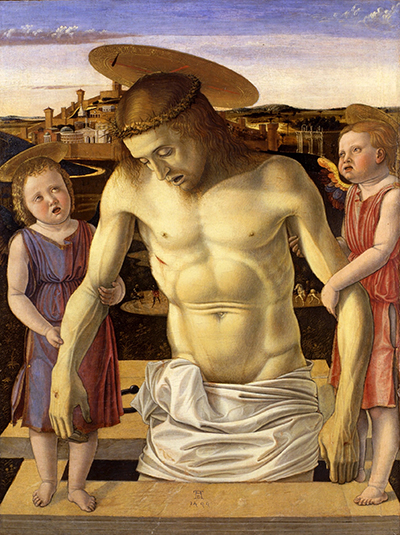
Two small angels hold up the body of Christ at the opening of a tomb. His head bows so far that the large golden halo behind it seems about to tip forward. Behind the figures a walled city catches the light, and at their feet a small monogram on the stone once persuaded collectors that they were looking at an Albrecht Dürer. The painting is Giovanni Bellini’s Dead Christ Supported by Two Angels in the Museo Correr, Venice, inventory Cl. I no. 39. Giorgio Fossaluzza’s study for the Museo Poldi Pezzoli dates it to about 1465 and gives its dimensions as 64.5 × 50 cm. [1] [2] [3]
At a Glance
- ArtistGiovanni Bellini
- DateAbout 1465 in the specialist catalogue
- MediumOil on poplar, as catalogued by Giorgio Fossaluzza
- LocationMuseo Correr, Venice
The work in Bellini’s career
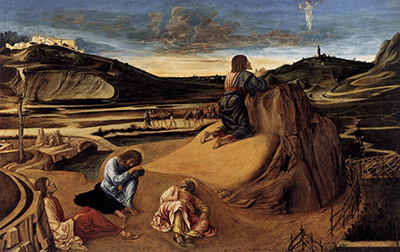
The Agony in the Garden
c. 1458–60Presentation at the Temple
c. 1475The Dead Christ in Venice
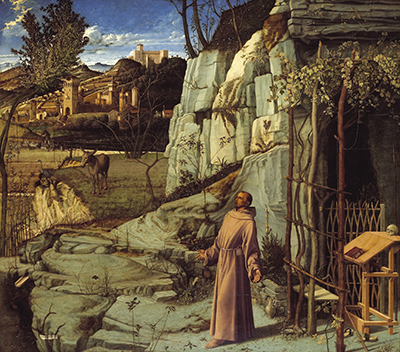
About 1465 in the specialist catalogueSt. Francis in the Desert
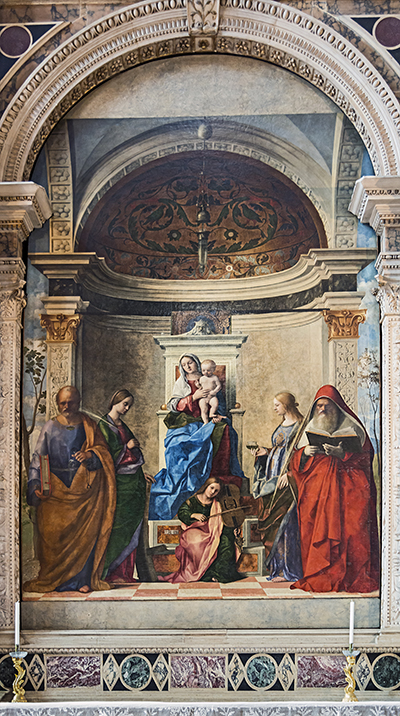
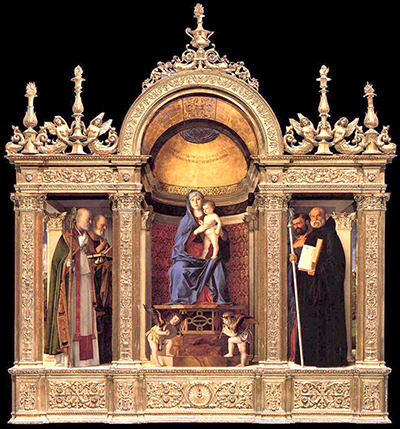
Late 1470sFrari Triptych
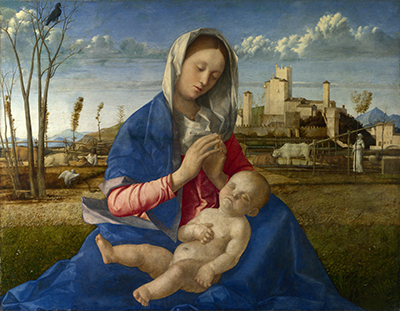
1488Madonna of the Meadow
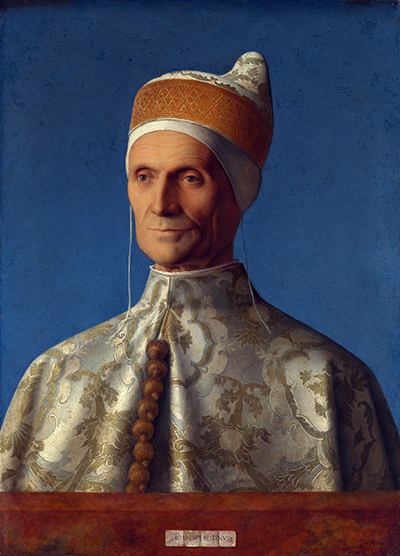
c. 1500–05Doge Leonardo Loredan
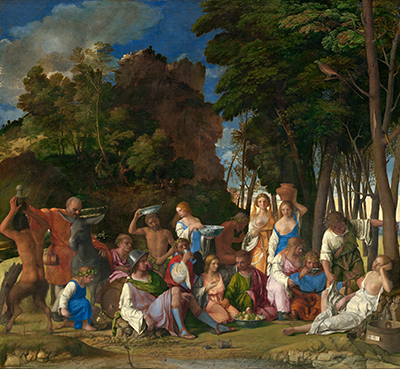
c. 1501–02The Feast of the Gods
Bellini’s signed date 1514How the angels support Christ
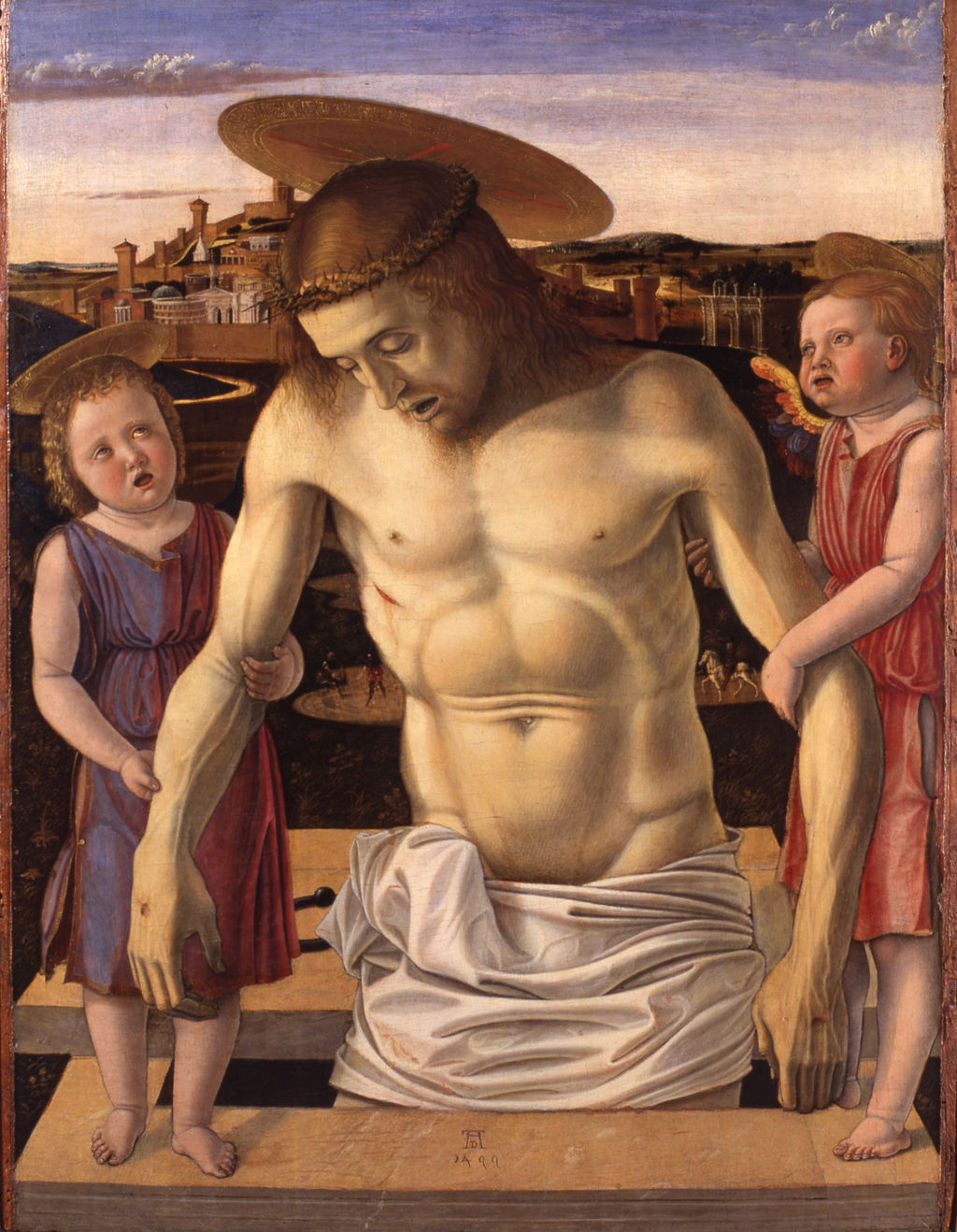
Christ’s torso fills the centre of the panel. The rise of the chest and the sharply shadowed edge of the ribs make it easy to imagine the volume of the body. The slack hands tell us how little he can do to support himself. On the left, one angel wraps his fingers around Christ’s forearm and steadies it lower down with his other hand. His companion reaches from behind to the upper arm and curls a hand around the forearm. Their support keeps Christ visible above the tomb. It also lets his hands hang towards the stone, where the wounds can be seen. [1] [2]
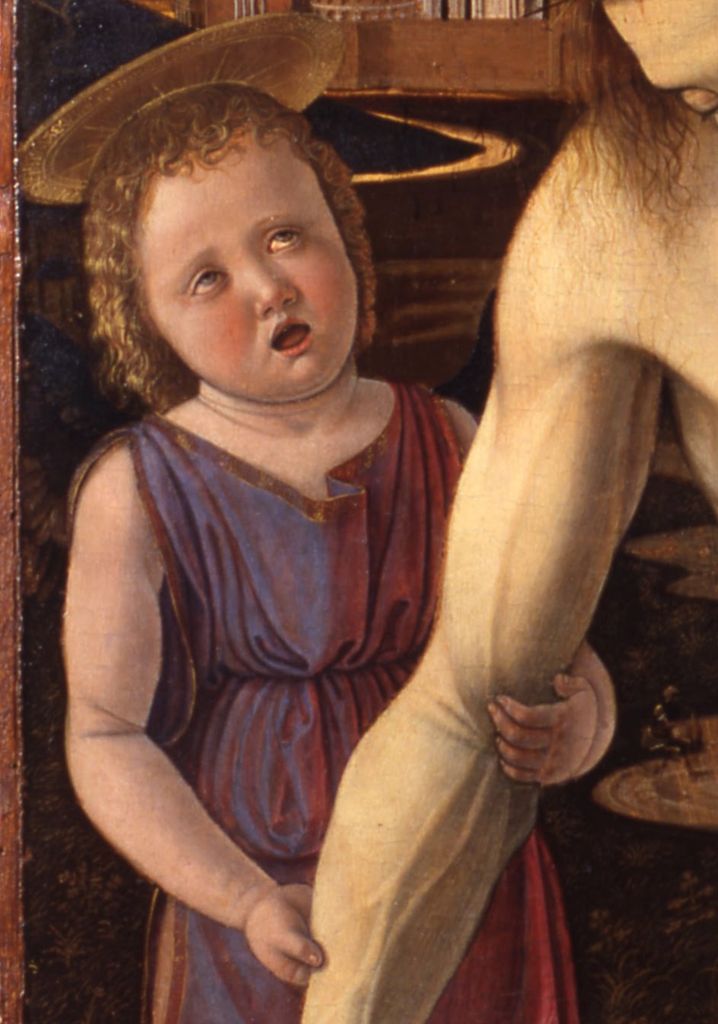
The angels are young children. Bellini shows their bare feet on the broad rim of the tomb, separated from each other by the dark opening. Their toes give some sense of how they have found their footing. The angel at the left lifts his eyes towards Christ’s face, his mouth parted. The other looks upwards across the composition. Their wings can almost escape notice among the slopes and folds of drapery. Compare their faces with Christ’s. The angels’ eyes are bright and their cheeks flushed. His lowered eyelids and dull lips make him seem increasingly still as the eye moves from one figure to the next. [1] [2]
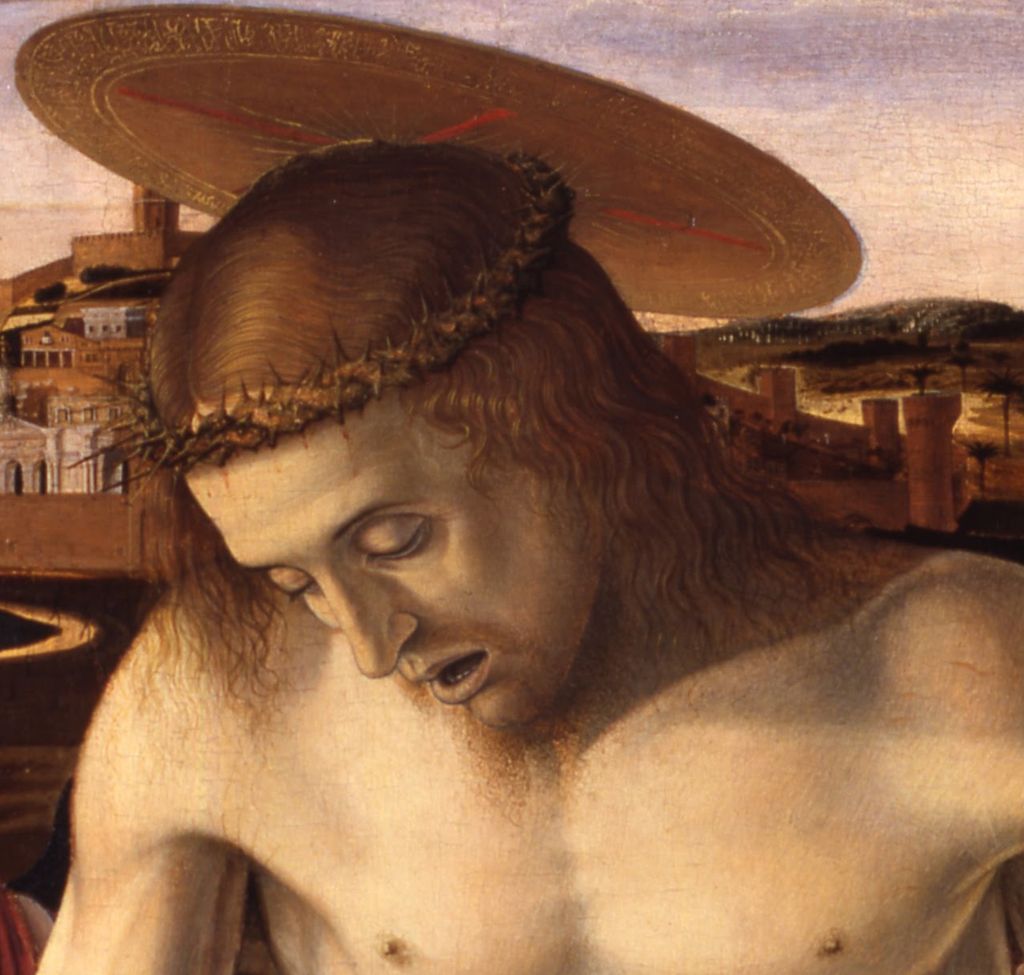
The crown of thorns follows the curve of Christ’s hairline while the halo opens out behind him on a different plane. Fossaluzza draws attention to its cross and the Kufic-style characters around its edge. The oval records the tilt of the head as clearly as the curve of the neck. The angels’ smaller haloes also turn through space. Bellini gives these familiar sacred forms the same kind of orientation as the stone beneath the angels’ feet. [1]
The city beyond the tomb
The view behind the figures starts close to the lower edge. The front of the tomb is seen almost straight on, but a strip of the horizontal surface is visible below the feet. A second strip of stone crosses behind Christ. Through the openings beside his waist and arms, the scale changes abruptly. Tiny figures move across a light patch of ground, and a winding path leads towards walls and towers. The mounted figure visible between Christ’s body and his left arm caught Poldi and Villa’s attention as an echo of contemporary equestrian monuments. Much of that small world would disappear if Christ’s arms were drawn close against his body. [1] [4]
Fossaluzza reads the distant city as Jerusalem, imagined with a medieval silhouette and buildings that recall ancient Rome. Look to the viewer’s left of Christ’s head for the crowded roofs and towers. To the right the view opens into low hills. The lights on the distant buildings and the warm strip at the horizon give the background an atmosphere of its own. In the Correr Crucifixion Bellini also gives the land behind a sacred figure its own paths, buildings and people. Here most of the view is interrupted by three bodies close to the picture plane. The little spaces Bellini leaves between them are enough to make the country seem to continue behind their shoulders. [1] [5]
A small dark fitting on the stone behind Christ, to the left of the white drapery, offers another example of the painting’s attention to material things. In Fossaluzza’s account of Hans Belting’s reading, it belongs to the sealing of the tomb. The dark shape is easy to miss beside the bright folds. Once seen, it makes the tomb look like something that could be opened and closed. [1]
A picture for prayer
The close view of the wounded Christ belongs to the Imago Pietatis, an image type that developed from Byzantine precedents and was used in Italy for meditation on Christ’s death. The Museo Poldi Pezzoli’s panel of about 1457, inventory 1587, shows how different an effect Bellini could make with the tomb and the half-length body. There Christ appears alone against rocky banks and bare branches. In Venice the angels invite a viewer to attend to the body through the simple action of holding it up. The low stone rim brings their gestures close to the viewer. [1] [6] [7]
Fossaluzza places the Correr painting in the tradition of the Engelpietà, the Pietà with angels, and proposes that it was made for private devotion. A comparison he discusses is Donatello’s bronze relief for the high altar of the Basilica of Saint Anthony in Padua, dated 1449 by the basilica. Donatello’s angels hold the cloth behind Christ. In the Correr painting the children’s hands clasp his bare arms. The shared arrangement draws attention to Christ’s body, while Bellini makes the contrast between the small hands and the adult limbs particularly direct. The altar setting in Padua also helps explain why Fossaluzza sees Eucharistic meaning in Bellini’s panel. The body presented before the viewer could recall the sacrifice commemorated in the Mass. The panel’s size allows the viewer to move between this devotional encounter and particulars as small as a child's fingers. [1] [8]
Oil, drawing and the date of the panel
Fossaluzza catalogues the painting as oil on a thin poplar panel. Jeongmu Yang, citing the published conservation analysis, specifies that linseed oil was found in a sample of sky paint. The sample establishes the binder in that passage. The technique in the figures is illuminated by a different kind of examination. [1] [14]
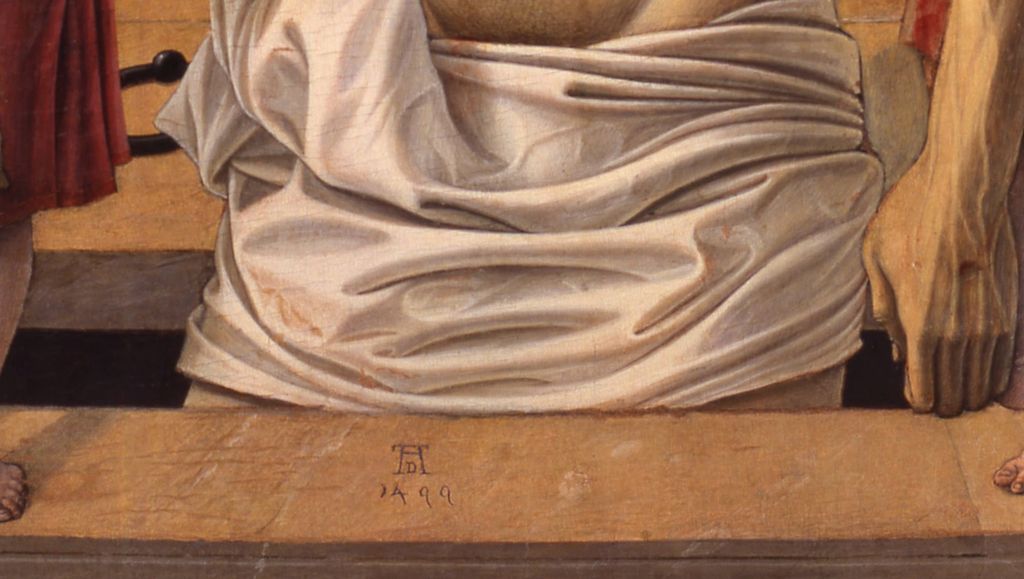
In their study of the underdrawing, Gianluca Poldi and Giovanni C. F. Villa reproduce infrared details of the face, drapery and arm. They describe parallel strokes reserved for shadowed passages, where Bellini worked out the turn of a form in advance. Compare the dark hollow near the closed eyes with the broad light on the chest, then look down at the white cloth. Its ridges catch the light unevenly, and grey shadows deepen where the folds run into each other. The visible softness of those transitions sits alongside the deliberate strokes that infrared examination reveals beneath the surface. Poldi and Villa also report lapis lazuli in the sky. [1] [4]
Fossaluzza’s dating centres on comparison with the Saint Vincent Ferrer Altarpiece at Santi Giovanni e Paolo in Venice. The altarpiece already includes the dead Christ with angels in its upper tier. Fossaluzza relates the Correr panel’s strong modelling to that ensemble and sees a further development in the way the figures are joined to the space behind them. The Fondazione Zeri places the painting around 1460–70. The Venice civic inventory lists the panel as attributed to Bellini and gives an earlier range of about 1453–55. As those dates suggest, the sequence of Bellini’s early paintings depends on which works scholars put beside them. [1] [2] [4] [16]
The civic record also gives a height of 74 cm. The conservators who examined the wood support for the 1991–92 campaign recorded about 64 cm, in line with Fossaluzza’s measurement of 64.5 cm. They describe a substantial loss in the support that had been filled in an earlier intervention. Fossaluzza records that the horizontal edges were trimmed, probably to fit another frame. The panel was restored by Mauro Pellicioli in 1946 and by Conservazione Beni Culturali in 1991–92. The original surround and the reason for the difference between the catalogue measurements remain uncertain. [1] [16] [17]
The Dürer monogram and the Correr bequest
At the centre of the front tomb ledge, below Christ’s folded cloth, are the letters of a Dürer monogram and the date 1499. Both are later additions. The monogram sits directly on painted stone. It should be read as evidence of the panel’s history as a collectible object. The 1830 appraisal of Teodoro Correr’s collection recorded the painting as a Dürer, and the panel passed to the City of Venice with Correr’s bequest that year. In 1859 Vincenzo Lazari questioned the age and execution of the mark and assigned the painting to the fifteenth-century Veronese school. The connoisseur Giovanni Battista Cavalcaselle drew the panel in his notebook in 1866. He considered Pier Maria Pennacchi and recorded affinities with Bellini, including the glassy quality of the colour. Giovanni Morelli argued for Bellini’s authorship in 1880. [1] [3]
Before Correr, the ownership history is uncertain. The seventeenth-century writer Carlo Ridolfi mentioned a painting of the same subject at the Scuola di San Giovanni Evangelista in Venice, which he attributed to Jacopo Bellini. It is a tantalising parallel, since the description includes two angels doing the very thing Giovanni paints here. The subject circulated widely enough that the description alone cannot connect the surviving panel to that building or identify its first owner. [1] [7]
How to recognise the Venice version
Bellini also painted The Dead Christ supported by Two Angels now in the National Gallery, London, inventory NG3912. The London picture measures 95 × 71.7 cm and the gallery dates it to about 1465–70. Its dark background throws the strongly lit body into relief. The angels support Christ’s arms from behind and his head tips back, opening the silhouette of the neck. The gallery’s finding of walnut oil belongs to that larger panel. At the Correr, the head falls forward and the figures interrupt a townscape under a blue sky. [1] [7]
In Berlin’s Gemäldegalerie version, inventory 28, the background is a hanging cloth and one angel leans towards Christ’s head. The museum dates the work to about 1470–75. The Museo della Città Luigi Tonini’s painting in Rimini, inventory 18 PQ, sets four angels around the body in a wide, dark composition. The Rimini museum records that the jurist Rainiero Migliorati gave that painting to the Tempio Malatestiano in 1499. [9] [10] [11] [15]
The Pietà at the Pinacoteca di Brera in Milan, inventory 228, has two human mourners. Mary approaches Christ’s face and Saint John supports him on the other side. Brera’s long inscription on the ledge concerns the image’s power to convey grief. In Venice the mark on the ledge belongs to the history of attribution. [3] [12]
The Correr also holds Antonello da Messina’s Pietà, Cl. I no. 42, with three angels and a landscape the museum identifies as Messina. Bellini’s open city view belongs to a smaller panel in which every part of the foreground depends on two children standing on the edge of a tomb. Follow their hands to Christ’s bowed head, then look through the gap under his arm. The change in scale from the fingers grasping the body to the riders in the distance makes both passages feel more immediate. [1] [4] [13]
Annotated Details from Dead Christ Supported by Two Angels at the Museo Correr
Numbered overview and cropped details. Photograph Faithful reproduction via Wikimedia Commons. Image source. Public Domain Mark 1.0.
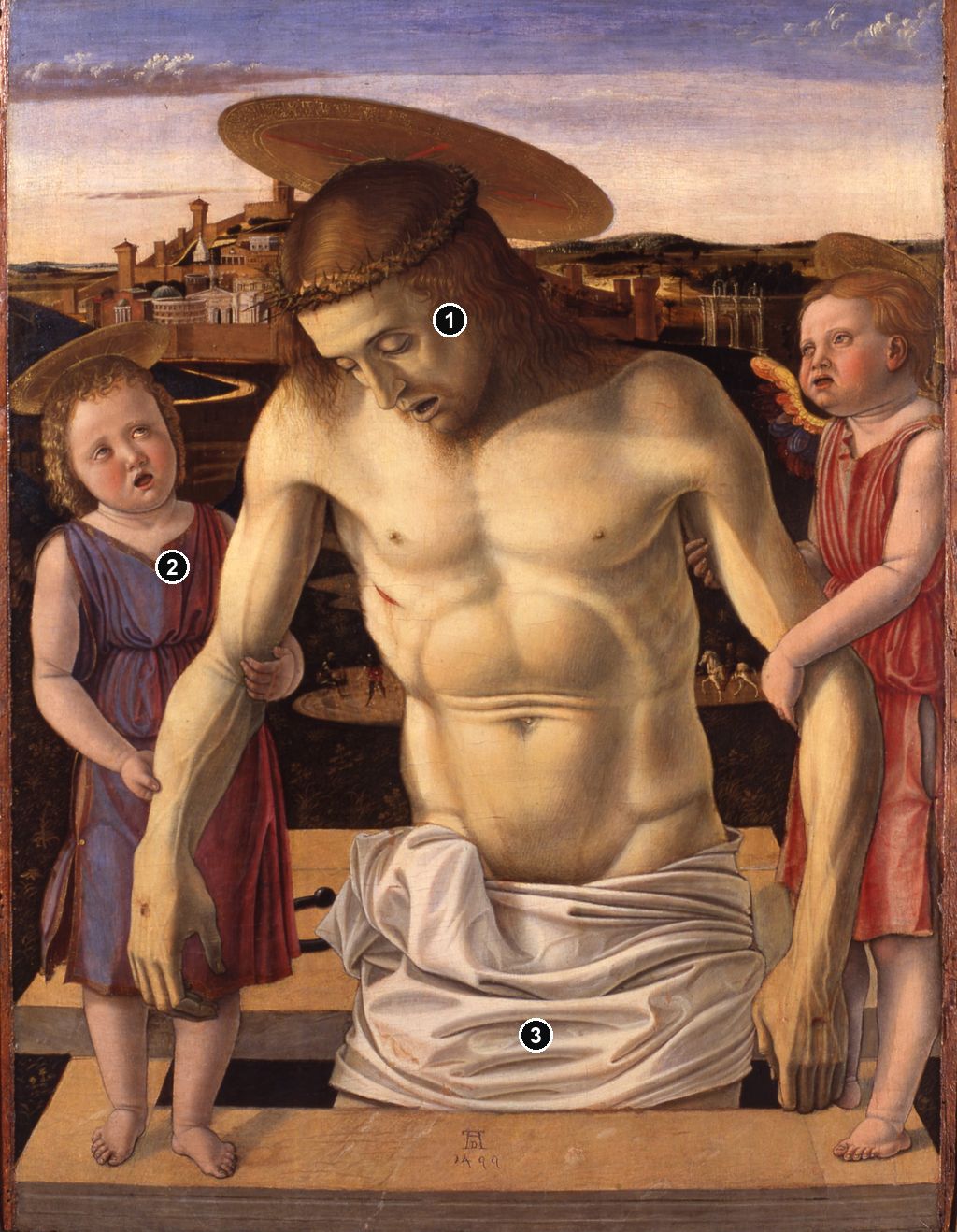
Details from DEAD CHRIST SUPPORTED BY TWO ANGELS AT THE MUSEO CORRER
The figures fill a shallow foreground under the broad silhouettes of the halos.
Christ’s lowered face
The large halo is seen at an angle. Below it, the bent head and fallen line of sight concentrate attention on Christ’s weight.
The angel at left
The angel’s face turns up as the body of Christ sinks. Close cropping brings their different angles of attention into view.
The painted winding cloth
Pale folds collect in front of the lower body. The ledge places a distinct boundary between the figures and the viewer.
Related reading
Artworks directory
Discussion
Look again at the images and ideas explored in Dead Christ Supported by Two Angels by Giovanni Bellini. These editorial prompts invite your observations.
Reader Insights
What changes when you look at the angels’ footing on the edge of the tomb?
Which details distinguish the Correr painting from the other Bellini panels of this subject?
How does the visible city change the experience of looking at the tomb?
Join the Conversation
Share a detail, comparison or question about Dead Christ Supported by Two Angels by Giovanni Bellini below.
References
- Giorgio Fossaluzza, “Il Cristo in Pietà sorretto da due angeli”, in Giovanni Bellini. Dall’icona alla storia, Museo Poldi Pezzoli exhibition catalogue, 2012, cat. 6, pp. 64–67 View source.
- Fondazione Federico Zeri, object 27279, Cristo in pietà sorretto da angeli, Museo Correr Cl. I no. 39 View source.
- Istituto Nazionale di Studi sul Rinascimento, photographic catalogue, Cristo morto sorretto da due angeli, Museo Correr no. 39 View source.
- Gianluca Poldi and Giovanni C. F. Villa, Indagando Bellini, pp. 32–35, figs. 22–24 and pp. 174–175 View source.
- Musei Civici di Venezia, Giovanni Bellini, Crocifissione View source.
- Museo Poldi Pezzoli, Imago Pietatis, inv. 1587 View source.
- National Gallery, London, The Dead Christ supported by Two Angels, NG3912 View source.
- Basilica of Saint Anthony, Padua, Donatello’s Imago Pietatis in bronze View source.
- Staatliche Museen zu Berlin, Der tote Christus, von zwei Engeln gestützt, Gemäldegalerie inv. 28 View source.
- Musei di Rimini, conservation and study of Bellini’s Pietà. Cristo morto con quattro angeli View source.
- Ministero della Cultura, inventory and ownership record for Rimini’s Pietà, inv. 18 PQ View source.
- Pinacoteca di Brera, Giovanni Bellini, Pietà, inv. 228 View source.
- Museo Correr via Google Arts & Culture, Antonello da Messina, Dead Christ supported by three Angels, Cl. I no. 42 View source.
- Jeongmu Yang, Giovanni Bellini: Experience and Experiment in Venetian Painting, UCL doctoral thesis, 1998, p. 135 n. 39, citing the Correr conservation analysis View source.
- Museo della Città Luigi Tonini, Rimini tra Medioevo e Rinascimento, entry for Bellini’s Pietà View source.
- Fondazione Musei Civici di Venezia, civic inventory object 2358, Pietà, Cl. I no. 0039 View source.
- Sabina Vedovello, Conservazione Beni Culturali, Museo Correr conservation report, pp. 100–102 View source.