 by Tom Gurney
Tom Gurney BSc (Hons) is an art history expert with over 20 years experience
Email: tomgurney1@gmail.com / Phone: +44 7429 011000
A late canvas in Besançon
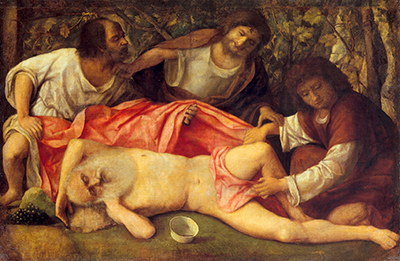
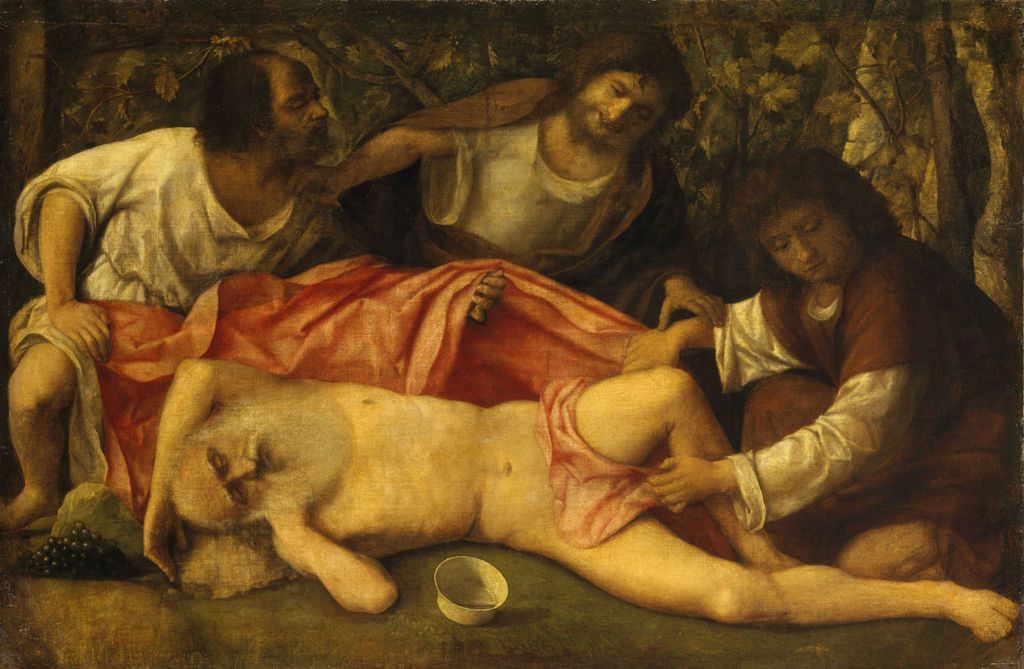
In Giovanni Bellini’s Drunkenness of Noah, an old man sleeps with his head on a stone while his three sons gather around him. One smiles. The other two draw a cloth over his exposed body. Bellini makes that small effort to preserve a father’s dignity the centre of a painting more than a metre and a half wide. The work, known in French as L’Ivresse de Noé or La Dérision de Noé, is in the Musée des Beaux-Arts et d’Archéologie in Besançon. The museum’s digital catalogue lists it as oil on canvas, about 1515, measuring 103 × 157 cm, accession 896.1.13. France’s Joconde catalogue gives slightly larger unframed measurements of 104.8 × 158 cm for the same accession. [1] [2]
At a Glance
- ArtistGiovanni Bellini
- DateAbout 1515
- MediumOil on canvas
- LocationMusée des Beaux-Arts et d’Archéologie, Besançon
The work in Bellini’s career
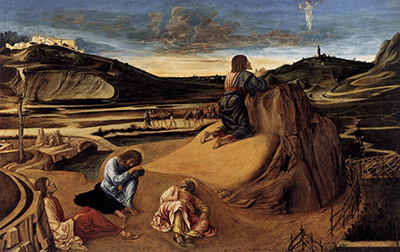
The Agony in the Garden
c. 1458–60Presentation at the Temple
c. 1475A late canvas in Besançon
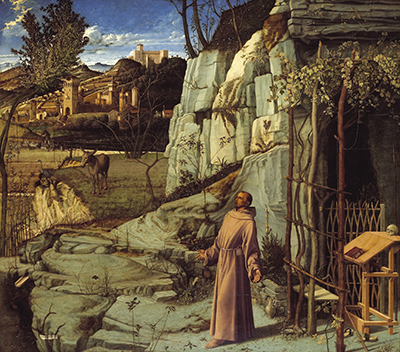
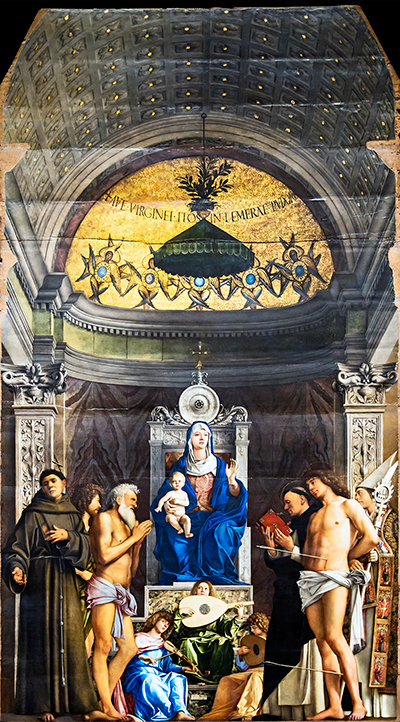
About 1515St. Francis in the Desert
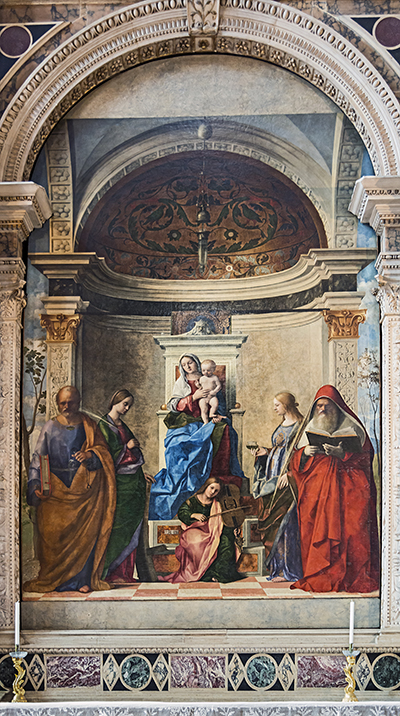
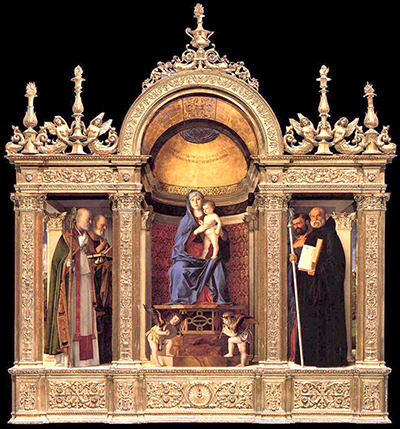
Late 1470sFrari Triptych
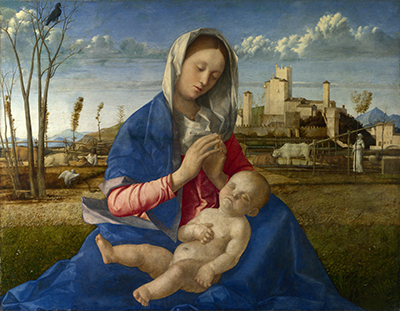
1488Madonna of the Meadow
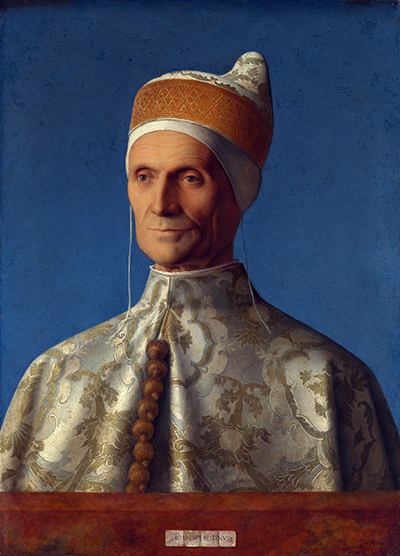
c. 1500–05Doge Leonardo Loredan
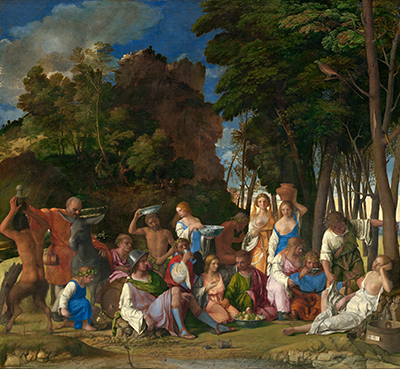
c. 1501–02The Feast of the Gods
Bellini’s signed date 1514What happens in Genesis
After the Flood, Noah cultivates the ground and plants a vineyard. He drinks its wine and lies uncovered inside his tent. Ham sees him naked and tells his brothers, Shem and Japheth, who are outside. The two carry a garment between them and walk backwards to cover their father, their faces turned away. The care with which they avoid seeing him makes their response different from Ham’s, whose decision to tell them gives the incident an audience. When Noah wakes, he curses Canaan, Ham’s son. Bellini ends the action while Noah is still asleep, before anyone in the picture can hear that judgement. [3]
Genesis places the exposure inside the tent, whereas Bellini fills the space behind the family with twisting vines. He brings the cause of the old man’s condition into the scene. A bunch of dark grapes sits by the stone at the lower left, and a shallow pale cup tilts towards us below Noah’s chest. The sequence runs from the living plant to the harvested fruit and then to the vessel from which the wine was drunk. The objects do this work so quietly that the viewer can follow the sons’ quarrel for some time before noticing them. [1] [2] [4]
The faces, hands and red cloth
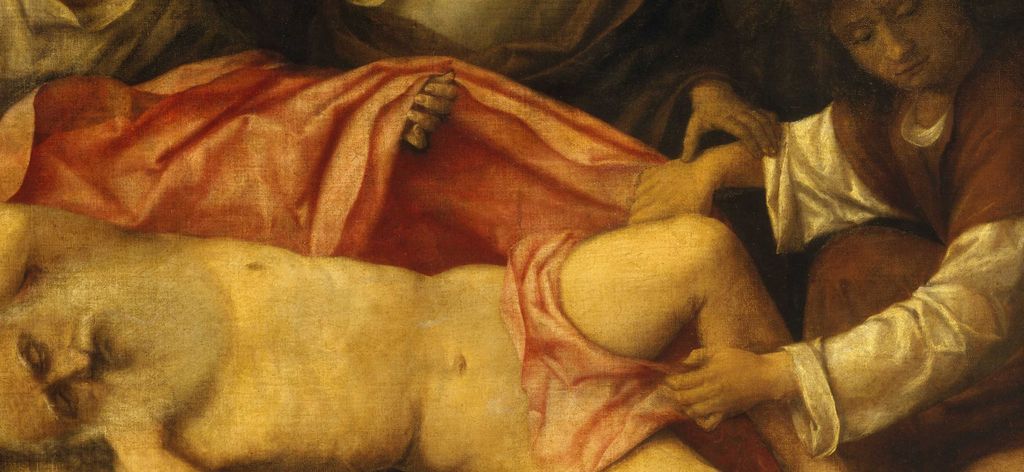
Noah’s body runs almost the length of the foreground. One elbow rises above his head, and the forearm descends beside his face. His other arm is bent against the ground. The leg nearest us stretches towards the right edge, while the farther knee comes up under the loose cloth. The eyes are closed, the face slack and opened to the light. The sons are busy with what his body reveals, but the bent limbs and precarious bed of stone make it possible to imagine what it feels like to wake there. [1]
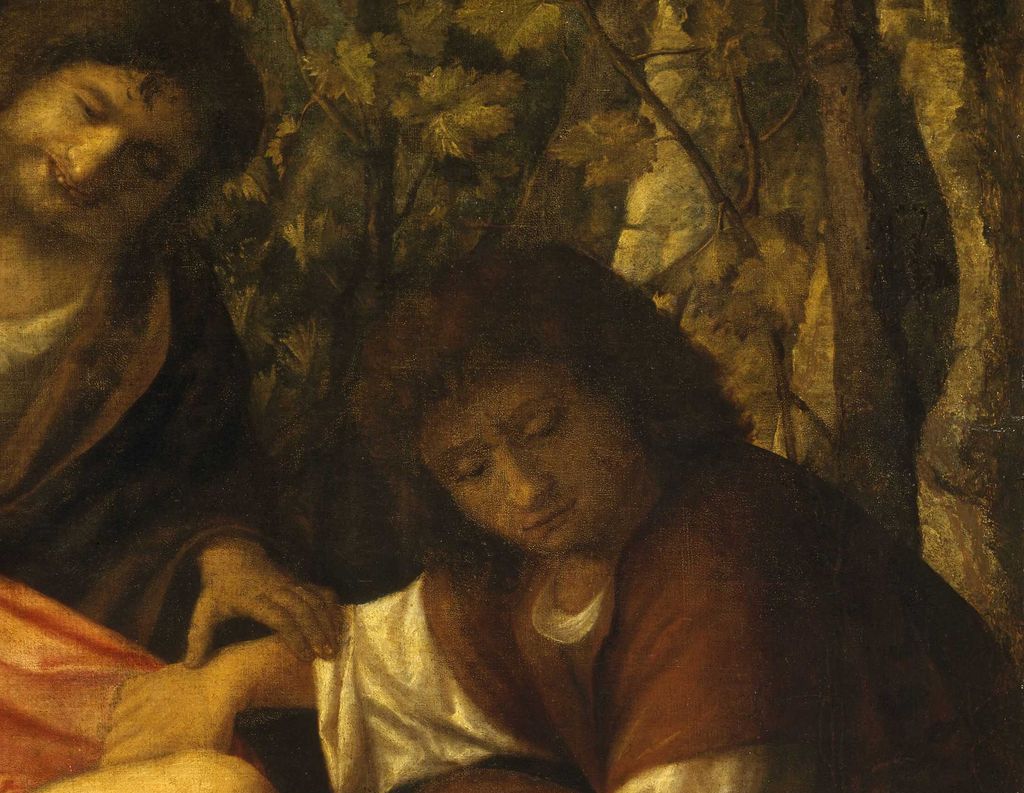
The figure at the left, usually identified as Shem, plants a foot and turns his head towards the others. Japheth crouches on the right and takes hold of the fabric beside the raised knee. His head is lowered, and the light singles out his sleeve and working hand. Between them Ham’s pale shirt appears through an opening in his darker mantle. The angle of his head makes his amusement legible. One of his arms reaches towards Shem, and a hand comes down near Japheth’s arm. The art historian Itay Sapir reads those gestures as attempts to hinder his brothers. Bellini gives Ham something to do with his hands, extending the role Genesis gives him as a witness and messenger. [1] [3] [4]
Look at the red fabric where several hands and differently lit folds converge. A lifted ridge runs from the left towards a hand near the middle, then slants down towards the right. The cloth can be followed across the canvas faster than any one glance can be followed between the figures. Its course gives a single shape to several actions: gathering, lifting, reaching and trying to cover. Noah’s sons attend to each other or to that immediate task. The position from which we see the picture leaves Noah’s chest and legs in full view. As Sapir observes, Bellini makes the old man especially visible to the spectator while showing what it costs the brothers to spare him a look. [1] [4]
Sapir also draws attention to the age differences. Shem has a receding hairline and grey in his beard, Japheth looks very young, and Ham appears between them in age. The apparent order sits awkwardly with the reference to Noah’s youngest son when he wakes in Genesis 9:24. Bellini’s arrangement makes those differences matter in another way. All three men experience the same discovery, but the youngest-looking figure carries out the task with the most immediate care. [1] [3] [4]
A biblical image with several readings
The contrast between the canvas’s two French titles is telling. L’Ivresse de Noé names Noah’s condition. La Dérision de Noé names what happens to him once he is exposed. The Museo Correr includes a Christian typological reading among the possibilities for the scene, in which events in the Old Testament anticipate episodes in the New. The mocked patriarch can recall the humiliation of Christ, and the grape and cup can call to mind the wine of Communion. The Vatican Museums explicitly situate Michelangelo’s fresco of the same episode in a sequence about the Fall and humanity’s renewal. In Bellini’s independent canvas, the sacred associations have to emerge from the individual objects and gestures. The unknown original setting makes it difficult to say how much of that reading the first viewers were expected to supply. [2] [4] [5] [8]
Michelangelo’s Sistine Chapel fresco includes a small figure of Noah working his vineyard as well as the drunken figure in the main scene. Bellini lets the fruit and the cup account for that earlier part of the story. The comparison helps explain how much space the Venetian painter gives to the act of covering. A Venetian precedent for the episode also existed in sculpture, in a corner relief of the Doge’s Palace. Bellini had even accepted a commission for a Deluge for the Scuola Grande di San Marco in 1470, a project whose subsequent fate is uncertain in the surviving evidence. That much earlier undertaking concerned the Flood itself. [2] [4] [5] [6] [7]
Anchise Tempestini explored the possibility that Bellini was reflecting on his own old age through a patriarch who survives a catastrophe and then needs his sons’ help with the ordinary matter of keeping himself covered. Tempestini also reports Giovanni Carlo Federico Villa’s proposal that the endangered dignity of Noah could evoke the recent political crisis endured by Venice. Both readings take the old man’s vulnerability seriously, but the commission and intended destination are unknown. The painting gives us a weary face and three different reactions to it, grounds for a study of ageing and authority even if the historical occasion remains elusive. [6]
How the attribution changed
The documented ownership begins with the French painter and collector Jean Gigoux. Joconde records the acquisition by bequest in 1894, the year he died. The Museo Correr traces the first known mention to the posthumous inventory of 1895 and dates the museum’s receipt to the following year. The National Gallery’s lender report likewise starts its provenance with Gigoux and records the passage by bequest to Besançon. The early records establish a nineteenth-century route into a French municipal collection. The wider bequest included about 500 paintings and 3,000 drawings, making it one of the foundations of the museum’s holdings. Who first owned the painting and where Gigoux found it remain uncertain in the published records. [2] [8] [9] [18]
The museum received a picture whose painter was still in dispute. Giorgione, Giovanni Cariani, Lorenzo Lotto and Titian were all proposed. Bernard Berenson initially favoured Cariani. In 1927 Roberto Longhi identified the canvas as a late Bellini in the journal Vita Artistica. The disagreement persisted, with Creighton Gilbert arguing for Lotto in 1956 and Fritz Heinemann for Titian in 1962. The French curator Michel Laclotte recalled writing to Berenson and receiving his agreement that the work was Bellini’s, a reversal the Correr exhibition history places in 1957. Daniel Wallace Maze still describes the attribution as less than universal in his 2017 study. Longhi’s identification is the one used by the holding museum and the National Gallery. [1] [2] [6] [8] [9] [10] [19] [20]
The older attributions make sense when we look at how the figures emerge from the foliage. The younger men’s hair and Ham’s mantle move in and out of the dark with few firm boundaries. The faces, white sleeves and warm flesh are easier to pick out than the fine network of leaves. The Museo Correr connects that atmosphere and the freedom of the handling with Giorgione, who died in 1510. In 1956 Longhi went so far as to describe the canvas as the first work of modern painting. His judgement shows how vigorously the attribution changed expectations of Bellini’s late style. [1] [8]
A late Bellini on canvas
About 1515 is an estimate. The Fondazione Federico Zeri places the picture between 1514 and 1516, while Maze places it about 1510–15. Both put it within the final years of a career that ended with Bellini’s death in 1516. The signed and dated Feast of the Gods of 1514 offers a useful comparison. Tempestini connects the drinking vessels in the two pictures and the role played by wine. In the Feast, the vessels belong to a gathering of gods where wine is still being served. In the Besançon canvas the cup is already on the ground and the person who drank from it lies exposed. It is a telling relation between two late paintings, although the Feast has a documented courtly setting and an independent history of reworking. Vienna’s Young Woman at Her Toilette, also dated 1515 by the Kunsthistorisches Museum, is painted on poplar. The three objects show Bellini still working across subjects and supports. The available dates leave the order of his last paintings open. [6] [7] [11] [12] [13] [19]
Besançon’s reopening dossier records preparatory study in the Versailles workshops of the Centre de recherche et de restauration des musées de France and the start of restoration in 2017, overseen by a scientific committee. A report at the time of the painting’s return names Cinzia Pasquali and describes the removal of yellowed varnish and intrusive older retouching during the 2017–18 treatment. The museum registrar confirms that the restored work was in London during the museum’s November 2018 reopening. Anyone comparing photographs should allow for those surface changes as well as the effects of illumination and reproduction. The transitions visible in Noah’s face and the leaves are things we can examine closely in the museum photograph. Pigments or buried alterations would require separate technical evidence. [1] [14] [15] [16]
Besançon lent the painting to Venice’s Museo Correr in 2016, five hundred years after Bellini’s death. In the National Gallery’s Mantegna and Bellini exhibition of 2018–19, the canvas was shown in the final room, devoted to antiquity, alongside works with very different subjects and approaches to the human figure. That setting draws attention to the prominence of the reclining nude. Look back from Noah to the vine, cup and three faces, however, and the picture becomes a study in what people do when another person is helpless and exposed. The Besançon museum’s collection guide places it among its Italian paintings alongside works by Bronzino, Titian and Tintoretto. [8] [15] [17] [21]
Annotated Details from Drunkenness of Noah in Besançon
Numbered overview and cropped details. Photograph Mémoire vive, Ville de Besançon via Wikimedia Commons. Image source. Public Domain Mark 1.0.
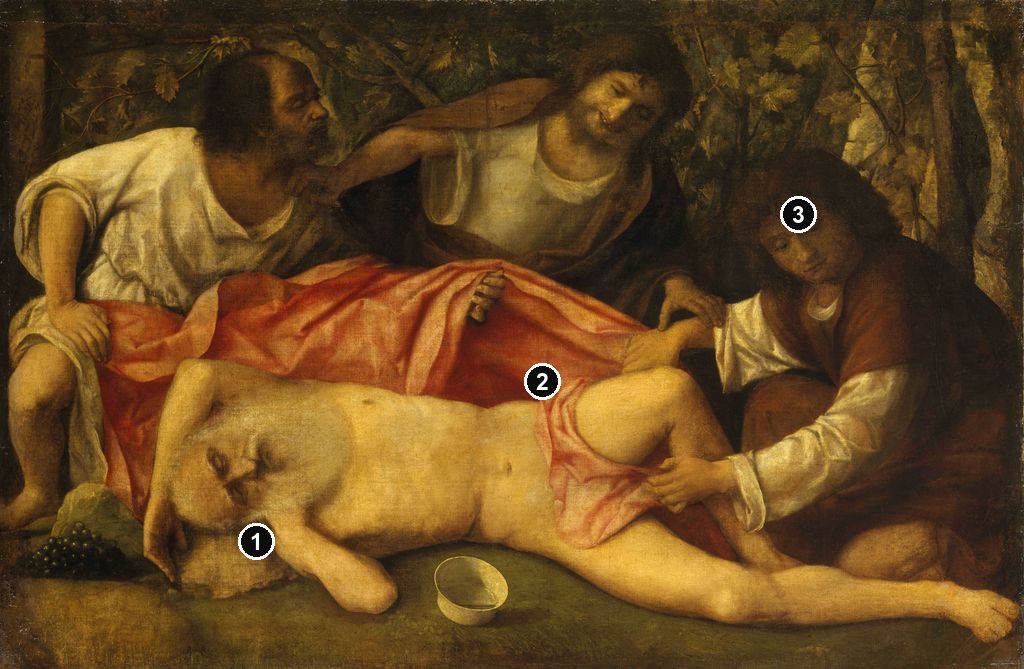
Details from DRUNKENNESS OF NOAH IN BESANÇON
Compare the long horizontal body with the movements of the cloth and the three figures in the shadows.
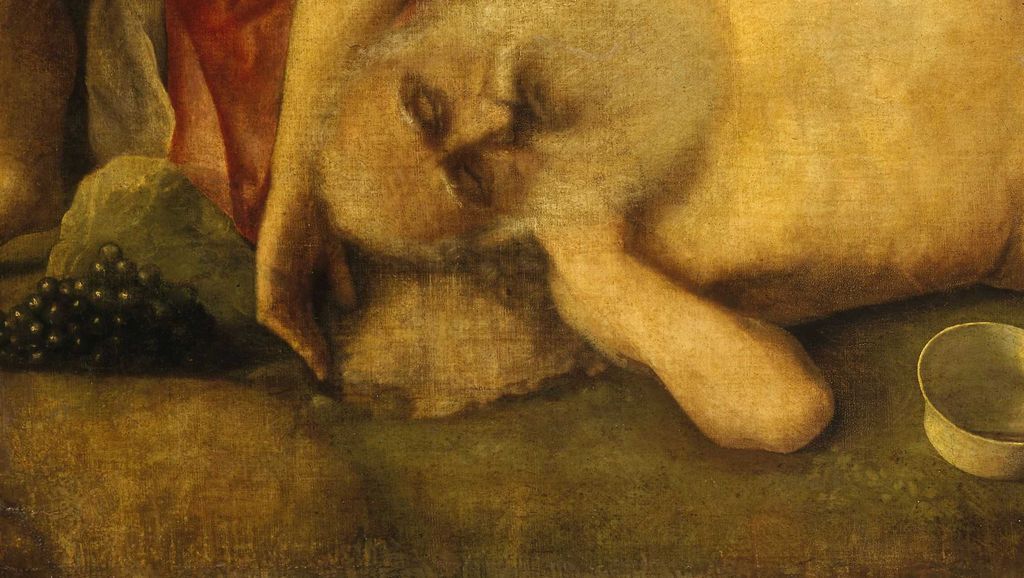
Noah’s face and arm
Noah’s head is low in the foreground, beside an arm stretched towards the viewer. The vessel stands nearby on the ground.
A cloth held across the body
The red fabric gathers into folds where the figures lift it. Vibrant colour reinforces the band running across the painting.
Figures turning in the dark
Angles of shoulders, faces and arms give the figures different lines of attention. The darker background brings the lights on their skin and fabric forward.
Related reading
Artworks directory
Discussion
Look again at the images and ideas explored in Drunkenness of Noah by Giovanni Bellini. These editorial prompts invite your observations.
Reader Insights
How does the red cloth guide the eye from one son to the next?
What details make a straightforward reading of the Genesis episode difficult?
How does the low position of Noah’s body affect your view of his sons?
Join the Conversation
Share a detail, comparison or question about Drunkenness of Noah by Giovanni Bellini below.
References
- Mémoire Vive, Ville de Besançon, L’Ivresse de Noé, museum record and photograph, 896.1.13 View source.
- French Ministry of Culture, Joconde record M0332001018 View source.
- Genesis 9, United States Conference of Catholic Bishops, especially verses 18–27 View source.
- Itay Sapir, The Drunkenness of Noah, Visual Commentary on Scripture, including Young and Old View source.
- Vatican Museums, Central Stories of the Sistine Chapel ceiling View source.
- Anchise Tempestini, L’Ebbrezza di Noè di Giovanni Bellini, pp. 227–233 View source.
- Terisio Pignatti, Bellini, Giovanni, detto Giambellino, Dizionario Biografico degli Italiani View source.
- Museo Correr, Giovanni Bellini. A Masterpiece for Venice, 2016 exhibition dossier View source.
- National Gallery, Mantegna and Bellini immunity from seizure report, entry X9691 View source.
- Michel Laclotte, Bernard Berenson: souvenirs, interview by Monica Preti, Studi di Memofonte 14, 2015, pp. 8–9 View source.
- Fondazione Federico Zeri, Bellini works catalogue, Ebbrezza di Noè View source.
- National Gallery of Art, The Feast of the Gods, 1942.9.1 View source.
- Kunsthistorisches Museum, Titian exhibition booklet, entry 10, Junge Frau bei der Toilette View source.
- Ville de Besançon, museum reopening press dossier, section on restoration View source.
- Lisa Diop, loan and restoration notice, Lettre des Amis des Musées de Besançon 58, December 2018 View source.
- Damien Poirier, report on the painting’s return to Besançon, February 2019 View source.
- National Gallery, Mantegna and Bellini, exhibition announcement and room guide View source.
- Museo Correr, The Musée des Beaux-Arts et d’Archéologie de Besançon, institutional history and Gigoux bequest View source.
- Daniel Wallace Maze, The Life of Giovanni Bellini, in Giovanni Bellini: Landscapes of Faith in Renaissance Venice, Getty Publications, 2017, fig. 17 and pp. 52–53 View source.
- Fondazione Roberto Longhi, inventory of Longhi’s papers, Vita Artistica entry 19 View source.
- Musée des Beaux-Arts et d’Archéologie de Besançon, Peinture, collection guide View source.