 by Tom Gurney
Tom Gurney BSc (Hons) is an art history expert with over 20 years experience
Email: tomgurney1@gmail.com / Phone: +44 7429 011000
Saint Jerome in the Wilderness
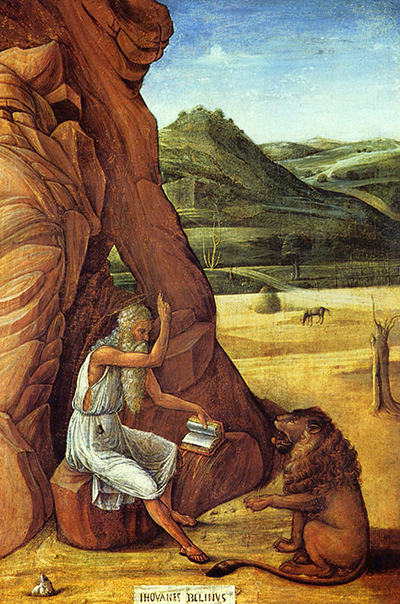
A lion sits upright in front of Saint Jerome and holds out a wounded paw. Jerome raises his right hand while his left stays on the open book beside him. Giovanni Bellini painted the encounter in tempera on a small wooden panel now at the Barber Institute of Fine Arts in Birmingham. The Barber calls it Saint Jerome in the Wilderness, dates it to about 1455–60 and gives its dimensions as 44.2 × 30 cm. It is one of Bellini’s earliest surviving paintings and an early example of his use of landscape to tell a sacred story. [1]
At a Glance
- ArtistGiovanni Bellini
- DateAbout 1455–60, Barber Institute
- MediumTempera on panel
- LocationBarber Institute of Fine Arts, Birmingham
The work in Bellini’s career
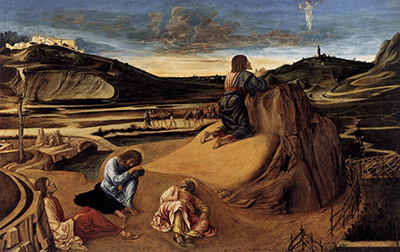
The Agony in the Garden
c. 1458–60Presentation at the Temple
c. 1475Saint Jerome in the Wilderness
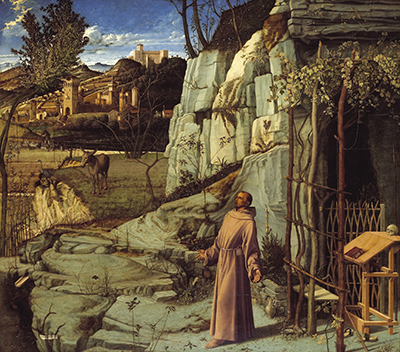
About 1455–60, Barber InstituteSt. Francis in the Desert
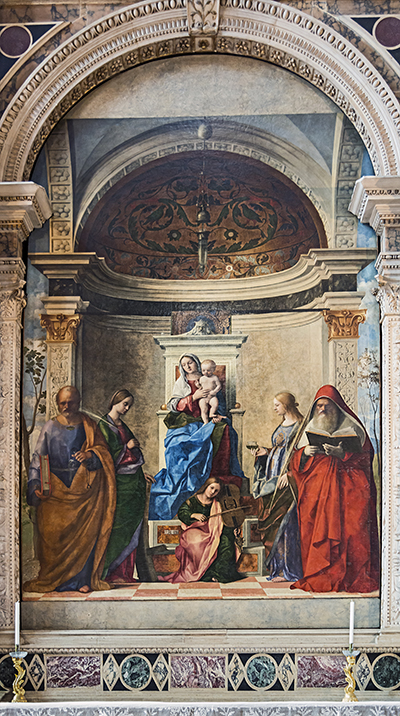
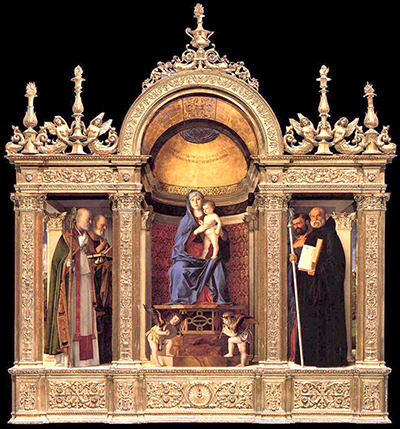
Late 1470sFrari Triptych
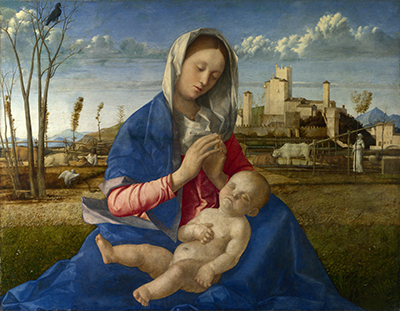
1488Madonna of the Meadow
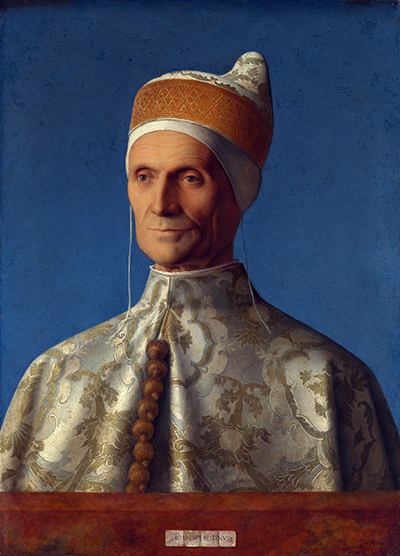
c. 1500–05Doge Leonardo Loredan
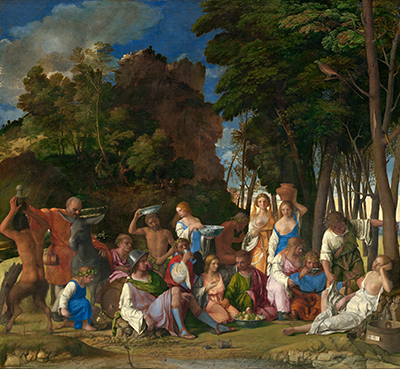
c. 1501–02The Feast of the Gods
Bellini’s signed date 1514Jerome, the lion and the open book
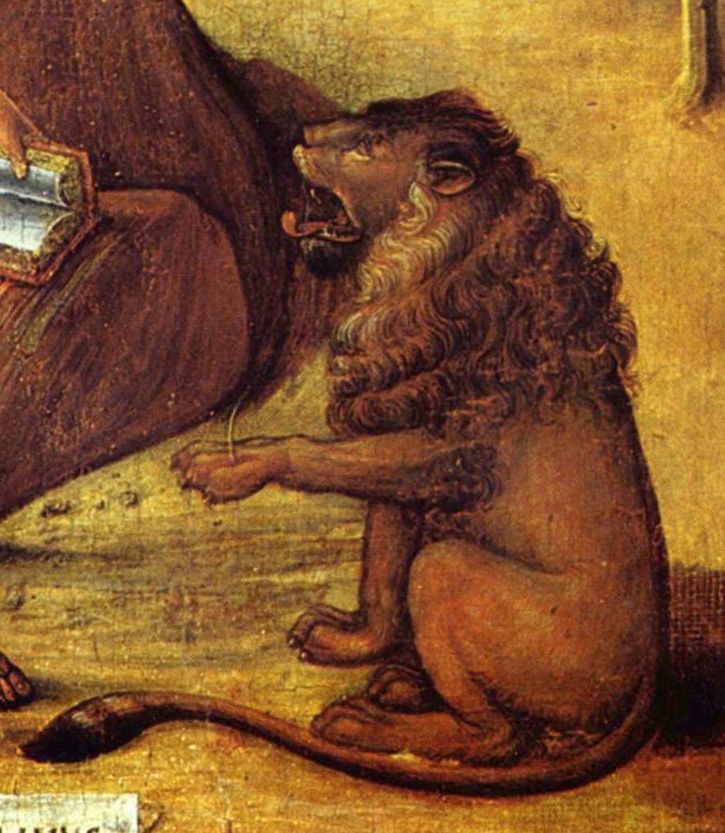
The lion has the massive chest and heavy mane of a dangerous animal, but Bellini makes it sit almost like a dog awaiting instruction. Its head tips up towards Jerome, its jaws part, and one forepaw extends over the ground between them. The thorn is still there. Jerome sits securely on a rock with his bare feet projecting towards the lion. The Barber reads the raised hand as a gesture of admonition or instruction. The two figures seem to be sizing each other up, and the pause makes the lion’s appeal legible across the small gap. [1]
The lion comes from a medieval legend. In the account collected in Jacobus de Voragine’s Golden Legend, the animal limps into the monastery while the brothers are listening to a reading. The others run away. Jerome welcomes it and directs them to examine and wash the injured foot. The lion stays after its recovery and is given charge of a donkey that carries wood. When merchants take the donkey, the brothers suspect the lion has eaten it. The animal eventually recognises the missing donkey and drives the traders back. The grazing donkey in Bellini’s middle distance may bring this later episode to mind, with the animal still at peace in the field. It can also be read as part of the valley’s ordinary life. [1] [2]
Bellini puts the appeal outside, at the edge of the saint’s retreat, where the stone seat and ledge supply the furniture of a study. Jerome’s fingers rest near the top of the open book. The pale pages stay in view between his body and the lion’s head, so the action still identifies a scholar. The historical Jerome was an early Christian theologian whose work helped shape the Latin Bible. He described his own experience of solitude in a letter to Eustochium, remembering steep rocks, places where he prayed and distractions that persisted even in seclusion. The letter records his ideal and its difficulties. The lion belongs to the later storytelling tradition that Bellini brings into the hermit’s setting. [1] [2] [3]
The cliff and the open valley
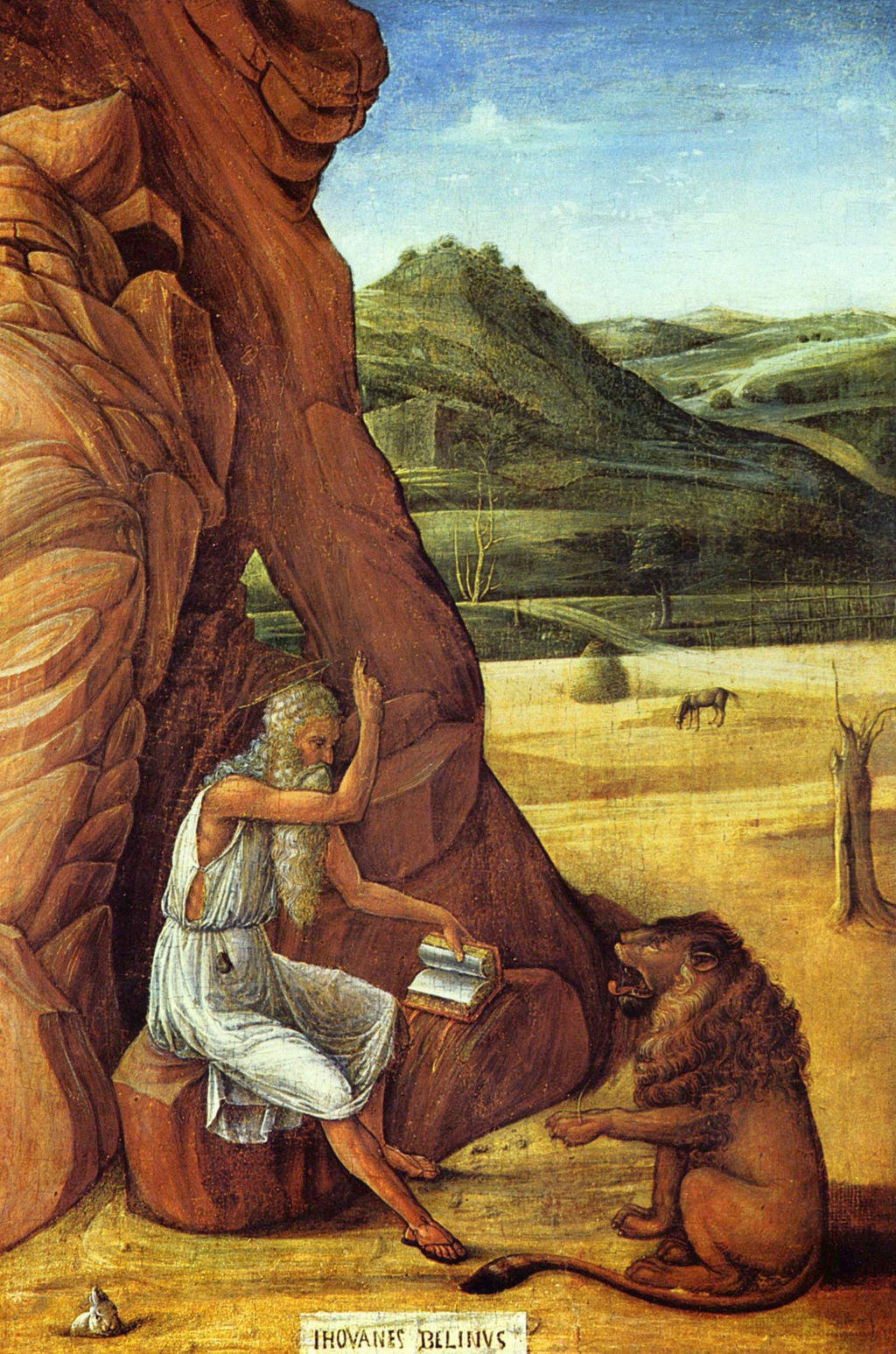
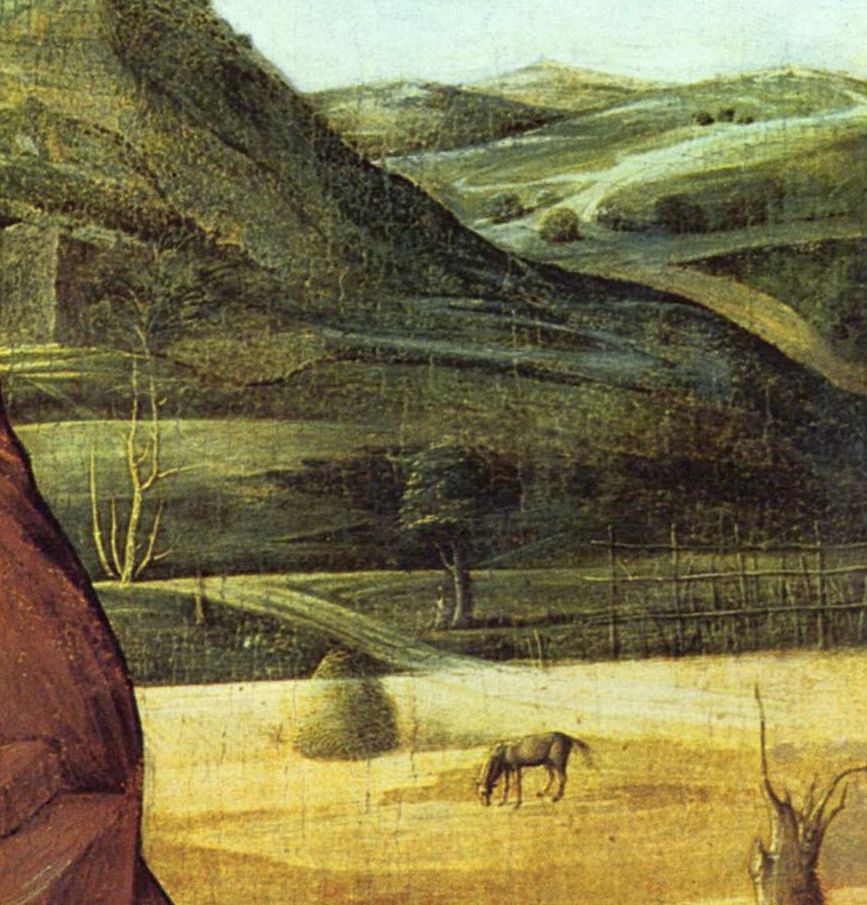
The cliff fills much of the left half. It rises out of the picture above Jerome, with dark recesses between reddish layers of rock. The ledge beneath the book brings the reddish stone into the middle of the action. From there the cliff narrows as it rises, opening a window onto a far hillside. The eye can follow it down again from the cool sky to the dark slopes, a stretch of golden field and the warm ground on which the lion sits. The depth of the valley is especially apparent if you compare the animal in the field, a few strokes at this scale, with the lion close enough for Bellini to pick out the curls of its mane. [1] [4]
The lower edge rewards close looking. A rabbit’s head emerges from the ground at the left, near Jerome’s feet and the painted signature slip. The Barber links the rabbit to the hermit’s life. Art historian Pavel Kalina also points out the animal by its den in this early painting when comparing it with the animals sheltering among the rocks in Bellini’s later Washington Saint Jerome Reading. The detail calls attention to the likeness between a creature’s refuge and Jerome’s, while the light on the field makes it easy to imagine a world beyond both shelters. [1] [5]
Bellini uses the warm light to show how much the terrain changes over so short a distance. Jerome’s garment catches it at the shoulder, along the folds over his knee and at the edges of the fabric. Behind him the crevices remain dark. The isolated tree at the edge of the field has only a few angular branches, while the softer hills further away are green. The Barber’s contribution to the National Inventory records one reading of this juxtaposition, in which the landscape beyond the cave invites thoughts of worldly comfort relinquished and of a future heavenly reward. The play of shadow and sunlight also gives the cliff and open ground a physical presence that can be appreciated without assigning a fixed meaning to each feature. [1] [4]
A small painting for close viewing
The compact format suits private devotion. The Barber relates it to the Venetian market for small narrative paintings, where Jerome’s learning and life of discipline could appeal to patrons who valued classical scholarship as well as Christian teaching. One person looking from nearby could take in the story quickly and then return to the book, the thorn or the rabbit. The original owner is unknown. The scale and subject explain the possible use of the panel without requiring a named commission. [1] [4]
At the bottom Bellini’s name appears on a pale painted slip, or cartellino. The National Inventory transcribes the irregular capitals as IHOVANES BELINUS. Brigit Blass-Simmen draws attention to the unusual spelling and the uneven construction of the letters, and notes that Debra Pincus questioned whether the inscription was written by Bellini himself. The Barber catalogues the painting under Bellini’s name. The authorship of the lettering is a narrower question, and the inscription supplies no date. The Berlin Mantegna and Bellini checklist placed the panel probably in 1453–55, a little earlier than the Barber’s current estimate. [1] [4] [6] [7]
Mantegna and the Bellini workshop
The Berlin exhibition brought this early Bellini into dialogue with Andrea Mantegna’s Saint Jerome Penitent in the Desert, kept at the Museu de Arte de São Paulo and dated about 1448–51 by the museum. Mantegna, Bellini’s brother-in-law, also locates his hermit beneath a rock formation. His Jerome prays before a crucifix and a lit candle, with closed books nearby. The São Paulo curators draw attention to the weight of the stones and to the figure’s own sculptural solidity. Bellini directs attention to the encounter with the lion, setting the gestures of the two figures against the rock and leaving the book open at Jerome’s side. The pairing shows how readily the same subject could be recast by two young painters, and how early both made exposed rock part of the design. The Louvre also preserves a drawing of Saint Jerome in the Desert in an album by Jacopo Bellini. It shows that the theme circulated in the family’s drawings as well as in small painted panels. [8] [9] [10]
Other Saint Jeromes by Giovanni Bellini
In the National Gallery’s Saint Jerome reading in a Landscape in London, about 1480–85, Jerome bends over the book and the lion lies quietly in the lower right. The saint is already accustomed to his companion. Technical examination showed that the lion was painted over rocks that had already been completed. That small revision places the familiar attribute within a design whose main emphasis is on the arc of the reader’s body around the book and on the steep terrain that separates him from the bright, distant city. Birmingham gives the lion an equal share in the action. [1] [11]
The St. Jerome in the Desert at the Uffizi in Florence is a much larger oil painting from about 1480. A seated Jerome reads below a rocky mass, with a distant city assembled from recognisable Italian monuments. The Uffizi identifies San Vitale and the Mausoleum of Theodoric in Ravenna, the Bridge of Tiberius in Rimini and the bell tower of Sant’Anastasia in Verona among those buildings. It traces the panel to the Papafava collection in Padua and treats a possible earlier location at Santa Maria dei Miracoli in Venice as a hypothesis. The oil panel Saint Jerome Reading at the National Gallery of Art in Washington dates to 1505. Its Jerome sits on the right in a blue drape, his head lowered over an open book, while the landscape extends to the left. Kalina notes the recurrence of a small animal by its shelter without inferring a direct link between the two paintings. For the Washington panel, he proposes a connection between the paired animals and a reading of the Psalms in which the rock is a place of refuge. That reading concerns the later composition, which Bellini organises around a sustained act of study. [5] [12] [13]
From the Southesk collection to Birmingham
The Barber’s National Inventory record traces the panel to D. Goodyear of Gloucester and an unsuccessful Christie’s sale in 1856. It was lot 59 in the 1863 sale of the Reverend Walter Davenport Bromley’s collection. The catalogue’s description singles out the thorn in the lion’s paw and attributes the picture to Giovanni Bellini. The Earl of Southesk bought it at that sale. It passed down in the Southesk collection before appearing at Christie’s again in 1948, and the Barber bought it from Agnew’s in 1949. [1] [4] [14]
The National Inventory also records appearances in Bellini exhibitions in Venice in 1949 and Rome in 2008, and in The Age of Titian in Edinburgh in 2004. The Getty brought the Birmingham, London and Washington paintings together for its 2017–18 exhibition Giovanni Bellini: Landscapes of Faith in Renaissance Venice. The early panel was also included in The Barber in London at the Courtauld Gallery in 2025–26, on loan from Birmingham. These loans put a painting small enough to take in at a glance into different settings for close comparison. Its most distinctive feature is still the interval between the raised paw and the lifted hand, with the open book between them and the valley quietly carrying on behind. [1] [4] [15] [16]
Annotated Details from Saint Jerome at the Barber Institute
Numbered overview and cropped details. Photograph Faithful reproduction via Wikimedia Commons. Image source. Public Domain Mark 1.0.
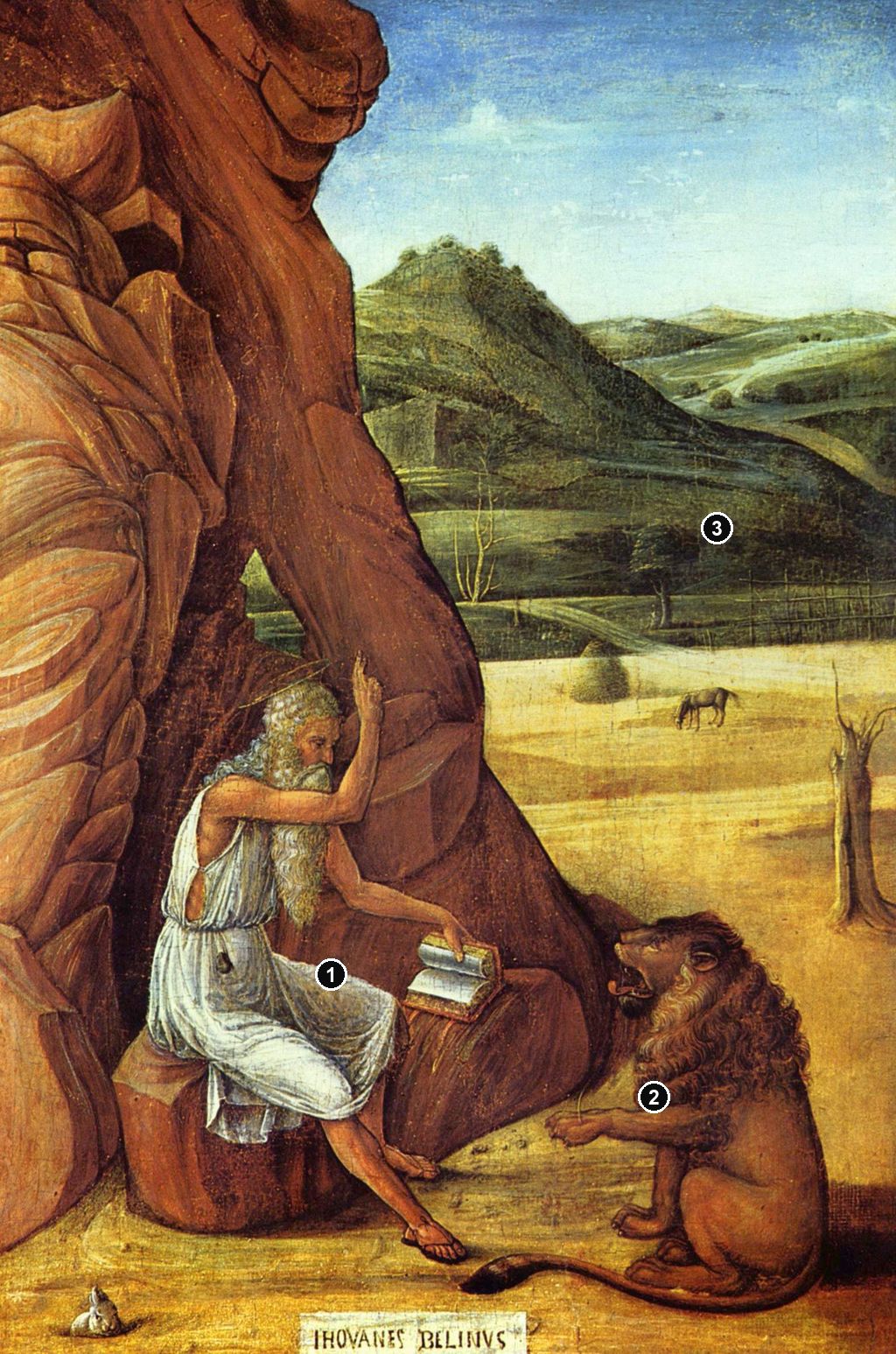
Details from SAINT JEROME AT THE BARBER INSTITUTE
The upright panel connects Jerome’s cave with the lion at his feet and the land beyond the rock.
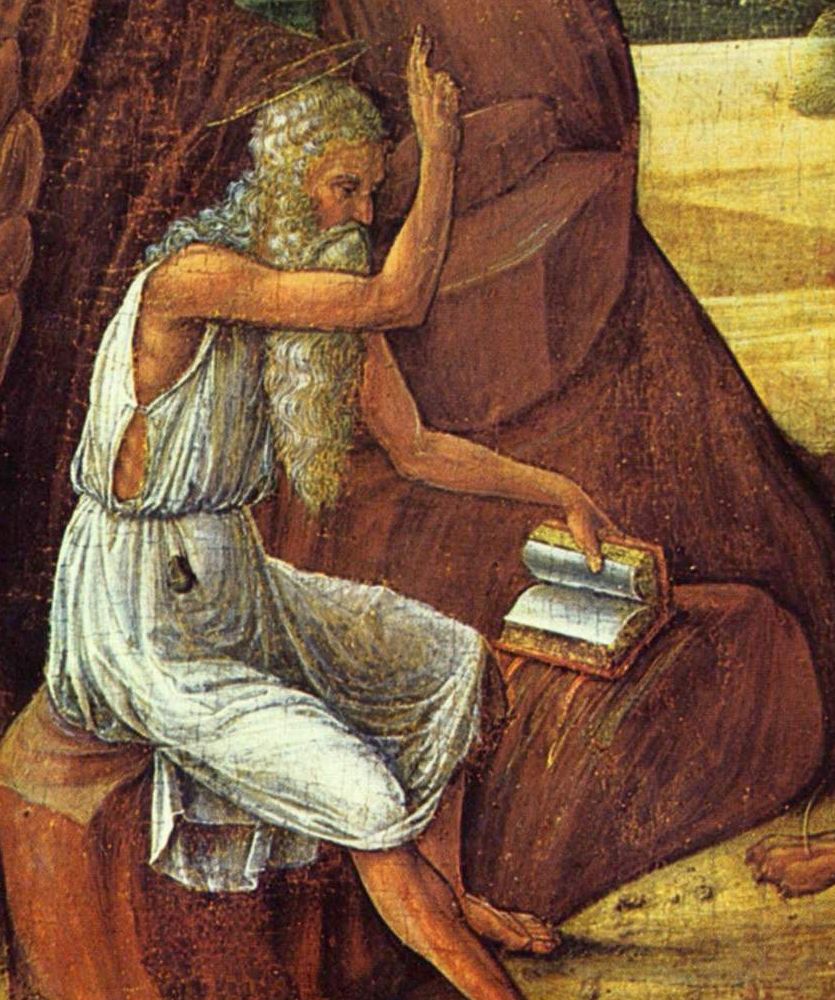
Jerome at his book
A book rests open near the saint’s knees. His diagonally stretched arm takes the eye from the rock shelter towards the lion.
The seated lion
The lion faces back towards Jerome. The angle of the paw brings the encounter into the clear space at the bottom of the painting.
Open country beyond the rock
The sharply modelled cliff gives way to green slopes and then paler fields and distant hills. The sudden change of scale makes the cave feel close.
Related reading
Artworks directory
Discussion
Look again at the images and ideas explored in St Jerome in the Desert by Giovanni Bellini. These editorial prompts invite your observations.
Reader Insights
What do Jerome’s arms tell you about his attention to the book and the lion?
How does the shape of the cliff affect the scale of the distant landscape?
What does the location of the signature add to your sense of the panel’s scale?
Join the Conversation
Share a detail, comparison or question about St Jerome in the Desert by Giovanni Bellini below.
References
- Barber Institute of Fine Arts, Giovanni Bellini, Saint Jerome in the Wilderness, accession 49.1 View source.
- Jacobus de Voragine, The Golden Legend, volume 5, “The Life of Saint Jerome”, Fordham Medieval Sourcebook View source.
- Jerome, Letter 22 to Eustochium, section 7, translated by W. H. Fremantle View source.
- Nicola Gauld and the Barber Institute, St Jerome in the Wilderness, National Inventory of Continental European Paintings View source.
- Pavel Kalina, “Hericiis et leporibus: Giovanni Bellini's St Jerome in Washington and the Idea of the Hermit's Life in Italy and Central Europe in the Early 16th Century”, Umění 60, no. 5 (2012), pp. 346–362 View source.
- Brigit Blass-Simmen, “Cultural Transfer in Microcosm”, in Padua and Venice, p. 10 and note 19 View source.
- Gemäldegalerie, Mantegna and Bellini, Berlin exhibition checklist View source.
- Gemäldegalerie, Mantegna und Bellini, wall texts, “Hieronymus” View source.
- Museu de Arte de São Paulo, Andrea Mantegna, São Jerônimo penitente no deserto View source.
- Musée du Louvre, Jacopo Bellini, Saint Jérôme dans le désert, album drawing View source.
- National Gallery, London, Giovanni Bellini, Saint Jerome reading in a Landscape, NG281 View source.
- Gallerie degli Uffizi, Giovanni Bellini, San Girolamo nel deserto, Contini Bonacossi no. 25 View source.
- National Gallery of Art, Washington, Giovanni Bellini, Saint Jerome Reading, 1939.1.217 View source.
- Christie, Manson & Woods, Davenport Bromley sale catalogue, June 1863, lot 59, digitised by the National Library of Scotland View source.
- J. Paul Getty Museum, Giovanni Bellini: Landscapes of Faith in Renaissance Venice, exhibition checklist View source.
- The Courtauld Gallery, The Barber in London: Highlights from a Remarkable Collection View source.