


 by Tom Gurney
Tom Gurney BSc (Hons) is an art history expert with over 20 years experience
Published on June 19, 2020 / Updated on November 29, 2026
Email: tomgurney1@gmail.com / Phone: +44 7429 011000
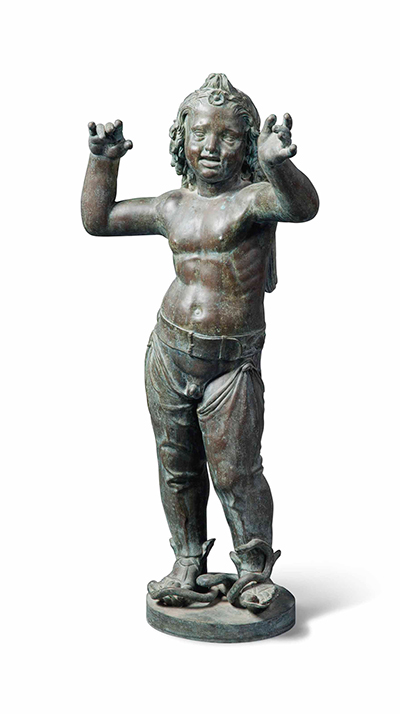
A bronze child throws both hands into the air, opens his mouth in laughter and steps across a snake. Seen from the front, the little wings at his ankles are more obvious than the feathered wings folded down his back. His trousers hang from a broad belt and leave his body exposed at the front and rear. Donatello made this partly gilded figure about 1435–40. The Museo Nazionale del Bargello in Florence keeps it under the conventional name Amore-Attis, also written Amor-Atys or Attis-Amorino. The bronze stands just over a metre high. Its subject has been debated for centuries. [1] [2]
A figure that turns as you move
Begin with the feet. One leg runs almost straight down from the hip, while the other angles outward. The difference gives the stance the uneven rhythm of a step. The snake runs across the toes and lifts its head beside one ankle. Above it, the folds pull diagonally towards the hips where the trousers are tied. The belt crosses the figure at another angle, then the ribcage twists and the shoulders lift unevenly. One hand reaches well above the child's head while the other opens at about the level of his face. The movement travels in a loose spiral from the base to the raised fingers.
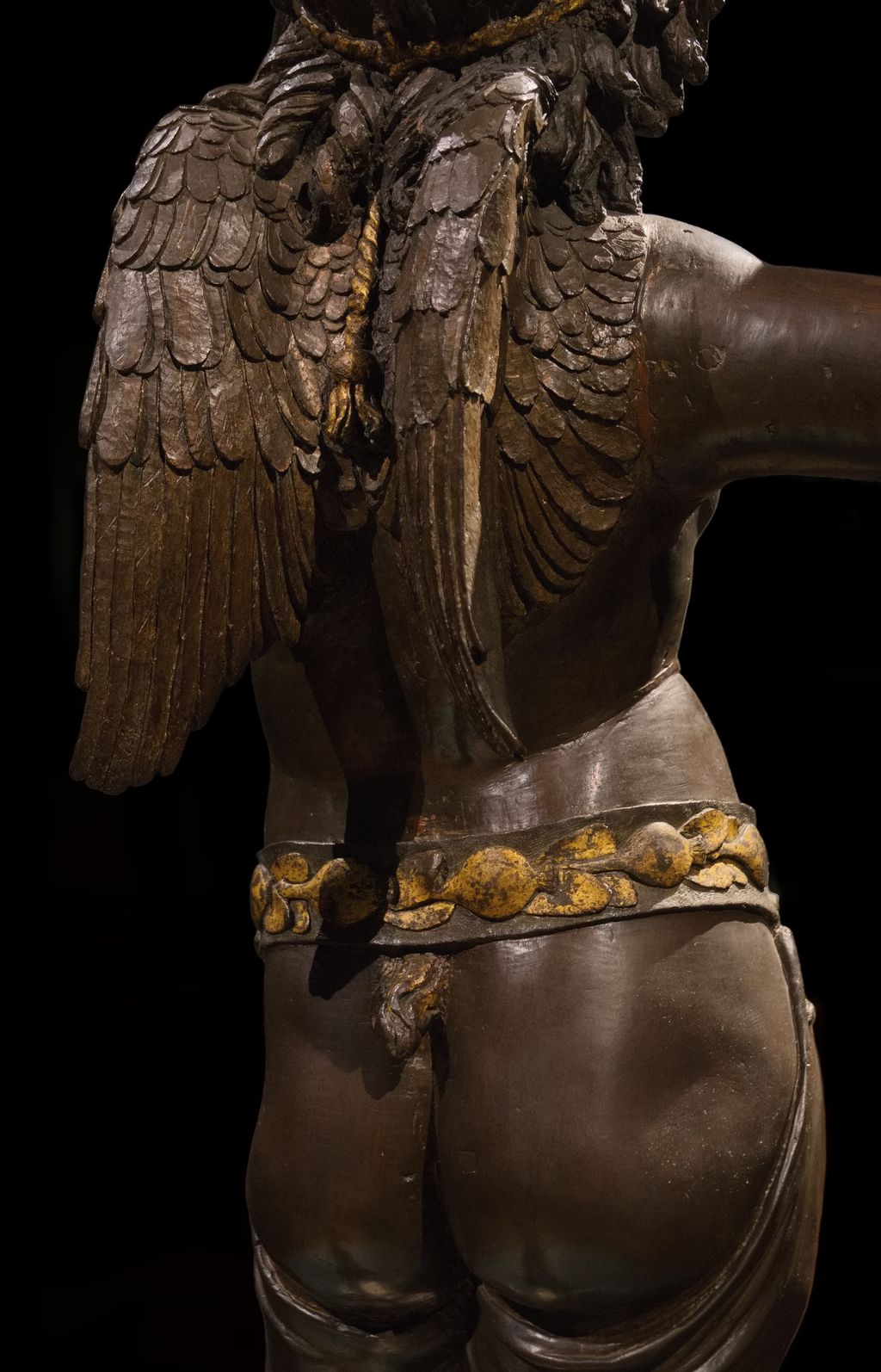
The figure from behind, where the wings, back and gathered costume pick up the turn. Armin Kleiner. Image source. CC BY-SA 4.0. Resized for the web.
From the front, the smooth belly and broad chest catch the light. Turn towards the side and the arms open up, leaving clear spaces between the elbows and torso. The higher hand has fingers that curl towards one another, while the other spreads as if to catch the air. The head tips up and the open mouth gives the impression of a laugh in progress. The snake's movement answers the child's. It twists along the ground while the figure straightens and turns above it. The child appears quite untroubled by what is underfoot. [2] [3]
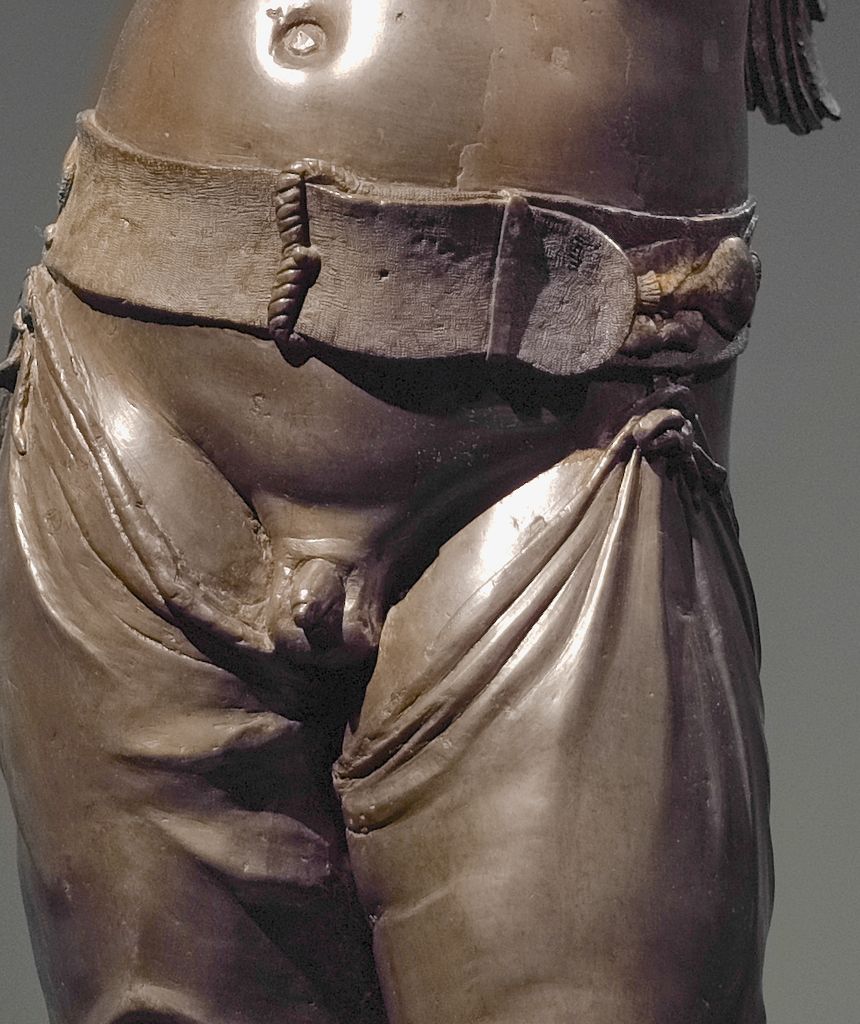
The back is the place to see how closely Donatello worked the feathers. Short, rounded ones overlap near the shoulders. Longer ones hang straight down, beside the cord that trails from the head. The belt looks comparatively plain near the buckle, but floral forms and rounded seedpods catch the light as it curves towards the back. Immediately below it is a small animal tail, easy to miss beneath the larger wings. A viewer who follows that succession of details around the sculpture has already seen why an account based on a single photograph can seem more conclusive than the object itself. [2]
Annotated Details from Amor-Atys
Select a number to jump to a detail of the sculpture.
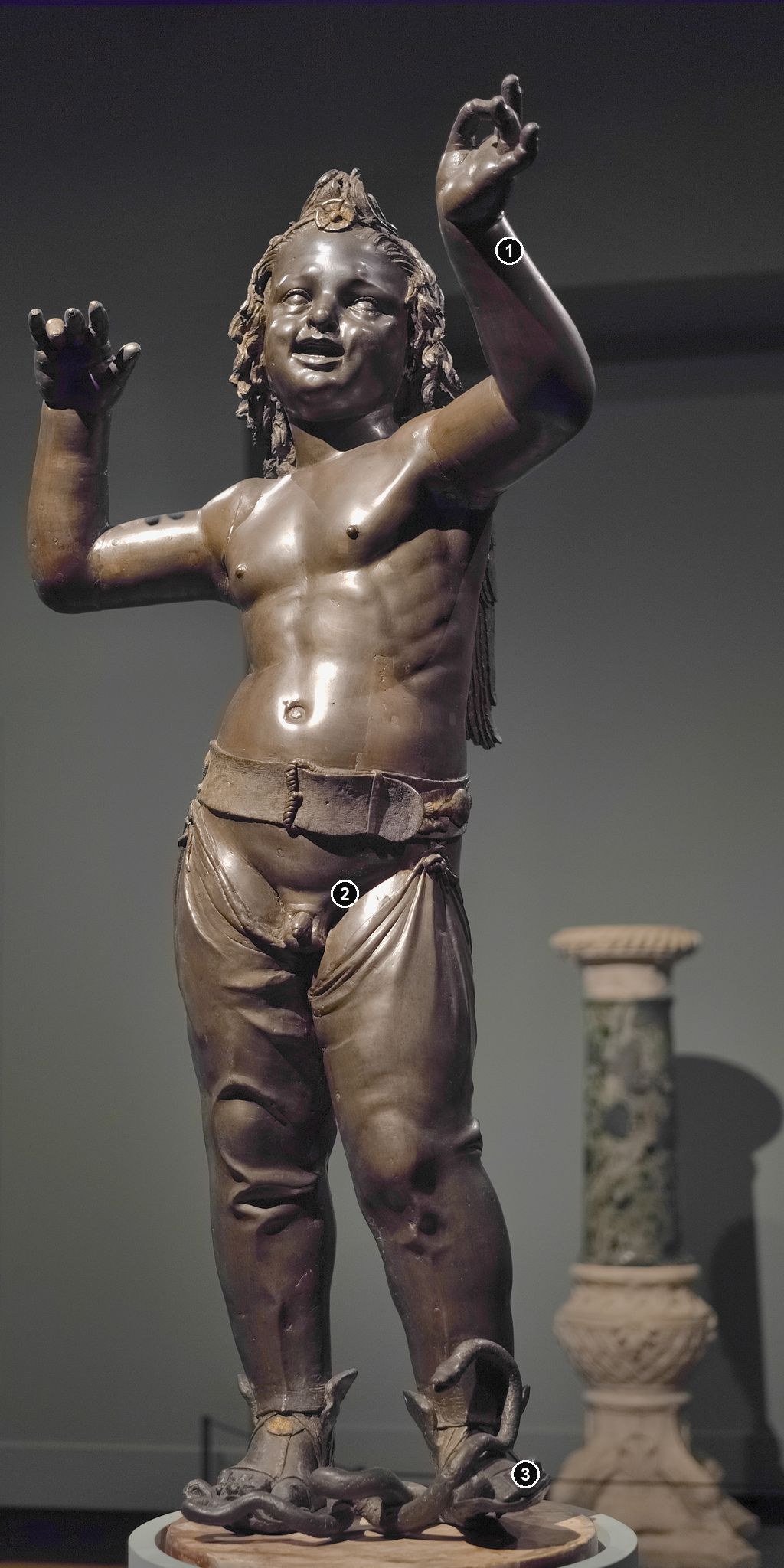
Details from AMOR-ATYS
Open a detail image to examine the surface more closely.
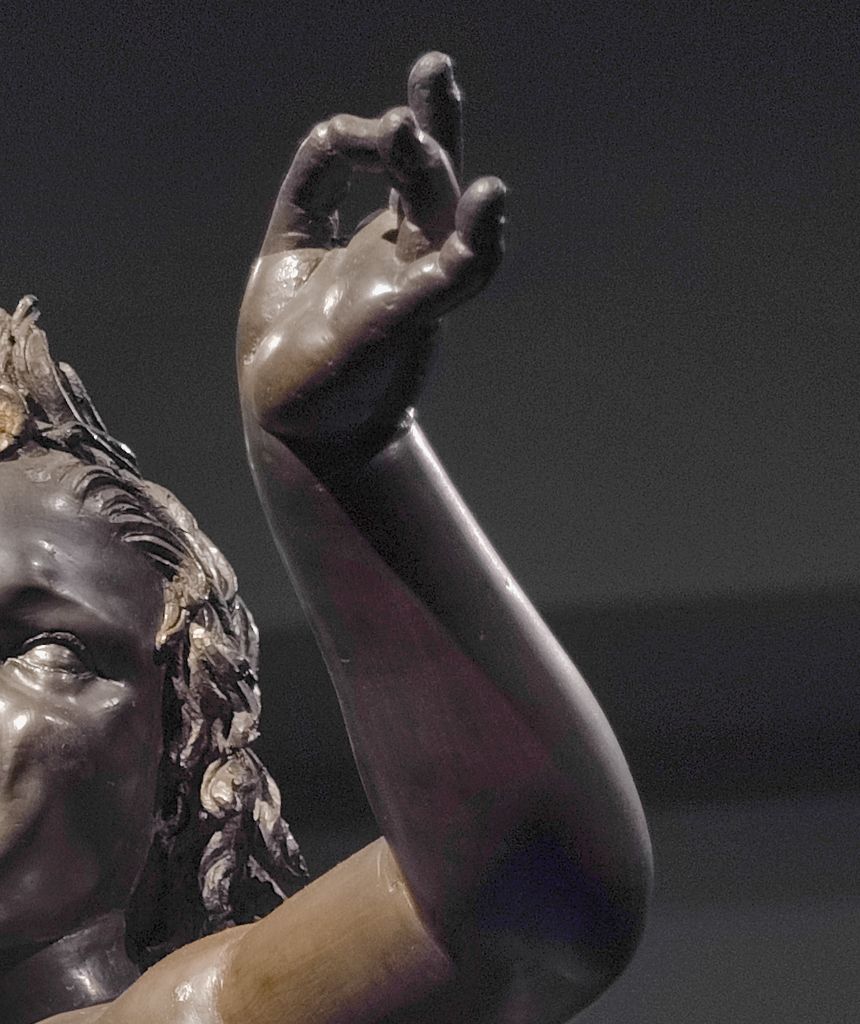
Raised arm and hand
The lift of the arm carries the gesture above the head. Open space between arm and body helps give the bronze a sense of movement.
The loose costume
The fabric gathers across the hips and opens over the legs. Its folds make the garment one of the sculpture’s most conspicuous attributes.
The serpent at the feet
The winding form at the base follows the outline of the feet. It is visible as an attribute even though its meaning remains debated.
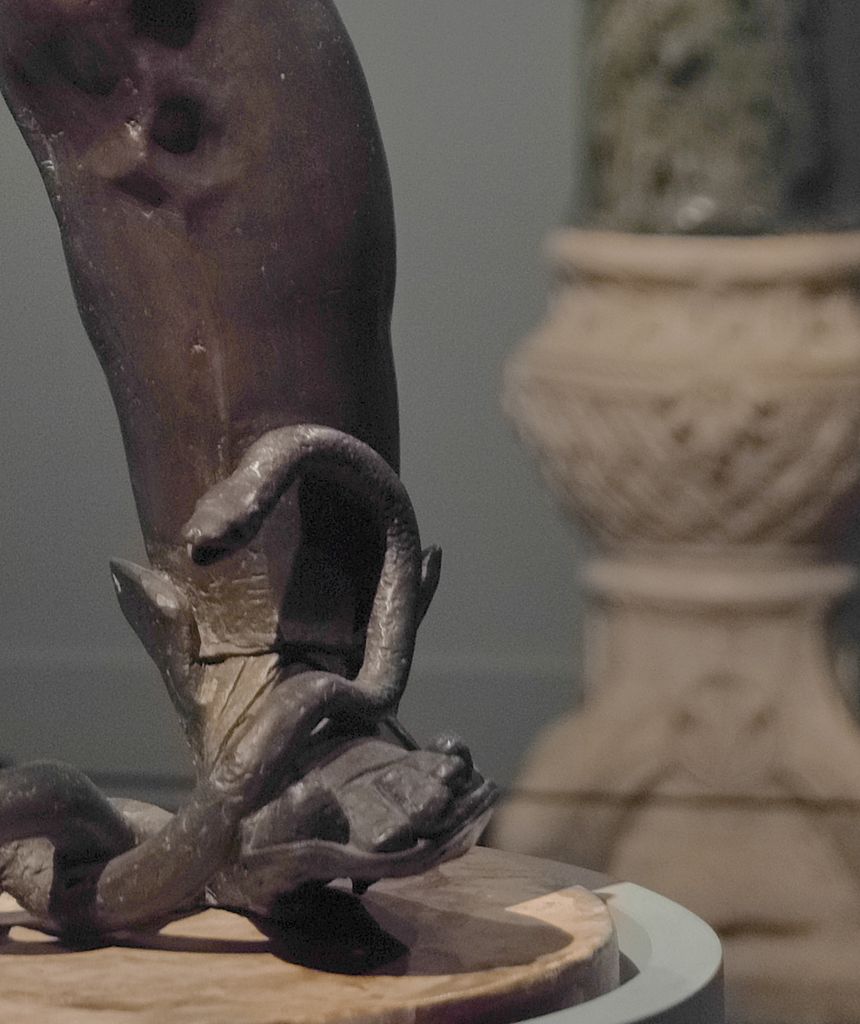
Annotated photograph and detail crops. Bautsch. Image source. CC0 / Public domain. Resized, annotated and cropped from the original photograph.
How Donatello made the bronze
The Italian national catalogue records lost-wax casting, chasing, gilding and patination. In lost-wax casting, a wax version of the figure is surrounded by a refractory mould. The wax is removed by heating and metal takes its place. Technical investigators Salvatore Siano and Giacomo Agresti drew attention to the relatively thin, even metal walls of Amor-Atys. From those walls and other features, they inferred that the body was made using an indirect process in which a mould was used to form the wax model, with accessories added in the course of making it. Their comparison with Donatello's bronze David gives a sense of his range as a bronze sculptor. The David has an internal armature and markedly more variable wall thickness, evidence for a directly modelled wax. [1] [4]
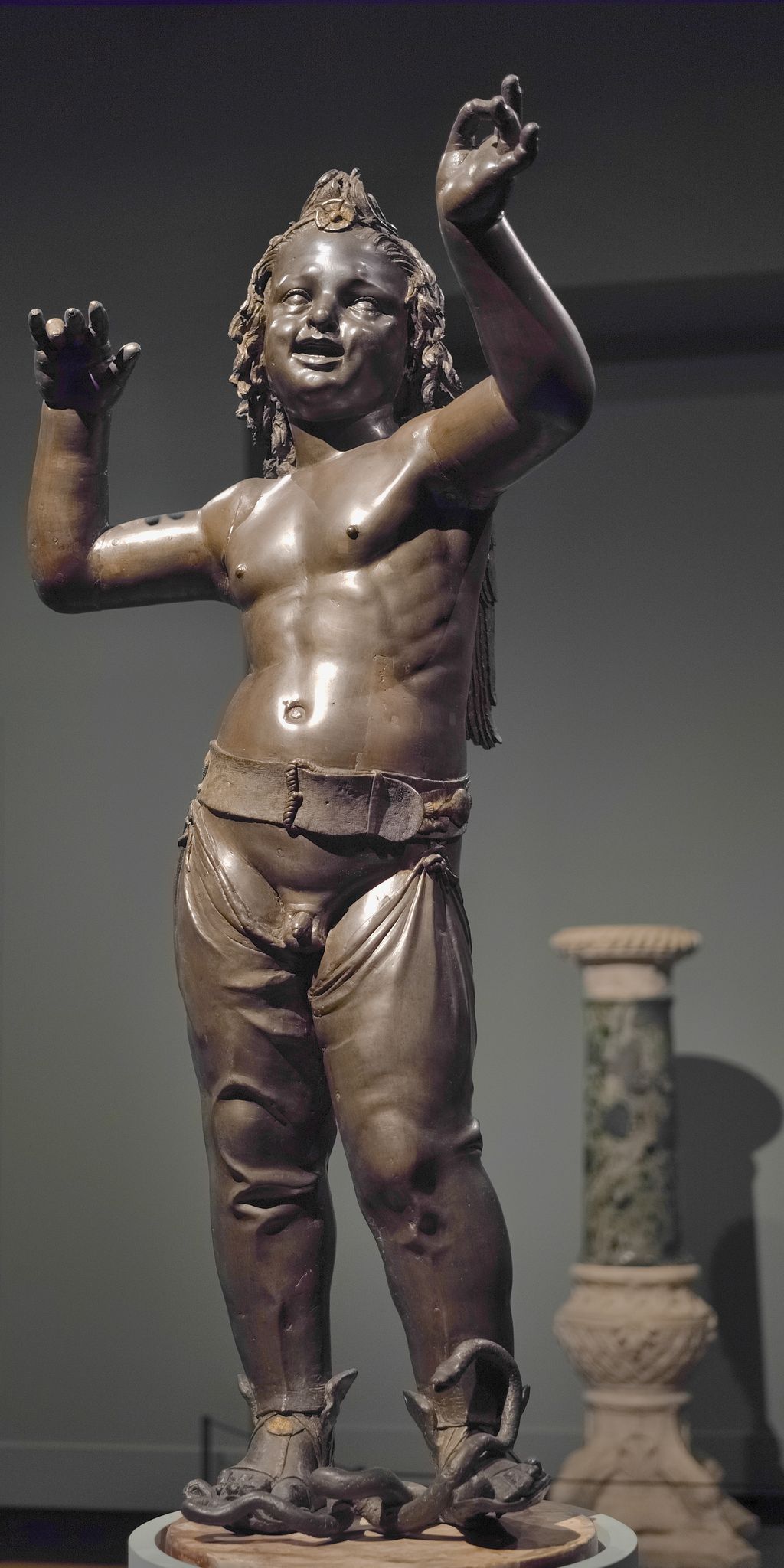
The Bargello bronze photographed on loan in Berlin in 2022. Gilding remains visible at the waist. Bautsch. Image source. CC0 / Public domain. Resized for the web.
Once the metal had cooled, chasing sharpened forms and textures at the surface. The smooth cheek runs into ridged locks of hair, and the small feathers cast narrow shadows on their neighbours. The belt, with its finely marked surface and conspicuous buckle, looks distinctly different from the bare skin above it. Bronze gives all these surfaces a common material, while the finish separates skin, hair, feather and costume. [1] [2]
In 2005 the Bargello exhibited the sculpture after treatment by the Opificio delle Pietre Dure. The conservators cleaned it selectively, using a laser for part of the work. Their cleaning brought out surviving gold leaf and areas of original patination. The remains of gold follow such details as the hair cord, the ornament above the forehead, the belt and the sandals. The treatment also stabilised an old fracture in the right arm. That repair matters to the way the work is seen, since the eye reads the lower raised hand in relation to the higher one. The catalogue for the Berlin exhibition reported that the 2005 examination supported the originality of the position of the arms and found no indication that the hands had once held an object. [2] [4] [5] [6]
Cupid, Mercury or Attis?
The little ankle wings explain why Giorgio Vasari called the figure Mercury. They recall the winged sandals of the gods' messenger. The feathers on the boy's back and his youthful appearance evoke Cupid, the Roman god of love, or his Greek counterpart Eros. A comparison with the Metropolitan Museum's later Cupid Bearing a Quiver and a Candle Socket, dated to the mid-sixteenth century, shows what an unambiguous attribute can do. The quiver identifies Cupid in a bronze made for a practical purpose. Donatello's child gives a viewer neither a quiver nor a visible bow, and the tail draws attention to a different part of the ancient world. [2] [3] [7]
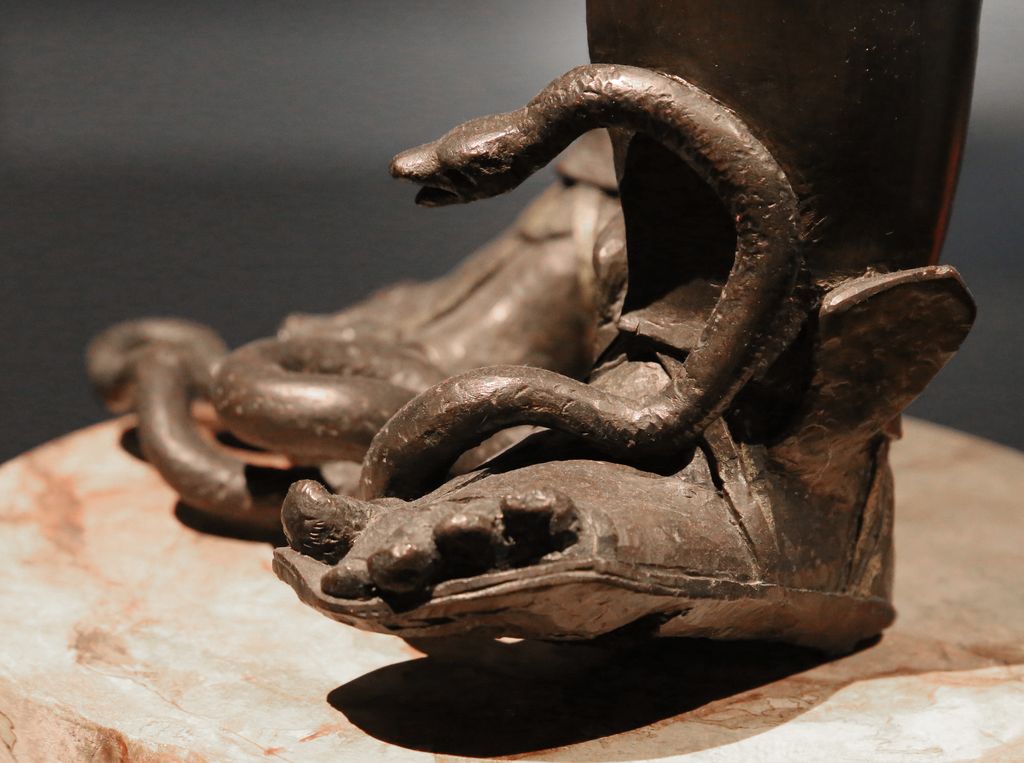
The footwear and serpent belong to the same figure. Their relationship is central to the competing identifications. Francesco Bini. Image source. CC BY-SA 4.0. Resized for the web.
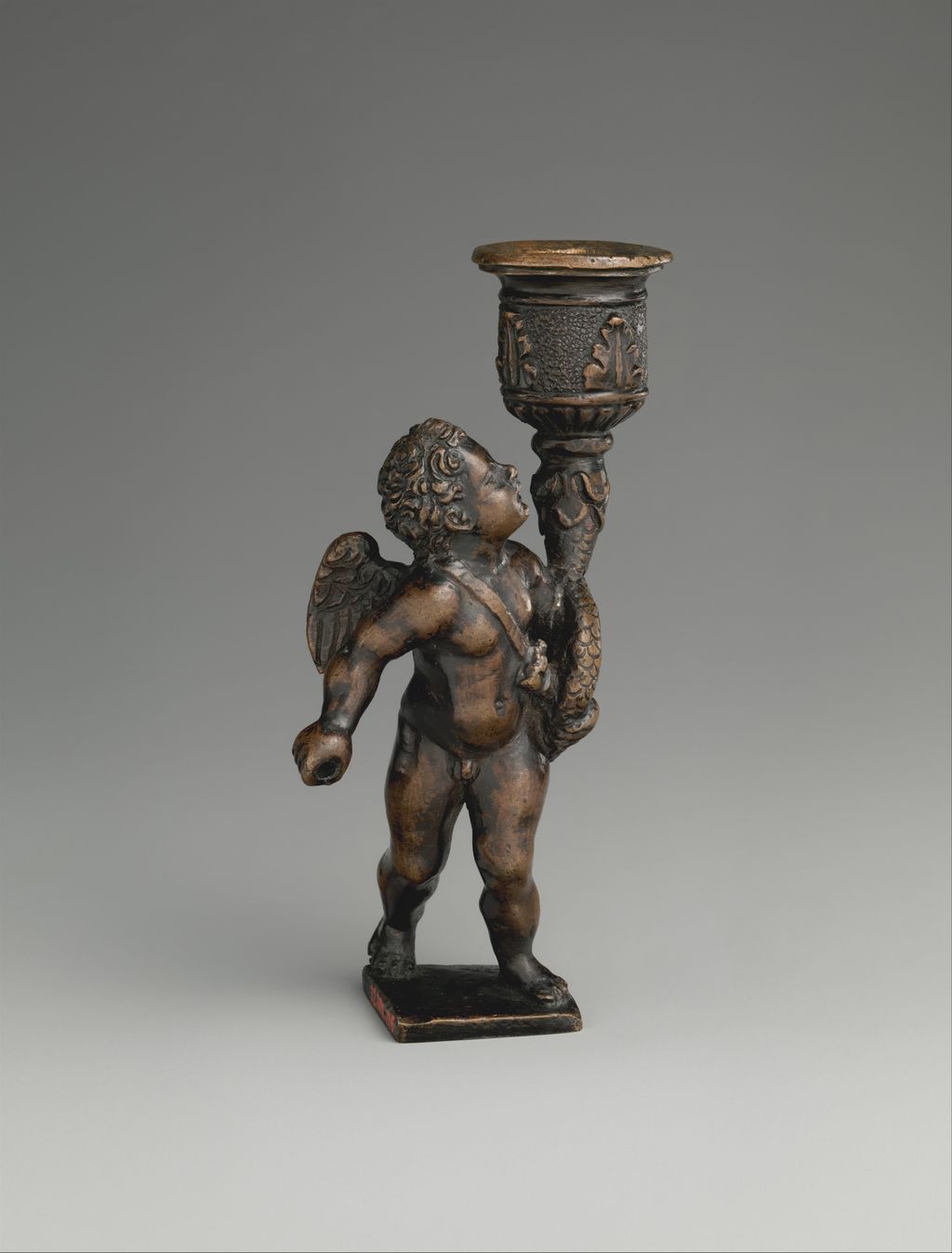
A separate winged figure from the Met, with a quiver as a recognizable attribute of Cupid. The Metropolitan Museum of Art, The Friedsam Collection, Bequest of Michael Friedsam, 1931. Image source. CC0 / Public domain. Resized for the web.
Attis, the Phrygian figure associated with the goddess Cybele, enters the discussion through the costume. Some ancient representations show him in trousers that open at the front. Here the garment is held at the hips, opens low at the front and exposes the buttocks below the belt. The long locks and laughing face give the child a character of his own. In 2022 Berlin exhibited the bronze in a group that included ancient images of Attis, a Cupid with grapes and a bronze satyr. Looking across those figures makes it possible to see the work's affinities with antiquity without identifying a single model that accounts for the whole sculpture. [1] [2] [8]
The tail also brought comparisons with fauns or Pan, and the snake recalled the story of the infant Hercules overpowering the serpents sent by Hera. The mood of the bronze is remarkably light for that episode. One antiquarian record offers Perseus, and a Doni inventory calls the boy Lucifer. Scholars have tried to explain his raised hands by imagining objects including grapes, a fish, a bow or dice. The evidence from the restored hands weakens those reconstructions. Each proposal tells us where a viewer started looking, whether at the costume, the ankle wings or the creature at the child's feet. [1] [2] [3] [5] [9]
Francesco Caglioti argues that the bronze's unusual combination of attributes is best understood as a sculptor's invention, with classical elements recombined for a new work. That reading makes room for the wit of the composition without assuming that its first audience held a single key to it. The art historian Ulrich Pfisterer has pointed to a broader Florentine taste for pictures and objects that invited competing interpretations. One writer describing a tournament banner in 1475 even relished the fact that its viewers disagreed on what it meant. Tamar Abramson has taken a further step, proposing that the bronze was designed as a riddle that could sustain conversation among learned viewers. The comparison with the tournament banner suggests why such a work might have been enjoyed in Florence. The identity of its first audience and what they made of it remain open. [9] [10] [16]
The Doni collection and a possible earlier patron
In the 1568 edition of his Lives, Vasari described a bronze Mercury by Donatello in the house of Giovanni Battista di Agnolo Doni. He singled out its odd dress and noted that it was made in the round. By the following century the Doni family displayed the bronze above a fireplace in their palace on Corso dei Tintori, and it came to be taken for an antiquity. The seventeenth-century scholar Giovanni Battista Doni sought advice from antiquarians including Lucas Holstenius and Giovanni Pietro Bellori. The comparison with Attis emerged from this period of inquiry. Giovanni Cinelli still discussed the work as ancient in 1677. [1] [2] [9] [11]
Pietro Bono Doni sold the bronze to the Florentine galleries in 1778. The national catalogue records a price of 600 scudi and dates its first display at the Uffizi to 25 June that year. The gallery antiquarian Luigi Lanzi connected it with Vasari's description and restored the attribution to Donatello. The bronze went to the Bargello in 1865. The museum identifies it today as one of the works in the Salone di Donatello, alongside both of the sculptor's Davids. [1] [5] [12]
The poppy pods on the belt may point to an owner earlier than the Doni. Caglioti identified the pods as a device used by the Bartolini Salimbeni family, a reading developed in the 2022 exhibition catalogues. A white and green marble pedestal in the Victoria and Albert Museum carries bunches of similar pods together with other family devices. Its dimensions are compatible with the bronze, but the pedestal is generally dated about 1465–70, several decades after the figure. If the two belonged together, the pedestal could have been made for a later installation. The emblems make a Bartolini Salimbeni commission plausible, while the bronze's first location and the exact identity of its patron remain undocumented. Imagining the bronze raised on a column changes the angle from which we meet the child's lifted face and see the animal at his feet. [2] [9] [13]
What other winged children can tell us
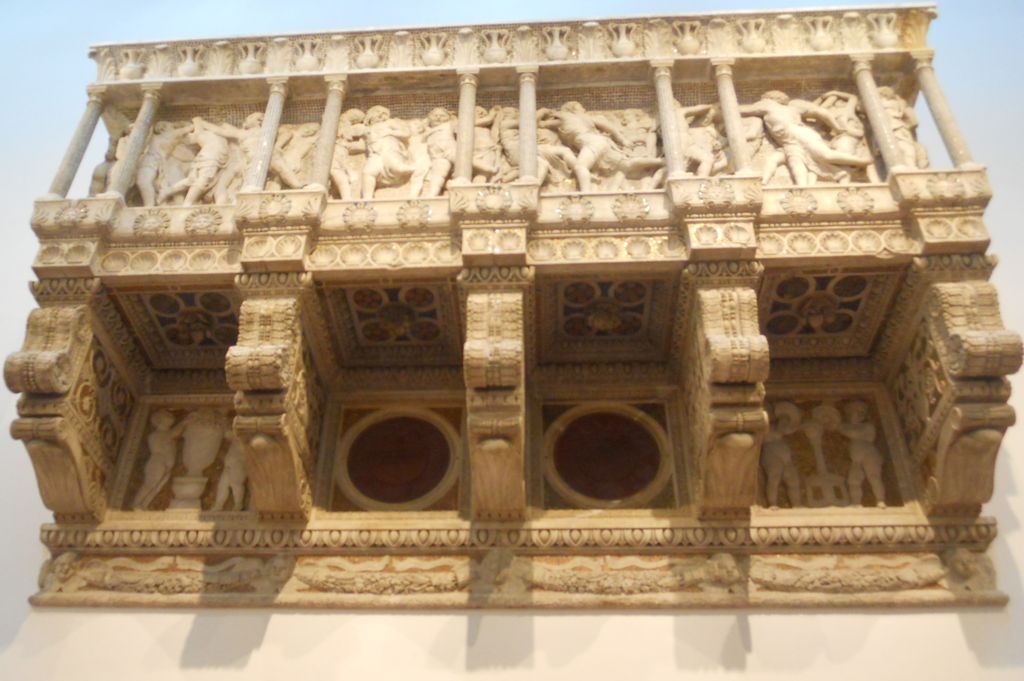
The word spiritello, or little spirit, was used for lively children of the sort Donatello repeatedly adapted from ancient art. Two bronze candle-bearing figures now at the Musée Jacquemart-André in Paris were made for Luca della Robbia's choir loft in Florence Cathedral. Caglioti has used their resemblance to Amor-Atys to argue for a date in the later 1430s. The children in Donatello's own Cantoria make a different comparison. In the relief the figures dash past columns and reappear in the gaps. In Amor-Atys the child has nothing around him to measure his step against. The hips, shoulders and lifted hands mark the rhythm themselves. [1] [9] [13]
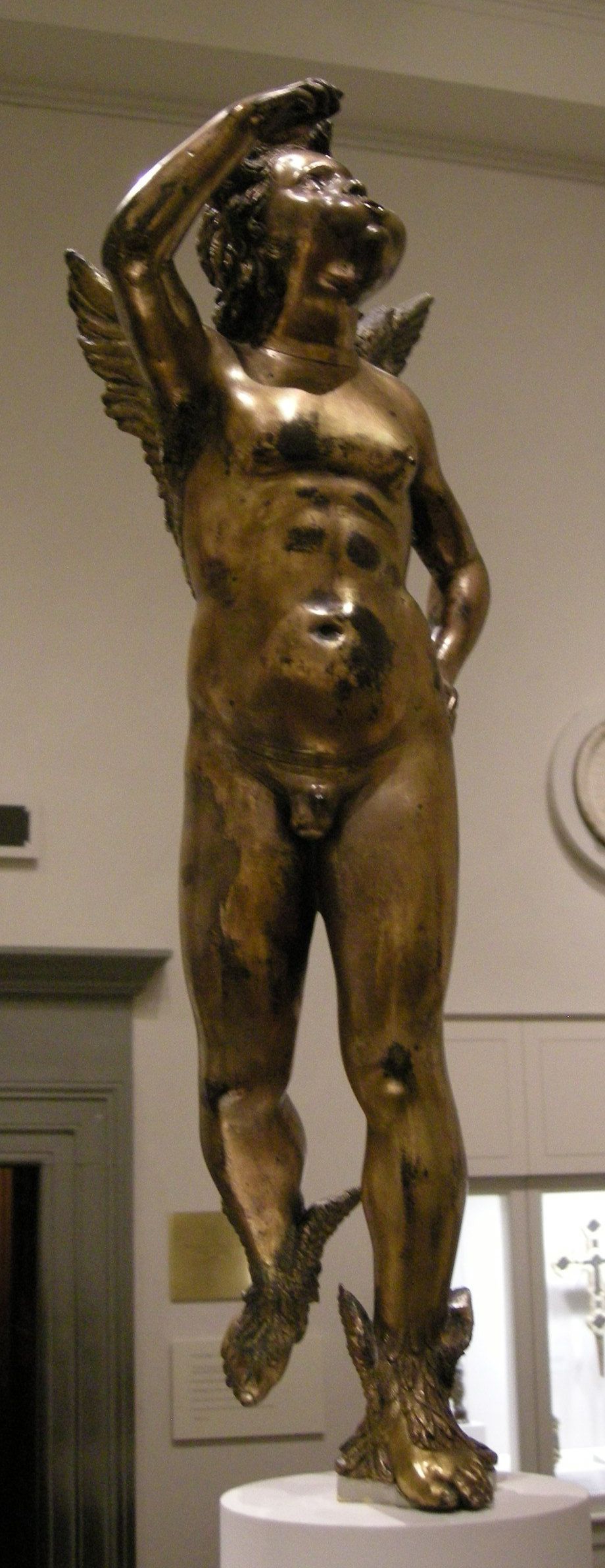
The Met’s Sprite, an independent fountain figure attributed to a sculptor or metalsmith close to Donatello. Sailko. Image source. CC BY-SA 3.0. Resized for the web.
Other bronzes show what can be established about a figure's use when its material structure supplies a clue. The V&A's Winged Putto with a Fantastic Fish stands on a tortoise and carries a fish across his shoulders. An opening at the back and channels for water identify it as a fountain figure. The museum considers the cast probably based on a model by Donatello. A different fountain bronze, the Met's Sprite, has winged shoulders and ankles and a small tail, all features that recur on the Bargello child. There too, physical evidence of piping establishes how it functioned. The Met attributes its figure to a sculptor or metalsmith close to Donatello. These works show how readily a winged child could be adapted for a specific setting. The Bargello bronze still leaves open what kind of setting its first owner chose. [14] [15]
Donatello sculpture directory
| Name | Date | Medium and record |
|---|---|---|
| Marble David | 1408–09, adapted 1416 | Carved Carrara marble Catalogue. |
| Saint John the Evangelist | c. 1409–15 | Carved marble Catalogue. |
| Saint Mark | 1411–13 | Carved Carrara marble Catalogue. |
| Saint George and its dragon relief | c. 1415–17 | Marble statue and marble relief Catalogue. |
| Marzocco | c. 1417–20 | Carved sandstone Catalogue. |
| Saint Louis of Toulouse, Florence | 1418–25 | Gilt bronze and mixed media Catalogue. |
| Pazzi Madonna | c. 1420s | Marble relief Catalogue. |
| Reliquary Bust of Saint Rossore | c. 1420s | Gilt bronze Catalogue. |
| The Prophet Jeremiah | 1420s–30s, disputed | Marble Catalogue. |
| Zuccone | c. 1420s–30s | Marble Catalogue. |
| Feast of Herod, Siena | 1420s | Gilded bronze relief Catalogue. |
| Ascension with Christ Giving the Keys to Saint Peter | c. 1428–30 | Marble relief Catalogue. |
| Cantoria | 1433–39 | Marble and mosaic Catalogue. |
| Amor-Atys | c. 1435–40 | Partly gilded bronze Catalogue. |
| Bronze David | c. 1435–40, disputed | Partly gilded bronze Catalogue. |
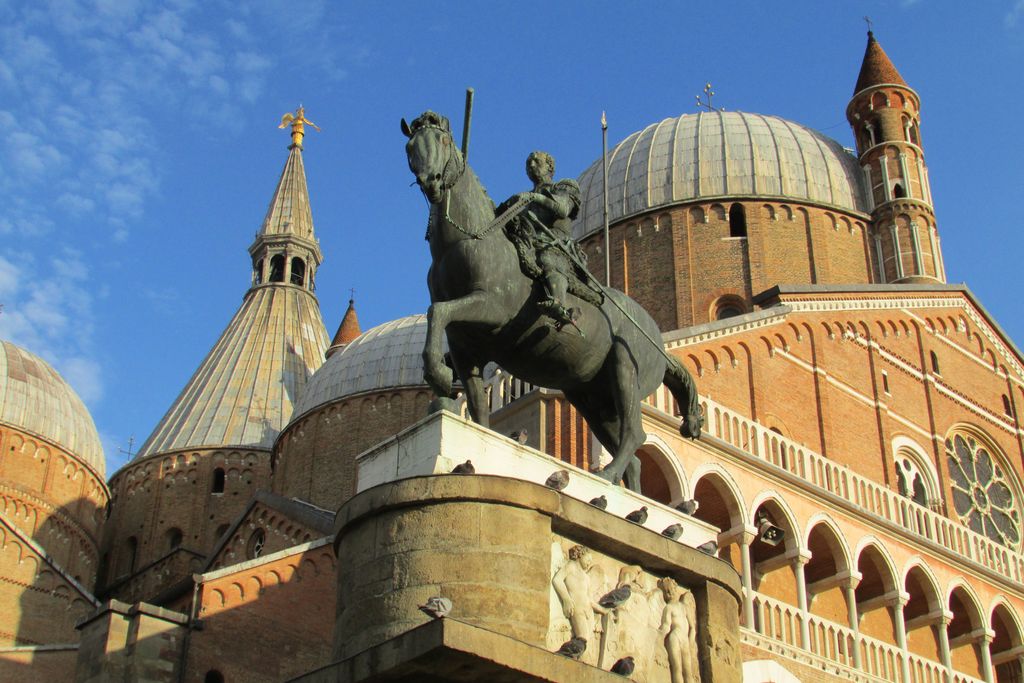
| Gattamelata | Installation agreement, 1453 | Bronze and stone Catalogue. |
| Santo altar | Mid-fifteenth century | Bronze and limestone ensemble Catalogue. |
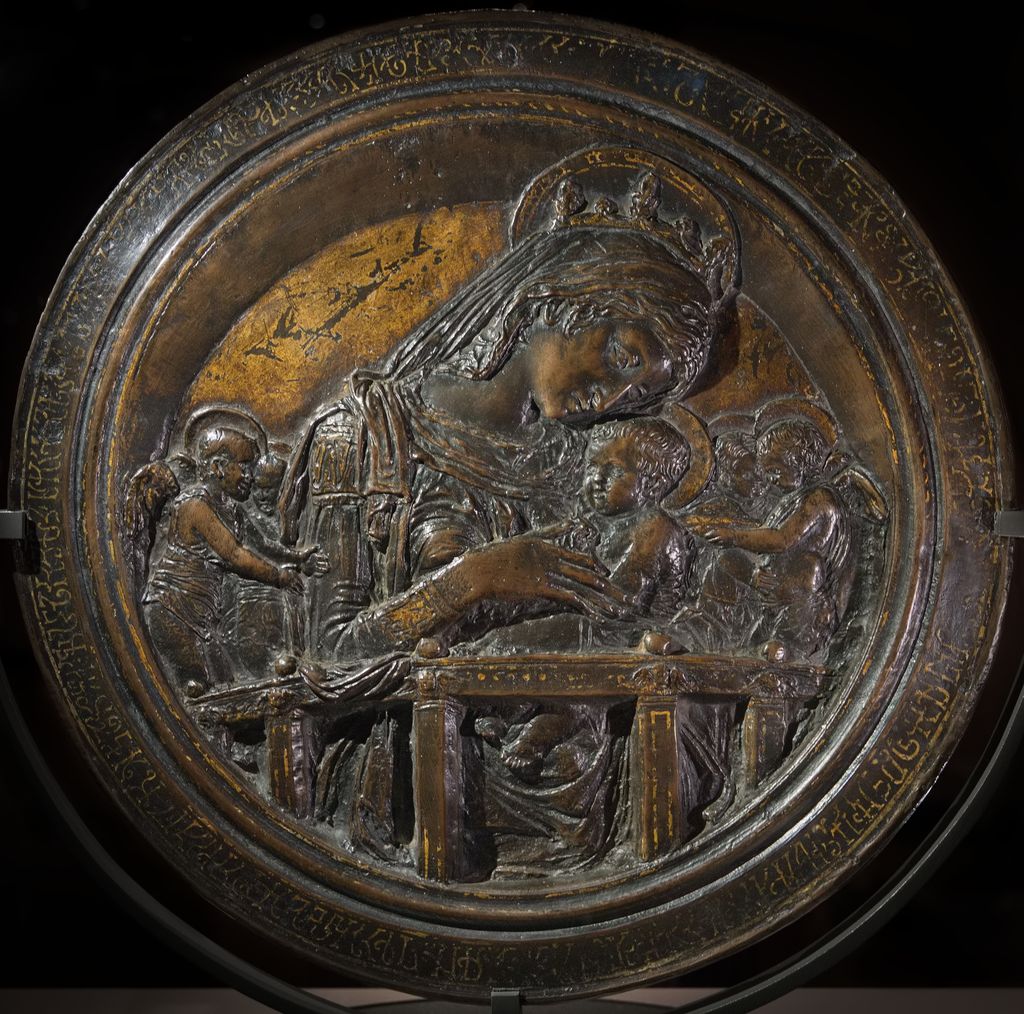
| Chellini Madonna | Given in 1456 | Partly gilded bronze tondo Catalogue. |
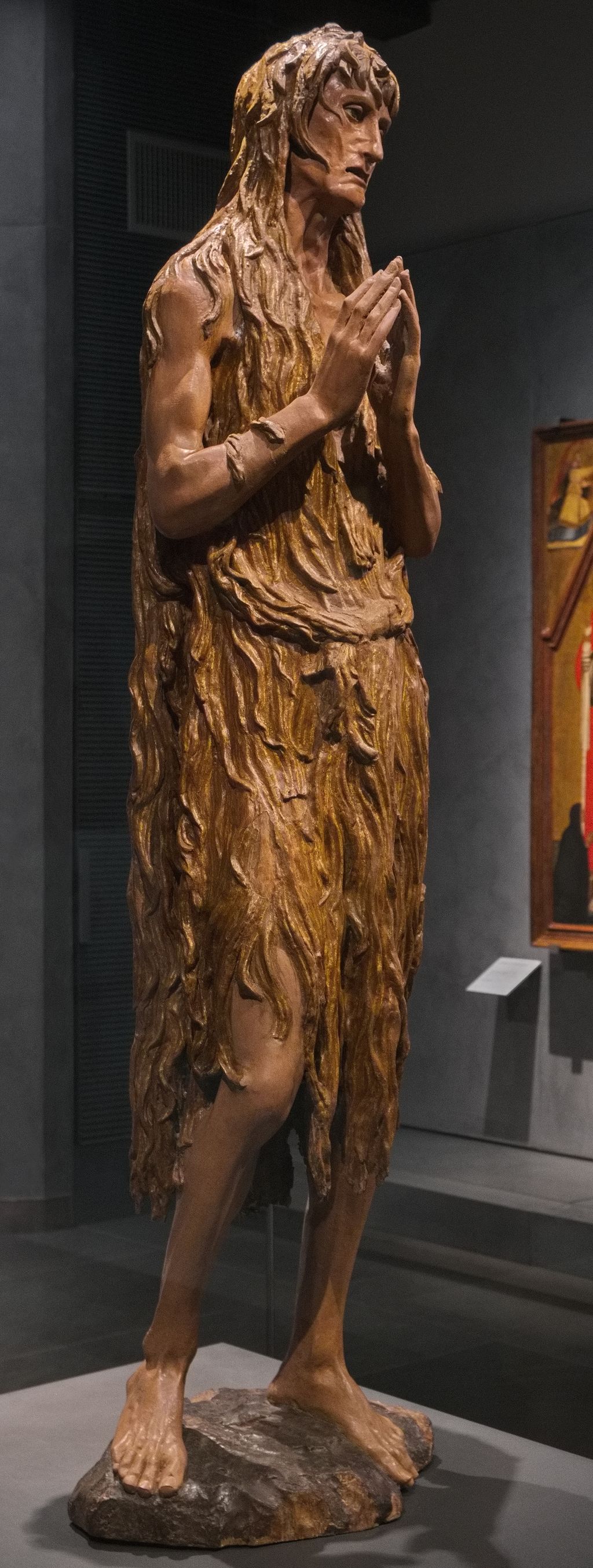
| Penitent Magdalene | c. 1453–55 (Opera) | Poplar, stucco, pigments and gold Catalogue. |
| Judith and Holofernes | Late 1450s–early 1460s | Bronze with surviving gilding Catalogue. |
| Pulpit of the Passion | Late work and later assembly | Bronze reliefs, Donatello and collaborators Catalogue. |
| Bust traditionally called Niccolò da Uzzano | Fifteenth century | Painted terracotta, attribution disputed Catalogue. |
| Prato Cathedral exterior pulpit | Commissioned 1428; carved 1430s | Marble reliefs, Donatello and Michelozzo Catalogue. |
| Cavalcanti Annunciation | c. 1433–35 | Gilded sandstone and terracotta Catalogue. |
| Crucifix at Santa Croce | Early fifteenth century | Painted wood Catalogue. |
| Madonna of the Clouds | c. 1425–35 | Marble relief Catalogue. |
| Old Sacristy Doors | Fifteenth century | Two paired bronze doors Catalogue. |
| Resurrection Pulpit | Late work and later assembly | Bronze reliefs, Donatello and collaborators Catalogue. |
| Brancaccio tomb | 1420s | Donatello, Michelozzo and assistants, mixed materials Catalogue. |
| Saint John the Baptist, Venice | 1438 | Polychromed and gilded wood Catalogue. |
| Sacrifice of Isaac | Early fifteenth century | Donatello and Nanni di Bartolo, marble Catalogue. |
| Madonna of Via Pietrapiana | Mid-fifteenth century | Terracotta Catalogue. |
| Miracle of the Mule | Mid-fifteenth century | Gilded bronze panel for the Santo altar Catalogue. |
| Padua Crucifix | Mid-fifteenth century | Cast bronze Catalogue. |
| Dancing Spiritello, Bargello | Fifteenth century | Bronze Catalogue. |
| Young Prophet from the Porta della Mandorla | c. 1404–09 | White marble, attributed to Donatello Catalogue. |
| Prophet or Apostle from the Duomo north tribune | Early fifteenth century | White marble, possibly Donatello Catalogue. |
| Beardless Prophet | 1415–18 | White marble Catalogue. |
| Sibyl and Prophet of the Porta della Mandorla | 1422 | Carved marble heads for the portal Catalogue. |
| Faith, Siena baptismal font | 1420s | Gilded bronze figure Catalogue. |
| Hope, Siena baptismal font | 1420s | Gilded bronze figure Catalogue. |
| Feast of Herod, Lille | c. 1430 | Carrara marble relief Catalogue. |
| Piot Madonna | c. 1440–60 | Polychrome terracotta with glass and wax inlays Catalogue. |
| Carafa Horse Head | c. 1456–58 | Cast bronze Catalogue. |
| Pazzi Madonna workshop version, Louvre | c. 1450 | Polychrome gesso, Donatello’s workshop Catalogue. |
| Pazzi Madonna tondo, Rijksmuseum | c. 1425–50 | Plaster and stucco, after Donatello Catalogue. |
| Sprite | c. 1430–40 | Bronze, sculptor or metalsmith close to Donatello Catalogue. |
Discussion
Look again at the images and ideas explored in Amor-Atys. These editorial prompts invite your observations.
Reader Insights
What do you see first when you walk around the figure, and which details only become clear when it turns away from you?
Which attribute would you start with if you had to explain one of the possible identities?
Join the Conversation
Share a detail, comparison or question about Amor-Atys below.
References
- Italian Ministry of Culture, Amore-Attis. Putto alato, national catalogue record 0900006743, Bargello Bronzi 448. View source.
- Neville Rowley and Francesco Caglioti, catalogue entries 42 and 43 in Donatello. Inventor of the Renaissance, E. A. Seemann, 2022, pp. 214–17. View source.
- Neville Rowley, “Bildhauerei mit Perspektive,” MuseumsJournal, 2022, Staatliche Museen zu Berlin. View source.
- Salvatore Siano and Giacomo Agresti, “Archaeometallurgical characterisation of Donatello's Florentine copper alloy masterpieces using portable laser-induced plasma spectroscopy and traditional techniques,” Studies in Conservation, 60, sup. 1, 2015, fig. 6. View source.
- Fondazione il Bargello, Il ritorno d’Amore. L’Attis di Donatello restaurato, exhibition archive, 2005–06. View source.
- Light for Art, Statua dell’Attis di Donatello, account of selective laser cleaning and surviving gilding. View source.
- The Metropolitan Museum of Art, Cupid Bearing a Quiver and a Candle Socket, collection object 197054. View source.
- Staatliche Museen zu Berlin, Donatello. Erfinder der Renaissance, exhibition checklist, “Spiritelli” section, 2022. View source.
- Francesco Caglioti, “L’‘Amore-Attis’ di Donatello, caso esemplare di un’iconografia ‘d’autore’,” in Il ritorno d’Amore. L’‘Attis’ di Donatello restaurato, ed. Beatrice Paolozzi Strozzi, S.P.E.S., 2005, pp. 31–74. View source.
- Ulrich Pfisterer, “Capolinea Donatello?”, Mitteilungen des Kunsthistorischen Institutes in Florenz, 65, 2023, “Significato: fase centrale.” View source.
- Giorgio Vasari, “Vita di Donato, scultore fiorentino,” in Le vite de’ più eccellenti pittori, scultori, et architettori, Giunti, 1568. View source.
- Musei del Bargello, Museo Nazionale del Bargello: riapre al pubblico il Salone di Donatello, 18 April 2025. View source.
- Fondazione Palazzo Strozzi and Musei del Bargello, Donatello, The Renaissance, English exhibition checklist, entries 5.4 and 5.6–7, 2022. View source.
- Victoria and Albert Museum, Winged Putto with a Fantastic Fish, 475-1864, collection record O16283. View source.
- The Metropolitan Museum of Art, Sprite, accession 1983.356, collection object 207394. View source.
- Tamar Abramson, “The Donatello Code: Attis-Amorino as a Pre-Emblematic Riddle,” Emblematica, vol. 5, 2023, journal abstract. View source.
- Victoria and Albert Museum, Donatello’s David. View source
- Opera del Duomo, Donatello and the Opera del Duomo. View source
- Ministero della Cultura, David with the Head of Goliath, Bargello bronze. View source
- Save Venice, Donatello’s Equestrian Monument to Gattamelata. View source
- Opificio delle Pietre Dure, L’ultimo Donatello. View source
More DONATELLO Sculptures
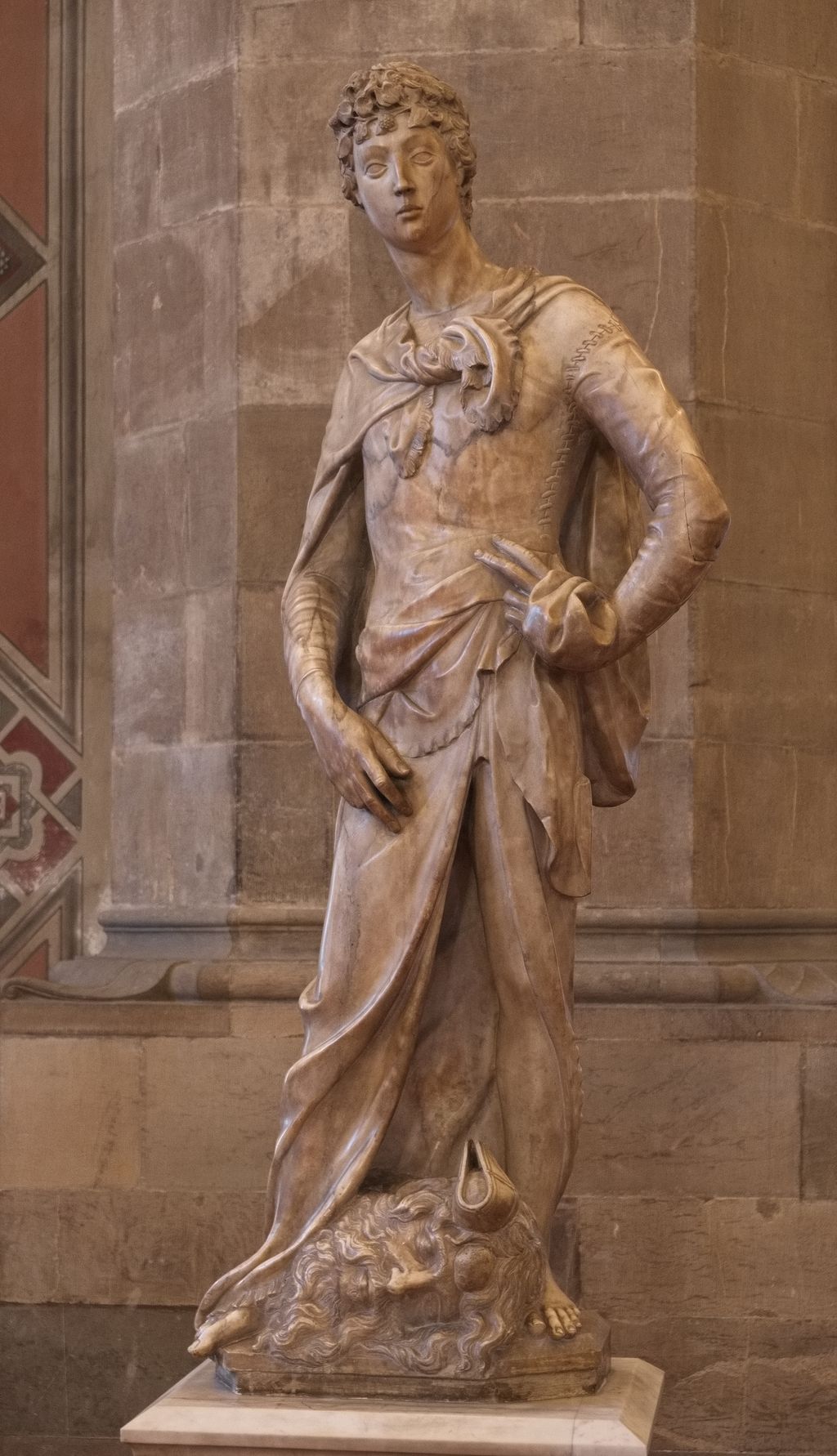
Marble David
Armin Kleiner. Image source. CC BY-SA 4.0. Resized for the web.
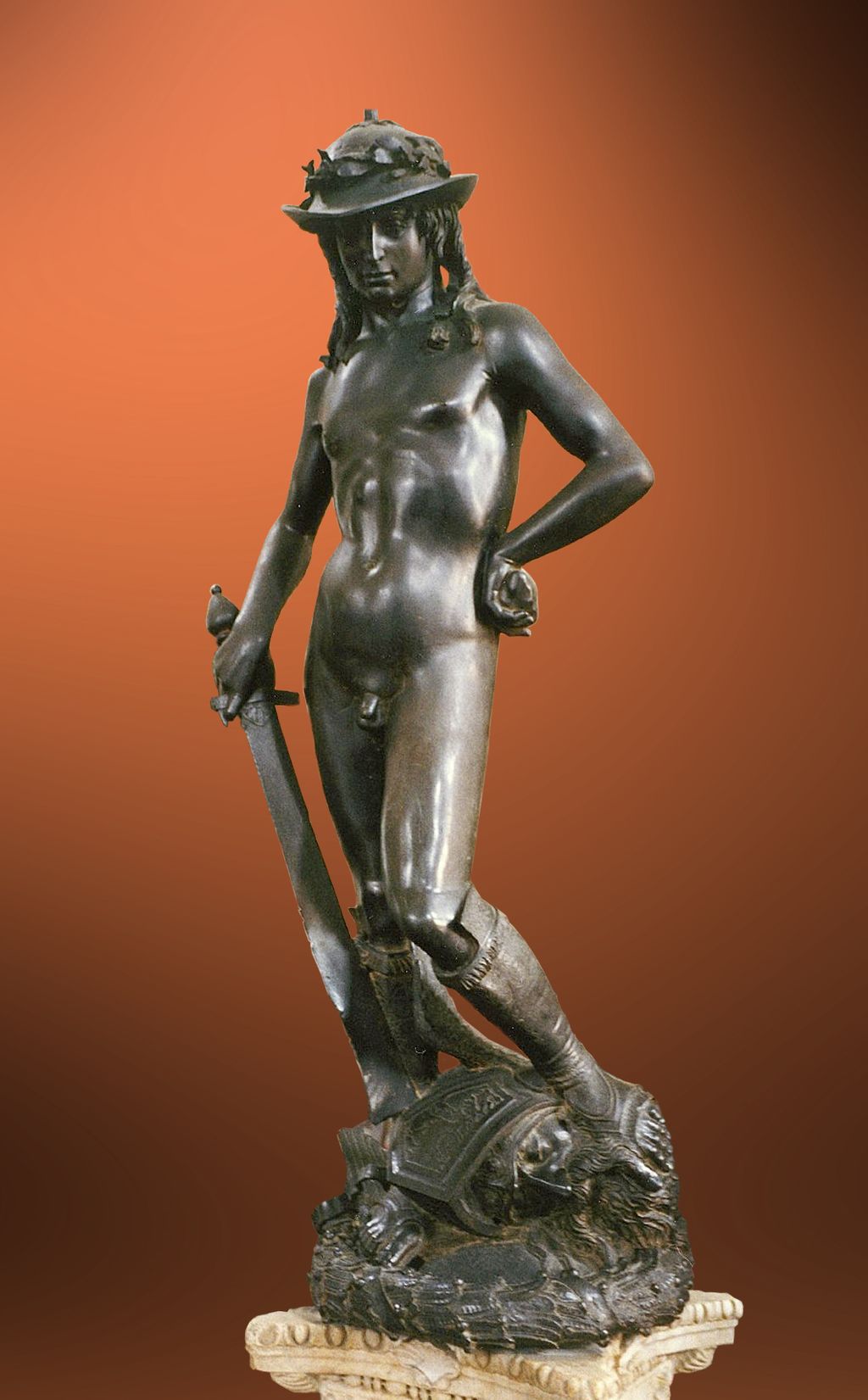
Bronze David
Patrick A. Rodgers. Image source. CC BY-SA 2.0. Resized for the web.
Cantoria
Erik Drost. Image source. CC BY 2.0. Resized for the web.
Gattamelata
Chris Light. Image source. CC BY-SA 4.0. Resized for the web.
Penitent Magdalene
Armin Kleiner. Image source. CC BY-SA 4.0. Resized for the web.
Chellini Madonna
Armin Kleiner. Image source. CC BY-SA 4.0. Resized for the web.
