


 by Tom Gurney
Tom Gurney BSc (Hons) is an art history expert with over 20 years experience
Published on June 19, 2020 / Updated on November 29, 2026
Email: tomgurney1@gmail.com / Phone: +44 7429 011000
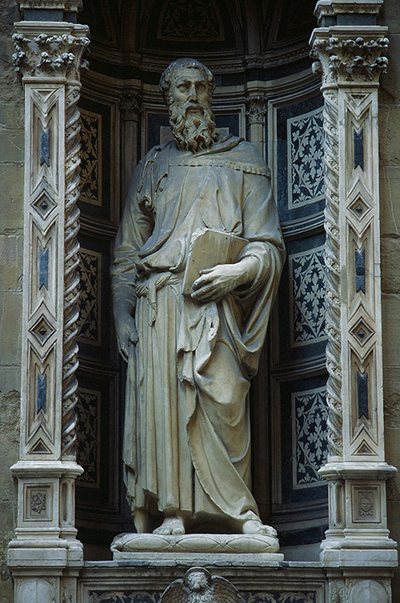
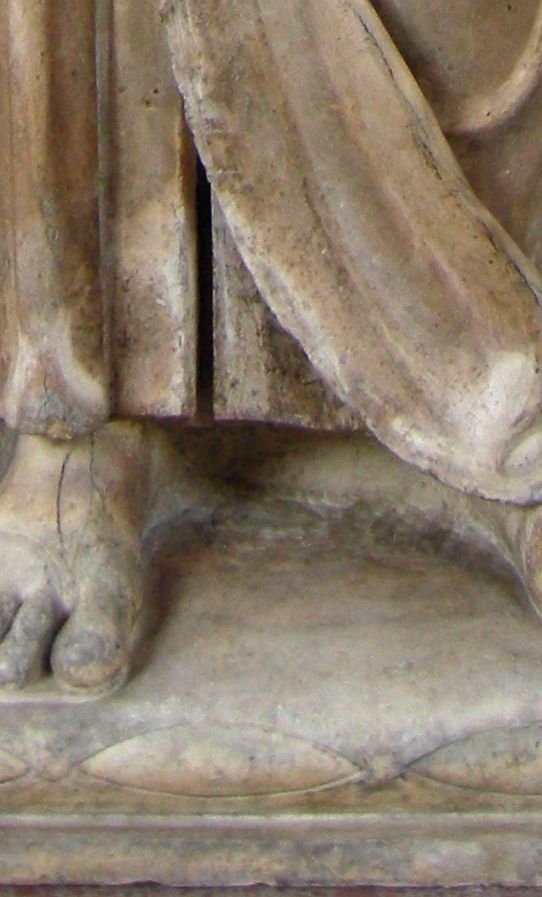
Donatello’s Saint Mark stands on a cushion. The right sandal sinks slightly into it, while the other foot, carrying less weight, has room to lift. Donatello carved the soft cushion and the man pressing down on it from the same block of Carrara marble. More than two metres tall, the statue originally stood above the street on the south side of Orsanmichele in Florence. The linen guild’s patron saint looked as though he could shift his weight again at any moment. Today the original is upstairs in the Museo di Orsanmichele, while a replica stands in the old niche. Each view preserves something the other cannot show. [1] [2] [3]
The linen guild’s commission
Orsanmichele began as a grain market. Florence’s government used the upper halls to store grain, and the market loggia below became a church. In 1339 the city called on its leading trade guilds to provide images of their patron saints for the pillars. The project gathered pace decades later. In the early fifteenth century, a guild could commission a patron saint and a carved setting in full view of what its rivals had already put up. [4] Among them were the Arte dei Linaioli e Rigattieri, the guild of linen drapers and dealers in second-hand clothing. The guild chose Mark the Evangelist, shown as a bearded man carrying the Gospel, his fingers gathered around the closed book. The surrounding tabernacle carries both the guild’s emblem and Mark’s customary lion. The stone frame identified the patron alongside the saint. [1] [3] [5] [6]
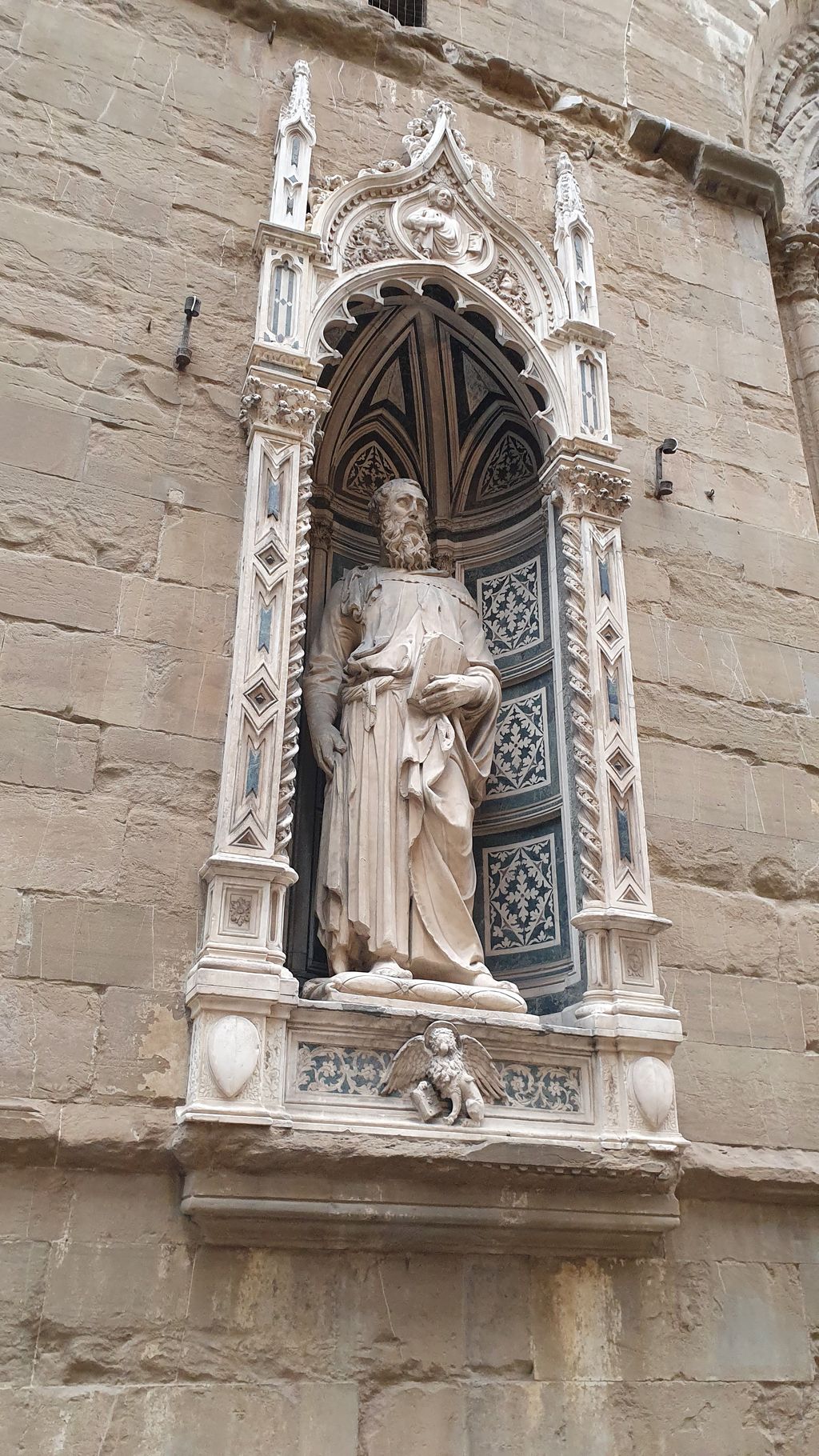
A replica of Saint Mark in the original tabernacle at Orsanmichele. Yair Haklai. Image source. CC BY-SA 4.0. Resized for the web.
The commission had a history before Donatello began carving. The guild’s records connect the sculptor Niccolò di Pietro Lamberti with the project in 1409. Lamberti was responsible for acquiring the marble, and some historians have suggested that he also started the carving. The surviving statue is generally credited to Donatello alone. On 3 April 1411 the guild assigned the Carrara block to Donatello, with delivery and installation, including gilding, due by 1 November 1412. The accounts show the figure was nearly complete in April 1413, with ornaments and gilding still to be finished. The familiar date of about 1411–13 describes the making of the statue without giving a precise day for its unveiling. [1] [7]
The setting was itself a commission. The guild entrusted the architectural work to Perfetto di Giovanni and Albizo di Piero. The frame combines an ogival arch, slender twisted columns and panels of contrasting marbles. Its pinnacles draw the eye upwards as the figure’s weight pulls the eye back down to the cushion. Between the deep shadow of the interior and the front edge of the niche, the visitor sees the saint turn into the light. The Gothic frame and the figure’s stance, indebted to classical sculpture, were conceived for the same public encounter. At Orsanmichele the early sculptures of Donatello still make particular sense alongside the architectural settings and commissions that shaped them. [2] [5]
How the marble carries weight
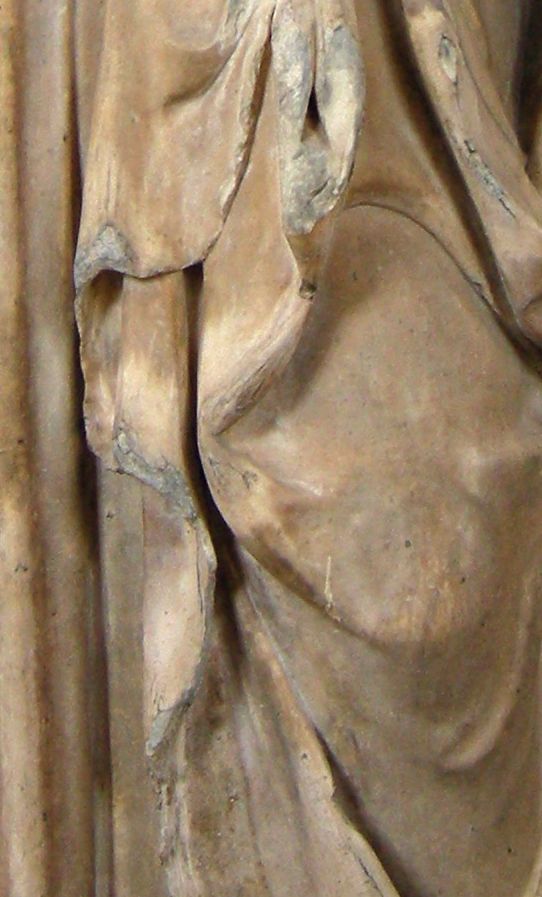
Seen from the front, the right leg, on the viewer’s left, makes a nearly upright line. Long channels of drapery run down it towards the planted sandal. On the other side the left knee pushes into the cloth, broadening and breaking the folds. The stance is an example of contrapposto, the balancing of a body whose weight falls mainly on one leg. Donatello makes the consequences travel through the whole person. One arm rests low against the clothing, the other bends to hold the book, and the face turns to the side. The saint looks occupied by something beyond the person passing beneath him. [1] [2]
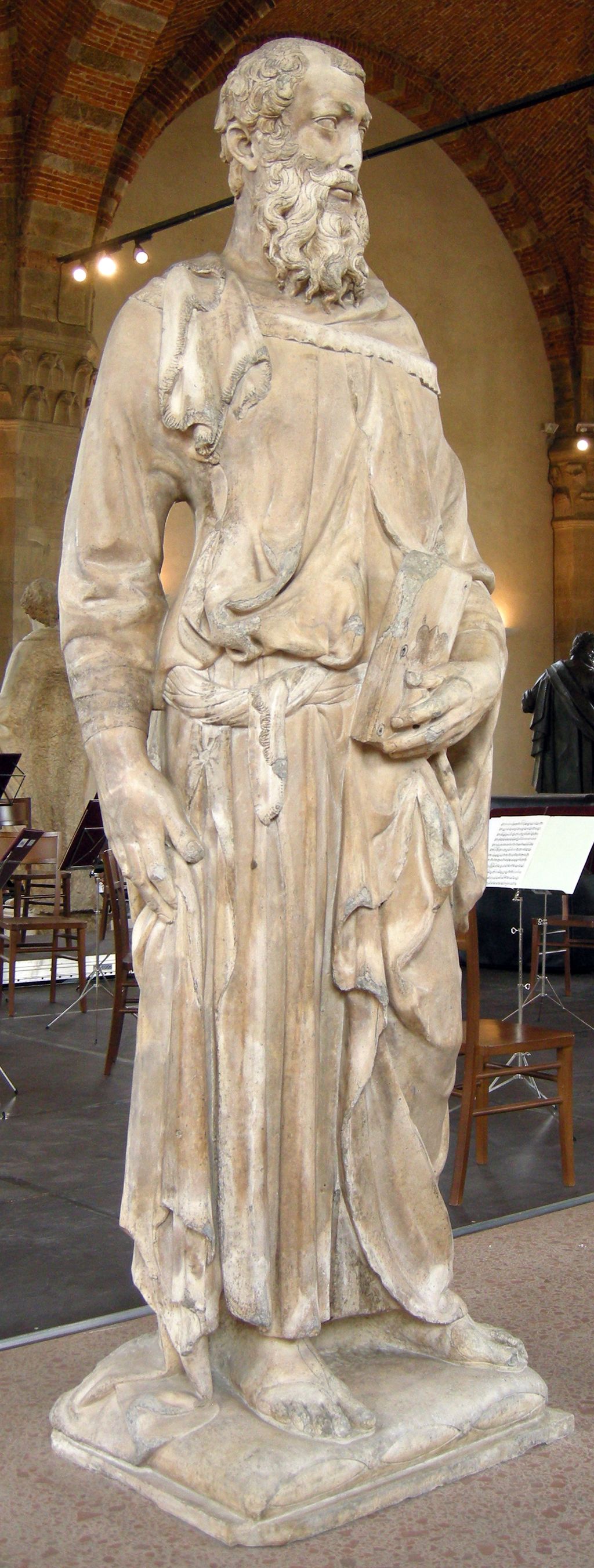
The original Saint Mark from an oblique angle, photographed in 2014 before its 2019–21 treatment. Sailko. Image source. CC BY-SA 3.0. Resized for the web.
The Saint Mark gives an unusual amount of attention to what happens where the body meets its support. The cushion bulges around the impression of the supporting foot. It gives the foot somewhere to sink, so that the difference between the legs has a visible consequence. The reference to a manufactured textile may have been a courtesy to the patrons. Above it, wide shadows follow the long folds of the hanging mantle. Tighter, shallower ones mark the cloth gathered at the waist. The robe gives the viewer enough information to trace the body’s stance even at a distance. [1] [2]
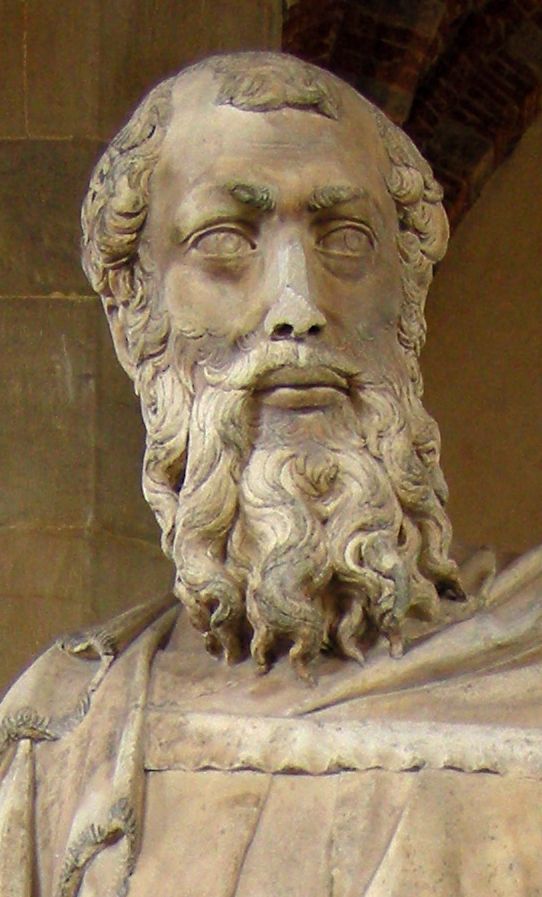
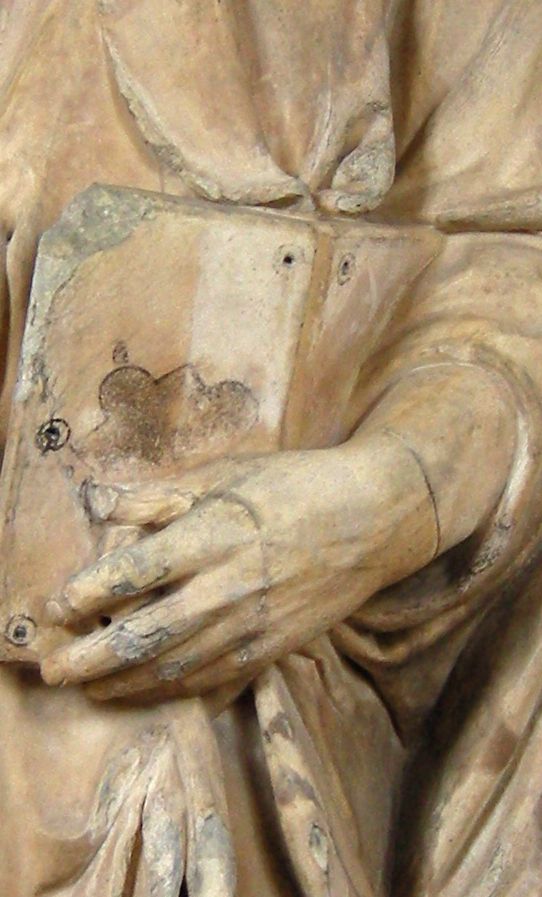
Look higher, where the folds broaden across the chest and the beard breaks into separate curling locks. The beard projects far enough to cast its own shadows, holding the outline of the chin in view as the face turns away. The head has deeply defined features, giving the street observer a brow, eyes and nose to read through daylight and shadow. At closer range there is a different kind of detail. The hand resting near the thigh touches the cloth lightly. Its fingers follow the curve of the fold. In the hand carrying the Gospel, the fingers curl up under the book’s edge. The grip helps convey the weight of the thing Mark carries, much as the cushion conveys the weight of Mark himself. [2]
Annotated Details from Saint Mark
Select a number to jump to a detail of the sculpture.
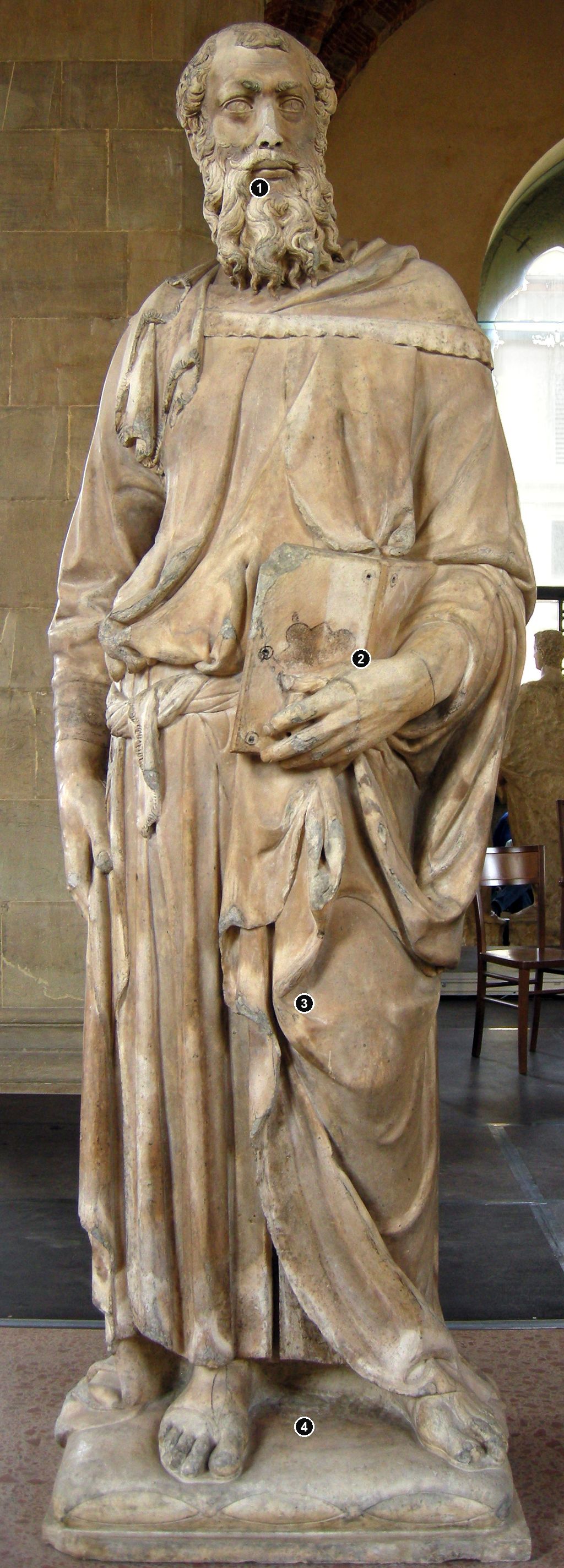
Details from SAINT MARK
Open a detail image to examine the surface more closely.
Turn of the face
The head turns above a more frontal body. The shadow inside the eye and beard carries the gaze into the space beyond the statue.
Hand and book
The evangelist’s hand holds the book against his body. The horizontal edges interrupt the long movement of the cloth.
Knee and falling folds
The bend of the nearer leg opens the cloth into broader folds. Beside it, vertical ridges descend more directly toward the foot.
Feet and cushion
The shallow cushion is compressed beneath the feet. The places where the marble meets it show the two feet bearing down differently.
Annotated photograph and detail crops. Sailko. Image source. CC BY-SA 3.0. Resized, annotated and cropped from the original photograph.
A figure made to be seen from below
A passer-by in the narrow street looks up and sees the projecting folds, beard and book against the shadow inside the tabernacle. At the lower height of the museum display, it is easier to see the top of the cushion and the shape of the book. In the street, a viewer approaching from one side can see the edge of the figure emerge in stages. Deep carving helps the folds stay legible at a distance and makes the movement of the saint’s turn register before subtler details come into view. The work is also economical. Daniel M. Zolli points out that the back is flat and unfinished, although the figure gives the impression of continuing all the way around. The original angle of sight, the niche and the sculptor’s handling of the block all contribute to that impression. [2]
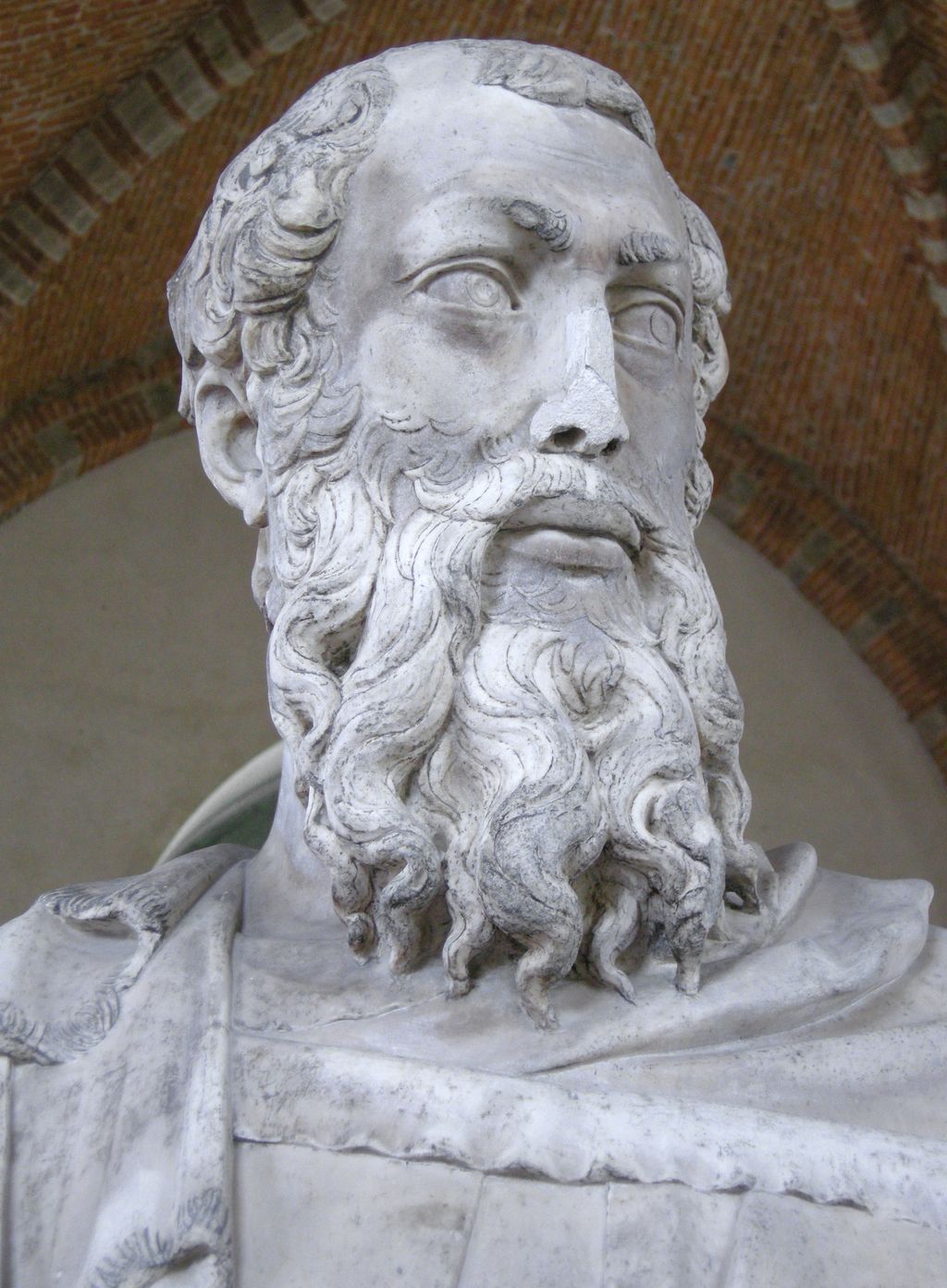
The original marble head in a 2014 museum photograph. Sailko. Image source. CC BY-SA 3.0. Resized for the web.
Giorgio Vasari later turned the difference in viewpoints into a story. In his life of Donatello, the guild consuls saw the figure on the ground and withheld approval. Donatello persuaded them to let him put it in the niche, ostensibly to work on it there. He covered the figure for fifteen days and, in Vasari’s telling, unveiled the marble untouched to a newly admiring audience. The story was written long after the commission. Its value lies in how a sixteenth-century writer understood the effect of the statue. The carving was calibrated for a place, and a change in position could transform a viewer’s judgement of it. Vasari also names Filippo Brunelleschi as an early collaborator. A court record confirms that the two artists were in business together in 1412. The partnership makes sense of the tradition that both were involved in the commission. Aldo Galli attributes the carving itself to Donatello, and the guild’s separately commissioned tabernacle was the work of specialist stone carvers. [1] [2] [5] [8] [4] [9]
Vasari offers another glimpse of the statue’s reputation in his life of Michelangelo. He recounts that a citizen found the artist looking at the Saint Mark and asked his opinion. Michelangelo reportedly replied that he had never seen a figure with the air of a more honest man. If Mark had really looked like that, his Gospel would be easy to believe. Vasari’s version makes the trustworthiness of a writer visible in a carved face and a bearing. The French critic Arsène Alexandre, writing around 1904, found the figure more disquieting. He saw a fiercely concentrated thinker and read a trace of mockery in the eyes. The two accounts are centuries apart, but both show how readily a viewer can read a character into the turn of the face and the set of the brow. The Evangelist’s studied expression offers one point of comparison with Donatello’s later Saint George, a figure whose alertness takes a very different form. [7] [10] [11]
Gold, bronze-coloured coating and the restored marble
The guild’s instructions about gilding matter because the worn surface of the original makes it easy to imagine the new statue as uniformly pale. Conservators have found traces of gold on the book cover and along clothing borders, cuffs and fringes, as well as in the hair and beard. Further traces survive on the cushion and sandals. In daylight, highlights on the edges of the carved clothing could have helped articulate seams and hems that are now difficult to distinguish at a distance. Gilding in the hair and around the Evangelist’s book would have caught the light in separate places as a person passed the niche. The contract anticipated this finishing work, and the small survivals give tangible evidence of how it was carried out. [1] [7]
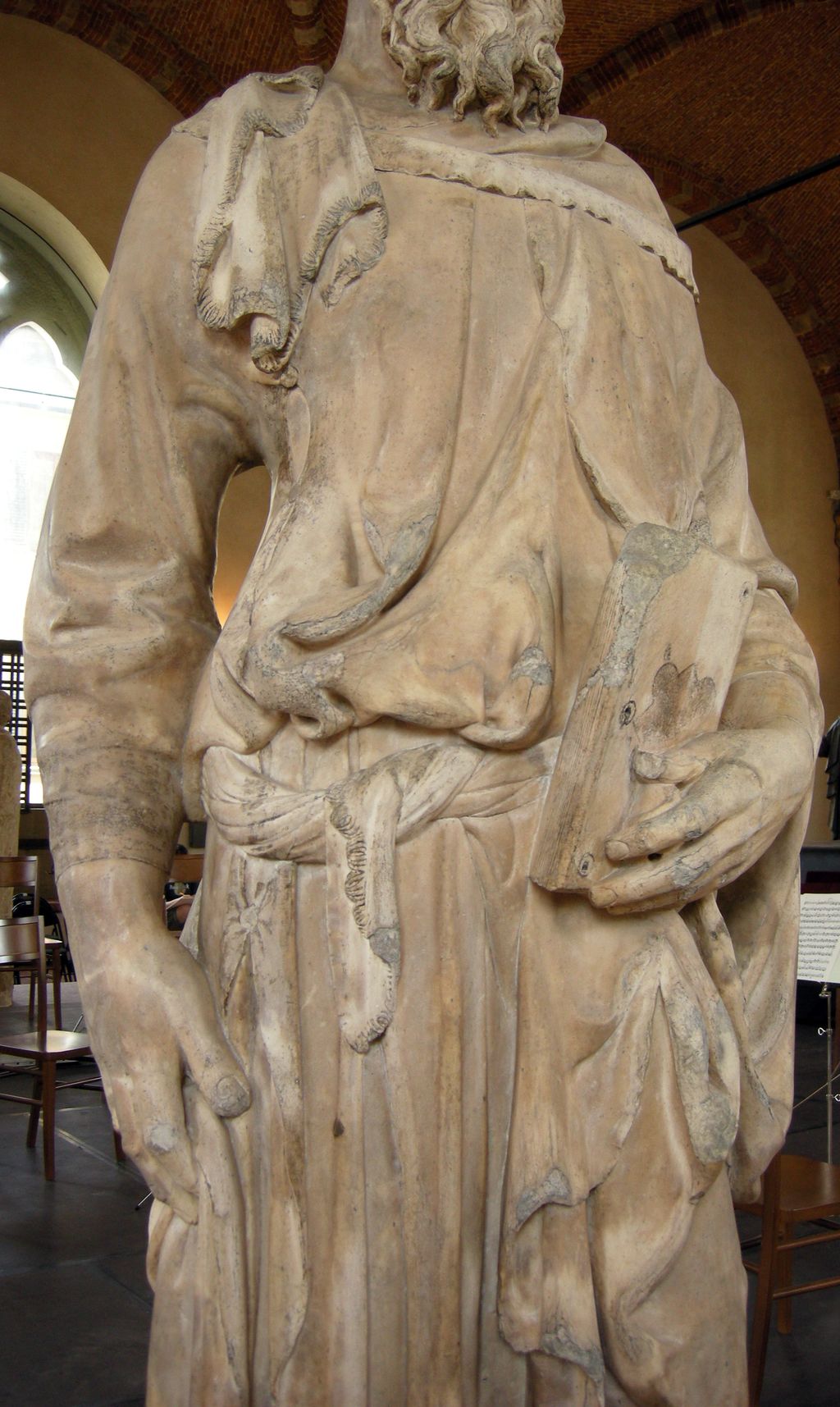
The book, hand and mantle in a photograph taken before the 2019–21 restoration. Sailko. Image source. CC BY-SA 3.0. Resized for the web.
The statue’s colouring changed again centuries later. A dark bronze-coloured finish, applied after 1789, brought the appearance of Orsanmichele’s marble figures closer to that of their neighbours cast in metal. Saint Mark left its niche in 1977. The Opificio delle Pietre Dure removed the dark coating during its 1984–86 restoration, the first in a wider campaign on the building’s Renaissance sculptures. Cleaning recovered a clearer view of the modelling and revealed faint gilding. The marble was kept indoors, and the Opificio made a cast in 1990 to take its place outside. Historic photographs show the original in the niche, in the surface condition of their own day. [12]
Brown patches later drew attention back to the stone. A scientific study of several Orsanmichele marbles found that oil from the old coating had penetrated some of the stone. Follow-up research also identified milk-based treatments that predated the bronze-coloured finish and investigated the effects of light and temperature on the residues. The studies help explain why removing a surface layer does not necessarily remove the changes it has set in motion within marble. From 2019 to 2021, the Musei del Bargello and the Opificio returned to Saint Mark, with support from Friends of Florence. The conservators investigated the uneven colouring, used laser cleaning selectively and clarified the extent of surviving gilding. The scattered traces help the eye recover some of Donatello’s original choices while leaving room for uncertainty about the overall effect of the new statue. [1] [7] [12] [13] [14] [15]
Seeing Saint Mark in Florence
On the south wall of Orsanmichele, the replica makes it possible to test some of Donatello’s decisions from the pavement. Step back far enough to take in the whole arch, then walk towards the niche from one side and watch how the angle changes the prominence of the knee and book. Upstairs in the museum, look at the original more closely. It is easier there to follow the turning head, the fingers on the book and the sag of the cushion. Between the street and the museum, the two encounters bring out the degree to which Donatello built his figure around the way people would come to see it. [1] [2] [3]
Donatello sculpture directory
| Name | Date | Medium and record |
|---|---|---|
| Marble David | 1408–09, adapted 1416 | Carved Carrara marble Catalogue. |
| Saint John the Evangelist | c. 1409–15 | Carved marble Catalogue. |
| Saint Mark | 1411–13 | Carved Carrara marble Catalogue. |
| Saint George and its dragon relief | c. 1415–17 | Marble statue and marble relief Catalogue. |
| Marzocco | c. 1417–20 | Carved sandstone Catalogue. |
| Saint Louis of Toulouse, Florence | 1418–25 | Gilt bronze and mixed media Catalogue. |
| Pazzi Madonna | c. 1420s | Marble relief Catalogue. |
| Reliquary Bust of Saint Rossore | c. 1420s | Gilt bronze Catalogue. |
| The Prophet Jeremiah | 1420s–30s, disputed | Marble Catalogue. |
| Zuccone | c. 1420s–30s | Marble Catalogue. |
| Feast of Herod, Siena | 1420s | Gilded bronze relief Catalogue. |
| Ascension with Christ Giving the Keys to Saint Peter | c. 1428–30 | Marble relief Catalogue. |
| Cantoria | 1433–39 | Marble and mosaic Catalogue. |
| Amor-Atys | c. 1435–40 | Partly gilded bronze Catalogue. |
| Bronze David | c. 1435–40, disputed | Partly gilded bronze Catalogue. |
| Gattamelata | Installation agreement, 1453 | Bronze and stone Catalogue. |
| Santo altar | Mid-fifteenth century | Bronze and limestone ensemble Catalogue. |
| Chellini Madonna | Given in 1456 | Partly gilded bronze tondo Catalogue. |
| Penitent Magdalene | c. 1453–55 (Opera) | Poplar, stucco, pigments and gold Catalogue. |
| Judith and Holofernes | Late 1450s–early 1460s | Bronze with surviving gilding Catalogue. |
| Pulpit of the Passion | Late work and later assembly | Bronze reliefs, Donatello and collaborators Catalogue. |
| Bust traditionally called Niccolò da Uzzano | Fifteenth century | Painted terracotta, attribution disputed Catalogue. |
| Prato Cathedral exterior pulpit | Commissioned 1428; carved 1430s | Marble reliefs, Donatello and Michelozzo Catalogue. |
| Cavalcanti Annunciation | c. 1433–35 | Gilded sandstone and terracotta Catalogue. |
| Crucifix at Santa Croce | Early fifteenth century | Painted wood Catalogue. |
| Madonna of the Clouds | c. 1425–35 | Marble relief Catalogue. |
| Old Sacristy Doors | Fifteenth century | Two paired bronze doors Catalogue. |
| Resurrection Pulpit | Late work and later assembly | Bronze reliefs, Donatello and collaborators Catalogue. |
| Brancaccio tomb | 1420s | Donatello, Michelozzo and assistants, mixed materials Catalogue. |
| Saint John the Baptist, Venice | 1438 | Polychromed and gilded wood Catalogue. |
| Sacrifice of Isaac | Early fifteenth century | Donatello and Nanni di Bartolo, marble Catalogue. |
| Madonna of Via Pietrapiana | Mid-fifteenth century | Terracotta Catalogue. |
| Miracle of the Mule | Mid-fifteenth century | Gilded bronze panel for the Santo altar Catalogue. |
| Padua Crucifix | Mid-fifteenth century | Cast bronze Catalogue. |
| Dancing Spiritello, Bargello | Fifteenth century | Bronze Catalogue. |
| Young Prophet from the Porta della Mandorla | c. 1404–09 | White marble, attributed to Donatello Catalogue. |
| Prophet or Apostle from the Duomo north tribune | Early fifteenth century | White marble, possibly Donatello Catalogue. |
| Beardless Prophet | 1415–18 | White marble Catalogue. |
| Sibyl and Prophet of the Porta della Mandorla | 1422 | Carved marble heads for the portal Catalogue. |
| Faith, Siena baptismal font | 1420s | Gilded bronze figure Catalogue. |
| Hope, Siena baptismal font | 1420s | Gilded bronze figure Catalogue. |
| Feast of Herod, Lille | c. 1430 | Carrara marble relief Catalogue. |
| Piot Madonna | c. 1440–60 | Polychrome terracotta with glass and wax inlays Catalogue. |
| Carafa Horse Head | c. 1456–58 | Cast bronze Catalogue. |
| Pazzi Madonna workshop version, Louvre | c. 1450 | Polychrome gesso, Donatello’s workshop Catalogue. |
| Pazzi Madonna tondo, Rijksmuseum | c. 1425–50 | Plaster and stucco, after Donatello Catalogue. |
| Sprite | c. 1430–40 | Bronze, sculptor or metalsmith close to Donatello Catalogue. |
Discussion
Look again at the images and ideas explored in Saint Mark. These editorial prompts invite your observations.
Reader Insights
What changes when you look at the statue from below? Compare the book and the knee in the street and museum views.
Follow the folds down both legs. Which details make Mark look settled on one foot, and which suggest he could take a step?
Join the Conversation
Share a detail, comparison or question about Saint Mark below.
References
- Istituto Centrale per il Catalogo e la Documentazione, San Marco Evangelista, national catalogue record 0900291902, especially pp. 2–4 for material, commission, measurements and conservation. View source.
- Daniel M. Zolli, “Donatello’s Visions: The Sculptor at Florence Cathedral”, in Sculpture in the Age of Donatello: Renaissance Masterpieces from Florence Cathedral, 2015, pp. 58–61. View source.
- Musei del Bargello, “Orsanmichele”, museum and building history. View source.
- Aldo Galli, “Orsanmichele”, in Donatello in Toscana. Itinerari, 2022, pp. 54–59. View source.
- Catalogo Generale dei Beni Culturali, Tabernacolo dell’Arte dei Linaioli e Rigattieri, national catalogue record 0900291901. View source.
- University of Virginia Institute for Advanced Technology in the Humanities, Florentine Sepoltuario, entry 4832, guild terminology. View source.
- Musei del Bargello, “Il restauro del San Marco di Donatello”, museum notes and restoration documentary by Vincenzo Capalbo. View source.
- Giorgio Vasari, “Donato”, Le vite de’ più eccellenti pittori, scultori e architettori, 1568 edition. View source.
- Francesco Caglioti, Laura Cavazzini, Aldo Galli and Neville Rowley, “Reconsidering the Young Donatello”, Jahrbuch der Berliner Museen, 57 (2015, published 2018), pp. 15–45, especially doc. 19. View source.
- Giorgio Vasari, “Vita di Michelagnolo Buonarroti”, Le vite de’ più eccellenti pittori, scultori e architettori, 1568 edition, Fondazione Memofonte and Accademia della Crusca. View source.
- Arsène Alexandre, Donatello, Henri Laurens, c. 1904, chapter IV. View source.
- Ministero della Cultura, announcement of the Saint Mark conservation campaign, release dated 20 June 2019. View source.
- Daniela Pinna, Monica Galeotti and Adriana Rizzo, “Brownish alterations on the marble statues in the church of Orsanmichele in Florence: what is their origin?”, Heritage Science, 3, 2015, article 7. View source.
- Daniela Pinna and colleagues, “A follow-up on the analytical study of discolouration of the marble statues of Orsanmichele in Florence”, Environmental Science and Pollution Research, 2017. View source.
- Opificio delle Pietre Dure, 2020 activity report, stone conservation section. View source.
- Victoria and Albert Museum, Donatello’s David. View source
- Opera del Duomo, Donatello and the Opera del Duomo. View source
- Ministero della Cultura, David with the Head of Goliath, Bargello bronze. View source
- Save Venice, Donatello’s Equestrian Monument to Gattamelata. View source
- Opificio delle Pietre Dure, L’ultimo Donatello. View source
More DONATELLO Sculptures
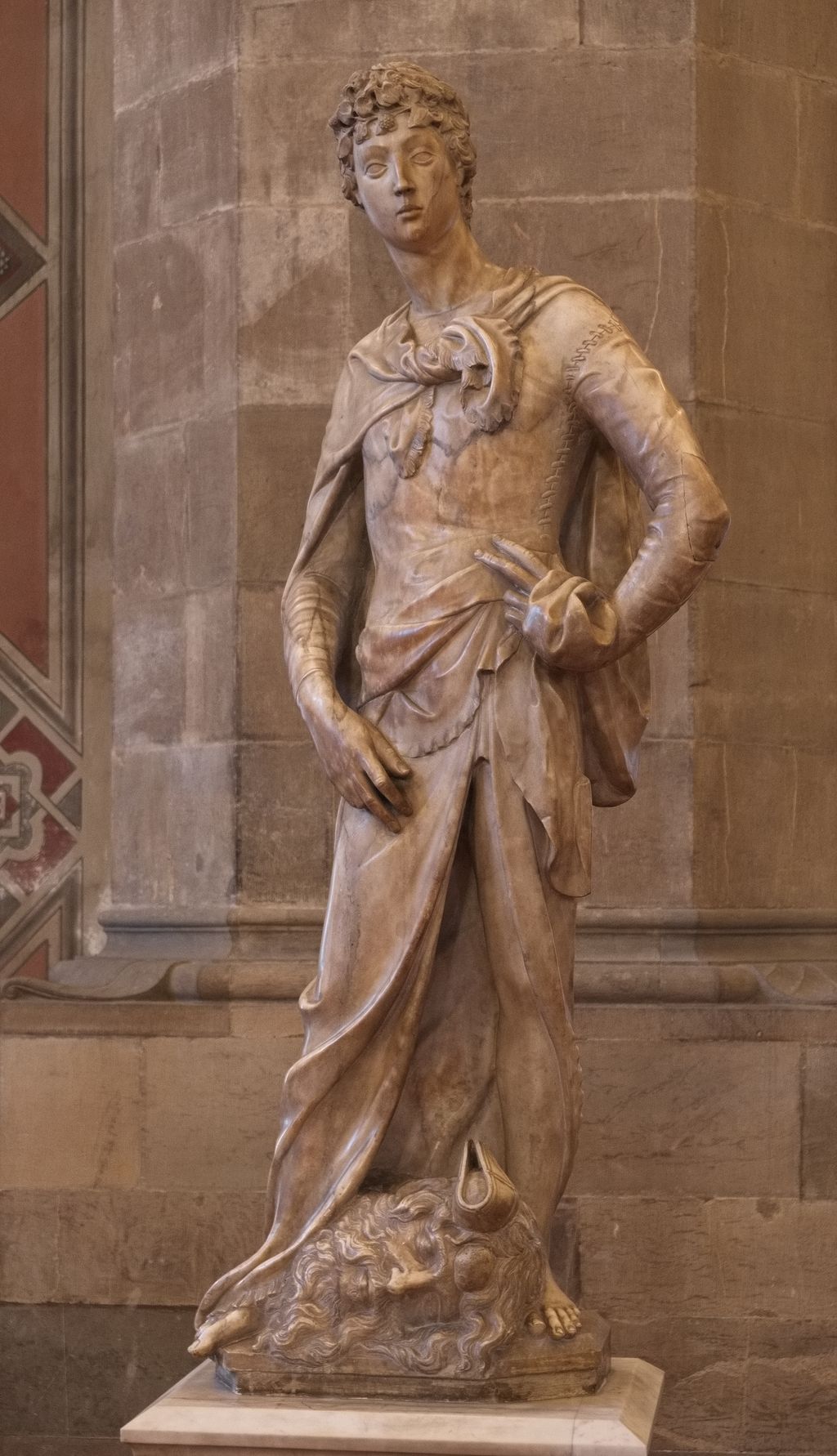
Marble David
Armin Kleiner. Image source. CC BY-SA 4.0. Resized for the web.
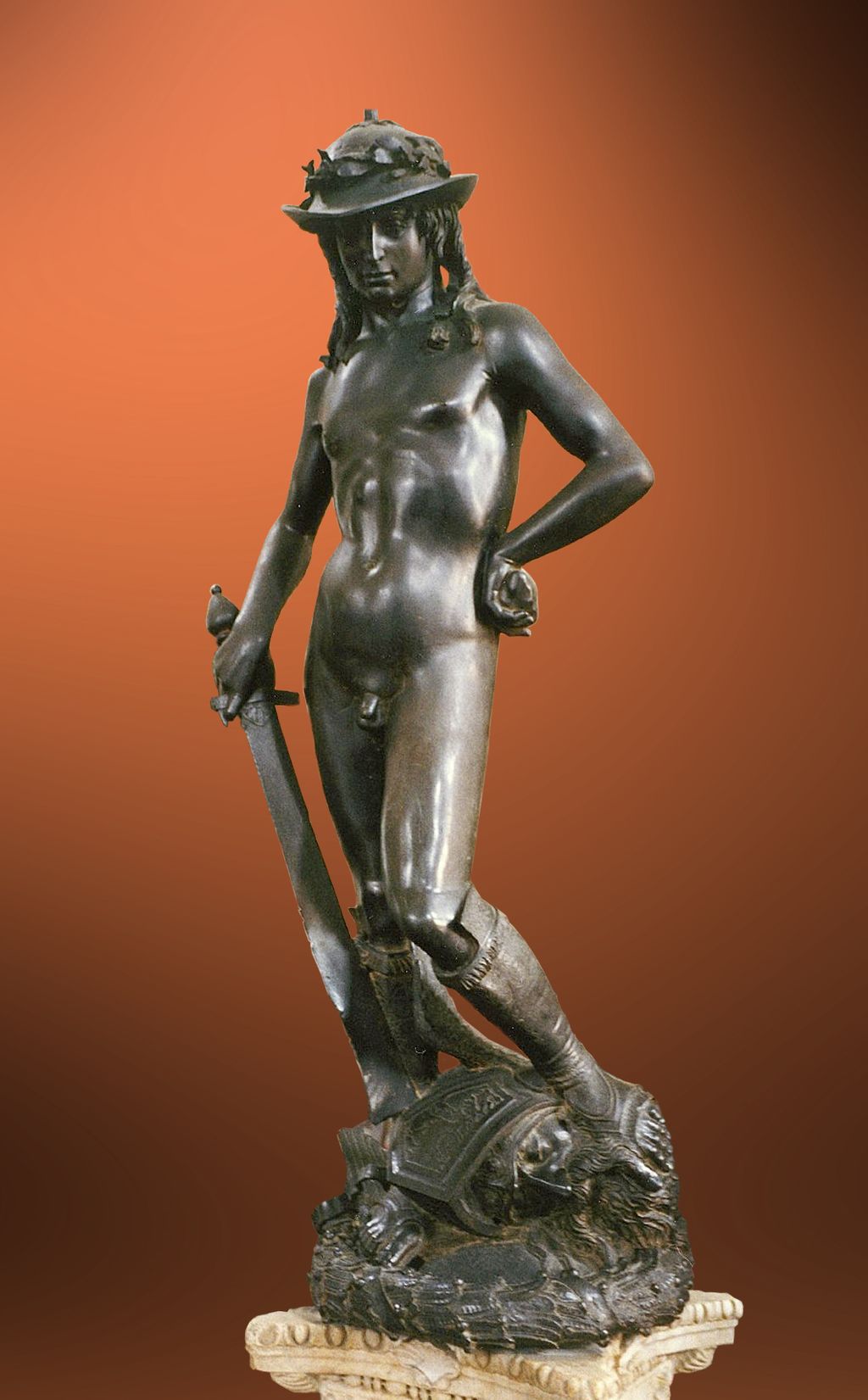
Bronze David
Patrick A. Rodgers. Image source. CC BY-SA 2.0. Resized for the web.
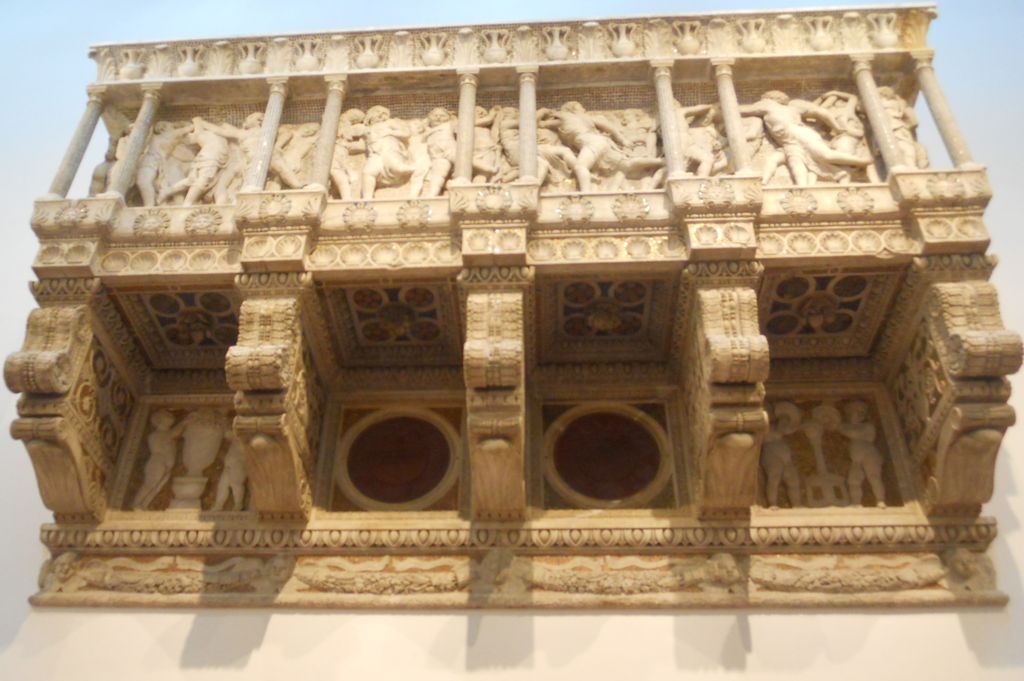
Cantoria
Erik Drost. Image source. CC BY 2.0. Resized for the web.
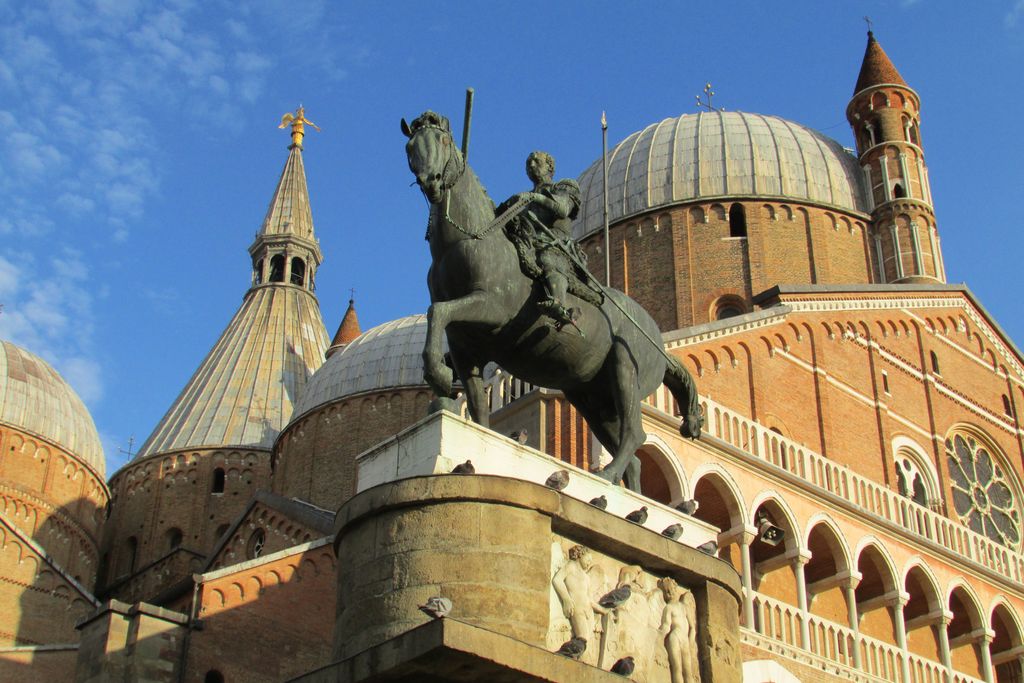
Gattamelata
Chris Light. Image source. CC BY-SA 4.0. Resized for the web.
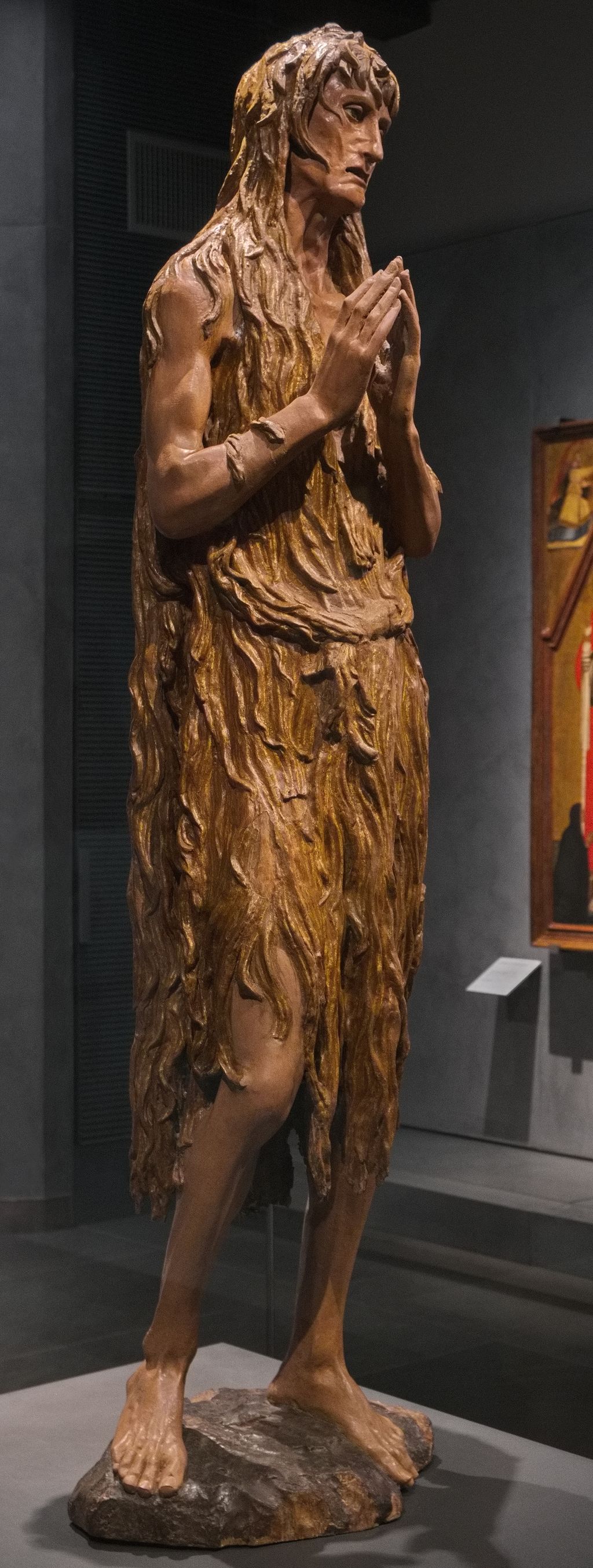
Penitent Magdalene
Armin Kleiner. Image source. CC BY-SA 4.0. Resized for the web.
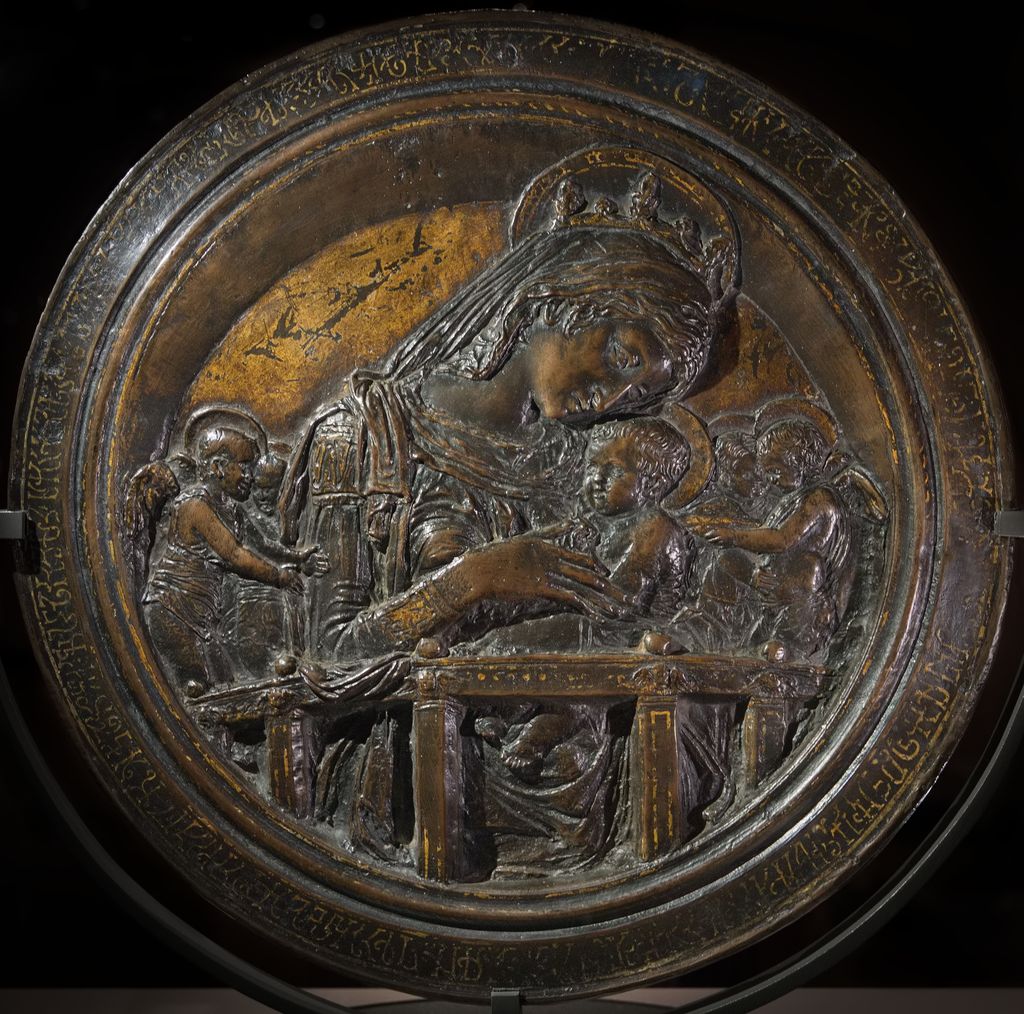
Chellini Madonna
Armin Kleiner. Image source. CC BY-SA 4.0. Resized for the web.
