


 by Tom Gurney
Tom Gurney BSc (Hons) is an art history expert with over 20 years experience
Published on June 19, 2020 / Updated on November 29, 2026
Email: tomgurney1@gmail.com / Phone: +44 7429 011000
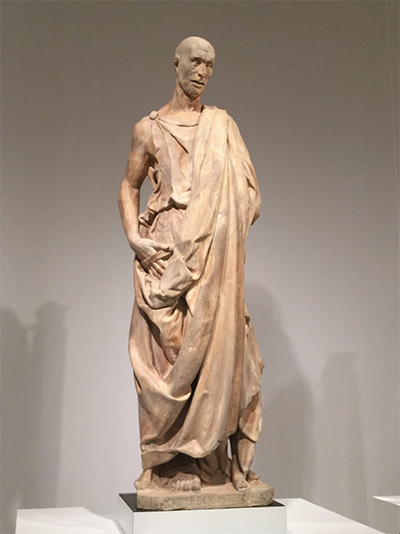
The man in Donatello’s Zuccone has drawn his chin in and opened his mouth just enough to show his teeth. His head inclines towards someone below him. In the museum you can see the tendons that stand out in his neck, but from the pavement below Giotto’s bell tower it was the dark hollows around his eyes and the turn of his head that carried the expression. Florentines named the figure lo Zuccone, roughly “pumpkin-head,” for its strikingly bare scalp. The Museo dell’Opera del Duomo in Florence now keeps the original, carved in the round from white Carrara marble. Its catalogue measures the statue at 198.5 centimetres high, 65.4 wide and 50.2 deep. The same record dates it to 1434–36 and identifies the prophet as possibly Habakkuk. [1] [2]
The carving of a face seen from below
Follow the heavy mantle from the left shoulder across the torso. Its folds drop towards the opposite side of the figure and cover the right arm. On the left the bare forearm runs close to the body, with the hand tucked into a loop beside the hip. The hips and shoulders turn in opposite directions, with the right hip coming forward under the receding shoulder. That small twist matters in a figure confined between the uprights of a niche. The body stays within a narrow space while the head turns down and to its left. Seen obliquely, the marble juts forward at the neck where the cloth draws back, and the profile brings the forehead, nose and parted lips into sharper relief. [1] [2]
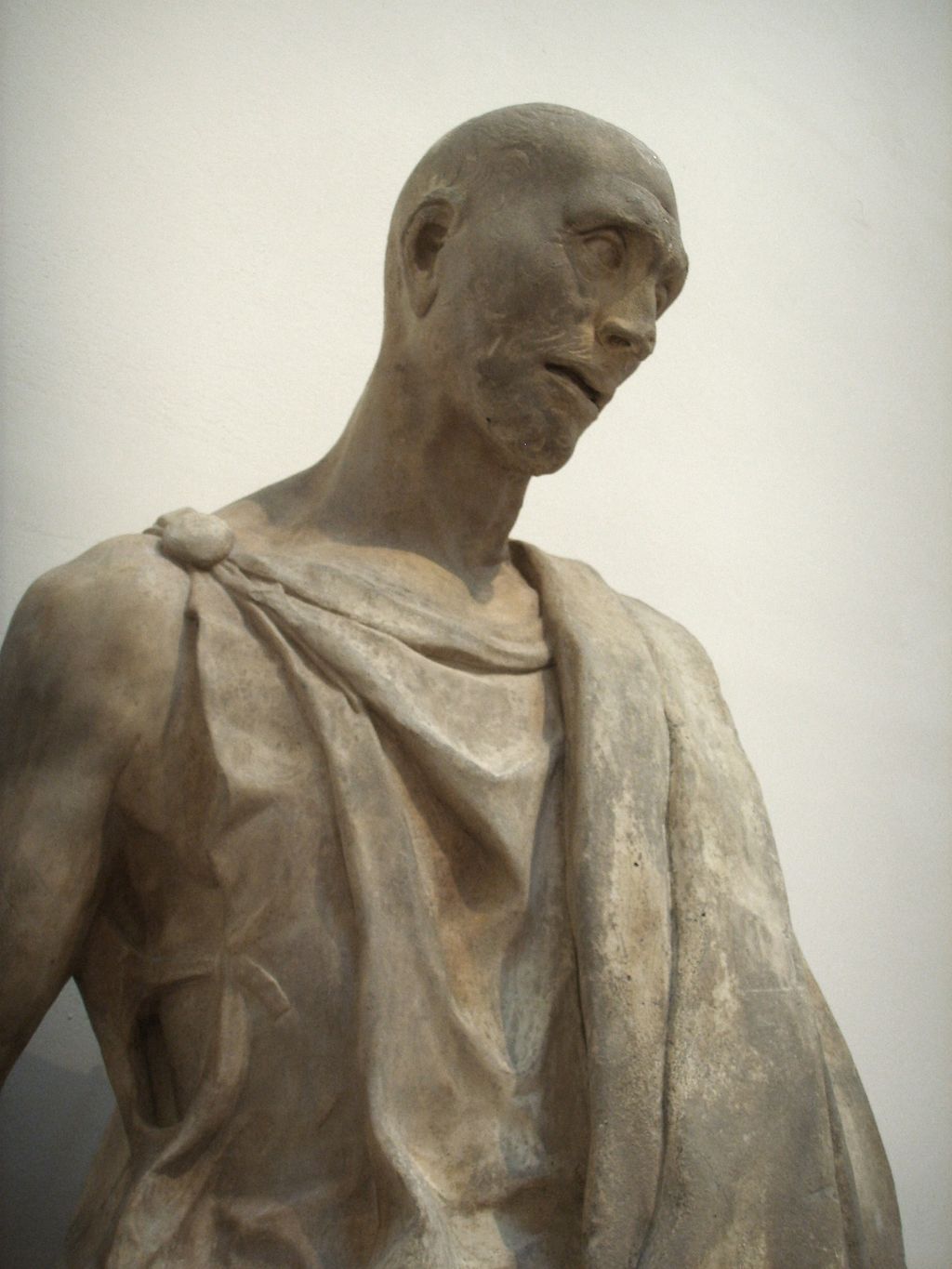
The head and neck in an oblique view of the original marble. I, Sailko. Image source. CC BY-SA 3.0. Resized for the web.
The close view gives the head a different character. The scalp has the sparse texture of cropped hair, and there are short strokes around the mouth and chin. Daniel M. Zolli, drawing on findings from the Opera’s 1999 conservation of the prophets, points to file marks left on the arm, nape and exposed shoulder. The finish varies with the form. Fine scratches suggest bristles. Much deeper cutting casts shadow below the brows and gives definition to the eyes, even at a distance where the texture of the beard would largely disappear. In 1596 Bernardo Davanzati singled out the eye sockets, arguing that fine carving suited to close inspection would have left the statue looking blind from the street. The physical surface helps explain why those hollows seemed so conspicuous to him. [1] [2]
Donatello faced a different problem with Saint John the Evangelist for the cathedral façade. A passer-by could stand much closer to that figure and see more of the change from polished skin to incised hair or cloth. The Zuccone had to hold its own at the height of the bell tower’s statue niches. Step back from a photograph of the prophet and what stays clear is the slant of the mantle, the head thrust forward and the shaded band across the eyes. The closer view then gives those shapes a physical cause, from the weight of a fold to the effort suggested by the sinews. [1] [2]
Annotated Details from the Zuccone
Select a number to jump to a detail of the sculpture.
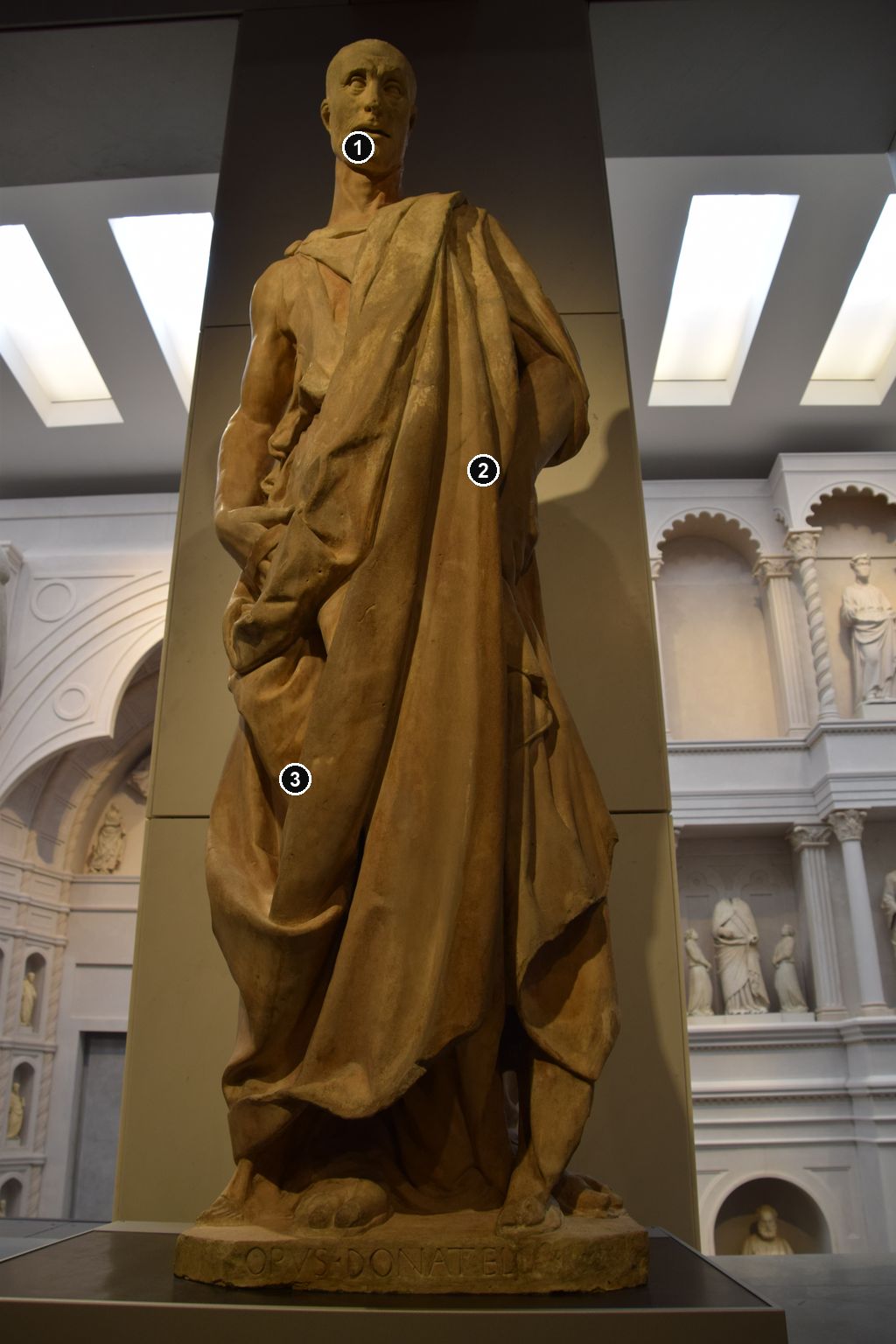
Details from THE ZUCCONE
Open a detail image to examine the surface more closely.
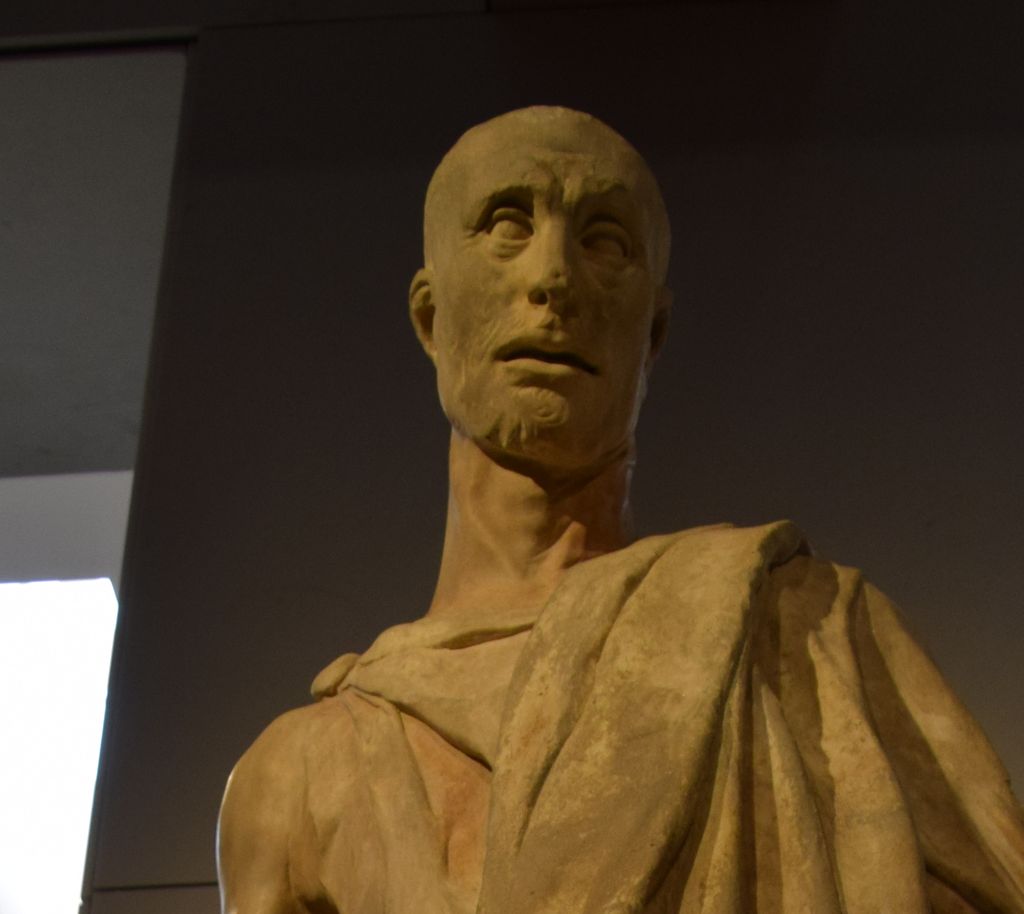
The upturned bare head
The exposed skull, open mouth and shadowed eye sockets remain legible in a low view. They give the face a silhouette distinct from the drapery below.
Garment over the shoulder
Long ridges in the mantle descend from the shoulder and curve as they approach the middle of the figure.
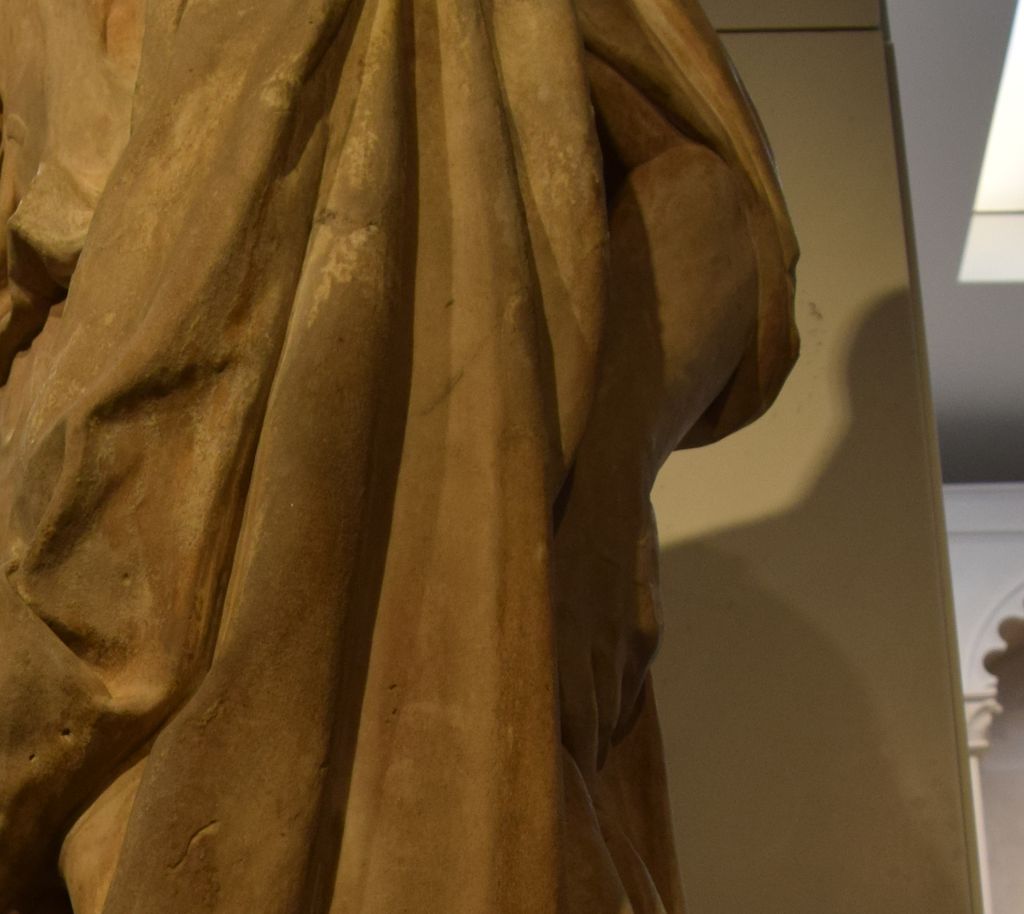
Hand at the side
The hand touches the hanging fabric at the side of the body. It gives the folds a point of tension partway down the figure.
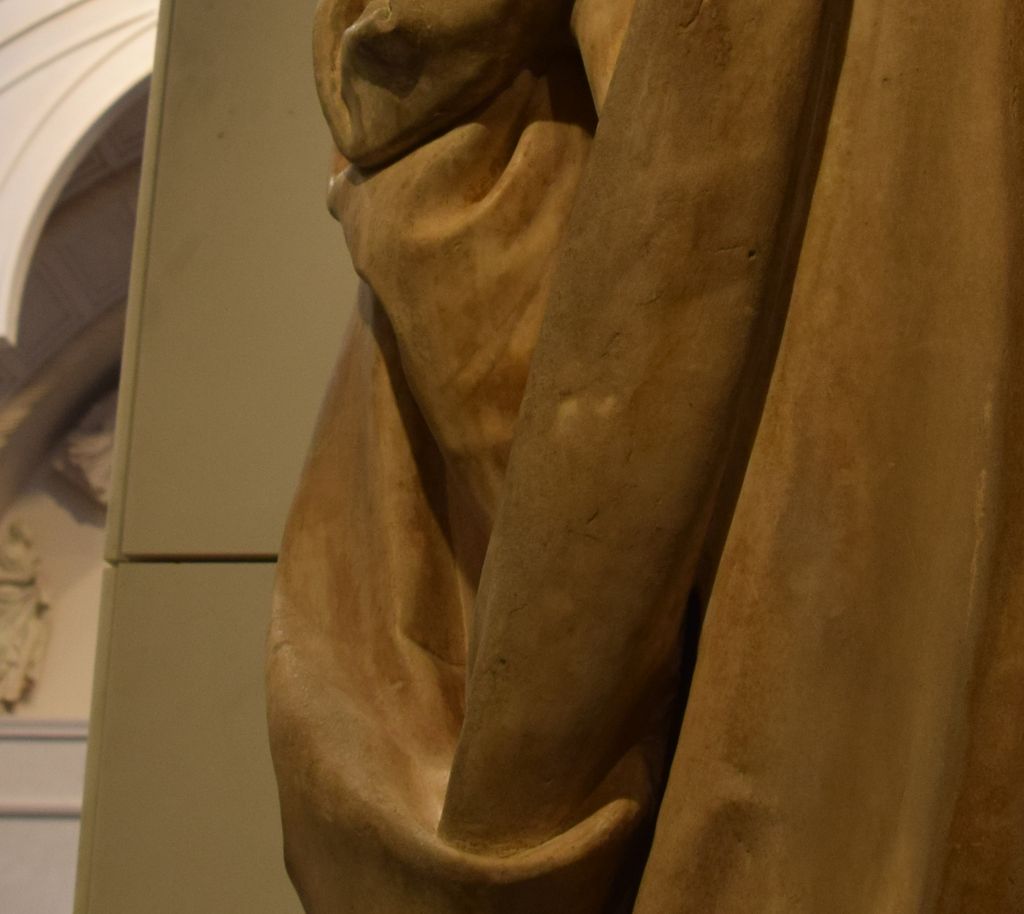
Annotated photograph and detail crops. George M. Groutas. Image source. CC BY 2.0. Resized, annotated and cropped from the original photograph.
When the Opera commissioned the prophet
The Opera di Santa Maria del Fiore oversaw the cathedral works, and the Zuccone belonged to a campaign to furnish the remaining niches of its bell tower. The campaign added fifteenth-century figures to a building whose earlier sculpture included prophets and sibyls above reliefs of human arts, Christian virtues and other subjects. The prophet could be seen as part of a group long before a passer-by could make out any single face or inscription. [1] [3] [4]
The date depends in part on matching the surviving prophets to two different commissions in the Opera’s accounts. Francesco Caglioti’s reconstruction for the cathedral museum catalogue follows the figure he identifies as the Zuccone back to a documented payment to Donatello in February 1427. That July, Donatello’s business partner Michelozzo declared a marble figure for Santa Maria del Fiore already three-quarters finished. Caglioti connects it to the same work and argues, using comparisons with Masaccio’s paintings as well as the documents, that the statue was largely carved by the interruption of marble commissions in 1428. The Opera records first name that figure as Habakkuk in 1434 and record approval in January 1436. The wider span thus includes a long interval between substantial carving and the final administrative steps. The museum’s object entry gives the shorter 1434–36 date, while an Opera account of Donatello’s career gives 1427–36. [1] [4] [5]
From the north face to the piazza
The statue first stood on the north side of the Campanile, facing the cathedral. In 1464, during Donatello’s lifetime, the Opera ordered the more recent sculptures moved to the west, where they could be seen more readily from the square. The officials’ deliberation praised the workmanship of the northern figures and found the older western statues coarse by comparison. The Zuccone occupied the second niche from the left on the west face and the figure now called Jeremiah stood to its right. The move gave the figure an audience approaching across open space. Its turned head could catch the attention of people passing the tower from an angle as well as those facing it squarely. [1] [4] [6] [7]
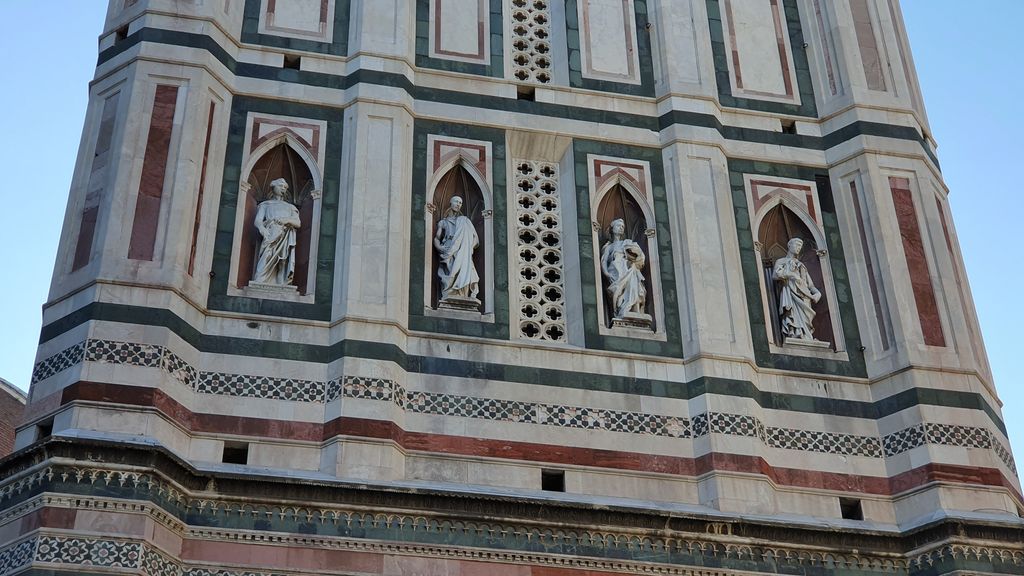
Copies in the west niches of Giotto’s bell tower, seen from the square. Yair Haklai. Image source. CC BY-SA 4.0. Resized for the web.
Look just below the prophet’s sandals in a museum photograph. The shaped plinth that forms part of the statue bears the Latin Opus Donatelli, “work of Donatello.” At the tower there was a separate support below it. When the older figures were moved, the west-side supports inscribed for David and Solomon stayed behind. The Zuccone therefore stood above David Rex, “King David,” and Jeremiah above the name of Solomon. An albumen print in the Rijksmuseum, dated about 1875–1900, carries the old title Koning David. It records Donatello’s marble standing where the west-side figure was photographed before its removal, and preserves a name that makes sense in light of the inscription below the statue. [1] [4] [6] [8]
Why Habakkuk remains a possibility
The Opera’s accounts name a Habakkuk. The bald statue has no identifying scroll, so matching the document to the marble depends on other clues. The separate marble known as Jeremiah does have a scroll with an inscription conventionally read as his name. Caglioti considers that inscription old enough to carry weight and assigns the Habakkuk record to the Zuccone. He also sees an echo of Donatello’s figure in Matteo Civitali’s Habakkuk for the chapel of Saint John the Baptist in Genoa Cathedral. Civitali’s inscribed prophet shares the bald head and the sense of a solitary figure almost swallowed by his heavy drapery. The connection is a clue to how another sculptor may have understood the Florentine figure late in the fifteenth century. [1] [4] [6] [7]
H. W. Janson questioned the evidential value of Jeremiah’s scroll, proposing that its lettering was added later. That opens the possibility that the figure documented as Habakkuk was the statue now called Jeremiah and that the Zuccone belongs to the earlier, unnamed commission. Patricia Rose proposed Elisha on different grounds. Her study of images of Elisha looked at the prophet’s baldness and mantle, both elements of his story in the Second Book of Kings. The Zuccone offers those visual cues, but no inscription of Elisha’s name. Habakkuk has his own resonance here. His book opens with a plea to God about violence and injustice, a possible context for the urgency in the face if the traditional identification is correct. The museum catalogue’s question mark leaves room for the limits of all these clues. [1] [6] [9] [10] [11]
What Vasari heard in the marble
In the life of Donatello first published in 1550, Giorgio Vasari says the Zuccone resembled a Florentine named Giovanni di Barduccio Cherichini. Vasari also has the sculptor swear by the statue and urge it to speak as he works. The stories reappear in his expanded 1568 edition. Written decades after Donatello’s death, they show how a familiar figure was remembered in Florence. They give a local name to its individual features and imagine the parted lips becoming the voice of a man. The Donatello quotes page follows Vasari’s wording across the two editions. [12] [13]
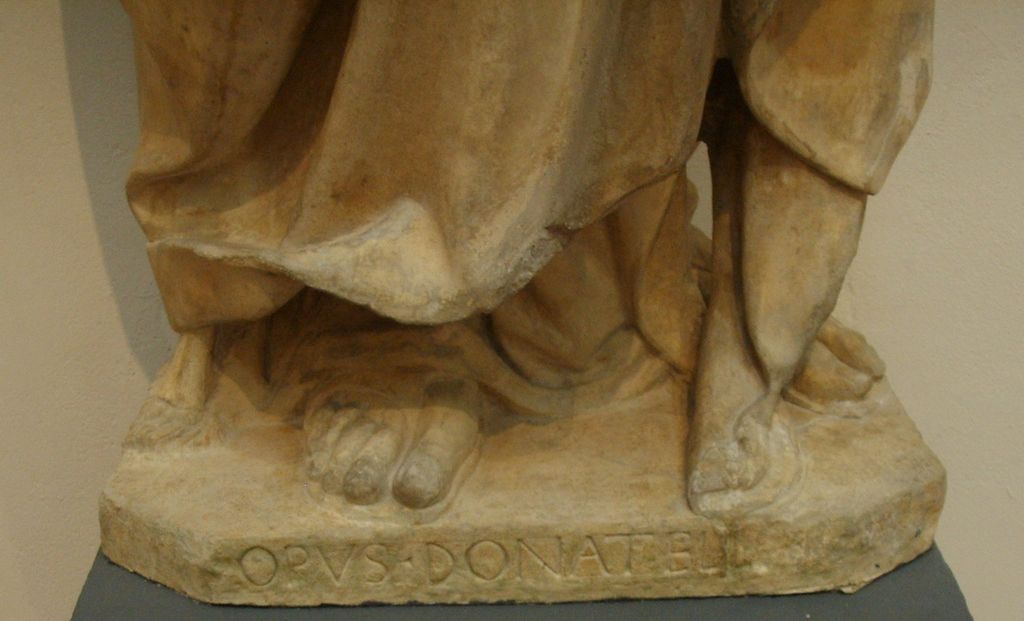
The marble base carries Donatello’s signature. I, Sailko. Image source. CC BY-SA 3.0. Resized for the web.
Where to see the marble and its copies
The original is in the Museo dell’Opera del Duomo’s Galleria del Campanile. The gallery groups statues by the sides of the tower on which they stood, giving the fifteenth-century figures a central position. Here you can follow the folds to the edge of the tunic, see the sandals on the plinth and read the signature that was so far above a passer-by. Gernot Lorenz records the removal of the Zuccone in 1936 and its replacement with a marble copy by Romano Romanelli. The west-side figure on the tower still gives a sense of how the statue reads from street level. [1] [3] [6]
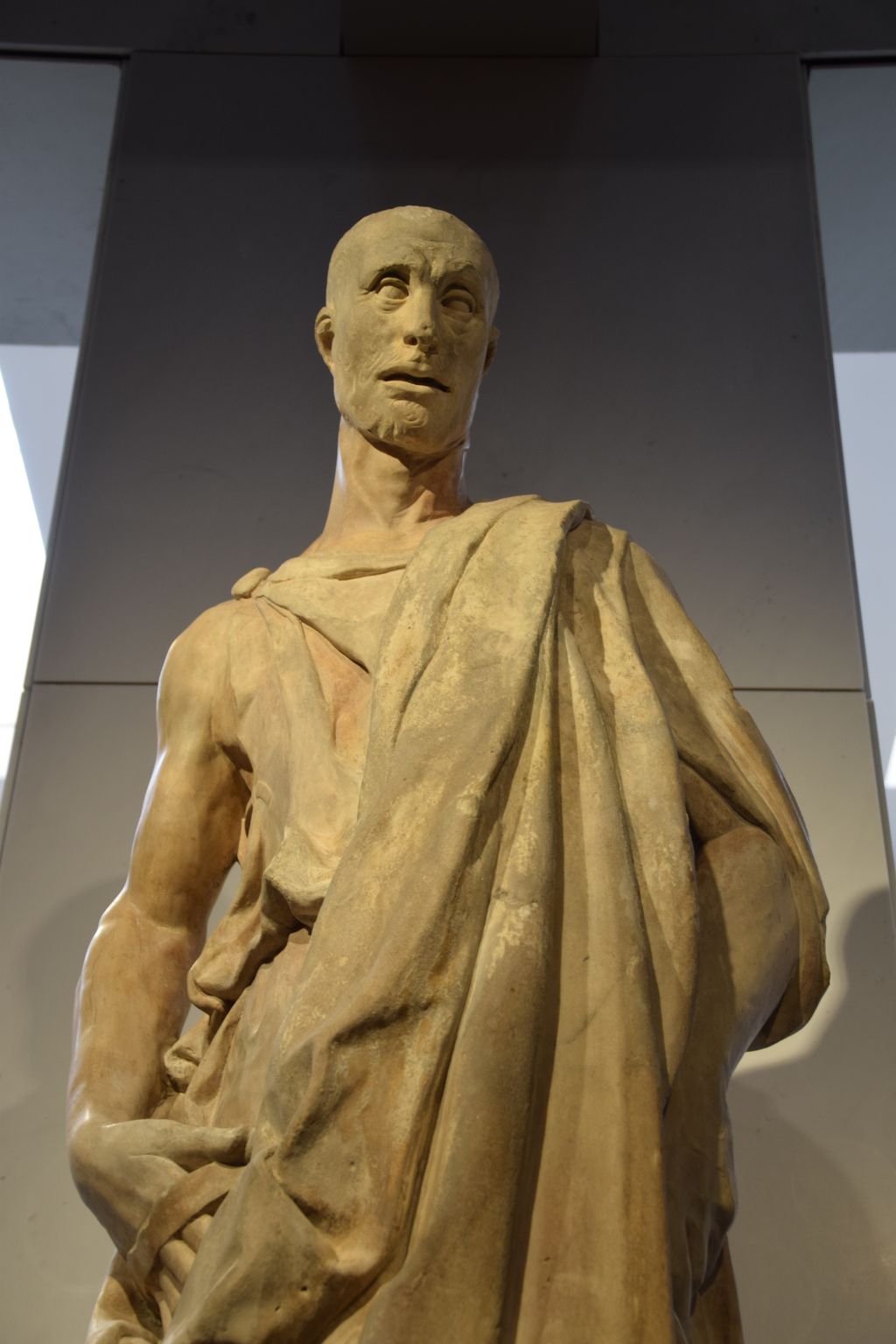
The original marble in a low museum view that keeps the turn of the head visible. George M. Groutas. Image source. CC BY 2.0. Resized for the web.
Copies of the upper part of the figure serve a different purpose. The Museo Tattile Statale Omero in Ancona has a bust in a collection designed for visitors to explore by touch. Statens Museum for Kunst in Copenhagen also catalogues a plaster cast of the bust in the Royal Cast Collection. Up close, the eyes and mouth become features a visitor can trace with their fingertips. Back in the square, the copy still relies on the lean body turning inside its mantle and the gaze directed down towards the crowd. [14] [15] [16]
Donatello sculpture directory
| Name | Date | Medium and record |
|---|---|---|
| Marble David | 1408–09, adapted 1416 | Carved Carrara marble Catalogue. |
| Saint John the Evangelist | c. 1409–15 | Carved marble Catalogue. |
| Saint Mark | 1411–13 | Carved Carrara marble Catalogue. |
| Saint George and its dragon relief | c. 1415–17 | Marble statue and marble relief Catalogue. |
| Marzocco | c. 1417–20 | Carved sandstone Catalogue. |
| Saint Louis of Toulouse, Florence | 1418–25 | Gilt bronze and mixed media Catalogue. |
| Pazzi Madonna | c. 1420s | Marble relief Catalogue. |
| Reliquary Bust of Saint Rossore | c. 1420s | Gilt bronze Catalogue. |
| The Prophet Jeremiah | 1420s–30s, disputed | Marble Catalogue. |
| Zuccone | c. 1420s–30s | Marble Catalogue. |
| Feast of Herod, Siena | 1420s | Gilded bronze relief Catalogue. |
| Ascension with Christ Giving the Keys to Saint Peter | c. 1428–30 | Marble relief Catalogue. |
| Cantoria | 1433–39 | Marble and mosaic Catalogue. |
| Amor-Atys | c. 1435–40 | Partly gilded bronze Catalogue. |
| Bronze David | c. 1435–40, disputed | Partly gilded bronze Catalogue. |
| Gattamelata | Installation agreement, 1453 | Bronze and stone Catalogue. |
| Santo altar | Mid-fifteenth century | Bronze and limestone ensemble Catalogue. |
| Chellini Madonna | Given in 1456 | Partly gilded bronze tondo Catalogue. |
| Penitent Magdalene | c. 1453–55 (Opera) | Poplar, stucco, pigments and gold Catalogue. |
| Judith and Holofernes | Late 1450s–early 1460s | Bronze with surviving gilding Catalogue. |
| Pulpit of the Passion | Late work and later assembly | Bronze reliefs, Donatello and collaborators Catalogue. |
| Bust traditionally called Niccolò da Uzzano | Fifteenth century | Painted terracotta, attribution disputed Catalogue. |
| Prato Cathedral exterior pulpit | Commissioned 1428; carved 1430s | Marble reliefs, Donatello and Michelozzo Catalogue. |
| Cavalcanti Annunciation | c. 1433–35 | Gilded sandstone and terracotta Catalogue. |
| Crucifix at Santa Croce | Early fifteenth century | Painted wood Catalogue. |
| Madonna of the Clouds | c. 1425–35 | Marble relief Catalogue. |
| Old Sacristy Doors | Fifteenth century | Two paired bronze doors Catalogue. |
| Resurrection Pulpit | Late work and later assembly | Bronze reliefs, Donatello and collaborators Catalogue. |
| Brancaccio tomb | 1420s | Donatello, Michelozzo and assistants, mixed materials Catalogue. |
| Saint John the Baptist, Venice | 1438 | Polychromed and gilded wood Catalogue. |
| Sacrifice of Isaac | Early fifteenth century | Donatello and Nanni di Bartolo, marble Catalogue. |
| Madonna of Via Pietrapiana | Mid-fifteenth century | Terracotta Catalogue. |
| Miracle of the Mule | Mid-fifteenth century | Gilded bronze panel for the Santo altar Catalogue. |
| Padua Crucifix | Mid-fifteenth century | Cast bronze Catalogue. |
| Dancing Spiritello, Bargello | Fifteenth century | Bronze Catalogue. |
| Young Prophet from the Porta della Mandorla | c. 1404–09 | White marble, attributed to Donatello Catalogue. |
| Prophet or Apostle from the Duomo north tribune | Early fifteenth century | White marble, possibly Donatello Catalogue. |
| Beardless Prophet | 1415–18 | White marble Catalogue. |
| Sibyl and Prophet of the Porta della Mandorla | 1422 | Carved marble heads for the portal Catalogue. |
| Faith, Siena baptismal font | 1420s | Gilded bronze figure Catalogue. |
| Hope, Siena baptismal font | 1420s | Gilded bronze figure Catalogue. |
| Feast of Herod, Lille | c. 1430 | Carrara marble relief Catalogue. |
| Piot Madonna | c. 1440–60 | Polychrome terracotta with glass and wax inlays Catalogue. |
| Carafa Horse Head | c. 1456–58 | Cast bronze Catalogue. |
| Pazzi Madonna workshop version, Louvre | c. 1450 | Polychrome gesso, Donatello’s workshop Catalogue. |
| Pazzi Madonna tondo, Rijksmuseum | c. 1425–50 | Plaster and stucco, after Donatello Catalogue. |
| Sprite | c. 1430–40 | Bronze, sculptor or metalsmith close to Donatello Catalogue. |
Discussion
Look again at the images and ideas explored in Zuccone. These editorial prompts invite your observations.
Reader Insights
How does the head read when you look up from below? Which features carry most strongly across the distance?
How does the figure’s pose shape your reading of it, given the different names it has carried?
Join the Conversation
Share a detail, comparison or question about Zuccone below.
References
- Opera di Santa Maria del Fiore, “Donatello, Profeta Zuccone (Abacuc?),” Museo dell’Opera del Duomo, object record and photographs. View source.
- Daniel M. Zolli, “Donatello’s Visions: The Sculptor at Florence Cathedral,” in Sculpture in the Age of Donatello, 2015, pp. 64–67 and notes 40–43. View source.
- Opera di Santa Maria del Fiore, “Galleria del Campanile,” Museo dell’Opera del Duomo. View source.
- Francesco Caglioti, “Donatello e l’Opera di Santa Maria del Fiore: il maestro, i colleghi, i seguaci,” in Catalogo del Museo dell’Opera del Duomo, ed. Timothy Verdon and Rita Filardi, vol. II, 2026, pp. 90–139, especially pp. 96–97 and 121–126. View source.
- Opera di Santa Maria del Fiore, “Donatello and the Opera del Duomo,” Opera Magazine, figure caption for the Zuccone. View source.
- Gernot Lorenz, Donatellos Prophetenstatuen am Campanile des Florentiner Doms, 2002, pp. 19–21, especially notes 33–40, citing Giovanni Poggi’s transcriptions of the Opera archive. View source.
- Opera di Santa Maria del Fiore, “Donatello, Profeta Geremia,” Museo dell’Opera del Duomo, object record. View source.
- Rijksmuseum, “Sculptuur van koning David door Donatello bij de Dom te Florence,” anonymous albumen print, c. 1875–1900, RP-F-00-4380. View source.
- Patricia Rose, “Bears, Baldness, and the Double Spirit: The Identity of Donatello’s Zuccone,” The Art Bulletin 63, no. 1, 1981, pp. 31–41. View source.
- United States Conference of Catholic Bishops, New American Bible, 2 Kings 2, especially verses 9–14 and 23–24. View source.
- United States Conference of Catholic Bishops, New American Bible, Habakkuk 1, especially verses 1–4. View source.
- Giorgio Vasari, Le vite, Florence, Lorenzo Torrentino, 1550, part II, “Donato scultore fiorentino,” pp. 339–340, Getty Research Institute facsimile. View source.
- Giorgio Vasari, Le vite, 1568, “Vita di Donato scultore fiorentino,” ed. Rosanna Bettarini and Paola Barocchi, Accademia della Crusca and Fondazione Memofonte. View source.
- Museo Tattile Statale Omero, “Bust of the Prophet Habakkuk,” sculpture copy, Ancona. View source.
- Statens Museum for Kunst, “Buste fra profetstatue, Il Zucchone,” plaster cast, Royal Cast Collection, KAS440. View source.
- Museo Tattile Statale Omero, “Touching Art,” on tactile access to the collection. View source.
- Victoria and Albert Museum, Donatello’s David. View source
- Ministero della Cultura, David with the Head of Goliath, Bargello bronze. View source
- Save Venice, Donatello’s Equestrian Monument to Gattamelata. View source
- Opificio delle Pietre Dure, L’ultimo Donatello. View source
More DONATELLO Sculptures
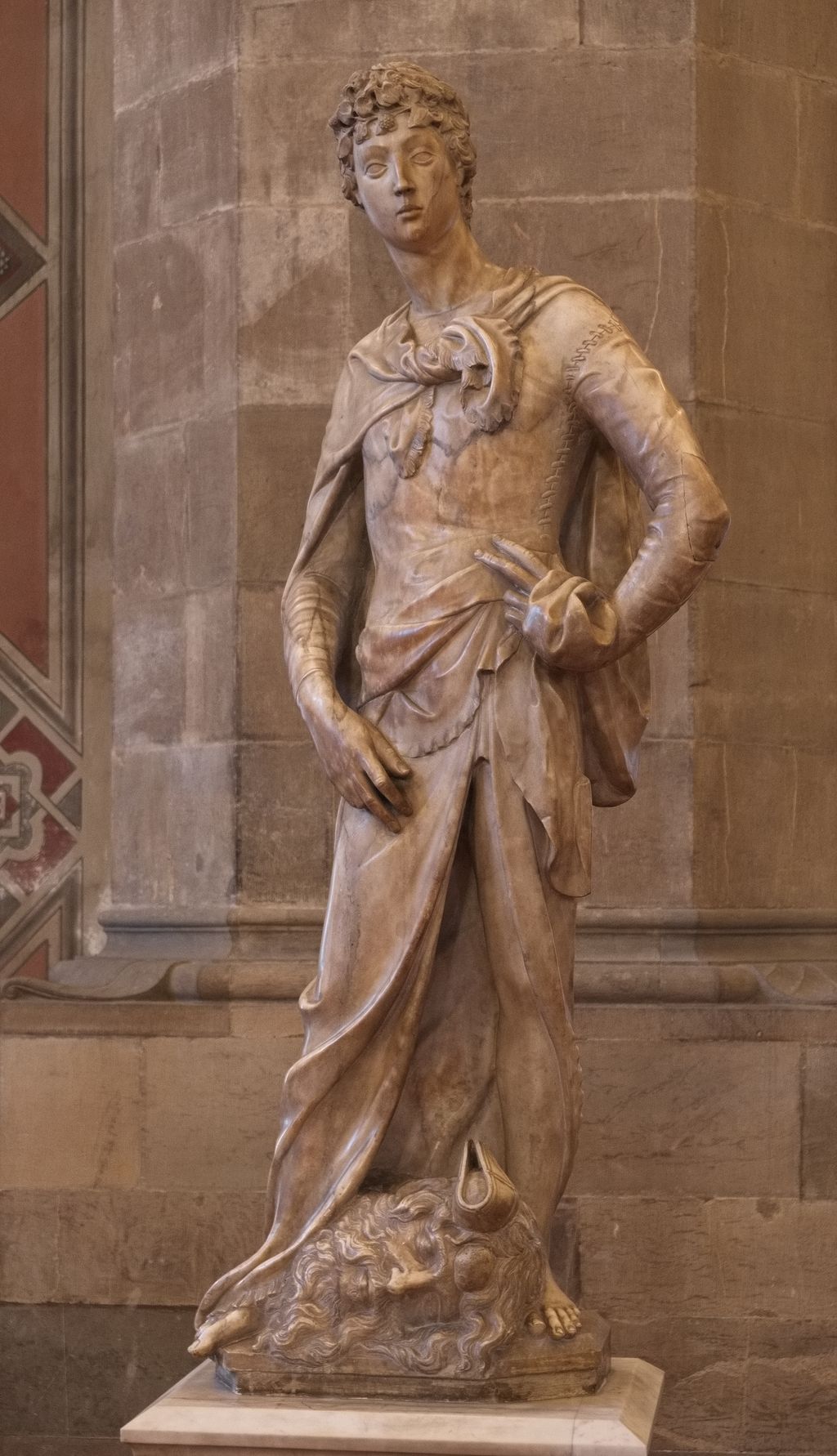
Marble David
Armin Kleiner. Image source. CC BY-SA 4.0. Resized for the web.
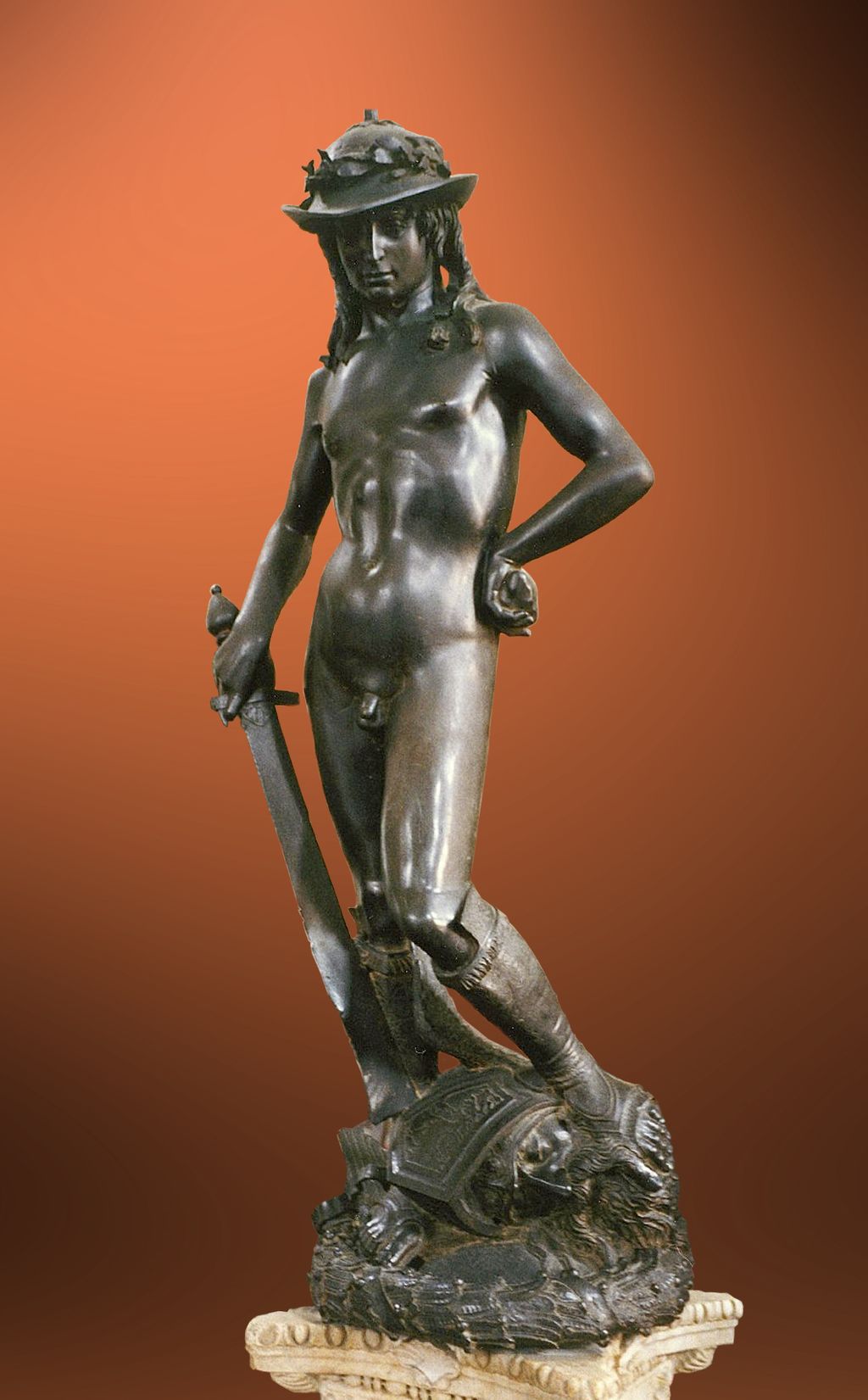
Bronze David
Patrick A. Rodgers. Image source. CC BY-SA 2.0. Resized for the web.
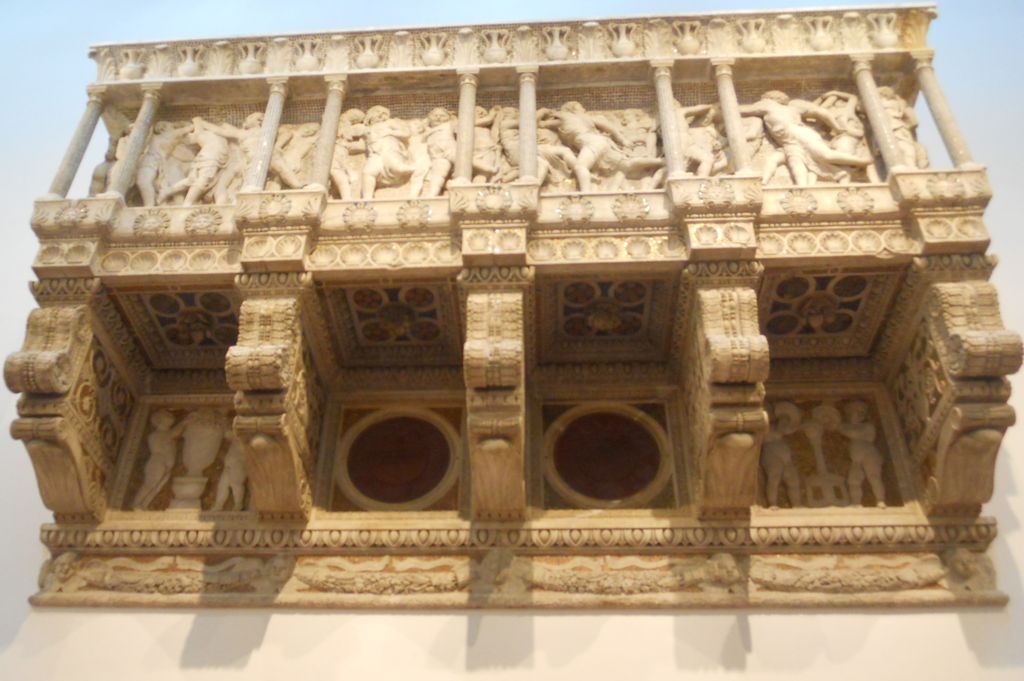
Cantoria
Erik Drost. Image source. CC BY 2.0. Resized for the web.
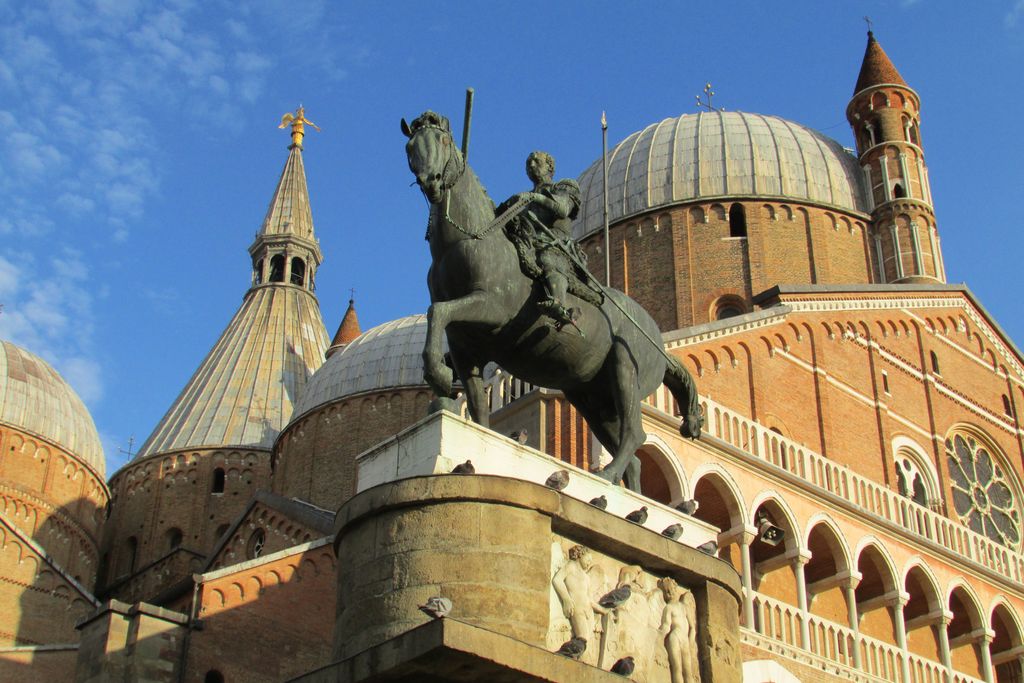
Gattamelata
Chris Light. Image source. CC BY-SA 4.0. Resized for the web.
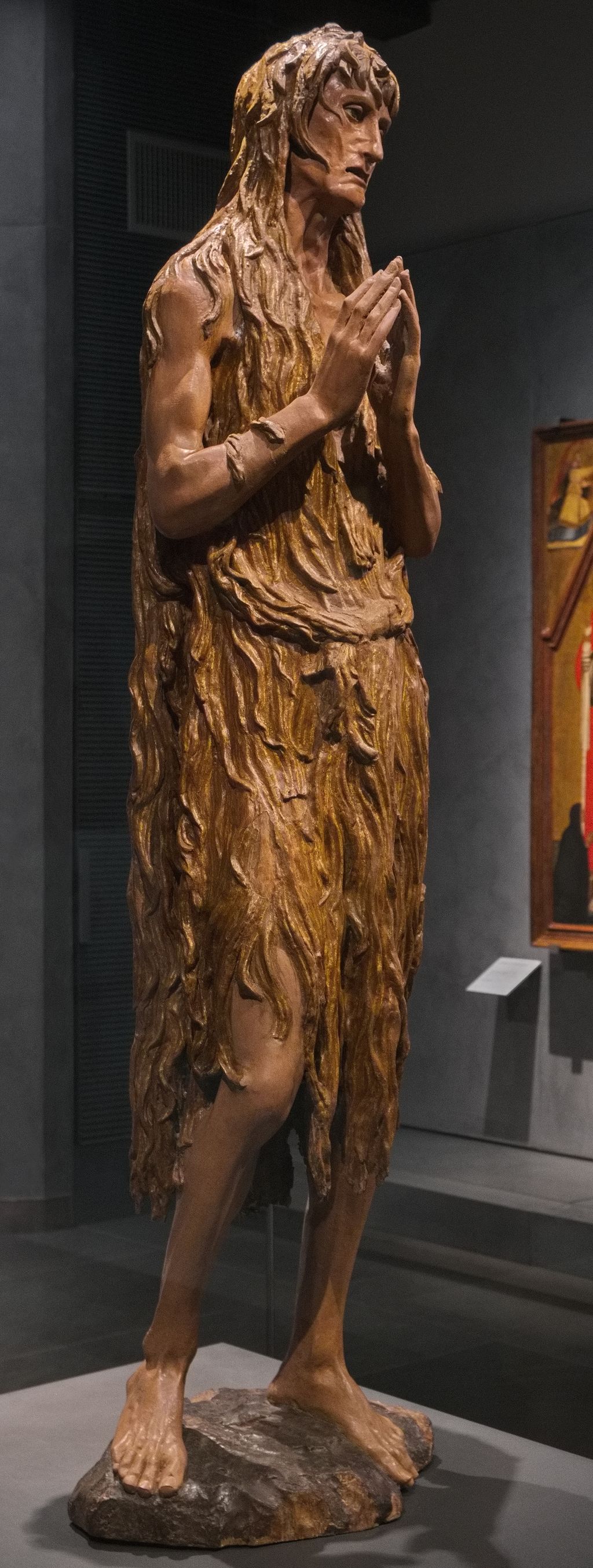
Penitent Magdalene
Armin Kleiner. Image source. CC BY-SA 4.0. Resized for the web.
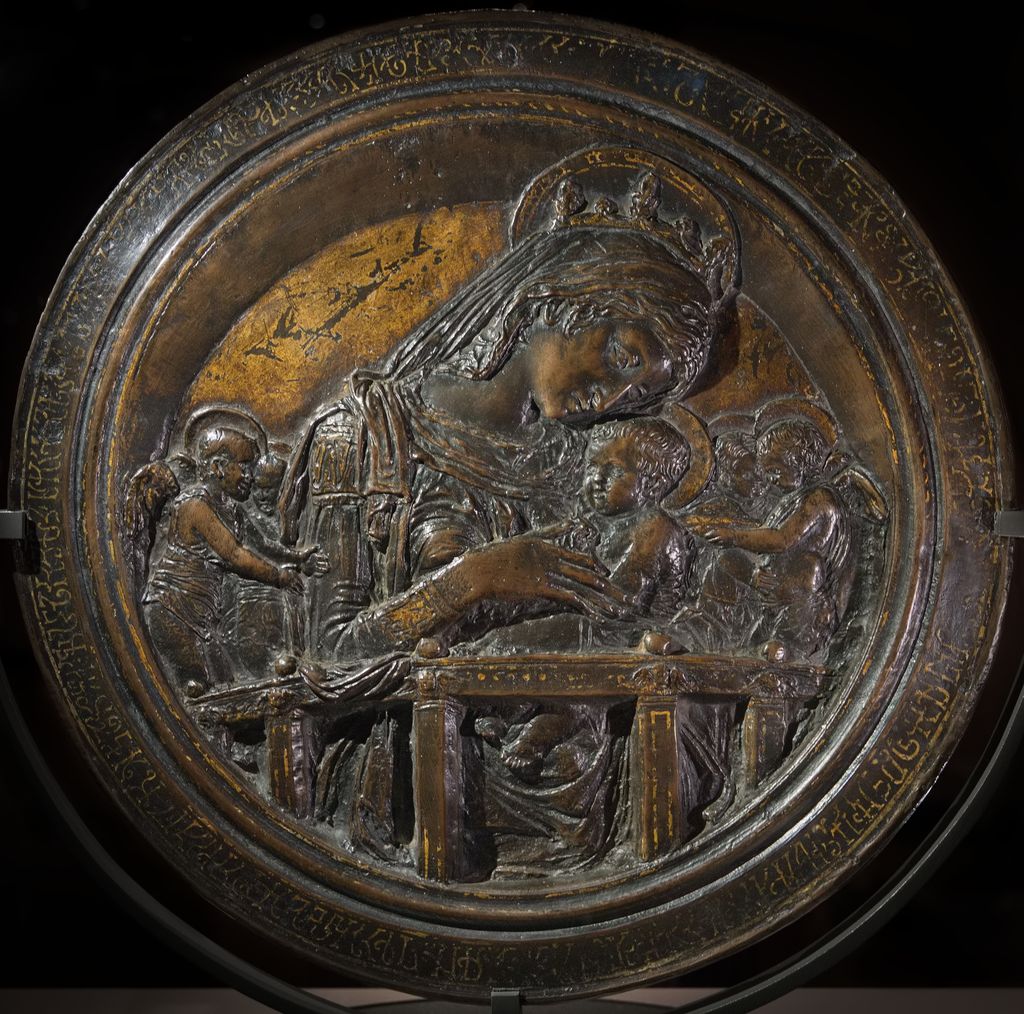
Chellini Madonna
Armin Kleiner. Image source. CC BY-SA 4.0. Resized for the web.
