


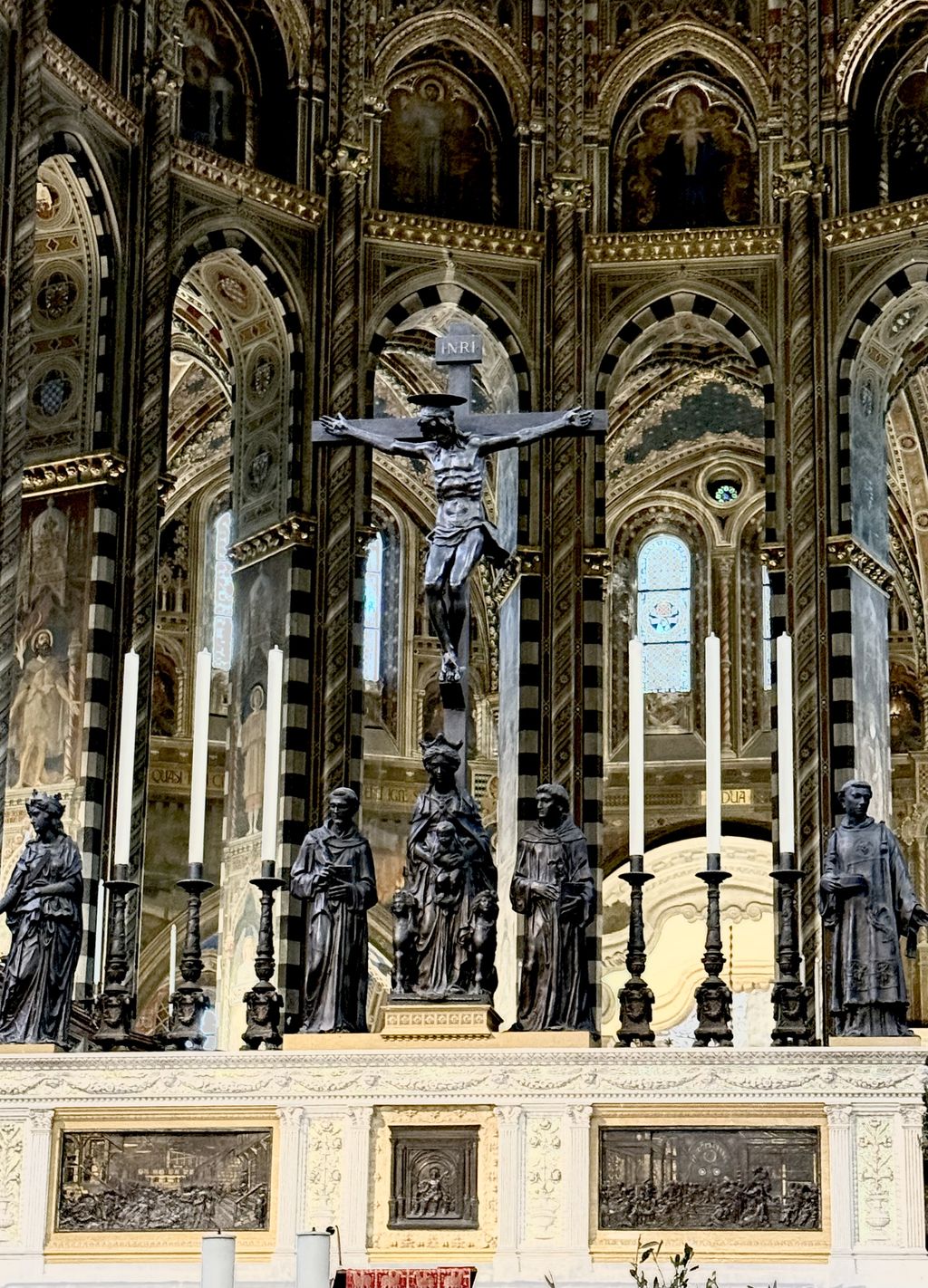
Donatello’s bronzes in Camillo Boito’s arrangement at the Basilica of Saint Anthony, Padua. Nicola Quirico. Image source. CC BY-SA 4.0. Resized for the web.
 by Tom Gurney
Tom Gurney BSc (Hons) is an art history expert with over 20 years experience
Email: tomgurney1@gmail.com / Phone: +44 7429 011000
A mule drops to its knees beneath a great arch. A Franciscan friar holds out the Eucharist and the people around him press forward to see. The scene occupies one of four wide bronze reliefs that Donatello made for the high altar of the Basilica of Saint Anthony in Padua. Above the reliefs today, six saints attend the Virgin and Child. Higher still hangs a bronze Crucifix that Donatello made for a different part of the same church. Together these works form the altar that the architect Camillo Boito assembled in 1895. The bronzes are fifteenth-century, but their setting preserves decisions made almost 450 years later. [1] [2]
A commission for Saint Anthony’s basilica
The Paduan basilica is known simply as the Santo, after the Franciscan preacher whose tomb made it a pilgrimage destination. The high altar and the altar-tomb are in different parts of the church. Anthony’s repeated appearance on the high altar, as a statue and as the protagonist of the four bronze stories, carried his presence into the principal setting for the Mass. Visitors who came to seek the saint at his tomb could encounter stories of his powers elsewhere in the building. The friars saw those same stories in a place where they gathered for worship. [2] [3]
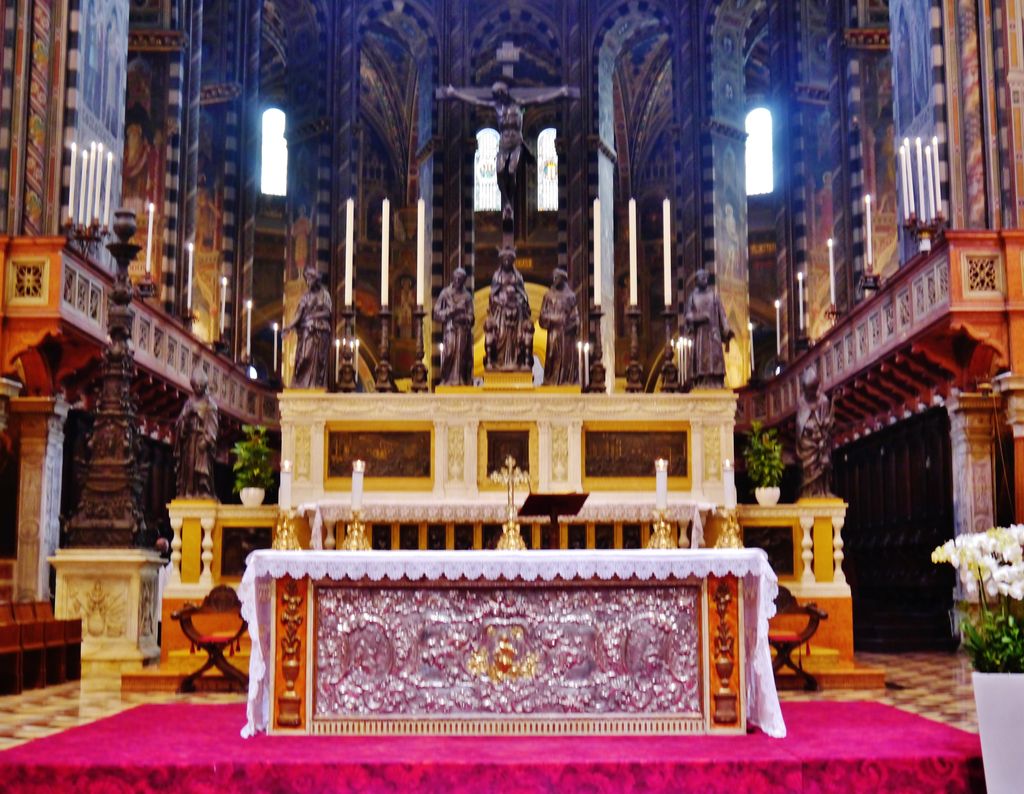
The high altar seen from the nave. The present installation relates Donatello’s bronzes to the architecture and liturgical furnishings around them. Zairon. Image source. CC BY-SA 4.0. Resized for the web.
The Veneranda Arca di Sant’Antonio commissioned the work. Paduan citizens and friars served on this body, which administered gifts from the faithful and paid for work in the basilica and friary. Preparations for the altar reach back to 1446 and payments for Donatello’s work on it are documented from February 1447. A gift by Francesco Tergola in 1446 helped fund the undertaking. His request for the inclusion of his coat of arms is documented, although Caglioti’s reading of the accounts indicates that it never became part of the design. The principal bronzes are generally dated to about 1446–50. The records cover several stages of work, including the modelling, casting and finishing of sculpture and the construction of its setting. A date for the principal sculptures therefore gives only part of the chronology. [1] [3] [4] [5]
The payments also reveal a division of labour beneath Donatello’s name. The local coppersmith Andrea dalle Caldiere cast bronzes for the altar. Assistants were paid to clean up the castings and finish their surfaces before gilding. The sculptor’s Florentine assistants and suppliers in Padua worked on a project that needed metal, stone and specialist labour. Fondazione Federico Zeri’s catalogue associates Bartolomeo Bellano with the altar ensemble and attributes the four principal stories to Donatello. Older workshop attributions and documented foundry work answer different questions. In a relief with softened edges and sharper accents, the effect could depend on decisions made in the model and on work done after the metal came out of the mould. [4] [5] [6]
The accounts show that casting was under way before construction of the stone altar became the focus of the work. Giovanna Baldissin Molli suggests that the Arca may initially have asked Donatello for sculpture to fit the existing high altar and that the undertaking then grew. That possibility helps explain why a single commission date gives such an incomplete picture. The project eventually included a new architectural setting, and recent work by Francesco Caglioti considers the altar in relation to the enclosure of the friars’ choir, an undertaking that continued after Donatello’s time in Padua. [1] [4]
The Virgin and the six saints
The seven principal statues are bronzes made in the round. In Boito’s arrangement the Virgin and Child occupy the centre, among six figures that include the bishops Louis of Toulouse and Prosdocimus. Francis of Assisi and Anthony are identifiable as friars, while Justina and Daniel stand with the local saints. Prosdocimus was venerated as Padua’s first bishop. Anthony belongs to both the local and Franciscan histories of the basilica, so the grouping allows him to be seen in each company. The saints are also recognisable by their silhouettes. The mitres of the bishops rise above the soft hoods and gathered habits of the friars. [2] [3] [5]
The Virgin faces out, holding the Child upright against her. Her lower body is set forward within the throne and the heavy folds falling between her knees make her seem on the point of rising. The Child, held in front of her body, is presented to the space beyond the sculpture. The flank of the throne, with its animal support, is easier to make out from an angle. The shift from frontal address to forms that come into view from the sides is one of the pleasures of seeing the group as sculpture. In a fifteenth-century setting with columns and a canopy, the relative positions of the figures would have changed further as a viewer moved. [3] [5]
The statues are often described as a sculptural sacra conversazione, the gathering of saints around the Virgin and Child in a space they share. In a painted altarpiece a painter can decide how far apart those figures appear and from what height we see their hands or faces. In Padua the distance between the bronzes, the height of their supports and the viewer’s position all mattered. Geraldine A. Johnson distinguishes among the people who would have encountered them. A pilgrim might have registered the altar’s splendour from a distance. A Paduan citizen might have recognised a group of protectors of the city. Friars with more regular access could read the same images through the history and devotional concerns of their order. [3]
Annotated Details from the Santo Altar
Select a number to jump to a detail of the sculpture.
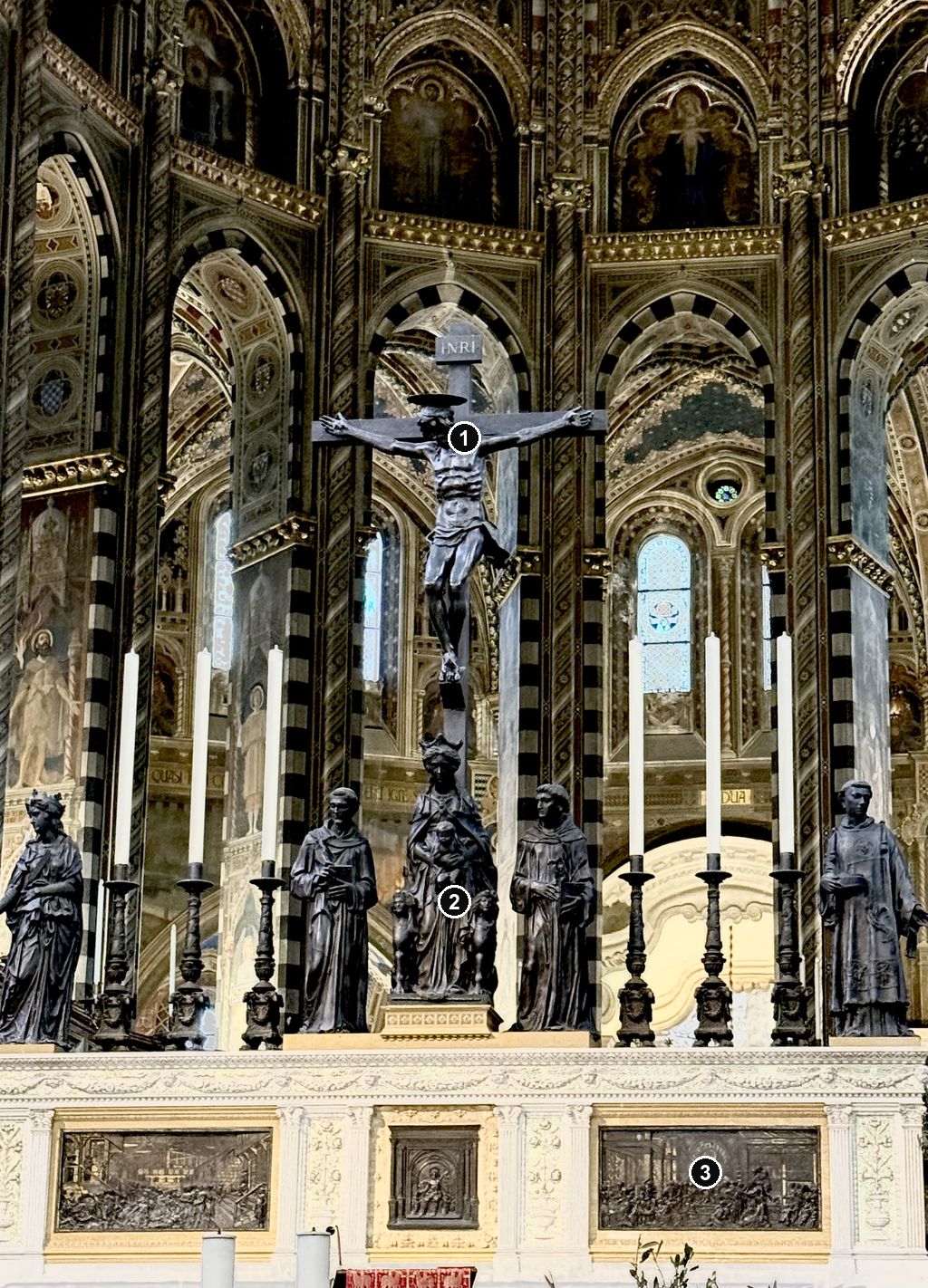
Details from THE SANTO ALTAR
Open a detail image to examine the surface more closely.
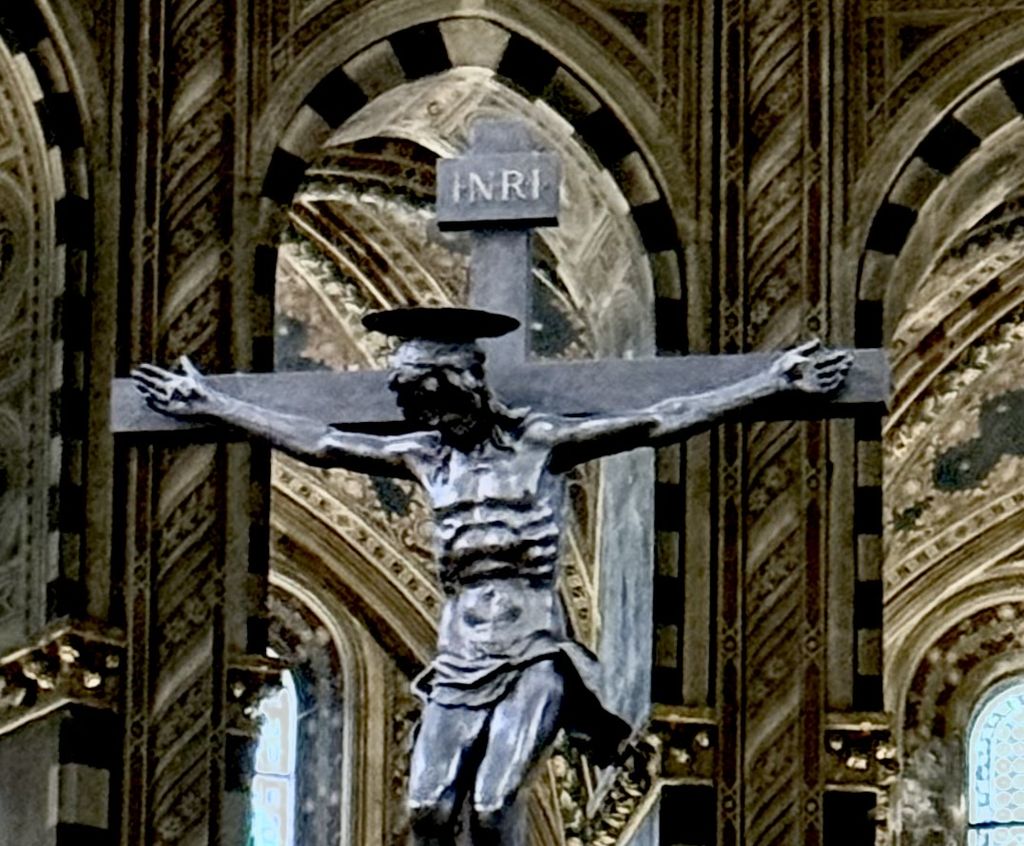
Crucifix above the figures
The crucifix sits high above the rest of the sculpture in Boito’s arrangement. Its central placement shows how the nineteenth-century installation presents the bronzes together.
The Madonna in the centre
The seated Madonna and Child interrupt the row of standing saints. Candles and liturgical furnishings give the present altar a different scale from an isolated museum display.
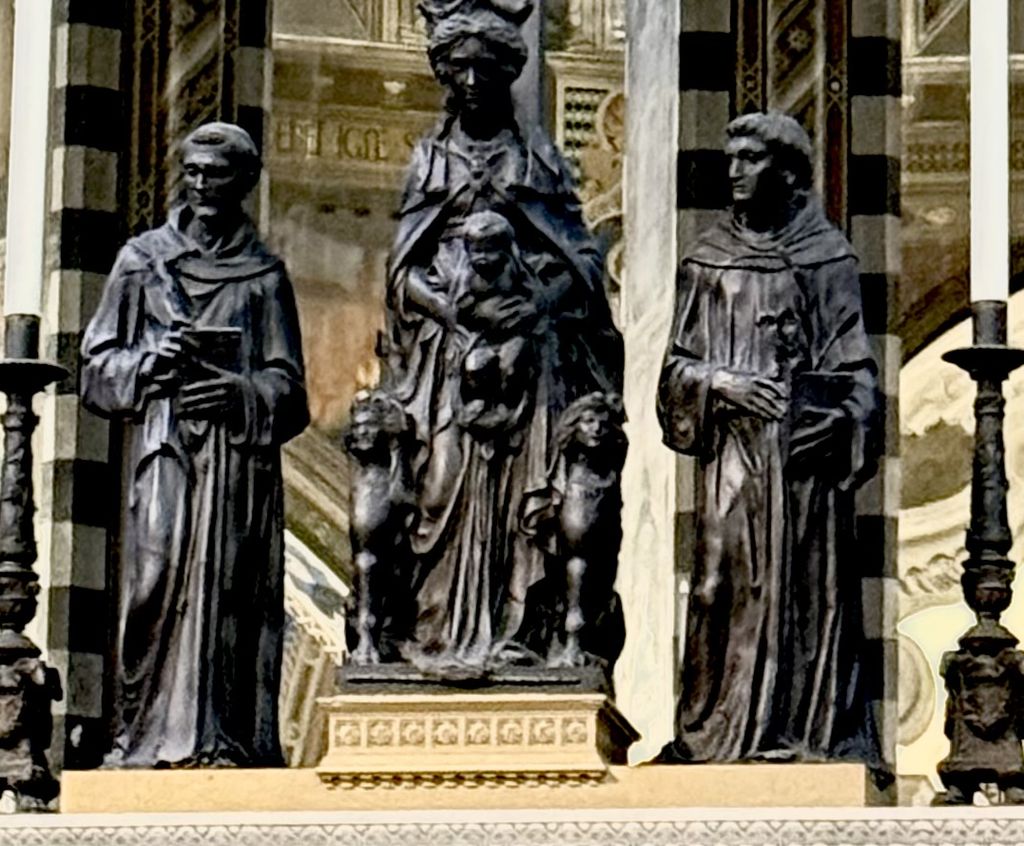
Reliefs below the figures
The bronze scenes are set low across the altar front. Their concentrated areas of action call for a closer view than the freestanding figures above.
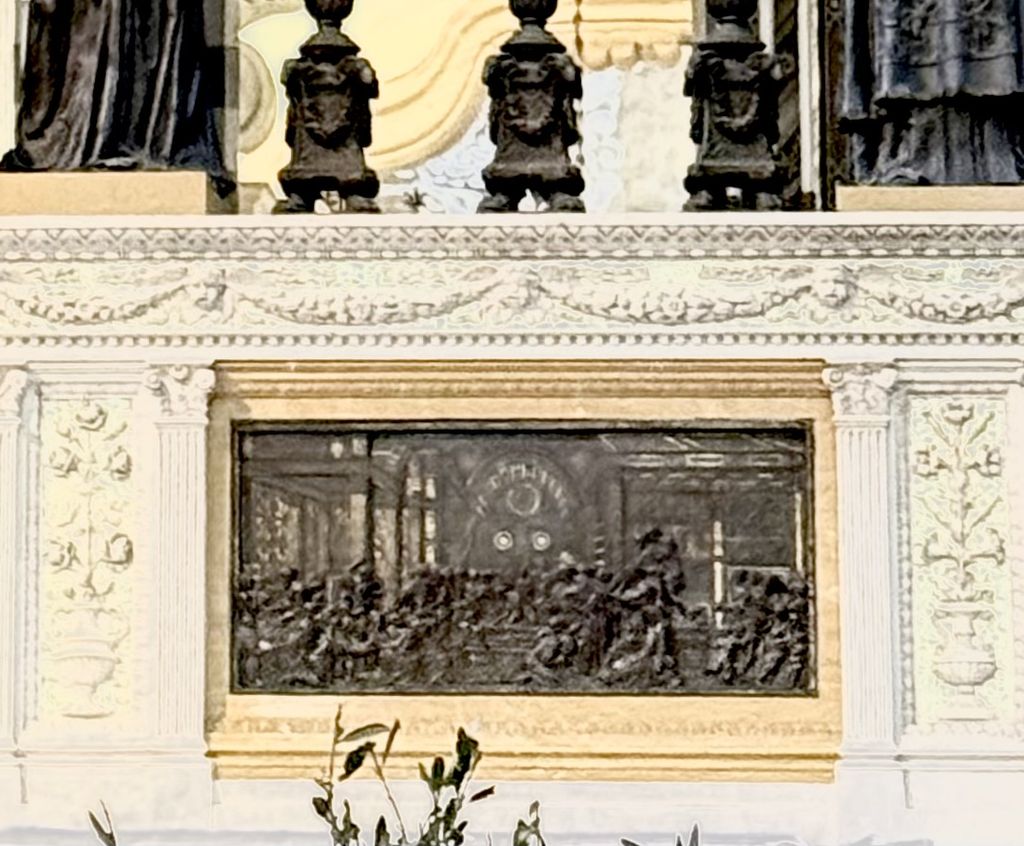
Annotated photograph and detail crops. Nicola Quirico. Image source. CC BY-SA 4.0. Resized, annotated and cropped from the original photograph.
The Miracle of the Mule
In the story depicted in the Miracle of the Mule, a man challenges Anthony to prove that Christ is present in the Eucharist. A hungry mule is offered feed while Anthony approaches with the consecrated Host. The animal bends before the sacrament. The choice between the feed and the Host makes an invisible tenet of the faith visible in a bodily action that the onlookers can recognise. Set into a high altar, the story acquired a further immediacy. The sacrament at the centre of the story was also at the centre of the rites celebrated above the relief. [7] [8]
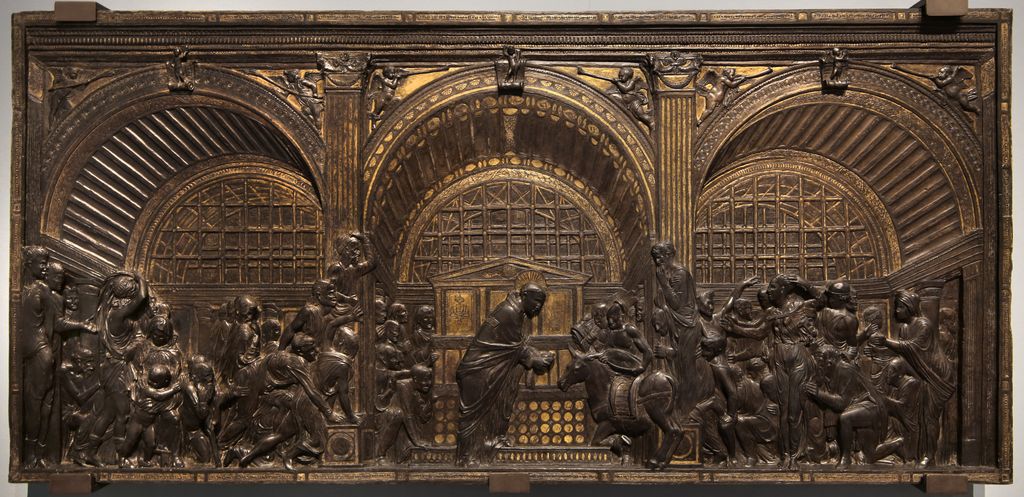
The spaces beneath the three vaults organise the bronze relief around the animal and the Host. Francesco Bini. Image source. CC BY-SA 4.0. Resized for the web.
Three round arches span the bronze panel, which measures about 57 by 123 centimetres. Their upper edges and the panels inside the archways are easier to follow than the first tangle of bodies below. Begin at the middle bay and look down to the much smaller exchange between the friar and the creature. The mule lowers its forequarters amid figures who are themselves dropping to their knees. On either side, bystanders bend, crane their necks or try to peer past the people in front of them. A spectator has to look through a crowd, as the people inside the relief do. [7] [8]
The architecture lends order to that clamour. Receding mouldings and the undersides of the arches give the impression of a space deep enough for the crowd to enter. In the lower part of the panel, the shallow difference between one figure and the next is enough to make a body disappear behind a shoulder and emerge again at the head. A raised edge can catch the light while a nearly flush line recedes. Selective gilding and silvering in the Santo narratives once gave such details additional emphasis. Looking across the Mule, it is possible to imagine the architectural surfaces registering first as highlights while the people emerged more slowly. [6] [8]
Donatello had used architecture to organise a complicated story in his bronze Feast of Herod for the Siena baptistery. There the palace interior carries different moments of the story into the background. In the Paduan Mule, the openings focus attention on an action almost lost among its own witnesses. One of the differences a close comparison brings out is how little bodily movement the animal needs to make the whole panel turn towards it. [5] [8]
A foot, a child and a miser’s heart
The other three bronzes gave Anthony new settings in which to act. In the Miracle of the Re-attached Foot, a young man takes the friar’s rebuke for kicking his mother so literally that he cuts off his own foot. Anthony comes to him and restores it. The sculpted body on the ground is the point around which standing and stooping figures collect. The horizontal youth and Anthony bending towards him bring the eye low, in keeping with a story whose outcome depends on a touch. [5] [9]
In the Miracle of the Speaking Infant, the child’s father doubts his wife’s fidelity. At Anthony’s prompting the newborn speaks, identifying its father and vindicating its mother. An entire group has to attend to a voice that could scarcely be imagined coming from such a small figure. Diana Bullen Presciutti’s study of the relief considers how the sculptor makes innocence both visible and, by implication, audible. The child is physically slight, but the people gathered to hear it give its testimony the force of a public event. [3] [10]
In the Miracle of the Miser’s Heart, Anthony tells the mourners at a rich man’s funeral that the dead man’s heart is with his wealth. The story moves between the body, which is opened and found to lack a heart, and a chest, where the heart is discovered. The width of the composition allows the proof to unfold across more than one gathering of figures. The Gospel maxim about the heart being where one’s treasure lies becomes something that people inside the bronze can turn and point to. Versions of this story, the healed foot and the speaking child also appear in later marble reliefs in the saint’s tomb chapel, where they belong to a separate commission. [5] [11] [12]
Two images of the dead Christ
Other bronzes bring the viewer back from public wonders to shorter, quieter subjects. Four reliefs represent the Evangelists through their traditional symbols, the winged human figure of Matthew, Mark’s lion, Luke’s ox and John’s eagle. In the narrow panels of angels and spiritelli, small animated bodies play instruments or sing. These figures show how much Donatello and his workshop could do with the space between the great statues and the larger narratives. The bronzes linked to the high altar are distinct from the later biblical reliefs that Bellano made for the enclosure of the choir. [1] [2] [5]
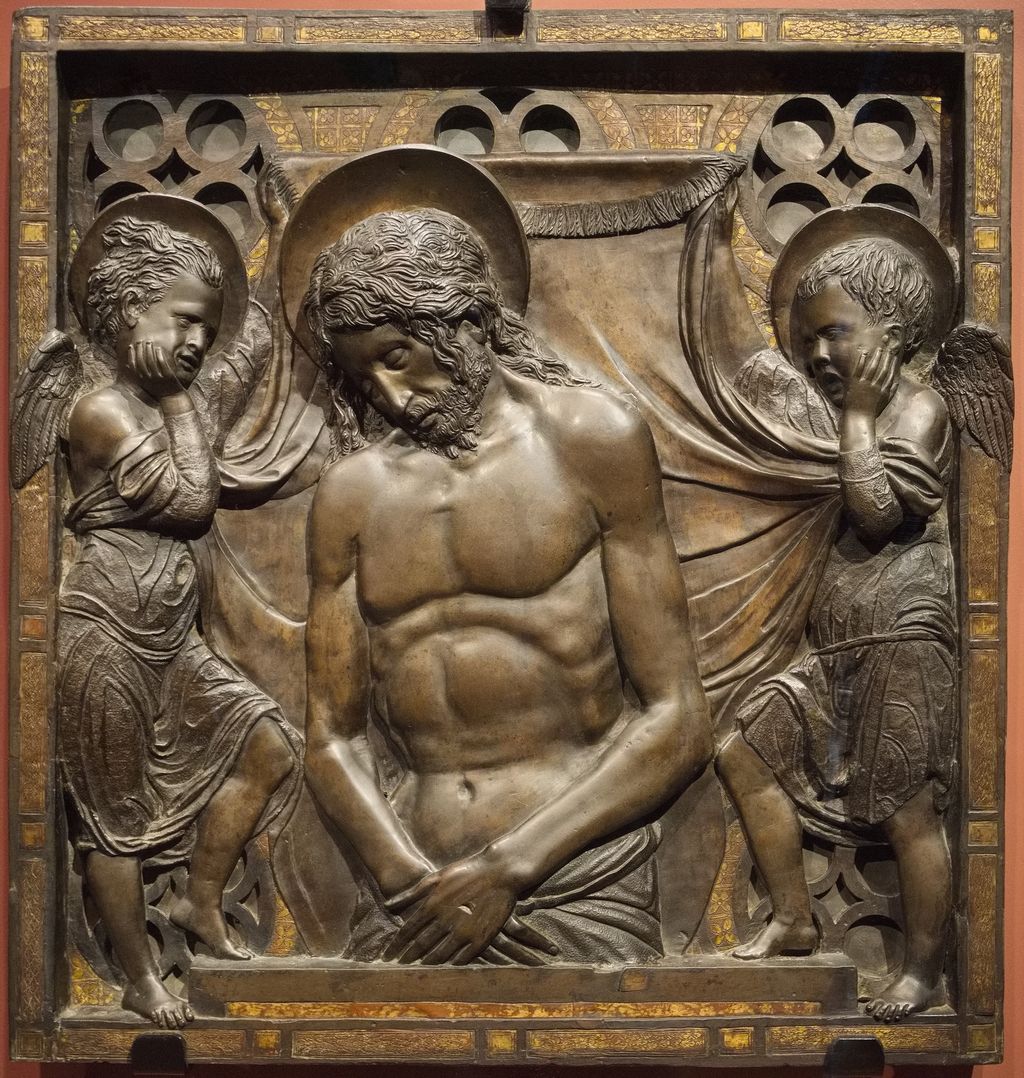
The altar’s bronze Man of Sorrows, with angels on either side of Christ. Armin Kleiner. Image source. CC BY-SA 4.0. Resized for the web.
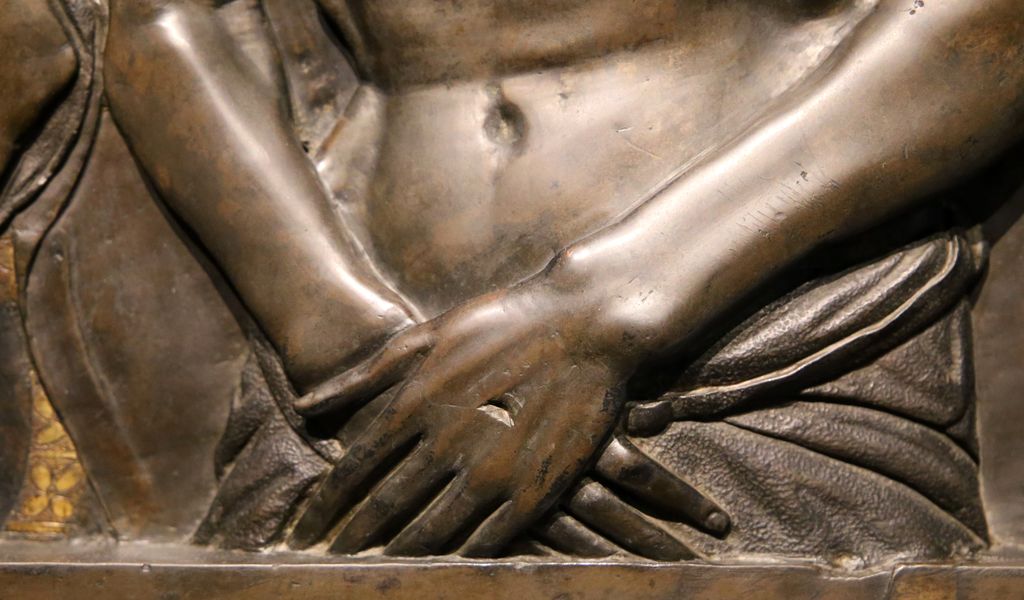
The hands cross in front of the body in the bronze Man of Sorrows. Francesco Bini. Image source. CC BY-SA 4.0. Resized for the web.
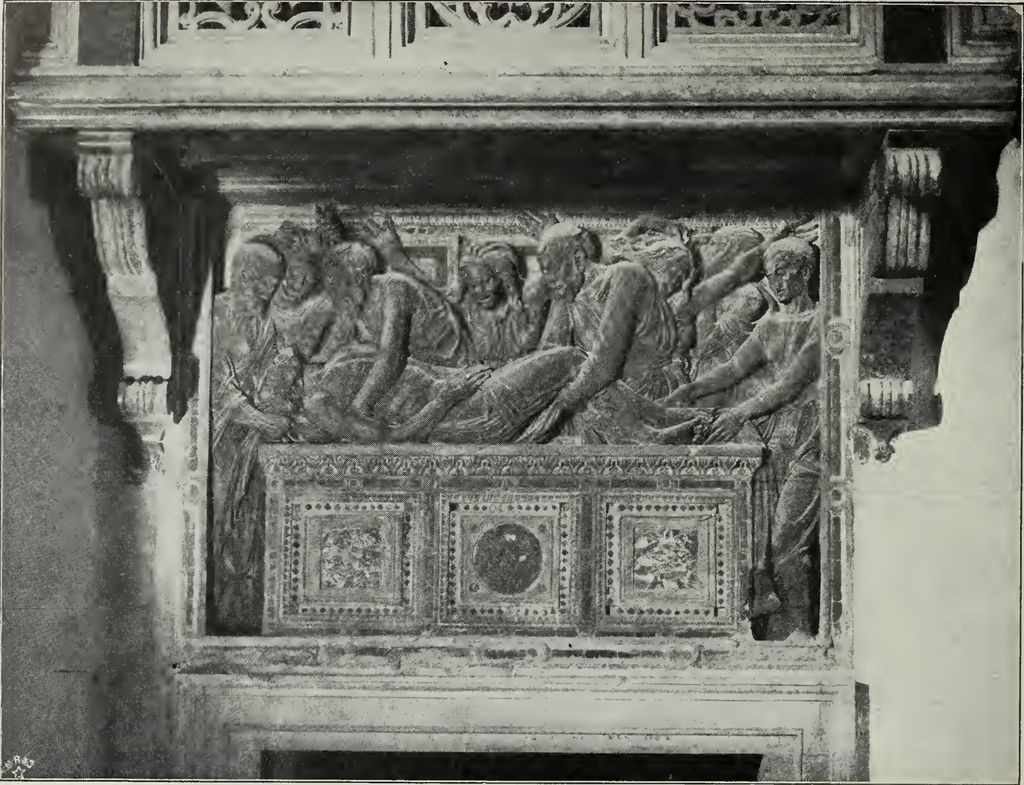
Alinari’s photograph of the stone Entombment beneath the rear of the Padua altar, published in 1904. Fratelli Alinari, published in Alfred Gotthold Meyer’s Donatello, 1904. Image source. Public domain. Photograph cropped from the digitised page and resized; published in 1904.
The small bronze Man of Sorrows, also called the Imago Pietatis, presents the dead Christ upright and supported by angels. The bowed head and slack body hold the eye near the middle of the relief. The angels press close enough for their bodies and wings to form part of the outline of the group. This is an image for contemplation, with Christ’s body offered to view almost as the Child is presented in the statue above. It also differs in subject and scale from the large bronze Crucifix, which depicts Christ on the cross. [4] [5] [13]
In the Entombment, on the back of the present altar, mourners lower Christ into a stone tomb. The rectangular lip of the sarcophagus gives the viewer a firm horizontal line. Behind it the hands, sleeves and faces contract into a dense band, with scarcely any space between the stricken figures. Christ’s weight draws the men who carry him forward while the mourners behind them fling up their hands and bend over the body. In the miracle bronzes, the fictive buildings supply room for witnesses to move. Here the compressed scene leaves grief nowhere to go. [2] [5] [14]
The Entombment is the surviving altar’s only narrative relief carved in Nanto limestone. The stone carries coloured inserts as well as a complex history of surface treatments. A cleaning test in 2017 revealed gold leaf beneath later layers. Raking light and examination of the surface also showed scratches, areas of repainting and losses down to the stone. A restoration project identifies a later bronze-coloured coating among the layers. The colour of the relief as seen in a photograph can consequently conceal both the limestone underneath and the decorative effect of its earlier finishes. [14]
From the fifteenth-century altar to Boito’s
Surviving accounts and early descriptions document an elaborate setting with coloured stone, mouldings and columns. They yield firmer evidence for some of its ingredients than for the placement of each bronze. The presbytery was also laid out differently. The friars’ choir and its enclosing structures affected where people could approach or see the altar. Caglioti distinguishes Donatello’s work on the choir enclosure from a separate Late Gothic screen, farther west, made under the direction of the Paduan stoneworker Bartolomeo Crivellari. That screen was the original setting for the bronze Crucifix. The Fondazione Zeri dates the Crucifix to about 1444–47, with work on it beginning ahead of the main altar bronzes. [1] [3] [15]
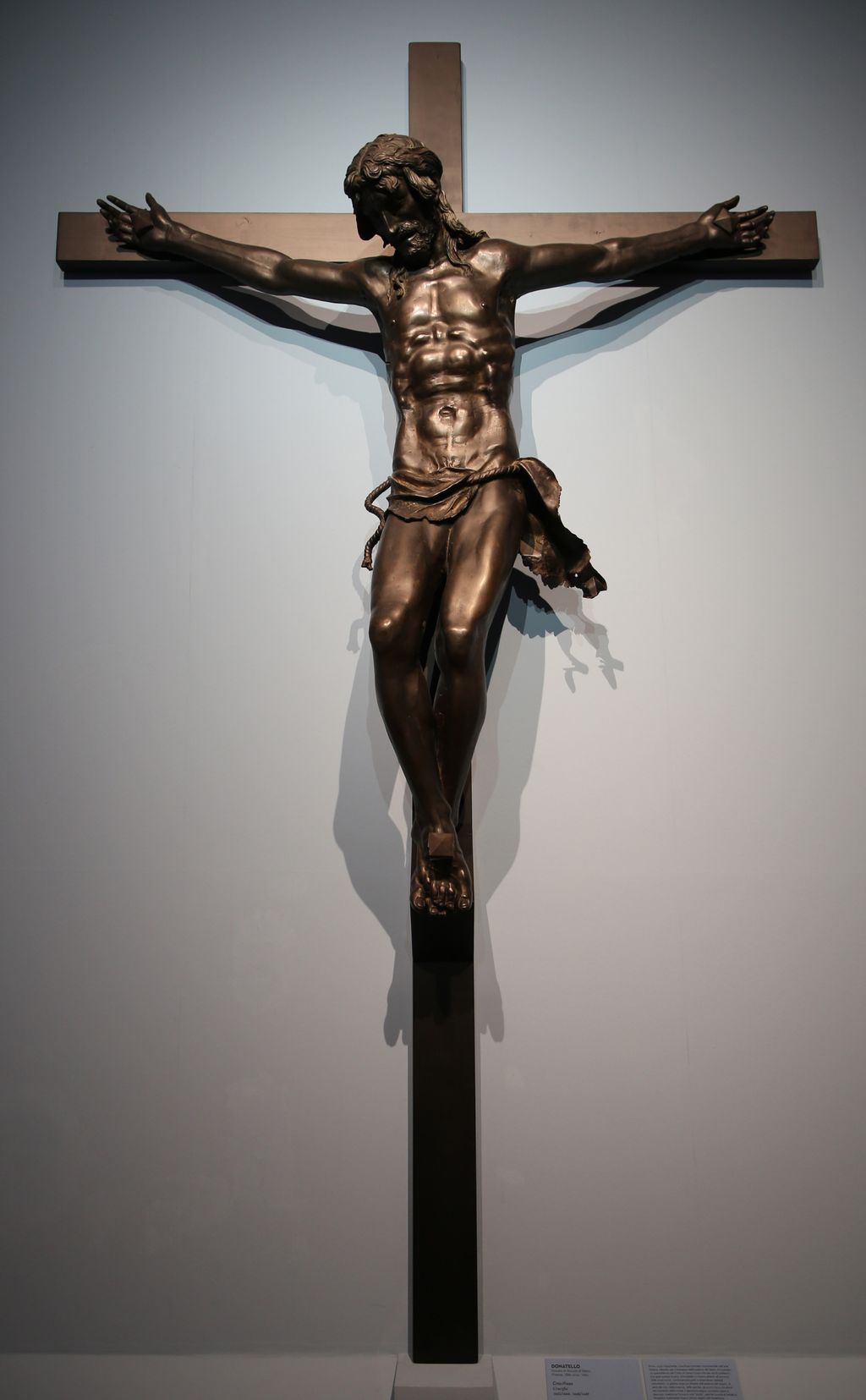
The large bronze Crucifix, photographed away from its position above Boito’s arrangement. Francesco Bini. Image source. CC BY-SA 4.0. Resized for the web.
Changes accumulated before Boito’s intervention. Rebuilding begun in 1579 under Girolamo Campagna and Cesare Franco broke up Donatello’s architectural arrangement. Caglioti connects that replacement to the desire to give a prominent Eucharistic tabernacle a place above the high altar. Earlier sculpture survived by being reused or relocated. In 1651 a further reorganisation removed the old screen, moved the Crucifix and shifted the friars’ stalls. A fire in 1749 destroyed the fifteenth-century wooden stalls and damaged the area. Repairs restored much of the preceding spatial arrangement. By the time nineteenth-century photographs could record the choir, they were already showing the result of successive interventions. [1] [16] [22]
The Arca considered Boito’s plans in the 1890s as it prepared for the seven-hundredth anniversary of Saint Anthony’s birth. In March 1895 the local newspaper described the reassembly of the altar as work under way. Boito published an account of the project in 1897, with documents and illustrations that include a view of the older presbytery. Francesca Castellani’s study of his design emphasises how closely he examined the bronzes and how much weight he gave to their visibility and the coherence of the new ensemble. Seen from the nave, the present Crucifix pulls the eye up the central axis and holds the dispersed figures together. That is an effect of Boito’s design and a reason the modern silhouette can suggest a misleadingly complete view of Donatello’s intentions. [1] [16] [17] [18]
Other reconstructions begin with the fifteenth-century records, surviving dimensions and clues such as the directions in which the saints turn. John White’s influential proposals of 1969 gave the figures an architectural canopy, with the sculptures and reliefs related to a framework that has disappeared. Creighton Gilbert returned to the documents to propose a simpler arrangement for the reliefs. The positions of the two bishops, the order of the stories and the appearance of the altar from the back all depend on how such evidence is interpreted. The smallest panels can change the appearance of the whole. Caglioti argues that the twelve vertical panels of musicians should be imagined at intervals between the larger bronzes. Alternating the single figures with the crowded scenes would have linked the rhythm of the reliefs below to that of the columns above. A reconstruction can show how a set of fragments might have worked together even where their exact positions remain uncertain. [1] [3] [19] [20]
From the piazza to the high altar
The equestrian monument to Gattamelata belongs to Donatello’s work in Padua as well. Made to commemorate the commander Erasmo da Narni, it was designed for the open space outside the Santo. Its isolated horse and rider have a profile legible across a square. Inside, an ensemble made for worship called for several kinds of attention. The Virgin’s stance, the large Crucifix above and the dark band of reliefs are legible at a distance in the present layout. The mule lowering its head or a small figure leaning across another comes into focus only at closer range. The 2022 Palazzo Strozzi exhibition made that closer view possible for the Miracle of the Mule and the Imago Pietatis by showing them on loan. In the basilica the reliefs return to the church and the company of the altar’s other bronzes. [2] [13] [21]
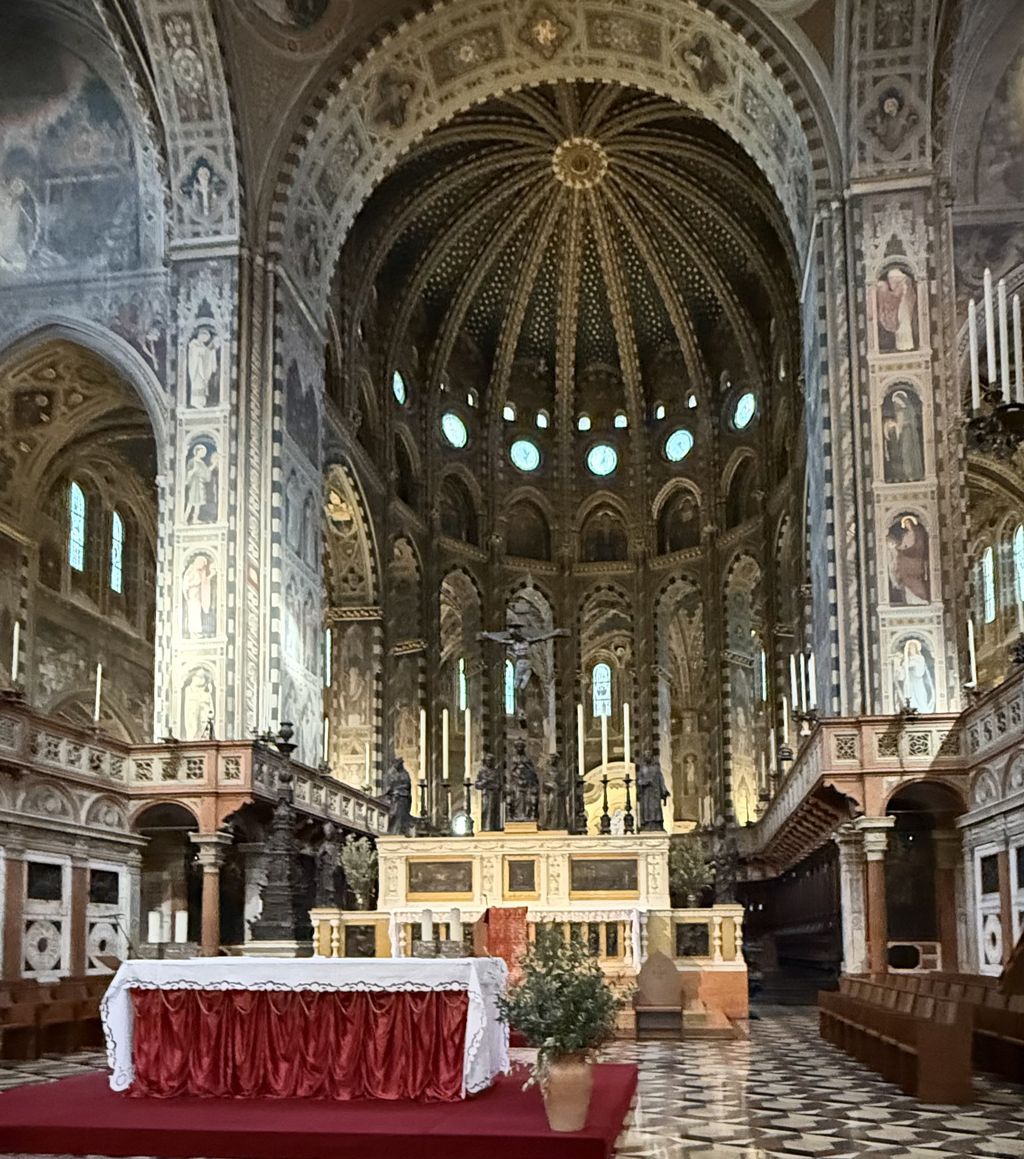
The choir and high altar seen through the basilica’s architecture. Nicola Quirico. Image source. CC BY-SA 4.0. Resized for the web.
Donatello sculpture directory
| Name | Date | Medium and record |
|---|---|---|
| Marble David | 1408–09, adapted 1416 | Carved Carrara marble Catalogue. |
| Saint John the Evangelist | c. 1409–15 | Carved marble Catalogue. |
| Saint Mark | 1411–13 | Carved Carrara marble Catalogue. |
| Saint George and its dragon relief | c. 1415–17 | Marble statue and marble relief Catalogue. |
| Marzocco | c. 1417–20 | Carved sandstone Catalogue. |
| Saint Louis of Toulouse, Florence | 1418–25 | Gilt bronze and mixed media Catalogue. |
| Pazzi Madonna | c. 1420s | Marble relief Catalogue. |
| Reliquary Bust of Saint Rossore | c. 1420s | Gilt bronze Catalogue. |
| The Prophet Jeremiah | 1420s–30s, disputed | Marble Catalogue. |
| Zuccone | c. 1420s–30s | Marble Catalogue. |
| Feast of Herod, Siena | 1420s | Gilded bronze relief Catalogue. |
| Ascension with Christ Giving the Keys to Saint Peter | c. 1428–30 | Marble relief Catalogue. |
| Cantoria | 1433–39 | Marble and mosaic Catalogue. |
| Amor-Atys | c. 1435–40 | Partly gilded bronze Catalogue. |
| Bronze David | c. 1435–40, disputed | Partly gilded bronze Catalogue. |
| Gattamelata | Installation agreement, 1453 | Bronze and stone Catalogue. |
| Santo altar | Mid-fifteenth century | Bronze and limestone ensemble Catalogue. |
| Chellini Madonna | Given in 1456 | Partly gilded bronze tondo Catalogue. |
| Penitent Magdalene | c. 1453–55 (Opera) | Poplar, stucco, pigments and gold Catalogue. |
| Judith and Holofernes | Late 1450s–early 1460s | Bronze with surviving gilding Catalogue. |
| Pulpit of the Passion | Late work and later assembly | Bronze reliefs, Donatello and collaborators Catalogue. |
| Bust traditionally called Niccolò da Uzzano | Fifteenth century | Painted terracotta, attribution disputed Catalogue. |
| Prato Cathedral exterior pulpit | Commissioned 1428; carved 1430s | Marble reliefs, Donatello and Michelozzo Catalogue. |
| Cavalcanti Annunciation | c. 1433–35 | Gilded sandstone and terracotta Catalogue. |
| Crucifix at Santa Croce | Early fifteenth century | Painted wood Catalogue. |
| Madonna of the Clouds | c. 1425–35 | Marble relief Catalogue. |
| Old Sacristy Doors | Fifteenth century | Two paired bronze doors Catalogue. |
| Resurrection Pulpit | Late work and later assembly | Bronze reliefs, Donatello and collaborators Catalogue. |
| Brancaccio tomb | 1420s | Donatello, Michelozzo and assistants, mixed materials Catalogue. |
| Saint John the Baptist, Venice | 1438 | Polychromed and gilded wood Catalogue. |
| Sacrifice of Isaac | Early fifteenth century | Donatello and Nanni di Bartolo, marble Catalogue. |
| Madonna of Via Pietrapiana | Mid-fifteenth century | Terracotta Catalogue. |
| Miracle of the Mule | Mid-fifteenth century | Gilded bronze panel for the Santo altar Catalogue. |
| Padua Crucifix | Mid-fifteenth century | Cast bronze Catalogue. |
| Dancing Spiritello, Bargello | Fifteenth century | Bronze Catalogue. |
| Young Prophet from the Porta della Mandorla | c. 1404–09 | White marble, attributed to Donatello Catalogue. |
| Prophet or Apostle from the Duomo north tribune | Early fifteenth century | White marble, possibly Donatello Catalogue. |
| Beardless Prophet | 1415–18 | White marble Catalogue. |
| Sibyl and Prophet of the Porta della Mandorla | 1422 | Carved marble heads for the portal Catalogue. |
| Faith, Siena baptismal font | 1420s | Gilded bronze figure Catalogue. |
| Hope, Siena baptismal font | 1420s | Gilded bronze figure Catalogue. |
| Feast of Herod, Lille | c. 1430 | Carrara marble relief Catalogue. |
| Piot Madonna | c. 1440–60 | Polychrome terracotta with glass and wax inlays Catalogue. |
| Carafa Horse Head | c. 1456–58 | Cast bronze Catalogue. |
| Pazzi Madonna workshop version, Louvre | c. 1450 | Polychrome gesso, Donatello’s workshop Catalogue. |
| Pazzi Madonna tondo, Rijksmuseum | c. 1425–50 | Plaster and stucco, after Donatello Catalogue. |
| Sprite | c. 1430–40 | Bronze, sculptor or metalsmith close to Donatello Catalogue. |
Discussion
Look again at the images and ideas explored in Donatello’s Santo Altar. These editorial prompts invite your observations.
Reader Insights
Which reactions in the crowd help your eye find the mule and the Host?
How would you read the seven figures if they stood beneath a canopy and the Crucifix were visible from a separate screen?
Join the Conversation
Share a detail, comparison or question about Donatello’s Santo Altar below.
References
- Francesco Caglioti, “Donatello e il tornacoro del Santo: punti fermi e prospettive d’indagine (anche sul tramezzo),” Il Santo 65, 2025, pp. 9–66. View source.
- Basilica of Saint Anthony of Padua, “Chœur et maître-autel,” guide to the installed works. View source.
- Geraldine A. Johnson, “Approaching the Altar: Donatello’s Sculpture in the Santo,” Renaissance Quarterly 52, 1999, pp. 626–666. View source.
- Giovanna Baldissin Molli and Elda Martellozzo Forin, Donatello a Padova: l’attività nella basilica di Sant’Antonio. Le registrazioni contabili dell’Archivio dell’Arca, Centro Studi Antoniani, 2023, introduction to the published transcriptions. View source.
- Fondazione Federico Zeri, object and photographic records for the high altar of the Basilica of Saint Anthony. View source.
- Alison Wright, “Making and Viewing,” on casting, finishing and selective gilding in Donatello’s sculpture. View source.
- Basilica of Saint Anthony of Padua, “Saint Anthony’s Miracles. The Heretic’s Mule,” the devotional account. View source.
- Beth Harris and Steven Zucker, “Donatello, The Miracle of the Mule,” object examination at Palazzo Strozzi, Smarthistory, 2023. View source.
- Basilica of Saint Anthony of Padua, “Saint Anthony’s Miracles. The Re-attached Foot,” the devotional account. View source.
- Diana Bullen Presciutti, “Making Innocence Visible (and Audible) in the Basilica del Santo,” Saints, Miracles, and Social Problems in Italian Renaissance Art, Cambridge University Press, 2023. View source.
- Basilica of Saint Anthony of Padua, “Saint Anthony’s Miracles. The Miser’s Heart,” the devotional account. View source.
- Basilica of Saint Anthony of Padua, “The Chapel of Saint Anthony,” catalogue of the later marble reliefs and altar-tomb. View source.
- Fondazione Palazzo Strozzi and Musei del Bargello, Donatello, il Rinascimento, Florence exhibition and loan information, 2022. View source.
- Ce.St.Art., Restoration Project: Deposition of Christ, Saint Anthony Basilica, Padua, conservation proposal and report on the 2017 examination. View source.
- Fondazione Federico Zeri, “Bardi Donato, Cristo crocifisso,” catalogue record for the basilica’s bronze Crucifix. View source.
- Camillo Boito, L’altare di Donatello e le altre opere nella Basilica Antoniana di Padova compiute per il Settimo Centenario dalla nascita del Santo, Hoepli, 1897, digitised by the Politecnico di Torino. View source.
- Il Comune, Padua, 8 March 1895, report on the proposed works at the Santo, Biblioteca Civica di Padova. View source.
- Francesca Castellani, “Camillo Boito e il dispositivo dell’altare di Donatello (1893–1895),” Università Iuav di Venezia research archive. View source.
- John White, “Donatello’s High Altar in the Santo at Padua Part Two: The Reconstruction,” The Art Bulletin 51, 1969, pp. 119–141. View source.
- Creighton E. Gilbert, “The Original Assembly of Donatello’s Padua Altar,” Artibus et Historiae 55, 2007, pp. 11–22. View source.
- Save Venice, “Donatello’s Equestrian Monument to Gattamelata,” conservation project and monument history. View source.
- Horst W. Janson, “Bardi, Donato, detto Donatello,” Dizionario Biografico degli Italiani, Treccani, 1964. View source.
- Victoria and Albert Museum, Donatello’s David. View source
- Opera del Duomo, Donatello and the Opera del Duomo. View source
- Ministero della Cultura, David with the Head of Goliath, Bargello bronze. View source
- Opificio delle Pietre Dure, L’ultimo Donatello. View source
More DONATELLO Sculptures
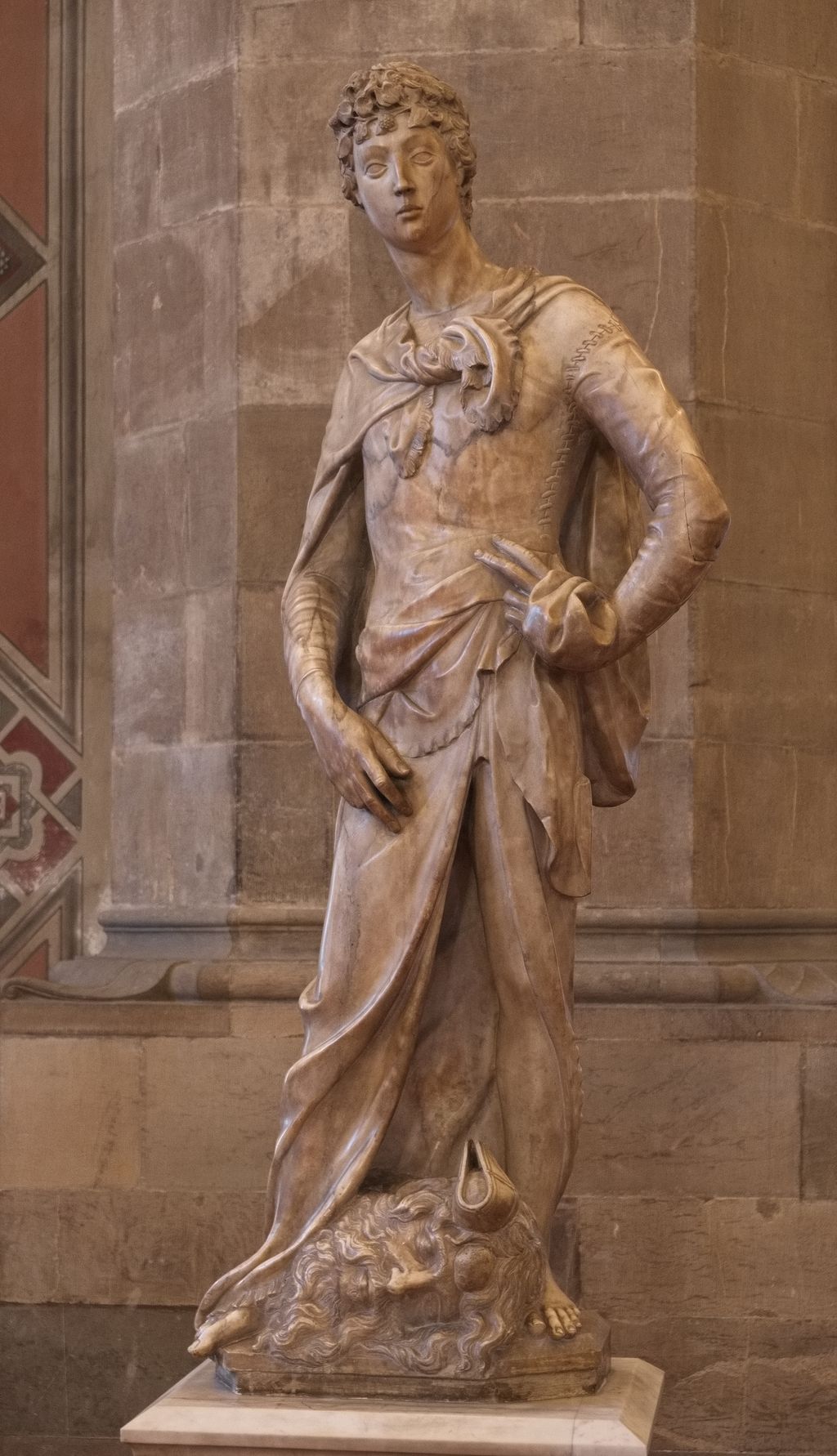
Marble David
Armin Kleiner. Image source. CC BY-SA 4.0. Resized for the web.
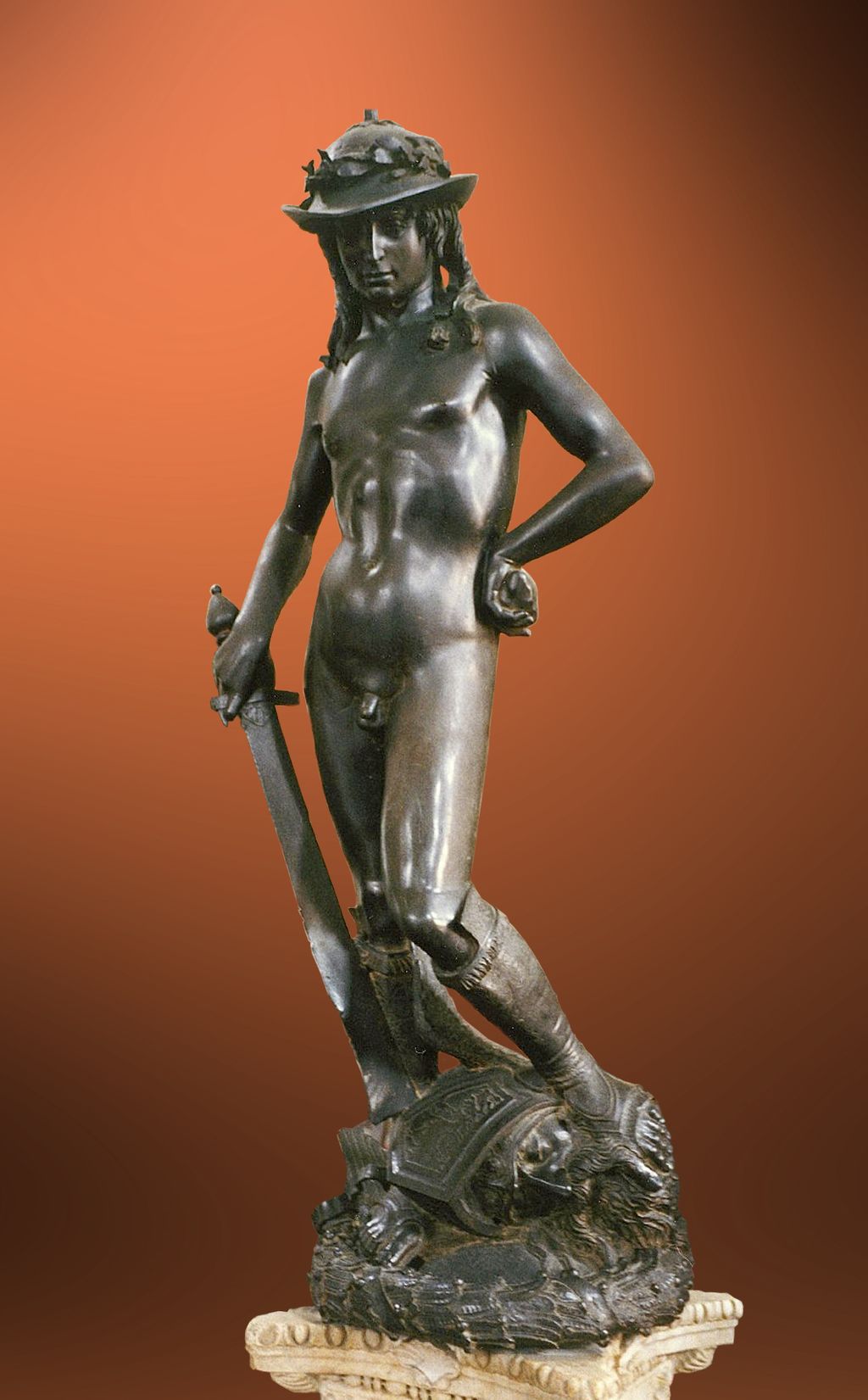
Bronze David
Patrick A. Rodgers. Image source. CC BY-SA 2.0. Resized for the web.
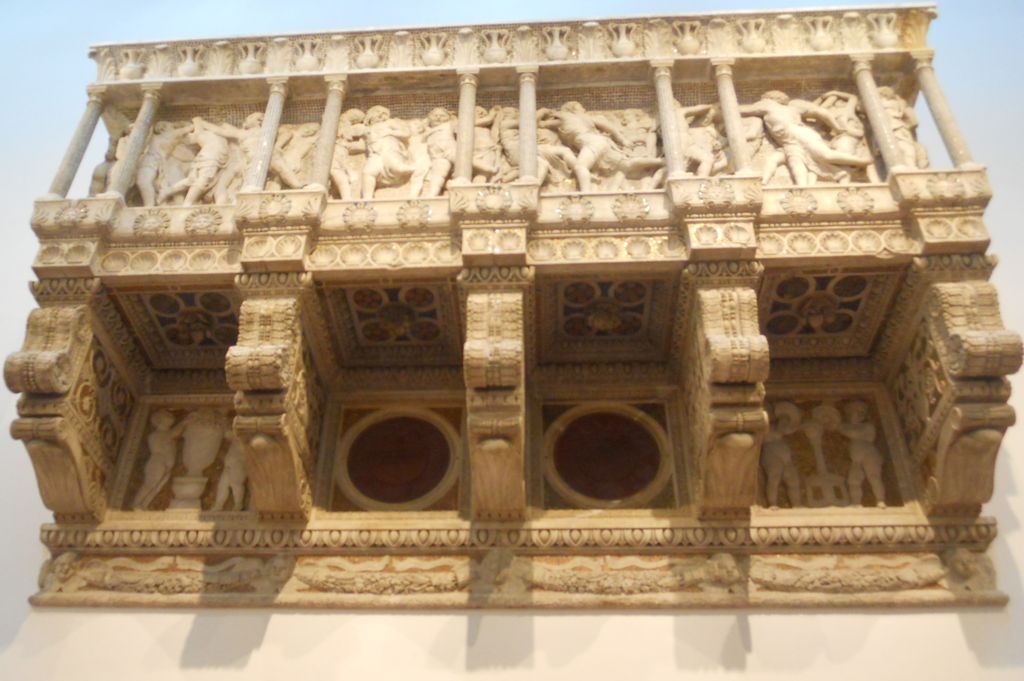
Cantoria
Erik Drost. Image source. CC BY 2.0. Resized for the web.
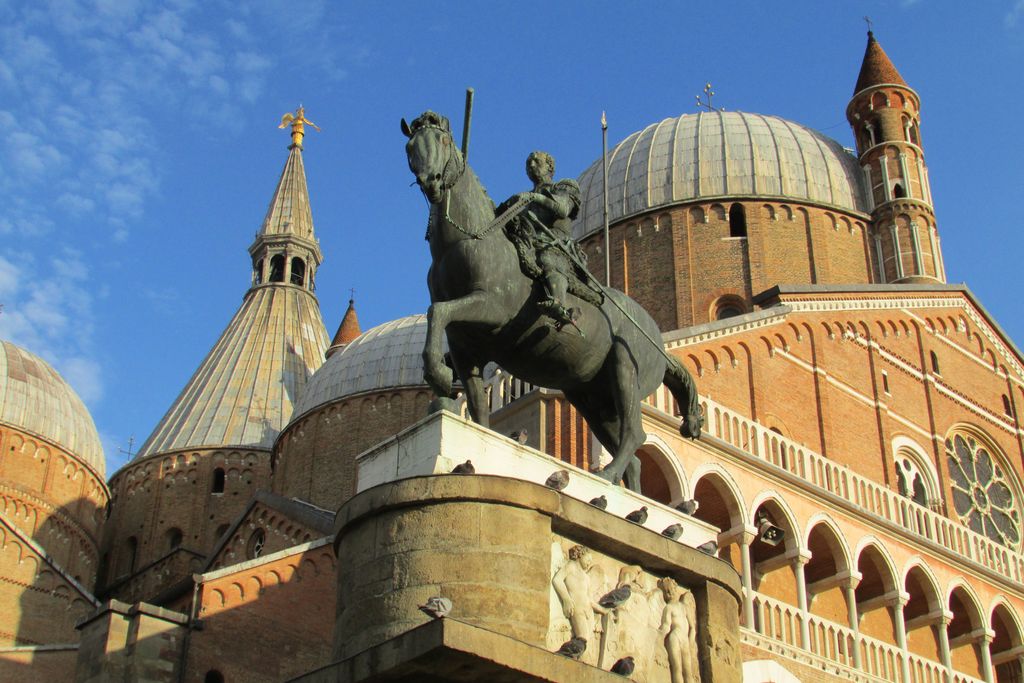
Gattamelata
Chris Light. Image source. CC BY-SA 4.0. Resized for the web.
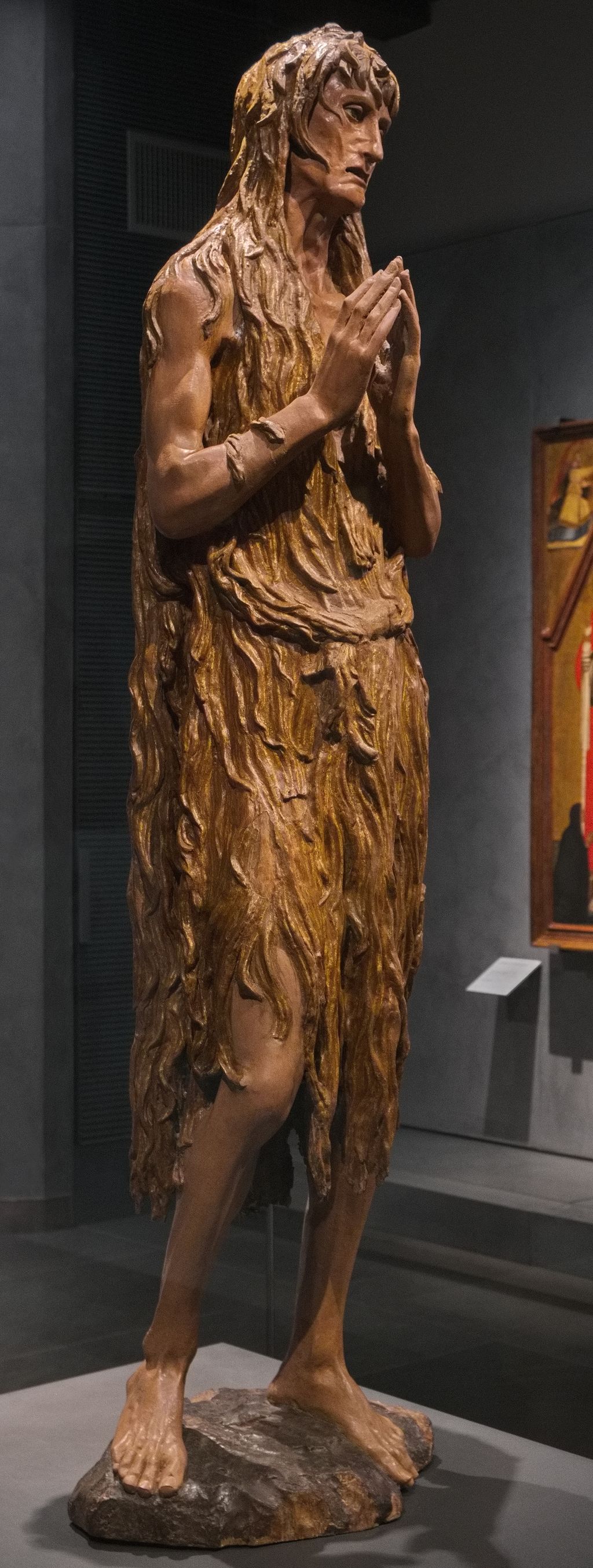
Penitent Magdalene
Armin Kleiner. Image source. CC BY-SA 4.0. Resized for the web.
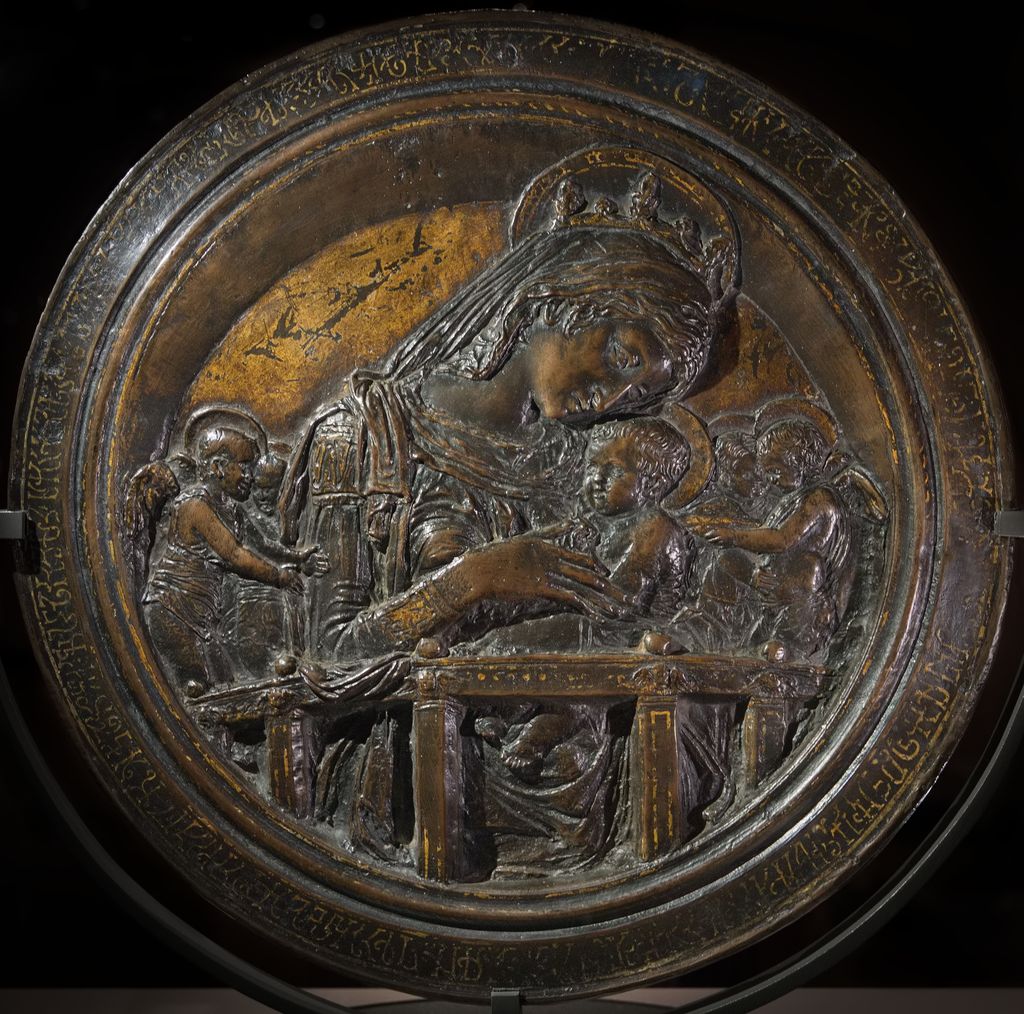
Chellini Madonna
Armin Kleiner. Image source. CC BY-SA 4.0. Resized for the web.
