


 by Tom Gurney
Tom Gurney BSc (Hons) is an art history expert with over 20 years experience
Published on June 19, 2020 / Updated on November 29, 2026
Email: tomgurney1@gmail.com / Phone: +44 7429 011000
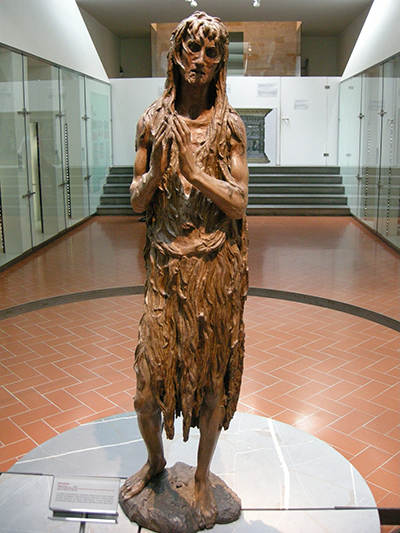
A small space opens between Mary Magdalene’s palms. Her fingers are raised towards her face, where the lips part and the eyes look off to her left. Follow her gaze and it carries you beyond the sculpture. Follow the hair down from her temples and you stay with the body, past the cords of her neck and the lean arms to bare feet on a rough patch of ground. Donatello gave the figure the size of a person you could meet and the concentration of someone who has scarcely noticed you. [1]
The Penitent Magdalene is in the Museo dell’Opera del Duomo in Florence. The museum’s catalogue gives its dimensions as 185 by 51 by 45 centimetres. Donatello carved the figure in the round from white poplar and built up parts of the surface in plaster mixed with plant fibres, then used paint and gilding. The Opera dates it to about 1453–55, a date also used by the Victoria and Albert Museum. The Opificio delle Pietre Dure, whose specialists examined and treated the sculpture, places it around 1440. The statue is documented in Florence’s Baptistery by 1500. Where it stood when it was first made remains an open question. [1] [2] [3] [4]
A body held in prayer
Begin at the base. One foot reaches forward and turns outward, and a bend in the right leg breaks the long, upright line of the figure. The Opera’s catalogue sees the beginning of a step. Donatello worked the ground into an uneven surface, and the toes spread above its irregular edge. The figure would read as a tall silhouette from across a room. From close by, the turn at the neck and the different angles of the feet keep the body from settling into a single frontal pose. The face and hands hold a moment of attention while the lower body suggests that she has just shifted her weight. [1]
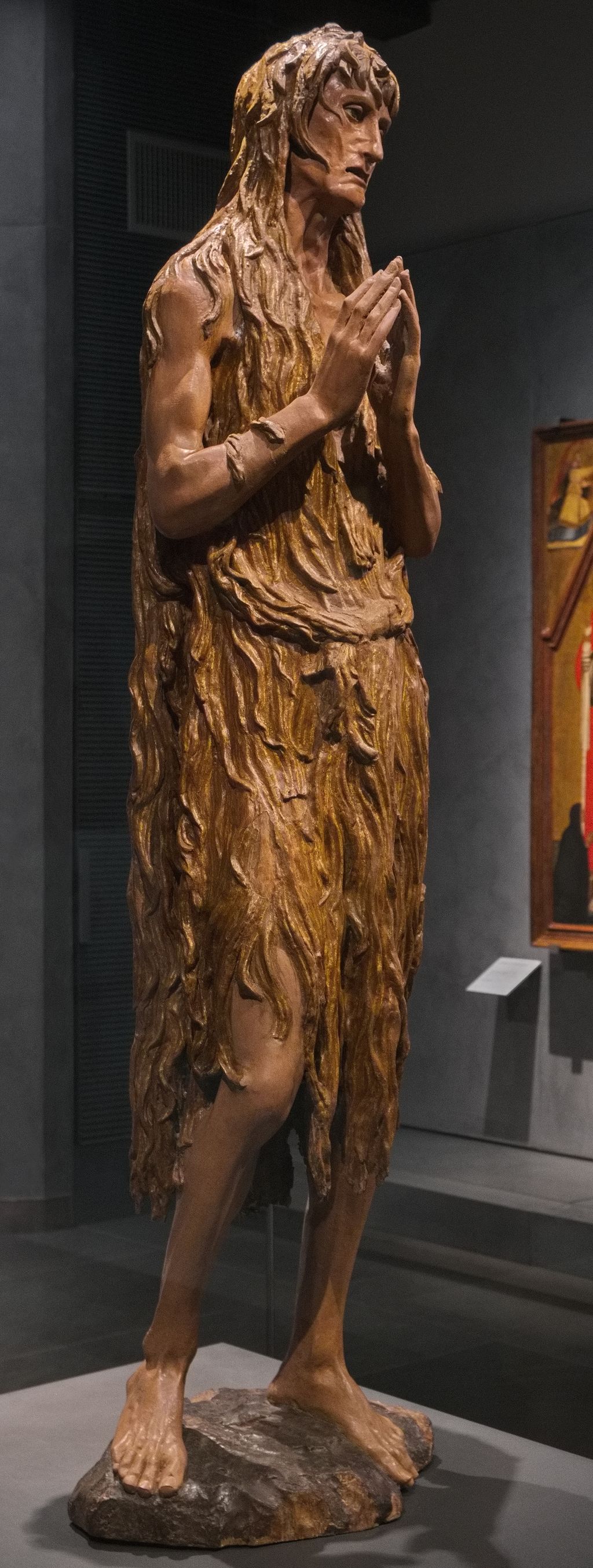
The figure as seen from the front at the Museo dell’Opera del Duomo, with the hands held near the chest. Armin Kleiner. Image source. CC BY-SA 4.0. Resized for the web.
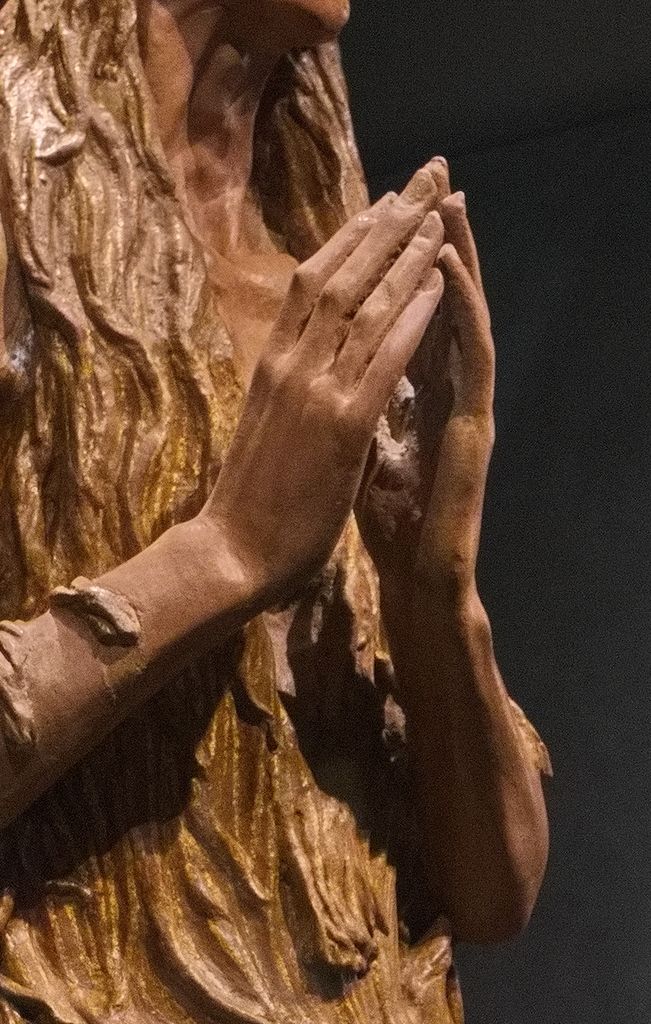
The hands come up in front of the chest. From the side, the sliver of darkness between the palms makes their position easier to see. The wrists are apart, the fingers close and the elbows low. Look at how little force the pose seems to require. A figure bracing herself might bear down through her hands or straighten the arms. Here the fingers reach upwards while the shoulders stay low and the bent arms leave space between the body and the gesture. In the small opening below the fingertips, light and shadow change as you move. A gesture familiar from painting becomes something you can trace in space. [1]
The face can look more severe from one side than from the other. The hollows below the cheekbones narrow towards the chin. The upper lip draws back and the lower lip catches a thin band of light. The eyes sit deep beneath their brows, yet the head is lifted enough for the gaze to travel. Art historian Heidi J. Hornik draws attention to the strength still visible in the limbs and to the figure’s balance. The body bears the effects of deprivation. The posture gives her the composure to remain standing and the strength to raise her hands. Both qualities are present at once, which makes the sculpture hard to reduce to an image of physical decline. [1] [5]
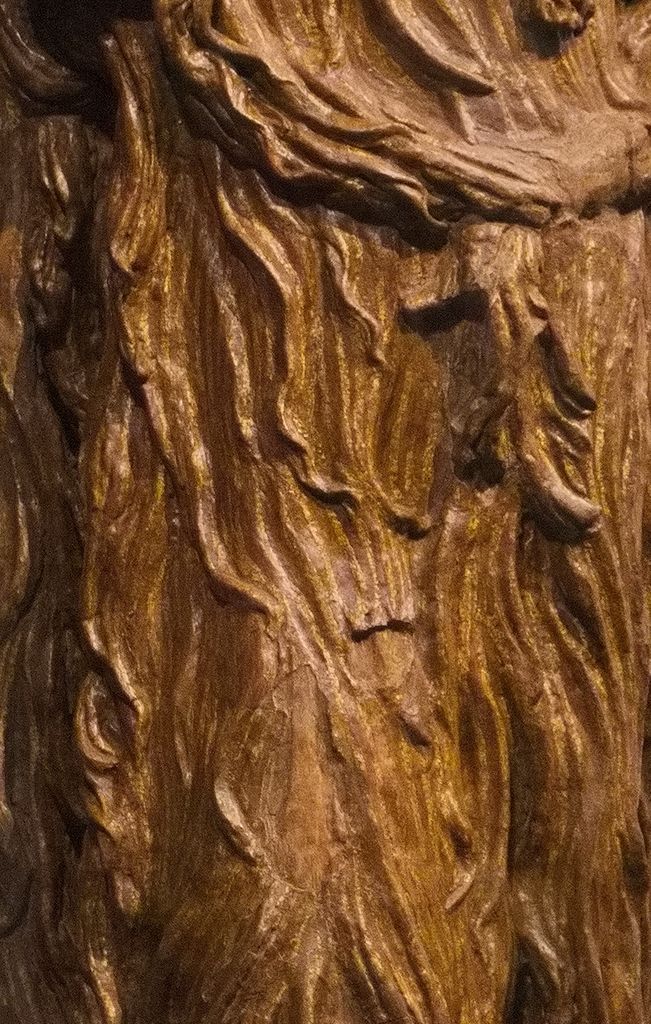
Donatello also keeps the covering hard to separate into its parts. Distinct strands cross the cheeks and lie over the shoulders. Lower down they broaden and bunch where the covering draws in at the waist. The museum catalogue reads this area as long hair mingling with a coarse garment of animal skins. The conservators describe a knot of hair at the waist, where material was built up over the wood. Across the back, the long parallel locks lie closer to the body. On the front, the pattern keeps breaking where an arm comes forward or a knee emerges. What first looks like a rough garment resolves into individual ridges whose edges still catch gold. [1] [3]
Annotated Details from Penitent Magdalene
Select a number to jump to a detail of the sculpture.
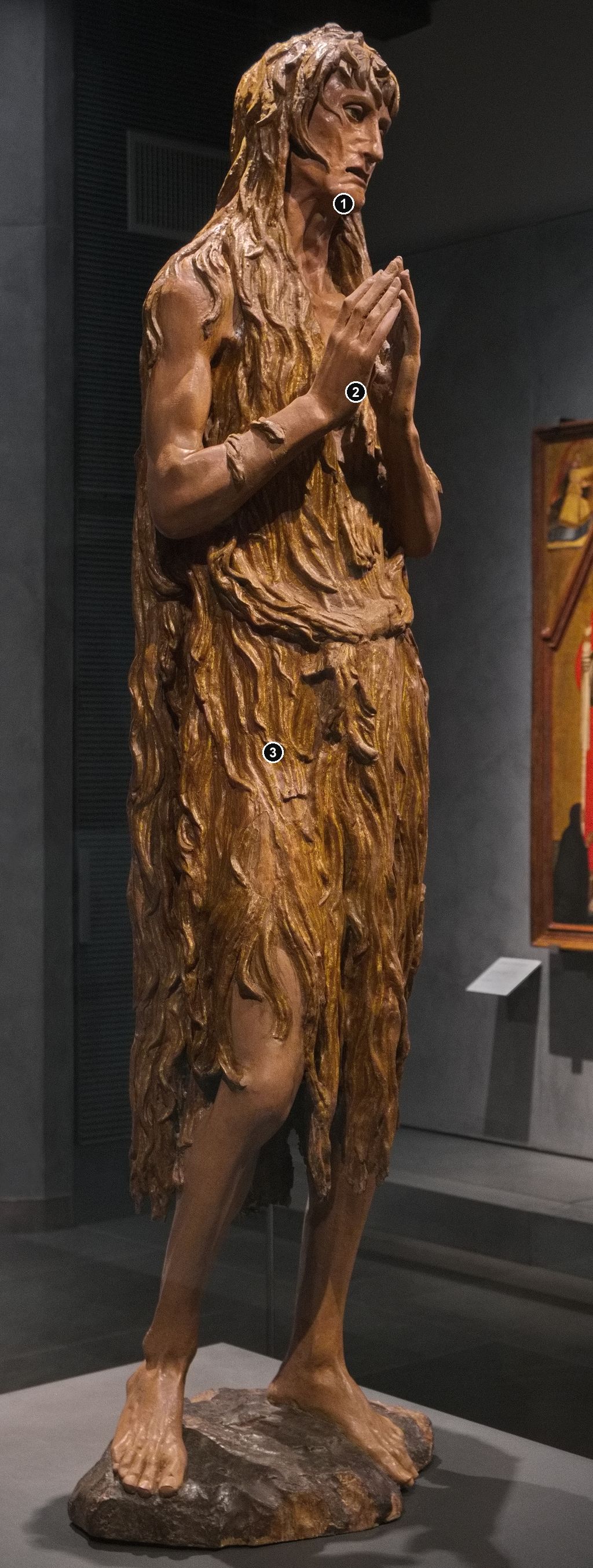
Details from PENITENT MAGDALENE
Open a detail image to examine the surface more closely.
The saint’s face
Jagged breaks around the cheek and the turn of the chin become more legible close up. The face catches less light where it falls between the hanging strands.
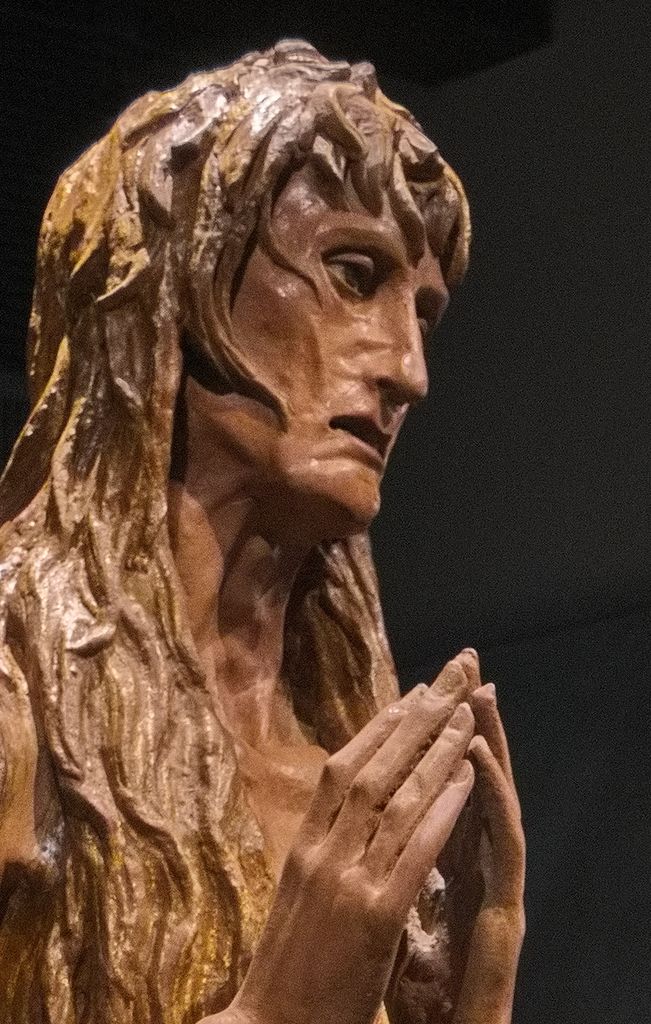
Hands held close
The raised hands stop short of a complete closure. Their small interval is visible against the uneven texture behind them.
The hair as a garment
Long, uneven ridges wrap the front of the body. Below the hands, their direction gives the narrow figure an unexpected breadth of texture.
Annotated photograph and detail crops. Armin Kleiner. Image source. CC BY-SA 4.0. Resized, annotated and cropped from the original photograph.
The saint and the wilderness story
In Luke 8, Mary called Magdalene is named among the women who accompany Jesus and the Twelve. Luke says she had been delivered from seven demons. In John 20 she goes to the tomb, weeps outside it and recognises Jesus when he calls her by name. She then tells the disciples what she has seen. Luke 7 relates a different episode. In the house of Simon the Pharisee, an unnamed woman wets Jesus’s feet with her tears and dries them with her hair. John 12 names Mary of Bethany, sister of Martha and Lazarus, as the woman who anoints Jesus’s feet in another account. In the Latin West, an influential reading associated with Gregory the Great identified these women with one another. The resulting tradition gave artists a familiar way to picture the Magdalene as a figure of repentance. [1] [5] [6] [7] [8]
The wilderness to which Donatello alludes comes from medieval accounts of the saint’s life. In the thirteenth-century Golden Legend, Jacobus de Voragine tells how she went to Provence and preached there before withdrawing to a remote place for thirty years. Angels lifted her up to hear their singing, and at the end of her life she received Communion from Bishop Maximinus. The story joins bodily hardship to sustained prayer. It also gives her hair an association with penitence that a viewer could recognise from the tradition of the anointing. In the visual tradition, the long covering also brings her close to Mary of Egypt, a distinct saint remembered as a desert penitent. [2] [4] [9]
A Florentine panel from the second half of the thirteenth century shows how familiar the story was long before Donatello. The painting in the Galleria dell’Accademia gives its anonymous artist the name Master of the Magdalene. The large central figure is wrapped in her long hair and holds a scroll that invites viewers to follow her example. Eight episodes surround her, among them the Noli me tangere, the preaching in Marseilles and her final Communion. Donatello keeps the long years in view through her weathered face and the hair that envelops her. Only the rough base suggests a setting. Where the painted panels show her preaching, travelling and receiving Communion, the statue holds her in prayer. [1] [10]
What the Baptistery records tell us
On 30 October 1500 an entry records that the sculpture was returned to the Baptistery after a period in the Opera’s premises. That wording establishes an earlier stay in the Baptistery, but leaves its length open. Francesco Albertini included the work in his survey of Florentine art in 1510. In the sixteenth century Giorgio Vasari described it opposite the tomb of the former pope John XXIII. The Opera places that location on the southwest side of the octagonal interior, near the chapel housing the main altar. The statue was moved in 1688 to make way for a new font, recorded on the southeast side in 1735 and returned to the southwest in 1921. Its angle within the building changed over the centuries. [1] [11]
Why might the figure have made sense in a Baptistery? The building is dedicated to Saint John the Baptist, another holy figure associated with the wilderness. The two saints could recall the discipline of repentance to worshippers attending a baptism. The location also gives the Magdalene’s slight turn a possible object. At the southwest position, her gaze would have led towards the sanctuary and altar. The Opera catalogue, drawing on Kelly Barnes-Oliver’s study, connects this line of sight with the body of Christ. Mary searches for him at the tomb in John’s Gospel. At the altar the worshipper encounters his body in the Eucharist. The hands held ready before her could recall the Communion scene in the older Florentine panel. This reading depends on a particular position in the building, a position attested well after Donatello’s working life. [1] [2] [7] [10]
An alternative comes from art historian Giovan Battista Fidanza. He compares the sculpture with the writings of Antonino Pierozzi, a Dominican who became archbishop of Florence in 1446. In those writings the Magdalene’s years of withdrawal prepare her for a life of contemplation, a path that had particular force for communities committed to religious reform. Fidanza proposes Antonino as a possible patron and a Dominican setting such as San Marco as a possible first home. The proposal draws on the affinity between the image and the devotional literature. The 1500 entry supplies evidence of a different kind, fixing the statue to a documented place and occasion. Between the two lies the unresolved question of the commission. [1] [12]
Carving, modelling and painting the poplar
Tomography let Opificio specialists follow the central pith of the tree through the head and down to the base. From the distance between the pith and a surviving growth ring, they estimated that the trunk was at least 60 centimetres across. The main wooden form was cut from that single trunk. Some splits opened as the wood seasoned, including ones now concealed by the sculpted surface. The large block gave Donatello room to cut the turn of the head and to carry the shape of the figure down into the rocky base. Look at how compact the body remains within its outline, even where the forearms rise and the forward foot edges towards the viewer. [3]
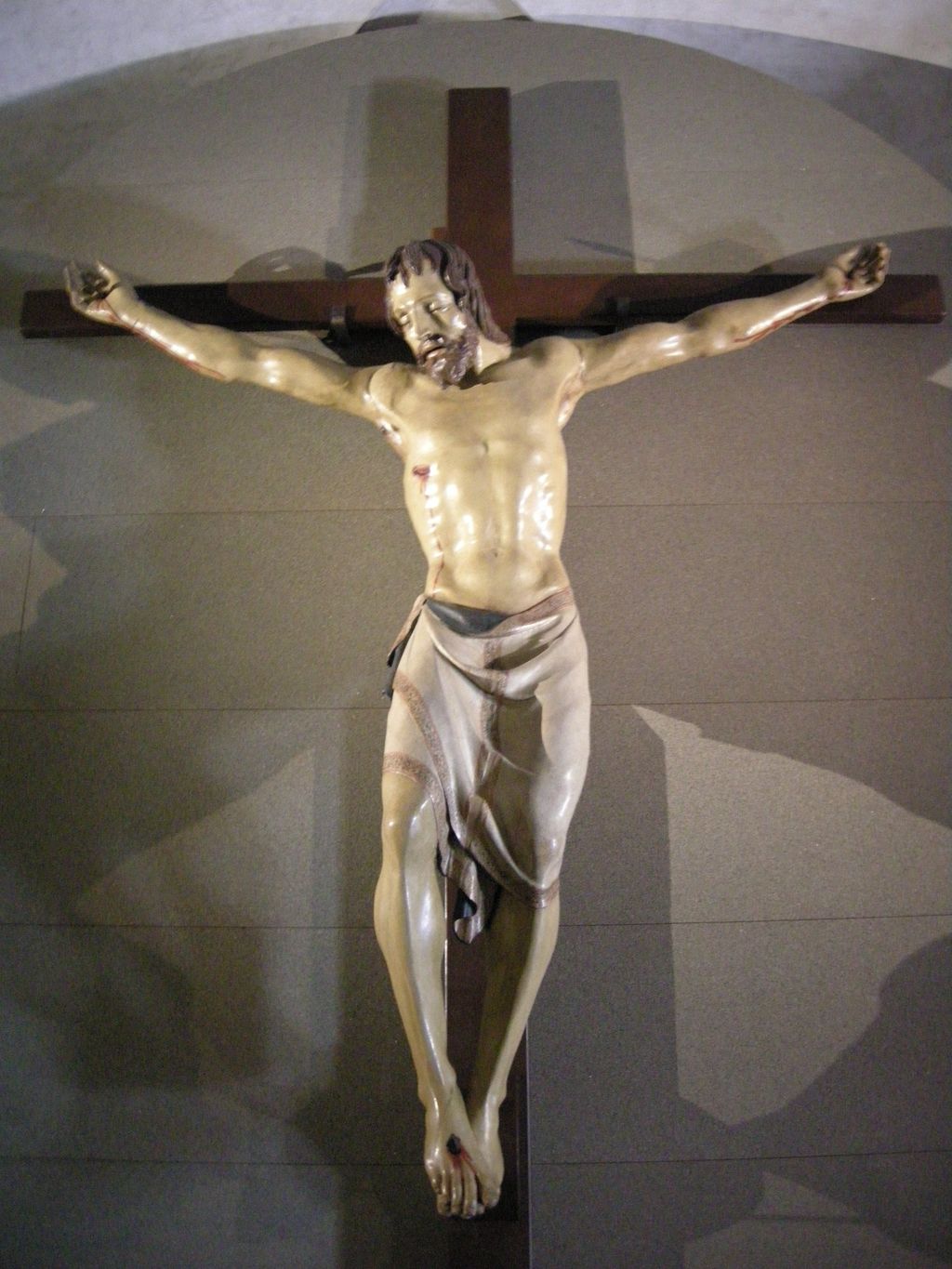
Donatello’s Crucifix in Santa Croce, an earlier work in coloured wood. I, Sailko. Image source. CC BY-SA 3.0. Resized for the web.
On the back, the valleys between the strands retain parallel gouge marks. Forward of the shoulders, the hair often projects well above the carved surface. Donatello could build a lock up in stucco made of gypsum plaster and animal glue with plant fibres, probably tow, to help hold the mixture together. At the head and waist some locks reach roughly three or four centimetres in thickness. The conservators identified a nail helping to anchor the prominent knot at the waist. Elsewhere the plaster makes quieter changes to the contours of the face and neck. The arms and legs, with their comparatively thin preparation, show how differently the sculptor used the surface layers from one passage to the next. [2] [3]
Paint completes the distinction between hair and skin. The Opificio found layers based on lead white in the flesh, with vermilion above the preparation in sampled areas. The limb samples showed a more complicated sequence than those from the face and neck, with an underlying layer coloured by hematite and earth pigments. The hair has a brown base that includes earths and ochres. Over it, narrow strokes of an oil-based mixture held the gold leaf. The patches of gold you can see today follow individual locks and come into view as the angle changes. The Opera connects that glimmer with the saint’s spiritual life. It can also remind a viewer of the beauty traditionally associated with her hair, even where the strands lie tangled and uneven. [1] [3]
Donatello’s painted wooden Saint John the Baptist in the Frari in Venice provides a useful comparison. The V&A dates that work to 1438, the year inscribed beside Donatello’s name on its base and uncovered during the 1972 conservation. Both figures use worked and coloured surfaces to give a wilderness saint a distinct bodily presence. John’s rough camel-hair covering and exposed limbs share something of the Magdalene’s visual language. His left hand holds a scroll and the raised index finger of his right gives him the air of a preacher. [4] [17] Fidanza reviews the argument that the likeness makes a date around 1440–42 more plausible for the Magdalene. It puts the two works closer together than the traditional date after Donatello’s return from Padua. The likeness explains the earlier proposal, though it gives no measure of how long he might have returned to the same techniques. [3] [4] [12]
What the flood and restorations revealed
The Arno flooded the Baptistery in November 1966. The timber figure was taken away for treatment, and conservators removed a grey coating that had made its surface appear largely uniform. When the statue was shown in Firenze Restaura in 1972, visitors could see surviving flesh colour and gilding where previous generations had seen something closer to a monochrome. Cracks, losses and later repairs still affected parts of the surface. In 1986 another intervention secured places where the plaster preparation had started to lift from its wooden support. [1] [3]
The next major treatment, dated October 2013 to March 2015 in the Opera catalogue, began with concern about flaking paint. The conservators found traces of grey in the recesses of the hair and a later reddish paint over the face and neck. Under a microscope they could see this paint running into cracks that had opened in an earlier surface. At the toes it extended over places where the original preparation and colour had already been lost. The team used those signs to identify later additions before removing the repainting from the face and neck with a scalpel under magnification. They also consolidated loose painted and modelled areas, filled selected losses and replaced an earlier resin reconstruction of a forehead lock with a removable reconstruction informed by surviving traces. [1] [3]
The distinction between damage to the statue and the privation Donatello wanted viewers to see mattered especially at the feet and in the flesh. Patches of exposed wood left by earlier losses could resemble wounds or make the limbs appear more ruined than the sculptor had intended. Filling and retouching selected losses helped restore the continuity of the forms. The team kept differences in sheen between the flesh and the hair, so the worked skin and the covering would remain distinct. The partly gilded surface on view today contains surviving early material, the effects of age and the results of successive treatments. [1] [3]
Other ways of seeing the Magdalene
Vasari took the marks of fasting and abstinence as evidence of how well Donatello understood anatomy. He also called the figure beautiful. His judgement makes sense in front of the raised hands and hollowed face, where the shape of a bone or the tension in a tendon can convey feeling. The Opera’s modern discussion of the sculpture places emphasis on endurance and on the saint’s significance for Florentine women who looked to her as a model of conversion. Hornik likewise finds tenacity in the way the figure stands. That reading allows the signs of age and fasting to sit alongside the steadiness of the prayer. [5] [11] [13]
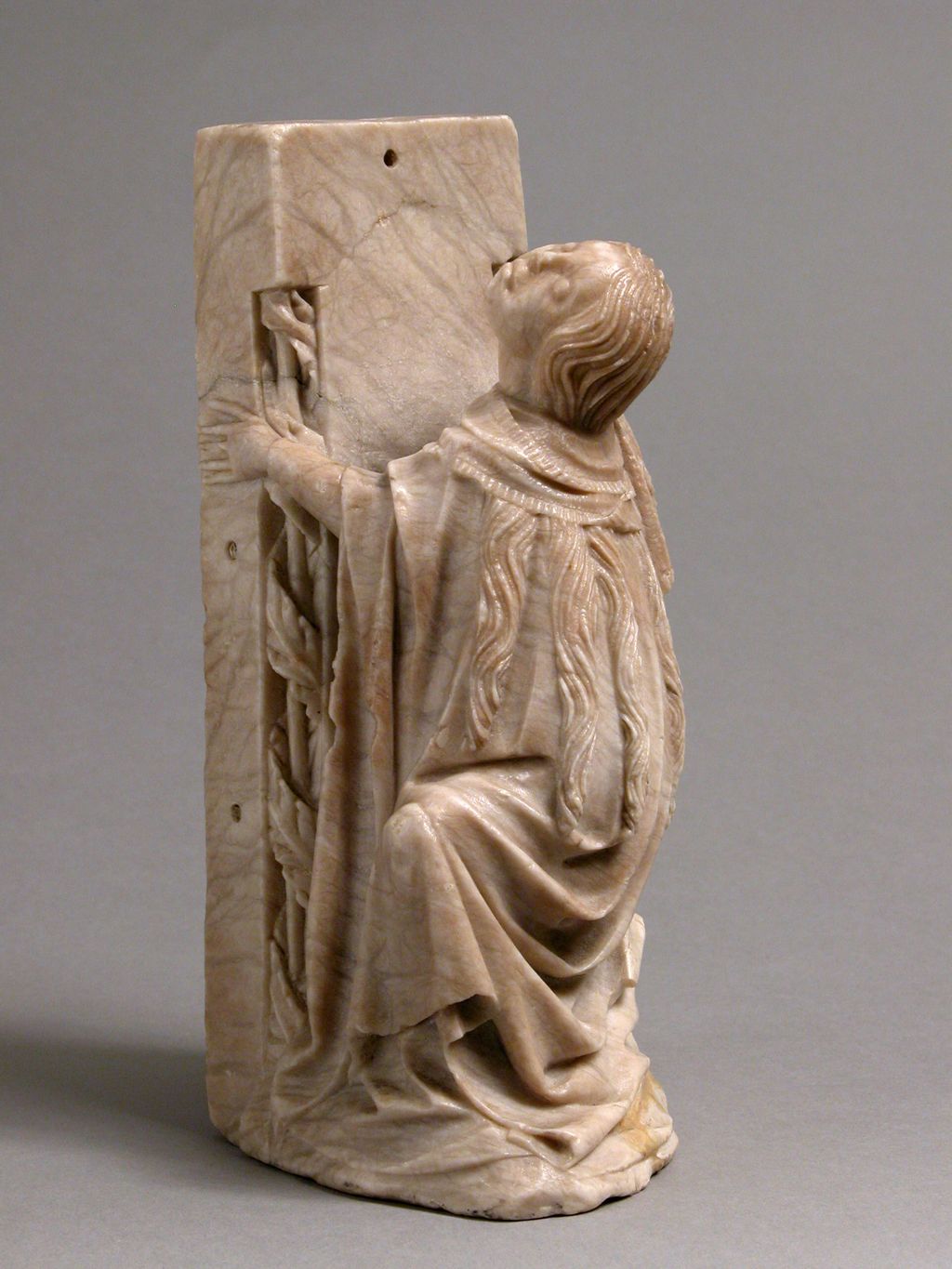
A marble group of Mary Magdalene at the foot of the Cross in the Metropolitan Museum of Art. The Metropolitan Museum of Art, Gift of Paul W. Doll Jr., 1965. Image source. CC0 / Public domain. Resized for the web.
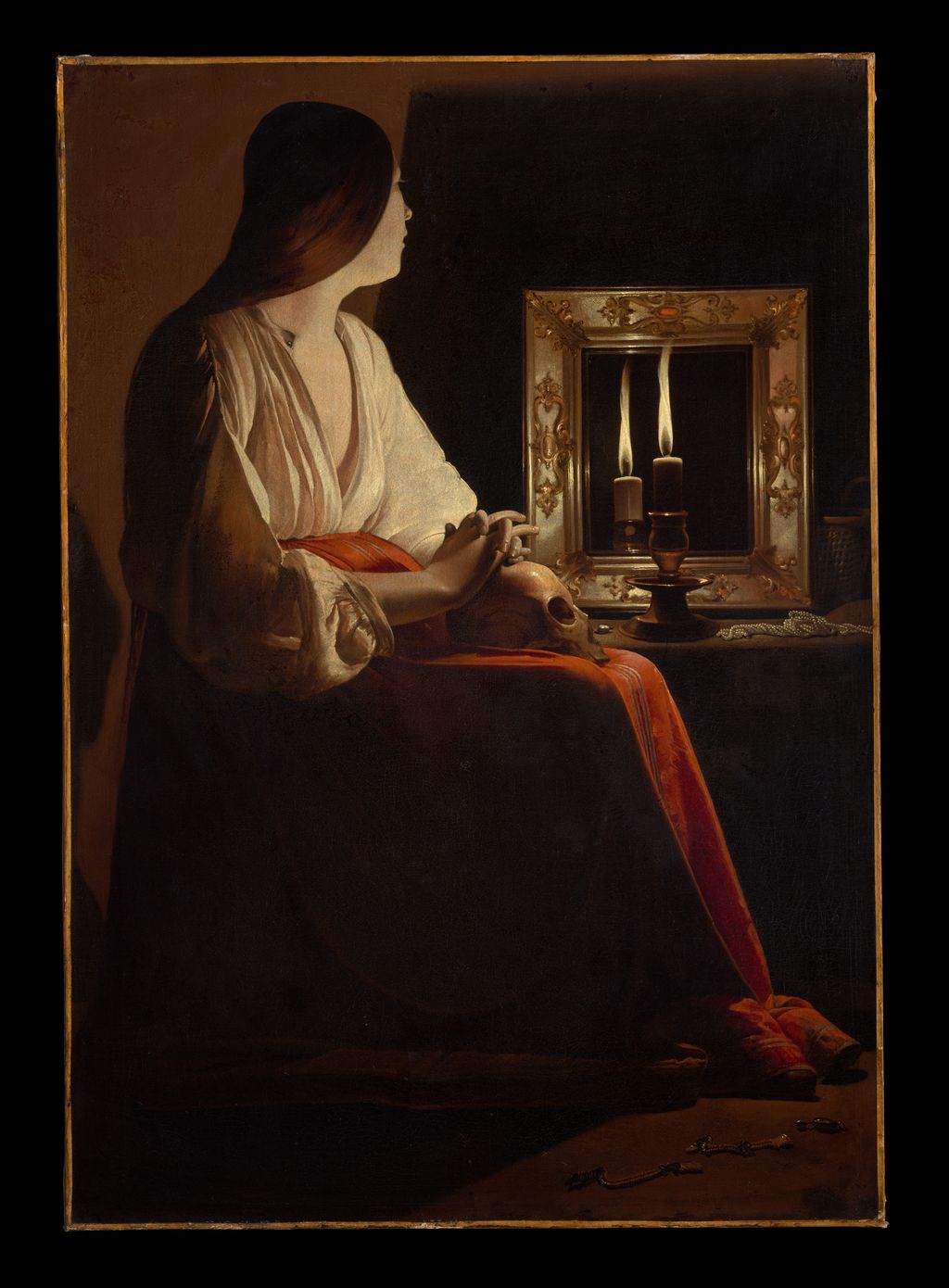
Georges de La Tour’s The Penitent Magdalen at the Metropolitan Museum of Art, with the candle and skull gathering the composition around the seated figure. The Metropolitan Museum of Art, Gift of Mr. and Mrs. Charles Wrightsman, 1978. Image source. CC0 / Public domain. Resized for the web.
Other artists made the Magdalene recognisable through very different acts of devotion. A small South Netherlandish alabaster at the Metropolitan Museum, attributed to a follower of the Master of Rimini, was made around 1420–30 to stand at the foot of a crucifix since lost. Its meaning depended on a larger carved scene and the relationship between the two figures. In Florence, Desiderio da Settignano began another standing wooden Magdalene for Santa Trinita. He died in 1464 before completing it. As Francesco Caglioti notes, archival work identifies Giovanni d’Andrea as the sculptor who finished the figure. The two Florentine statues share a tall format and a body covered by long strands, though the Santa Trinita figure settles into a more gently curved silhouette. [14] [15]
By about 1640 Georges de La Tour had painted a Magdalene at the scale of a person in a dark interior. The painting now at the Met gives her a skull, a mirror and a flame. All three gather the eye around her seated figure and give her meditation visible objects. In Donatello’s sculpture the reflected light comes instead from the strips of gold on the standing figure itself. That effect rewards moving a little to one side in the museum. The gleam shifts from one ridge of hair to the next, and the dark space between the palms comes into view. The turn of the head carries the eye back to whatever lies beyond her. [1] [16]
Donatello sculpture directory
| Name | Date | Medium and record |
|---|---|---|
| Marble David | 1408–09, adapted 1416 | Carved Carrara marble Catalogue. |
| Saint John the Evangelist | c. 1409–15 | Carved marble Catalogue. |
| Saint Mark | 1411–13 | Carved Carrara marble Catalogue. |
| Saint George and its dragon relief | c. 1415–17 | Marble statue and marble relief Catalogue. |
| Marzocco | c. 1417–20 | Carved sandstone Catalogue. |
| Saint Louis of Toulouse, Florence | 1418–25 | Gilt bronze and mixed media Catalogue. |
| Pazzi Madonna | c. 1420s | Marble relief Catalogue. |
| Reliquary Bust of Saint Rossore | c. 1420s | Gilt bronze Catalogue. |
| The Prophet Jeremiah | 1420s–30s, disputed | Marble Catalogue. |
| Zuccone | c. 1420s–30s | Marble Catalogue. |
| Feast of Herod, Siena | 1420s | Gilded bronze relief Catalogue. |
| Ascension with Christ Giving the Keys to Saint Peter | c. 1428–30 | Marble relief Catalogue. |
| Cantoria | 1433–39 | Marble and mosaic Catalogue. |
| Amor-Atys | c. 1435–40 | Partly gilded bronze Catalogue. |
| Bronze David | c. 1435–40, disputed | Partly gilded bronze Catalogue. |
| Gattamelata | Installation agreement, 1453 | Bronze and stone Catalogue. |
| Santo altar | Mid-fifteenth century | Bronze and limestone ensemble Catalogue. |
| Chellini Madonna | Given in 1456 | Partly gilded bronze tondo Catalogue. |
| Penitent Magdalene | c. 1453–55 (Opera) | Poplar, stucco, pigments and gold Catalogue. |
| Judith and Holofernes | Late 1450s–early 1460s | Bronze with surviving gilding Catalogue. |
| Pulpit of the Passion | Late work and later assembly | Bronze reliefs, Donatello and collaborators Catalogue. |
| Bust traditionally called Niccolò da Uzzano | Fifteenth century | Painted terracotta, attribution disputed Catalogue. |
| Prato Cathedral exterior pulpit | Commissioned 1428; carved 1430s | Marble reliefs, Donatello and Michelozzo Catalogue. |
| Cavalcanti Annunciation | c. 1433–35 | Gilded sandstone and terracotta Catalogue. |
| Crucifix at Santa Croce | Early fifteenth century | Painted wood Catalogue. |
| Madonna of the Clouds | c. 1425–35 | Marble relief Catalogue. |
| Old Sacristy Doors | Fifteenth century | Two paired bronze doors Catalogue. |
| Resurrection Pulpit | Late work and later assembly | Bronze reliefs, Donatello and collaborators Catalogue. |
| Brancaccio tomb | 1420s | Donatello, Michelozzo and assistants, mixed materials Catalogue. |
| Saint John the Baptist, Venice | 1438 | Polychromed and gilded wood Catalogue. |
| Sacrifice of Isaac | Early fifteenth century | Donatello and Nanni di Bartolo, marble Catalogue. |
| Madonna of Via Pietrapiana | Mid-fifteenth century | Terracotta Catalogue. |
| Miracle of the Mule | Mid-fifteenth century | Gilded bronze panel for the Santo altar Catalogue. |
| Padua Crucifix | Mid-fifteenth century | Cast bronze Catalogue. |
| Dancing Spiritello, Bargello | Fifteenth century | Bronze Catalogue. |
| Young Prophet from the Porta della Mandorla | c. 1404–09 | White marble, attributed to Donatello Catalogue. |
| Prophet or Apostle from the Duomo north tribune | Early fifteenth century | White marble, possibly Donatello Catalogue. |
| Beardless Prophet | 1415–18 | White marble Catalogue. |
| Sibyl and Prophet of the Porta della Mandorla | 1422 | Carved marble heads for the portal Catalogue. |
| Faith, Siena baptismal font | 1420s | Gilded bronze figure Catalogue. |
| Hope, Siena baptismal font | 1420s | Gilded bronze figure Catalogue. |
| Feast of Herod, Lille | c. 1430 | Carrara marble relief Catalogue. |
| Piot Madonna | c. 1440–60 | Polychrome terracotta with glass and wax inlays Catalogue. |
| Carafa Horse Head | c. 1456–58 | Cast bronze Catalogue. |
| Pazzi Madonna workshop version, Louvre | c. 1450 | Polychrome gesso, Donatello’s workshop Catalogue. |
| Pazzi Madonna tondo, Rijksmuseum | c. 1425–50 | Plaster and stucco, after Donatello Catalogue. |
| Sprite | c. 1430–40 | Bronze, sculptor or metalsmith close to Donatello Catalogue. |
Discussion
Look again at the images and ideas explored in Donatello’s Penitent Magdalene. These editorial prompts invite your observations.
Reader Insights
Where do the smoother and rougher passages of the wood draw your attention?
How do the small spaces around the face and hands affect the way you read the figure’s posture?
Join the Conversation
Share a detail, comparison or question about Donatello’s Penitent Magdalene below.
References
- Opera di Santa Maria del Fiore, Santa Maria Maddalena Penitente, scientific catalogue entry, including provenance, technical data and conservation records. View source.
- Opera di Santa Maria del Fiore, Donatello, Maddalena, Museo dell’Opera del Duomo object and gallery record. View source.
- Opificio delle Pietre Dure, Donatello, Maddalena penitente, 1440 ca., conservation and technical dossier. View source.
- Victoria and Albert Museum, “Donatello – a master at work,” section on wood sculpture. View source.
- Heidi J. Hornik, “The Penitence of Mary Magdalen,” Christian Reflection, 2013, pp. 38–39. View source.
- Bible Gateway, Luke 7:36–8:3, New Revised Standard Version Updated Edition. View source.
- United States Conference of Catholic Bishops, John 20, New American Bible. View source.
- Bible Gateway, John 12:1–8, New Revised Standard Version Updated Edition. View source.
- Jacobus de Voragine, “The Life of S. Mary Magdalen,” The Golden Legend, translated by William Caxton, Fordham University’s Internet Medieval Sourcebook. View source.
- Galleria dell’Accademia di Firenze, Penitent St Mary Magdalene and Eight Stories from her Life, collection entry. View source.
- Giorgio Vasari, “Donato,” Le vite de’ più eccellenti pittori, scultori e architettori, 1568. View source.
- Giovan Battista Fidanza, “Donatellos Maria Magdalena. Technik und Theologie einer Holzfigur,” Wiener Jahrbuch für Kunstgeschichte 62, 2014, pp. 127–144. View source.
- Opera di Santa Maria del Fiore, “Around Donatello’s Penitent Magdalene: concepts of virtue and beauty.” View source.
- The Metropolitan Museum of Art, Mary Magdalene at the Foot of the Cross, follower of the Master of Rimini, collection entry. View source.
- Francesco Caglioti, “Le mostre donatelliane del 2022 e i mal di pancia della critica accademica austro-tedesca,” Studi di Scultura 6, 2024, pp. 10–101, especially pp. 94–95. View source.
- The Metropolitan Museum of Art, The Penitent Magdalen, Georges de La Tour, collection entry. View source.
- Save Venice, “Donatello’s Saint John the Baptist and the Fiorentini Altar in the Basilica dei Frari,” conservation project record. View source.
- Victoria and Albert Museum, Donatello’s David. View source
- Opera del Duomo, Donatello and the Opera del Duomo. View source
- Ministero della Cultura, David with the Head of Goliath, Bargello bronze. View source
- Save Venice, Donatello’s Equestrian Monument to Gattamelata. View source
- Opificio delle Pietre Dure, L’ultimo Donatello. View source
More DONATELLO Sculptures
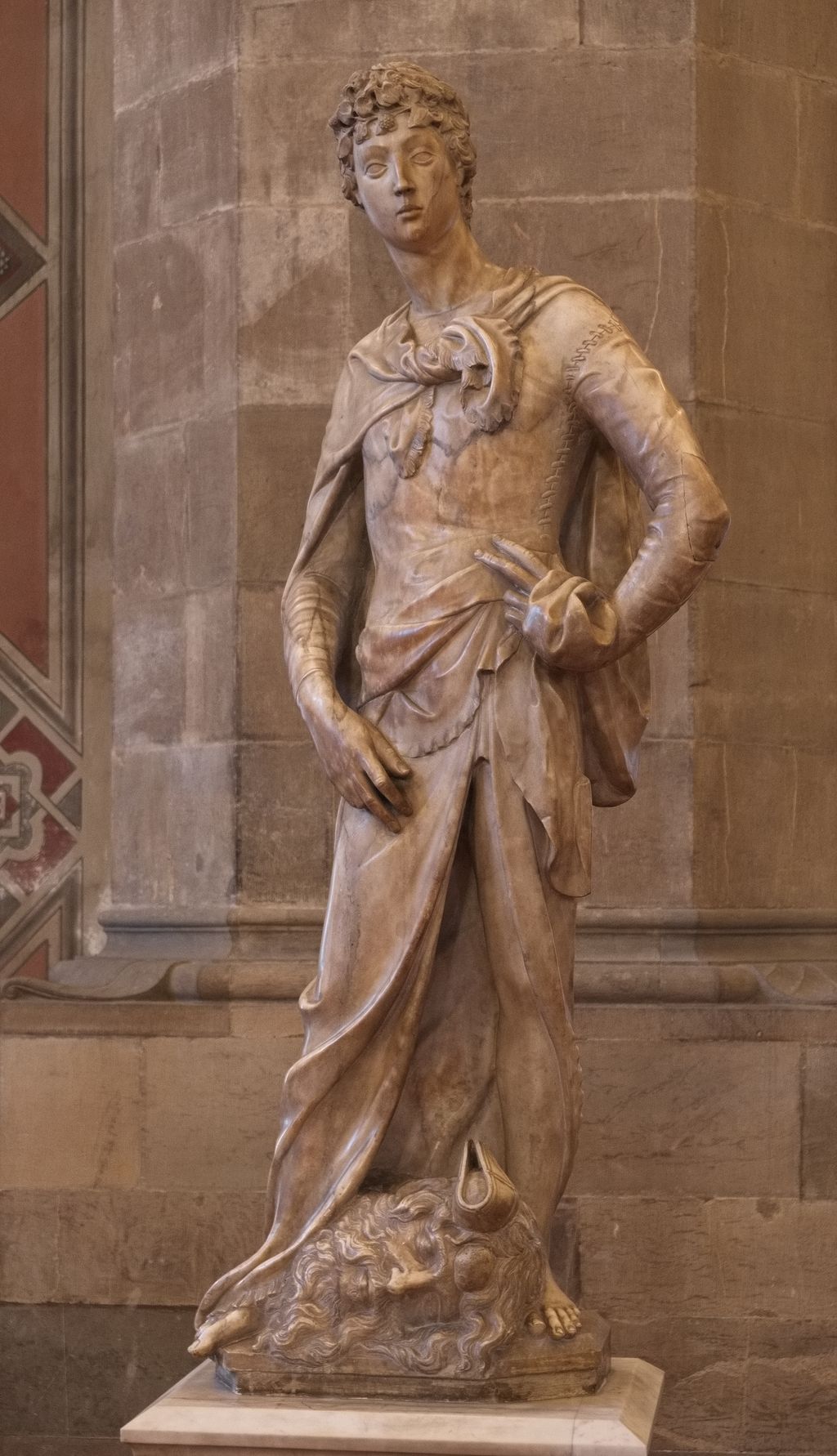
Marble David
Armin Kleiner. Image source. CC BY-SA 4.0. Resized for the web.
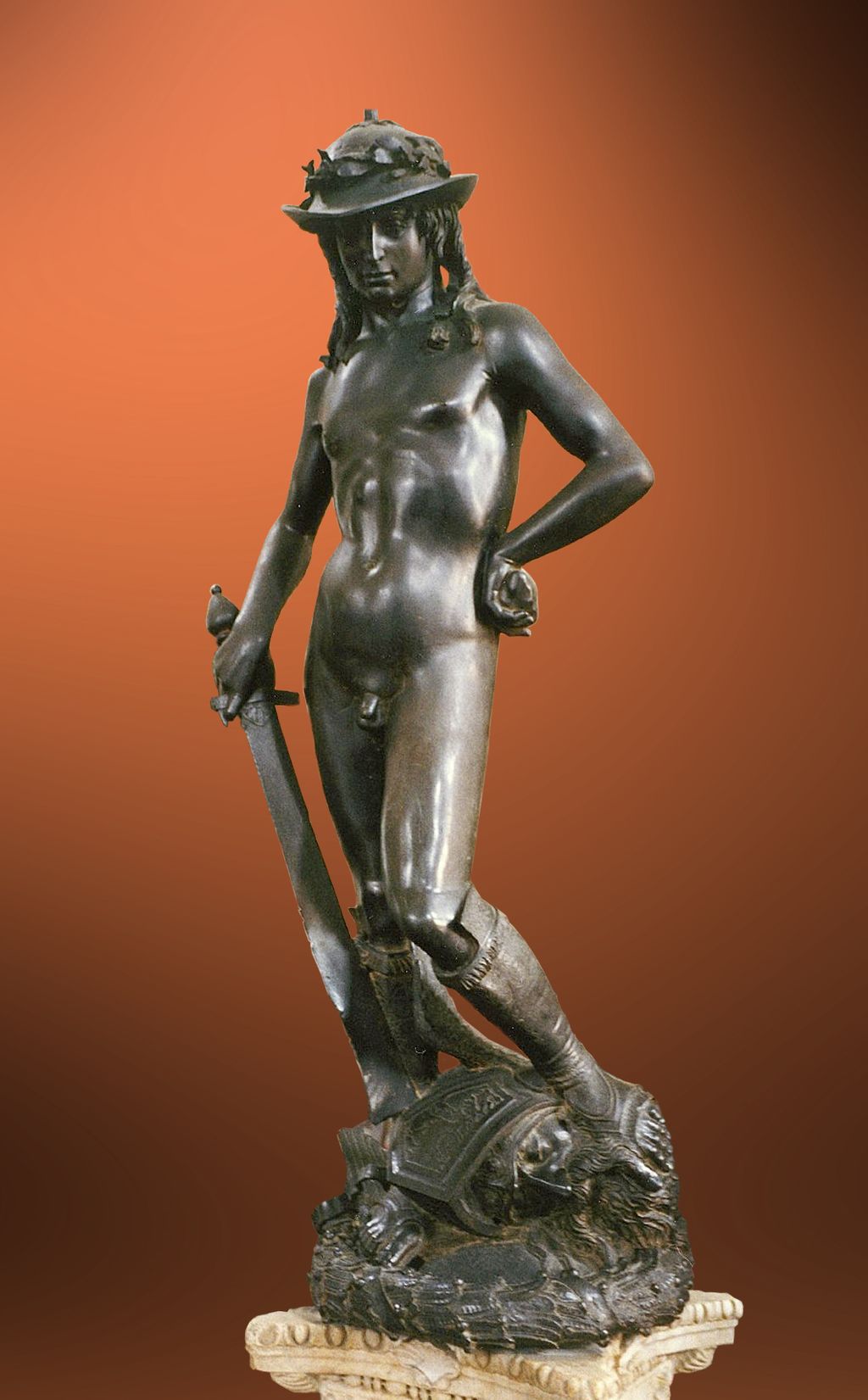
Bronze David
Patrick A. Rodgers. Image source. CC BY-SA 2.0. Resized for the web.
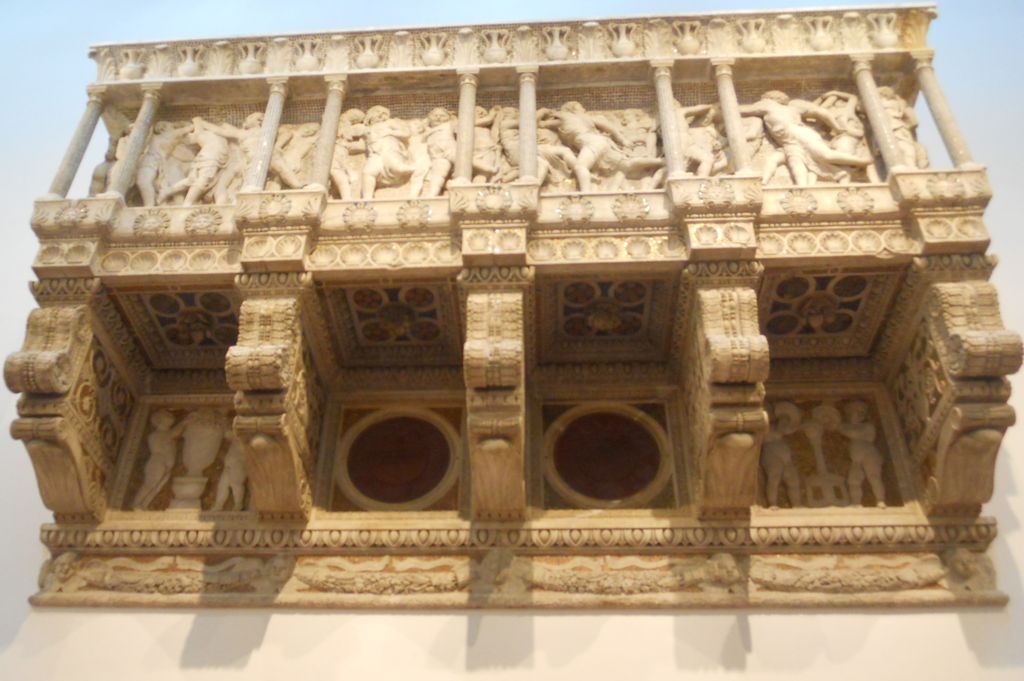
Cantoria
Erik Drost. Image source. CC BY 2.0. Resized for the web.
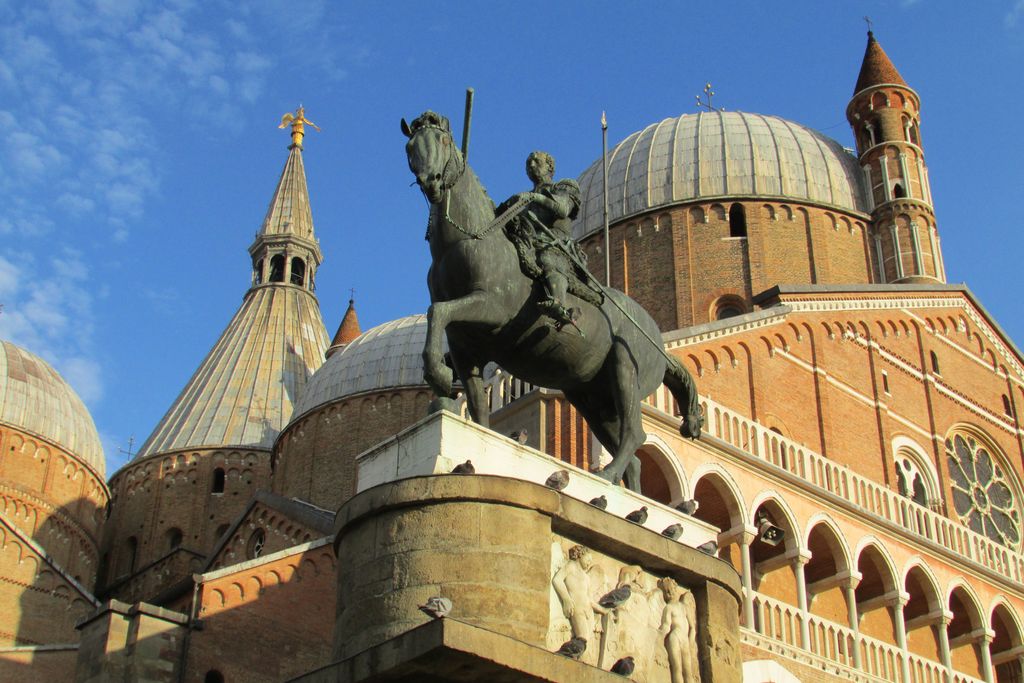
Gattamelata
Chris Light. Image source. CC BY-SA 4.0. Resized for the web.
Penitent Magdalene
Armin Kleiner. Image source. CC BY-SA 4.0. Resized for the web.
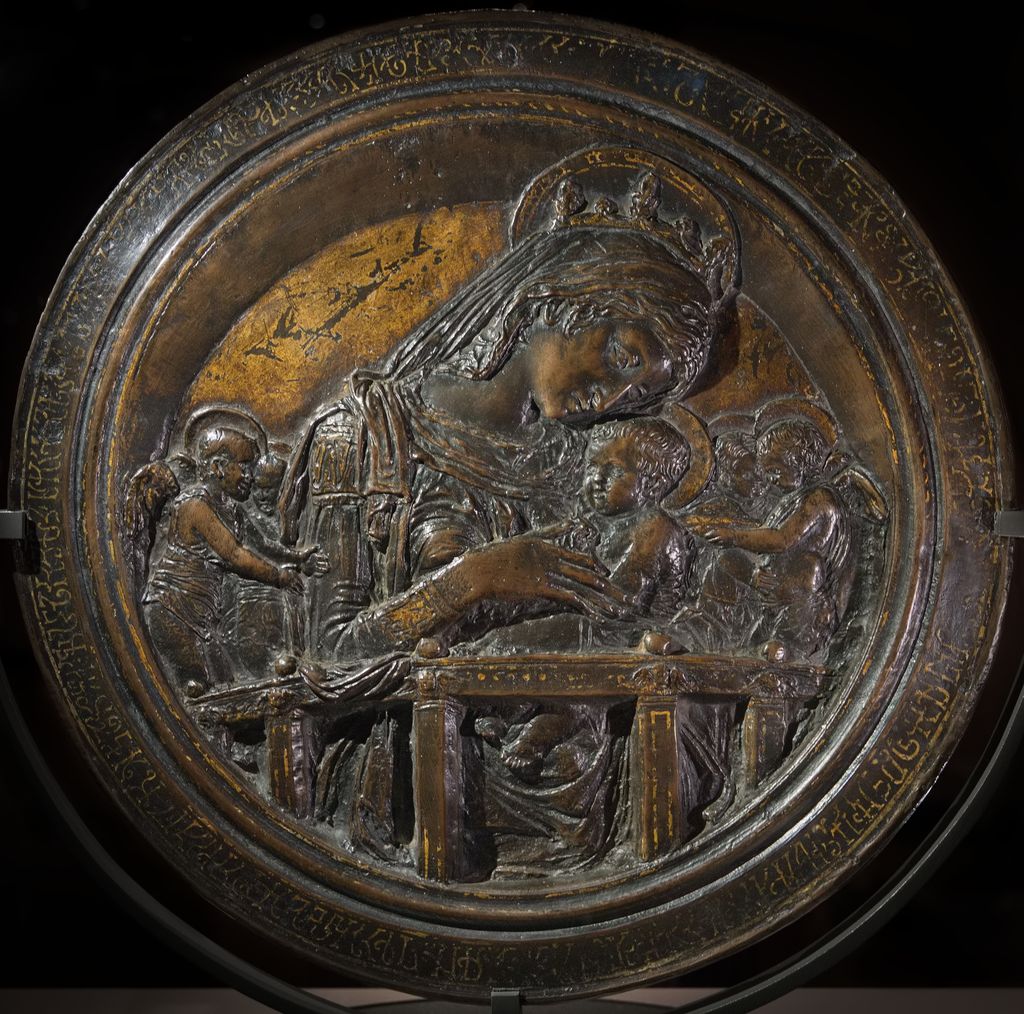
Chellini Madonna
Armin Kleiner. Image source. CC BY-SA 4.0. Resized for the web.
