


 by Tom Gurney
Tom Gurney BSc (Hons) is an art history expert with over 20 years experience
Published on June 19, 2020 / Updated on November 29, 2026
Email: tomgurney1@gmail.com / Phone: +44 7429 011000
In 1416 the Florentine government acquired a marble David that Donatello had carved for the cathedral. A figure intended for a high buttress was reworked for the seat of government. More than three decades later, in Padua, the family of a military commander employed the same sculptor to commemorate him on horseback in bronze. The two commissions mark the distance Donatello travelled in his working life, from carving figures for a building site in his native city to directing the making of a monument on a scale few sculptors of his time had attempted. [1] [2] [3]
Donato di Niccolò di Betto Bardi was born in Florence around 1386 and died there in 1466. Early accounts preserve stories about his friendship with Brunelleschi and his manner with patrons. The surviving documents tell a different kind of story, one in which the sculptor negotiates the price of tombs, shares workshop tools with Michelozzo, asks to be paid for work in Siena and leaves a property near Prato to a relative who had helped him collect his debts. Those records give us a way to follow the career of Donatello through the people and institutions that made his work possible. [2] [4] [5]
Around 1386–1407: Growing up and working in Florence
Florentine tax returns supply the most direct evidence for the year of Donatello’s birth. The published transcription of his 1427 return gives his age as forty-one, and he was recorded as forty-seven in 1433. Both ages point to about 1386. His later declaration in 1458 gives a higher age than either of those returns would predict. The year customarily given for his birth is therefore an estimate. The tax records also identify members of his household. In 1427 he was living with his mother, Orsa, his widowed sister, Tita, and her son Giuliano. These particulars are firmer evidence about his family than the stories that later grew up around his character. [2] [4] [5]
Donatello’s earliest recorded workshop employment was in Lorenzo Ghiberti’s workshop, where he appears in records covering 1404 to 1407. Ghiberti had won the commission for a new set of bronze doors for the Florence Baptistery. The surviving entries name Donatello among the assistants employed to carry out that commission, the doors now known as the North Doors. They establish the young sculptor’s place in the enterprise, while the surviving doors give the clearest idea of the scale and complexity of the work those assistants undertook. Specific panels cannot securely be assigned to Donatello through the employment records. [2] [4] [6]
The workshop brought the practices of the goldsmith into contact with large-scale sculpture. Work on a relief began with a design and a model in a material such as wax or clay, followed by mould-making, casting and the laborious finishing of the metal surface. A young worker could encounter a break in the process at any stage, learning that a decision made while modelling affected how the metal could later be cast and finished. Donatello’s early training as a goldsmith is plausible in that setting. Documentary certainty begins with his employment by Ghiberti. By then Donatello was also taking work in marble for the cathedral, so his experience of working in soft modelling materials and of cutting stone developed close together. [2] [6] [7]
A late fifteenth-century life of Filippo Brunelleschi, traditionally attributed to Antonio Manetti, describes the two men studying antiquities in Rome when they were young. The trip is difficult to date or substantiate independently. The secure evidence for Donatello’s early working years is Florentine. His documented activity in Rome in the 1430s belongs to a subsequent period, when his reputation was already established. [2] [8]
1408–22: Cathedral sculptures and the Florentine guilds
The Opera del Duomo, the body responsible for building and furnishing Florence Cathedral, entrusted Donatello with a succession of commissions. In 1408 he was engaged to make the marble David for a buttress of one of the cathedral’s great tribunes. Nanni di Banco received a comparable assignment for a figure of Isaiah. At the height envisaged, a figure of this scale could be hard to read, and David did not become a permanent part of the buttress programme. In 1416 the city took the statue to what is now the Palazzo Vecchio. Donatello adapted the carving for its new setting, where David’s victory over Goliath could speak to the independence and fortunes of the republic. [1] [2] [4]
By the time David changed setting, Donatello had also completed a seated Saint John the Evangelist for the cathedral front. The initial order belongs to late 1408, the museum dates its execution to 1409–15, and it was delivered in 1415. The façade placed John among four Evangelists made by different sculptors. Each artist supplied a figure for an architectural whole with an established scale, subject and position. John’s heavy body and inclined head were conceived for a viewer below him. In the cathedral museum the surviving figures and the partial reconstruction of the old façade make it possible to compare how the sculptors answered the same demands. [2] [9]
At Orsanmichele, the merchants and craftspeople of Florence were furnishing their own niches with monumental images of patron saints. Donatello made Saint Mark for the linen merchants and dealers in used clothing, and Saint George for the armourers and sword makers. Mark was made in the early 1410s, George around the middle of that decade. Both guilds commissioned marble statues for the street. George’s trade connection is especially visible in the saint’s armour and shield. The armourers also had a relief below the figure in which the saint fights the dragon. Like the cathedral frontage, the outside of Orsanmichele gave sculptors a place to work alongside one another, with their efforts open to daily comparison. [2] [10]
The guild records for Saint Mark show how much of a commission could be settled before the sculptor began to carve. The linen guild paid Niccolò di Pietro Lamberti to obtain a block from Carrara. In February 1411 it appointed five officials empowered to inspect the stone, award the commission and see the figure installed. The officials engaged Donatello in April and stipulated the figure’s height, gilding and installation deadline. They also deducted the cost of the block from what he was to be paid. The resulting statue depended on a sequence of decisions about quarrying, finance and the niche, some of them taken while the task of carving the saint was still unassigned. [4]
Donatello returned to Orsanmichele in bronze for the Parte Guelfa, a powerful political institution with a niche of its own. Its gilded Saint Louis of Toulouse was made between 1418 and 1425, according to the institution that now cares for it, the Opera di Santa Croce. The figure was cast in separate pieces and assembled, a practical achievement on a scale well beyond a small workshop bronze. Its subsequent history illustrates how the politics of the street could change the ownership and use of a niche. When the space passed to the Mercanzia, the merchants’ tribunal, Saint Louis was taken down. Andrea del Verrocchio’s bronze group of Christ and Saint Thomas eventually occupied the site. [10] [11]
The commissions also overlapped. Work for the cathedral included prophets for the niches in Giotto’s bell tower well into the period of Donatello’s partnership with Michelozzo. A payment for a prophet does not always settle which surviving statue is meant. Figures were moved and some inherited names rest on later evidence. The bare-headed figure known as the Zuccone is commonly called Habakkuk, but the cathedral museum gives the name with a question mark. It displays that statue and the figure identified as Jeremiah among works by several sculptors from the bell tower. The programme took shape through individual commissions over many years. A sculptor could be drawing an advance for one figure while sending a bronze relief or arranging the transport of a tomb elsewhere. [2] [4] [8] [28]
The 1420s: Michelozzo, the tax returns and a workshop across cities
By the mid-1420s Donatello had formed a business partnership with Michelozzo di Bartolomeo. In 1427 Donatello said that they practised the same carving trade together and owned a modest stock of tools and equipment. He referred the tax officials to Michelozzo’s return for details of the partnership’s work. Read together, the declarations describe a business with substantial commissions on its books, money already spent on materials and labour, and work in progress whose costs the partners were still reckoning. An entry in the Medici bank’s tax material connects both men to a debt concerning the Brancaccio tomb. In the same fiscal records, a fourteen-year-old assistant, Rinaldo di Giovanni Ghini, declares that he works with the two sculptors and lives in Michelozzo’s house. [4] [7] [8]
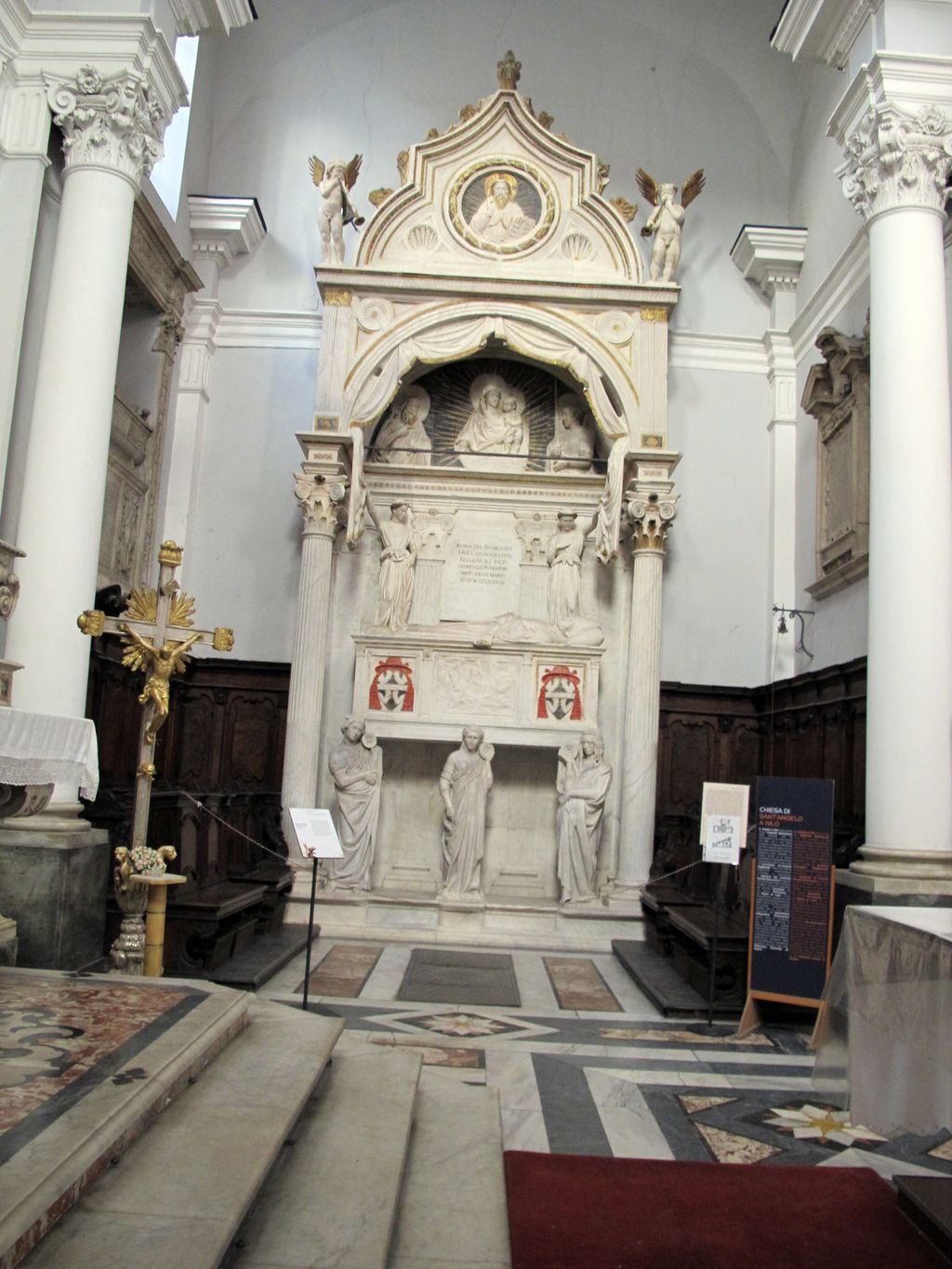
The Brancaccio tomb at Sant’Angelo a Nilo in Naples, a project of Donatello, Michelozzo and assistants. Sailko. Image source. CC BY-SA 3.0. Resized for the web.
One of the largest jobs in the returns was the tomb of Baldassare Cossa, the deposed pope of the Pisan line who had taken the name John XXIII. The partners built it in the Florence Baptistery, where the recumbent bronze figure lies above the marble sarcophagus. By their 1427 accounting, the money they had drawn for the work had already been spent and the tomb was still incomplete. The figures in the return convey how a fixed-price contract could expose a workshop to risk, especially when the commission combined bronze, dressed stone and an architectural frame that had to fit into a particular site. [4] [8]
The tomb of Cardinal Rinaldo Brancaccio followed a different route. The partners made it in Pisa for the church of Sant’Angelo a Nilo in Naples, with sea transport included in the agreed price. Pagno di Lapo worked for them in Florence and Pisa, as a claim for outstanding wages entered in his father’s tax return shows. Donatello’s most readily identifiable contribution to the monument is the shallow marble relief of the Assumption. The larger work combined carving, architecture, the labour of assistants and shipping. The arrangement allowed a patron to obtain a substantial Florentine workshop product for a church in Naples, with much of the labour carried out in a different city. [2] [4] [8] [12]
The partners were also concerned with the delivery and payment of work for the font in the Baptistery of Siena. In a letter of May 1427 to the administrator of the cathedral works, they pursued an outstanding payment and asked what figures were wanted, saying they had time to carry them out. The bronze Feast of Herod arrived at the Siena customs house in April 1427. Donatello’s July tax declaration still listed what he expected to spend on gilding and what he owed two other artists in connection with the relief. In October the Sienese accounts recorded the finished panel as delivered and credited him with the agreed sum. Its commission had begun several years earlier. The relief and the figures associated with the font entered an undertaking shared with other sculptors, including Ghiberti and Jacopo della Quercia. The letters show the day-to-day business behind such a project. Subjects, payments and the time available in the workshop all had to be settled before the pieces could come together in the baptistery. [4] [8] [13]
Small reliefs occupied a different place in Donatello’s practice. A work such as the Ascension with Christ Giving the Keys to Saint Peter could be carved on a comparatively shallow slab of marble. Its first destination is uncertain. The two reliefs share an interest in what can be achieved by the smallest variations in the depth of stone, but only the large monument can be tied through workshop records to a place of manufacture and an agreed destination. [2] [4] [14] [29]
1428–43: Prato, Rome and the Medici
In 1428 Donatello and Michelozzo contracted to make an exterior pulpit for the church of Santo Stefano in Prato. The balcony was to serve for the public display of the Sacred Girdle, venerated as a relic of the Virgin. A model was already in existence when the partners received the commission. Work extended across a decade. Michelozzo cast the large bronze capital in 1433, while the marble reliefs of dancing children that encircle the parapet were installed in 1438. Surviving entries record expenses for securing the slabs and, later, paying a painter to gild parts of the pulpit. The documented milestones mark different kinds of work spread over much of the 1430s. [4] [14] [15]
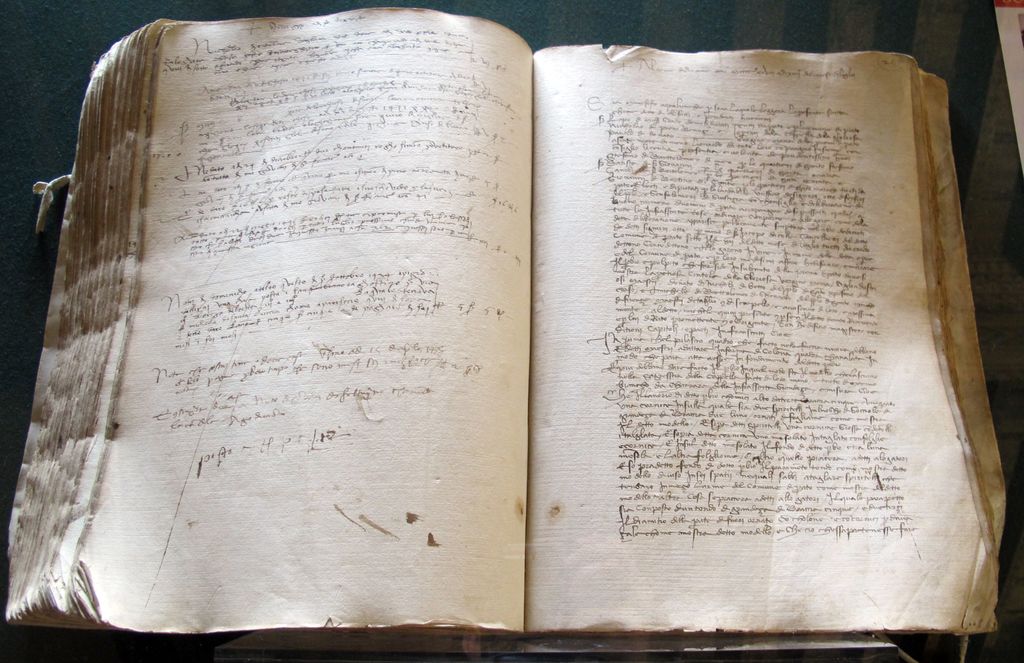
The 1428 commission document for the external pulpit at Prato, for the work of Donatello and Michelozzo. Sailko. Image source. CC BY-SA 3.0. Resized for the web.
During the delay Donatello spent time in Rome. The works most securely associated with his visit in 1432–33 are a tabernacle for the Sacrament and the tomb slab of the archdeacon Giovanni Crivelli. Cosimo de’ Medici intervened in efforts to bring the artists back to their obligations at Prato. Even after Donatello returned, the officials were still pursuing him for the reliefs, and in March 1438 they declined to pay further money until the carving advanced. A separate payment record names Maso di Bartolomeo undertaking work on the structure. The correspondence and accounts give as much space to people chasing the commission to completion as to the two men who originally signed for it. [4] [8] [14] [15]
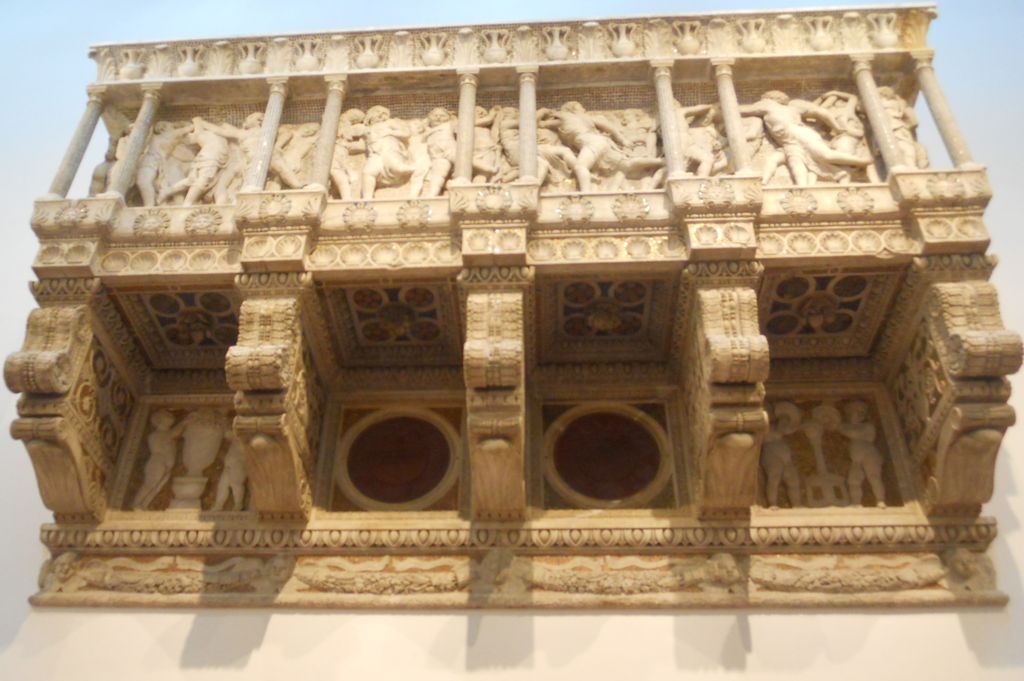
In 1433 the Florence cathedral works commissioned Donatello’s Cantoria, a gallery for an organ and singers. It was made through 1439 and placed inside the cathedral above the canons’ sacristy. The work on the Prato balcony was still under way. The cathedral officials used Luca della Robbia’s earlier commission as a benchmark, setting a price of forty florins for each panel of comparable quality, with provision for more if the workmanship surpassed it. [4] Donatello used dancing children on both commissions, but the people of Prato looked up at a pulpit on a street corner, while those in Florence saw a gallery across an enclosed space in the cathedral. The distinction mattered to a workshop designing the two friezes at the same time. The Prato project also gave younger sculptors material to adapt. Maso later made a reliquary for the Girdle with dancing figures running around its sides, closer in arrangement to the Florence gallery. [14] [16]
Work in Florence now brought Donatello into a closer relationship with the Medici. In the Old Sacristy of San Lorenzo he supplied decoration for a space that served the family’s burial and devotional purposes. The setting was Brunelleschi’s architecture. Donatello worked there in coloured stucco and in bronze, including on the two doors with pairs of saints. Two other bronze doors, for the sacristies of the cathedral, were commissioned from him in 1437 and took on a different history. The cathedral accounts record advances, separate deadlines and provision for a helper. In 1446, while Donatello was in Padua, the Opera engaged Michelozzo, Luca della Robbia and Maso di Bartolomeo to make one of the doors, and the new agreement still referred to Donatello’s model. [4] [8] [14]
The Medici are also linked with the free-standing bronze David. The circumstances and date of this commission are less secure than those of the youthful marble. The bronze was documented in the Medici palace in 1469, after Donatello’s death, while modern scholars have placed its making at different points in his career. Its later position in the palace is firm ground for discussing the family’s ownership. Assigning the work to a single year, or fixing its first intended setting solely from the palace record, would turn a useful date for its reception into a claim about its origin. [2] [8] [14]
1443–54: A decade in Padua
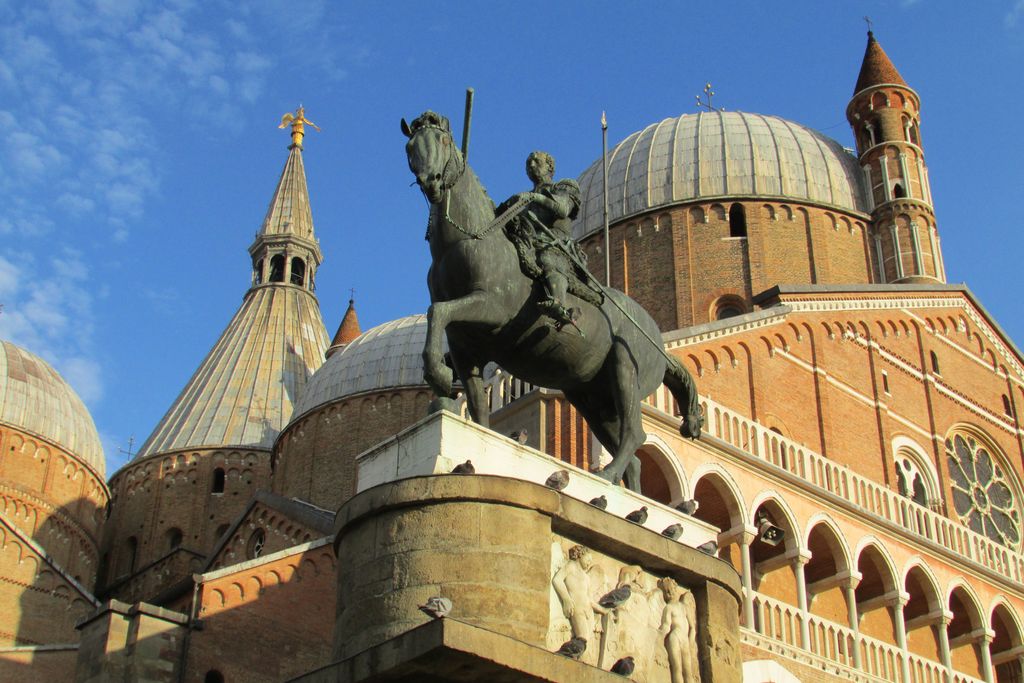
Donatello moved to Padua in the 1440s, with the years 1443 to 1453 conventionally defining his Paduan period. The city was under Venetian rule. His principal projects there centred on the Basilica of Saint Anthony, known as the Santo, but answered to different patrons. The administrators responsible for the shrine engaged him for work in the church. The family of Erasmo da Narni, the Venetian commander nicknamed Gattamelata, commissioned a bronze equestrian monument with the approval of the Venetian Senate. The piazza and the shrine thus brought work for a local religious institution and work for a military family into close physical proximity. [2] [3] [8] [17] [18]
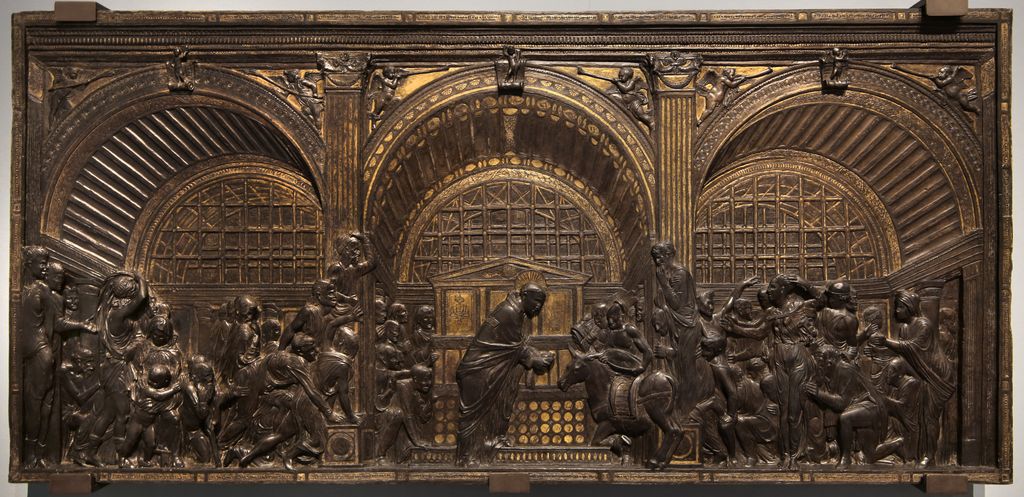
The Miracle of the Mule, one of the gilded bronze narratives for the Santo altar. Francesco Bini. Image source. CC BY-SA 4.0. Resized for the web.
A bronze Crucifix preceded the main Santo altar ensemble and is now mounted above it. Work on the altar itself began in the mid-1440s, with the main phase of production conventionally placed between 1446 and 1450. The undertaking comprised figures in the round, including the Virgin and Child and six saints, together with reliefs for its base. Several reliefs depict miracles of Saint Anthony. Bringing together so many large and small pieces meant planning a series of castings and coordinating the people who prepared, cast and finished them. The original altar was dismantled. The arrangement now visible is Camillo Boito’s reconstruction of 1895, evidence of how a later generation interpreted a group that had lost much of its original architectural setting. [2] [8] [14] [17]
The equestrian monument to Gattamelata was made in an overlapping period. The basilica’s modern study and conservation account dates its production to 1447–53 and places its installation in the forecourt later, around 1457. The Metropolitan Museum’s account gives 1453 as the year it was erected. The distinction is important because the date associated with the completion of the bronze may differ from the date when it stood in the place that gave the monument its public presence. The commander’s actual burial was inside the basilica. The elevated horse and rider marked his memory outside, where they addressed everyone approaching the church. [2] [3] [18]
Work across several commissions depended on people who could act for the sculptor as well as people who could help cast and finish a bronze. In 1449 Giovanni di Buonaiuto Lorini appeared before the podestà in Padua and identified himself as Donatello’s relative and representative in recovering debts. This was the same man who several years later stood guarantor for the sculptor’s rental of a house and workshop near the cathedral in Florence. The records connect Donatello’s decade away from Tuscany to the practical arrangements behind his return there. A renewed rental of the premises in 1462 again bears Giovanni’s guarantee. [4] [5]
Donatello left Padua around the end of 1453 or the beginning of 1454. The bronzes stayed in the city where a younger generation of artists could study them. In the work of the young Andrea Mantegna, the resemblance shows in the way strongly foreshortened figures and antique architecture give a sacred story the immediacy of a public event. The case for contact and artistic exchange rests on proximity and on the works themselves. There is no need to assign Mantegna a formal apprenticeship to explain what a painter working in Padua could have learned from the sculptor’s reliefs. [2] [8] [14] [19]
1454–61: Florence again, then Siena
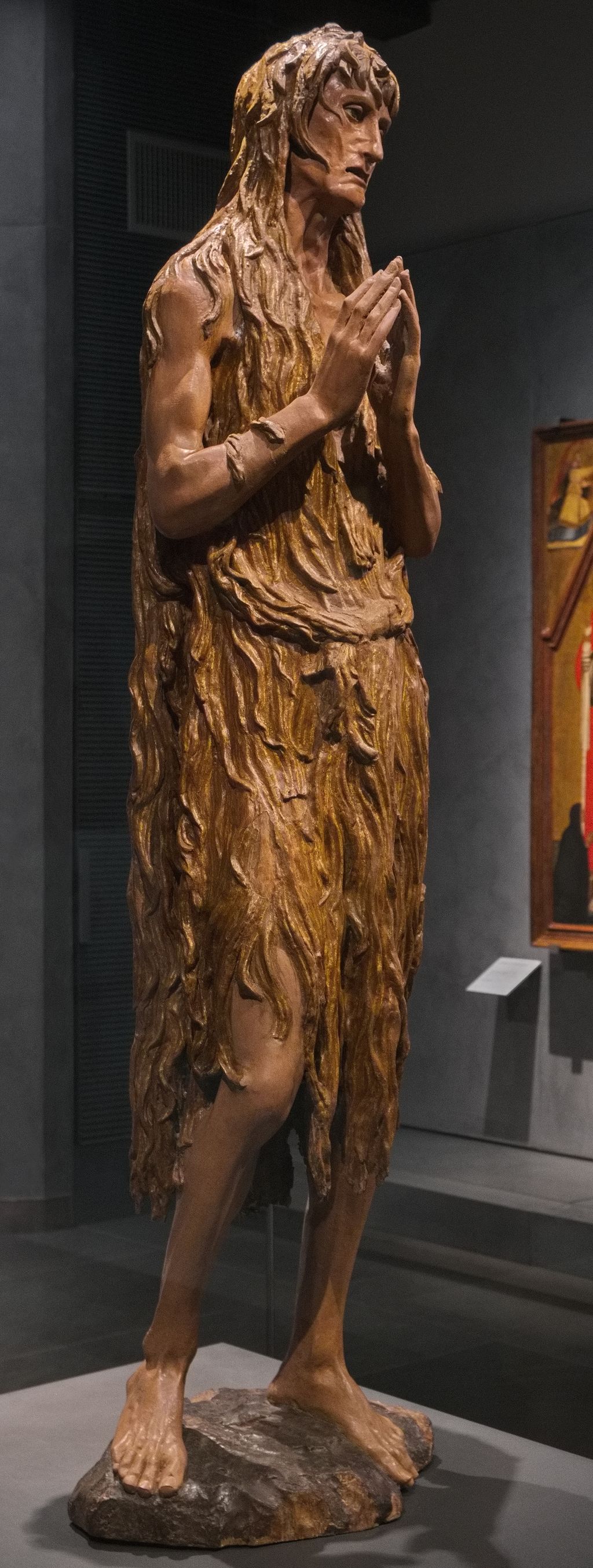
Among the works usually associated with Donatello’s return south is the wooden Penitent Magdalene, dated by the Museo dell’Opera del Duomo to around the middle of the 1450s. It stood in the Florence Baptistery, where the sculptor had once helped make doors. Its carved and coloured surface belonged to a different branch of workshop practice from the Paduan bronzes. In its position to the left of the high altar, the saint looked towards the altar. The building that had helped to train Donatello’s generation of metalworkers served an equally important part in the life of this late work, giving the figure a purpose and direction within the liturgy. [2] [6] [20]
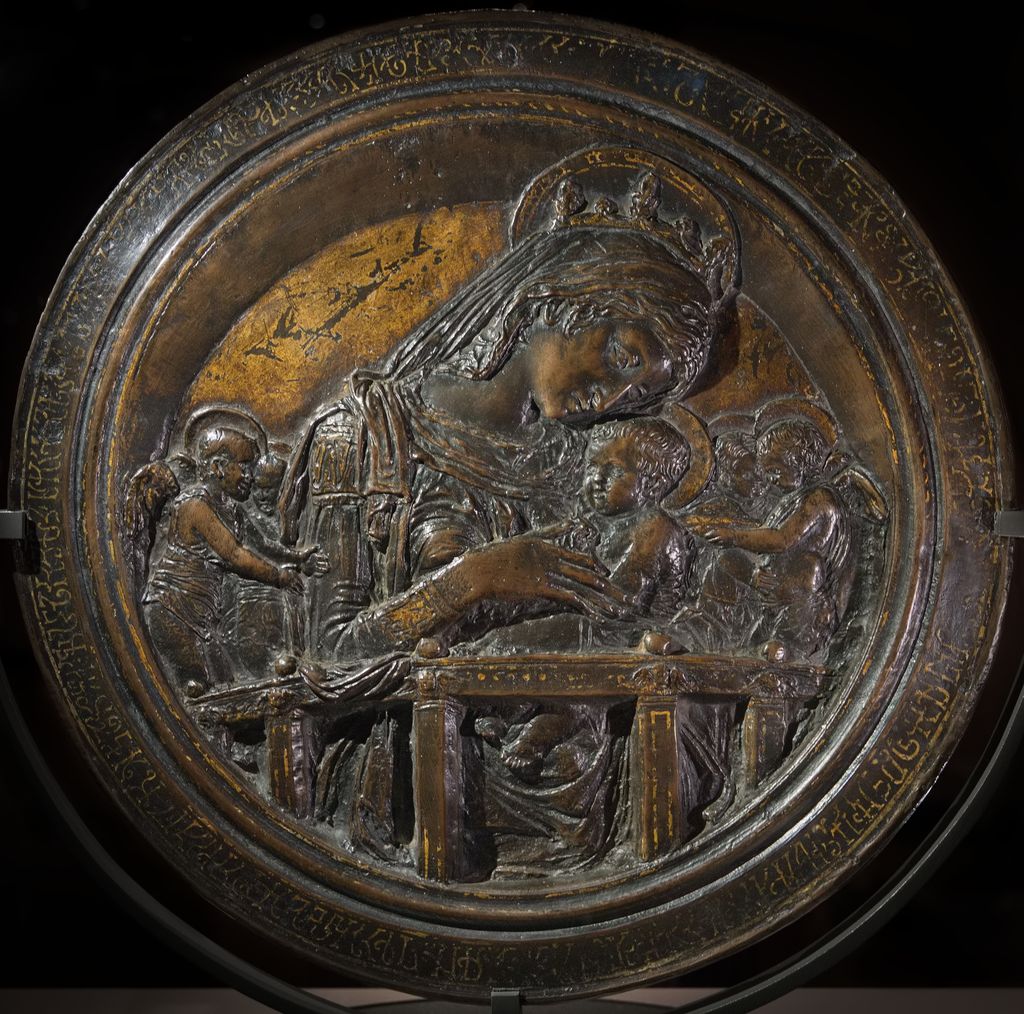
A smaller object opens another window on Donatello’s working life after Padua. In 1456 the physician Giovanni Chellini recorded receiving a round bronze relief of the Virgin and Child with Four Angels from the sculptor for his services. The reverse was fashioned so that glass could be cast from it. Chellini’s record is unusually valuable for connecting a portable devotional object to a transaction between people who knew one another. It gives a date by which the relief was in the recipient’s hands. The form of the object also shows that a sculptor could pass on, in the same gift, an original image and a means of repeating it. [6] [14]
By 1457 Donatello was working again for the Sienese cathedral. The bronze Saint John the Baptist associated with that stay is distinct from his early marble Evangelist for Florence. It reached Siena with the right arm missing and was subsequently completed. Donatello was also engaged to produce bronze doors for the cathedral. An inventory names his house or workshop near the bishop’s garden, and the Opera paid towards his rent and supplied a bed and feather bolster for his use while he carried out the work. The doors were never installed. The contrast between the installed Baptist and the unrealised doorway shows the different outcomes possible within one period of patronage. [2] [4] [8] [21]
The 1458 tax return places Donatello in Siena and records a house with a little ground at Figline near Prato that he had purchased in 1443. In 1460 he made a notarised donation of this property to Giovanni di Buonaiuto, with the transfer to take effect after his death. The later archival discovery of that deed helps connect the asset recorded in a tax return with his arrangements for disposing of it. It also gives weight to the repeated appearances of Giovanni as someone Donatello trusted with business. A household return and a legal act can establish property, residence and kinship while leaving most of an individual’s intimate life beyond recovery. [4] [5]
1461–66: San Lorenzo and the work left to others
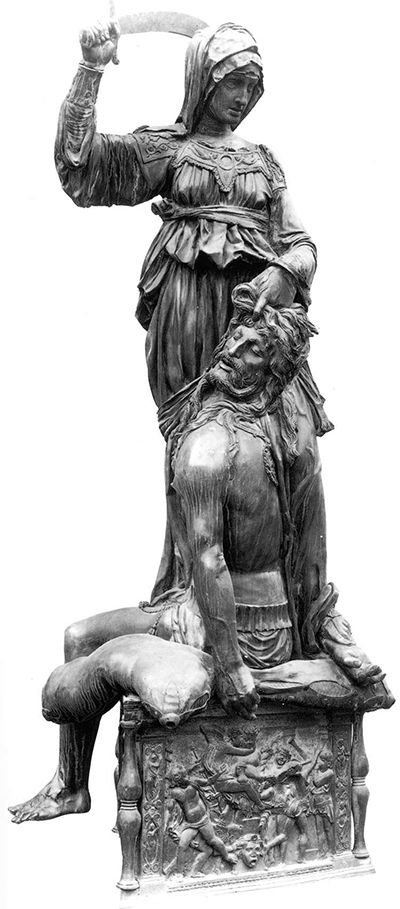
Towards the end of Donatello’s life the Medici displayed Judith and Holofernes in the garden of their Florentine palace. The bronze group belongs to his late career. It represents Judith overcoming the commander who threatened her people, a subject that remained open to political use after it left the family. In 1495 the Florentine republic moved the sculpture to the Piazza della Signoria following the expulsion of the Medici. The transfer makes a counterpart to the move of the early marble David. As with David, a change of address gave a work already familiar to Florentines a role in presenting the city’s government. [8] [14] [22]
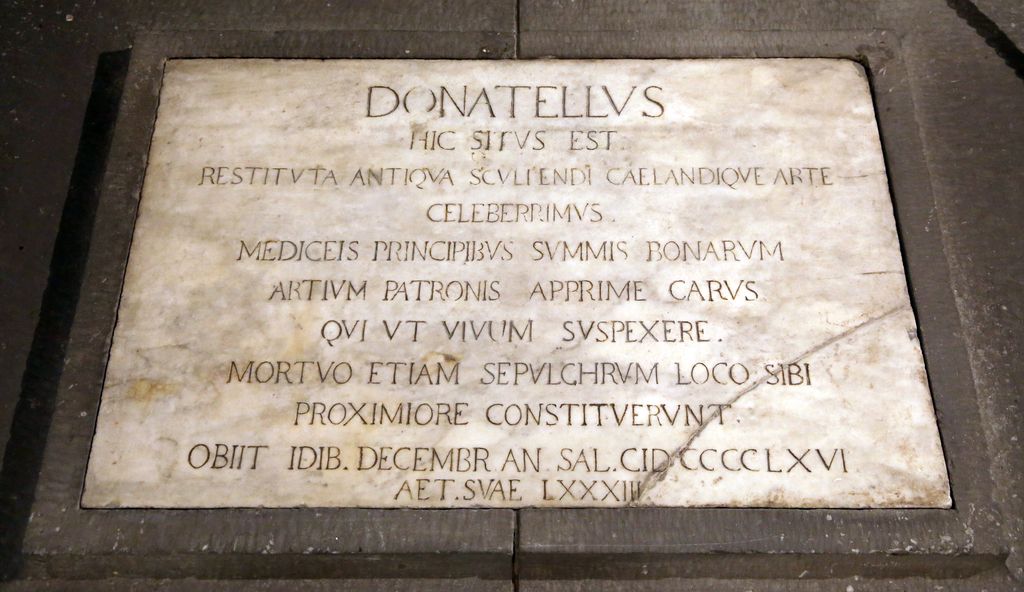
Donatello’s floor tomb in the crypt of San Lorenzo in Florence. Francesco Bini. Image source. CC BY-SA 4.0. Resized for the web.
Donatello’s last major undertaking is associated with the bronze reliefs now assembled as the Passion and Resurrection pulpits in San Lorenzo. The scenes probably took shape over several years. The relief of the Martyrdom of Saint Lawrence carries a date in June 1465, a firm point in a sequence otherwise hard to establish. Conservation research has distinguished different treatments of the bronze and shown how much the panels’ physical history can tell us. Records of metal, fuel and wax acquired in 1456 show Donatello and his assistants preparing for large-scale casting, although the surviving accounts do not assign those materials to each individual relief. The documents name Bartolomeo Bellano among the people receiving payments. Bertoldo di Giovanni is associated with Donatello’s work on the authority of Vasari, writing long afterwards. The precise division of work among the sculptors remains open. [2] [14] [23]
Donatello died on 13 December 1466 and was buried at San Lorenzo, where his floor tomb is in the crypt. The reliefs continued on a separate course after his death, through completion, assembly and changes to their arrangement. The pulpits as seen today preserve his conception through the activity of collaborators and subsequent generations of church officials and craftsmen. Work on the site continued beyond the life of the sculptor, just as it had on nearly every large building where his career began. [8] [23] [24]
Donatello's reputation after his death
Donatello’s contemporaries could see only a part of what he had made unless they travelled. A Florentine knew the statues at Orsanmichele and the cathedral. A visitor to Padua saw the altar and the horse and rider. Meanwhile smaller works, and reproductions of them, could travel. The Louvre and the Rijksmuseum, for example, preserve objects based on the design of the Pazzi Madonna, whose marble is in Berlin. The copies are evidence of the reach of a small composition beyond the building sites, churches and cities in which Donatello received his commissions. [14] [19] [25] [26]
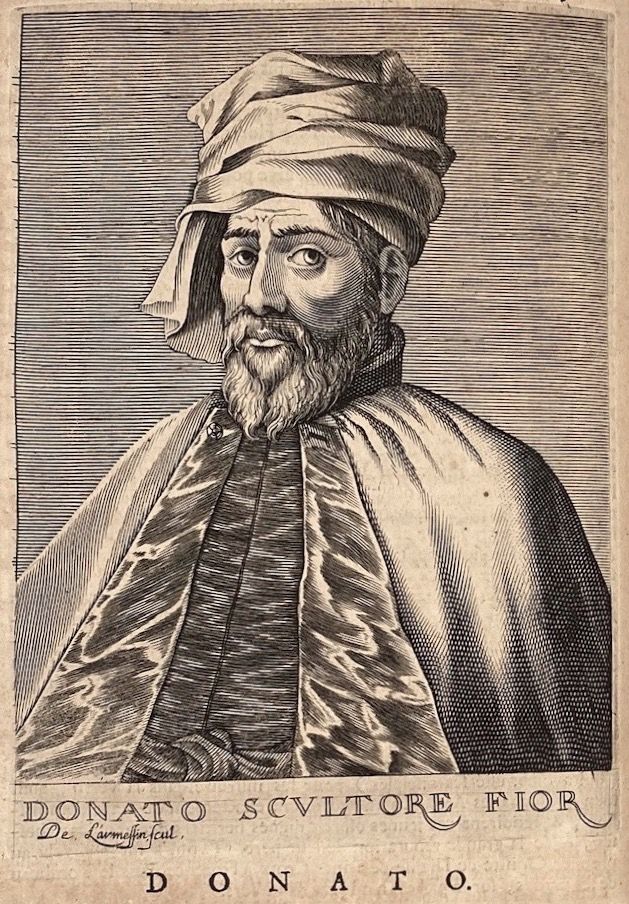
Nicolas de Larmessin’s 1682 engraving of Donatello, published long after the sculptor’s death. Nicolas I de Larmessin and Esme de Boulonois. Image source. Public domain. Resized for the web.
Later writers gave readers a personality to associate with the signed and documented works. In the sixteenth century Giorgio Vasari wrote that patrons and craftsmen alike held Donatello in extraordinary esteem. The anecdotes in his Lives helped create the popular image of a blunt and irreverent man. Vasari also placed Donatello’s birth in 1403, a year that would make him an infant when his name appears among Ghiberti’s workers. They are retrospective accounts that can also be read for what their authors thought a great sculptor ought to be. The documentary record supplies a man whose achievements were bound up with other people’s skills, repeated negotiations and the varied needs of the cities where he worked. The surviving stories and sayings and the catalogue of his sculpture offer two further ways to follow that reputation. [2] [4] [14] [27]
Four stages of Donatello’s career
From the workshop to the street
Early employment in Ghiberti’s workshop preceded commissions for the cathedral and the Florentine guilds. Saint Mark and Saint George give two ways to make a marble figure visible from below. [2]
Collaboration, relief and public sculpture
Projects in Florence, Siena and Prato put Donatello’s reliefs into distinct settings. Partnerships and changing patrons shaped both what could be undertaken and how the work reached its setting. [2]
An altar and a monument
At the Santo, Donatello made sculptures for both the high altar and an equestrian memorial outside. The bronze projects address different settings within the same place. [35]
A return to Florence and work left unfinished
The Penitent Magdalene and the late bronze reliefs show different ways to shape bodies and surfaces. The San Lorenzo pulpits also preserve the work of collaborators and later installers. [36]
Donatello sculpture directory
| Name | Date | Medium and record |
|---|---|---|
| Marble David | 1408–09, adapted 1416 | Carved Carrara marble Catalogue. |
| Saint John the Evangelist | c. 1409–15 | Carved marble Catalogue. |
| Saint Mark | 1411–13 | Carved Carrara marble Catalogue. |
| Saint George and its dragon relief | c. 1415–17 | Marble statue and marble relief Catalogue. |
| Marzocco | c. 1417–20 | Carved sandstone Catalogue. |
| Saint Louis of Toulouse, Florence | 1418–25 | Gilt bronze and mixed media Catalogue. |
| Pazzi Madonna | c. 1420s | Marble relief Catalogue. |
| Reliquary Bust of Saint Rossore | c. 1420s | Gilt bronze Catalogue. |
| The Prophet Jeremiah | 1420s–30s, disputed | Marble Catalogue. |
| Zuccone | c. 1420s–30s | Marble Catalogue. |
| Feast of Herod, Siena | 1420s | Gilded bronze relief Catalogue. |
| Ascension with Christ Giving the Keys to Saint Peter | c. 1428–30 | Marble relief Catalogue. |
| Cantoria | 1433–39 | Marble and mosaic Catalogue. |
| Amor-Atys | c. 1435–40 | Partly gilded bronze Catalogue. |
| Bronze David | c. 1435–40, disputed | Partly gilded bronze Catalogue. |
| Gattamelata | Installation agreement, 1453 | Bronze and stone Catalogue. |
| Santo altar | Mid-fifteenth century | Bronze and limestone ensemble Catalogue. |
| Chellini Madonna | Given in 1456 | Partly gilded bronze tondo Catalogue. |
| Penitent Magdalene | c. 1453–55 (Opera) | Poplar, stucco, pigments and gold Catalogue. |
| Judith and Holofernes | Late 1450s–early 1460s | Bronze with surviving gilding Catalogue. |
| Pulpit of the Passion | Late work and later assembly | Bronze reliefs, Donatello and collaborators Catalogue. |
| Bust traditionally called Niccolò da Uzzano | Fifteenth century | Painted terracotta, attribution disputed Catalogue. |
| Prato Cathedral exterior pulpit | Commissioned 1428; carved 1430s | Marble reliefs, Donatello and Michelozzo Catalogue. |
| Cavalcanti Annunciation | c. 1433–35 | Gilded sandstone and terracotta Catalogue. |
| Crucifix at Santa Croce | Early fifteenth century | Painted wood Catalogue. |
| Madonna of the Clouds | c. 1425–35 | Marble relief Catalogue. |
| Old Sacristy Doors | Fifteenth century | Two paired bronze doors Catalogue. |
| Resurrection Pulpit | Late work and later assembly | Bronze reliefs, Donatello and collaborators Catalogue. |
| Brancaccio tomb | 1420s | Donatello, Michelozzo and assistants, mixed materials Catalogue. |
| Saint John the Baptist, Venice | 1438 | Polychromed and gilded wood Catalogue. |
| Sacrifice of Isaac | Early fifteenth century | Donatello and Nanni di Bartolo, marble Catalogue. |
| Madonna of Via Pietrapiana | Mid-fifteenth century | Terracotta Catalogue. |
| Miracle of the Mule | Mid-fifteenth century | Gilded bronze panel for the Santo altar Catalogue. |
| Padua Crucifix | Mid-fifteenth century | Cast bronze Catalogue. |
| Dancing Spiritello, Bargello | Fifteenth century | Bronze Catalogue. |
| Young Prophet from the Porta della Mandorla | c. 1404–09 | White marble, attributed to Donatello Catalogue. |
| Prophet or Apostle from the Duomo north tribune | Early fifteenth century | White marble, possibly Donatello Catalogue. |
| Beardless Prophet | 1415–18 | White marble Catalogue. |
| Sibyl and Prophet of the Porta della Mandorla | 1422 | Carved marble heads for the portal Catalogue. |
| Faith, Siena baptismal font | 1420s | Gilded bronze figure Catalogue. |
| Hope, Siena baptismal font | 1420s | Gilded bronze figure Catalogue. |
| Feast of Herod, Lille | c. 1430 | Carrara marble relief Catalogue. |
| Piot Madonna | c. 1440–60 | Polychrome terracotta with glass and wax inlays Catalogue. |
| Carafa Horse Head | c. 1456–58 | Cast bronze Catalogue. |
| Pazzi Madonna workshop version, Louvre | c. 1450 | Polychrome gesso, Donatello’s workshop Catalogue. |
| Pazzi Madonna tondo, Rijksmuseum | c. 1425–50 | Plaster and stucco, after Donatello Catalogue. |
| Sprite | c. 1430–40 | Bronze, sculptor or metalsmith close to Donatello Catalogue. |
Discussion
Look again at the images and ideas explored in Biography. These editorial prompts invite your observations.
Reader Insights
Which surviving commission tells you the most about the people involved in Donatello’s work?
Compare a Florentine guild commission and a project from Padua. How did the setting and patrons change what the sculpture had to do?
Join the Conversation
Share a detail, comparison or question about Biography below.
References
- Ministero della Cultura, David, national catalogue entry 0900287035. View source.
- Horst W. Janson, “Bardi, Donato, detto Donatello,” Dizionario Biografico degli Italiani, vol. 6. View source.
- Basilica of Saint Anthony of Padua, conservation report on the removal of the bronze Gattamelata group from its pedestal. View source.
- Volker Herzner, “Regesti donatelliani,” Rivista dell’Istituto Nazionale d’Archeologia e Storia dell’Arte, archival records of Donatello’s life and commissions. View source.
- Gianni Rossi, “La casa che Donatello comprò a Figline (e la scoperta delle sue ultime volontà).” View source.
- Victoria and Albert Museum, “Donatello – a master at work.” View source.
- Amy R. Bloch, “Sculpture, Donatello, and the Goldsmith’s Art in Fifteenth-Century Florence,” The Art Bulletin. View source.
- Pinacoteca Comunale di Faenza, “Donatello (Donato di Niccolò di Betto Bardi),” drawing on Francesco Caglioti’s Vita di Donatello. View source.
- Opera di Santa Maria del Fiore, San Giovanni evangelista, museum catalogue. View source.
- Musei del Bargello, “Donatello and the Dawn of Renaissance,” visitor itinerary. View source.
- Opera di Santa Croce, St. Louis of Toulouse, catalogue of works. View source.
- Comune di Napoli, “Sant’Angelo a Nilo Church,” Napoli Patrimonio Mondiale UNESCO. View source.
- Gaetano Milanesi, Documenti per la storia dell’arte senese, vol. 2, documents on the baptismal font of San Giovanni. View source.
- Fondazione Palazzo Strozzi and Museo Nazionale del Bargello, Donatello: The Renaissance, exhibition texts curated by Francesco Caglioti. View source.
- Diocesi di Prato, “Il pulpito di Donatello,” account of the pulpit and the Sacred Girdle. View source.
- Opera di Santa Maria del Fiore, Cantoria di Donatello, museum catalogue. View source.
- Basilica of Saint Anthony of Padua, “Presbiterio e altare maggiore,” guide to the present altar and Boito’s arrangement. View source.
- James David Draper, “Donatello (ca. 1386–1466),” Heilbrunn Timeline of Art History, The Metropolitan Museum of Art. View source.
- Staatliche Museen zu Berlin, Donatello: Inventor of the Renaissance, exhibition overview. View source.
- Opera di Santa Maria del Fiore, Maddalena di Donatello, museum catalogue. View source.
- Opera della Metropolitana di Siena, San Giovanni Battista, archival object record. View source.
- Palazzo Medici Riccardi, Giuditta e Oloferne, Mediateca. View source.
- Opificio delle Pietre Dure, Donatello, Pulpiti della Passione e della Resurrezione, 1456–1466, Basilica di San Lorenzo, Firenze, conservation report. View source.
- Comune di Firenze, “Alla basilica di San Lorenzo commemorato Donatello,” account of his death date and tomb in the crypt. View source.
- Musée du Louvre, La Vierge et l’Enfant, dite la Madone des Pazzi, collection catalogue. View source.
- Rijksmuseum, Maria met kind, type ‘Madonna dei pazzi’, tondo, collection catalogue. View source.
- Giorgio Vasari, “Vita di Donato, scultore fiorentino,” Le vite, 1568 edition, Fondazione Memofonte transcription. View source.
- Opera di Santa Maria del Fiore, “Sibyls, Prophets and Patriarchs in Giotto’s Bell Tower,” history and identifications of the tower sculptures. View source.
- Victoria and Albert Museum, “Explore Donatello’s masterpiece: ‘The Ascension’,” collection research and lighting study. View source.
- The Metropolitan Museum of Art, Florence and Central Italy, 1400–1600. View source
- Casa Buonarroti, Madonna of the Stairs. View source
- Victoria and Albert Museum, Donatello’s David. View source
- Opera del Duomo, Donatello and the Opera del Duomo. View source
- Ministero della Cultura, David with the Head of Goliath, Bargello bronze. View source
- Save Venice, Donatello’s Equestrian Monument to Gattamelata. View source
- Opificio delle Pietre Dure, L’ultimo Donatello. View source
More DONATELLO Sculptures
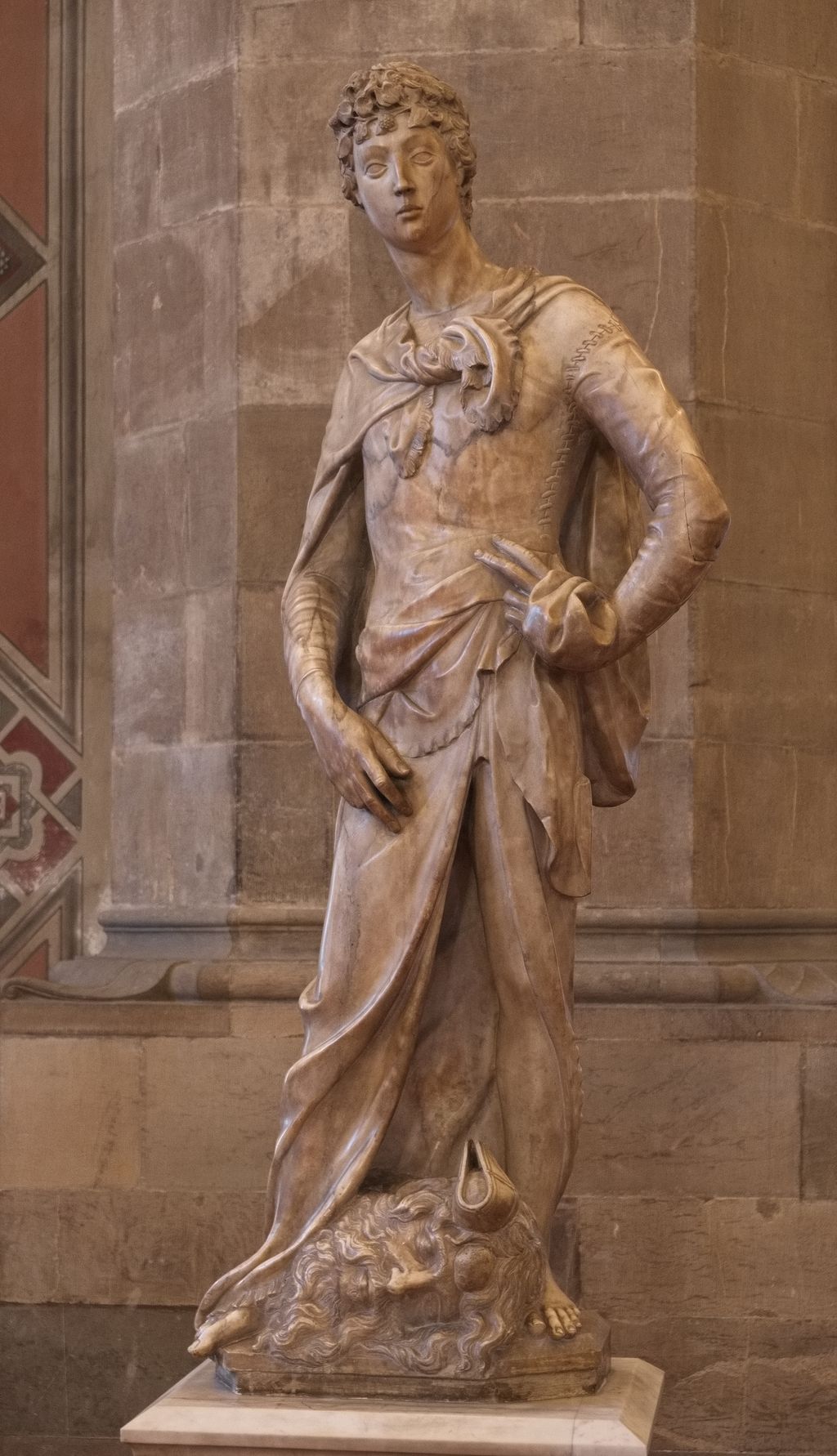
Marble David
Armin Kleiner. Image source. CC BY-SA 4.0. Resized for the web.
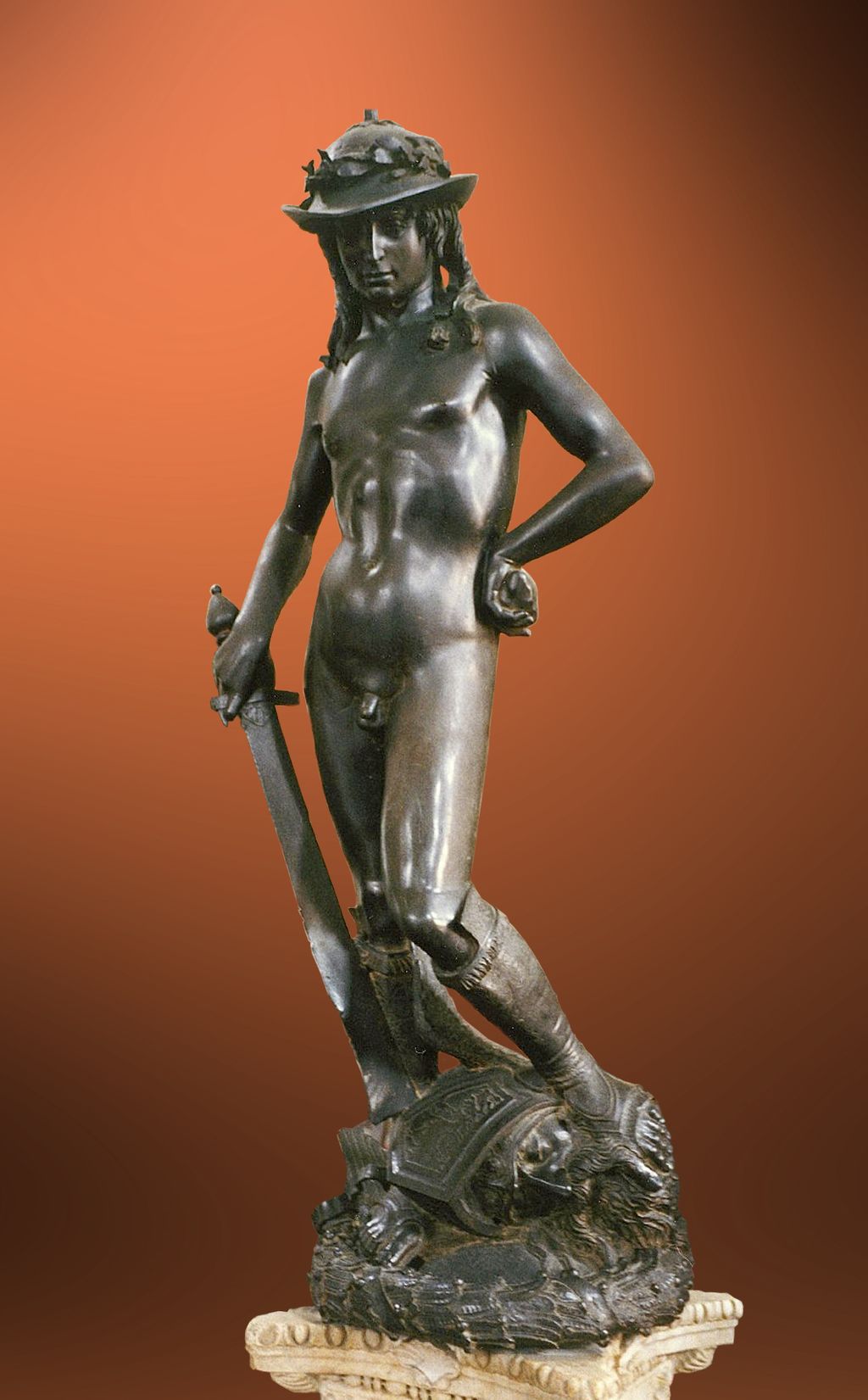
Bronze David
Patrick A. Rodgers. Image source. CC BY-SA 2.0. Resized for the web.
Cantoria
Erik Drost. Image source. CC BY 2.0. Resized for the web.
Gattamelata
Chris Light. Image source. CC BY-SA 4.0. Resized for the web.
Penitent Magdalene
Armin Kleiner. Image source. CC BY-SA 4.0. Resized for the web.
Chellini Madonna
Armin Kleiner. Image source. CC BY-SA 4.0. Resized for the web.
