


 by Tom Gurney
Tom Gurney BSc (Hons) is an art history expert with over 20 years experience
Published on June 19, 2020 / Updated on November 29, 2026
Email: tomgurney1@gmail.com / Phone: +44 7429 011000
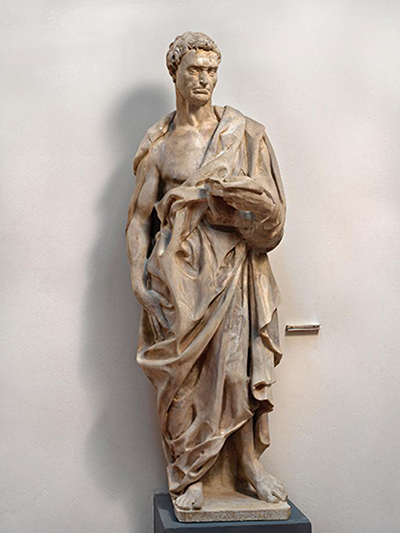
Donatello’s Prophet Jeremiah looks out from under a furrowed brow, one hand gripping a scroll and a fold of his mantle together. His other hand presses against his thigh. There is enough movement in the turn of his head and the drag of the cloth to suggest that something has just caught his attention, yet his lips remain firmly closed. The white marble figure stands 194 centimetres tall. Made for a high niche in Giotto’s bell tower beside Florence Cathedral, it is now in the Galleria del Campanile of the Museo dell’Opera del Duomo. A copy stands in the tower’s west face, where the original spent nearly five centuries. [1] [2] [3]
A figure made to be seen from the square
Start with the free arm. On Jeremiah’s right, the bared shoulder and the length of the arm lead down to the hand at the thigh. On the other side, the bent elbow brings cloth and scroll into the same crowded space. His weight settles over his right leg, while his head turns left. Seen from the front, these motions pull in different directions. From an oblique angle, the slight turn and backward inclination of the upper body become clearer. His pose gives the impression of someone who has paused while the folds are still settling around him. [2]
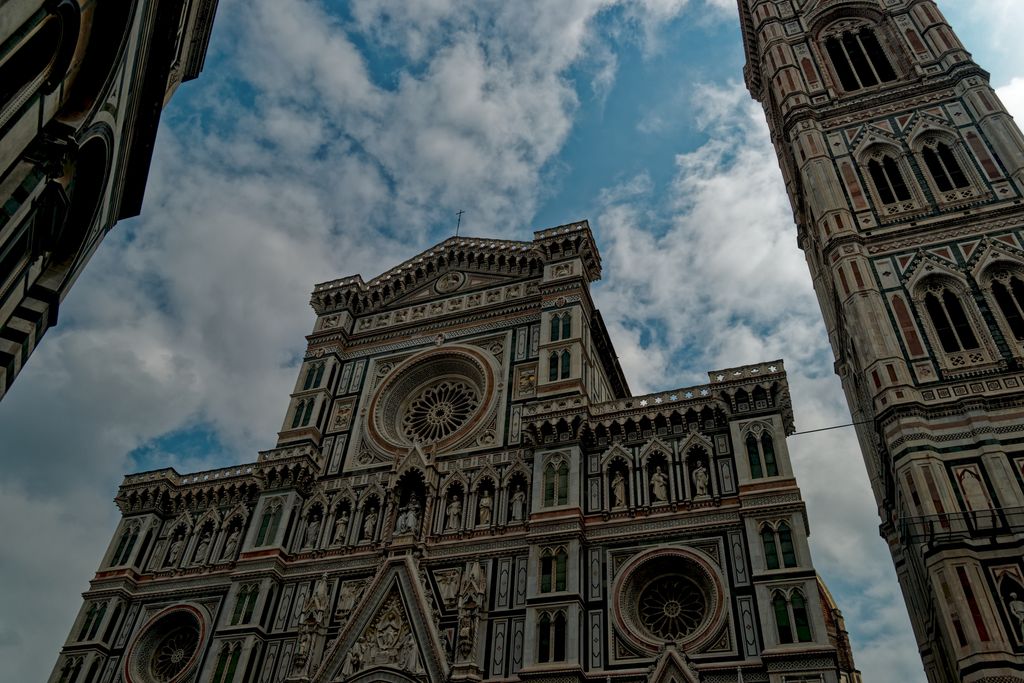
Giotto’s bell tower beside the cathedral in Florence. The prophets were designed for niches above the square. Txllxt TxllxT. Image source. CC BY-SA 4.0. Resized for the web.
A niche imposes a frame on a statue. Seen from the pavement, the short movements of fingers and small details in the face would have been difficult to make out. The large gestures travel farther. The exposed arm makes a continuous shape beside the broken edges of the fabric, and the deep cuts between folds produce shadows that can be read from below. The recess also makes the angle of a head matter. A frontal figure meets the space squarely, while Jeremiah’s turn carries his attention across one edge of the opening. You can see the pull of that turn even when the eyes themselves are hard to distinguish. [1] [2]
The tower already had fourteenth-century sculptures when the Opera, the body responsible for Florence Cathedral’s works, commissioned new figures in the fifteenth century. Its sixteen large niches accommodated Israelite prophets and pagan sibyls, figures associated with inspired foreknowledge. Below them, rows of smaller reliefs show human occupations and arts, as well as subjects including the virtues and sacraments. Jeremiah therefore belonged to a building that invited people to read images at different heights and scales. The rolled-out edges of clothing and the near life-size body had to register at a distance much greater than the one at which visitors can study the marble today. [3] [4]
What the mantle and the face tell us
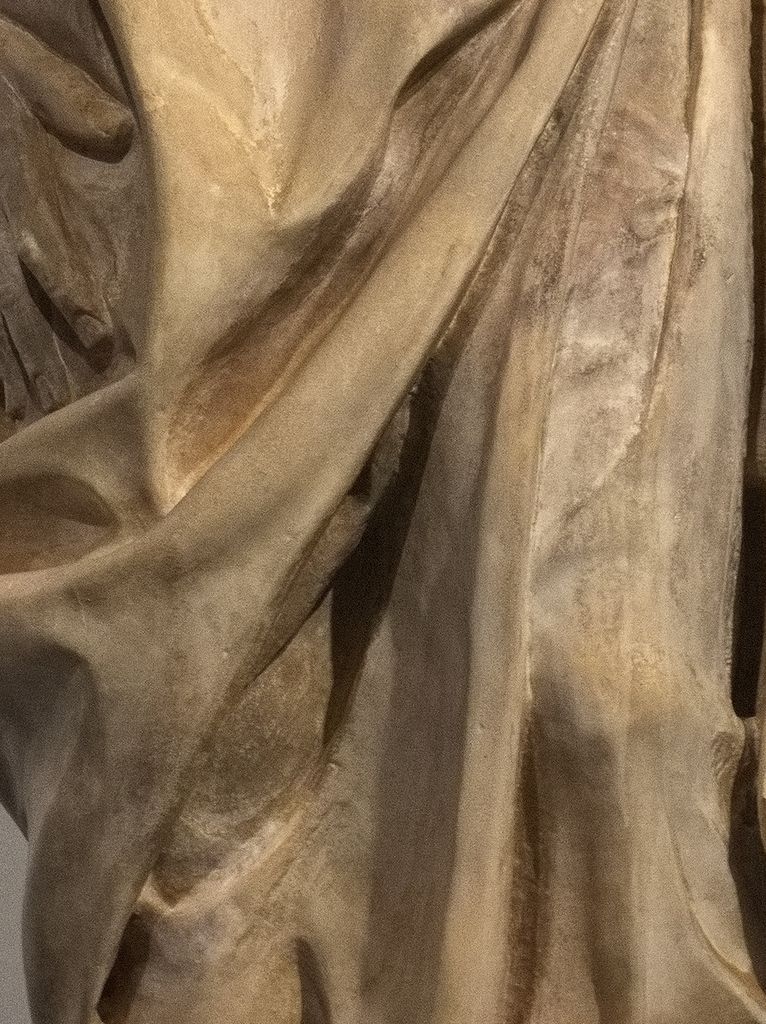
The carving gives the bare skin and the cloth very different kinds of weight. Across the chest, fabric gathers into heavy ridges before changing direction at the left hand. Lower down, the mantle opens enough to give the legs room to stand out as separate forms. The grip at the left side explains part of this pattern. Jeremiah is holding up the cloth as well as the scroll, so the folds have a reason to bunch at the hand and loosen where the fabric hangs free. Donatello made a single piece of cloth seem thick enough to drag on the shoulders and flexible enough to crumple under the fingers. [1] [2]
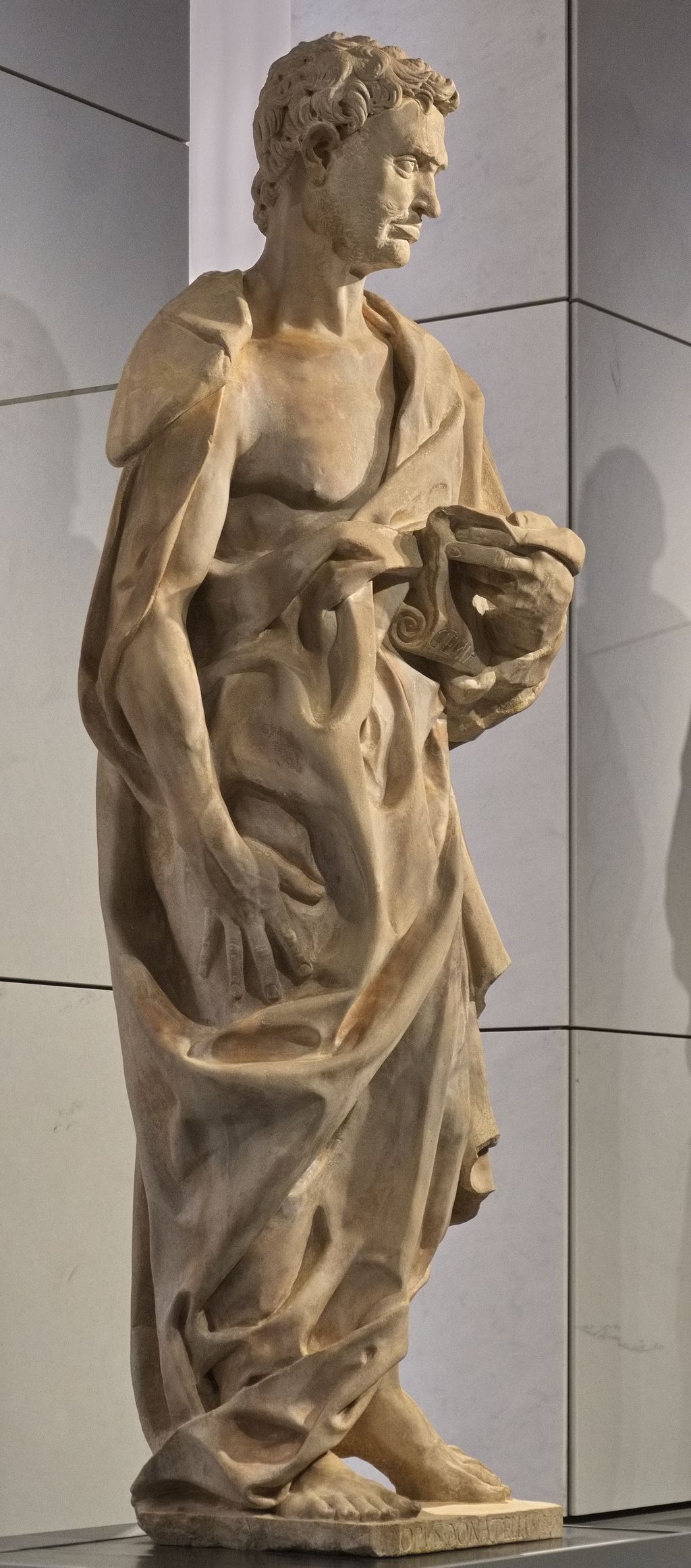
A side view of the original, with the arm supporting the scroll. Armin Kleiner. Image source. CC BY-SA 4.0. Resized for the web.
The Opera catalogue compares these layered folds with the cope on Donatello’s Saint Louis of Toulouse, originally made for an exterior niche at Orsanmichele. Conservators at Santa Croce found that the bronze was cast in separately made pieces assembled around a support, some overlapping their neighbours. The comparison makes sense when you follow the edges of Jeremiah’s mantle. In the marble, carving receding planes and channels creates the illusion that one thickness of material has been laid over another. The works offer two materially different ways of making clothing occupy the space around a figure. [1] [5]
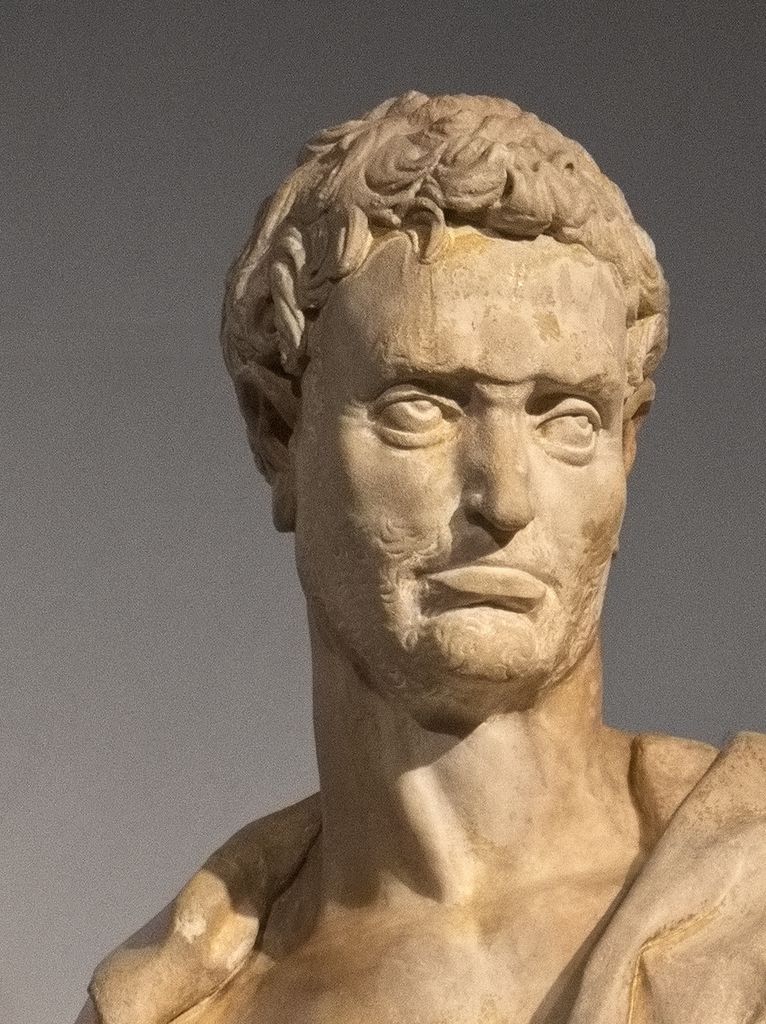
A closer view rewards attention to the rough hair, short beard and line of the mouth. The turn of the head stretches the neck and brings its modelling into play. Several of the strongest features can be read at different scales. The set jaw works in outline, while the compressed lips are visible up close. A tradition recorded by Vasari associated the face with the Florentine Francesco Soderini. The resemblance remains unverified. The story shows how readily later viewers imagined a particular person behind a face that looked familiar enough to belong to their city. [1] [2] [4]
Annotated Details from Prophet Jeremiah
Select a number to jump to a detail of the sculpture.
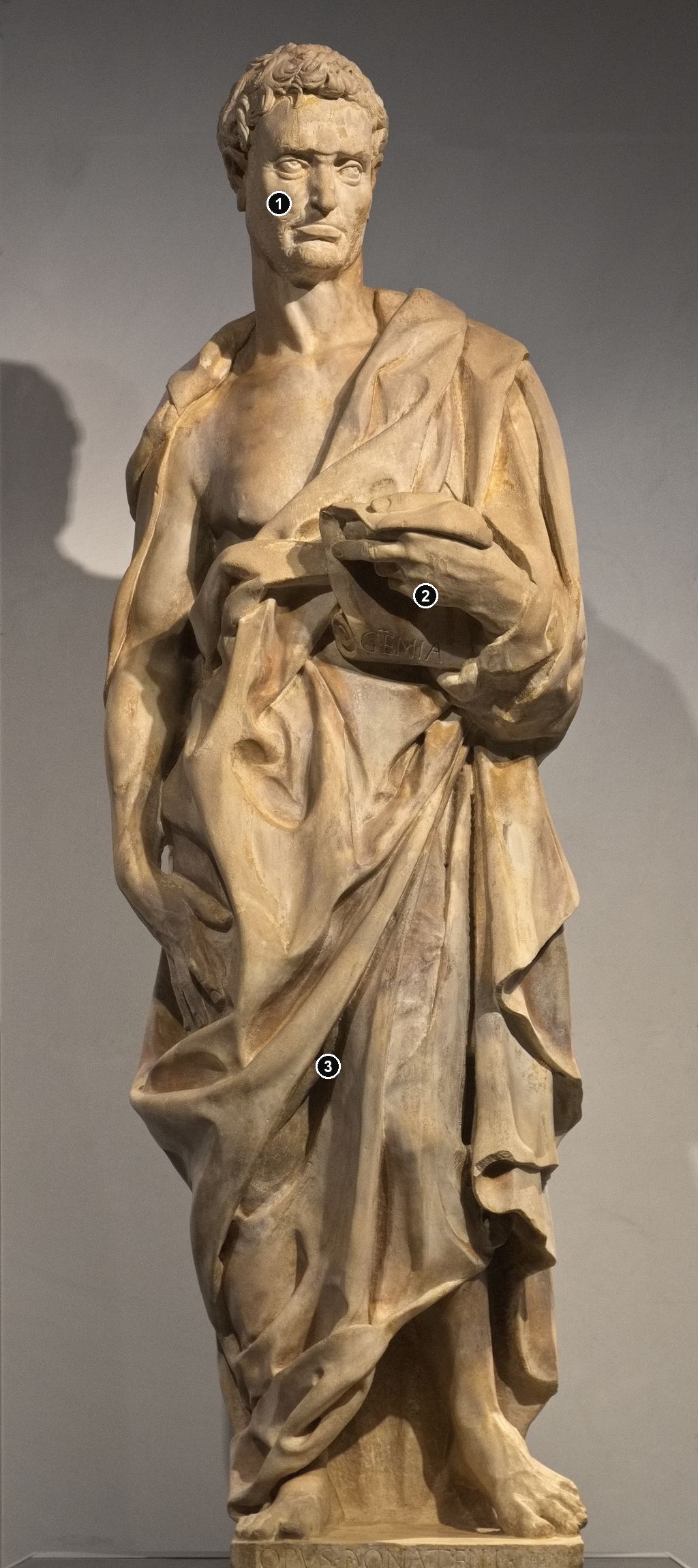
Details from PROPHET JEREMIAH
Open a detail image to examine the surface more closely.
The face
Close, shallow ridges around the brow and eyes make the expression more legible near the face. The turn of the head is restrained.
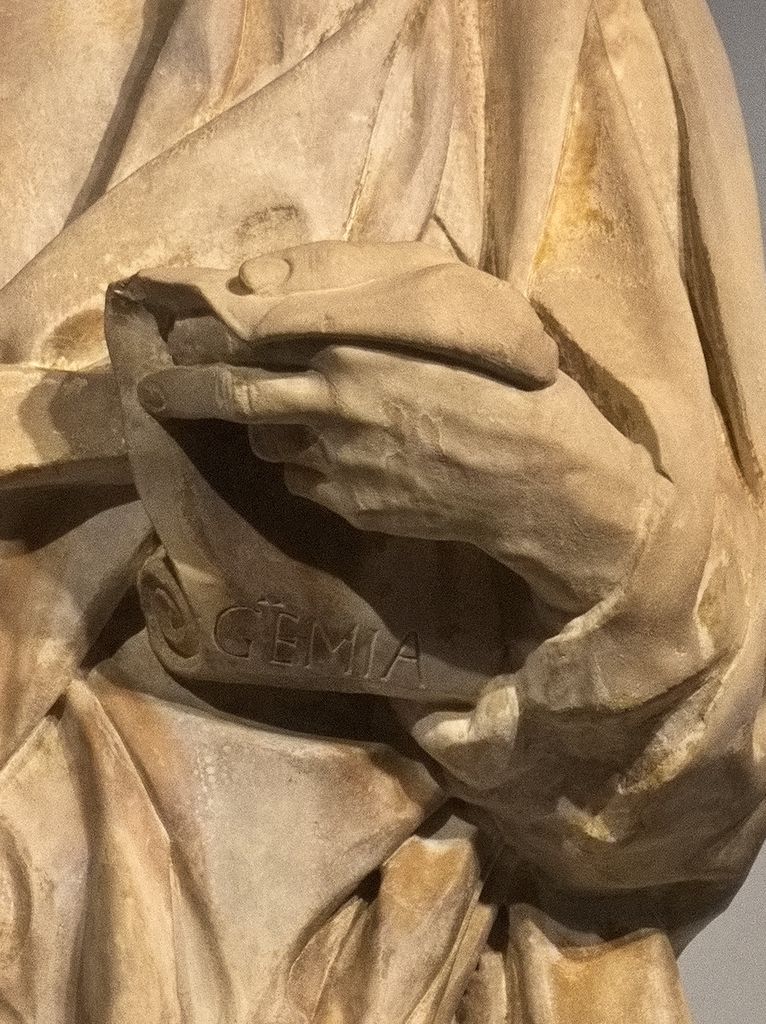
The scroll
The bent forearm supports the scroll at the waist. Its shape remains visible even where folds of the cloth approach it.
Mantle and stepping leg
A broad diagonal sweep crosses the figure over the nearer leg. Thin ridges inside the larger fold keep its surface from reading as a single flat strip.
Annotated photograph and detail crops. Armin Kleiner. Image source. CC BY-SA 4.0. Resized, annotated and cropped from the original photograph.
A name carved into the scroll
The Opera reads the inscription on the scroll as the abbreviated name Geremia, Italian for Jeremiah. The short text gives a name to a figure whose costume and scroll could otherwise belong to more than one prophet. In chapter 36 of the Book of Jeremiah, the prophet dictates a scroll to his scribe Baruch, who reads it publicly. King Jehoiakim burns it piece by piece, and Jeremiah has it written again. The episode gives a reader a way to think about the weight Donatello gave the scroll, held securely against a body at rest. The carved words identify the figure without specifying a scene from the book. [1] [2] [6]
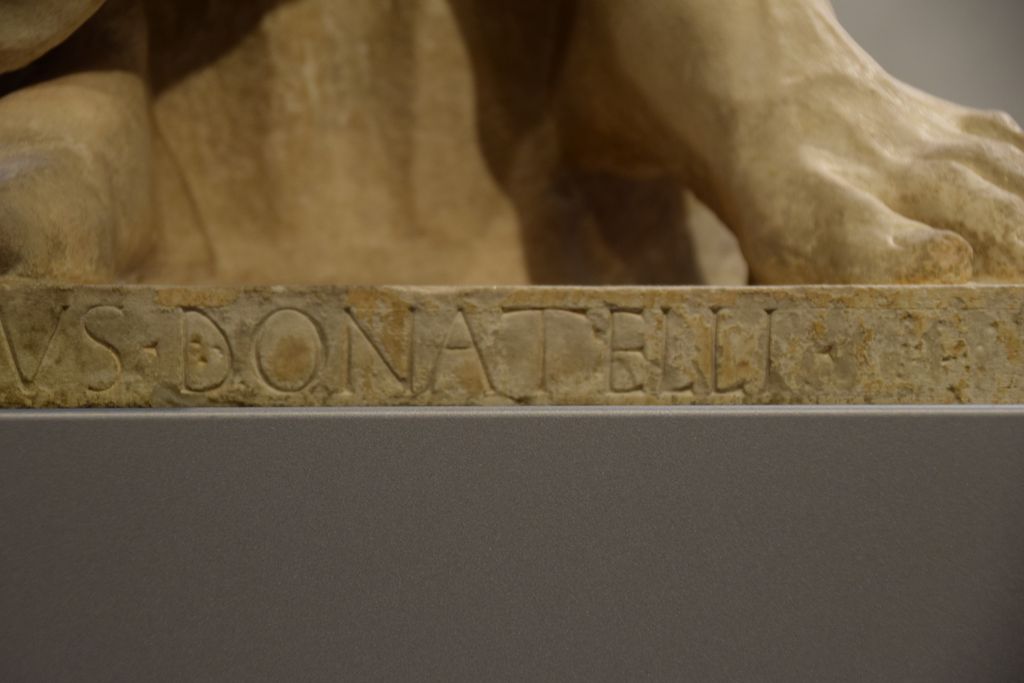
The artist’s signature cut into the marble base, separate from the lettering on the scroll. George M. Groutas. Image source. CC BY 2.0. Resized for the web.
The base carries a second inscription, read in full as Opus Donatelli, meaning ‘work of Donatello’. The Opera’s web records treat the carved texts as possible later additions and suggest that the base lettering could date to the move of 1464. Francesco Caglioti, writing in the museum’s 2026 catalogue, considers the signature likely to be Donatello’s own. He regards the inscription on the scroll as old enough to carry weight even if its authorship is uncertain. The question of who cut particular letters is distinct from the attribution of the statue, which the Opera and Caglioti both give to Donatello. [1] [2] [4] [9]
The date depends in part on how two surviving marbles are matched to two sequences of Cathedral records. The Opera’s online inventory dates Jeremiah to 1427–36, and its visitor account allows a broader span of 1423–36. Caglioti connects the later sequence, which eventually names Habakkuk, with the bald figure known as the Zuccone. That leaves the commission paid for between 1423 and 1426 as his candidate for the scroll-bearing Jeremiah. He also points to the green mantle of an apostle behind Saint Peter in Masaccio’s Tribute Money as evidence that painters in Florence could already study Jeremiah’s arrangement of folds before Masaccio died in 1428. The apparent echo in paint matters because payment, carving and installation could be separated by years. The surviving records tell us when the patrons paid and made decisions, while the comparison with Masaccio attempts to date the appearance of the carved folds themselves. The two marbles are easy to tell apart in the gallery. Jeremiah has thick, uneven hair and a closed mouth. The Zuccone has a bare scalp and parted lips. [1] [2] [3] [4]
From the north side to the museum
Jeremiah first stood on the north side of the campanile, facing the space beside the cathedral. In 1464 it was moved to the second niche from the right on the west face, overlooking the square and Baptistery. The change brought the two marbles by Donatello, together with two other fifteenth-century figures, into positions previously occupied by fourteenth-century sculptures. On Jeremiah’s other side stood Nanni di Bartolo’s Obadiah, whose open scroll faces out more readily toward the viewer. Caglioti notes that the two Donatellos ended up above older plinths inscribed with the names of David and Solomon. The result was an unusual pile-up of labels. The scroll carried the prophet’s name, the thin base carried the sculptor’s, and the reused plinth carried a name from a figure that had stood there before. [1] [2] [3] [4]
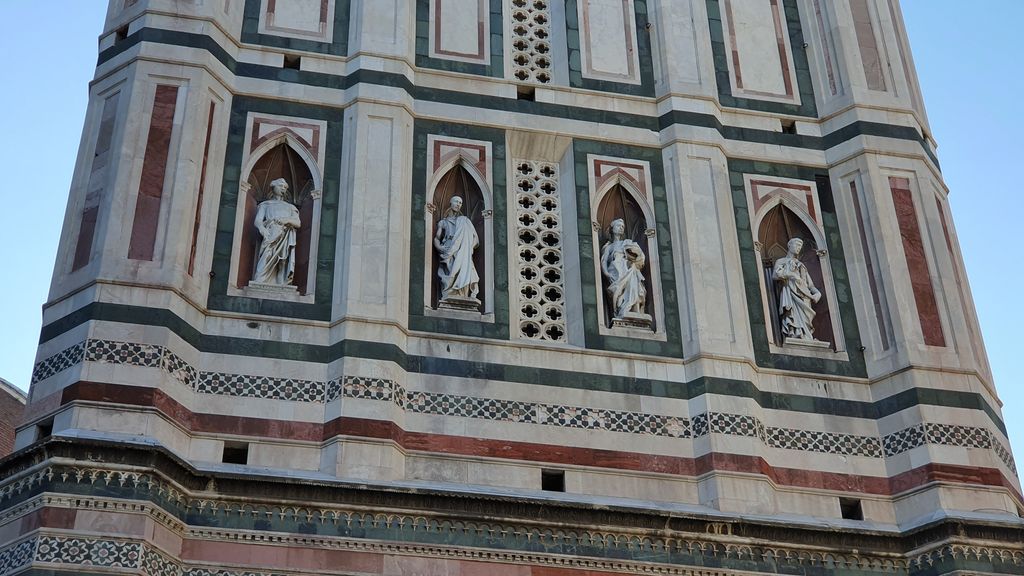
The west niches today contain copies of the original sculptures. Yair Haklai. Image source. CC BY-SA 4.0. Resized for the web.
The original came down in 1939. The Opera’s archive records both the poor condition of the west-side figures and fears of damage from wartime air raids. The statue went to the Bargello for safekeeping, then to the cathedral museum after the war. Romano Romanelli and Natale Binazzi hand-carved the west-side replacements in white marble between 1939 and 1945. A late nineteenth-century photograph in the Rijksmuseum collection shows the original still in its niche. It preserves a view of the sculpture inside the projecting frame that once made its twisting body part of the architecture. [1] [3] [7]
The move indoors left conservators with damage accumulated outdoors. The Opera records a treatment from 2002 to 2008 under the responsibility of the Opificio delle Pietre Dure. Carlo Biliotti and Isidoro Castello used both laser and traditional cleaning methods, and addressed fractures and an earlier repair at the right shoulder. Iron and bronze pins on the back had left stains on the marble, a reminder that some of the damage came from the very hardware used to secure the sculpture. The team also treated weakened areas of the stone and filled small fractures. [1]
The museum groups the originals from each face of the tower together and puts the fifteenth-century figures near the centre of the gallery. It sets the statues slightly above the visitor, preserving something of the upward view while bringing details within reach of the eye. The two settings reward different kinds of looking. In the square the west-side copy shows how the head and the weight of the mantle carry across the open space. In the museum you can follow the small change of pressure where the fingers catch the cloth and the scroll. [3] [8]
Donatello sculpture directory
| Name | Date | Medium and record |
|---|---|---|
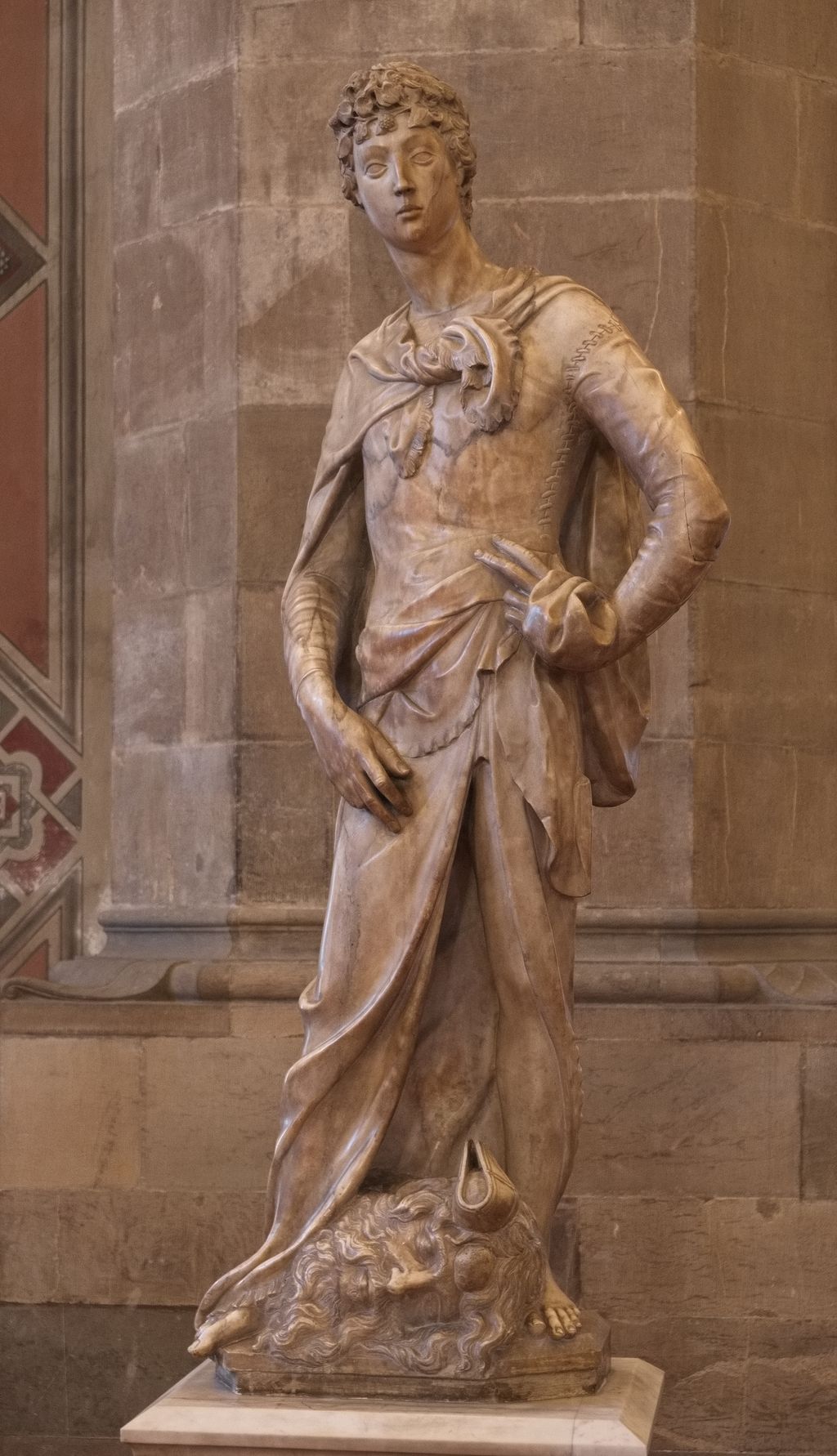
| Marble David | 1408–09, adapted 1416 | Carved Carrara marble Catalogue. |
| Saint John the Evangelist | c. 1409–15 | Carved marble Catalogue. |
| Saint Mark | 1411–13 | Carved Carrara marble Catalogue. |
| Saint George and its dragon relief | c. 1415–17 | Marble statue and marble relief Catalogue. |
| Marzocco | c. 1417–20 | Carved sandstone Catalogue. |
| Saint Louis of Toulouse, Florence | 1418–25 | Gilt bronze and mixed media Catalogue. |
| Pazzi Madonna | c. 1420s | Marble relief Catalogue. |
| Reliquary Bust of Saint Rossore | c. 1420s | Gilt bronze Catalogue. |
| The Prophet Jeremiah | 1420s–30s, disputed | Marble Catalogue. |
| Zuccone | c. 1420s–30s | Marble Catalogue. |
| Feast of Herod, Siena | 1420s | Gilded bronze relief Catalogue. |
| Ascension with Christ Giving the Keys to Saint Peter | c. 1428–30 | Marble relief Catalogue. |
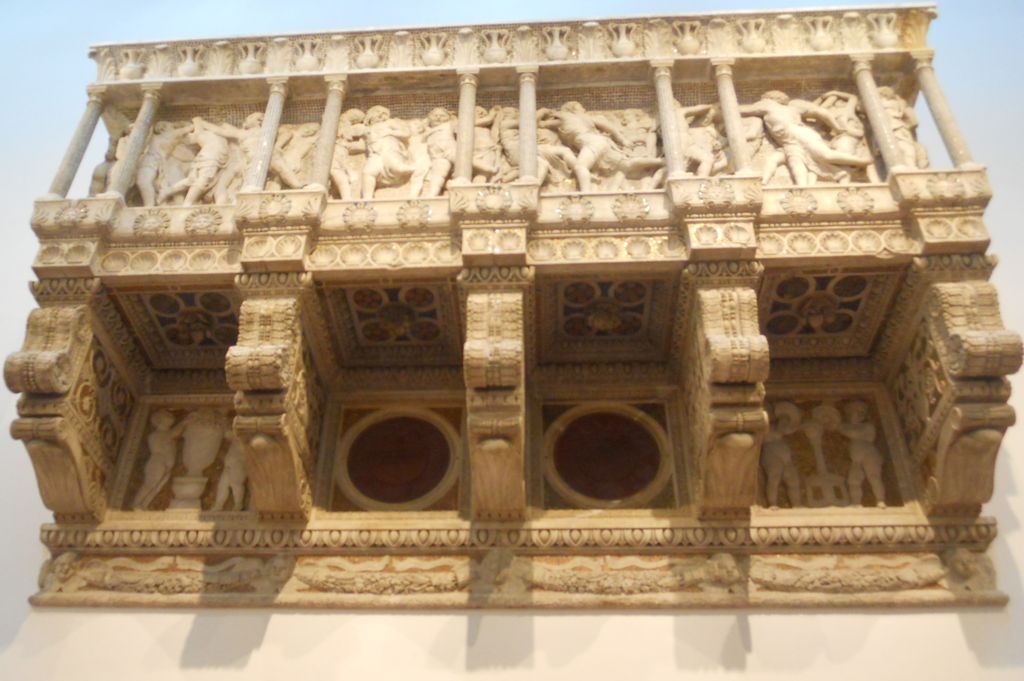
| Cantoria | 1433–39 | Marble and mosaic Catalogue. |
| Amor-Atys | c. 1435–40 | Partly gilded bronze Catalogue. |
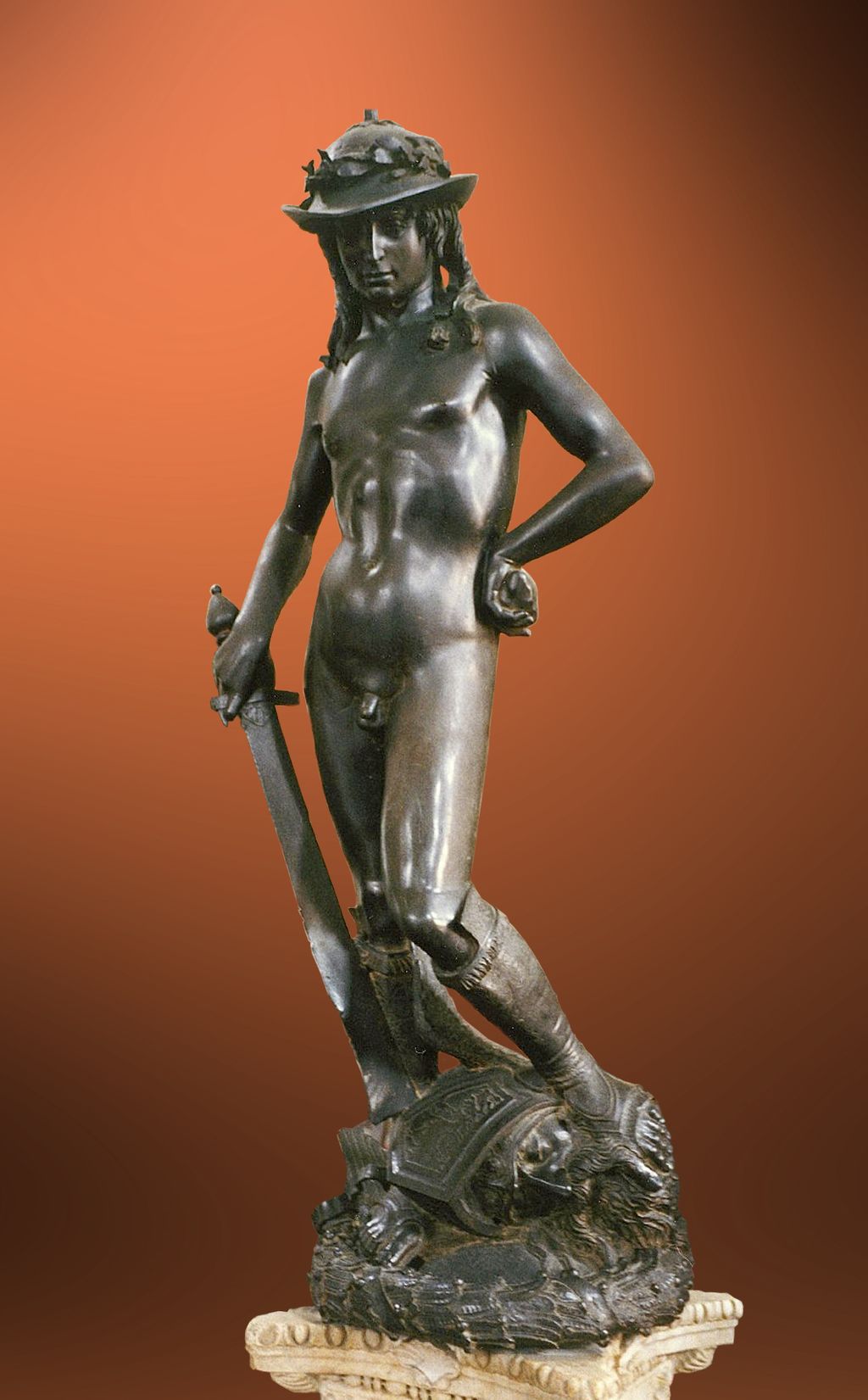
| Bronze David | c. 1435–40, disputed | Partly gilded bronze Catalogue. |
| Gattamelata | Installation agreement, 1453 | Bronze and stone Catalogue. |
| Santo altar | Mid-fifteenth century | Bronze and limestone ensemble Catalogue. |
| Chellini Madonna | Given in 1456 | Partly gilded bronze tondo Catalogue. |
| Penitent Magdalene | c. 1453–55 (Opera) | Poplar, stucco, pigments and gold Catalogue. |
| Judith and Holofernes | Late 1450s–early 1460s | Bronze with surviving gilding Catalogue. |
| Pulpit of the Passion | Late work and later assembly | Bronze reliefs, Donatello and collaborators Catalogue. |
| Bust traditionally called Niccolò da Uzzano | Fifteenth century | Painted terracotta, attribution disputed Catalogue. |
| Prato Cathedral exterior pulpit | Commissioned 1428; carved 1430s | Marble reliefs, Donatello and Michelozzo Catalogue. |
| Cavalcanti Annunciation | c. 1433–35 | Gilded sandstone and terracotta Catalogue. |
| Crucifix at Santa Croce | Early fifteenth century | Painted wood Catalogue. |
| Madonna of the Clouds | c. 1425–35 | Marble relief Catalogue. |
| Old Sacristy Doors | Fifteenth century | Two paired bronze doors Catalogue. |
| Resurrection Pulpit | Late work and later assembly | Bronze reliefs, Donatello and collaborators Catalogue. |
| Brancaccio tomb | 1420s | Donatello, Michelozzo and assistants, mixed materials Catalogue. |
| Saint John the Baptist, Venice | 1438 | Polychromed and gilded wood Catalogue. |
| Sacrifice of Isaac | Early fifteenth century | Donatello and Nanni di Bartolo, marble Catalogue. |
| Madonna of Via Pietrapiana | Mid-fifteenth century | Terracotta Catalogue. |
| Miracle of the Mule | Mid-fifteenth century | Gilded bronze panel for the Santo altar Catalogue. |
| Padua Crucifix | Mid-fifteenth century | Cast bronze Catalogue. |
| Dancing Spiritello, Bargello | Fifteenth century | Bronze Catalogue. |
| Young Prophet from the Porta della Mandorla | c. 1404–09 | White marble, attributed to Donatello Catalogue. |
| Prophet or Apostle from the Duomo north tribune | Early fifteenth century | White marble, possibly Donatello Catalogue. |
| Beardless Prophet | 1415–18 | White marble Catalogue. |
| Sibyl and Prophet of the Porta della Mandorla | 1422 | Carved marble heads for the portal Catalogue. |
| Faith, Siena baptismal font | 1420s | Gilded bronze figure Catalogue. |
| Hope, Siena baptismal font | 1420s | Gilded bronze figure Catalogue. |
| Feast of Herod, Lille | c. 1430 | Carrara marble relief Catalogue. |
| Piot Madonna | c. 1440–60 | Polychrome terracotta with glass and wax inlays Catalogue. |
| Carafa Horse Head | c. 1456–58 | Cast bronze Catalogue. |
| Pazzi Madonna workshop version, Louvre | c. 1450 | Polychrome gesso, Donatello’s workshop Catalogue. |
| Pazzi Madonna tondo, Rijksmuseum | c. 1425–50 | Plaster and stucco, after Donatello Catalogue. |
| Sprite | c. 1430–40 | Bronze, sculptor or metalsmith close to Donatello Catalogue. |
Discussion
Look again at the images and ideas explored in Prophet Jeremiah. These editorial prompts invite your observations.
Reader Insights
Which part of Jeremiah’s pose would catch your eye first from the square, and which details need a closer look?
What does the lettering on the scroll add when you can see it from nearby?
Join the Conversation
Share a detail, comparison or question about Prophet Jeremiah below.
References
- Opera di Santa Maria del Fiore, Geremia (lato ovest). Scientific catalogue, record 886, including location history, inscriptions, archival references and the 2002–08 conservation record. View source.
- Opera di Santa Maria del Fiore, Donatello, Profeta Geremia. Italian museum object record and photographs. View source.
- Opera di Santa Maria del Fiore, Sibille, Profeti e Patriarchi nel Campanile di Giotto. Opera Magazine, 17 February 2022. View source.
- Francesco Caglioti, Donatello e l’Opera di Santa Maria del Fiore: il maestro, i colleghi, i seguaci. In Timothy Verdon and Rita Filardi, eds., Catalogo del Museo dell’Opera del Duomo di Firenze, vol. 2, Mandragora, 2026, pp. 90–139, especially pp. 95–98 and 120–24. View source.
- Opera di Santa Croce, San Ludovico di Tolosa. Object and conservation record. View source.
- United States Conference of Catholic Bishops, Jeremiah 36. New American Bible, Revised Edition. View source.
- Rijksmuseum, Sculptuur van de profeet Jeremia gemaakt Donatello bij de Dom te Florence. Photograph c. 1875–1900, RP-F-00-4377, open collection image and metadata. View source.
- Opera di Santa Maria del Fiore, Galleria del Campanile. Museum gallery guide and description of the arrangement. View source.
- Istituto Nazionale di Studi sul Rinascimento, Donato Bardi. Profeta Geremia (particolare). Brogi photograph of the feet and signature, Fototeca, inv. 21450. View source.
- Victoria and Albert Museum, Donatello’s David. View source
- Opera del Duomo, Donatello and the Opera del Duomo. View source
- Ministero della Cultura, David with the Head of Goliath, Bargello bronze. View source
- Save Venice, Donatello’s Equestrian Monument to Gattamelata. View source
- Opificio delle Pietre Dure, L’ultimo Donatello. View source
More DONATELLO Sculptures
Marble David
Armin Kleiner. Image source. CC BY-SA 4.0. Resized for the web.
Bronze David
Patrick A. Rodgers. Image source. CC BY-SA 2.0. Resized for the web.
Cantoria
Erik Drost. Image source. CC BY 2.0. Resized for the web.
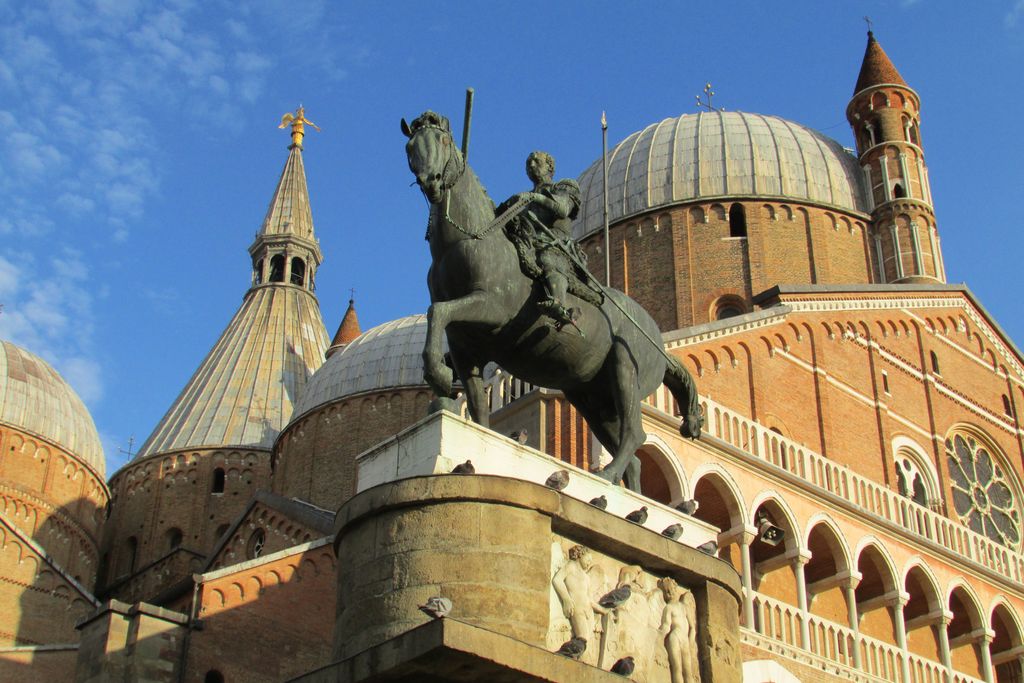
Gattamelata
Chris Light. Image source. CC BY-SA 4.0. Resized for the web.
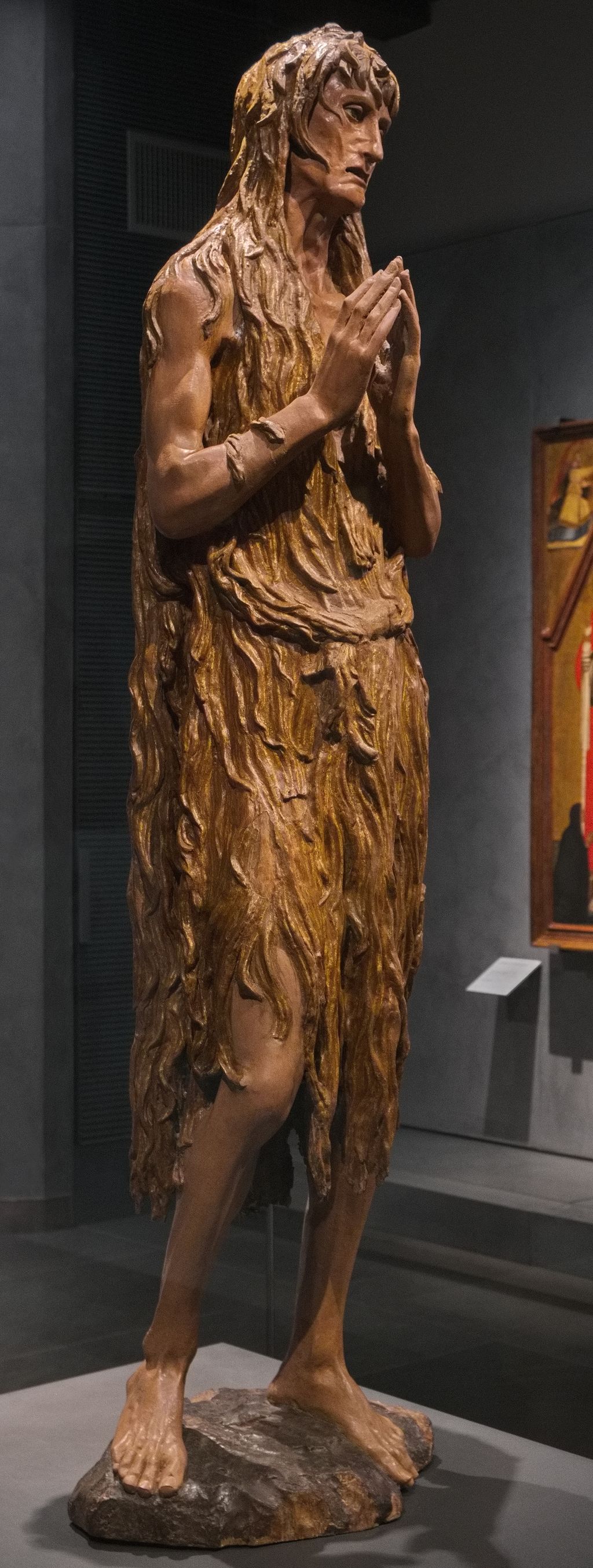
Penitent Magdalene
Armin Kleiner. Image source. CC BY-SA 4.0. Resized for the web.
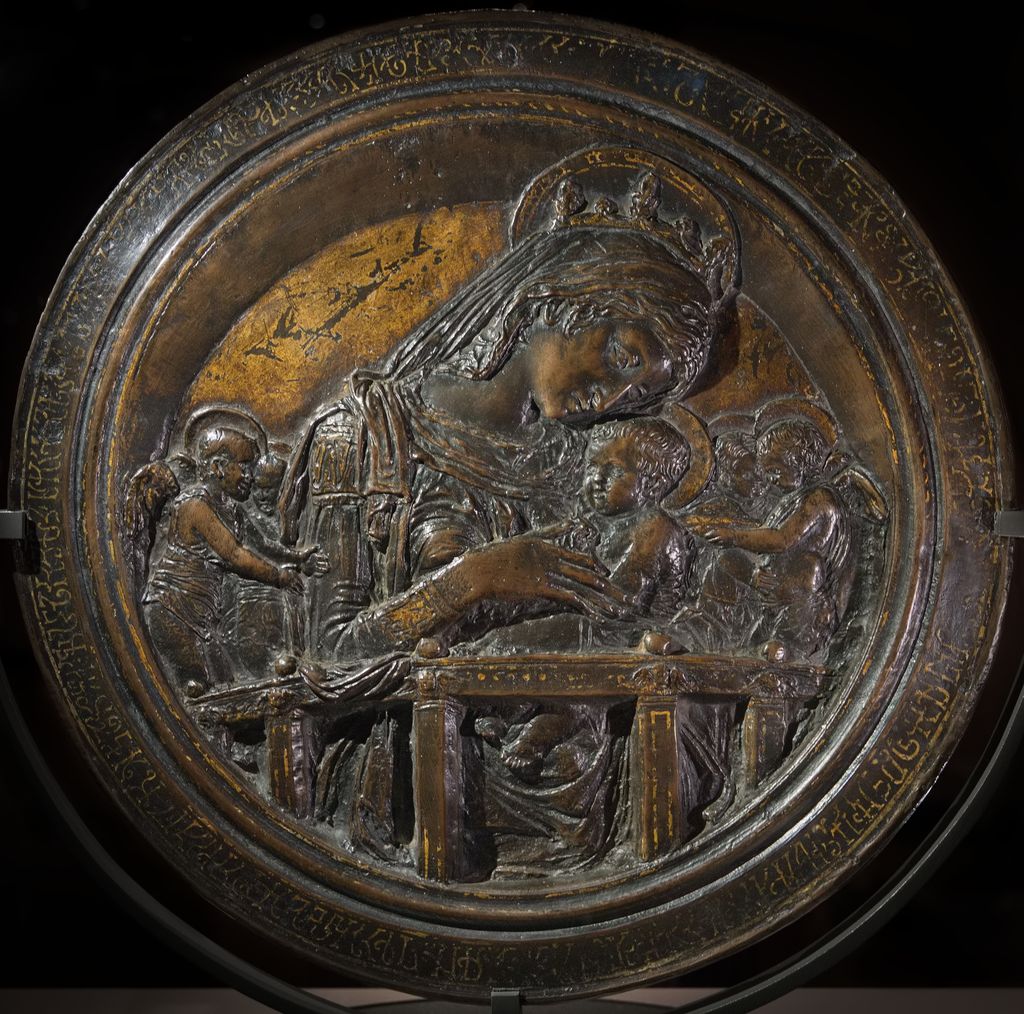
Chellini Madonna
Armin Kleiner. Image source. CC BY-SA 4.0. Resized for the web.
