


 by Tom Gurney
Tom Gurney BSc (Hons) is an art history expert with over 20 years experience
Published on June 19, 2020 / Updated on November 29, 2026
Email: tomgurney1@gmail.com / Phone: +44 7429 011000
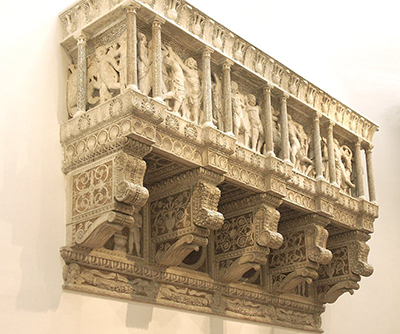
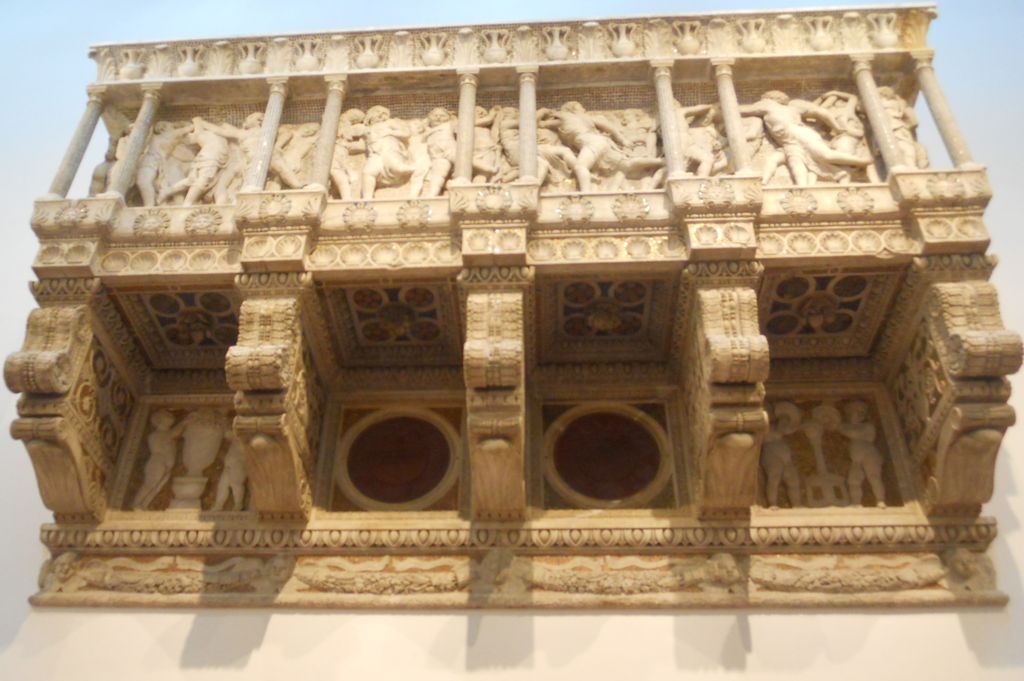
A pair of marble columns interrupts your view of the dancers on Donatello’s Cantoria. A child’s arm disappears behind a shaft, more figures burst into view beside it, and another pair of columns brings the same momentary pause. The columns belong to the architecture of the gallery, but Donatello makes them part of the dance. He set the carved children behind them, against a field of glittering mosaic, and continued the procession around the sides. The balcony once stood high above the floor of Florence Cathedral, where music rose from behind its marble parapet. Today the Cantoria is in the cathedral’s museum, the Museo dell’Opera del Duomo, where visitors can see how the sculptor made architecture, bodies and reflected light work together. [1] [2]
A gallery for music beneath the dome
A cantoria is a gallery for church music. Donatello’s was attached to the southeast pier of the cathedral crossing, above the door to the Sacristy of the Canons. Another marble gallery, made by Luca della Robbia, stood opposite it above the Sacristy of the Masses. The Opera del Duomo, which oversaw construction and decoration of the cathedral, was fitting out the space around the high altar as Brunelleschi’s dome neared completion. The paired lofts made space for organs and singers in that part of the building, giving music a visible place in the architecture of the crossing. The carved children would have been above the congregation and below the musicians, at the point where the eye searched for the source of the sound. [1] [3] [4]
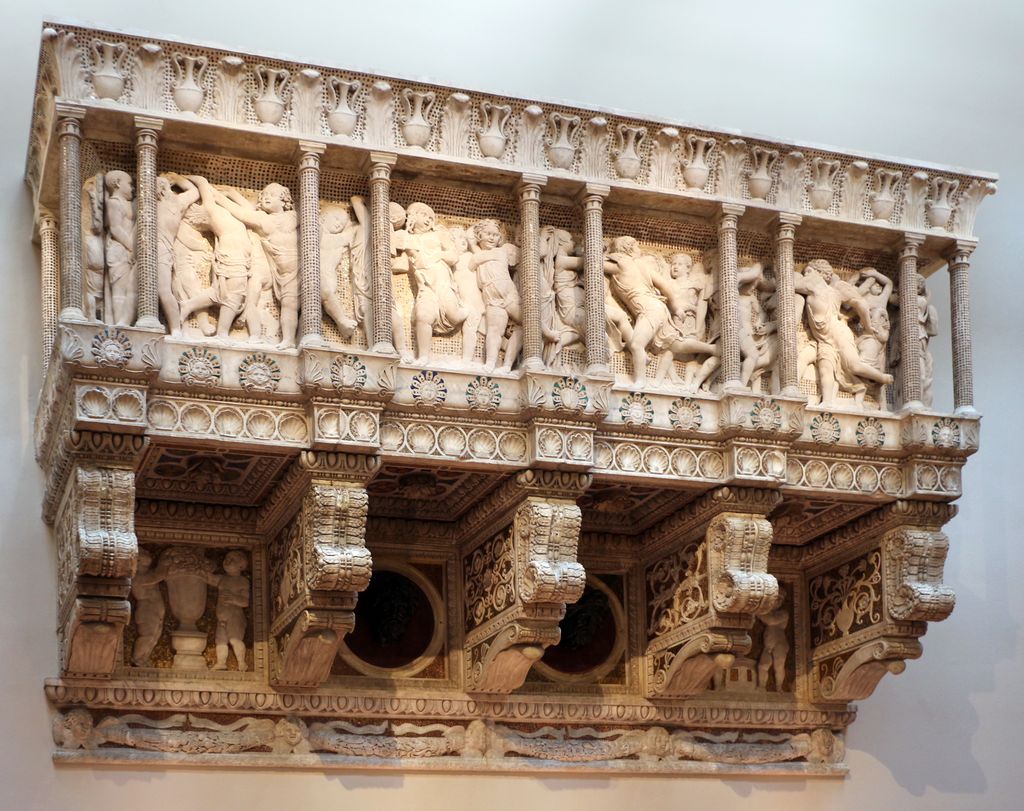
Donatello’s gallery in its present museum assembly, from the kind of low viewpoint that exposes the carved underside. Sailko. Image source. CC BY 3.0. Resized for the web.
On 10 July 1433 the cathedral administrators asked Neri di Gino Capponi to entrust the second gallery to Donatello, with Luca’s ongoing work serving as a benchmark for the price. The terms later allowed payment above Luca’s rate for any panel judged superior in quality. The main new organ was intended for Luca’s side, with the smaller, older instrument assigned to Donatello’s gallery. The Opera’s public label dates Donatello’s ensemble to 1433–39. The fuller records show why the end date is approximate. By 1438 the gallery was described as nearly complete, a record of 1439 refers to a second bronze head, and the loft was already in place when a payment was recorded in 1440. The bronzes were valued with the work in 1446 and a record of their gilding followed in 1456. The installation and the finishing of its ornament were separate stages of the commission. [1] [2] [4] [5]
Both studios had to make sculpture that people would see from below and often at an angle. Donatello’s earlier Saint John the Evangelist had posed a related problem on the cathedral façade, where a seated figure needed to project beyond its niche visually. The gallery called for effects on a wider scale. The Opera lists the assembled Cantoria as about 5.7 metres wide, 3.48 metres high and just under a metre deep. From below, its projecting ledges and brackets would have been conspicuous, and the balcony’s upper band of carving could be taken in across a considerable distance. The underside deserved attention too. A viewer near the sacristy door would have had a view of ornament that a straight-on photograph tends to hide. [1] [2] [4]
How the dance moves through marble
Start with the front rank of winged children and follow it to the left. Behind it, a second rank moves the other way. Crossing bodies, linked hands and limbs projected across neighbouring figures turn the scene into a round dance. Some children seem to pursue one another or toss crowns. Small details underfoot, including rushes, acorns and berries, suggest a patch of ground inside the narrow marble loggia. The action extends around both ends. There are children blowing horns, and on the right the instruments form an arch with figures playing below it. The exhibition curated by Francesco Caglioti drew attention to a further illusion at the ends of the gallery, where openings in the back wall appear to let the dancers enter and leave. [2] [6]
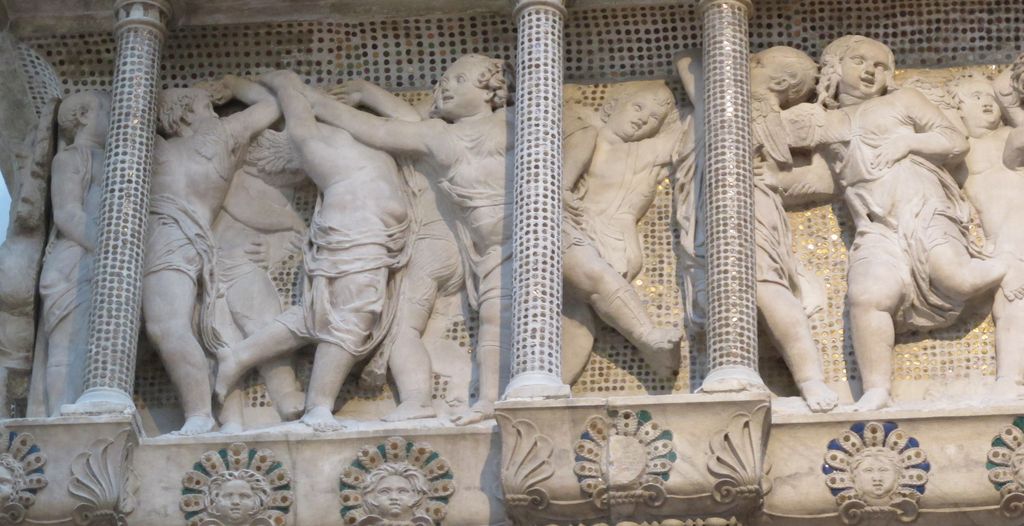
Dancers overlap one another behind the projecting columns of the gallery. Sailko. Image source. CC BY-SA 3.0. Resized for the web.
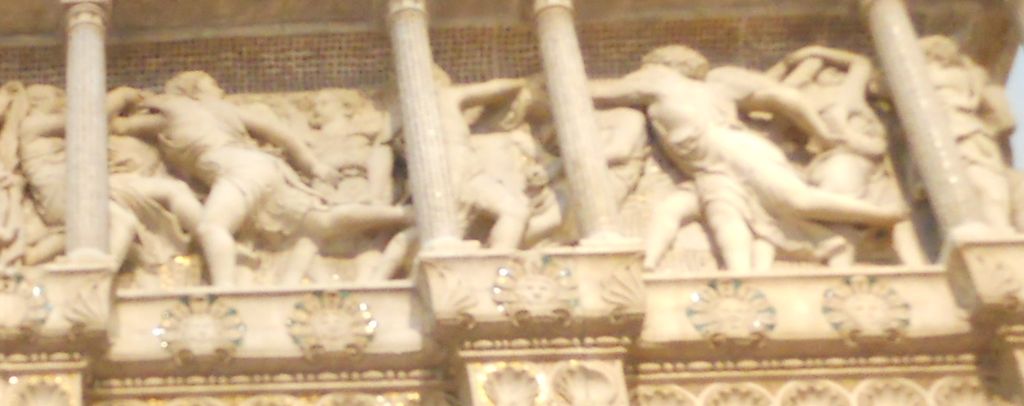
Donatello made the front of the balcony broad enough to take in at a glance and structured the carving so that it rewards a second look. The foreground columns are substantial enough to cast shadows and intermittently cover the relief. The children occupy the much shallower space behind them. An arm thrown across another body, or the shallow trace of a head behind a nearer figure, lets several ranks fit into that space. Walk sideways in front of the work and the pairs of columns seem to slide along the row of dancers. The fragments of action that you can see between them keep changing. Alternating visibility and concealment give the impression that the dance continues even where the marble architecture blocks the view. [1] [2] [4]
The sixteenth-century writer Giorgio Vasari called Donatello’s treatment in bozze, or roughly blocked out. In his 1568 life of Luca della Robbia, Vasari argued that such carving carried better at a distance than Luca’s smoother finish. That is a later viewer’s judgement from the period when the galleries still stood in the cathedral. The difference makes sense when you look at the work from across the museum room. Minute details in the children’s faces give way to broad turns of shoulders and hips, widely spaced gestures and strong outlines. In close view the figures can seem to jostle for room. Seen from farther away, the same crowd reads as a single moving band. [7]
The varying detail also offers clues to how a work of this size was made. In the 2026 museum catalogue, Francesco Caglioti calls attention to variations in the carving of the little heads along the band beneath the dancers as evidence of workshop participation. He suggests that Agostino di Duccio, documented with Donatello at Prato in 1437, may have learned from working on the Cantoria. The proposal gives a sense of how an invention on this scale could pass through a workshop, even when individual passages are difficult to assign. [8]
Annotated Details from the Cantoria
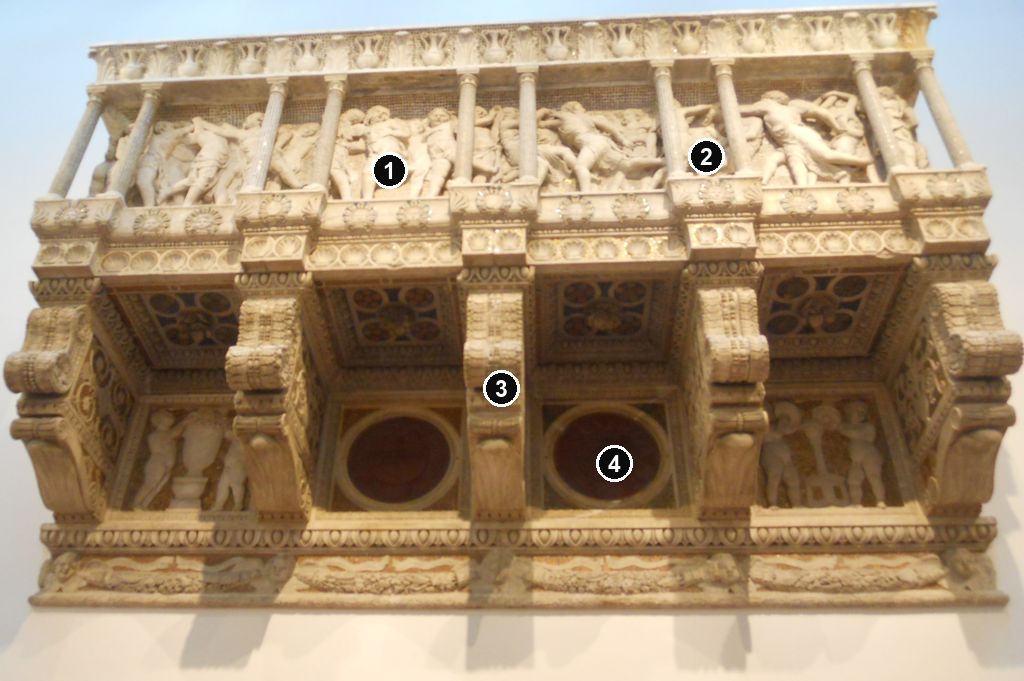
Select a number to jump to a detail of the sculpture.
Details from THE CANTORIA
Open a detail image to examine the surface more closely.
Figures in motion
A limb or fold can disappear behind a column and reappear in another interval. The column screen lets the dance continue across its separate openings.
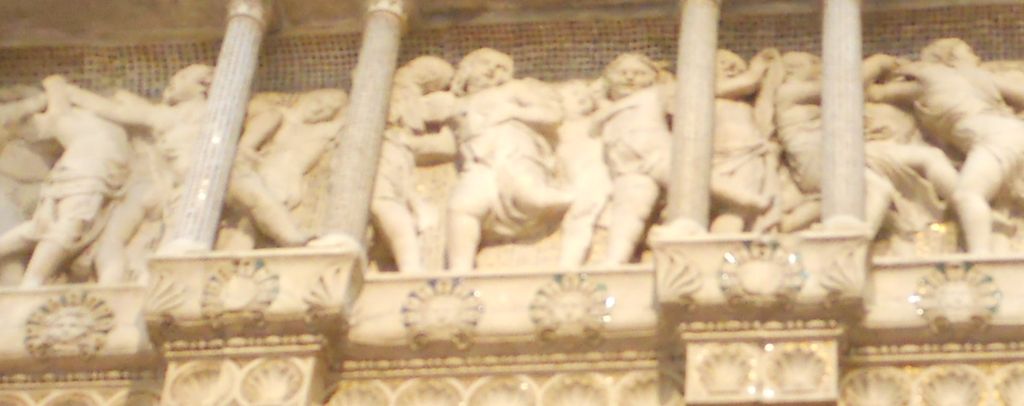
Columns and glittering ground
The columns catch the light in front of the figures. Small pieces set into the rear ground break up the shadow behind them.
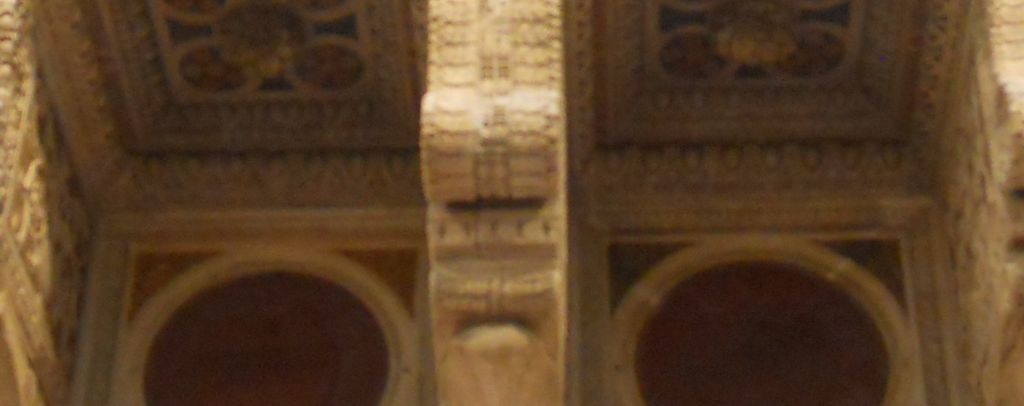
A bracket and its underside
Carved supports mark the underside visible to someone standing below the loft. They divide the decorated spaces below the dancer frieze.
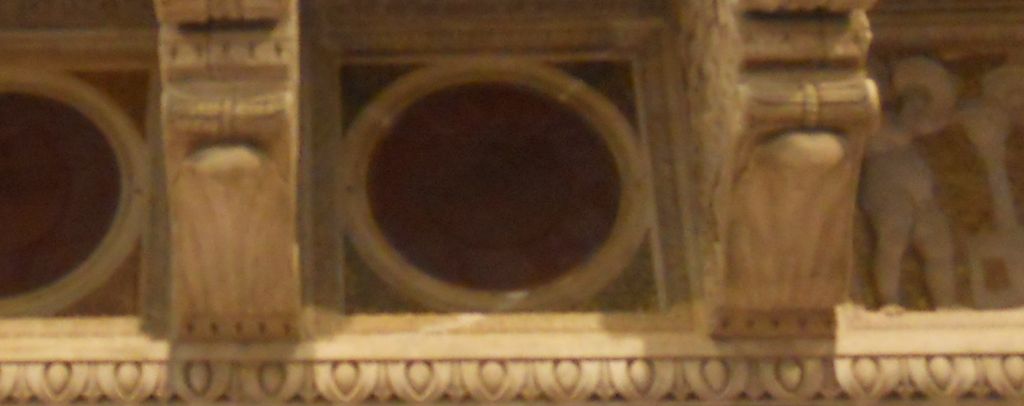
Round openings in the display
These roundels belong to the gallery as reconstructed. The heads mounted there are traced to the Villa Medici in the museum’s 2026 catalogue.
Annotated photograph and detail crops. Erik Drost. Image source. CC BY 2.0. Resized, annotated and cropped from the original photograph.
The colour above and below the brackets
The white figures are just one part of the surface. Donatello combined white and coloured marble, including cipollino, with coloured glass paste, gold and bronze. Round pieces of glass are set into cavities behind the dancers and into the shafts of the columns in front of them. Beneath the gallery, small pieces arranged in patterns bring colour to the coffers, where projecting stone rosettes sit among smaller mosaic ones. The art historian Daniel M. Zolli distinguishes the scattered glass on the façade of the balcony, the patterned tesserae underneath and the gilded ceramic fragments found around the supporting brackets. The Opera’s accounts place work on the mosaic late in the project, as the carving was being readied for its final setting. [1] [2] [9]
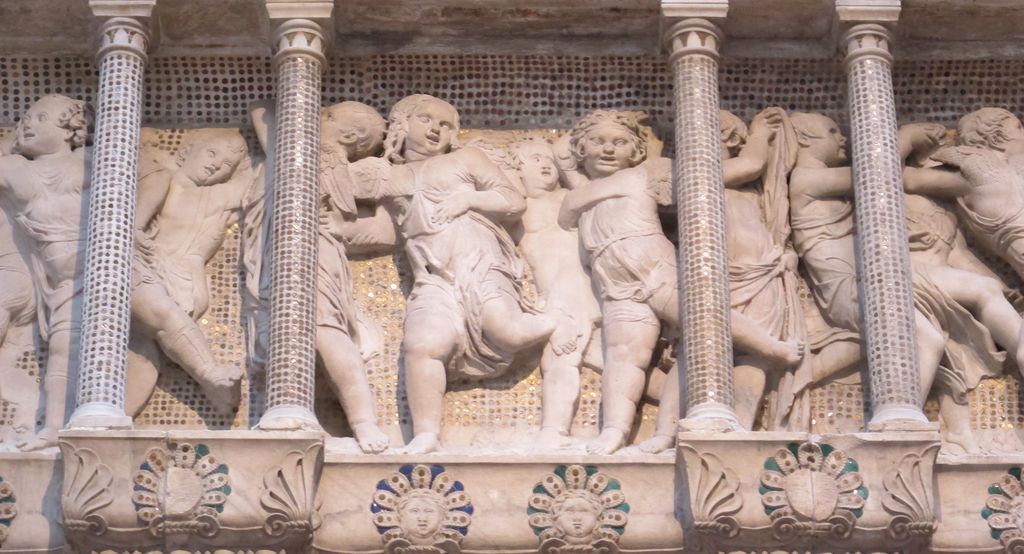
The low glass mosaic and sculpted bands between and below the marble columns. Sailko. Image source. CC BY-SA 3.0. Resized for the web.
The two surfaces of the upper gallery catch light differently. Marble spreads it across a cheek or an extended thigh, defining the body. The little glass pieces register as points, their brilliance changing with angle and lighting. Bright spots can show through gaps between the bodies, then continue across the column shafts, tying the broad architectural pattern to the crowded relief. Below, five great brackets divide the space into four compartments. Two of those compartments carry carved pairs of children with a vase or instruments. The other two contain roundels with bearded bronze heads. In the cathedral these lower ornaments would have provided a closer and weightier register beneath the swift movement along the parapet. [1] [2] [9]
The bronze heads now in the roundels have a history of their own. In 1909 Robert Corwegh proposed that two heads from the Bargello were the ones mentioned in the cathedral accounts. The Opera’s online entries follow that identification and record a suggestion that Michelozzo made the right-hand head. Conservation at the Opificio delle Pietre Dure found that the two heads were individually cast by the lost-wax method using the same alloy and were originally gilded. The technical findings tell us about the pair that survives. The link to the cathedral commission depends on provenance. [5] [10]
In the Opera’s 2026 printed catalogue, Gabriele Fattorini traced the pair to Villa Medici in Rome, where an inventory of 1588 identified them as Neptune and Pluto. They came to Florence in 1788. The Bargello deposited them at the Opera museum in 1931, and Fattorini dates their insertion into the gallery to after the Second World War. The two heads that Donatello’s accounts mention still present a separate question. Caglioti has suggested that one might survive as the Metropolitan Museum’s Cherub and Shell, a bronze the Met attributes to a sculptor close to Donatello and dates tentatively to the 1470s, several decades after the cathedral’s records place the original heads in the gallery. [8] [15] [16]
Antiquity, heaven and the dancers at Prato
The reliefs belong to a Christian place of worship, yet the vocabulary of their dance has a long history in ancient art. The Opera catalogue points to reliefs on ancient sarcophagi in Rome and Ravenna, as well as Byzantine ivory caskets with small figures dancing, wrestling and tossing wreaths. Donatello had been working in Rome before taking the commission. A comparison closer to home lay on the cathedral itself. Arnolfo di Cambio’s old façade, still standing when Donatello worked on the balcony, combined white marble with gold mosaic. The nearby Baptistery also offered Florentines a familiar example of light and colour deployed high above the worshipper, including a mosaic register of angelic orders separated by spiral columns. In medieval Roman churches, Cosmatesque craftsmen had used cut stone and coloured mosaic to animate a screen, a pulpit or an altar. Donatello used the reflective surface to animate the space immediately behind a moving body. That was a new job for a familiar material. [2] [4] [12] [18]
For the Opera, the winged children give visible form to the joy of praising God during the Mass. Some readers have looked for an underlying text and pointed to Psalms 148 or 149. Psalm 149’s call to praise God in dance makes it a natural association. Others have read the two levels as a passage from the ancient world below to the delight of Christian paradise above, a reading art historian Emma Spina Barelli linked to Lorenzo Valla’s writing on pleasure. That reading drew in part on the bearded heads, whose later addition changes the evidence for the interpretation. The commission records leave the precise subject and its possible adviser unknown. The sight of the dancers from the cathedral floor, together with the voices and organ in the loft, would already have made an association with praise intelligible. [1] [2] [17]
During the same decade Donatello and Michelozzo worked on a second ensemble of dancing children for the cathedral at Prato. Its rounded outdoor pulpit gave clergy a place to display the Sacred Belt of the Virgin to people gathered outside. Seven panels around the projecting parapet contain separate groups of dancers against mosaic. In Florence the movement of a single dance continues along three sides of the rectangular balcony. The variety shows how readily Donatello adapted the motif to different buildings and ceremonies. It also travelled back to Prato on a much smaller scale. In 1446–47 Maso di Bartolomeo, who had worked on the Prato pulpit, made a rectangular reliquary to house the belt. Its procession of little dancers carries a version of the Florentine design around a box that could be held and turned. [6] [11]
Luca della Robbia’s companion gallery
Luca made music visible through the things its performers do. Boys bend towards a shared scroll, hands reach for instruments, and heads tilt to read or listen. Marble frames give each group a space of its own, and the inscription supplies a scriptural context by naming the means of praise in Psalm 150. Donatello gives the edges of his relief a different job. The opening and closing views between his columns set the pace of a dance that joins one bay to the next. Stand where you can see both galleries in succession. Luca leads the eye from one group of performers to another, while Donatello asks it to keep time with figures that disappear and return. [2] [3] [13]
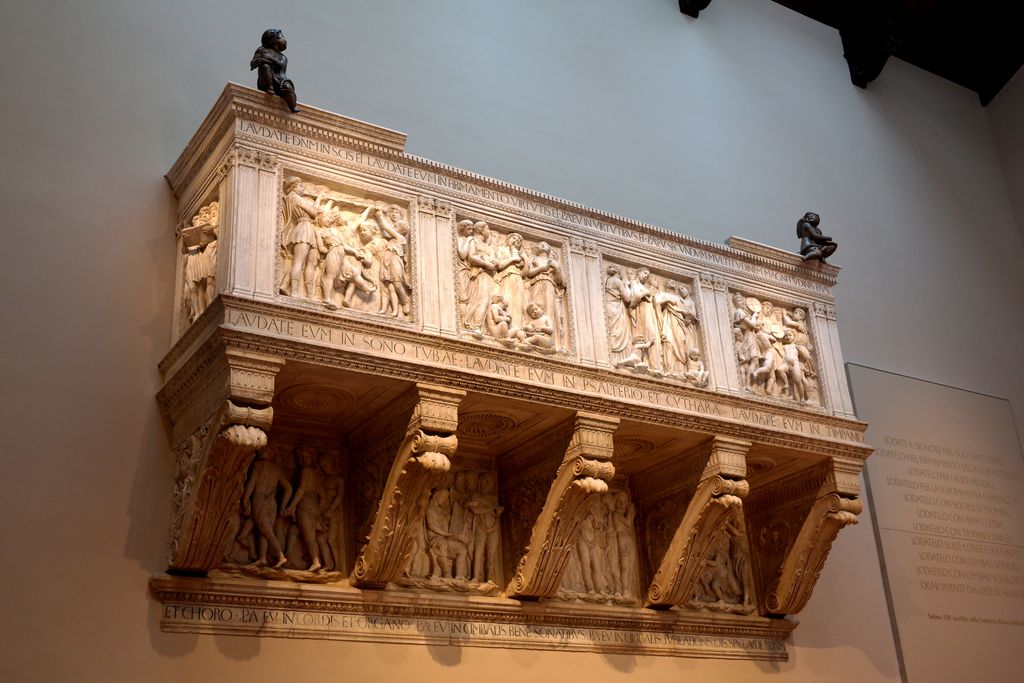
Luca della Robbia’s separate gallery brings the singers into distinct framed panels. Luca Aless. Image source. CC BY-SA 4.0. Resized for the web.
From the cathedral to the Sala delle Cantorie
Both galleries were dismantled in 1688 for the wedding festivities of Ferdinando de’ Medici and Violante Beatrice of Bavaria. The brackets and platforms were left in place at first. Donatello’s reliefs and mosaic columns went into storage, while pieces of the framing were reused in repairs. The carved reliefs of both galleries went to the Uffizi in 1822 and to the Bargello courtyard in 1867. There they were joined by the old brackets, removed from the cathedral in the 1840s. As a sculpture once seen across a large interior, the Cantoria now had a second life as a collection of fragments that could be inspected one by one. The South Kensington Museum, now the Victoria and Albert Museum, arranged for casts in 1876. Another set, cast by Giuseppe Lelli in 1907 and kept by the Museum of Fine Arts in Budapest, lets viewers study the modelling apart from the contrast between marble and coloured glass. [2] [13] [19]
The Opera’s effort to bring the galleries back and give them a permanent home helped bring the museum itself into being. Architect Luigi del Moro made the first reconstruction of Donatello’s loft for the museum, which opened in 1891 with the two cantorie facing one another. Critics questioned how accurately his reconstruction captured Donatello’s use of space. The gallery came apart again during the Second World War. After the architect Sabatini found another piece of the upper cornice in 1959, the ensemble was put back together in the arrangement described by the Opera today. Caglioti identifies the concave mosaic strip above the dancers as an addition by Del Moro. He proposes that the missing height belonged below their feet, where a raised base would have kept the ground of the dance visible to someone looking up from the cathedral floor. Even the placement of a narrow strip can change how much of the scene a person sees from below. [2] [8] [14]
The present Sala delle Cantorie evokes the area around the high altar by displaying the galleries with liturgical and devotional objects. Visitors can stand back to take in the whole work, move sideways to see the columns come between them and the dancers, then approach to pick out the colours of the glass or the relief beneath the projecting brackets. The singers are gone, but a change of position still changes the pace and texture of what the viewer sees. [1] [3]
Donatello sculpture directory
| Name | Date | Medium and record |
|---|---|---|
| Marble David | 1408–09, adapted 1416 | Carved Carrara marble Catalogue. |
| Saint John the Evangelist | c. 1409–15 | Carved marble Catalogue. |
| Saint Mark | 1411–13 | Carved Carrara marble Catalogue. |
| Saint George and its dragon relief | c. 1415–17 | Marble statue and marble relief Catalogue. |
| Marzocco | c. 1417–20 | Carved sandstone Catalogue. |
| Saint Louis of Toulouse, Florence | 1418–25 | Gilt bronze and mixed media Catalogue. |
| Pazzi Madonna | c. 1420s | Marble relief Catalogue. |
| Reliquary Bust of Saint Rossore | c. 1420s | Gilt bronze Catalogue. |
| The Prophet Jeremiah | 1420s–30s, disputed | Marble Catalogue. |
| Zuccone | c. 1420s–30s | Marble Catalogue. |
| Feast of Herod, Siena | 1420s | Gilded bronze relief Catalogue. |
| Ascension with Christ Giving the Keys to Saint Peter | c. 1428–30 | Marble relief Catalogue. |
| Cantoria | 1433–39 | Marble and mosaic Catalogue. |
| Amor-Atys | c. 1435–40 | Partly gilded bronze Catalogue. |
| Bronze David | c. 1435–40, disputed | Partly gilded bronze Catalogue. |
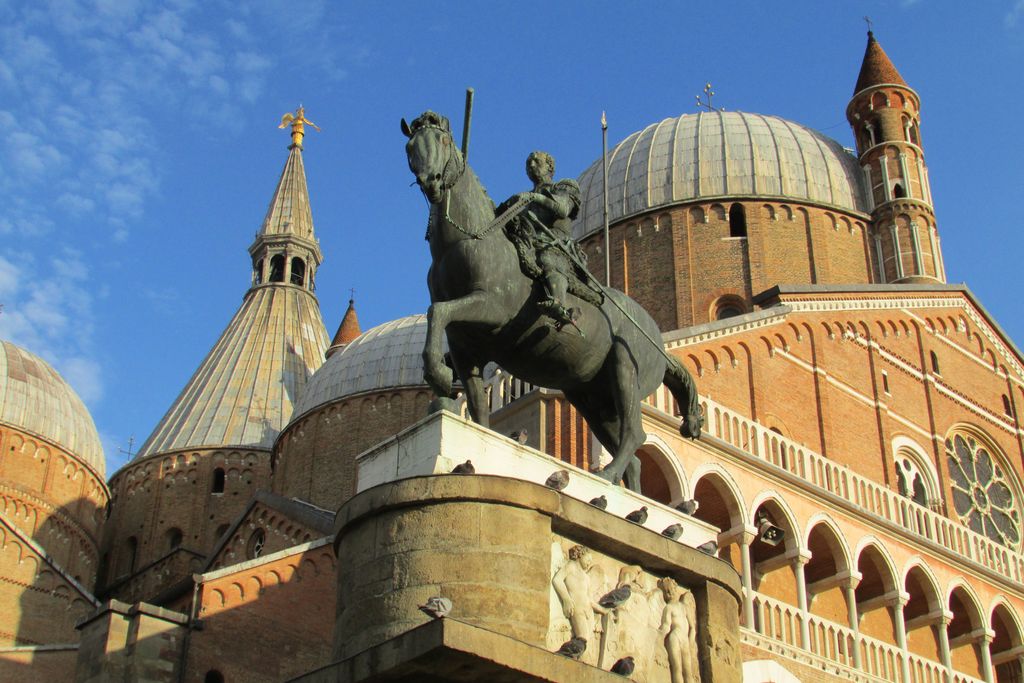
| Gattamelata | Installation agreement, 1453 | Bronze and stone Catalogue. |
| Santo altar | Mid-fifteenth century | Bronze and limestone ensemble Catalogue. |
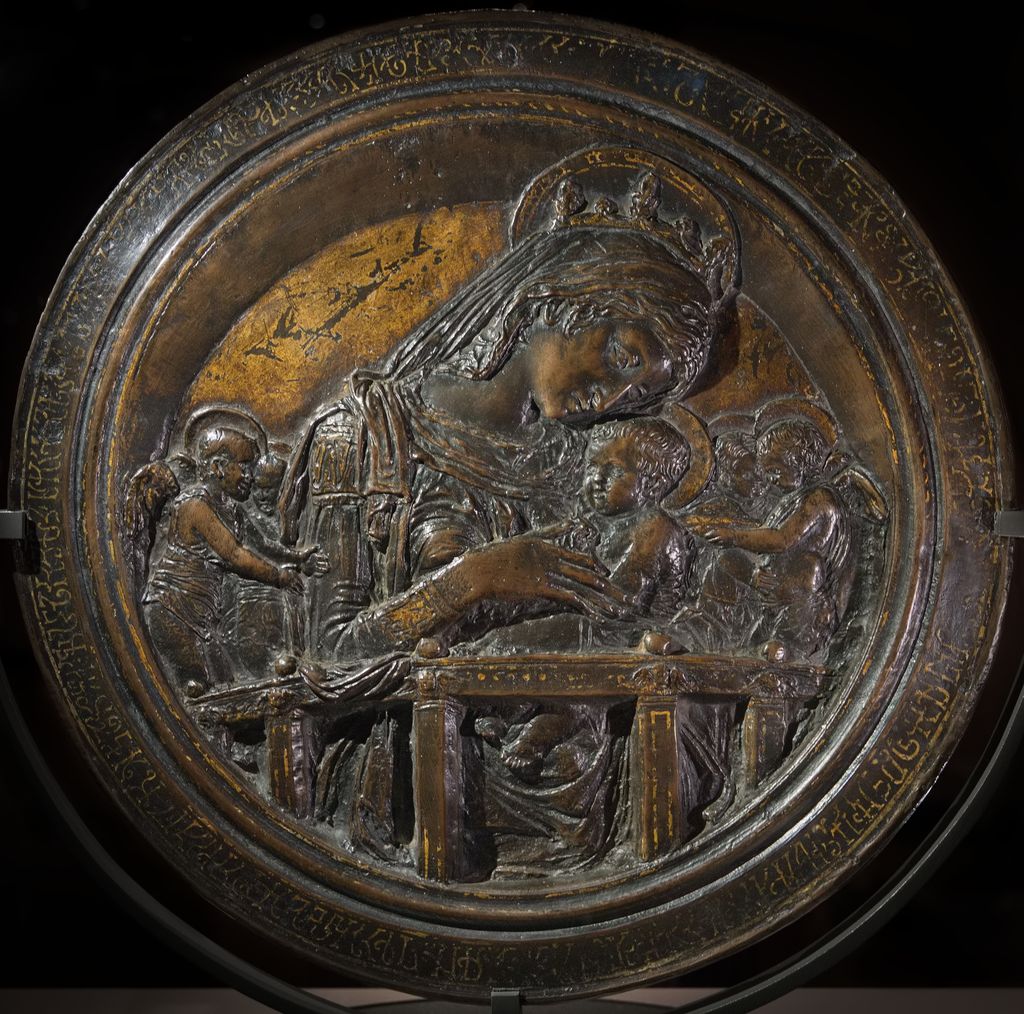
| Chellini Madonna | Given in 1456 | Partly gilded bronze tondo Catalogue. |
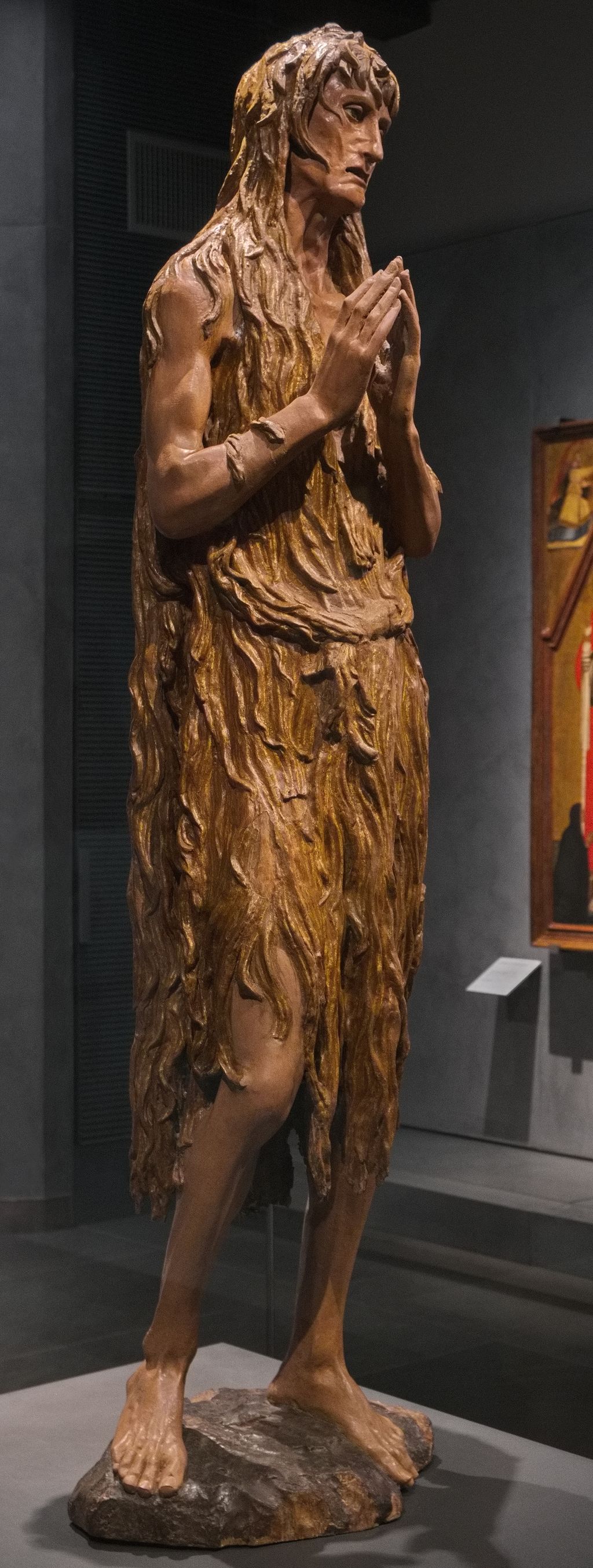
| Penitent Magdalene | c. 1453–55 (Opera) | Poplar, stucco, pigments and gold Catalogue. |
| Judith and Holofernes | Late 1450s–early 1460s | Bronze with surviving gilding Catalogue. |
| Pulpit of the Passion | Late work and later assembly | Bronze reliefs, Donatello and collaborators Catalogue. |
| Bust traditionally called Niccolò da Uzzano | Fifteenth century | Painted terracotta, attribution disputed Catalogue. |
| Prato Cathedral exterior pulpit | Commissioned 1428; carved 1430s | Marble reliefs, Donatello and Michelozzo Catalogue. |
| Cavalcanti Annunciation | c. 1433–35 | Gilded sandstone and terracotta Catalogue. |
| Crucifix at Santa Croce | Early fifteenth century | Painted wood Catalogue. |
| Madonna of the Clouds | c. 1425–35 | Marble relief Catalogue. |
| Old Sacristy Doors | Fifteenth century | Two paired bronze doors Catalogue. |
| Resurrection Pulpit | Late work and later assembly | Bronze reliefs, Donatello and collaborators Catalogue. |
| Brancaccio tomb | 1420s | Donatello, Michelozzo and assistants, mixed materials Catalogue. |
| Saint John the Baptist, Venice | 1438 | Polychromed and gilded wood Catalogue. |
| Sacrifice of Isaac | Early fifteenth century | Donatello and Nanni di Bartolo, marble Catalogue. |
| Madonna of Via Pietrapiana | Mid-fifteenth century | Terracotta Catalogue. |
| Miracle of the Mule | Mid-fifteenth century | Gilded bronze panel for the Santo altar Catalogue. |
| Padua Crucifix | Mid-fifteenth century | Cast bronze Catalogue. |
| Dancing Spiritello, Bargello | Fifteenth century | Bronze Catalogue. |
| Young Prophet from the Porta della Mandorla | c. 1404–09 | White marble, attributed to Donatello Catalogue. |
| Prophet or Apostle from the Duomo north tribune | Early fifteenth century | White marble, possibly Donatello Catalogue. |
| Beardless Prophet | 1415–18 | White marble Catalogue. |
| Sibyl and Prophet of the Porta della Mandorla | 1422 | Carved marble heads for the portal Catalogue. |
| Faith, Siena baptismal font | 1420s | Gilded bronze figure Catalogue. |
| Hope, Siena baptismal font | 1420s | Gilded bronze figure Catalogue. |
| Feast of Herod, Lille | c. 1430 | Carrara marble relief Catalogue. |
| Piot Madonna | c. 1440–60 | Polychrome terracotta with glass and wax inlays Catalogue. |
| Carafa Horse Head | c. 1456–58 | Cast bronze Catalogue. |
| Pazzi Madonna workshop version, Louvre | c. 1450 | Polychrome gesso, Donatello’s workshop Catalogue. |
| Pazzi Madonna tondo, Rijksmuseum | c. 1425–50 | Plaster and stucco, after Donatello Catalogue. |
| Sprite | c. 1430–40 | Bronze, sculptor or metalsmith close to Donatello Catalogue. |
Discussion
Look again at the images and ideas explored in Donatello’s Cantoria. These editorial prompts invite your observations.
Reader Insights
Follow the dancers past one pair of columns. Which gesture disappears from sight, and where do you pick up the movement again?
What can you see from below the gallery that is harder to see when looking straight at the dancers?
Join the Conversation
Share a detail, comparison or question about Donatello’s Cantoria below.
References
- Opera di Santa Maria del Fiore, “Donatello, Cantoria.” Museo dell’Opera del Duomo object page. View source.
- Opera di Santa Maria del Fiore, “Cantoria di Donatello.” Catalogue record 894, including the formal description, documentary chronology, interpretation and reconstruction history. View source.
- Opera di Santa Maria del Fiore, “Sala delle Cantorie.” Museo dell’Opera del Duomo room guide. View source.
- Daniel M. Zolli, “Donatello’s Visions: The Sculptor at Florence Cathedral.” In Sculpture in the Age of Donatello, 2015, especially the discussion accompanying figs. 27–31. View source.
- Opera di Santa Maria del Fiore, “Testa in bronzo della Cantoria.” Catalogue record 2026, with documentary and conservation notes. View source.
- Fondazione Palazzo Strozzi and Musei del Bargello, Donatello, the Renaissance, 2022 exhibition press kit, “Dancing Spiritelli.” View source.
- Giorgio Vasari, “Luca della Robbia,” Le vite de’ più eccellenti pittori, scultori e architettori, Giuntina edition, 1568, p. 263. View source.
- Francesco Caglioti, “Donatello e l’Opera di Santa Maria del Fiore: il maestro, i colleghi, i seguaci.” In Catalogo del Museo dell’Opera del Duomo di Firenze, edited by Timothy Verdon and Rita Filardi, vol. II, Mandragora, 2026, pp. 90–139, especially pp. 127–29. View source.
- Daniel M. Zolli, Donatello’s Promiscuous Technique. Harvard University doctoral dissertation, 2017, ch. 2, especially pp. 105–06 and figs. 2.39–41. View source.
- Opera di Santa Maria del Fiore, “Testa in bronzo dalla Cantoria.” Catalogue record 2028. View source.
- Diocesi di Prato, “Museo dell’Opera del Duomo,” Sala del Pulpito and Capsella della Sacra Cintola. View source.
- Opera di Santa Maria del Fiore, “Tuscan craftsmen, Mosaic with Angelic hierarchies (second register).” Baptistery of San Giovanni. View source.
- Opera di Santa Maria del Fiore, “Cantoria con musici e danzatori.” Catalogue record 854 for Luca della Robbia’s gallery. View source.
- Opera di Santa Maria del Fiore, “The Opera del Duomo Museum turns 130 today!” Museum history, 2021. View source.
- Gabriele Fattorini, “Scultore attivo a Roma, Coppia di Teste all’antica.” In Catalogo del Museo dell’Opera del Duomo di Firenze, edited by Timothy Verdon and Rita Filardi, vol. II, Mandragora, 2026, pp. 267–71, no. 234. Repository abstract. View source.
- The Metropolitan Museum of Art, “Cherub and shell.” Collection record for object 58.115, attributed to a sculptor close to Donatello. View source.
- Emma Spina Barelli, “Note iconografiche in margine alla Cantoria di Donatello.” Storia dell’arte, nos. 15–16, 1972, pp. 283–91. Journal summary. View source.
- Silvia Pedone and M. Grasso, “Donatello e l’uso del mosaico in scultura: dalla pratica tardo-medievale al primo Rinascimento.” Atti del XVIII colloquio dell’Associazione italiana per lo studio e la conservazione del mosaico, 2013, pp. 367–82. View source.
- Museum of Fine Arts, Budapest, “Reliefs from the Singing Gallery.” Catalogue entry for Giuseppe Lelli’s 1907 plaster casts. View source.
- Victoria and Albert Museum, Donatello’s David. View source
- Opera del Duomo, Donatello and the Opera del Duomo. View source
- Ministero della Cultura, David with the Head of Goliath, Bargello bronze. View source
- Save Venice, Donatello’s Equestrian Monument to Gattamelata. View source
- Opificio delle Pietre Dure, L’ultimo Donatello. View source
More DONATELLO Sculptures
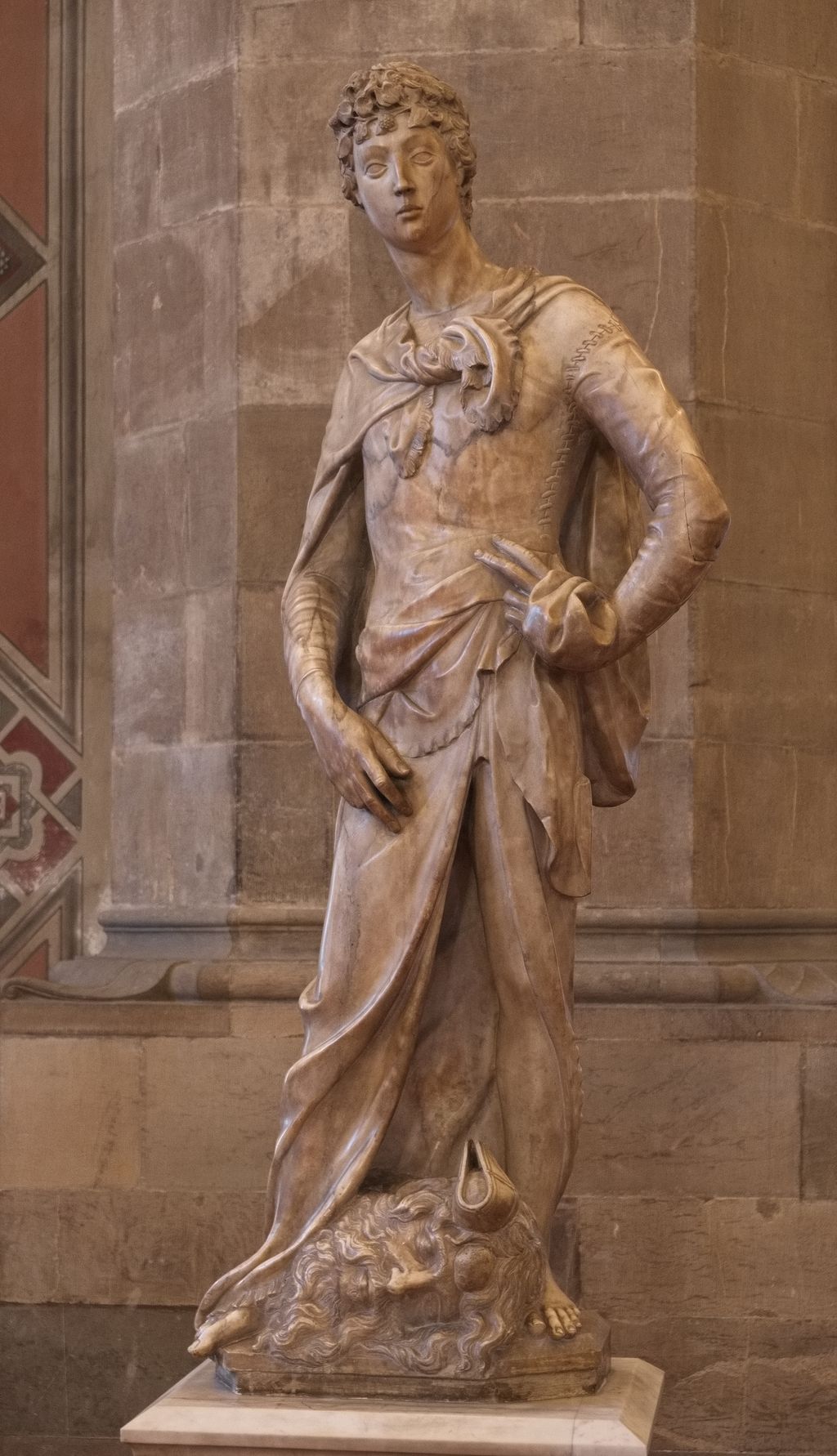
Marble David
Armin Kleiner. Image source. CC BY-SA 4.0. Resized for the web.
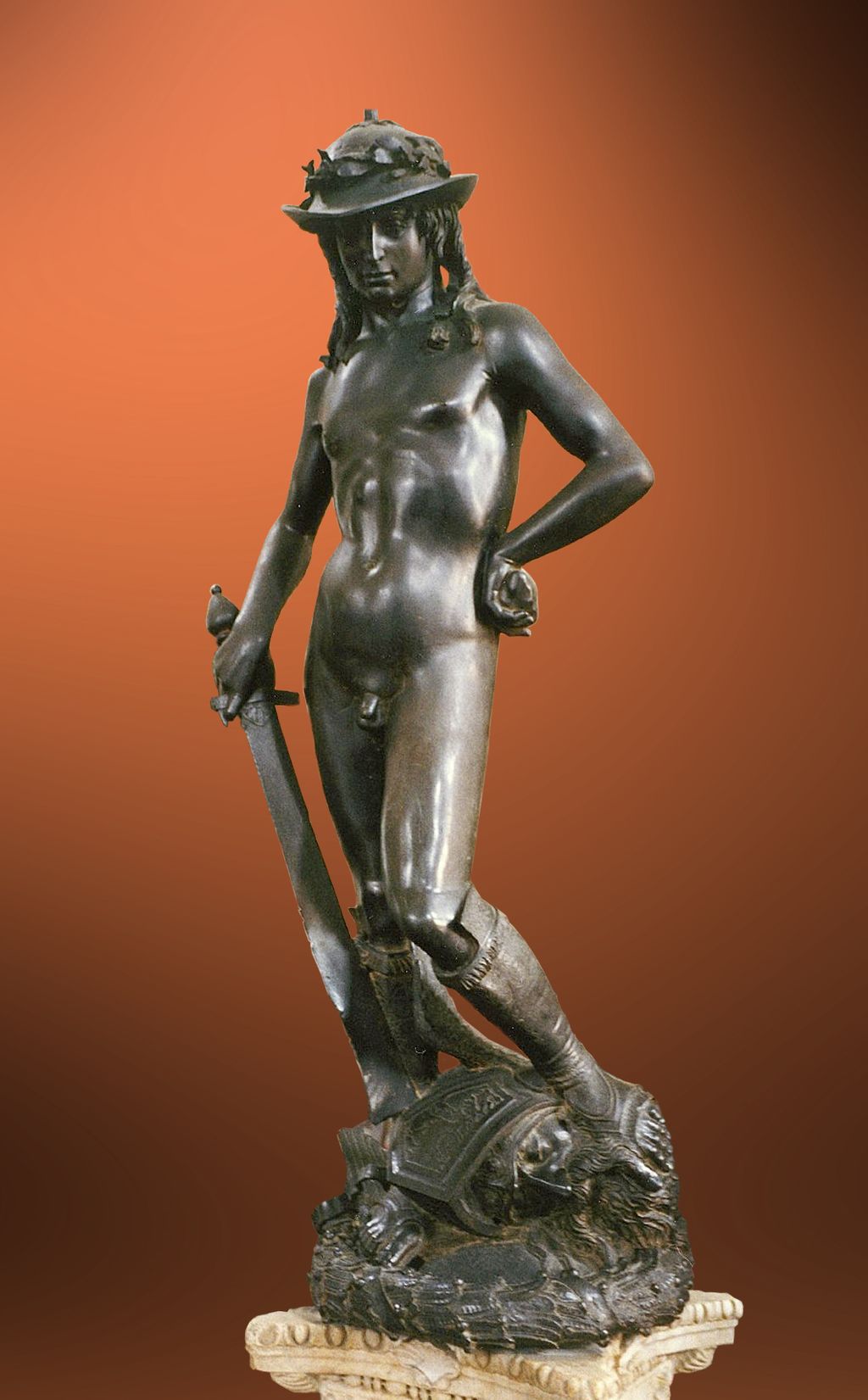
Bronze David
Patrick A. Rodgers. Image source. CC BY-SA 2.0. Resized for the web.
Cantoria
Erik Drost. Image source. CC BY 2.0. Resized for the web.
Gattamelata
Chris Light. Image source. CC BY-SA 4.0. Resized for the web.
Penitent Magdalene
Armin Kleiner. Image source. CC BY-SA 4.0. Resized for the web.
Chellini Madonna
Armin Kleiner. Image source. CC BY-SA 4.0. Resized for the web.
