 by Tom Gurney
Tom Gurney BSc (Hons) is an art history expert with over 20 years experience
Published on June 19, 2020 / Updated on November 25, 2026
Email: tomgurney1@gmail.com / Phone: +44 7429 011000
John Everett Millais: Introduction
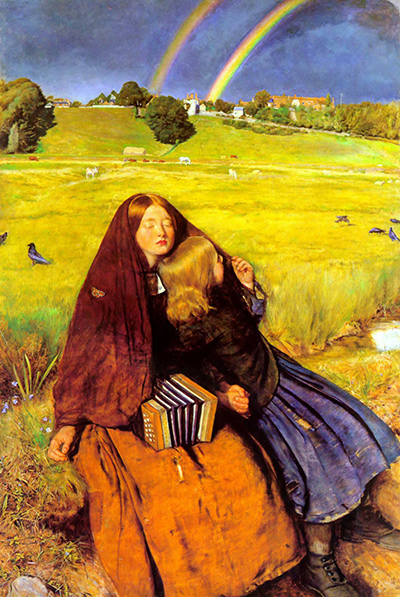
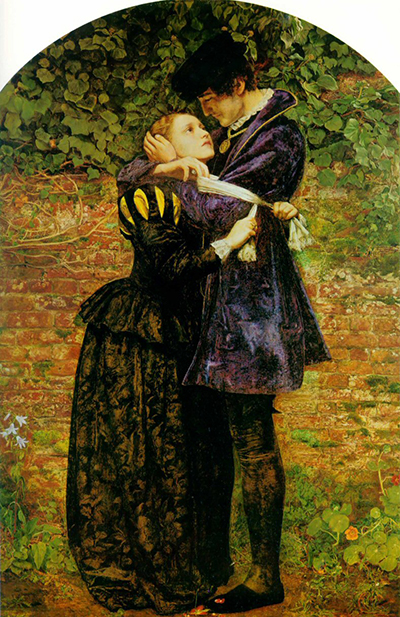
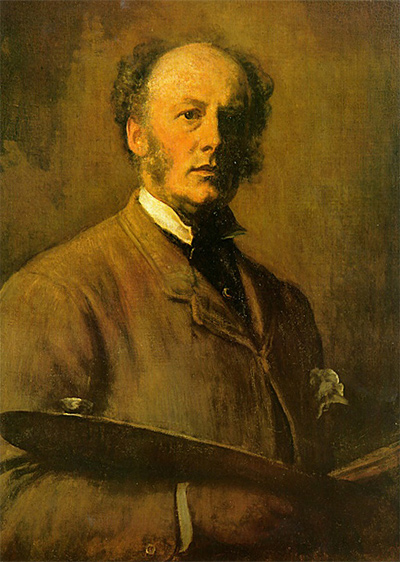
John Everett Millais (1829–1896) painted Ophelia floating among river plants, three sisters absorbed in a card game and a stand of Scottish trees full of damp morning light. The Shakespearean tragedy made his name as a young Pre-Raphaelite. The other pictures show how much his art changed over a career that took him from founding the Pre-Raphaelite Brotherhood in 1848 to presiding over the Royal Academy in his final year. Across that span he painted religious and historical subjects, illustrated books and magazines, took on portrait commissions and made landscapes in which the weather and the light are the main events. [1]
Millais knew how to make a gesture carry a scene. Look at Isabella reaching for a piece of fruit, the child Christ offering his wounded hand or Ophelia’s open palms rising above the water. Each movement is small enough to miss and consequential enough to change the picture. In later work the direction of a glance or the way a brushstroke catches the light can do as much as a painstakingly rendered prop.
At a Glance
- Life1829–1896 [1]
- TrainingRoyal Academy Schools from 1840 [1]
- Pre-Raphaelite BrotherhoodFounding member in 1848 [1][2]
- Royal AcademyFull Academician in 1863 and President in 1896 [1]
John Everett Millais in context
Pre-Raphaelite Brotherhood
Founded in 1848 [1]Victorian illustration and exhibition painting
Later 1850s and 1860s [1]Later portraiture and landscape
1870s–1890s [3]John Ruskin
1819–1900William Holman Hunt
1827–1910Dante Gabriel Rossetti
1828–1882John Everett Millais
1829–1896 [1]Vincent van Gogh
1853–1890Isabella
1848–49Ophelia
1851–52Autumn Leaves
1855–56Dew-Drenched Furze
1889–90Essential John Everett Millais works
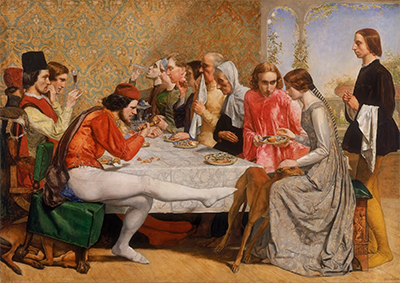
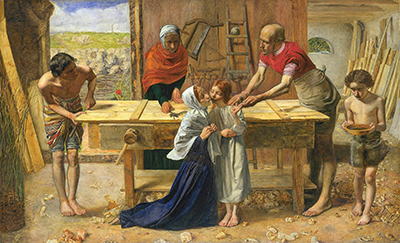
Christ in the House of His Parents
1849–50 · The wounded child draws a working household together around a carpenter’s bench. [5]
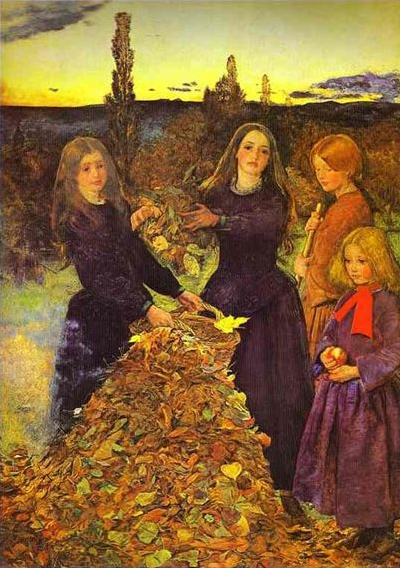
Autumn Leaves
1855–56 · Four girls gather leaves by the last light and a drift of smoke. [8]
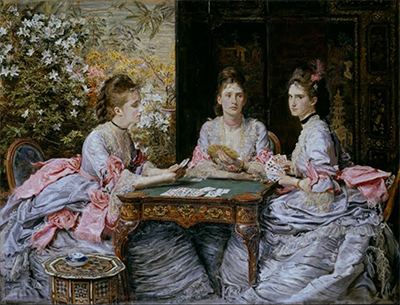
Hearts are Trumps
1872 · Three sisters play cards in a group portrait shaped by the colour and fall of their dresses. [9]
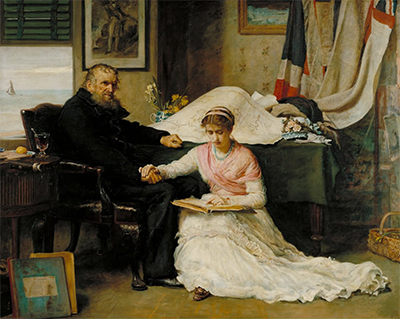
The North-West Passage
1874 · A map and a book bring the Arctic into a room shared by an old seaman and a young woman. [10]
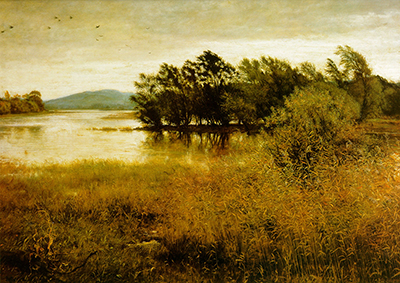
Chill October
1870 · A low horizon leaves most of the view open to the weather. [11]
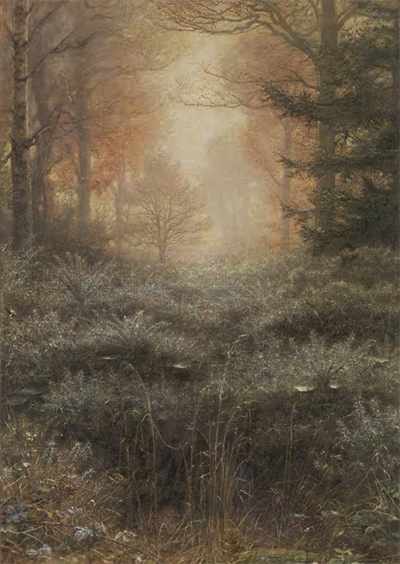
Dew-Drenched Furze
1889–90 · Filtered light picks out undergrowth and tree trunks on a Scottish estate. [12]
Millais’s artistic connections
The painters and critics around Millais, and later readers of his work.
- William Holman Hunt: Hunt and Millais helped found the Brotherhood. Their pictures Rienzi and Isabella hung near each other at the Royal Academy in 1849. [1] [13]
- Dante Gabriel Rossetti: Rossetti, Hunt and Millais helped form the Brotherhood in 1848. Some of their earliest meetings took place in Millais’s studio. [1] [2]
- John Ruskin: Millais painted Ruskin beside rushing water at Glenfinlas in a portrait commissioned by Ruskin’s father. The project brought the critic and painter together in the Scottish landscape. [14]
- Vincent van Gogh: In an 1882 letter to Theo, Van Gogh compared the feeling of Chill October with that of a landscape by Jacob van Ruisdael. [11]
- Masao Miyazawa: Miyazawa’s exhibition essay uses Sisters to show how colour and arrangement grew in importance alongside subject in Millais’s later work. [3]
Contents
- The young Pre-Raphaelite at the Royal Academy
- Shakespeare, Tennyson and the view from nature
- Pictures made to be printed
- Childhood and the society portrait
- How Millais pictured history
- The Scottish landscapes
- Millais after the Brotherhood
The young Pre-Raphaelite at the Royal Academy
Millais entered the Royal Academy Schools at eleven. In 1848 some of the first meetings of the Brotherhood took place in his studio in Gower Street. William Holman Hunt and Dante Gabriel Rossetti were fellow founders. The young artists looked to painters before Raphael for ways to depart from conventions they encountered in British art. Clear colour, sharply defined forms and close observation gave their early work its force. Pre-Raphaelitism broadened well beyond those first paintings. Later exhibitions have brought its work on paper and decorative arts into view alongside the oils. [1] [2] [3]
In Isabella, the long table puts the awkwardness of a shared meal on display. Lorenzo offers Isabella a blood orange while one of her brothers thrusts a leg towards her dog under the table. The brother’s movement is startling because it cuts across the regular arrangement of seated guests and tableware. Lorenzo’s quieter gesture brings the pair close without giving them any privacy. Millais chose this gathering from John Keats’s poem, in which the brothers murder Lorenzo after discovering the lovers’ attachment. Keats in turn took the tale from Boccaccio, whose story starts with the brothers’ business in Messina and the young man who manages their affairs. Millais puts the conflict into the space between the people seated at the table. [15] At the Academy in 1849, the picture hung near Hunt’s Rienzi. The Art-Journal singled it out for praise, even though its bright colour, flattened space and individually drawn faces made for an unusual entry in the exhibition. [4] [13]
The following year Christ in the House of His Parents drew attacks from the press. The shavings, timber and tools describe a room where people make things for a living. At the centre the child’s injury brings the adults together, and the little wound in his hand anticipates the Crucifixion. The workbench makes sense both as a feature of Joseph’s trade and as the place where this meeting of everyday accident and sacred history occurs. Charles Dickens objected to the way Millais represented the Holy Family in his article for Household Words. In Isabella critics had already met the young artist’s way of bringing closely observed bodies, faces and objects to the front of a scene. Applied to this particular household, that directness raised the question of how sacred figures should look. [13] [5] [16]
Four stages of John Everett Millais’s career
These periods group related developments; painting, travel and local work overlap across their boundaries.
Painting close to what he could see
Millais trained at the Royal Academy Schools and helped found the Pre-Raphaelite Brotherhood in 1848. At the Academy, Isabella and Christ in the House of His Parents put ordinary gestures and things at the centre of ambitious subjects. [1] [4] [5]
Making pictures at home and for print
Effie Gray helped recruit sitters, and their children posed for pictures including the two Sermons. Millais also designed images that engravers translated into woodcuts for books and periodicals. [1] [17] [18] [8]
Shakespeare, Tennyson and the view from nature
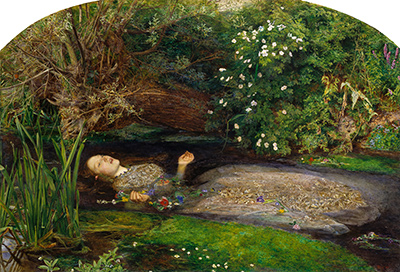
Ophelia makes a scene from Hamlet visible that the audience hears about from Queen Gertrude. Millais shows a brief interval when Ophelia’s dress still helps to keep her afloat. The riverbank is close enough to make out separate stems and sprays of leaves. Water stretches all the way across the foreground, and the dress begins to merge with the dark surface. What happens next is clear from Gertrude’s account. In the painting, close attention to the bank delays the moment when the eye settles on the figure and the gravity of her situation comes into focus. [20] [6]
There were two places of work behind that continuous scene. Millais painted the bank outdoors beside the Hogsmill River at Ewell in Surrey, then painted the figure in his London studio, where Elizabeth Siddal posed in a bath. Working directly on an exhibition picture outdoors was a distinctive part of the early Pre-Raphaelite practice. Seen in that light, the wall of greenery is a record of extended attention as well as a choice about how much of the fictional river to show. The close framing leaves little sense of how to approach the site from outside the canvas. The vegetation and the carefully positioned figure bring an event from a play into the space of an observed landscape. [6] [21]
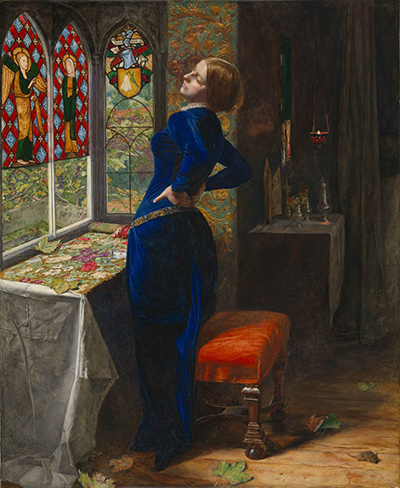
Mariana begins with a different predicament. Tennyson took an abandoned woman from Shakespeare’s Measure for Measure and made her waiting the subject of a poem. Millais gives her an action that might last only a second. Alone in a room with embroidery and stained glass, she stands with her hands at her back, easing her body after sitting at work. The National Gallery compares the painting’s blue dress and minutely finished interior with Jan van Eyck’s Arnolfini Portrait. In a preparatory drawing Millais even included a round mirror. In the painted version he opened up the space behind Mariana, giving the eye more reason to wander into the room while she stays where she is. [7]
A few years later Autumn Leaves gives its figures the ordinary work of gathering leaves in the dusk. A few faces, the outline of the pile and the fading sky can keep the eye moving even when the basic action has been taken in. David Wilson, writing on painting in Scotland, compares its treatment of childhood and passing time with William McTaggart’s The Past and the Present. Wilson also traces how Scottish audiences had access to Millais’s pictures through loan exhibitions. Mariana, Ophelia and Autumn Leaves were all shown at the Royal Scottish Academy in the 1850s. That exhibition history places the work within a conversation about naturalism that reached beyond the London shows. [8]
When three of Millais’s pictures appeared at the Paris Universal Exhibition of 1855, Gustave Planche gave Ophelia a more sympathetic hearing than The Return of the Dove to the Ark or The Order of Release. He disliked the jarring colours in the Shakespearean picture and wanted clearer contours for the body. Yet he found its melancholy moving and thought it did justice to something in Shakespeare’s character. His review catches a tension that can still make the picture disconcerting. The plants are sharp enough to pick out individually, while the edge of Ophelia’s dress becomes harder to follow as the fabric meets the dark water. [22]
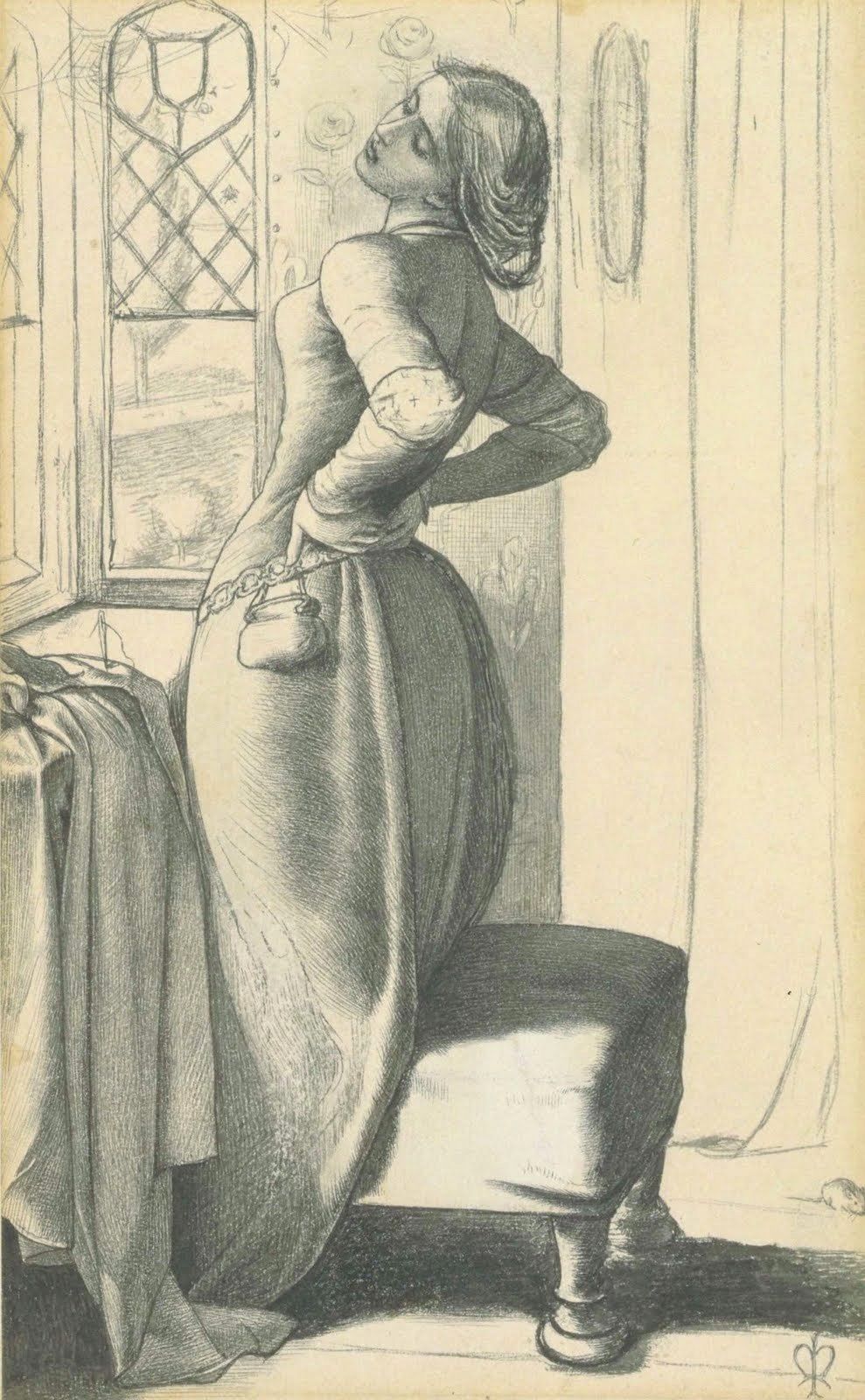
John Everett Millais, study for Mariana in the Moated Grange, 1850. Pen and ink with gouache, Victoria and Albert Museum, E.354-1931. The study includes a round mirror behind Mariana. Millais left it out of the painting. Image source. Public domain.
Pictures made to be printed
By the late 1850s Millais was contributing to periodicals, among them Once a Week and The Cornhill Magazine. An illustration had to work in the time it took a reader to turn a page, as well as hold up if the reader paused. The Metropolitan Museum of Art’s proof of The Good Shepherd (1864) shows what went into making one of those small images. It was part of a series of New Testament parables. Millais tried out designs, drew the chosen composition on a prepared wooden block and examined proofs. The Dalziel Brothers engraved and printed the design. Their carving determined which marks would take ink. Where an oil painting could draw attention with colour, a wood engraving could make light stand out by surrounding the unprinted paper with dense marks. [1] [17]
In Millais’s prints, the credit line can tell you how far his hand was involved. The Met’s The Baby-house, showing two girls at play beside a dolls’ house, is an etching and drypoint by Millais himself. The Good Shepherd records a collaboration between the person who designed the image and the firm that cut the block and printed it. A third way his pictures reached the public was through reproductions of finished oils. Wellcome Collection holds a Pears advertisement that uses Bubbles, a painting of a child watching a soap bubble. One encounter with that image might begin with the child’s absorbed expression. Another might begin with the name of the soap. The agency of engravers, printers and advertisers mattered to the way a Millais image circulated and to what a viewer was invited to see in it. [17] [23] [24]
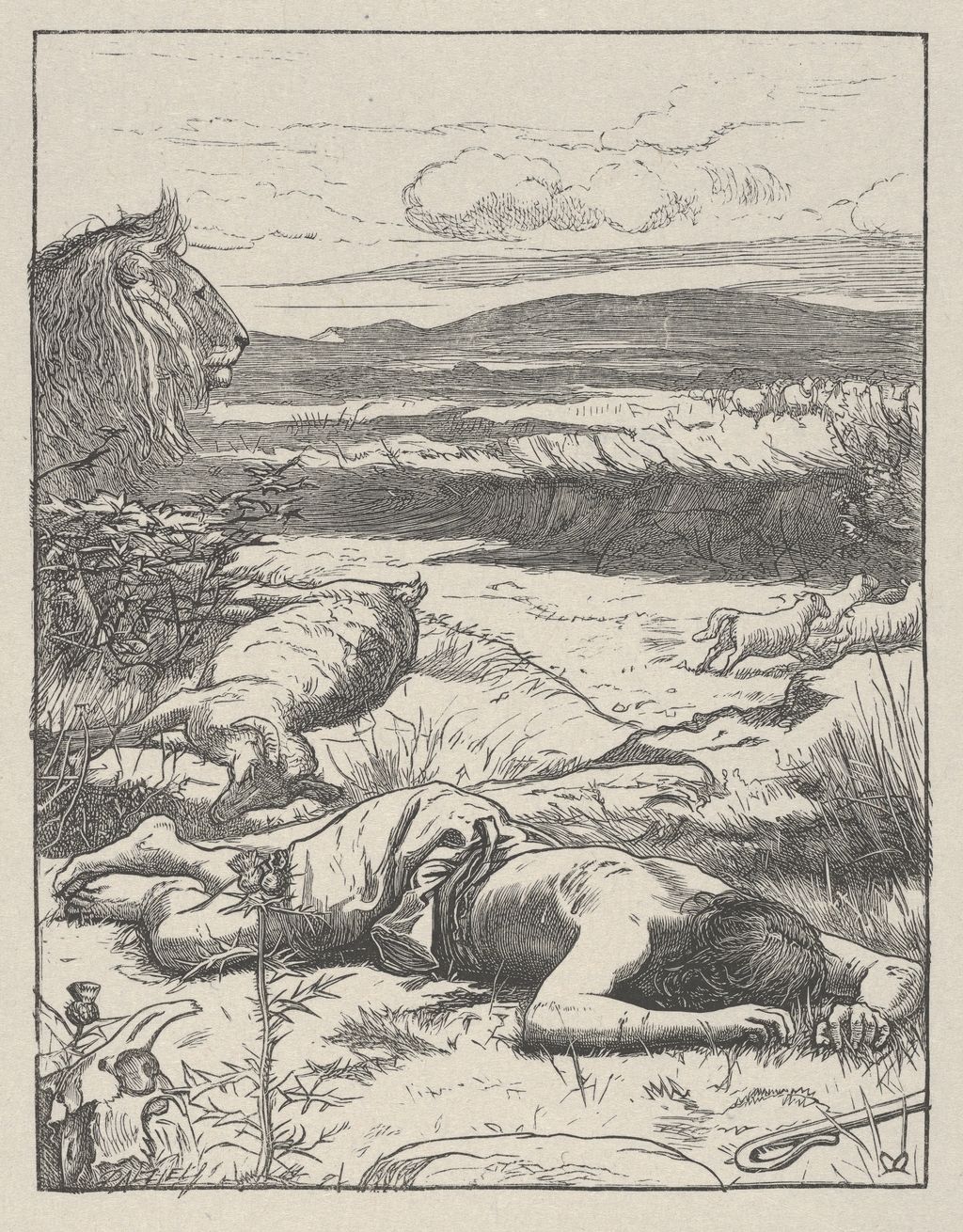
John Everett Millais, design, engraved and printed by the Dalziel Brothers. The Good Shepherd, 1864, wood-engraved proof. Metropolitan Museum of Art, Rogers Fund, 1921, 21.68.4(20). The wood-engraved proof shows the contrast between the marks cut by the Dalziel Brothers and the light of the unprinted paper. Image source. CC0 / Public domain.
Childhood and the society portrait
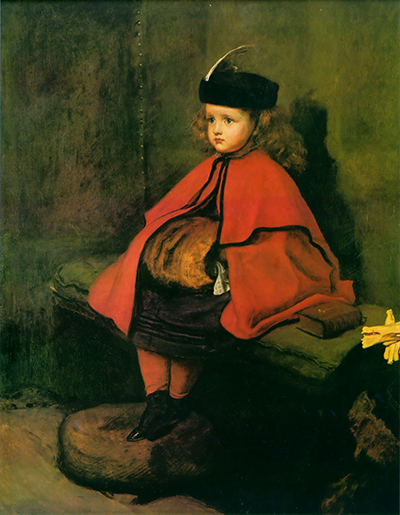
In My First Sermon and My Second Sermon, a church pew becomes the setting for two states of attention. In the first canvas the little girl sits upright, facing forward. In the second her head has drooped in sleep. Much of the setting and costume is familiar, so the small change in posture does almost all the work of the sequel. At the Royal Academy banquet the Archbishop of Canterbury took the sleeping child as an occasion to joke about overlong sermons, a response that shows how easily the picture’s small drama travelled beyond the family that supplied the sitter. [18] In Bubbles the child’s eyes follow the delicate thing he has just blown into the air. Both subjects give a child an absorbing experience of their own, which an adult viewer can recognise from a gesture or glance. [18] [24]
Millais was already a full Royal Academician by the end of 1863, the year he showed the first Sermon. His growing portrait practice brought opportunities to paint likenesses on a much larger scale. In the group portrait Hearts are Trumps, he turns the Armstrong sisters’ game of cards into a way to organise the group within a single interior. The spread of pale fabric and the hands gathered at the table make an ensemble across the canvas. A conservation project at Tate showed how much of that arrangement depends on colour relationships. Discoloured varnish had reduced the sense of depth and altered the tones. Removing it, after tests to protect the paint underneath, let relationships between the dresses and the darker setting come through more clearly. [1] [9]
The portraits also differ sharply from one another. In the Musée d’Orsay’s Mrs Heugh, aged ninety-three, Millais brings together closely observed ageing skin and the surfaces of fabric and metal. His 1879 portrait of the painter Louise Jopling gives the face and the turn of the body particular force against the dark field of her dress and setting. Jopling later recalled dropping the pleasant expression she meant to maintain during the sittings. Her account gives the look that survives in the picture something of the give-and-take of a conversation between painters. The art historian Nele Putz sees the more broadly handled dress and dark surrounding space in Louise Jopling as part of a development in Millais’s adult portraiture. Read alongside Mrs Heugh, it shows how well he could vary the degree of finish while taking a sitter’s appearance seriously. [25] [19] [26]
How Millais pictured history
In the early Order of Release, a woman brings the document that will free a prisoner in the aftermath of the Jacobite rising. The paper sits between her and the person whose authority she needs, while husband, child and dog pull the viewer’s attention towards the reunion the order makes possible. The paper gives the people in the room something to do and the scene a future. In The North-West Passage, painted two decades later, the old seaman looks beyond the people and objects beside him. The woman usually identified as his daughter looks down at a book. She lays her other hand over his closed fist. The chart behind her brings the Arctic into their room. The picture approaches a national preoccupation with exploration through two people who occupy the same space but seem to be attending to different things. Each painting makes a historical subject legible through a domestic encounter, with the written or printed object serving a distinct purpose. [27] [10]
The Scottish landscapes
In the portrait of John Ruskin, the critic stands beside rushing water at Glenfinlas. His stillness allows time to notice the broken rock and the fall of water around him. Millais began the work during a visit to Scotland in 1853. His later Scottish landscapes give the land and weather the whole picture. Chill October spreads out low across rough waterside growth and a broad sky. Its horizon gives a sense of exposure. The lean of the vegetation and the uneven reflection on the water suggest the conditions of the day. In 1882 Vincent van Gogh brought it up in a letter to Theo, distinguishing its feeling from that of a view of the bleaching grounds near Haarlem by Jacob van Ruisdael. The comparison puts this Scottish subject in a conversation about what landscape can convey through the painter’s choices. [14] [11]
Dew-Drenched Furze takes the eye upwards through trees. Light comes through from beyond the trunks and singles out areas of the foreground growth. The upright canvas and near symmetry give that filtered light a steady setting. Tate traces the title to Tennyson’s In Memoriam A.H.H., the long poem of grief for Arthur Hallam. The phrase gives the moisture a name and brings the associations of the poem to the scene. Placed beside Ophelia, the late canvas has a familiar patience with the vegetation at the front of the picture. Here the plants and light can command attention on their own, with the literary reference carried by the title. [12]
Millais after the Brotherhood
Millais’s reputation has often been organised around the intensity of his early work. The Japanese scholar Akira Ishizuka argues that judging the later work by the young Brotherhood’s aims helped to keep it out of view. Masao Miyazawa, writing for the Bunkamura retrospective, brought attention to what Millais gained as his handling and subjects changed. He points to pictures such as the 1868 Sisters, in which the painter’s daughters are the sitters, but the colour and arrangement also give the painting an interest of its own. That reading makes room for the ambition of the portraits and landscapes alongside the appeal of the Shakespearean pictures. [28] [3]
The full-career retrospective opened at Tate Britain in 2007 and went in 2008 to the Van Gogh Museum in Amsterdam, the Kitakyushu Municipal Museum of Art and Bunkamura in Tokyo. The Dutch host showed society portraits, historical pictures and landscapes from across the career, and mounted a small companion display of contemporary photography called Me, Ophelia. One exhibition asked viewers to consider how the painter’s work had changed across a lifetime. The other considered what might be made of a picture that remained familiar more than a century later. [6] [29] [30]
For a first route through Millais’s paintings, start with the hands and faces at the table in Isabella, then look at the posture and paint in the late portraits. Set the riverbank in Ophelia beside the vegetation in Dew-Drenched Furze and the open sky in Chill October. Each comparison makes a different choice visible, from how much of a story to reveal to how much of the canvas to give over to the weather. The biography follows the relationships and commissions behind that range. The quotations gather the artist’s testimony and period responses to the work.
Further reading
An exhibition catalogue and the family biography are starting points for reading across Millais’s career.
Millais. Jason Rosenfeld and Alison Smith. Tate Publishing, 2007. ISBN 9781854377463.
The Tate retrospective catalogue considers sculpture and works on paper alongside the paintings, and gives the early and late work room within one career survey. View the catalogue record.
The Life and Letters of Sir John Everett Millais, Volume 2. John Guille Millais. Cambridge University Press reprint of the 1899 edition. ISBN 9781108051736.
The artist’s son assembled family records and correspondence, including evidence for the later paintings and views of the artist given by people who knew him. View the publisher’s record.
John Everett Millais artwork directory
Browse paintings and drawings covered in these articles, including related works held in public collections. Reproductive engravings and editions are discussed on the Prints page.
Prints and illustrated editions
- The Baby-House, 1872. Etching by Millais.
- The Good Shepherd, 1864. Wood engraving designed by Millais, engraved and printed by the Dalziel Brothers.
- Mariana, 1857. Wood engraving designed by Millais and cut by the Dalziel Brothers for the Moxon Tennyson.
- The Proscribed Royalist, 1858. Mixed-method engraving by William Henry Simmons after Millais.
| Name | Date | Medium |
|---|---|---|
| Pizarro Seizing the Inca of Peru | 1846 | Painting |
| The Young Men of Benjamin Seizing Their Brides | 1847 | Painting |
| Isabella | 1848–49 | Painting |
| Christ in the House of His Parents (‘The Carpenter’s Shop’) | 1849–50 | Painting |
| Ferdinand Lured by Ariel | 1849–50 (monogram dated 1849) | Painting |
| Study for Christ in the House of His Parents, Tate N04623 | c. 1849 | Drawing |
| Study for Christ in the House of His Parents, Tate N04792 | c. 1849 | Drawing |
| Study for Mariana in the Moated Grange | 1850 | Drawing |
| A Huguenot, on St Bartholomew’s Day, Refusing to Shield Himself from Danger by Wearing the Roman Catholic Badge | 1851–52 (exhibited 1852) | Painting |
| Mariana | 1851 | Painting |
| Ophelia | 1851–52 | Painting |
| The Bridesmaid | 1851 | Painting |
| The Return of the Dove to the Ark | 1851 | Painting |
| The Order of Release 1746 | 1852–53 | Painting |
| The Proscribed Royalist, 1651 | 1852–53 (exhibited 1853) | Painting |
| Portrait of John Ruskin | 1853–54 | Painting |
| The Blind Girl | 1854–56 | Painting |
| Autumn Leaves | 1855–56 (Manchester labels 1856) | Painting |
| A Dream of the Past: Sir Isumbras at the Ford | 1856–57, later revised | Painting |
| The Vale of Rest | 1858–59 | Painting |
| Study for The Black Brunswicker, Tate A00812 | c. 1860 | Drawing |
| Study for The Black Brunswicker, Tate A00813 | c. 1860 | Drawing |
| Study for The Black Brunswicker, Tate A00814 | c. 1860 | Drawing |
| The Black Brunswicker | 1860 | Painting |
| The Ransom | 1860–62 | Painting |
| My First Sermon | 1863 | Painting |
| My Second Sermon | 1864 | Painting |
| Joan of Arc | 1865 | Painting |
| Chill October | 1870 (exhibited 1871) | Painting |
| The Boyhood of Raleigh | 1870 | Painting |
| The Knight Errant | 1870 | Painting |
| Hearts are Trumps | 1872 | Painting |
| The North-West Passage | 1874 | Painting |
| Louise Jane Jopling | 1879 | Painting |
| William Ewart Gladstone, NPG 3637 | 1879 | Painting |
| Bubbles | 1886 | Painting |
| Portia | 1886 | Painting |
| Dew-Drenched Furze | 1889–90 | Painting |
| Ducklings | 1889 | Painting |
| Portrait of Sarah Hammond | 1891 | Painting |
Discussion
Look again at the images and ideas explored in John Everett Millais. These editorial prompts invite your observations.
Reader Insights
What connects the gestures in Isabella and The North-West Passage when you look at where each figure puts their hands?
Which late landscape would you place beside Ophelia to show how Millais’s treatment of plants and water changed?
Join the Conversation
Share a detail, comparison or question about John Everett Millais below.
References
- Carol Blackett-Ord, National Portrait Gallery, Sir John Everett Millais, 1st Bt, Later Victorian Portraits Catalogue, “Biography and References”. View source.
- National Gallery of Art, Pre-Raphaelites: Victorian Art and Design, 1848–1900, exhibition overview. View source.
- Masao Miyazawa, Bunkamura, John Everett Millais, exhibition introduction, sections on the Brotherhood, Aestheticism and later portraiture. View source. (in Japanese).
- Walker Art Gallery, Isabella, WAG 1637, collection interpretation. View source.
- Tate, Christ in the House of His Parents (The Carpenter’s Shop), N03584, collection interpretation. View source.
- Tate, “The Story of Ophelia,” sections on the location and model, and retrospective itinerary. View source.
- National Gallery, “Painting in detail: ‘Mariana’,” Reflections: Behind the Inspiration, p. 7. View source.
- David Wilson, University of St Andrews, The Art of Faith in a World of Progress: From Transcendence to Immanence, vol. 1, pp. 95–98. View source.
- Tate, “John Everett Millais’s Hearts are Trumps 1872,” conservation project, varnish and pigment analysis and treatment. View source.
- Mark A. Cheetham, British Art Studies, “Millais’s Metapicture,” no. 19, discussion of sailor, daughter and chart. View source.
- Vincent van Gogh, Van Gogh Museum and Huygens Institute, letter to Theo, The Hague, on or about 21 July 1882, letter 249, comparison with Ruisdael and notes 11–12. View source. (in Dutch).
- Tate, Dew-Drenched Furze, T12865, collection interpretation and source for the title. View source.
- Sarah Victoria Turner, Paul Mellon Centre, “1849 The Arrival of the ‘PRB’,” The Royal Academy Summer Exhibition: A Chronicle, fig. 1 and note 4, citing The Art-Journal, June 1849, p. 171. View source.
- Ashmolean Museum, Portrait of John Ruskin, WA2013.67, object interpretation. View source.
- Giovanni Boccaccio, Classici online, Decameron, day IV, novella 5, opening account of Lisabetta and Lorenzo. View source.
- Sarah Victoria Turner, Paul Mellon Centre, “1850 Battles Old and New,” The Royal Academy Summer Exhibition: A Chronicle, section beginning with the reception of Millais’s religious picture. View source.
- The Metropolitan Museum of Art, The Good Shepherd, proof from The Parables of Our Lord and Saviour Jesus Christ, 21.68.4(20), object entry and producer credits. View source.
- Guildhall Art Gallery, City of London, “Women of Guildhall Art Gallery,” paired My First Sermon and My Second Sermon labels. View source.
- National Portrait Gallery, Louise Jane Jopling (née Goode, later Rowe), NPG 6612, display label and linked catalogue entries. View source.
- William Shakespeare, Folger Shakespeare Library, Hamlet, act 4, scene 7, Gertrude’s account of Ophelia’s drowning. View source.
- Elizabeth Prettejohn, Paul Mellon Centre, “1852 Pre-Raphaelite Plein-Air,” The Royal Academy Summer Exhibition: A Chronicle, discussion of the Ewell painting campaign. View source.
- Gustave Planche, “Exposition des beaux-arts. L’école anglaise,” Revue des Deux Mondes, 1855, vol. 11, pp. 465–486, paragraphs on the three Millais canvases. View source. (in French).
- The Metropolitan Museum of Art, The Baby-house, 66.544.30, object entry. View source.
- Wellcome Collection, “Bubbles”: Pears Soap Matchless for the Complexion, object image and cataloguing note on Millais. View source.
- Musée d’Orsay, Les peintres anglais et américains au musée d’Orsay, object notes for Mrs Heugh à l’âge de 93 ans. View source.
- Nele Putz, Ludwig Maximilian University of Munich, Demokratisierung des Luxus in der Malerei des späten 19. Jahrhunderts: Portrait und Genre bei John Everett Millais, pp. 59–61. View source. (in German).
- Tate, The Order of Release, 1746, N01657, collection interpretation. View source.
- Akira Ishizuka, Kwassui Women’s University, “An Examination of Exhibitions and Publications Focusing on the Life and Art of John Everett Millais,” Kwassui Bulletin 55, pp. 13–15. View source. (in Japanese).
- Van Gogh Museum, Jaarverslag 2008, pp. 37–38, “John Everett Millais” and “Me, Ophelia”. View source.
- Bunkamura, John Everett Millais, 2008 exhibition overview, Tokyo dates and Kitakyushu tour entry. View source. (in Japanese).