 by Tom Gurney
Tom Gurney BSc (Hons) is an art history expert with over 20 years experience
Published on June 19, 2020 / Updated on November 25, 2026
Email: tomgurney1@gmail.com / Phone: +44 7429 011000
Isabella: Introduction
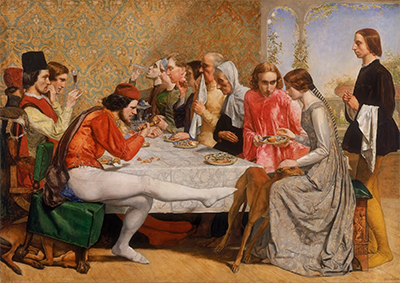
Lorenzo offers Isabella half a blood orange while her brother aims a kick at the dog resting against her. Both gestures take place at the same table, in full view of the other guests. John Everett Millais painted Isabella, also known as Lorenzo and Isabella, in 1848–49. The oil on canvas belongs to the Walker Art Gallery in Liverpool. Its subject comes from John Keats’s Isabella; or, The Pot of Basil, but Millais chose to paint the lovers at dinner, before the brothers murder Lorenzo. The tragedy is already taking shape in the few feet between their seats. [1] [2] [3]
At a Glance
- Date1848–49 [1]
- MediumOil on canvas [1]
- CollectionWalker Art Gallery, Liverpool [1]
- Literary subjectJohn Keats’s Isabella; or, The Pot of Basil [1][2]
This work across John Everett Millais’s career
Isabella (current article)
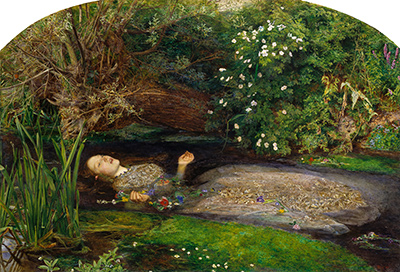
1848–49Ophelia
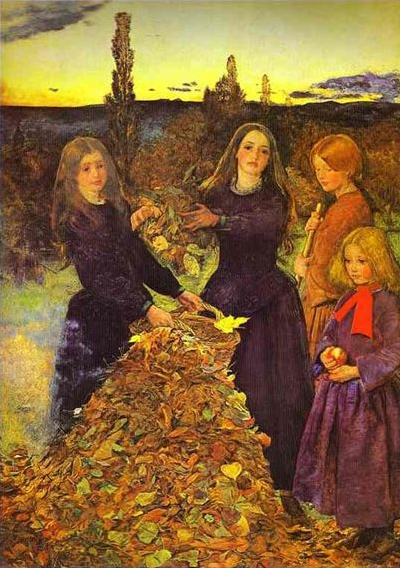
1851–52Autumn Leaves
1855–56Dew-Drenched Furze
1889–90Contents
- From Boccaccio to the dinner table
- How Millais directs the eye
- Spilled salt and other clues
- From the ink study to the Academy wall
- The same poem, a later moment
- Annotated details
From Boccaccio to the dinner table
The story begins with Lisabetta of Messina in the fifth tale of the fourth day of Giovanni Boccaccio’s Decameron. Her three brothers are wealthy merchants whose father came from San Gimignano. Lorenzo, a young Pisan who manages their affairs, falls in love with her. After one brother sees Lisabetta visit Lorenzo at night, the brothers lure him away, kill him and bury him. Lorenzo appears to Lisabetta in a dream and tells her where to find him. She brings his head home and conceals it in a pot planted with basil, which she waters with her tears and fragrant waters. Her brothers take the pot away and flee after discovering what lies inside. Lisabetta dies grieving for it. [4]
Keats places the story around Florence, gives Isabella two brothers, and makes Lorenzo’s position in their business central to the lovers’ danger. The brothers intend Isabella to marry a nobleman with land. Their outrage at her attachment to a man who works for them follows a whole passage on the sources of their fortune. Keats takes the reader from the merchants’ comfortable household to the mines and factories where people labour for them, and to the diver risking his life in the waters off Ceylon. This gives the brothers’ anger a social dimension. In their dealings with Lorenzo they expect the same authority over a person that they exercise as employers. [2]
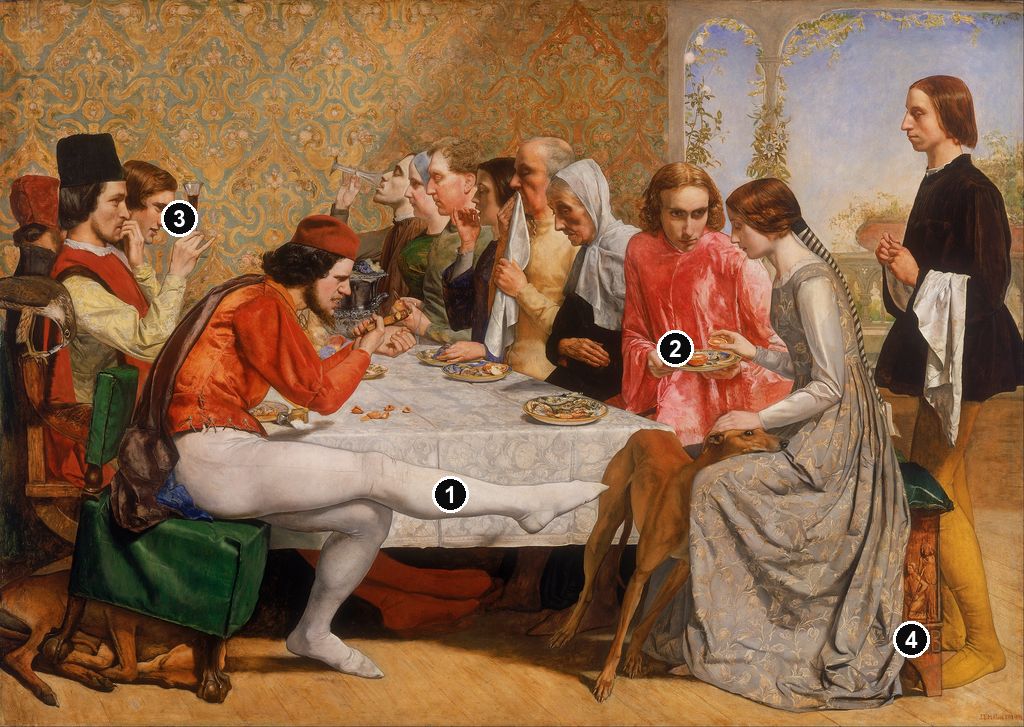
The painting brings the lovers’ pleasure in sitting together, described in Keats’s first stanza, into the same moment as the danger of being watched. The brother with the wineglass seems occupied with his drink until you follow his glance across the table. The literary scholar Fanny Gillet compares the other brother’s outstretched foot to the movement of a sentence that runs over the end of a line in Keats. Both hang in suspense. The foot also crosses the space between the two sides of the table, giving the family’s intrusion into the lovers’ private life a physical form. The kick is Millais’s invention, a small act of cruelty that anticipates what the brothers do much later in the poem. [1] [2] [5]
How Millais directs the eye
Begin at the left, with the brother’s tilted chair. The effort of breaking a nut pulls his shoulders forward while his leg thrusts out of the same figure at a sharp angle. The white stocking makes the kick legible against the hanging tablecloth and the darker shapes below. The shoe points straight towards the dog’s flank, carrying the eye from the brother to Isabella. The animal leans against Isabella, its head close to the hand with which she steadies it. The brother can disturb that little pocket of trust without even getting up. [1]
Now follow the long edge of the cloth towards the back of the painting. The table recedes abruptly, yet the diners remain close together and their profiles stay unusually clear. Hands, sleeves, glasses and faces overlap in a succession of distinct shapes. Some of the guests attend to their own food and drink, so the ordinary routine of dinner continues around the brother’s show of temper. Near the right edge, the attendant’s dark coat meets the white napkin over his arm. Millais makes adjacent colours and crisp contours do much of the work of telling us where one form ends and another begins. [1] [3] [6]
Isabella and Lorenzo lean into the narrow space between them. The arch behind the pair brings them together visually, while the hand that offers the fruit and the hand that approaches it give their relationship a scale much smaller than the brother’s sweeping leg. Only a few inches of the table are needed to pass a plate, but the exchange takes place in a room where every such movement may be noticed. The Japanese scholar Gotoh Mie links Millais’s shallow space and hard contours to the value Keats placed on immediate, physically specific details. In both, a thing as small as a piece of fruit or as ordinary as a foot can command attention even in the middle of a crowded scene. [1] [6]
The Walker Art Gallery relates the painting’s brilliant colour, compressed space and angular figures to early Italian art. The stiff profiles help to keep the individual diners visible, and the chair backs, patterned sleeves and vessels stay distinct even where the room seems most crowded. From a distance the table is one conspicuous band of white. Up close it becomes an array of small actions, including the lifting of a glass and the breaking of a shell. The older pictorial vocabulary gives close scrutiny of these incidents a place in a large literary painting. [1] [6]
Morna O’Neill points to the patterned wall covering as another example of how surface matters in this painting. She compares it with the richly figured fabrics that hang behind holy figures in early Italian panels, and with nineteenth-century wallpapers designed by A. W. N. Pugin. In Millais the pattern runs behind a table of merchants. Look at how little its rhythm changes from one place to the next. The steady repeat draws the eye back to the surface even as the edge of the table leads it into depth. [7]
Spilled salt and other clues
The tableware carries some of the darkest details. The Walker identifies a scene of David beheading Goliath on one of the decorated plates. O’Neill proposes Hercules and the Hydra for a beheading scene on a plate in the painting, drawing a comparison with a surviving Italian maiolica dish at the Ashmolean. The precise identification can be hard to make out at this scale. The image of a blade and a severed head takes on force once we know what Isabella will find in Lorenzo’s grave. On the left a hawk tears at a white feather, which the museum reads as a dove’s. The gallery associates the passion flowers and white roses by the lovers with their attachment. The blood orange has a double force. It is the food that allows Lorenzo to serve Isabella at dinner, and its exposed red flesh has been read both as a sign of passion and as a hint of bloodshed. [1] [8] [7]
Look for the salt cellar lying on its side and the shadow that runs across the cloth beside it. Art historian Carol Jacobi connects the spill to the ominous overturned salt in Goethe’s account of Leonardo’s Last Supper. She also proposes a parallel with Hogarth’s tavern scene from A Rake’s Progress, in which a leg juts across the foreground and a shadow crosses the table. Her reading goes further than the idea of bad luck. Jacobi sees a phallic shape in the shadow and argues that the arrangement of arm, lap and spilled salt binds sexuality to aggression. The interpretation depends on how the details line up, and Jacobi leaves open whether Victorian viewers recognised the suggestion. [9]
From the ink study to the Academy wall
The Fitzwilliam Museum holds a pen and Indian ink study dated 1848. It bears Millais’s monogram on the chair at the left and two lines from Keats, written below the drawing, about the pleasure the lovers take in sitting beside each other at meals. The inscription shows how early that small intimacy supplied the organising incident for the composition. On the full-scale canvas the table setting can hold many more competing points of attention, but the offered fruit still makes the relationship readable across the room. A separate Millais watercolour titled Lorenzo and Isabella is held by Guildhall Art Gallery in London. [1] [10] [11]
The faces also had a life outside the story. The 1886 exhibition catalogue identifies Mrs Hodgkinson, the wife of Millais’s half-brother, as Isabella and William Michael Rossetti as a model for Lorenzo. It also identifies the diner wiping his mouth as Millais’s father. For that figure, the gesture interrupts the formal row of faces. Someone at the table is already finished eating, even as the two young people in the foreground take their time over a piece of fruit. [3]
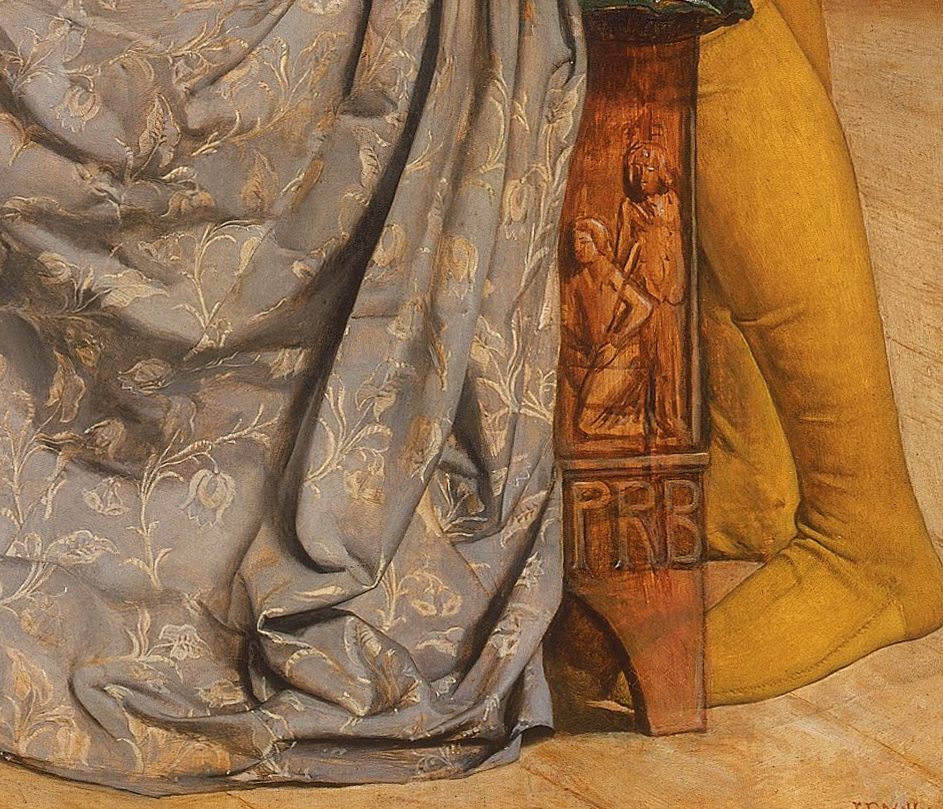
Isabella was the only painting Millais submitted to the Royal Academy in 1849. He added the initials PRB to his signature, low on the right, marking his allegiance to the newly formed Pre-Raphaelite Brotherhood. In the Middle Room, the Academy hung his canvas near Hunt’s Rienzi, which carried the same initials. Both works had the advantage of being hung on the line, where they could be seen more readily among the many objects on the walls. Dante Gabriel Rossetti had already exhibited his signed Girlhood of Mary Virgin at the smaller Free Exhibition earlier that spring. The art historian Peter Trippi compares the Brotherhood’s shared initials to the letters Royal Academicians and Associates could place after their names. The three letters at the bottom of Millais’s painting brought a new artistic affiliation into a room crowded with signs of established rank. [12] [13]
The first response was mixed and included real enthusiasm. In June, The Art-Journal singled out Isabella as an exceptional work and predicted a reputation for its young painter. The Standard praised the characterisation and vigorous handling even as it found the picture stiff and medieval in style. William Michael Rossetti’s diary reports a hostile comment in the Court Journal, which questioned why work by Millais and Hunt had been admitted when another artist’s picture was rejected. Looking back in an editorial note, Rossetti nevertheless remembered the tone of 1849 as generally moderate and sometimes favourable. The harsher criticism he associated with 1850 belonged to a subsequent exhibition season. [12] [14]
By 1884 the canvas had been acquired for the Walker Art Gallery. Two years later it returned to London for the Grosvenor Gallery retrospective, lent by the Corporation of Liverpool. The catalogue called it Isabella, or Lorenzo and Isabella and printed passages from the first and twenty-first stanzas of Keats. The first describes the lovers’ happiness at meals and the second the brothers’ discovery and plans for Isabella’s marriage. Visitors were invited to hold both passages in mind as they looked at one scene. [3] [8]
The same poem, a later moment
William Holman Hunt came back to Keats’s story in Isabella and the Pot of Basil, the tall painting at the Laing Art Gallery in Newcastle upon Tyne. In Hunt, Isabella embraces the pot and lowers her head over it. What appears at the edge of Millais’s scene as a pot of herbs, which the Walker takes as a hint of the ending, now occupies the centre of the picture and contains what is left of Lorenzo. Hunt leaves the brothers out of the room. Their actions are already apparent in the way Isabella clings to the vessel. [8] [15]
That later picture brings out the oddity of the moment Millais chose. His Isabella can still reach for something Lorenzo has offered her. Around her, wine is being lifted, nuts are being cracked and a dog is seeking shelter. The meal has all the apparatus of a household at ease, down to the pleasure of sharing a piece of fruit. Once you have followed the brother’s foot across the picture, it is difficult to look at any of those ordinary things with quite the same confidence. [1] [2]
Annotated Details from Isabella
The numbered points identify visible features discussed in this article. Return from each detail to the numbered overview. Isabella, oil on canvas, Walker Art Gallery, WAG 1637. Image source. Public domain.
Details from ISABELLA
Compare the cropped details with the source images above. Notice how their colours, shapes and positions contribute to the larger compositions.
The brother’s kick
The sharply angled leg cuts across the long white cloth. Follow its direction to the dog beside Isabella and then back to the brother’s tilted chair.
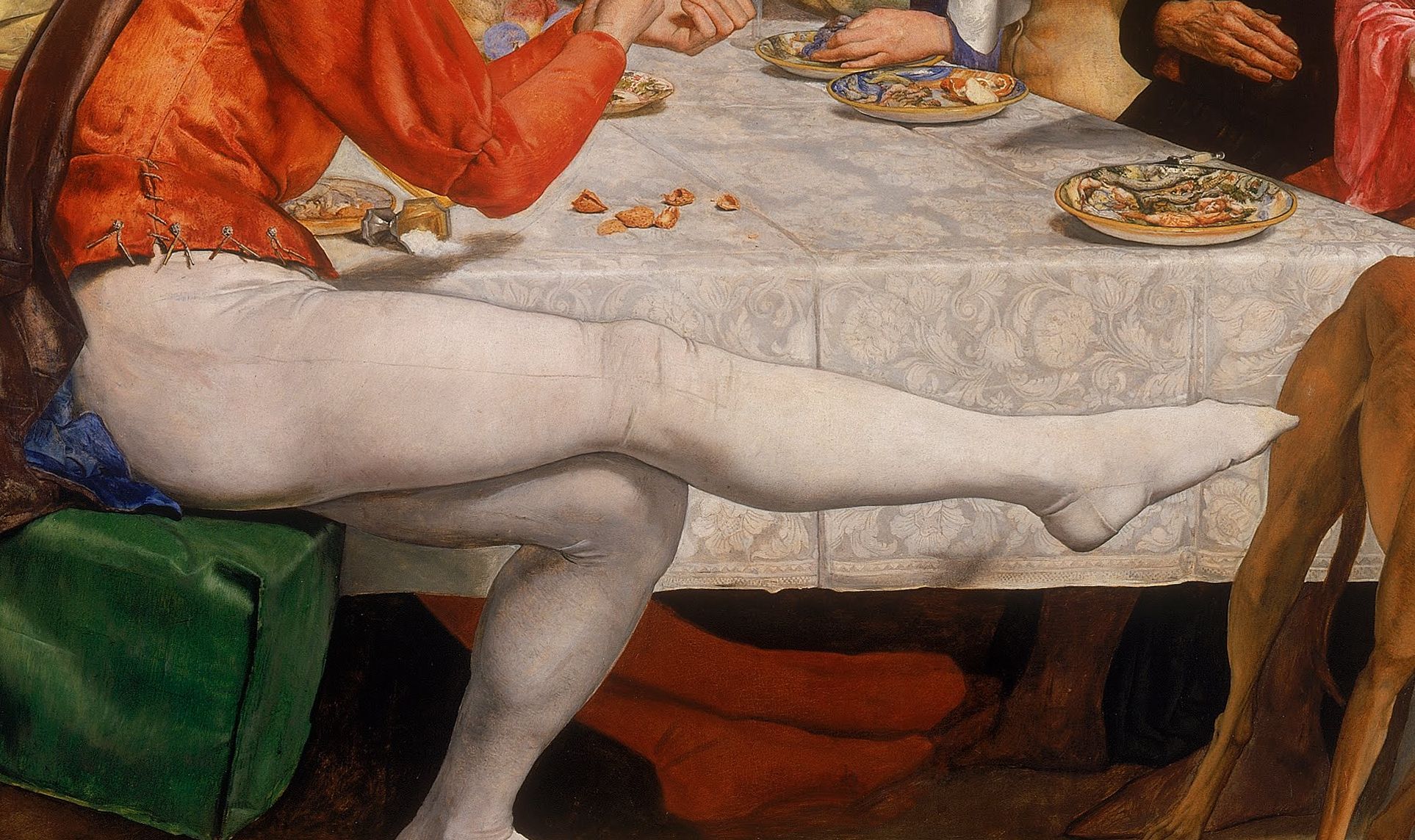
Isabella and Lorenzo share fruit
Lorenzo offers the fruit while Isabella leans in towards him. Their two inclined heads and the space around the fruit set their encounter apart within the crowded meal.
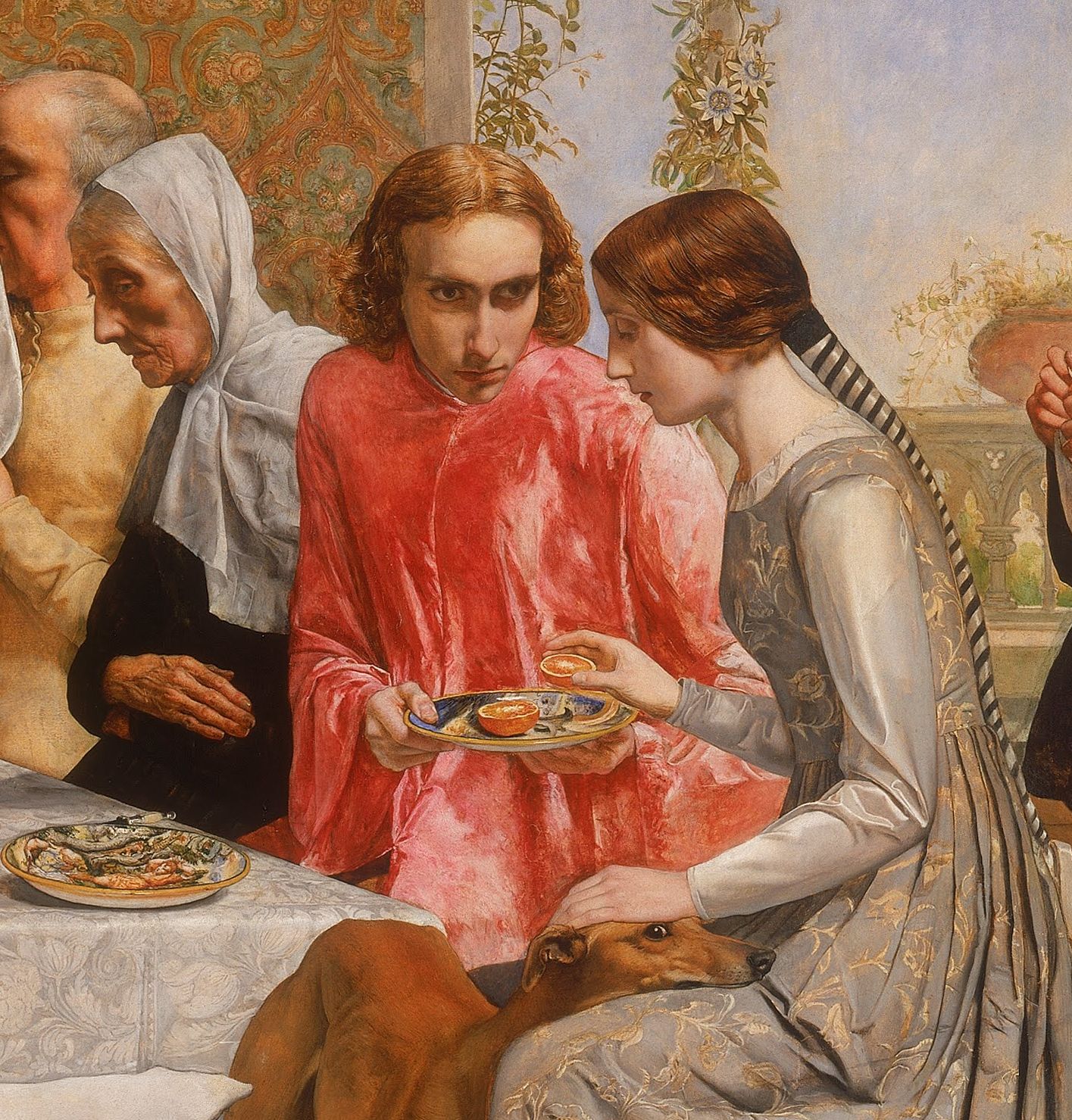
The raised glass
The glass disguises the second brother’s attention. Look beyond his hand to the direction of his gaze across the table.
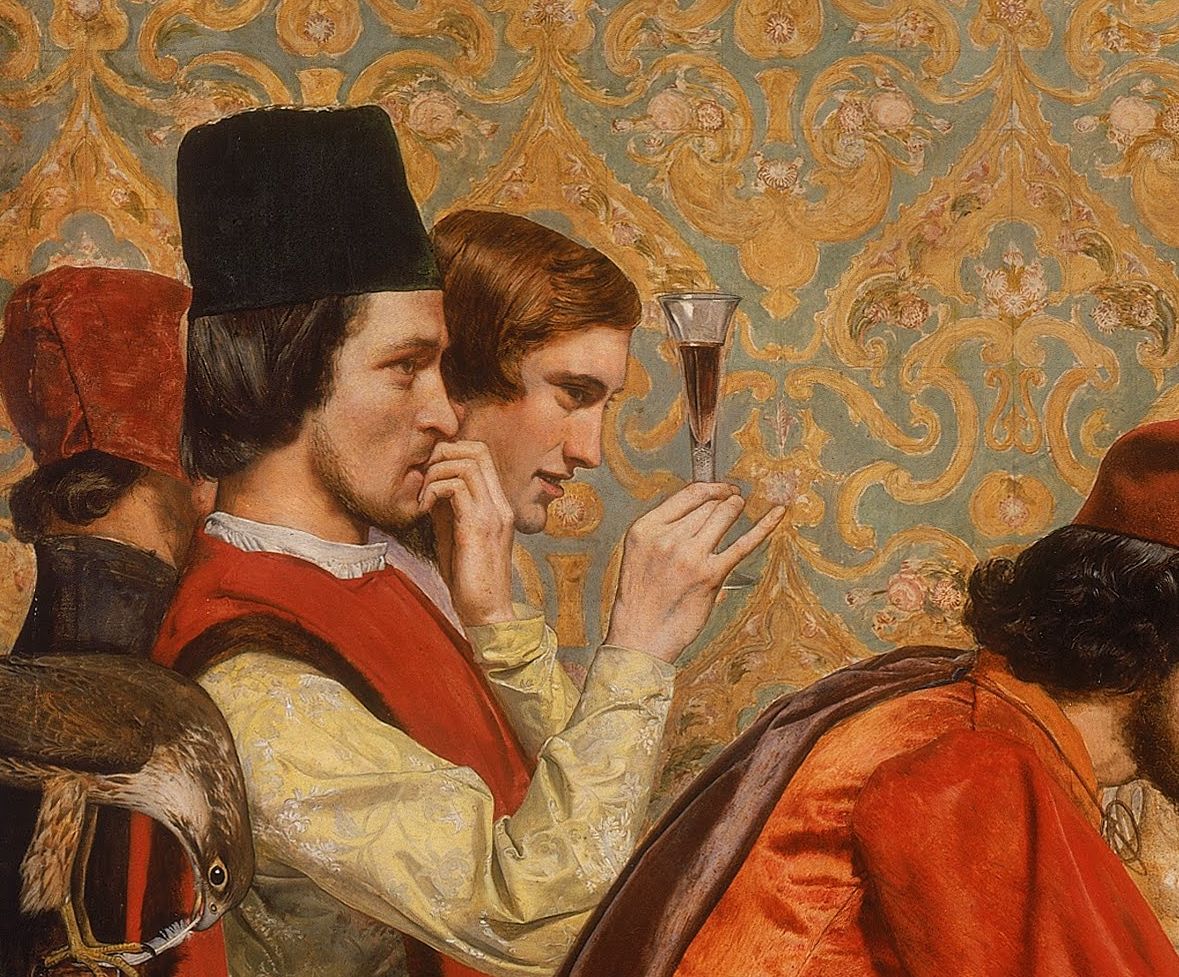
The initials of the Brotherhood
The letters PRB sit low at the right. The initials mark the allegiance Millais shared with Hunt and Rossetti when the work was first shown.
Films about Millais and the Pre-Raphaelites
Jason Rosenfeld discusses the gestures and the source story at the centre of the painting. The other films explore related paintings and the wider movement.
Pre-Raphaelites: John Everett Millais – Isabella
Tate’s film discusses how Millais sets the Keats story around a crowded table.
Watch on YouTubeJohn Everett Millais artwork directory
Browse paintings and drawings covered in these articles, including related works held in public collections. Reproductive engravings and editions are discussed on the Prints page.
Prints and illustrated editions
- The Baby-House, 1872. Etching by Millais.
- The Good Shepherd, 1864. Wood engraving designed by Millais, engraved and printed by the Dalziel Brothers.
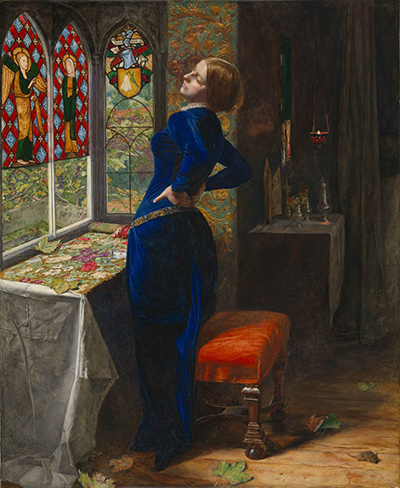
- Mariana, 1857. Wood engraving designed by Millais and cut by the Dalziel Brothers for the Moxon Tennyson.
- The Proscribed Royalist, 1858. Mixed-method engraving by William Henry Simmons after Millais.
| Name | Date | Medium |
|---|---|---|
| Pizarro Seizing the Inca of Peru | 1846 | Painting |
| The Young Men of Benjamin Seizing Their Brides | 1847 | Painting |
| Isabella | 1848–49 | Painting |
| Christ in the House of His Parents (‘The Carpenter’s Shop’) | 1849–50 | Painting |
| Ferdinand Lured by Ariel | 1849–50 (monogram dated 1849) | Painting |
| Study for Christ in the House of His Parents, Tate N04623 | c. 1849 | Drawing |
| Study for Christ in the House of His Parents, Tate N04792 | c. 1849 | Drawing |
| Study for Mariana in the Moated Grange | 1850 | Drawing |
| A Huguenot, on St Bartholomew’s Day, Refusing to Shield Himself from Danger by Wearing the Roman Catholic Badge | 1851–52 (exhibited 1852) | Painting |
| Mariana | 1851 | Painting |
| Ophelia | 1851–52 | Painting |
| The Bridesmaid | 1851 | Painting |
| The Return of the Dove to the Ark | 1851 | Painting |
| The Order of Release 1746 | 1852–53 | Painting |
| The Proscribed Royalist, 1651 | 1852–53 (exhibited 1853) | Painting |
| Portrait of John Ruskin | 1853–54 | Painting |
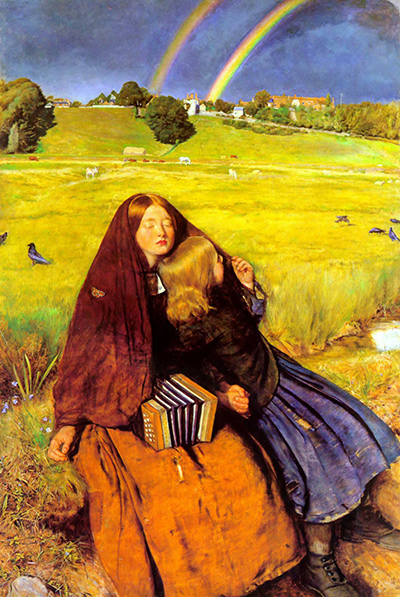
| The Blind Girl | 1854–56 | Painting |
| Autumn Leaves | 1855–56 (Manchester labels 1856) | Painting |
| A Dream of the Past: Sir Isumbras at the Ford | 1856–57, later revised | Painting |
| The Vale of Rest | 1858–59 | Painting |
| Study for The Black Brunswicker, Tate A00812 | c. 1860 | Drawing |
| Study for The Black Brunswicker, Tate A00813 | c. 1860 | Drawing |
| Study for The Black Brunswicker, Tate A00814 | c. 1860 | Drawing |
| The Black Brunswicker | 1860 | Painting |
| The Ransom | 1860–62 | Painting |
| My First Sermon | 1863 | Painting |
| My Second Sermon | 1864 | Painting |
| Joan of Arc | 1865 | Painting |
| Chill October | 1870 (exhibited 1871) | Painting |
| The Boyhood of Raleigh | 1870 | Painting |
| The Knight Errant | 1870 | Painting |
| Hearts are Trumps | 1872 | Painting |
| The North-West Passage | 1874 | Painting |
| Louise Jane Jopling | 1879 | Painting |
| William Ewart Gladstone, NPG 3637 | 1879 | Painting |
| Bubbles | 1886 | Painting |
| Portia | 1886 | Painting |
| Dew-Drenched Furze | 1889–90 | Painting |
| Ducklings | 1889 | Painting |
| Portrait of Sarah Hammond | 1891 | Painting |
Discussion
Look again at the images and ideas explored in Isabella. These editorial prompts invite your observations.
Reader Insights
Where does your eye travel from the brother’s extended leg?
Which clue at the dinner table most changes your sense of what happens after this scene?
Join the Conversation
Share a detail, comparison or question about Isabella below.
References
- Walker Art Gallery, Isabella, extended collection entry at Google Arts & Culture. View source.
- John Keats, Isabella, or the Pot of Basil, in The Complete Poetical Works and Letters of John Keats. View source.
- Grosvenor Gallery, Exhibition of the Works of Sir John E. Millais, 1886, catalogue entry 120. View source.
- Giovanni Boccaccio, Decameron, fourth day, fifth tale, Italian text at Brown University’s Decameron Web. View source.
- Fanny Gillet, “L’illustration ou le surgissement des intimités visuelles du texte poétique ?”, Textes et contextes, section 2.1. View source.
- Gotoh Mie, “Adapting the Decameron: The Rebellious Artistry in Keats’s ‘Isabella’ and Millais’s Isabella”, English Romanticism, no. 48. View source.
- Morna O’Neill, “Arts and Crafts Painting: The Political Agency of Things”, British Art Studies, no. 1, 2015, figs. 14–18. View source.
- National Museums Liverpool, Isabella, collection entry at Google Arts & Culture. View source.
- Carol Jacobi, “Sugar, Salt and Curdled Milk: Millais and the Synthetic Subject”, Tate Papers, no. 18, 2012. View source.
- The Fitzwilliam Museum, Study for Lorenzo and Isabella, accession 1396. View source.
- London Picture Archive, Lorenzo and Isabella, Guildhall Art Gallery, accession 1054. View source.
- Sarah Victoria Turner, “1849: The Arrival of the ‘PRB’”, The Royal Academy Summer Exhibition: A Chronicle, 1769–2018. View source.
- Peter Trippi, catalogue essay on the Pre-Raphaelites, Italian exhibition press dossier for Preraffaelliti. Rinascimento moderno, 2024. View source.
- William Michael Rossetti, Præraphaelite Diaries and Letters, diary and editorial note 154. View source.
- Laing Art Gallery, “Looking with Nature”, entry for William Holman Hunt’s Isabella and the Pot of Basil. View source.