 by Tom Gurney
Tom Gurney BSc (Hons) is an art history expert with over 20 years experience
Published on June 19, 2020 / Updated on November 25, 2026
Email: tomgurney1@gmail.com / Phone: +44 7429 011000
Chill October: Introduction
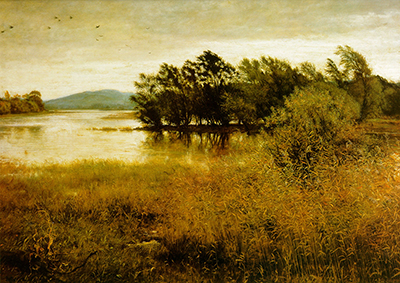
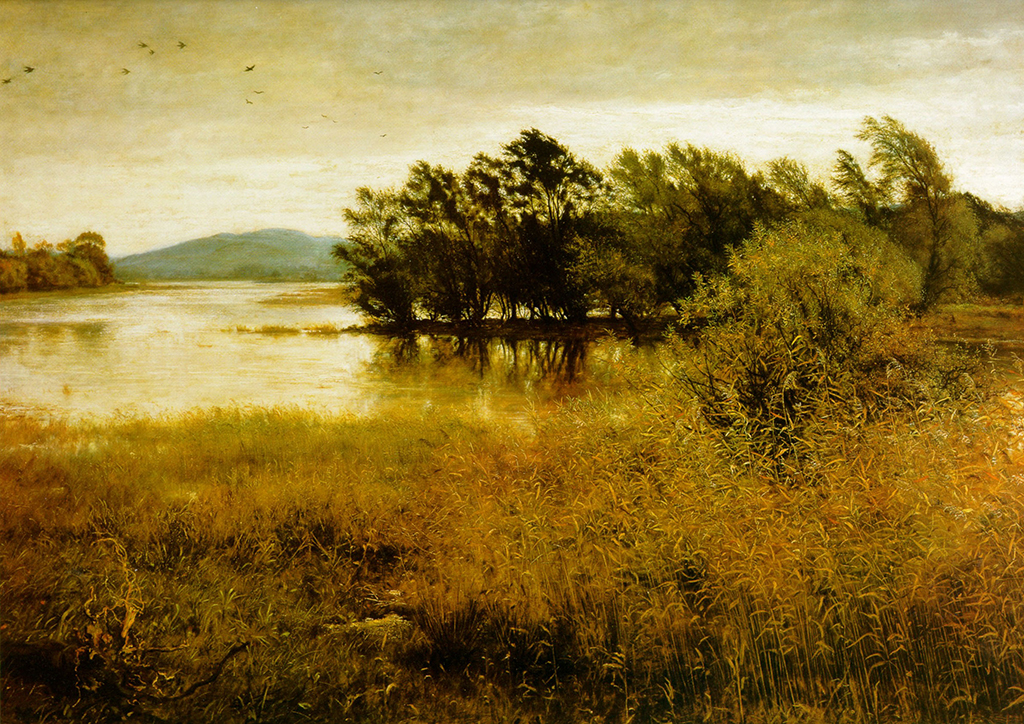
In Chill October, the wind reaches the viewer before the view opens up. It bends the long grass in the foreground and stirs the willows on a spit of land where a backwater meets the River Tay. A pale opening in the clouds lights a narrow reach of water, and beyond it the hills almost disappear into the sky. John Everett Millais painted this stretch of river below Kinfauns, near Perth, in 1870. The oil on canvas, about 141 × 187 cm, made its Royal Academy debut the following year and became the first of his large Scottish landscapes. [1] [2] [3]
At a Glance
- Date1870 [1]
- MediumOil on canvas [2]
- DimensionsAbout 141 × 187 cm [2]
- First Royal Academy exhibition1871 [3]
This work across John Everett Millais’s career
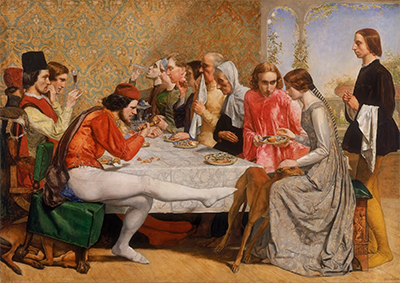
Isabella
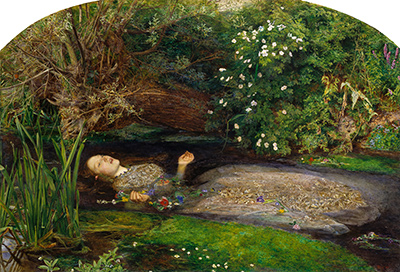
1848–49Ophelia
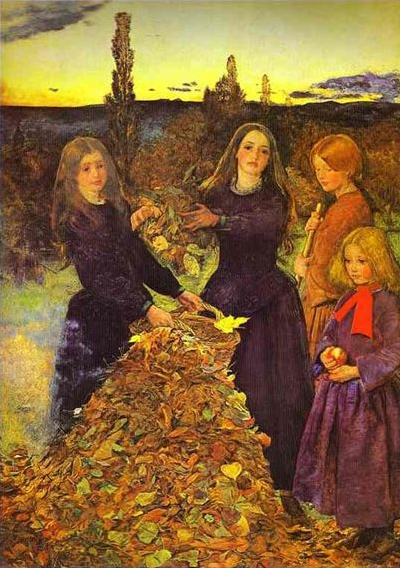
1851–52Autumn Leaves
1855–56Chill October (current article)
1870 (exhibited 1871) [1]Dew-Drenched Furze
1889–90Contents
- The autumn river
- At work beside the Tay
- From figure painting to landscape
- From Edinburgh to Paris and Cragside
- Why Van Gogh remembered it
- Annotated details
The autumn river
The grass crowds the lower edge of the picture, close enough for individual blades and seed heads to catch the light. Above it, the willow-covered spit thrusts out from the right. Its dark foliage makes the strip of open water beside it look brighter, while the curve of the farther bank carries the eye left towards the hills. Millais gives the foreground and the distance very different kinds of attention. The stems are sharp and broken, the hills broad and soft. The changes in focus make the low position of the viewer feel as important as the breadth of the view. [1] [2]
A screen or a book can make the canvas seem like a small study. At nearly two metres wide, it gives a large share of its surface to things a passer-by might scarcely register, from the weave of reeds to the varying darkness of the trees. The clouds leave the grasses in shadow while letting light through across the river. A few birds serve as another measure of distance. Those small accents also keep the sky from reading as an even field of grey. The title directs attention to what the weather might feel like at the water’s edge. The picture leaves the precise hour, and how long the light will last, to the viewer. [1] [2]
At work beside the Tay
On 18 May 1882, Millais wrote an account of the painting that was later recorded on the back of its stretcher. He said the view had stayed with him for years. Friends wondered what he saw in so ordinary a place. He chose it for the feeling it had long given him, setting up near the railway between Perth and Dundee. The location made painting awkward. According to the account printed by his son, the tide once swept away his platform, and passing trains threatened to blow his work into the water. His son also recalled that a porter helped carry the big canvas between the painting site and the stationmaster’s hut, where it was stored overnight. [1] [4]
Millais said he made no preliminary sketch and worked directly on the canvas before the subject, in wind and rain. He also acknowledged work in the studio to bring together the picture’s overall effect. His note leaves those studio revisions unspecified. The distinction matters when looking at the weather. Grass can be observed blade by blade over repeated visits, but the particular combination of wind, light and cloud depicted here is fleeting. Millais had to make separate observations read as one moment. [1] [4]
In 2007, the poet Kathleen Jamie wrote for Tate about taking a small reproduction to the Tay. She recognised the hill in the distance as the one near her own house and found a related view across the riverbank in June. She could recognise it even with the trees in full leaf and the tide low. The encounter helps explain the balance Millais struck. The shape of the river and the alignment of the hills give the picture a location, while the angle of the grasses and the light on the water give it a season. [5]
From figure painting to landscape
Millais had made weather and vegetation count for much in earlier paintings. In Autumn Leaves, gathering dusk deepens the mood of four girls tending a pile of leaves. In Chill October, he works with a related feeling of the year drawing in and asks the terrain and weather to carry it. William Allingham’s verse about a river and bending rushes was printed beside the painting’s entry at the 1886 Grosvenor Gallery exhibition. The catalogue noted that Allingham had written the poem years before Millais painted the river. The pairing shows how naturally a Victorian viewer could read the picture as a poem about the season, with the rushes and the river taking the place of speakers. [3] [6]
The Academy put the picture in its first gallery in 1871, a year when it introduced a formal advance viewing for the press and gave landscape prominent positions. The Times led its first exhibition review with Millais’s painting and praised its ability to communicate a feeling. The Athenaeum also opened its coverage with the picture and treated it as poetry in paint. Visitors could see the same painter taking on very different subjects at that exhibition, among them the biblical Victory, O Lord! and a portrait of the historian George Grote. The large landscape claimed a place alongside that work, and Millais followed it with further independent landscapes including Flowing to the River and Winter Fuel. [3] [6]
The view also has affinities with painting outside the English Academy. In her study of the Scottish collector John Forbes White, Jennifer Melville compares the low horizon, subdued tones and unremarkable terrain with work by contemporary Dutch painters collected in Scotland. She identifies the circles in which Millais could have encountered work by Willem Roelofs and Gerrit Mollinger. Millais himself traced his choice to the stretch of the Tay he knew. The comparison helps explain how a view an English acquaintance might pass over could look like a substantial subject to a painter accustomed to the open ground and restrained colour of Dutch landscape. [4] [7]
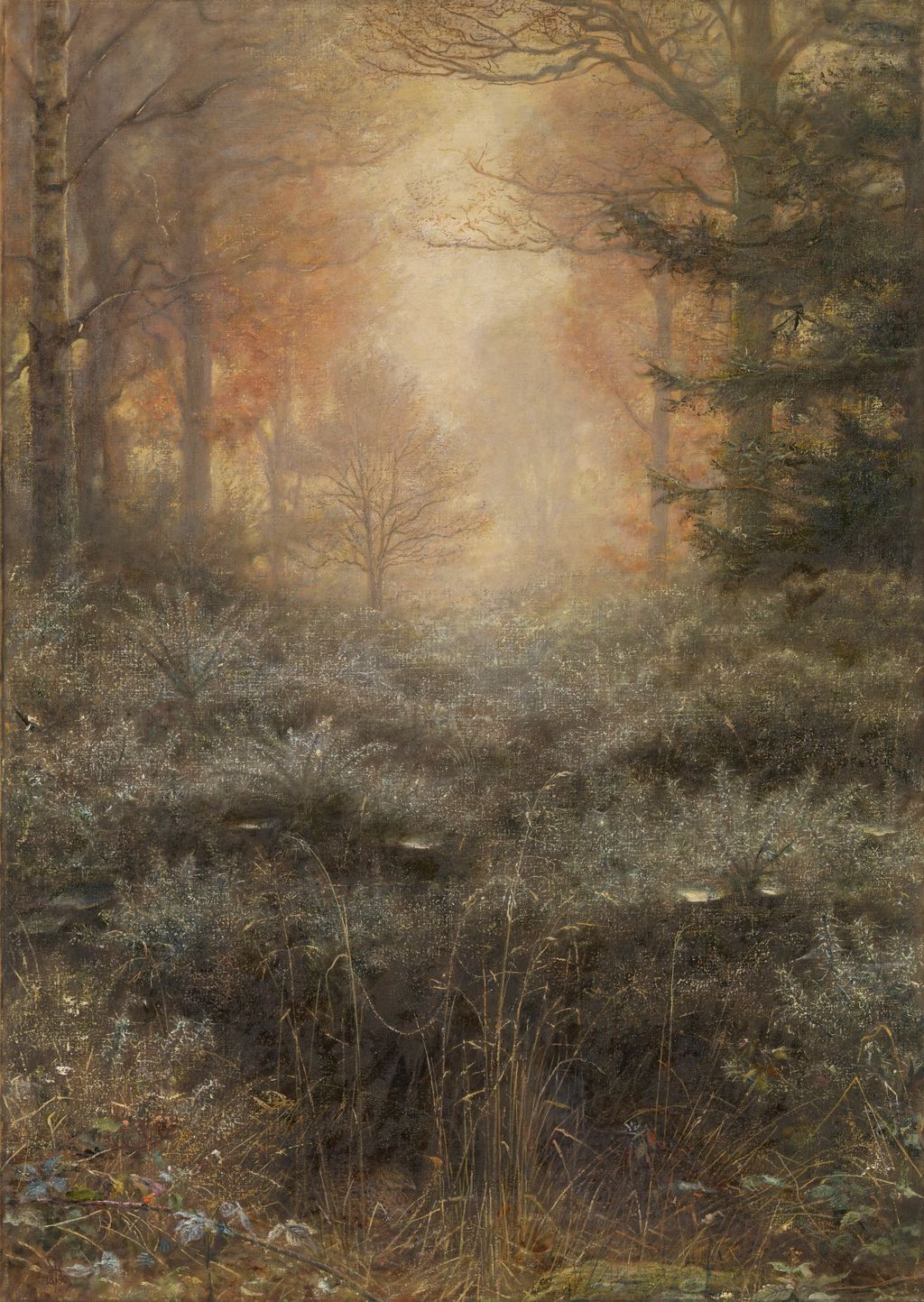
Dew-Drenched Furze, oil on canvas, Tate, T12865. Millais returned to Perthshire for an upright woodland composition with much less visible sky. Image source. Public domain.
From Edinburgh to Paris and Cragside
Samuel Mendel lent Chill October to the Royal Scottish Academy in Edinburgh in 1873. It passed from his collection to the industrialist William Armstrong in 1875. At Cragside, Armstrong’s house in Northumberland, it occupied a prominent place among the paintings displayed to visitors. Armstrong lent the canvas to the Grosvenor Gallery exhibition in 1886 and to the Royal Academy’s posthumous Millais exhibition in 1898. The Grosvenor catalogue also records a showing at the Fine Art Society in 1881. [1] [6] [8] [9]
The painting was also an example for younger Scottish artists. The painter George Reid complained in an 1886 letter that Joseph Milne had gone to the same place on the Tay and painted a large canvas from Millais’s spot. Reid thought the result looked like a copy and counted several more painters trying their hand at the view. Millais had once had trouble convincing his friends that the site was worth painting. Reid’s complaint shows how readily a famous picture could turn an overlooked place into an established subject. [7]
By the time it reached the Paris Exposition Universelle in 1878, the painting had a reputation of its own. The report by the United States commissioners took it and Millais’s other landscape on view, O’er the Hills and Far Away, to be familiar enough to dispense with detailed descriptions. The report preferred the tone and feeling of Chill October while criticising the way some passages were painted. The disagreement with the London reception helps locate what was at stake in the picture. The foreground rewards scrutiny, but the force of the landscape depends on allowing some forms to blur into weather. What the London critics took for expressive unity could strike another observer as a sacrifice of finish. [3] [10]
After Thomas Agnew & Sons published Alfred-Louis Brunet-Debaines’s etching in 1883, the design could reach people far from the exhibitions and Armstrong’s drawing room. A print lets the viewer see how much of the composition hangs on contrasts of light and dark. The difference between the near tangle of stems and the expanse of river survives in black and white. When the Armstrong collection was dispersed in 1910, the original oil was sold as lot 76. The National Trust’s Cragside records document prints after it in the house and credit the canvas to the private collection of Andrew Lloyd Webber, who lent it to Tate Britain’s 2012 Pre-Raphaelite exhibition. [11] [12]
Why Van Gogh remembered it
Vincent van Gogh was writing about Chill October before Brunet-Debaines’s etching appeared. In July 1877, he wrote from Amsterdam to Theo about a chance encounter with Millais in London and singled out the autumn landscape among the painter’s works. Five years later, he told his fellow painter Anthon van Rappard that Anton Mauve had admired the picture. In a letter to Theo that July, Van Gogh compared its feeling to that of Jacob van Ruisdael’s view of the bleaching grounds near Haarlem. He admired the older Dutch master and thought there was a more personally intimate quality in some modern painting. Millais’s attention to ordinary ground and passing weather gave him a way to explain that difference. [13] [14] [15]
Two summers later, writing from Nuenen while Theo was in London, Van Gogh brought up the canvas again. He grouped it with drawings by Frederick Walker and George John Pinwell among the British works that had stayed in his mind. In the same letter he imagined walking with Theo by the river in the city, where certain old quarters took on a distinct character in gloomy weather. Millais’s riverbank was in Scotland, but the association makes sense. What Van Gogh valued could be found in a London street or on the Tay. The ordinary view became memorable because someone had paid close attention to how it felt in that light. [16]
Annotated Details from Chill October
The numbered points identify visible features discussed in this article. Return from each detail to the numbered overview. Chill October, oil on canvas, 1870. Jasonmillais. Image source. CC BY-SA 4.0. Numbered overview and detail crops use CC BY-SA 4.0.
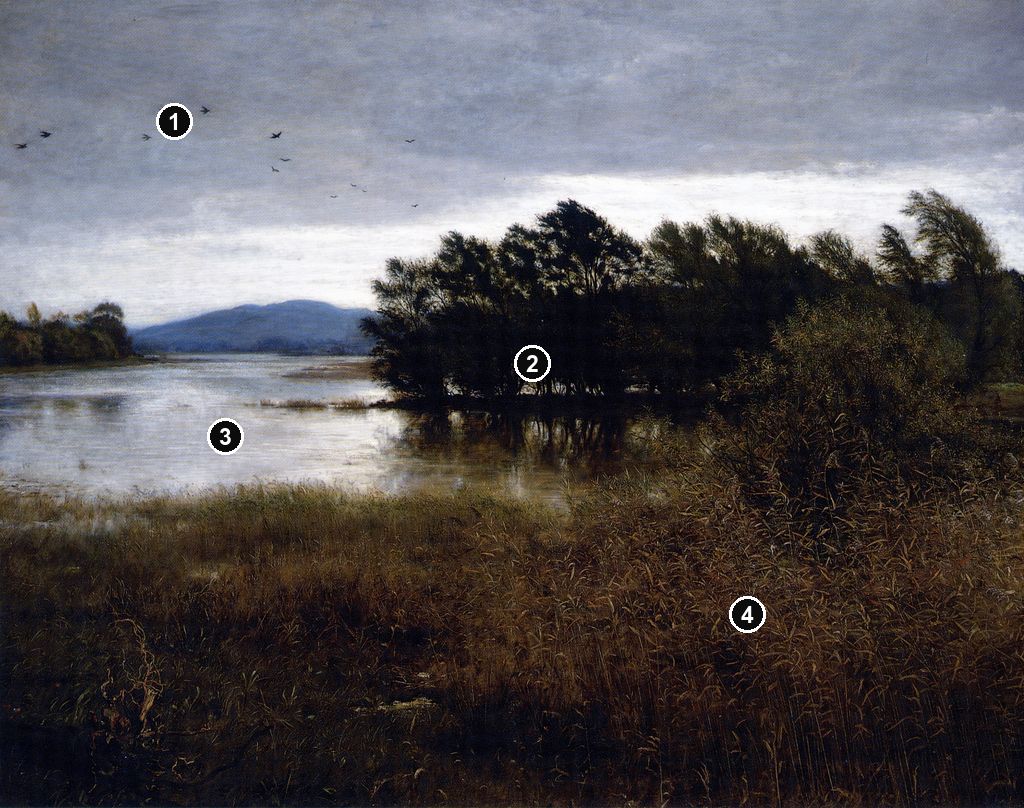
Details from CHILL OCTOBER
Compare the cropped details with the source images above. Notice how their colours, shapes and positions contribute to the larger compositions.
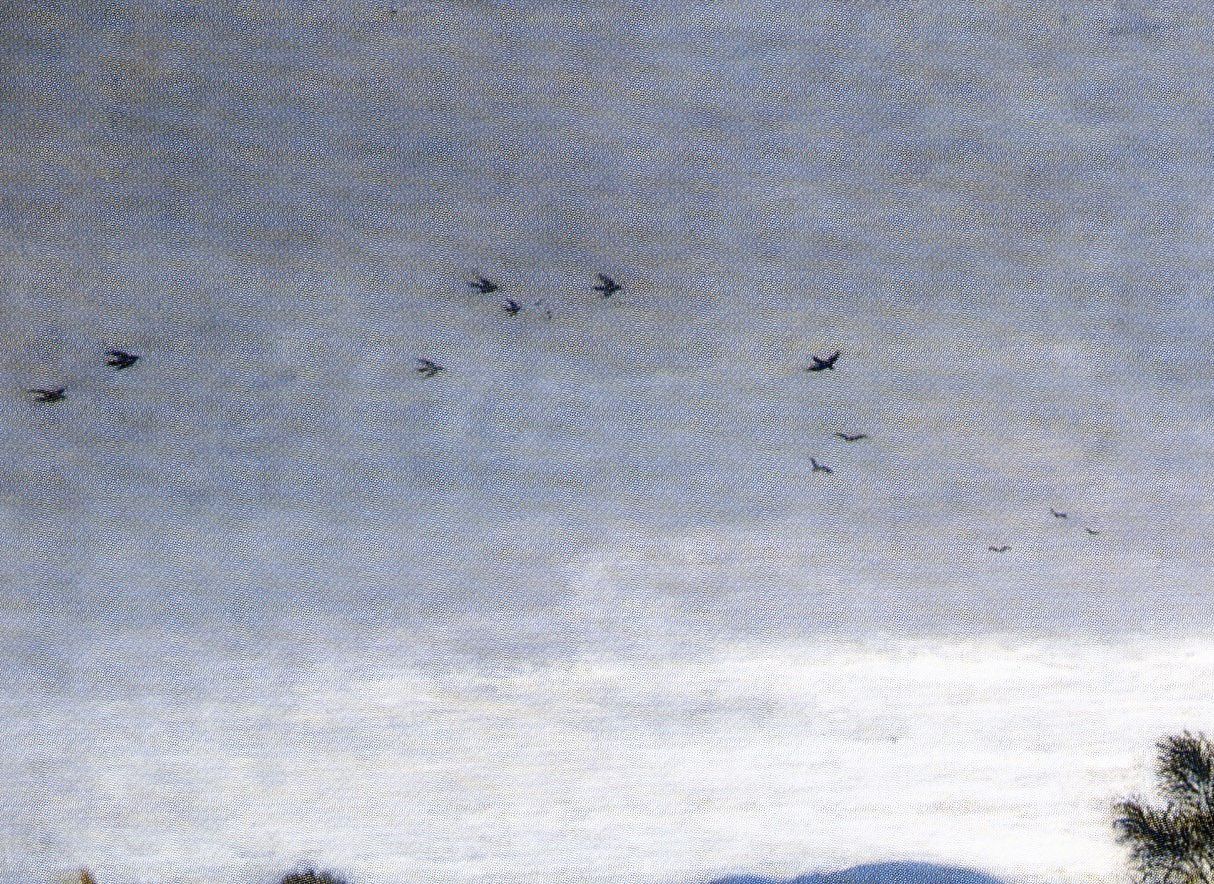
Birds in the open sky
The small flock makes the open sky feel deeper. Its scattered dark shapes lead towards the far bank.
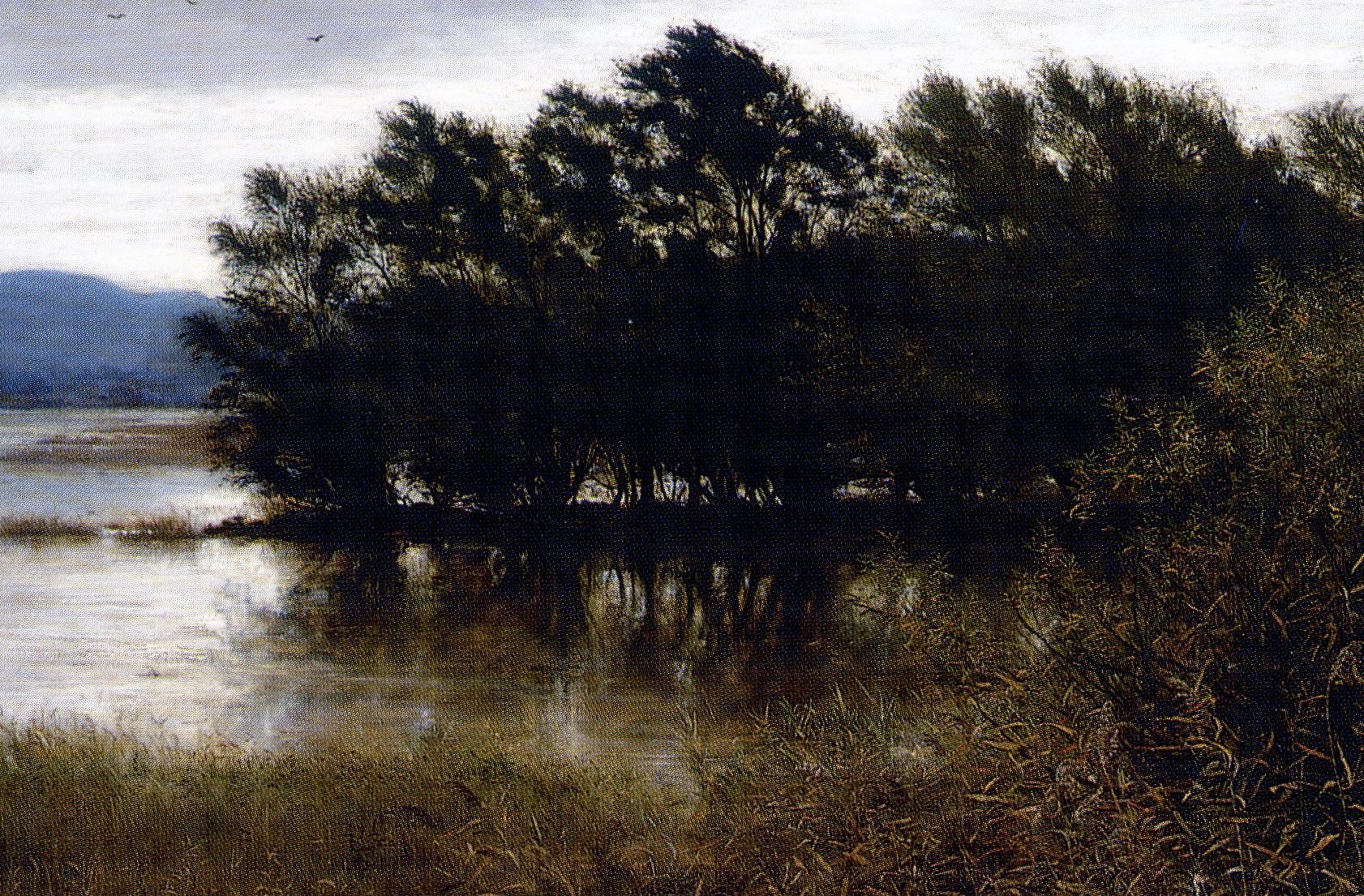
Trees and their reflections
The wind-bent trees form a dense silhouette behind the water. Their reflections break into darker, shorter marks below the bank.
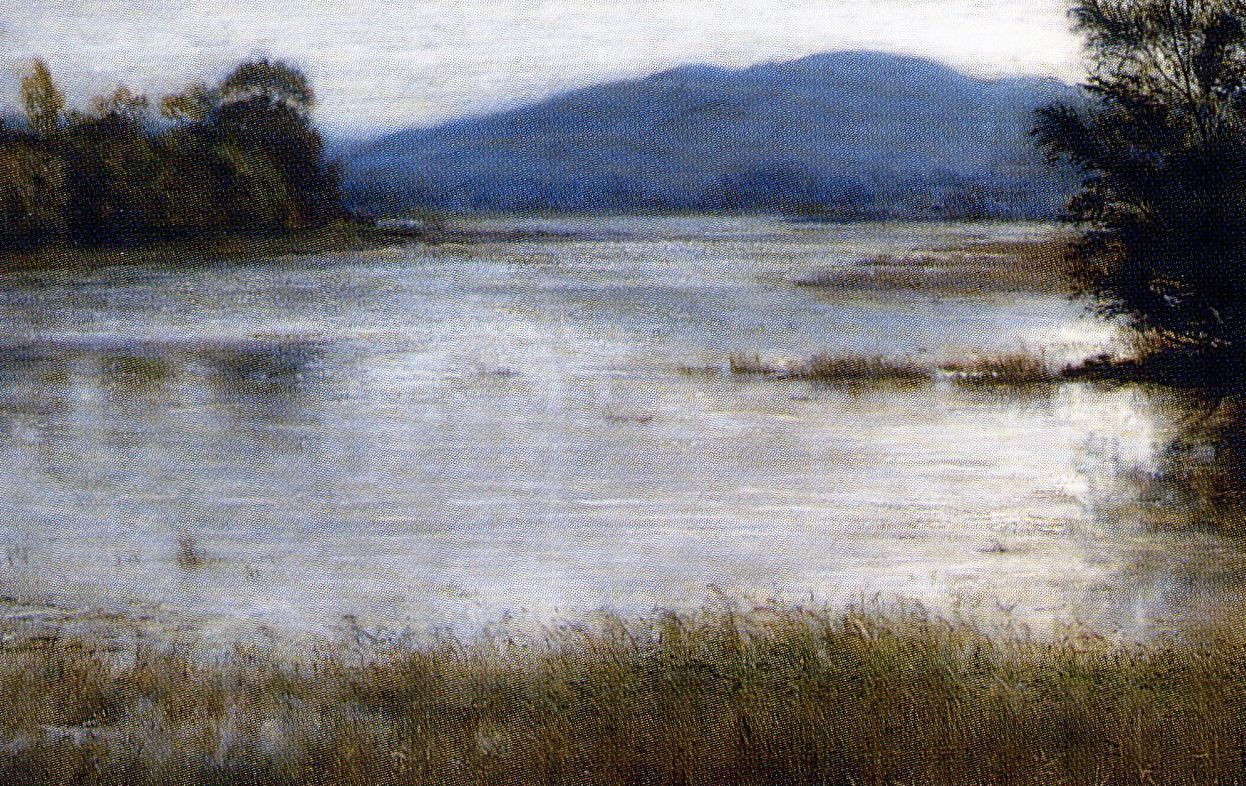
The far opening of the water
The water bends back towards a low ridge. The left side stays open while the trees close in on the right.
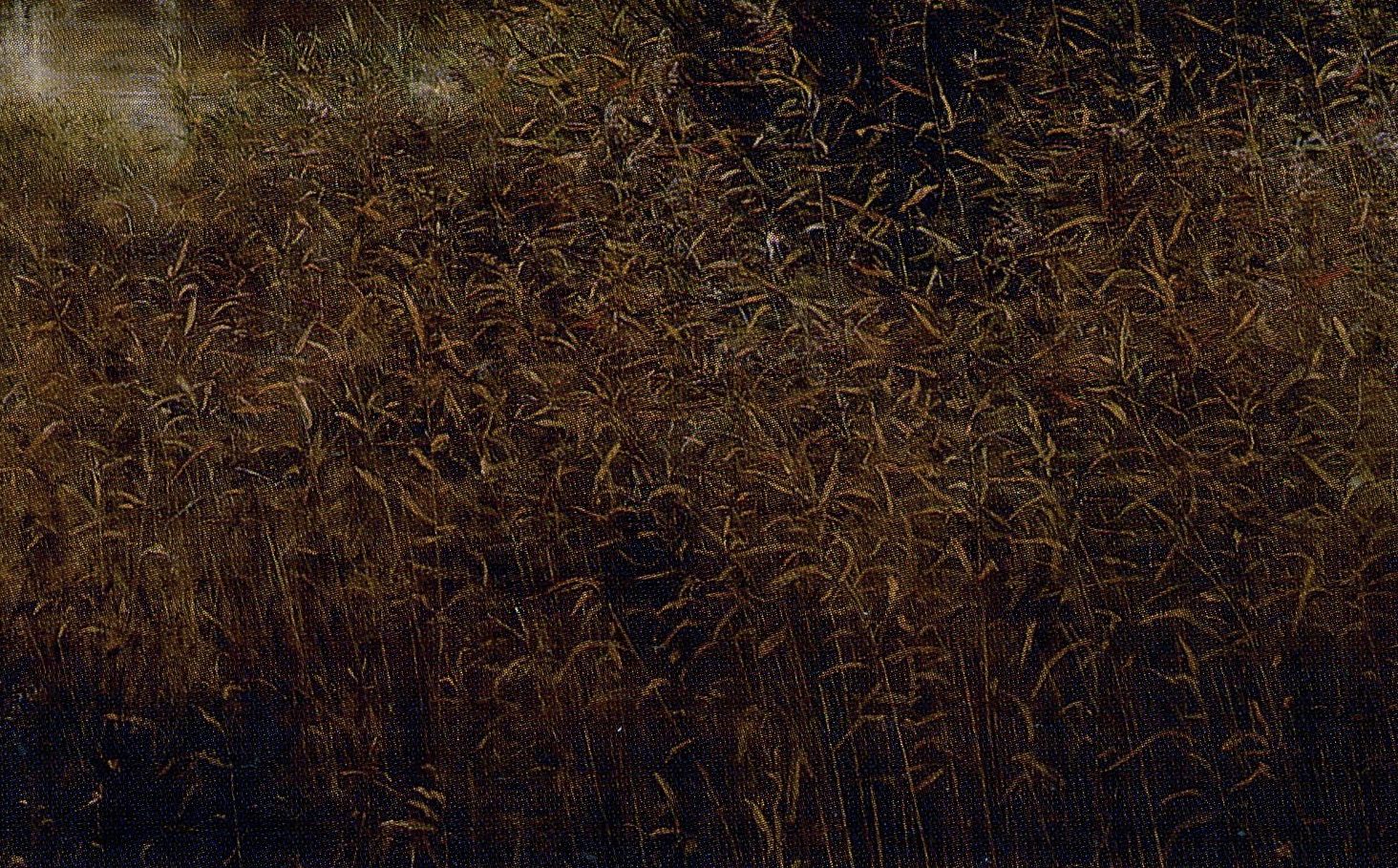
Grasses on the near bank
Fine, raised stems break across the foreground. They make the edge of the water feel less solid against the broad, cool surface behind.
John Everett Millais artwork directory
Browse paintings and drawings covered in these articles, including related works held in public collections. Reproductive engravings and editions are discussed on the Prints page.
Prints and illustrated editions
- The Baby-House, 1872. Etching by Millais.
- The Good Shepherd, 1864. Wood engraving designed by Millais, engraved and printed by the Dalziel Brothers.
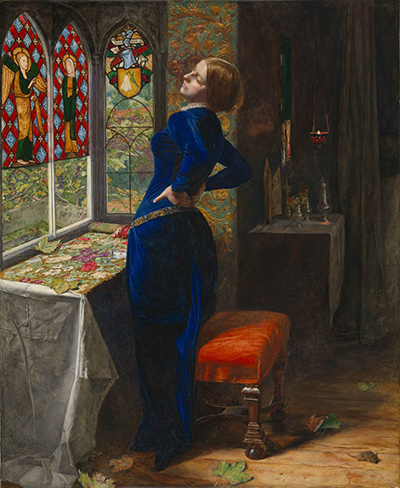
- Mariana, 1857. Wood engraving designed by Millais and cut by the Dalziel Brothers for the Moxon Tennyson.
- The Proscribed Royalist, 1858. Mixed-method engraving by William Henry Simmons after Millais.
| Name | Date | Medium |
|---|---|---|
| Pizarro Seizing the Inca of Peru | 1846 | Painting |
| The Young Men of Benjamin Seizing Their Brides | 1847 | Painting |
| Isabella | 1848–49 | Painting |
| Christ in the House of His Parents (‘The Carpenter’s Shop’) | 1849–50 | Painting |
| Ferdinand Lured by Ariel | 1849–50 (monogram dated 1849) | Painting |
| Study for Christ in the House of His Parents, Tate N04623 | c. 1849 | Drawing |
| Study for Christ in the House of His Parents, Tate N04792 | c. 1849 | Drawing |
| Study for Mariana in the Moated Grange | 1850 | Drawing |
| A Huguenot, on St Bartholomew’s Day, Refusing to Shield Himself from Danger by Wearing the Roman Catholic Badge | 1851–52 (exhibited 1852) | Painting |
| Mariana | 1851 | Painting |
| Ophelia | 1851–52 | Painting |
| The Bridesmaid | 1851 | Painting |
| The Return of the Dove to the Ark | 1851 | Painting |
| The Order of Release 1746 | 1852–53 | Painting |
| The Proscribed Royalist, 1651 | 1852–53 (exhibited 1853) | Painting |
| Portrait of John Ruskin | 1853–54 | Painting |
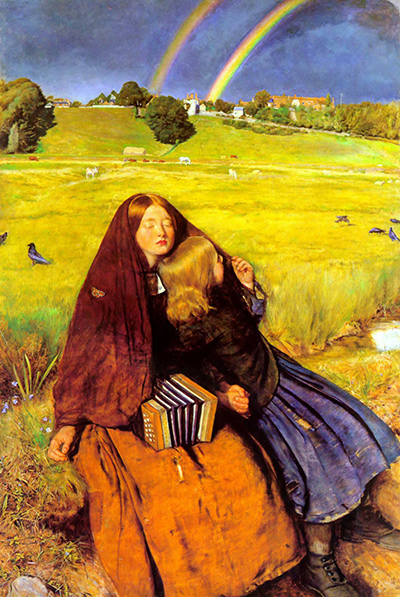
| The Blind Girl | 1854–56 | Painting |
| Autumn Leaves | 1855–56 (Manchester labels 1856) | Painting |
| A Dream of the Past: Sir Isumbras at the Ford | 1856–57, later revised | Painting |
| The Vale of Rest | 1858–59 | Painting |
| Study for The Black Brunswicker, Tate A00812 | c. 1860 | Drawing |
| Study for The Black Brunswicker, Tate A00813 | c. 1860 | Drawing |
| Study for The Black Brunswicker, Tate A00814 | c. 1860 | Drawing |
| The Black Brunswicker | 1860 | Painting |
| The Ransom | 1860–62 | Painting |
| My First Sermon | 1863 | Painting |
| My Second Sermon | 1864 | Painting |
| Joan of Arc | 1865 | Painting |
| Chill October | 1870 (exhibited 1871) | Painting |
| The Boyhood of Raleigh | 1870 | Painting |
| The Knight Errant | 1870 | Painting |
| Hearts are Trumps | 1872 | Painting |
| The North-West Passage | 1874 | Painting |
| Louise Jane Jopling | 1879 | Painting |
| William Ewart Gladstone, NPG 3637 | 1879 | Painting |
| Bubbles | 1886 | Painting |
| Portia | 1886 | Painting |
| Dew-Drenched Furze | 1889–90 | Painting |
| Ducklings | 1889 | Painting |
| Portrait of Sarah Hammond | 1891 | Painting |
Discussion
Look again at the images and ideas explored in Chill October. These editorial prompts invite your observations.
Reader Insights
Where does the wind become visible even though you can only see the land, water and sky?
Compare the horizon with the riverbank in Ophelia. What different kind of space does each painting give you?
Join the Conversation
Share a detail, comparison or question about Chill October below.
References
- Royal Academy of Arts, Exhibition of Works by the Late Sir John Everett Millais, Winter Exhibition, 1898, p. 35, cat. 108. View source.
- Rosenfeld, Jason, “Millais in the 1860s.” In The Wolf’s Den, Martin Beisly Fine Art, 2020, fig. 9. View source.
- Helmreich, Anne, “1871: The Year of Modern Landscape.” In The Royal Academy of Arts Summer Exhibition: A Chronicle, 1769–2018, Paul Mellon Centre for Studies in British Art, 2018. View source.
- Millais, John Guille, The Life and Letters of Sir John Everett Millais. London, Methuen, 1899, vol. II, pp. 28–29. View source.
- Jamie, Kathleen, “Poetic Encounters: Millais’s Chill October.” Tate Etc., no. 11, 1 September 2007. View source.
- Grosvenor Gallery, Exhibition of the Works of Sir John E. Millais, 1886, pp. 24–25, cat. 21. View source.
- Melville, Jennifer, John Forbes White and George Reid: Artists and Patrons in North-East Scotland 1860–1920. PhD thesis, University of Edinburgh, 2000, pp. 61–63. View source.
- Royal Scottish Academy, The Royal Scottish Academy, 1826–1916, Glasgow, James Maclehose and Sons, 1917, p. 273, 1873 catalogue entry 431. View source.
- Newcastle University, Co-Curate, “Cragside,” house and collection history. View source.
- Story, William Wetmore, “Fine Arts.” In Reports of the United States Commissioners to the Paris Universal Exposition, 1878, vol. II, p. 51. View source.
- National Trust Collections, Chill October, print after Alfred-Louis Brunet-Debaines, Cragside, NT 1226560.1. Collection and provenance record, updated 3 October 2021. View source.
- Brown, Mark, “Best Art Exhibitions of 2012, No 10 – Pre-Raphaelites: Victorian Avant-Garde.” The Guardian, 10 December 2012. View source.
- Van Gogh, Vincent, Letter to Theo van Gogh, Amsterdam, 15 July 1877, no. 122 in the Van Gogh Museum and Huygens Institute edition. View source.
- Van Gogh, Vincent, Letter to Anthon van Rappard, The Hague, 28 May 1882, no. 232. Van Gogh Museum and Huygens Institute. View source.
- Van Gogh, Vincent, Letter to Theo van Gogh, The Hague, on or about 21 July 1882, no. 249. Van Gogh Museum and Huygens Institute. View source. (in Dutch).
- Van Gogh, Vincent, Letter to Theo van Gogh, Nuenen, early August 1884, no. 456 in the modern edition. In Brieven aan zijn broeder, edited by Jo van Gogh-Bonger, vol. II, pp. 423–24. View source. (in Dutch).