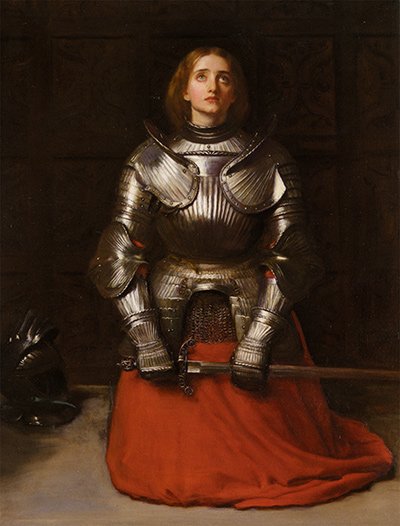
 by Tom Gurney
Tom Gurney BSc (Hons) is an art history expert with over 20 years experience
Published on June 19, 2020 / Updated on November 25, 2026
Email: tomgurney1@gmail.com / Phone: +44 7429 011000
John Everett Millais Prints: Introduction
In John Everett Millais’s etching The Baby-House, two girls sit beside a doll’s house, their dark skirts standing out against a room drawn with a few spare lines. In The Good Shepherd, the Dalziel Brothers cut Millais’s drawing into a woodblock, bringing out everything from a lion’s mane to the contours of distant hills. Both prints carry Millais’s designs, but the catalogue credits tell different stories about how the images reached paper. A third kind of print begins with one of his finished paintings, as James Stephenson’s engraving after Ophelia did. [1] [2] [3]
At a Glance
- EtchingThe Baby-House, 1872 [1]
- Book illustrationWood engravings for the Parables, engraved and printed by the Dalziel Brothers [2][4][5]
- Print after a paintingJames Stephenson’s Ophelia proof, 1866 [3]
Contents
- Millais’s own etchings
- The Dalziel Brothers and the Parables
- Books, poems and serial fiction
- Prints made after paintings
- When reproduction became advertising
- Annotated details
Millais’s own etchings
An etcher draws through a protective ground on a metal plate. Acid bites the metal exposed by the drawing, leaving grooves that hold ink. A press forces damp paper against the plate to take up the ink. The pressure can leave a shallow impression of the plate’s edge around the image. Artists can prepare their own plates and entrust the printing to someone else. A publisher’s name on a folio tells us who brought the work to readers and collectors. [6]
Millais’s The Young Mother appeared in the Etching Club’s 1857 folio for the Art Union of London. The National Gallery of Victoria and the Delaware Art Museum hold separate impressions. Delaware locates the scene in the Scottish Highlands and relates it to Millais’s growing family. Art historian Jason Rosenfeld identifies the mother and baby as his wife Effie and their first child, Everett. A private moment thus became an image issued in a folio alongside other artists’ work. [7] [8] [9]
Fifteen years later, The Baby-House appeared in another Etching Club folio for the Art Union. Rosenfeld identifies the girls as Millais’s daughters Carrie and Sophie. One sits high on a chair with her head bent over her hands. The other holds a doll on the floor. Between them, the windows of the doll’s house stand at roughly the height of the younger child’s head. Closely worked lines darken the skirts and the space behind the younger girl. The lighter marks above the toy suggest a much larger room with barely a trace of the wall that encloses it. [1] [9] [10]
The Washington impression is catalogued as etching on chine appliqué. A thin paper carrying the print is bonded to a sturdier backing sheet. The plate measures 14.5 by 18.5 centimetres, while the full sheet is 26 by 36.5 centimetres. A reproduction cropped to the picture and its inscriptions can therefore make the object look smaller than the sheet actually is. The Met describes its own impression as etching and drypoint, a process that scratches directly into the metal. That difference in catalogue wording is worth preserving when comparing the two sheets. [1] [10] [11] [12]
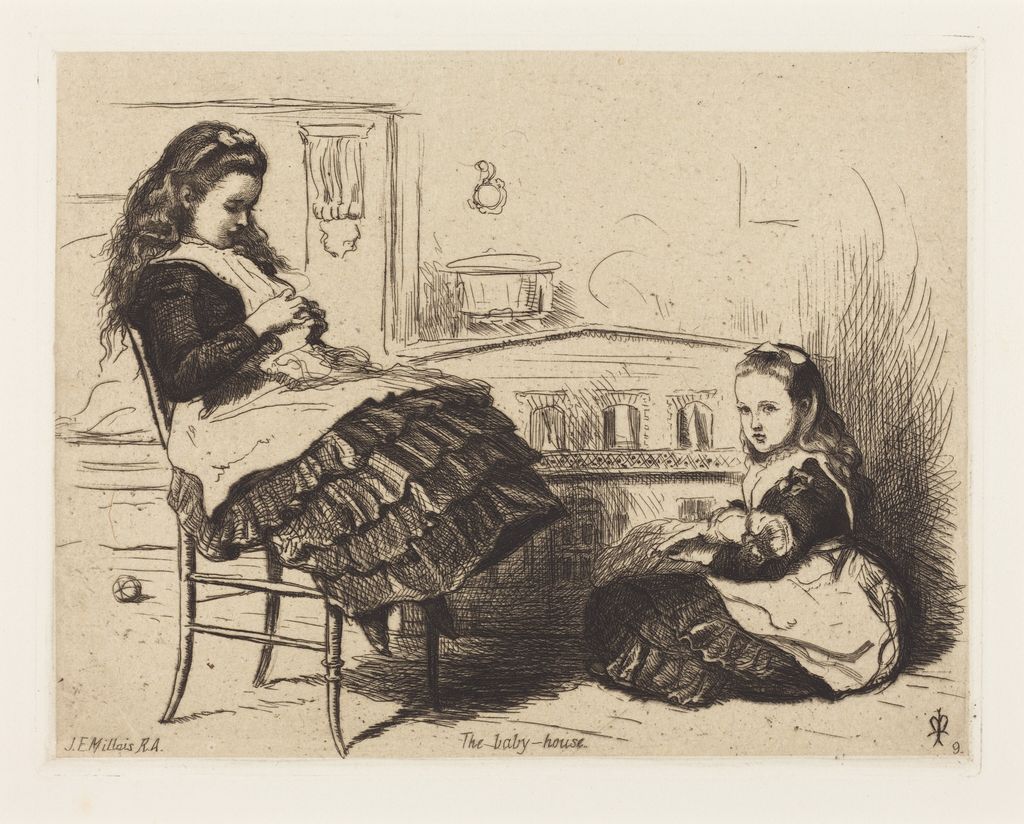
John Everett Millais, The Baby-House, 1872. Etching on chine appliqué. National Gallery of Art, Washington, Ailsa Mellon Bruce Fund, 1983.36.1. Image source. Public domain.
The Dalziel Brothers and the Parables
Wood engraving used a different principle. The engraver cut away areas of a hard woodblock that would print white. The raised surface took the ink. Because movable type also printed in relief, text and image could go through the press together. That made wood engraving a practical choice for periodicals as well as for illustrated books. Even when an illustration appeared on its own page, its fine lines depended on how an engraver interpreted marks originally made in pencil or ink. [4] [13]
The Dalziel Brothers commissioned Millais to design illustrations for the New Testament parables in 1857. The project began with a plan for thirty drawings and yielded twenty. Millais told the Dalziels that he repeatedly redrew the subjects before settling on a composition. He transferred the designs to blocks coated with Chinese white. The Dalziels cut and printed the blocks, and Millais reviewed proofs so the image could be adjusted. The brothers’ workshop employed many engravers. The firm’s credit identifies who was responsible for the work without assigning any given cut to an individual hand. [2] [4] [5]
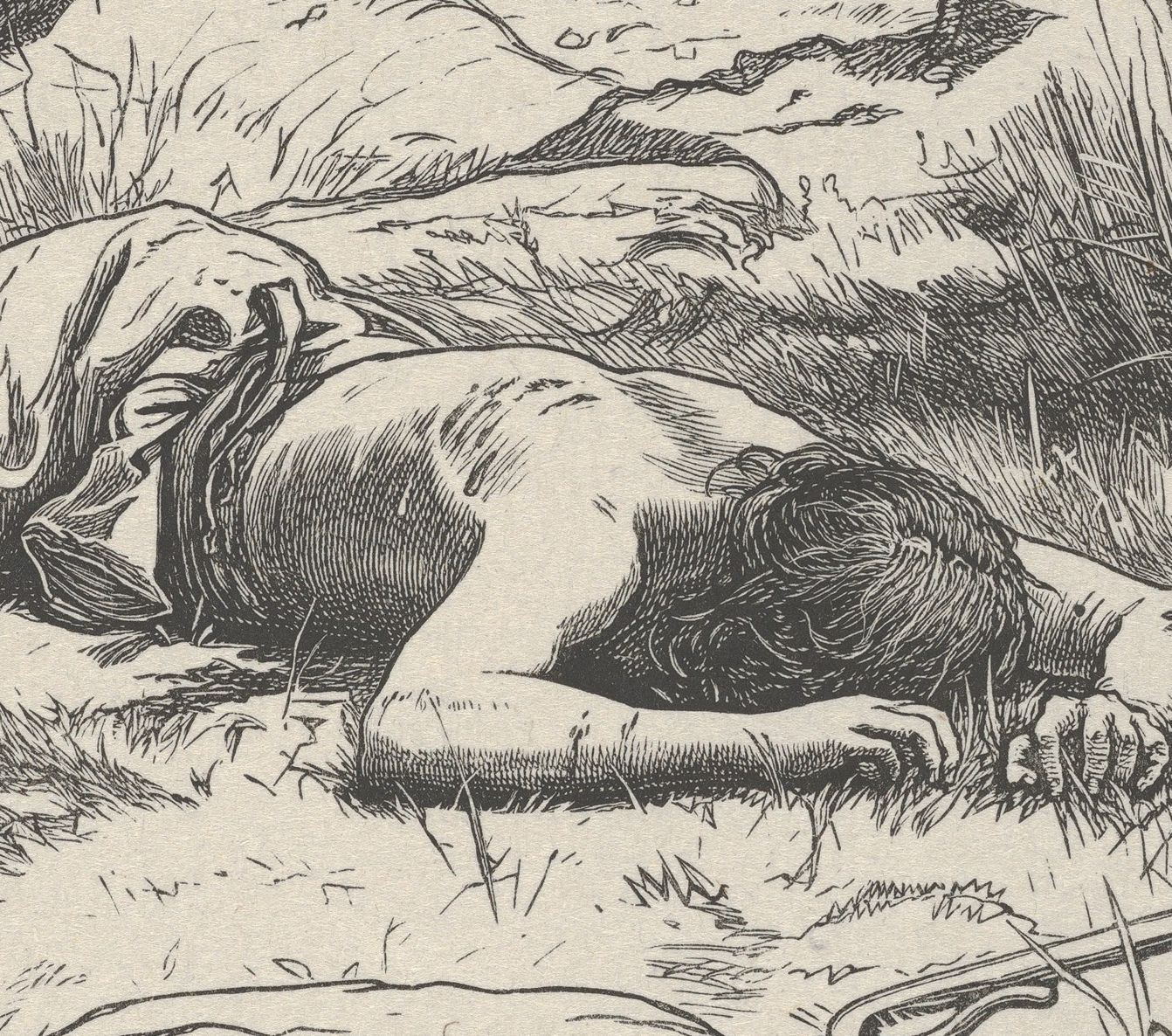
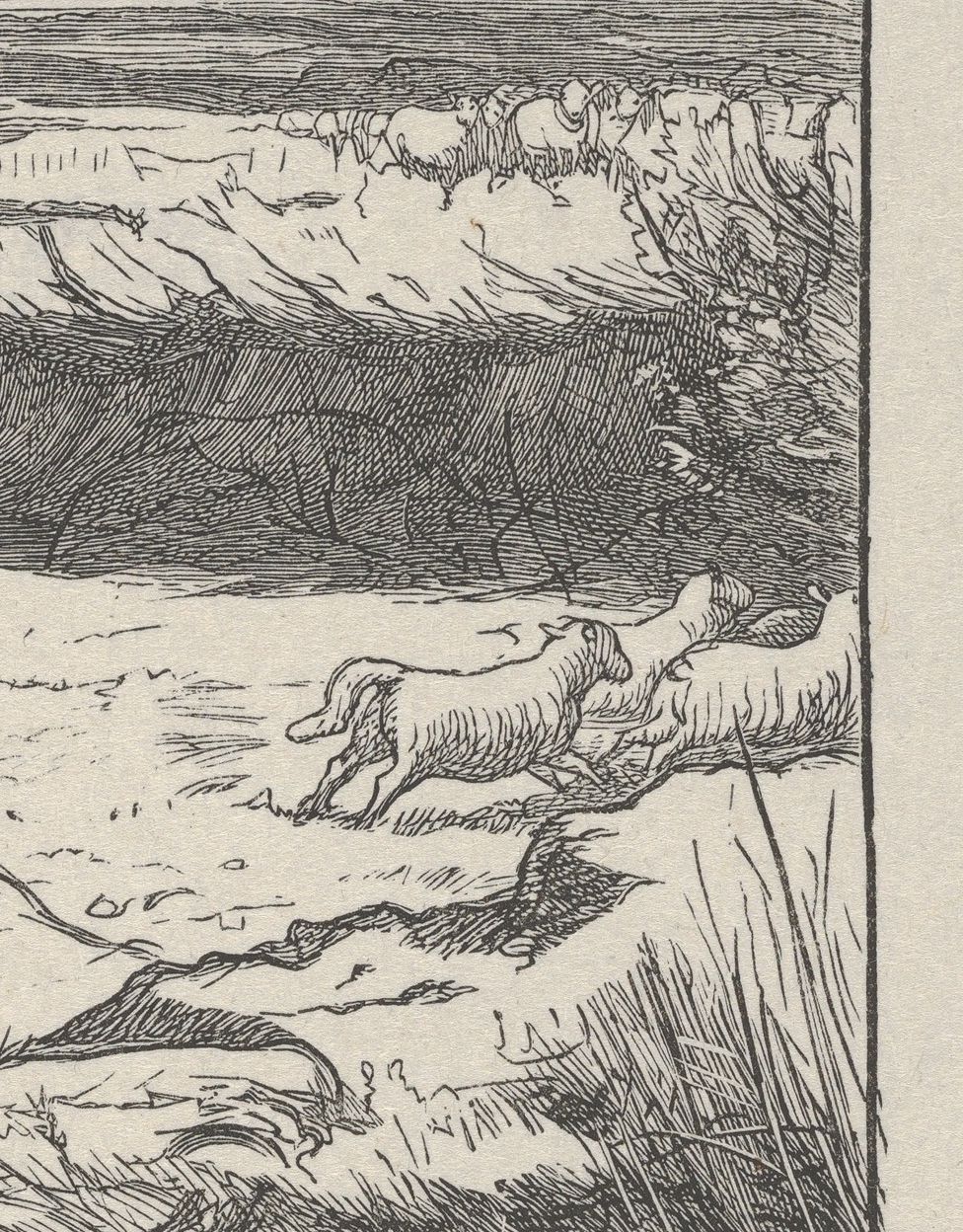
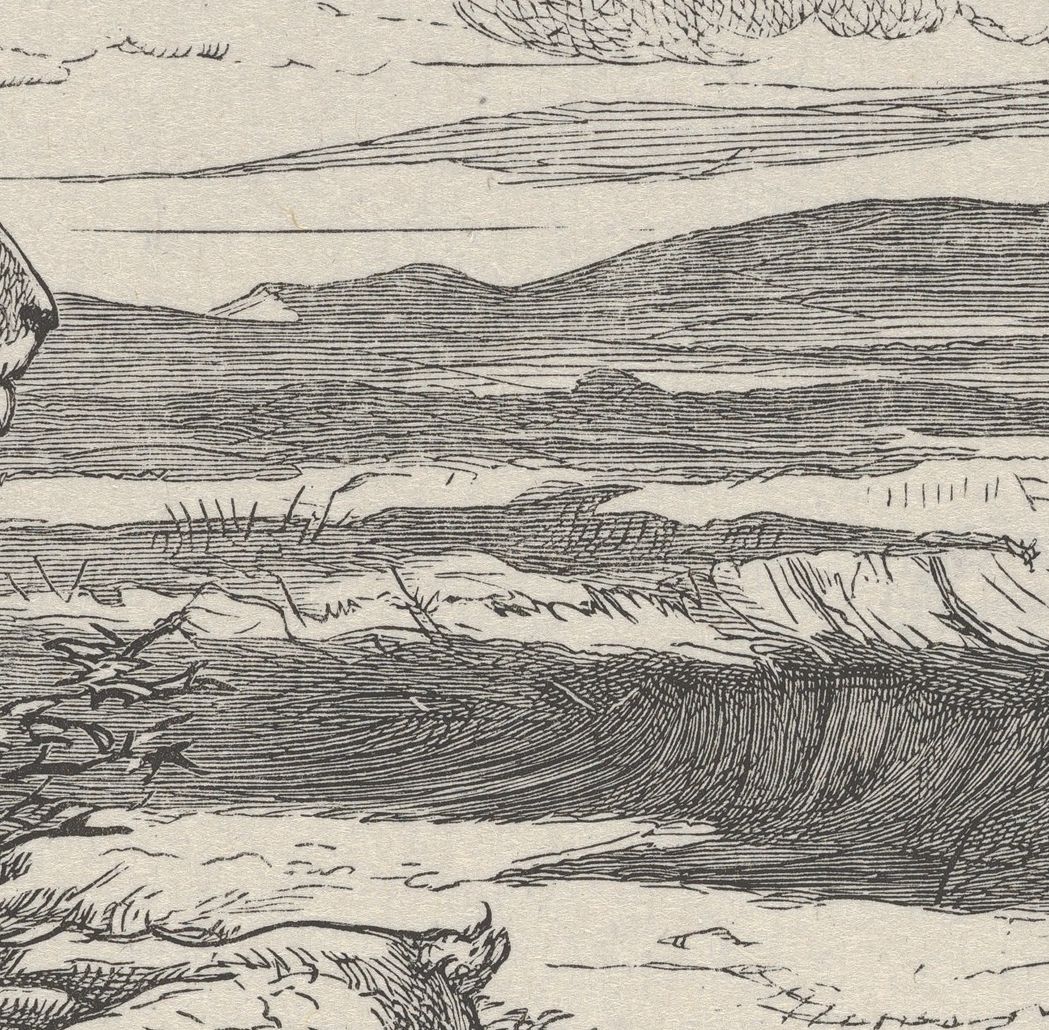
In the Met’s 1864 proof of The Good Shepherd, a man lies face down across the foreground. A lion’s head rises above the thorny plants to the left, while sheep run towards the right. The shepherd’s body stretches almost the full width of the image. Above him, the fine contours of cloud and hill leave generous room for the sky. In John’s Gospel, the good shepherd lays down his life for his sheep. Millais makes that idea visible through the vulnerable body on the ground, the fleeing flock and the nearby predator. The cuts in the block give that encounter its particular textures, from the lion’s rippling mane to the longer, nearly horizontal lines of the landscape. [2]
The same series survives in several forms. Twelve illustrations appeared in Good Words, Once a Week and The Cornhill Magazine in 1862 and 1863. The Met’s Routledge, Warne & Routledge volume is catalogued under 1864. In that copy, red cloth and gold stamping frame twenty illustrations placed between the printed leaves. The Morgan Library holds a separate proof on India paper of The Pearl of Great Price, dated tentatively to 1863. The Met also holds a privately issued collection of proofs and Millais’s letters to the Dalziels, catalogued across 1864–1902. In Japan, the Koriyama City Museum of Art dates its own book of twenty India-paper proofs to 1902. The dates describe particular publications and sheets. They tell us when an image appeared in print or was assembled into a volume, in addition to when Millais developed the design. [5] [14] [15] [16]
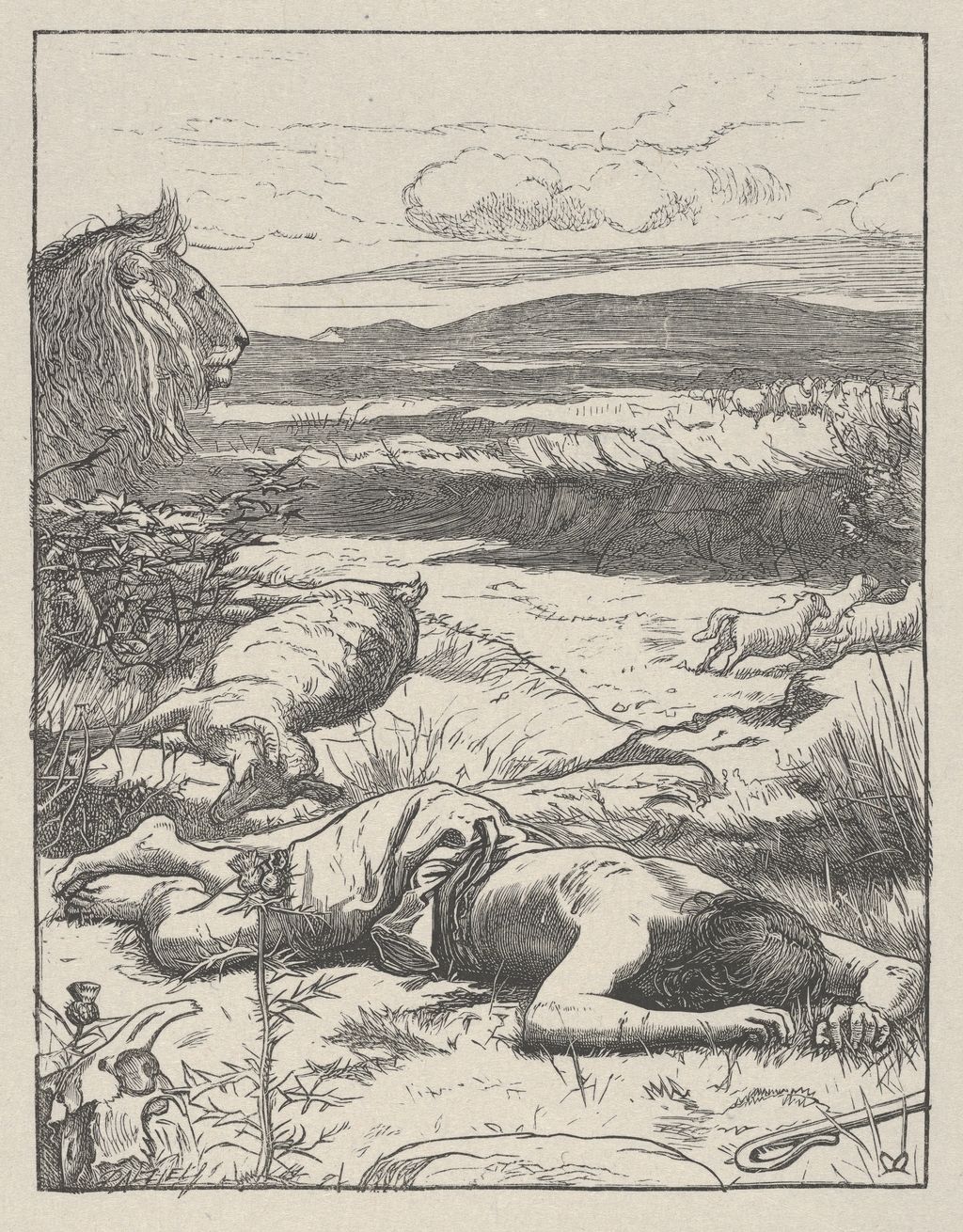
John Everett Millais, design, engraved and printed by the Dalziel Brothers. The Good Shepherd, 1864, wood-engraved proof. Metropolitan Museum of Art, Rogers Fund, 1921, 21.68.4(20). Image source. CC0 / Public domain.
Books, poems and serial fiction
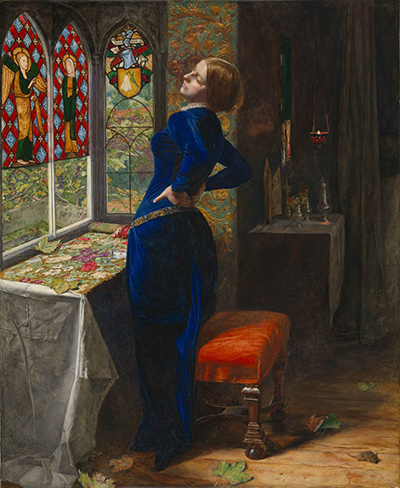
Millais’s design for Tennyson’s The Talking Oak first appeared in Edward Moxon’s 1857 edition of the poet’s work. The Met credits John Thompson as engraver and records that the image was recut for an 1866 edition and printed again in New York in 1903. A reader might encounter the same composition across decades and on different sides of the Atlantic. Edition details tell us which encounter a particular sheet records. The illustrated Tennyson also included a wood engraving of Mariana by the Dalziels after a Millais design. Millais had already painted the subject. In the book, Tennyson’s verse supplies the setting as the reader moves between words and image. Tennyson took an interest in the pictures. In his account of an 1854 visit, he noted that Millais had agreed to use the poet’s young son Hallam as a model for the illustration to Dora, another poem in the volume. The source for that picture included a living sitter as well as the words that accompanied it. [17] [18]
Millais found a different audience in the weekly Once a Week. His illustration for Tom Taylor’s Magenta appeared in the first issue on 2 July 1859. Taylor sets public celebrations following the battle against the grief of a woman whose loss goes unacknowledged by the crowd. Two weeks later the magazine printed Millais’s illustration for Tennyson’s The Grandmother’s Apology. Its domestic subject is the speaker’s long recollection of family life, addressed to her granddaughter. Across the two poems, interiors hold very different kinds of private experience. In the magazine, the drawings invite a reader to pause over the people in those rooms as they begin to read. [19] [20]
The first bound volume of The Cornhill Magazine, covering January to June 1860, includes illustrations by Millais and Frederick Sandys and engraving credits for the Dalziel Brothers, William James Linton and Joseph Swain. The Met catalogues the February illustration for Unspoken Dialogue separately and names Millais and the Dalziels. A surviving leaf can give even more specific information. The Fitzwilliam Museum’s The Board, cut from the June 1863 Cornhill, faced page 756 in Anthony Trollope’s The Small House at Allington. Millais’s monogram and the Dalziel signature are both printed within the image. [21] [22] [23]
Trollope’s Orley Farm came out in twenty monthly parts between March 1861 and October 1862. Each part carried two illustrations that were subsequently included in the book. For the serial reader the pictures appeared in pairs, spaced a month apart. A reader with the bound novel could turn back to an earlier scene and see a character in two situations within minutes. Trollope was especially fond of Millais’s illustrations to this novel, as he recorded in his autobiography. In 1933 the Dutch printmaker S. Moulijn singled out the apparent ease of Millais’s line in a survey of English wood engravings at the Gemeentemuseum in The Hague. The surviving parable proofs and letters show how much care could lie behind that appearance of ease. [2] [24] [25] [26]
The illustrations also became a subject for collectors in their own right. Alexander Strahan’s 1866 Millais’s Illustrations: A Collection of Drawings on Wood brought together eighty designs from various sources. The Met describes one copy in green cloth with a gold-stamped title and gilded page edges. The repackaging gave readers a way to follow a single illustrator across several texts. The catalogue also records the engravers, among them the Dalziel Brothers and Joseph Swain. [27]
Prints made after paintings
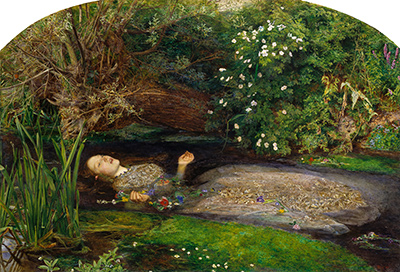
James Stephenson’s 1866 proof after Ophelia translates a painted riverbank into tones and marks made on a plate. Mezzotint can produce a deep black from the roughened surface of a plate, with lighter tones emerging wherever the surface is smoothed. Stipple uses dots to build tone. Stephenson used both processes alongside etching. The silvery decoration on Ophelia’s dress still catches the eye among the leaves and flowers despite the loss of painted colour. The Met’s proof, printed on chine collé, is dated 1 March 1866. The oil painting had already been exhibited in 1852. [3] [28]
William Henry Simmons used a similar combination of techniques after The Proscribed Royalist. In the Met’s proof, dated 15 January 1858, light glances off the young woman’s skirt in smooth, bright folds. It breaks into irregular patches on the bark of the oak beside her. The hiding man’s face emerges from a deep hollow, easily missed before one traces her hand to his lips. Simmons’s control of texture and tonal contrast allows the woman’s pale collar and sideways look to draw the eye through the crowded woodland. Princeton holds another version of the composition, an albumen photograph catalogued to around the 1850s or 1860s. Its process is clearly identified. The museum record leaves open exactly which object the photographer used. [29] [30]
An etching after a self-portrait shows how easily the subject’s name and the printmaker’s can be confused. In the impression held by the Kunsthalle Bremen, Millais’s name appears inside the picture. The French pencil inscription below it identifies the source as a likeness by Millais himself, and the signature inside the image credits Charles Albert Waltner with the print. The museum records etching and aquatint among Waltner’s techniques. Aquatint can build areas of tone across an etched plate. Here the painted likeness is Millais’s, and the work of translating it into print is Waltner’s. [31] [32]
Publishers also had to decide which paintings could justify the cost of a new plate. In an April 1851 letter to Thomas Combe, Millais put the expected cost of engraving The Return of the Dove to the Ark at nearly £500. He was prepared to waive payment for the reproduction rights and wanted to approve the choice of printmaker. As historian Robert Verhoogt notes, the project discussed in the letter did not result in a published engraving. The letter shows the negotiations that could lie behind otherwise straightforward credits for painter, engraver and publisher. [33] [34]
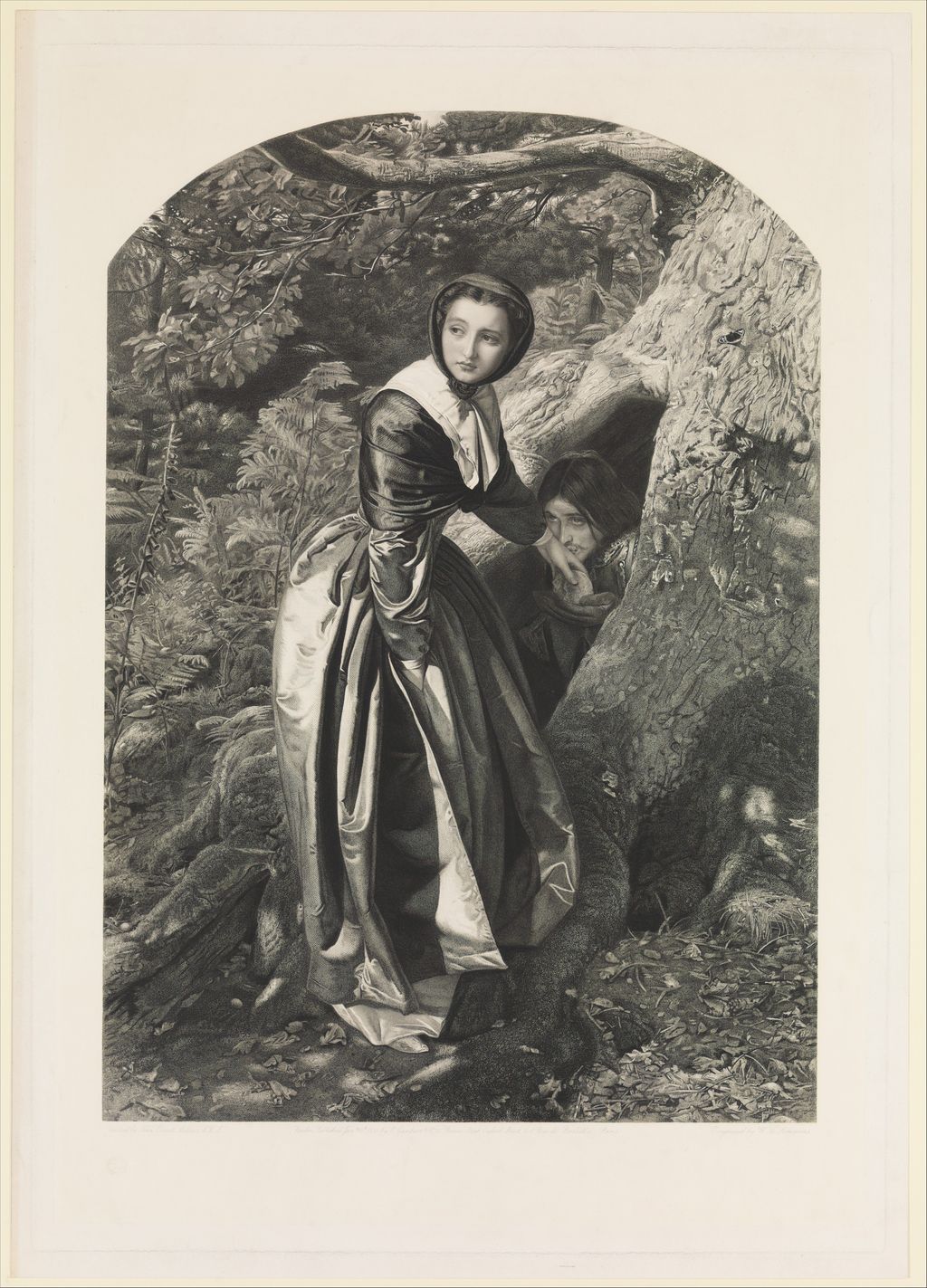
William Henry Simmons after John Everett Millais, The Proscribed Royalist, 1858. Mixed-method engraving on chine collé. Metropolitan Museum of Art, 49.40.209. Image source. CC0 / Public domain.
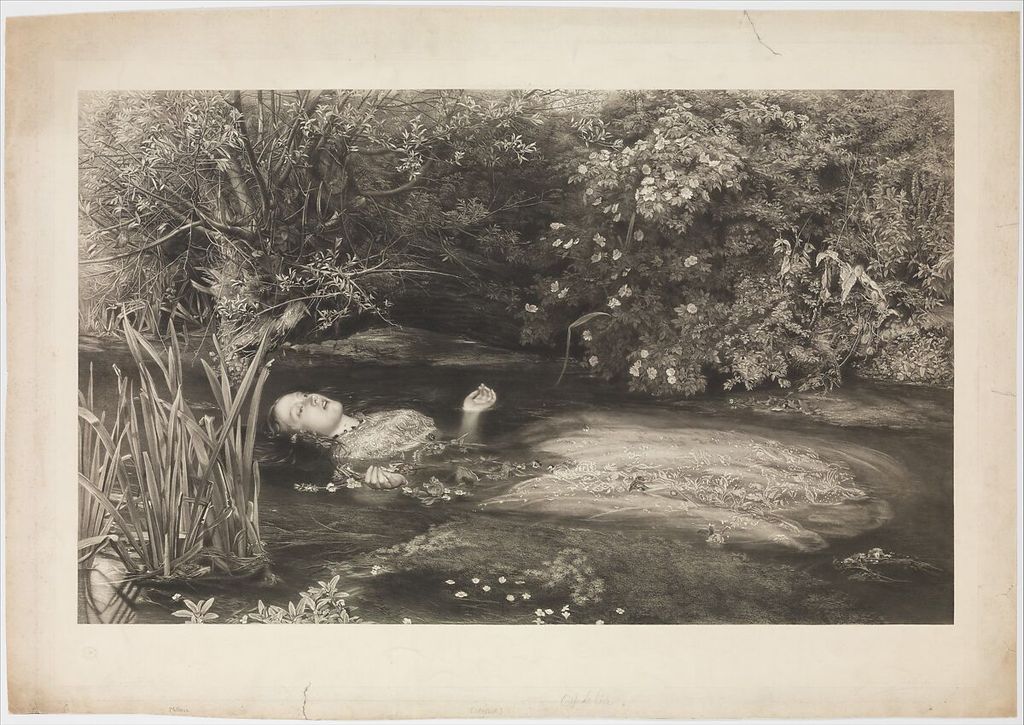
James Stephenson after John Everett Millais, Ophelia, 1866. Mezzotint, etching and stipple on chine collé, proof. The Metropolitan Museum of Art, 49.40.282. The full impression retains the margins around the scene and the image extends the dress into the stream through a range of dark tones. Image source. CC0 / Public domain.
When reproduction became advertising
A further transformation is visible in prints after Bubbles. The Victoria and Albert Museum holds a Pears Soap advertisement proof that it tentatively dates to about 1888 or 1889. The record identifies it as a chromolithograph, a print made by colour lithography. A bar of soap was added to the scene and the company’s name made the branding explicit. The monogram and 1886 date refer to the picture reproduced in the advertisement. [35]
The monochrome Pears advertisement in the company’s 1912 centenary edition of Charles Dickens’s The Battle of Life is a separate publication. Here the brand dominates the top of the page. The initial letter drops down beside the child’s head, and the large bubble floats among the letters at precisely the point to which he looks. By following his gaze, the reader is led to the product name. Setting the advertisement next to Simmons’s Proscribed Royalist shows how differently a print could put a Millais composition to use. One invites the viewer to discover what a figure is trying to conceal, while the other draws the eye to the advertiser’s name. [29] [35] [36]
Prints preserve clues to their making outside the image as well as within it. The title and number on The Baby-House point to a folio. The two names in The Board record separate contributions to a single design. The 1866 date on the Ophelia catalogue record belongs to the proof, while the date reproduced inside a Pears advertisement belongs to the underlying image. Reading those details alongside the subject offers a way to tell Millais’s original printmaking, his illustration work and the afterlife of his paintings apart. [1] [3] [10] [23] [35]
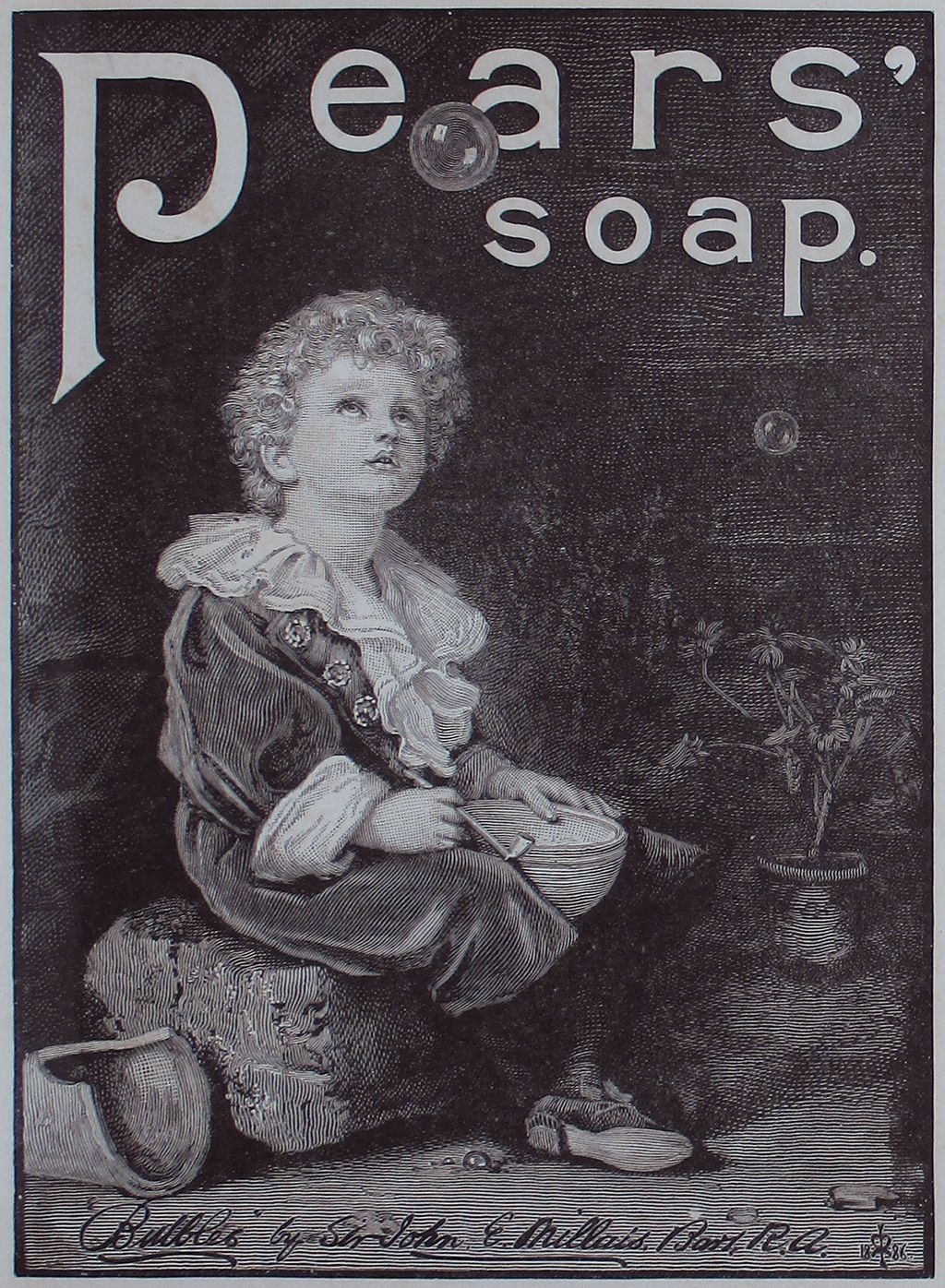
Pears soap advertisement after John Everett Millais’s Bubbles, from the 1912 Pears centenary edition of Charles Dickens’s The Battle of Life. The branded print uses the child and bubbles as part of an advertising design. Image source. Public domain.
Annotated Details from The Good Shepherd
The numbered points identify visible features discussed in this article. Return from each detail to the numbered overview. John Everett Millais, design, engraved and printed by the Dalziel Brothers. The Good Shepherd, 1864, wood-engraved proof. Metropolitan Museum of Art, Rogers Fund, 1921, 21.68.4(20). Image source. CC0 / Public domain.
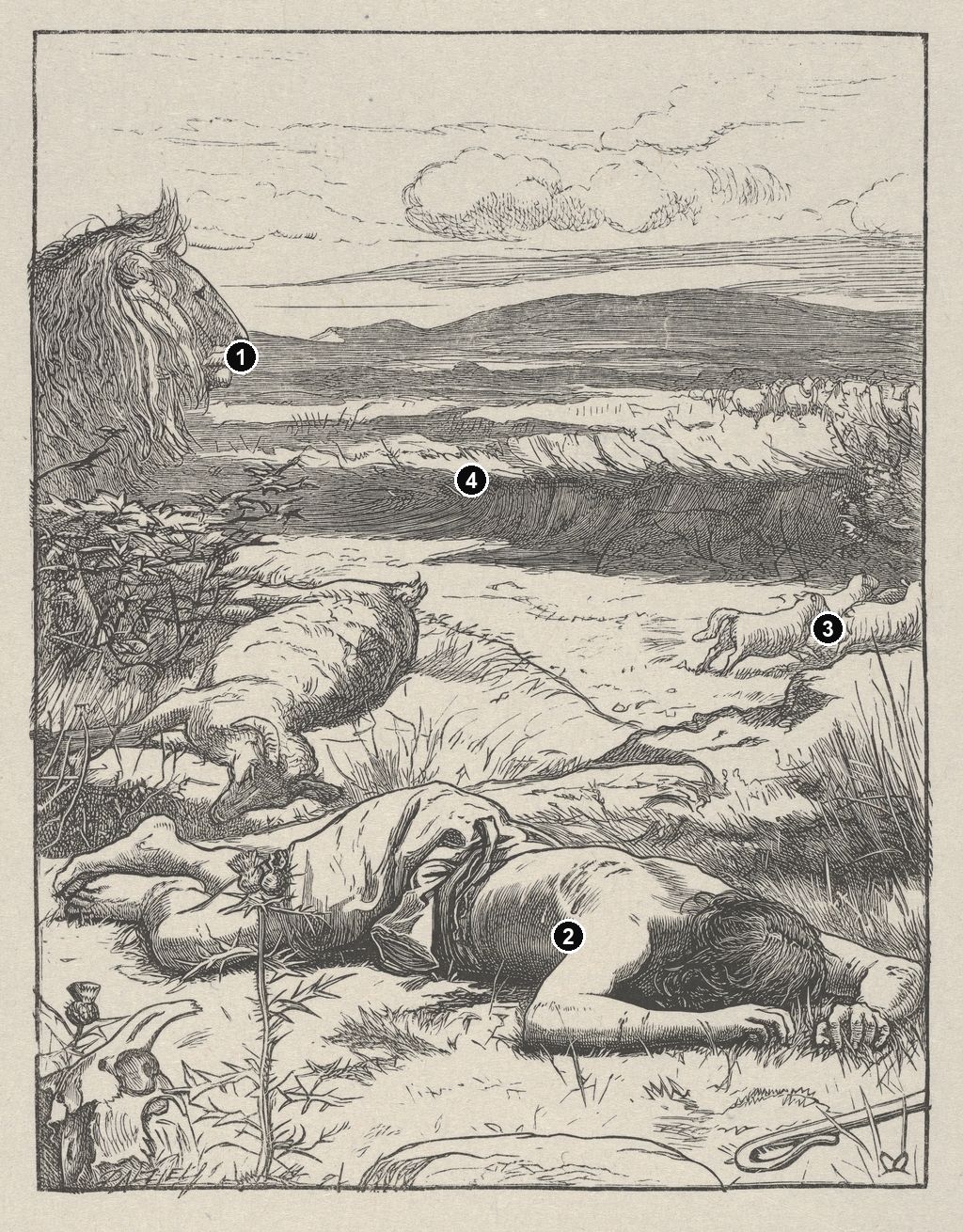
Details from THE GOOD SHEPHERD
Compare the cropped details with the source images above. Notice how their colours, shapes and positions contribute to the larger compositions.
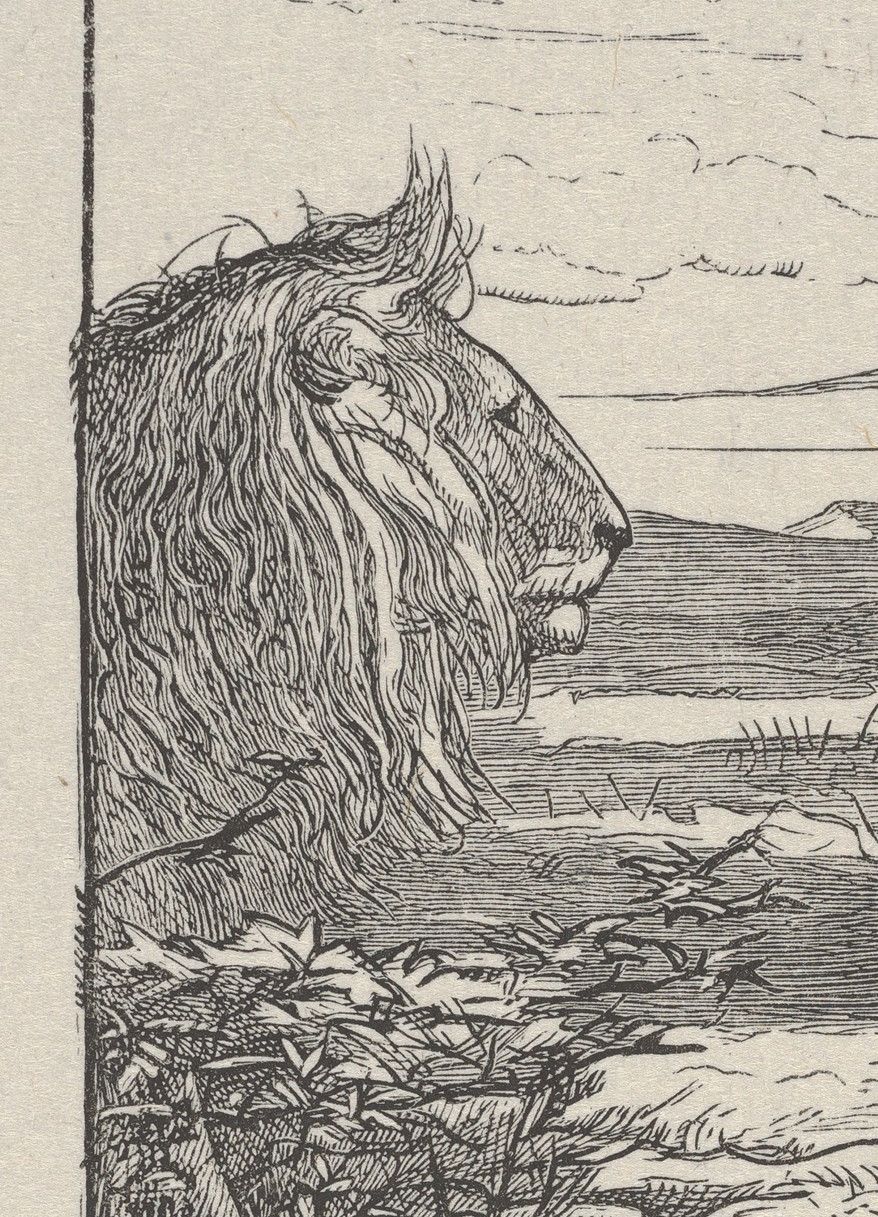
The lion above the thorns
The dark lines of the lion’s mane run into the neighbouring mass of thorns. Its profile remains clear against the lighter field.
The collapsed shepherd
The man occupies much of the lower foreground. Pale areas of his arm and the dark folds above it make the direction of the body clear at small scale.
The retreating sheep
The small figures head into the upper right, a change of scale that opens a distance between them and the fallen shepherd.
Different rhythms of line
The engraved lines across the distant hills are mostly near horizontal. In the nearer field they crowd together and cross to describe dark plants and broken ground.
John Everett Millais artwork directory
Browse paintings and drawings covered in these articles, including related works held in public collections. Reproductive engravings and editions are discussed on the Prints page.
Prints and illustrated editions
- The Baby-House, 1872. Etching by Millais.
- The Good Shepherd, 1864. Wood engraving designed by Millais, engraved and printed by the Dalziel Brothers.
- Mariana, 1857. Wood engraving designed by Millais and cut by the Dalziel Brothers for the Moxon Tennyson.
- The Proscribed Royalist, 1858. Mixed-method engraving by William Henry Simmons after Millais.
| Name | Date | Medium |
|---|---|---|
| Pizarro Seizing the Inca of Peru | 1846 | Painting |
| The Young Men of Benjamin Seizing Their Brides | 1847 | Painting |
| Isabella | 1848–49 | Painting |
| Christ in the House of His Parents (‘The Carpenter’s Shop’) | 1849–50 | Painting |
| Ferdinand Lured by Ariel | 1849–50 (monogram dated 1849) | Painting |
| Study for Christ in the House of His Parents, Tate N04623 | c. 1849 | Drawing |
| Study for Christ in the House of His Parents, Tate N04792 | c. 1849 | Drawing |
| Study for Mariana in the Moated Grange | 1850 | Drawing |
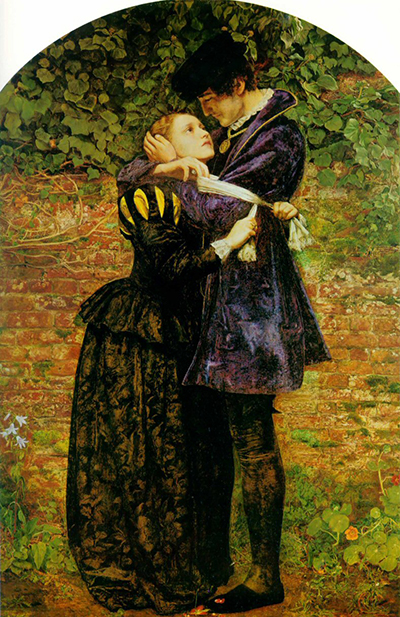
| A Huguenot, on St Bartholomew’s Day, Refusing to Shield Himself from Danger by Wearing the Roman Catholic Badge | 1851–52 (exhibited 1852) | Painting |
| Mariana | 1851 | Painting |
| Ophelia | 1851–52 | Painting |
| The Bridesmaid | 1851 | Painting |
| The Return of the Dove to the Ark | 1851 | Painting |
| The Order of Release 1746 | 1852–53 | Painting |
| The Proscribed Royalist, 1651 | 1852–53 (exhibited 1853) | Painting |
| Portrait of John Ruskin | 1853–54 | Painting |
| The Blind Girl | 1854–56 | Painting |
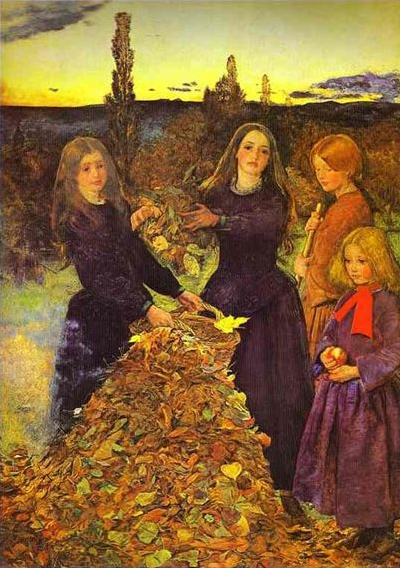
| Autumn Leaves | 1855–56 (Manchester labels 1856) | Painting |
| A Dream of the Past: Sir Isumbras at the Ford | 1856–57, later revised | Painting |
| The Vale of Rest | 1858–59 | Painting |
| Study for The Black Brunswicker, Tate A00812 | c. 1860 | Drawing |
| Study for The Black Brunswicker, Tate A00813 | c. 1860 | Drawing |
| Study for The Black Brunswicker, Tate A00814 | c. 1860 | Drawing |
| The Black Brunswicker | 1860 | Painting |
| The Ransom | 1860–62 | Painting |
| My First Sermon | 1863 | Painting |
| My Second Sermon | 1864 | Painting |
| Joan of Arc | 1865 | Painting |
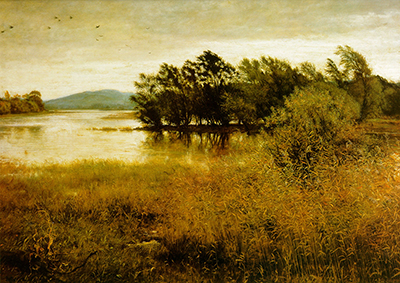
| Chill October | 1870 (exhibited 1871) | Painting |
| The Boyhood of Raleigh | 1870 | Painting |
| The Knight Errant | 1870 | Painting |
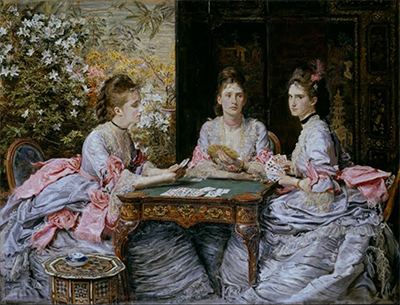
| Hearts are Trumps | 1872 | Painting |
| The North-West Passage | 1874 | Painting |
| Louise Jane Jopling | 1879 | Painting |
| William Ewart Gladstone, NPG 3637 | 1879 | Painting |
| Bubbles | 1886 | Painting |
| Portia | 1886 | Painting |
| Dew-Drenched Furze | 1889–90 | Painting |
| Ducklings | 1889 | Painting |
| Portrait of Sarah Hammond | 1891 | Painting |
Discussion
Look again at the images and ideas explored in John Everett Millais Prints. These editorial prompts invite your observations.
Reader Insights
Compare an etching by Millais with an image cut by the Dalziel Brothers. Where do you see the difference between their marks?
What changes when an advertiser adds a product name to an image you know from a painting?
Join the Conversation
Share a detail, comparison or question about John Everett Millais Prints below.
References
- National Gallery of Art, Washington, The Baby-House, 1872, object 1983.36.1. View source.
- The Metropolitan Museum of Art, The Good Shepherd (The Parables of Our Lord and Saviour Jesus Christ), wood-engraved proof, 1864, object 21.68.4(20). View source.
- The Metropolitan Museum of Art, James Stephenson after John Everett Millais, Ophelia (Shakespeare, Hamlet, Act 4, Scene 7), proof dated 1 March 1866, object 49.40.282. View source.
- University of Sussex and British Museum, The Woodpecking Factory: Victorian Illustrations by the Brothers Dalziel. View source.
- The Metropolitan Museum of Art, The Parables of Our Lord and Saviour Jesus Christ, 1864, object 18.69. View source.
- The Metropolitan Museum of Art, Etching, Materials and Techniques. View source.
- National Gallery of Victoria, The Young Mother, object P33-1971. View source.
- Delaware Art Museum, The Young Mother, 1857, object 2007-33. View source.
- Jason Rosenfeld, “Family Man: ‘The Wolf’s Den’ and John Everett Millais’s Expressions of Paternal Affection in the 1860s,” in The Wolf’s Den, Martin Beisly Fine Art, 2020, p. 22, fig. 18. View source.
- The Metropolitan Museum of Art, The Baby-house, 1872, object 66.544.30. View source.
- The Metropolitan Museum of Art, The Printed Image in the West: Drypoint, Heilbrunn Timeline of Art History. View source.
- The Metropolitan Museum of Art, L’Estampe Originale: A Rare Print Portfolio Now Online, on chine collé. View source.
- Bibliothèque nationale de France, Techniques d’illustration du livre imprimé. View source. (in French).
- The Morgan Library & Museum, The Pearl of Great Price, proof on India paper, object 1986.939. View source.
- The Metropolitan Museum of Art, John Everett Millais: India Proofs of his Twenty Pictures from The Parables of our Lord, and Twenty Autograph Letters from him to the Brothers Dalziel, 1864–1902. View source.
- Koriyama City Museum of Art, Twenty India Paper Proofs of Drawings by Sir John Everett Millais, 1902, object LB-8410, collection catalogue entry in Art Platform Japan. View source. (in Japanese).
- The Metropolitan Museum of Art, The Talking Oak (Tennyson’s Poems, New York, 1903), object 25.78.542. View source.
- Fundación Juan March, Julia Margaret Cameron 1815–1879, “Legends and Idylls,” catalogue entry 2.10, Tennyson illustrations. View source.
- Tom Taylor, “Magenta,” Once a Week, 2 July 1859, p. 10, facsimile and transcription from Digital Victorian Periodical Poetry. View source.
- Alfred Tennyson, “The Grandmother’s Apology,” Once a Week, 16 July 1859, pp. 41–43, facsimile and transcription from Digital Victorian Periodical Poetry. View source.
- The Metropolitan Museum of Art, The Cornhill Magazine, vol. I, January–June 1860, object 35.53.109. View source.
- The Metropolitan Museum of Art, illustration to Unspoken Dialogue, from The Cornhill Magazine, February 1860, facing p. 194, object 35.53.109(3). View source.
- The Fitzwilliam Museum, The Board, illustration to The Small House at Allington, object P.1091-1991. View source.
- Princeton University Library, exhibition catalogue entries for Orley Farm in parts and in book form. View source.
- Anthony Trollope, An Autobiography, 1883, vol. I, ch. IX, p. 130. View source.
- S. Moulijn, “‘The sixties’: Engelsche houtgravures in het Gemeente Museum te ’s-Gravenhage,” Elseviers Geïllustreerd Maandschrift, vol. 43, 1933, digitised by DBNL. View source.
- The Metropolitan Museum of Art, Millais’s Illustrations: A Collection of Drawings on Wood, Alexander Strahan & Co., 1866, object 62.629.15. View source.
- The Metropolitan Museum of Art, The Printed Image in the West: Mezzotint, Heilbrunn Timeline of Art History. View source.
- The Metropolitan Museum of Art, William Henry Simmons after John Everett Millais, The Proscribed Royalist, proof dated 15 January 1858, object 49.40.209. View source.
- Princeton University Art Museum, “The Proscribed Royalist” by John Everett Millais, albumen print, ca. 1850s–60s, object x1993-4. View source.
- Kunsthalle Bremen, Charles Albert Waltner after John Everett Millais, Bildnis John Everett Millais, object 2022/5034, collection record in Deutsche Digitale Bibliothek. View source.
- The Metropolitan Museum of Art, The Printed Image in the West: Aquatint, Heilbrunn Timeline of Art History. View source.
- John Everett Millais, letter to Thomas Combe, 15 April 1851, in J. G. Millais, The Life and Letters of Sir John Everett Millais, 1899, chapter on correspondence, p. 49 in the scanned edition. View source.
- Robert M. Verhoogt, “Artistic Piracy: Modern Conflicts of Artistic Copyright in Historical Perspective,” CIHA Congress, London, 2000, discussion of the Combe letter and note 12. View source.
- Victoria and Albert Museum, Bubbles, Pears Soap advertising proof, ca. 1888 or 1889, object E.224-1942. View source.
- A. & F. Pears, advertisement after Millais’s Bubbles from Charles Dickens’s The Battle of Life, Pears Centenary Edition, 1912, page facsimile. View source.