 by Tom Gurney
Tom Gurney BSc (Hons) is an art history expert with over 20 years experience
Published on June 19, 2020 / Updated on November 25, 2026
Email: tomgurney1@gmail.com / Phone: +44 7429 011000
The Return of the Dove to the Ark: Introduction
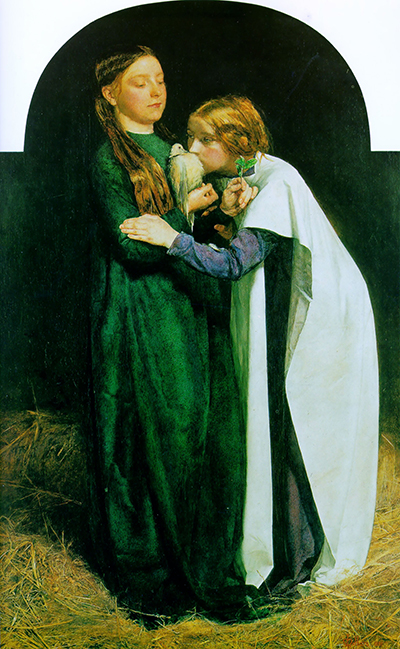
In John Everett Millais’s The Return of the Dove to the Ark, a young woman holds a dove against her chest while her companion bends to kiss it. An olive sprig is held up between them. The bird has just brought news that the waters of the Flood are receding. Millais gives the viewer a dark interior, two faces and a floor strewn with straw. The vast change outside the ark takes the form of a small event inside it. The 1851 oil on canvas measures 88.2 × 54.9 cm and belongs to the Ashmolean Museum in Oxford. [1] [2] [3]
At a Glance
- Date1851 [1]
- MediumOil on canvas [1]
- CollectionAshmolean Museum, WA1894.8 [1]
- SubjectTwo women receive the dove that brought an olive leaf back to Noah’s ark [1][2]
This work across John Everett Millais’s career
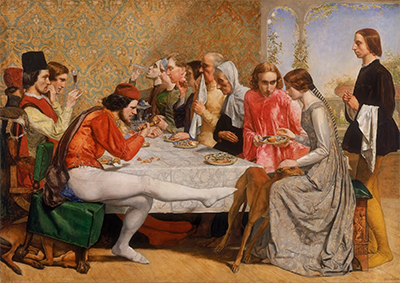
Isabella
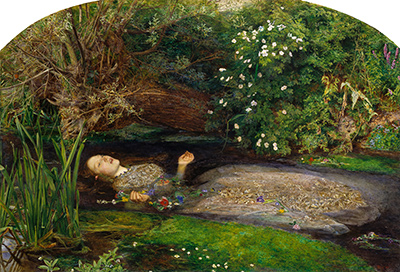
1848–49Ophelia
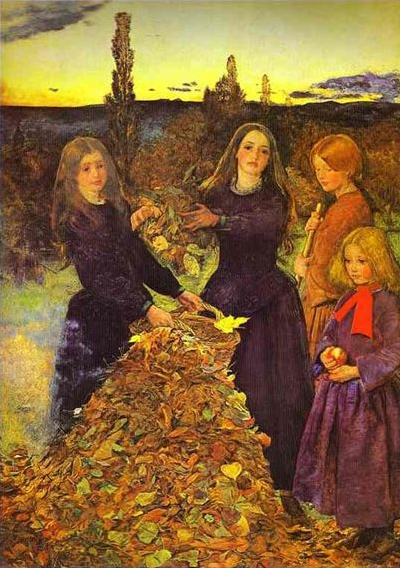
1851–52Autumn Leaves
1855–56Dew-Drenched Furze
1889–90Contents
- The story in Genesis
- Hands, feathers and folds
- From the eve of the Flood to its aftermath
- The Royal Academy and Ruskin’s defence
- Thomas and Martha Combe in Oxford
- Two readings in Paris
- Annotated details
The story in Genesis
In Genesis 8, Noah opens the ark and sends out a raven, then a dove. The dove finds nowhere to rest on its first flight. Noah reaches out, takes it in his hand and brings it back. He waits seven days before releasing it again. This time the dove returns in the evening with a freshly plucked olive leaf. The leaf tells Noah that the floodwater has fallen far enough to expose living vegetation. Noah releases it a third time after another week, and the bird stays away. Even the welcome news of its second return therefore comes while Noah’s household is still sheltering in the ark. [2]
The olive identifies the second flight in Millais’s picture. The women have traditionally been identified as two of Noah’s daughters-in-law. Genesis places the wives of Noah’s sons aboard, but gives the task of sending and receiving the bird to Noah. The 1886 Grosvenor Gallery retrospective described the women tending the dove, a scene that Millais imagined around the event in scripture. The painting starts after the act of catching. The olive has been taken from the bird’s beak, and the women have time to hold it and bend close. The picture leaves open who first brought it in. [1] [2] [4]
Hands, feathers and folds
The woman in green stands upright with her eyes lowered. One hand supports the dove and the other holds the olive upright. The woman in white and violet bends from the right, resting a hand on her companion’s sleeve as her face approaches the bird’s head. The gestures tell us where each figure has put her weight and how the bird is being held. The dove’s folded wings and slightly raised plumage are visible against the darker cloth. The sprig is small enough to miss at first, especially beside the bright folds of the white mantle. [1]
The curve above the figures encloses their two heads, one upright and the other inclined. Below, their clothes fall in long folds almost to the bottom of the painting. The dark space behind them has few readable forms, while the mat of straw is picked out strand by strand. That uneven distribution of detail gives the viewer a sense of enclosure without explaining the structure of the ark. It also sets off the thin green leaves of the olive: where vegetation on the floor has dried to a tangle of pale stalks, these few fresh leaves are evidence that plants have survived outside. [1] [2]
From the eve of the Flood to its aftermath
Millais had considered a larger biblical composition about the days before the Flood. Art historian Paolo Giudici connects the abandoned project with the success of John Linnell’s Noah: The Eve of the Deluge of 1848. A drawing by Millais in the British Museum, historically catalogued as The Deluge and also known as The Eve of the Deluge, relates to the verse in Matthew in which people carry on eating, drinking and marrying before the waters arrive. Millais shows a man holding open the shutters as the waters rise, while a woman turns to warn a wedding party. The British Museum catalogue records that the drawing was squared for transfer to canvas. Linnell’s expansive painting of the period before the Flood provides a comparison for how differently the story could be staged. Millais’s drawing belongs to the independent project about the world before the catastrophe. His finished painting takes up the same biblical story on the far side of the disaster. [5] [6] [7]
Millais had already used an ordinary interior to carry a sacred story in Christ in the House of His Parents, exhibited at the Royal Academy in 1850. In that painting a wounded hand in a working carpenter’s shop anticipates the Crucifixion. The wound brings a future event into a familiar setting. In The Return of the Dove, the fresh leaf brings news of a change elsewhere. Each painting asks the viewer to attend to a small object or gesture for the meaning of a much larger story. [2] [8]
The Royal Academy and Ruskin’s defence
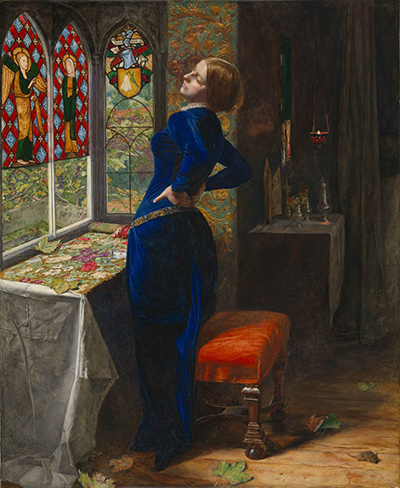
The Royal Academy exhibited The Return of the Dove to the Ark in 1851 alongside two other submissions by Millais, Mariana and The Woodman’s Daughter. The catalogue numbers were 651, 561 and 799 respectively. [9] All three depend on a reader’s knowledge of events beyond the painting. In Mariana, the heroine’s stretch at her embroidery conveys the strain of waiting described by Tennyson. In The Woodman’s Daughter, the offer of strawberries comes early in Coventry Patmore’s story of an unequal and ultimately disastrous relationship. The dove’s arrival makes a small encounter the first sign that a long ordeal might end. [10] [11] [12]
In his second letter to The Times, published on 30 May 1851, John Ruskin found fault with the face of the upright woman and raised a broader concern about the effect of exacting detail on the painting of flesh. He urged readers to consider the tenderness of the stooping figure, the harmony of the draperies and the worn bird’s ruffled plumage. He picked out two loose feathers, one on the woman’s arm and one on the ground, then turned to the hay. Its precision mattered to him because it had been painted with a freedom of touch he considered distinctly modern. The detail that could make an early Pre-Raphaelite picture look laborious was, in this passage of the canvas, his evidence of ease. [13]
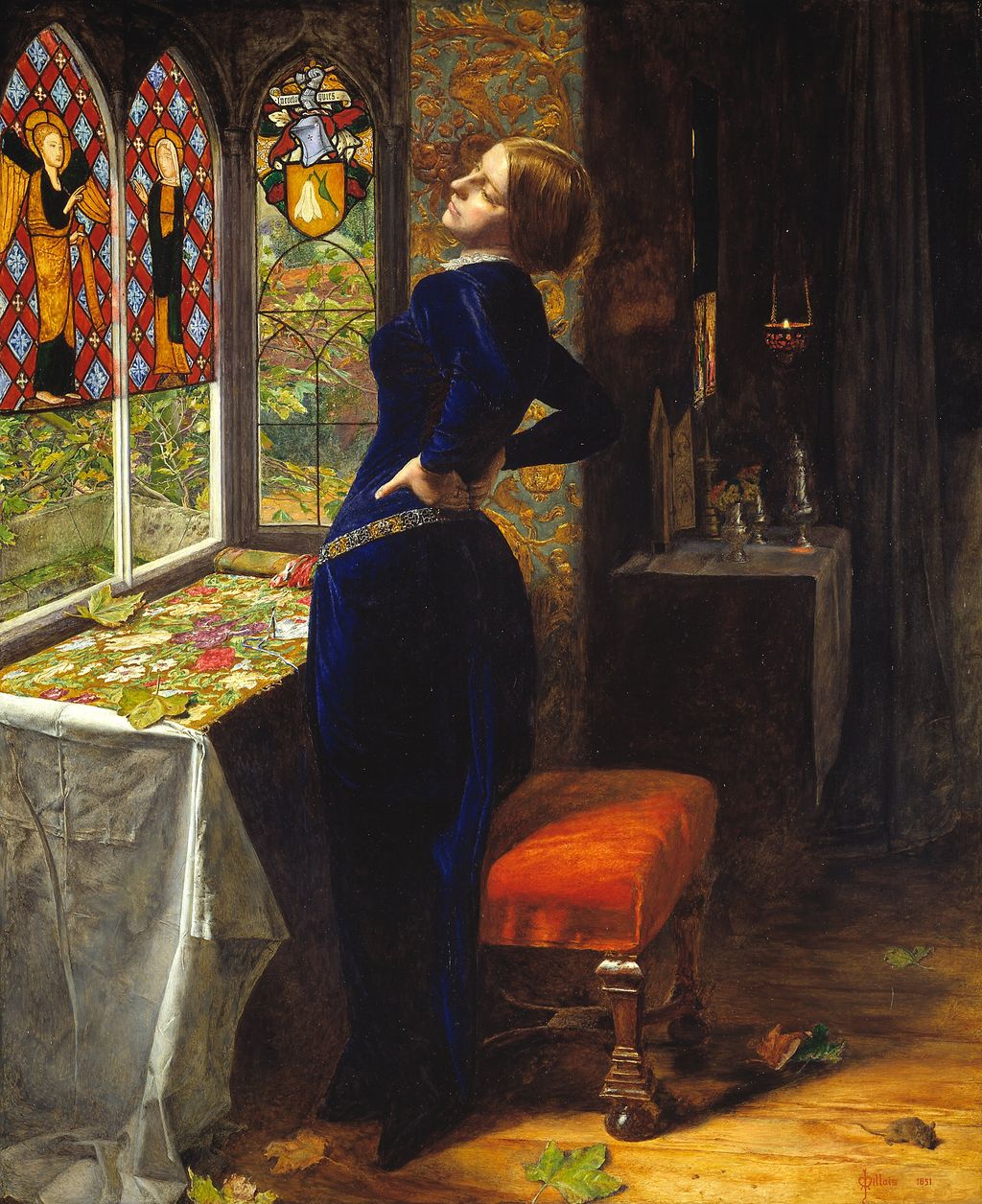
Mariana, oil on mahogany, Tate, T07553. Millais showed this panel at the same 1851 Academy exhibition.
Thomas and Martha Combe in Oxford
The artist’s correspondence establishes that Thomas Combe, superintendent of the Clarendon Press, had already bought the painting by 1 April 1851. Millais promised to finish the picture to its corners and proposed a frame with olive foliage and a dove carrying a branch in each corner. In December he told Combe that he had touched up the painting and advised him to wait before having it varnished. He also requested that it hang slightly forward and near the window, explaining that it was darker than Charles Allston Collins’s picture of a nun. The letters show how closely Millais attended to the painting as an object that would have to be seen in a particular light. A diary entry by William Michael Rossetti records, through Holman Hunt and Coventry Patmore, that Ruskin wanted to buy it when it was already sold. [14] [3] [15]
George Pyne’s watercolour of an exhibition at the Old Oxford Town Hall in June 1854 shows how the pictures were presented in public. Both the Dove and Collins’s Convent Thoughts are visible, lent by Thomas Combe. Here a scene of an olive-bearing bird and a picture of a nun examining a passionflower could be seen in the same room. The watercolour preserves their association three years after the Academy exhibition. Combe lent the Dove to the International Exhibition in London in 1862, where the catalogue lists it directly after Millais’s The Vale of Rest. His widow Martha lent it again in 1886 to the Grosvenor Gallery, before including it and Convent Thoughts in her 1893 bequest to the Ashmolean. [4] [16] [17]
Two readings in Paris
At the 1855 Exposition Universelle in Paris, Gustave Planche singled out the Dove and The Order of Release for a patronising verdict. He saw their finish as the sort of painstaking execution that might be admired in a girls’ boarding school. He gave Ophelia a more sustained discussion. Planche’s objection matters because it touched exactly the feature Ruskin had taken seriously. Both saw the patience invested in small particulars, and they disagreed about whether it gave the painting artistic force. [13] [18]
Théophile Gautier approached the same picture differently. He doubted that the figures’ youth or costumes made them plausible as members of Noah’s family. Yet their faces recalled people from childhood, and he found sincerity in the care with which they approached the bird. He admired the younger woman’s hand on the green sleeve and saw the intensity of that green as akin to stained glass. The Japanese scholar Minako Imura later discussed the passage in her study of Gautier’s criticism, bringing attention to his interest in images that stir a sense of recognition. The two Paris reviews show how a painting could seem excessively worked to one critic and disarmingly familiar to another. [19] [20]
The straw remains open to a different reading. In a study of prayer and plant imagery, the Japanese artist Hiromi Kuboi read the straw in Millais’s foreground as an image of renewal and connected the scene with a wish for peace. The biblical sequence gives that hope a particular timing. The ark is still occupied, the dove has only just returned, and the olive is something the women can hold from the land they have been waiting to see again. [2] [21]
Annotated Details from The Return of the Dove to the Ark
The numbered points identify visible features discussed in this article. Return from each detail to the numbered overview. The Return of the Dove to the Ark, oil on canvas, Ashmolean Museum, WA1894.8. Image source. Public domain.
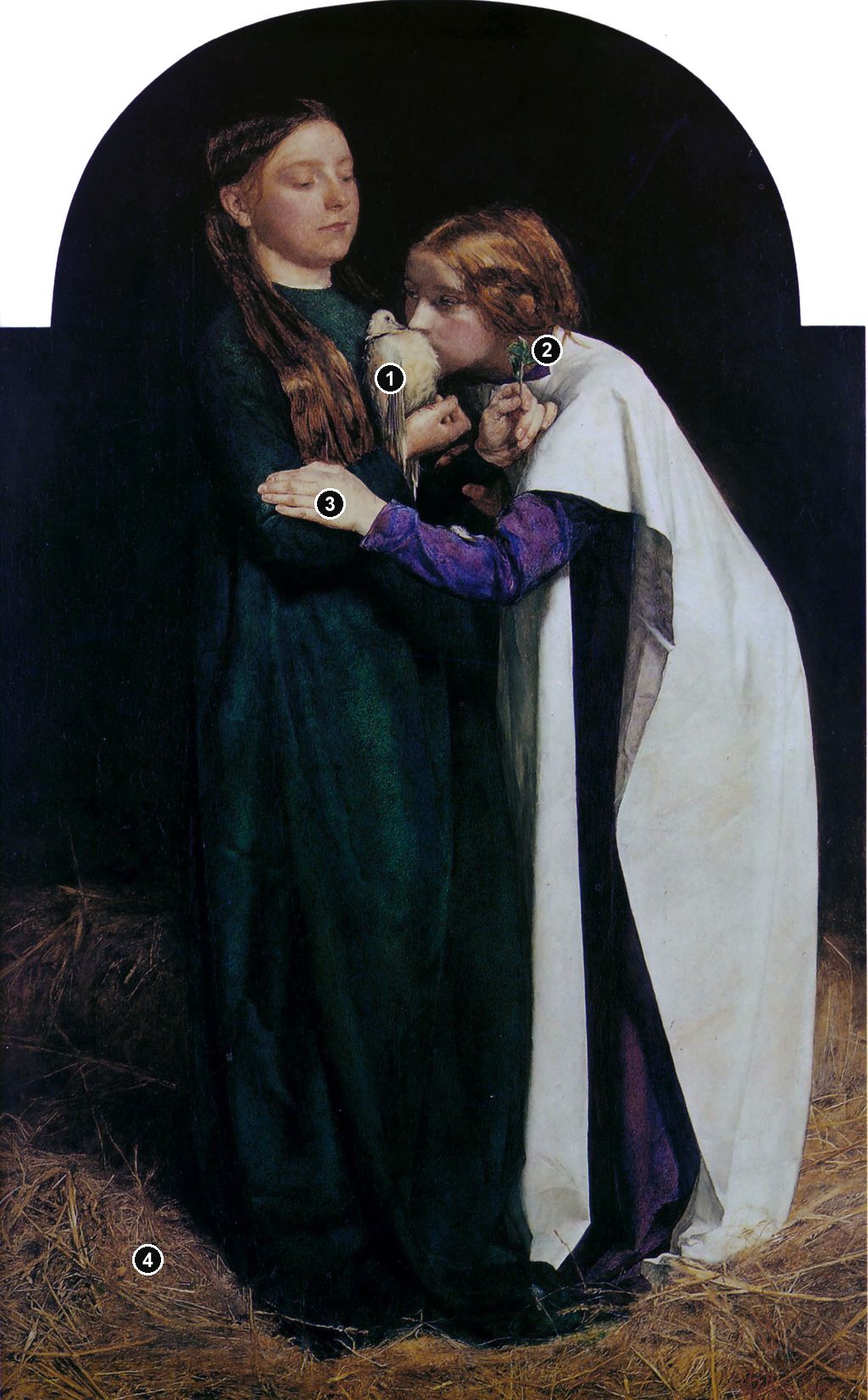
Details from THE RETURN OF THE DOVE TO THE ARK
Compare the cropped details with the source images above. Notice how their colours, shapes and positions contribute to the larger compositions.
The dove’s head and folded wing
One woman supports the dove close to her body as her companion bends towards its head. The bird’s pale plumage is legible against the darker dress.
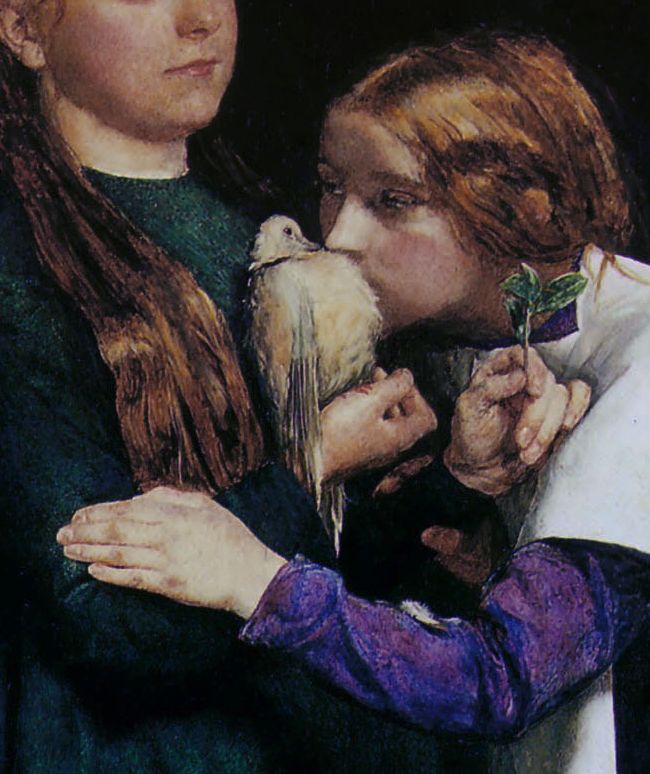
The olive sprig
A few green leaves are visible by the bent woman’s shoulder. The olive identifies this as the second return of the dove in Genesis.
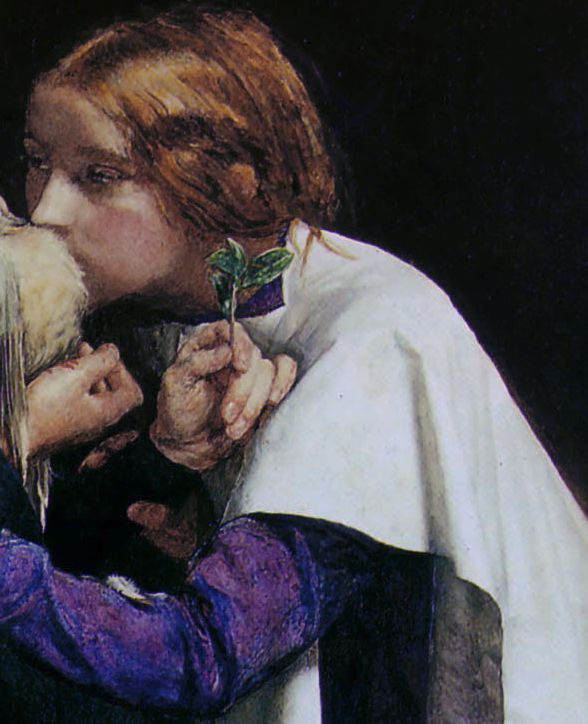
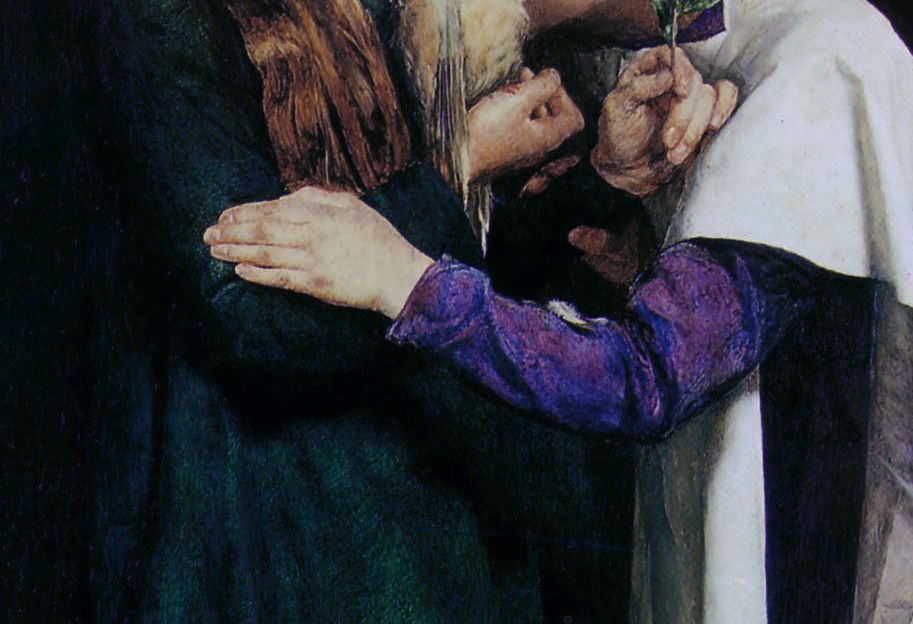
Hands and layered sleeves
The extended hand rests on the standing woman’s sleeve. The dark cloth, violet sleeve and white mantle make their overlapping movements easier to follow.
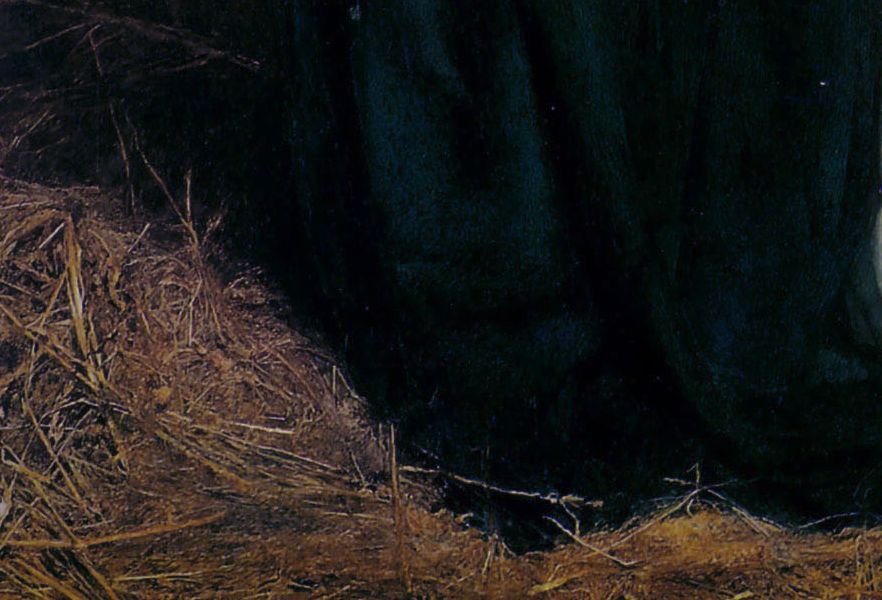
The straw at their feet
Stray stalks catch the light across the floor. The dry straw offers a contrast with the small sprig that has just come from outside.
John Everett Millais artwork directory
Browse paintings and drawings covered in these articles, including related works held in public collections. Reproductive engravings and editions are discussed on the Prints page.
Prints and illustrated editions
- The Baby-House, 1872. Etching by Millais.
- The Good Shepherd, 1864. Wood engraving designed by Millais, engraved and printed by the Dalziel Brothers.
- Mariana, 1857. Wood engraving designed by Millais and cut by the Dalziel Brothers for the Moxon Tennyson.
- The Proscribed Royalist, 1858. Mixed-method engraving by William Henry Simmons after Millais.
| Name | Date | Medium |
|---|---|---|
| Pizarro Seizing the Inca of Peru | 1846 | Painting |
| The Young Men of Benjamin Seizing Their Brides | 1847 | Painting |
| Isabella | 1848–49 | Painting |
| Christ in the House of His Parents (‘The Carpenter’s Shop’) | 1849–50 | Painting |
| Ferdinand Lured by Ariel | 1849–50 (monogram dated 1849) | Painting |
| Study for Christ in the House of His Parents, Tate N04623 | c. 1849 | Drawing |
| Study for Christ in the House of His Parents, Tate N04792 | c. 1849 | Drawing |
| Study for Mariana in the Moated Grange | 1850 | Drawing |
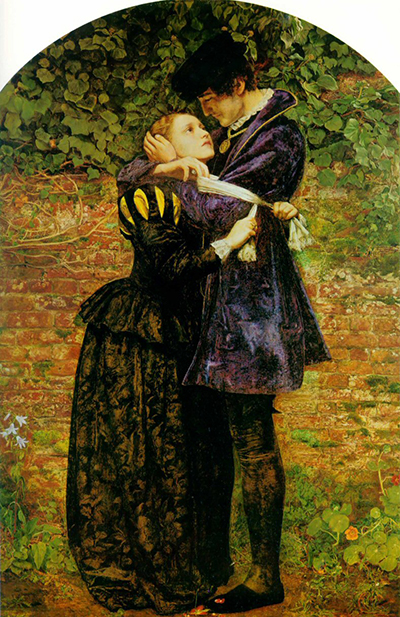
| A Huguenot, on St Bartholomew’s Day, Refusing to Shield Himself from Danger by Wearing the Roman Catholic Badge | 1851–52 (exhibited 1852) | Painting |
| Mariana | 1851 | Painting |
| Ophelia | 1851–52 | Painting |
| The Bridesmaid | 1851 | Painting |
| The Return of the Dove to the Ark | 1851 | Painting |
| The Order of Release 1746 | 1852–53 | Painting |
| The Proscribed Royalist, 1651 | 1852–53 (exhibited 1853) | Painting |
| Portrait of John Ruskin | 1853–54 | Painting |
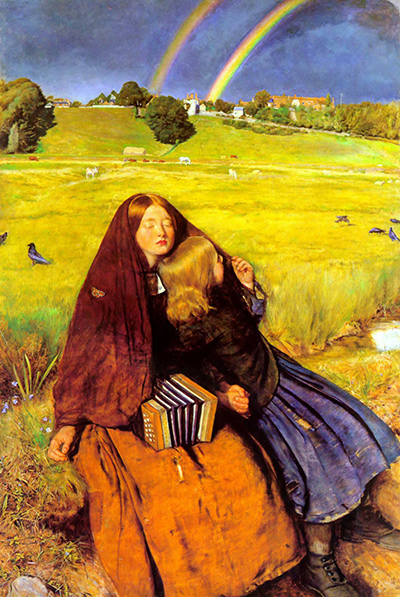
| The Blind Girl | 1854–56 | Painting |
| Autumn Leaves | 1855–56 (Manchester labels 1856) | Painting |
| A Dream of the Past: Sir Isumbras at the Ford | 1856–57, later revised | Painting |
| The Vale of Rest | 1858–59 | Painting |
| Study for The Black Brunswicker, Tate A00812 | c. 1860 | Drawing |
| Study for The Black Brunswicker, Tate A00813 | c. 1860 | Drawing |
| Study for The Black Brunswicker, Tate A00814 | c. 1860 | Drawing |
| The Black Brunswicker | 1860 | Painting |
| The Ransom | 1860–62 | Painting |
| My First Sermon | 1863 | Painting |
| My Second Sermon | 1864 | Painting |
| Joan of Arc | 1865 | Painting |
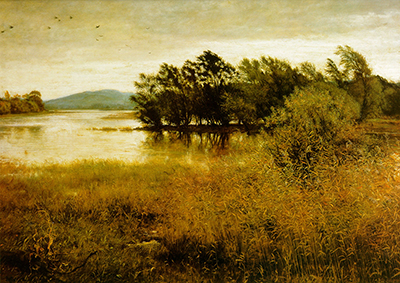
| Chill October | 1870 (exhibited 1871) | Painting |
| The Boyhood of Raleigh | 1870 | Painting |
| The Knight Errant | 1870 | Painting |
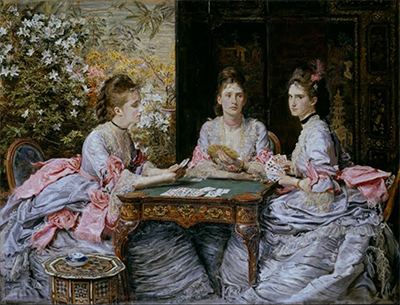
| Hearts are Trumps | 1872 | Painting |
| The North-West Passage | 1874 | Painting |
| Louise Jane Jopling | 1879 | Painting |
| William Ewart Gladstone, NPG 3637 | 1879 | Painting |
| Bubbles | 1886 | Painting |
| Portia | 1886 | Painting |
| Dew-Drenched Furze | 1889–90 | Painting |
| Ducklings | 1889 | Painting |
| Portrait of Sarah Hammond | 1891 | Painting |
Discussion
Look again at the images and ideas explored in The Return of the Dove to the Ark. These editorial prompts invite your observations.
Reader Insights
How long did it take you to see the olive sprig after finding the bird?
What does the narrow arched shape do to the way you read the two women’s gestures?
Join the Conversation
Share a detail, comparison or question about The Return of the Dove to the Ark below.
References
- Ashmolean Museum, The Return of the Dove to the Ark, WA1894.8, museum reproduction and object metadata. View source.
- United States Conference of Catholic Bishops, Genesis, 8:6–12 and family identified in 7:13. View source.
- Lynn Roberts, The Framemaker James Wyatt: Turner, Millais & Grinling Gibbons, original research on the Combe interiors and frames. View source.
- Grosvenor Gallery, Exhibition of the Works of Sir John E. Millais, 1886, no. 88. View source.
- Paolo Giudici, A Sermon in Painting, Royal College of Art doctoral thesis, p. 115 and works cited. View source.
- British Museum, Catalogue of Drawings by British Artists and Artists of Foreign Origin Working in Great Britain, vol. III, p. 106, Millais no. 2. View source.
- Cleveland Museum of Art, John Linnell, Noah: The Eve of the Deluge, 1972.119. View source.
- Tate, Christ in the House of His Parents (The Carpenter’s Shop), N03584. View source.
- Algernon Graves, The Royal Academy of Arts: A Complete Dictionary of Contributors and Their Work from Its Foundation in 1769 to 1904, vol. V, Millais entries for 1851. View source.
- Tim Barringer, Royal Academy Summer Exhibition Chronicle, 1851 Ruskin to the Rescue. View source.
- Tate, Mariana, T07553. View source.
- Guildhall Art Gallery, The Woodman’s Daughter, painting and Coventry Patmore’s poem. View source.
- John Ruskin, letters to The Times, 13 and 30 May 1851, in E. T. Cook and Alexander Wedderburn (eds.), The Works of John Ruskin, vol. XII. View source.
- John Everett Millais, letters to Thomas Combe, April and December 1851, in J. G. Millais (ed.), The Life and Letters of Sir John Everett Millais, vol. I, pp. 100 and 150–51. View source.
- William Michael Rossetti, Præraphaelite Diaries and Letters, 1851 diary, May entries. View source.
- Ashmolean Museum, 2003–04 annual report, p. 36, George Pyne’s An Exhibition at the Oxford Town Hall, 1854. View source.
- International Exhibition of 1862, Official Catalogue of the Fine Art Department, no. 650, p. 38. View source.
- Gustave Planche, Exposition des Beaux-Arts, part I, review of the English school at the 1855 Exposition Universelle. View source. (in French).
- Théophile Gautier, Les Beaux-Arts en Europe, 1855, vol. I, pp. 56–58. View source.
- Minako Imura, “Gautier and Baudelaire’s Art Criticism: On Delacroix,” part II, p. 143. View source.
- Hiromi Kuboi, Inori no niwa (Garden of Prayer), Tokyo University of the Arts doctoral thesis, pp. 34–35. View source.