 by Tom Gurney
Tom Gurney BSc (Hons) is an art history expert with over 20 years experience
Published on June 19, 2020 / Updated on November 25, 2026
Email: tomgurney1@gmail.com / Phone: +44 7429 011000
My Second Sermon: Introduction
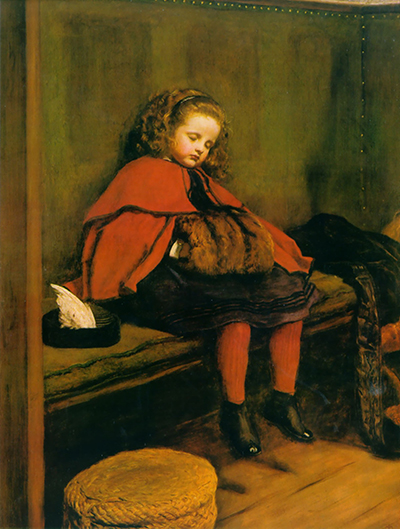
Effie Millais has fallen asleep in church. Her head tips towards the side of the pew, her hat lies beside her, and the red stockings beneath her skirt end in little black shoes suspended above the floor. John Everett Millais painted his daughter in this pose in 1864, the year after he showed her listening intently in My First Sermon. The sequel is an oil on canvas in London’s Guildhall Art Gallery. Its joke is easy to grasp, but the sustained attention Millais gives the sleeping girl is what makes the picture worth coming back to. [1] [2]
At a Glance
- Date1864 [1]
- MediumOil on canvas [1]
- CollectionGuildhall Art Gallery, 702 [1][3][4]
- SitterThe artist’s daughter Effie, asleep in the pew [1][2]
This work across John Everett Millais’s career
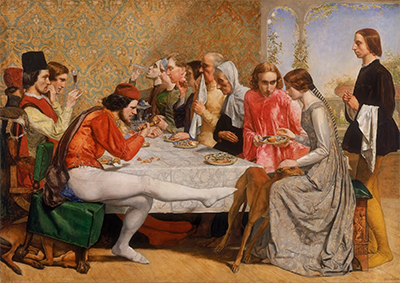
Isabella
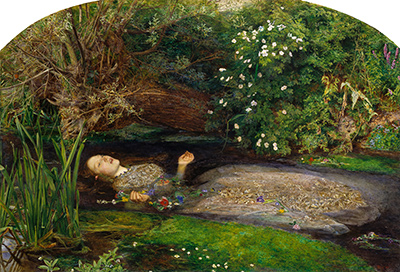
1848–49Ophelia
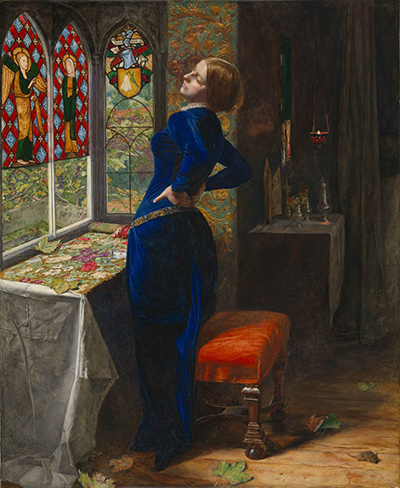
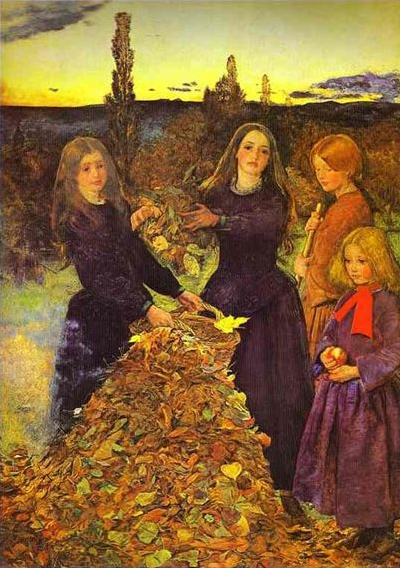
1851–52Autumn Leaves
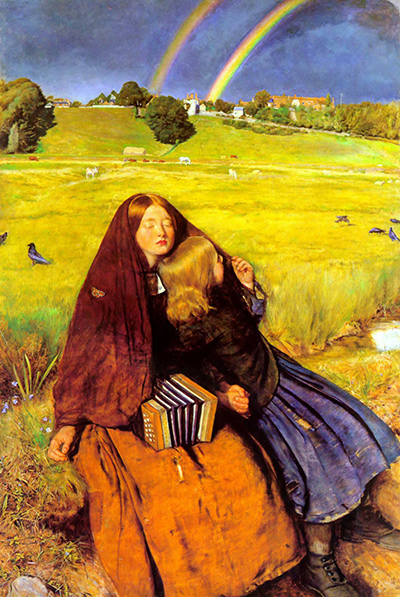
1855–56Dew-Drenched Furze
1889–90Contents
- A child asleep in a high-backed pew
- What Millais wrote while he was working
- Recognition and the 1864 Royal Academy exhibition
- From a pair of prints to a Paris exhibition
- Annotated details
A child asleep in a high-backed pew
In My First Sermon, Effie’s face is upright beneath the brim of her hat. In the sequel, the hat has come off, leaving her curls against the dark wood. Her eyes are closed and her chin drops towards the red cloak drawn around her shoulders. Both hands are in the brown fur muff. Its weight seems to have settled into her lap. These details give the softening of her posture a direction, from the sideways fall of the head to the small turn of the feet. [1] [2] [5]
The old pew has as much to do with the effect as the face. Millais gives it tall panels, a long green seat and a wooden rail that runs across the bottom of the picture. The edges of the wood stay square to the canvas while Effie slides visibly off the upright. There is room for a hat and other belongings on the long bench, enough space to make her look all the smaller. The repeated reds of the cape and stockings draw the eye from the point where her head comes to rest down to the feet. Between them the darker bands at the hem and the deep blue of the skirt give shape to the mass of clothes that has slumped into the seat. [1] [5]
The pulpit is somewhere outside the frame. We see the service entirely from the pew, and we can tell how long it feels to her from an incident that might have taken only a few seconds. A churchgoing adult might read a lapse in manners in the drooping head. The intimacy of the view makes another response possible. Effie looks comfortable in a seat built on a scale that leaves her legs dangling, and the very clothes she put on to go out have made a warm little shelter. [1] [2]
What Millais wrote while he was working
The sitter was Euphemia, known as Effie, the artist’s daughter. Her mother, also known as Effie, was away in Scotland when Millais wrote to her on 13 January 1864. He told her he was about to start on “Effie sleeping in the pew” and remarked that the place was dark but that he could see enough to draw. He went on to talk about illustrations he had completed for Good Words and an edition of the Arabian Nights. In the letter the idea for the painting is still a job to be begun, alongside the other things on his desk. [6]
The artist’s son John Guille Millais associated both pictures with the old high-backed pews in the church at Kingston upon Thames, where his grandparents lived. He later explained the child’s sleep through the warmth of the church, the waning novelty of attendance and possibly the preacher’s delivery. His father’s letter gives firmer evidence for the proposed pose and the conditions in which he intended to draw. The way Millais singles out the light is worth bearing in mind when looking at the finished canvas. The pew remains legible in several degrees of brown, while the warm reds and a few much paler touches make the girl stand out within it. [1] [6]
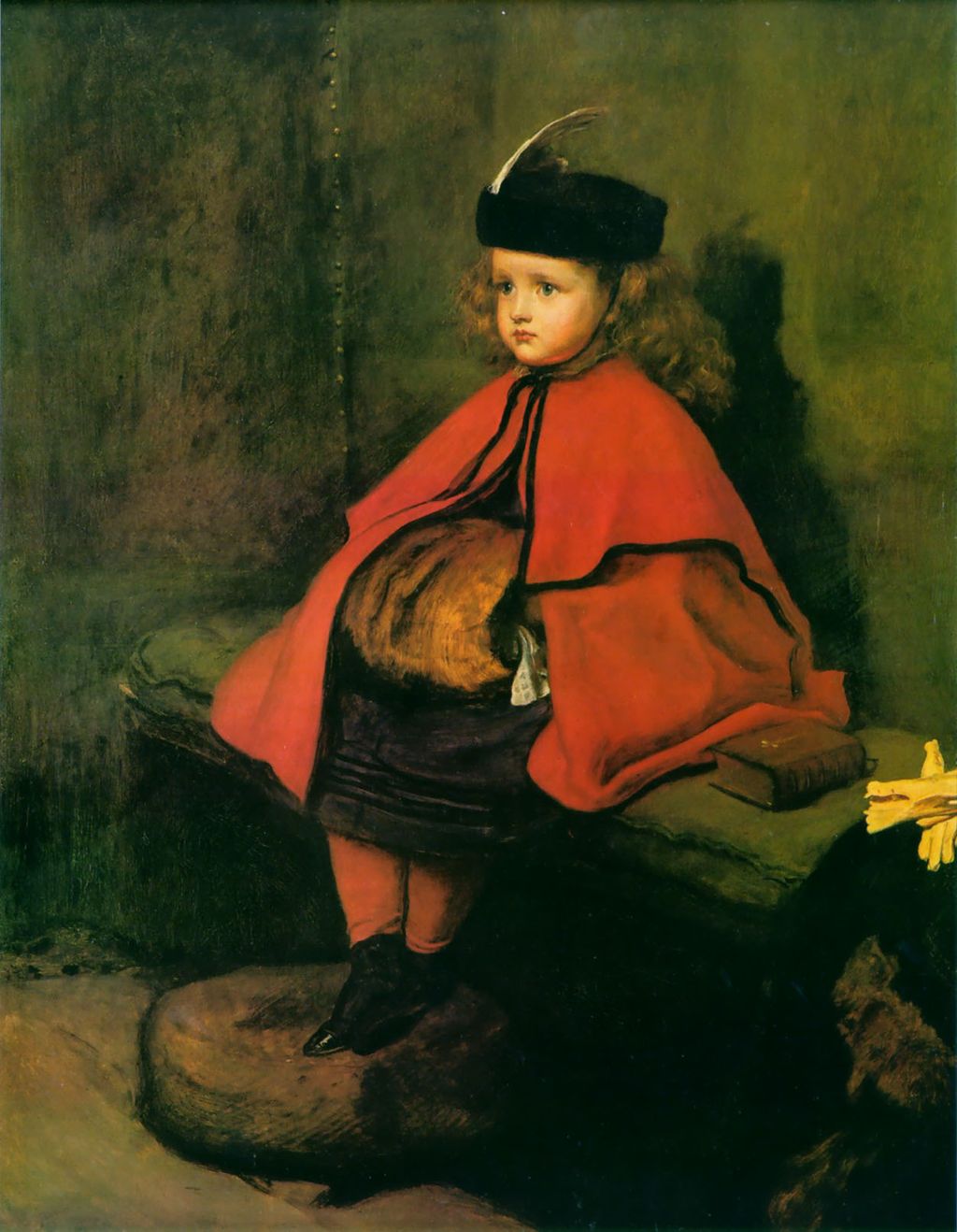
My First Sermon, oil on canvas, Guildhall Art Gallery, 701. Compare the raised eyes and upright posture of the first painting with the sequel’s sleeping pose. Image source. Public domain.
Recognition and the 1864 Royal Academy exhibition
My Second Sermon appeared as no. 13 at the Royal Academy in 1864. Millais was newly elected to full membership, and his work that summer included Leisure Hours, a portrait of two girls beside a bowl of goldfish, and Charlie Is My Darling, which shows a girl in riding dress on a mounting block. Writing about the exhibition for the Fine Arts Quarterly Review, William Michael Rossetti regarded the subjects of all three as modest. He thought Leisure Hours the most commanding in execution and singled out My Second Sermon for its taste. His distinction shows how much a contemporary critic could weigh the choice of incident as well as the artist’s skill in painting it. [7] [8] [9]
For the Art Journal, there was pleasure in recognising a child who had already become familiar from the previous summer. Its reviewer teased Effie for falling asleep while admitting that the lapse cost her none of the viewer’s affection. The art historian Shiori Koga has called attention to the year between the two exhibitions as part of the experience of this pair. The viewer in 1864 had to supply the earlier image from memory. The recurring pew and the red clothes established where we were and whom we were looking at. Millais could then change the whole story with a different turn of the head and the absence of a hat from its familiar place. [10] [11]
John Guille dates another response to the Academy banquet of 1865. In the speech he transcribed from contemporary newspaper reports, Charles Longley, the Archbishop of Canterbury, treated the sleeping child as if she were giving a sermon of her own. She had been instructing the assembled company without knowing it, he joked, and churchmen could take her slumber as a warning to keep their sermons shorter. The authority moves from the speaker to the listener, and in Longley’s account the least attentive person in the room is the one with the clearest lesson to offer. [6]
From a pair of prints to a Paris exhibition
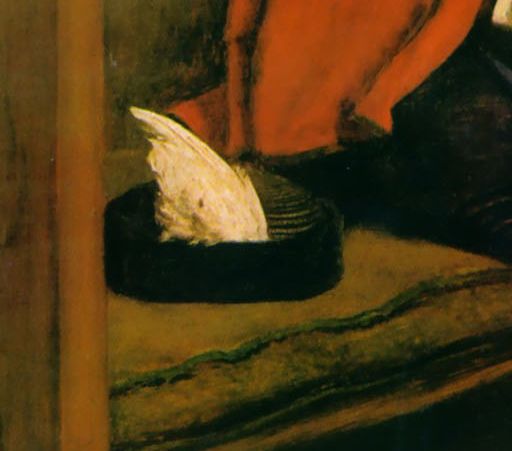
The two pictures could be compared directly in print. The National Trust holds an 1865 pair at Castle Ward by Thomas Oldham Barlow, who translated Millais’s paintings into mezzotints. Without the red of the cape and stockings, the inclined head, the exposed hair and the pale feather of the hat on the bench carry more of the comparison. The pair preserves something that was unavailable at the sequel’s first exhibition. Both moments can be taken in at the same time. [5] [10] [12]
Millais also made a watercolour version of the sleeping child now in the Victoria and Albert Museum. Its painted image is just 24 centimetres high. Birmingham has a further version, in which the child’s feet hang apart and her legs are uncrossed. These objects show how the subject could travel with the essential incident intact, even when its size, medium or details changed. [13] [14]
Charles Gassiot lent both Guildhall canvases to Millais’s retrospective at the Grosvenor Gallery in 1886 and again to the Royal Academy’s memorial exhibition in 1898. The latter catalogue explicitly sends readers from the sleeping girl to her companion. The City of London’s illustrated catalogue records both pictures in the Gassiot Bequest of 1902. Once the two oils entered the same public collection, their successive moments could again be read together. [5] [15] [3]
Both oils travelled to Madrid for the Fundación Juan March’s La isla del tesoro in 2012–13. The catalogue put them next to one another in a survey that followed British art from Holbein to Hockney. The pairing let an audience far removed from the original Academy exhibitions encounter the same sitter and setting in two states. [4]
The Musée Marmottan Monet gave the sequel a different setting in Paris in L’Empire du sommeil (2025–26). The museum included it in a section about gentle sleep, the kind that artists have often observed in their own families. Seen in that company, Effie’s nap has room to register as a pleasure in its own right. The church pew, with its hard edges and dark panels, makes an unlikely place to find such complete ease. [16]
Annotated Details from My Second Sermon
The numbered points identify visible features discussed in this article. Return from each detail to the numbered overview. My Second Sermon, oil on canvas, Guildhall Art Gallery, 702. Image source. Public domain.
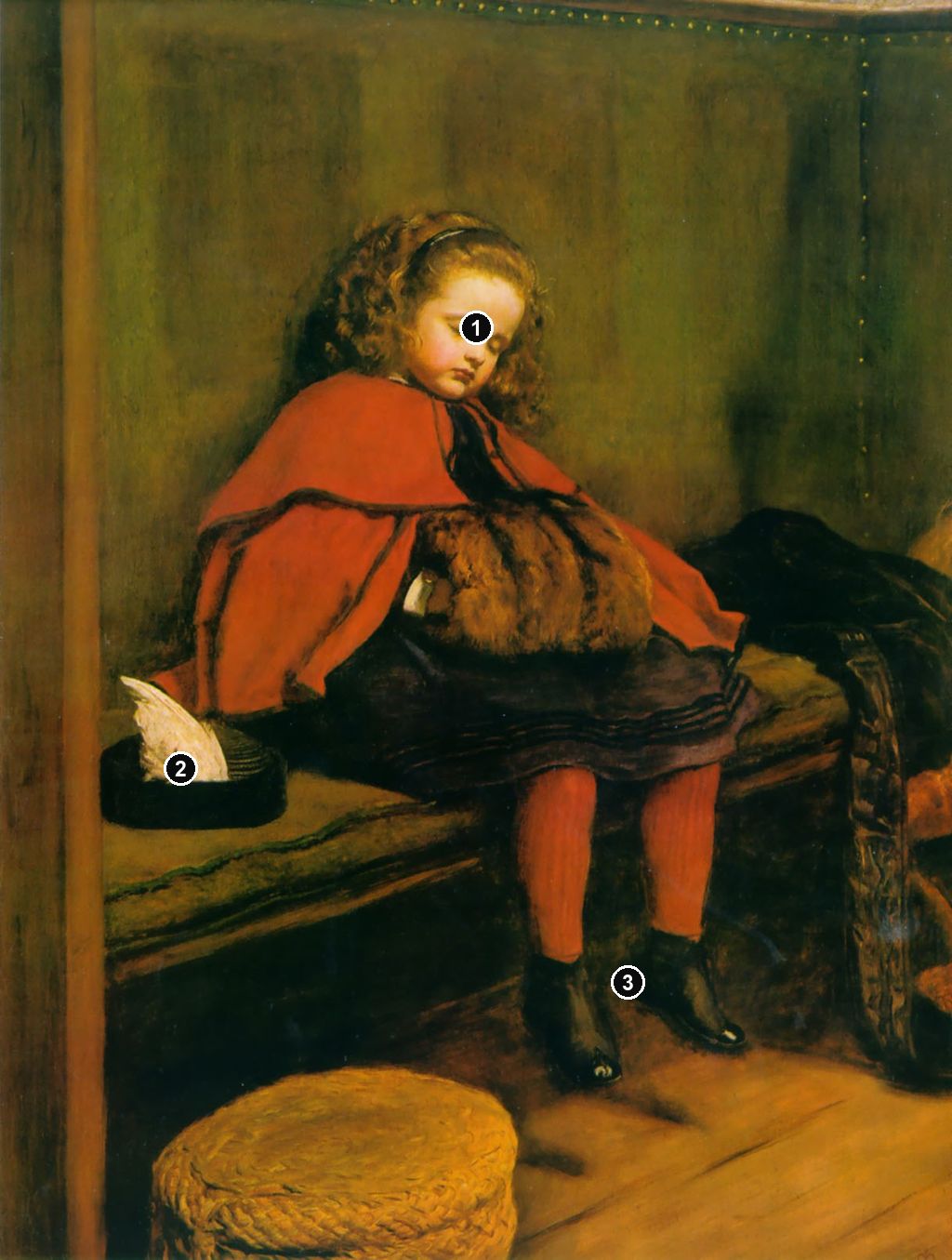
Details from MY SECOND SERMON
Compare the cropped details with the source images above. Notice how their colours, shapes and positions contribute to the larger compositions.
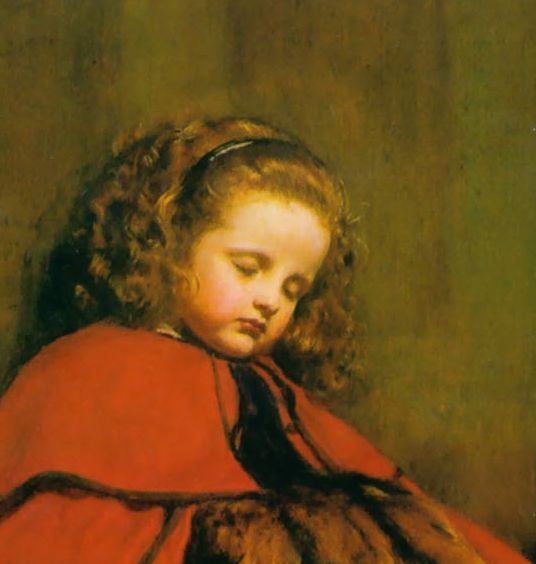
Effie’s lowered head
Effie’s chin slips down and the light falls on her closed eyelids. The outline of her hair is less formal with the hat beside her.
The hat on the bench
The cap and its pale feather lie on the seat. Moving them from the head makes the angle of the sleeping child’s face easier to see.
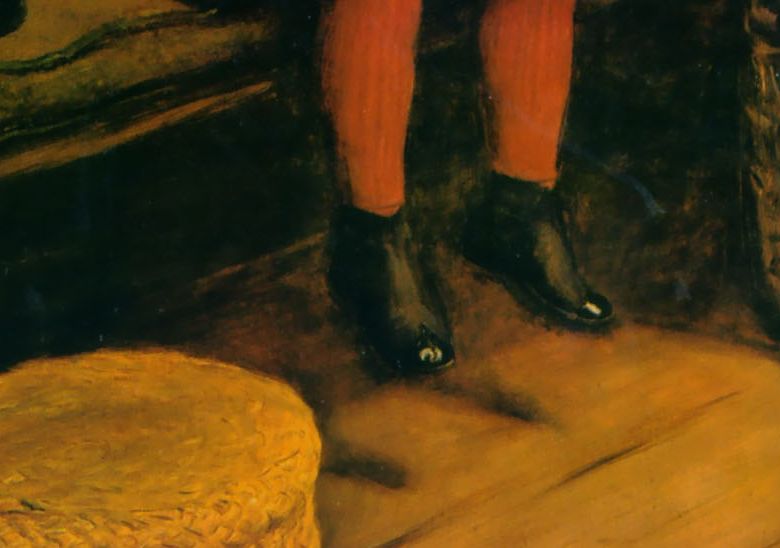
The child’s feet and footstool
Her boots drop below the seat while the low footstool stands further forward. That break between body and furniture is one sign of the change in posture from the first painting.
John Everett Millais artwork directory
Browse paintings and drawings covered in these articles, including related works held in public collections. Reproductive engravings and editions are discussed on the Prints page.
Prints and illustrated editions
- The Baby-House, 1872. Etching by Millais.
- The Good Shepherd, 1864. Wood engraving designed by Millais, engraved and printed by the Dalziel Brothers.
- Mariana, 1857. Wood engraving designed by Millais and cut by the Dalziel Brothers for the Moxon Tennyson.
- The Proscribed Royalist, 1858. Mixed-method engraving by William Henry Simmons after Millais.
| Name | Date | Medium |
|---|---|---|
| Pizarro Seizing the Inca of Peru | 1846 | Painting |
| The Young Men of Benjamin Seizing Their Brides | 1847 | Painting |
| Isabella | 1848–49 | Painting |
| Christ in the House of His Parents (‘The Carpenter’s Shop’) | 1849–50 | Painting |
| Ferdinand Lured by Ariel | 1849–50 (monogram dated 1849) | Painting |
| Study for Christ in the House of His Parents, Tate N04623 | c. 1849 | Drawing |
| Study for Christ in the House of His Parents, Tate N04792 | c. 1849 | Drawing |
| Study for Mariana in the Moated Grange | 1850 | Drawing |
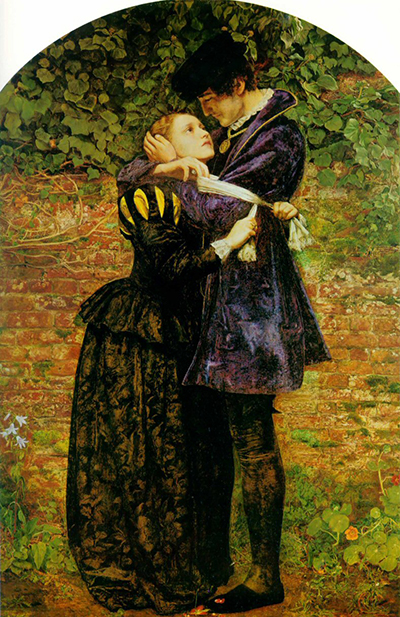
| A Huguenot, on St Bartholomew’s Day, Refusing to Shield Himself from Danger by Wearing the Roman Catholic Badge | 1851–52 (exhibited 1852) | Painting |
| Mariana | 1851 | Painting |
| Ophelia | 1851–52 | Painting |
| The Bridesmaid | 1851 | Painting |
| The Return of the Dove to the Ark | 1851 | Painting |
| The Order of Release 1746 | 1852–53 | Painting |
| The Proscribed Royalist, 1651 | 1852–53 (exhibited 1853) | Painting |
| Portrait of John Ruskin | 1853–54 | Painting |
| The Blind Girl | 1854–56 | Painting |
| Autumn Leaves | 1855–56 (Manchester labels 1856) | Painting |
| A Dream of the Past: Sir Isumbras at the Ford | 1856–57, later revised | Painting |
| The Vale of Rest | 1858–59 | Painting |
| Study for The Black Brunswicker, Tate A00812 | c. 1860 | Drawing |
| Study for The Black Brunswicker, Tate A00813 | c. 1860 | Drawing |
| Study for The Black Brunswicker, Tate A00814 | c. 1860 | Drawing |
| The Black Brunswicker | 1860 | Painting |
| The Ransom | 1860–62 | Painting |
| My First Sermon | 1863 | Painting |
| My Second Sermon | 1864 | Painting |
| Joan of Arc | 1865 | Painting |
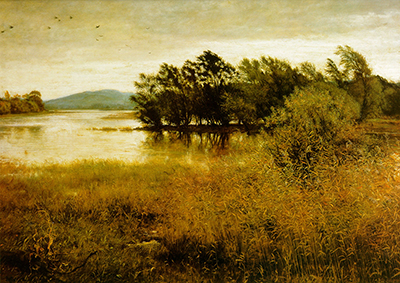
| Chill October | 1870 (exhibited 1871) | Painting |
| The Boyhood of Raleigh | 1870 | Painting |
| The Knight Errant | 1870 | Painting |
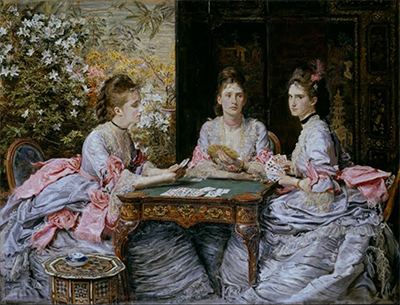
| Hearts are Trumps | 1872 | Painting |
| The North-West Passage | 1874 | Painting |
| Louise Jane Jopling | 1879 | Painting |
| William Ewart Gladstone, NPG 3637 | 1879 | Painting |
| Bubbles | 1886 | Painting |
| Portia | 1886 | Painting |
| Dew-Drenched Furze | 1889–90 | Painting |
| Ducklings | 1889 | Painting |
| Portrait of Sarah Hammond | 1891 | Painting |
Discussion
Look again at the images and ideas explored in My Second Sermon. These editorial prompts invite your observations.
Reader Insights
Which change to the feathered hat, cushion or child’s expression makes you recognise the scene as a sequel?
What part of the pose still calls for careful attention even though the child is asleep?
Join the Conversation
Share a detail, comparison or question about My Second Sermon below.
References
- Guildhall Art Gallery, City of London Corporation, My Second Sermon, 1864. Collection entry and artwork image. View source.
- Guildhall Art Gallery, City of London Corporation, Women of Guildhall Art Gallery. Collection exhibition. View source.
- Corporation Art Gallery, The Corporation Art Gallery, Guildhall, London: Illustrated Catalogue, p. 71, nos. 701–702. View source.
- Fundación Juan March, La isla del tesoro. Arte británico de Holbein a Hockney. Madrid, 2012, nos. 93–94. View source.
- Grosvenor Gallery, Exhibition of the Works of Sir John E. Millais, Bt., R.A. London, 1886, nos. 113 and 127. View source.
- Millais, John Guille, The Life and Letters of Sir John Everett Millais. Abridged ed., London, 1905, pp. 197–199. View source.
- Graves, Algernon, The Royal Academy of Arts, vol. 5. London, 1906, p. 245. View source.
- Bryant, Barbara, “1864: New Art Ascendant.” The Royal Academy Summer Exhibition: A Chronicle, 1769–2018. View source.
- Rossetti, William Michael, “Art-Exhibitions in London.” The Fine Arts Quarterly Review 3, October 1864, pp. 28–29. View source.
- “The Royal Academy.” The Art Journal, June 1864, p. 163. View source.
- Koga, Shiori, “A Study of the Interval Between Two Paintings,” on Millais’s sermon pictures. Research presentation abstract, Kyushu University. View source. (in Japanese).
- National Trust, Thomas Oldham Barlow after John Everett Millais, My First Sermon and My Second Sermon, 1865. Castle Ward, object 834246. View source.
- Victoria and Albert Museum, My Second Sermon, watercolour, 1864, accession 399-1901. View source.
- Connecting Histories, with Birmingham Museums and Art Gallery. My Second Sermon by Millais, Birmingham object 1909P61. View source.
- Royal Academy of Arts, Exhibition of Works by the Late Sir John Everett Millais, Winter Exhibition. London, 1898, nos. 20 and 26. View source.
- Musée Marmottan Monet, L’Empire du sommeil, exhibition dossier, 2025, p. 9. View source.