 by Tom Gurney
Tom Gurney BSc (Hons) is an art history expert with over 20 years experience
Published on June 19, 2020 / Updated on November 25, 2026
Email: tomgurney1@gmail.com / Phone: +44 7429 011000
Bubbles: Introduction
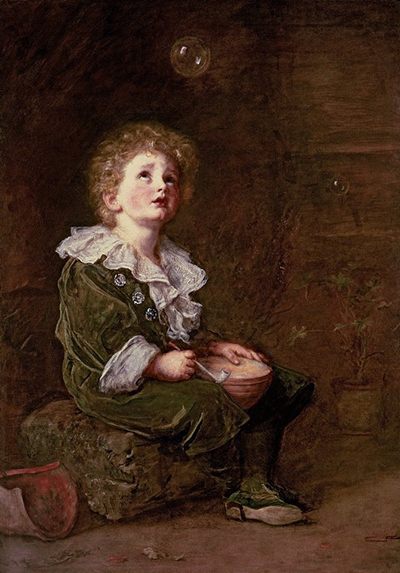
A boy sits with a pipe in his hand, watching a single soap bubble rise above him. John Everett Millais painted his grandson William Milbourne James in 1885–86 and originally called the picture A Child’s World. The oil on canvas bears his monogram and the date 1886 according to the Royal Academy’s 1898 catalogue. The original went on long-term loan from Unilever to the Lady Lever Art Gallery in Port Sunlight. Its fame, however, came from the copies that carried it into places where most people would never see the canvas. [1] [2] [3]
At a Glance
- Date1886 [1][2]
- MediumOil on canvas [1][2]
- SitterThe artist’s grandson William Milbourne James [1][3]
- Related titleA Child’s World [1][2]
This work across John Everett Millais’s career
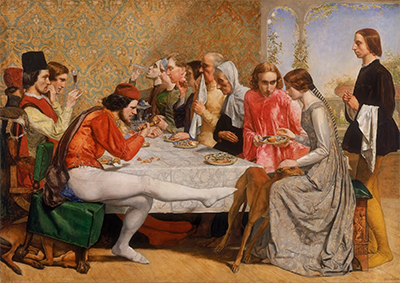
Isabella
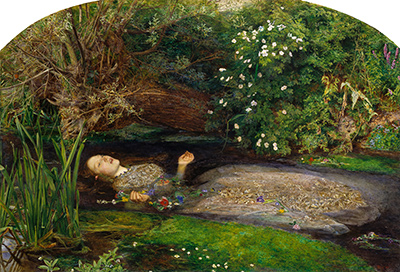
1848–49Ophelia
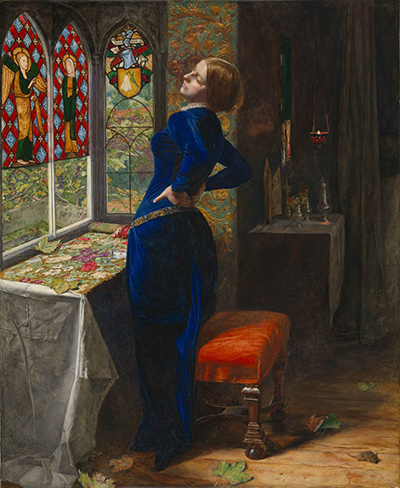
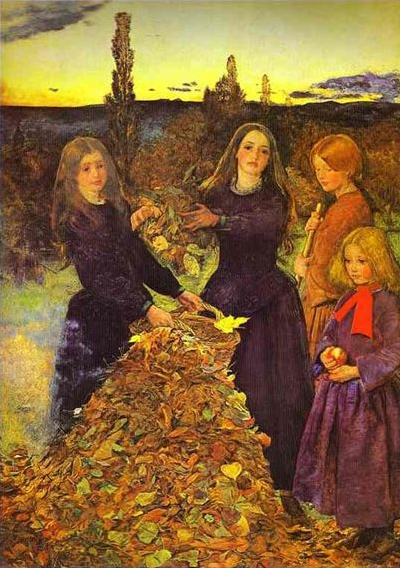
1851–52Autumn Leaves
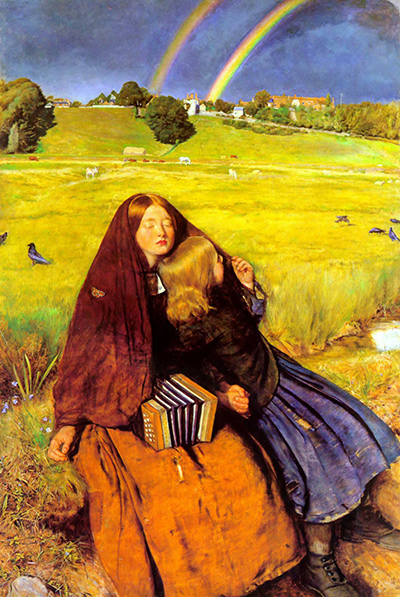
1855–56Dew-Drenched Furze
1889–90Contents
- A boy, a bowl and one small wonder
- Why the bubble matters
- From an illustrated newspaper to Pears Soap
- Millais, Marie Corelli and the original canvas
- Annotated details
A boy, a bowl and one small wonder
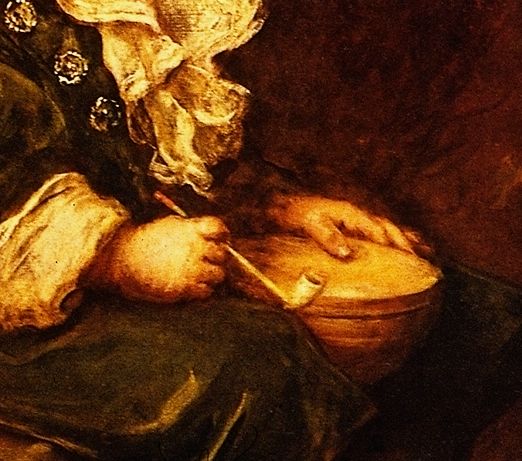
Willie, as the family called him, sits low on a stone in a shaded garden. His right hand still holds the thin pipe, but it has dropped below his chin. The shallow bowl rests between his knees, and his other hand steadies it at the rim. His head tilts back just enough for the line of his eyes to lead towards the bubble. The two hands suggest the practical business of making it. The upturned face belongs to the next instant, when something he has made is already beyond his reach. [1] [3]
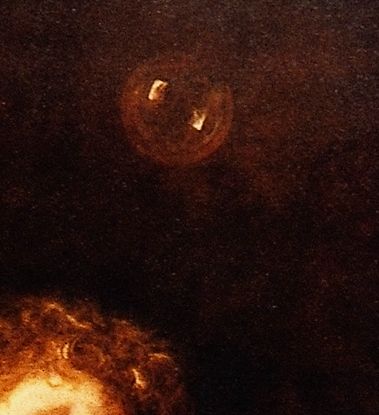
Millais keeps much of the scene in shadow, a change from the daylight and closely described foliage of his early Ophelia. Here a narrow range of tones lets a flash of white make a difference. Light catches the folds of the pale collar and cuffs, the rim of the bowl and the edges of the curls. The green velvet emerges from the dark garden in broad folds. Above it, the bubble is nearly lost in the background except for the little passages of colour and reflected light that tell us it has a surface. The longer you look, the more distinct the materials become. Velvet absorbs the light, glazed pottery collects it and the bubble appears to hold it across a film thin enough to disappear. [1] [4]
John Guille Millais, the artist’s son, recalled that his father had taken the idea from watching Willie at play. He was about four and, in the family account, liked sitting for his grandfather because he got to hear stories. A soap bubble would never stay put long enough to study, so Millais reportedly had a crystal sphere made to help him judge the lights and colours. That detail belongs to the family’s account of the work. A period photograph published by the Metropolitan Museum shows the canvas on an easel in Millais’s Palace Gate studio, alongside the early state of the painting that became Portia. The photograph records the place of Bubbles among his studio projects in the mid-1880s. [5] [6]
Willie was the son of Millais’s daughter Effie. He grew up to become a Royal Navy admiral, and the nickname from the picture followed him into adult life. Royal Museums Greenwich holds Frank Dobson’s 1941 portrait bust of the admiral. The sculpted likeness has a public bearing that makes a striking comparison with Millais’s portrait of the boy at play. [3] [4]
Why the bubble matters
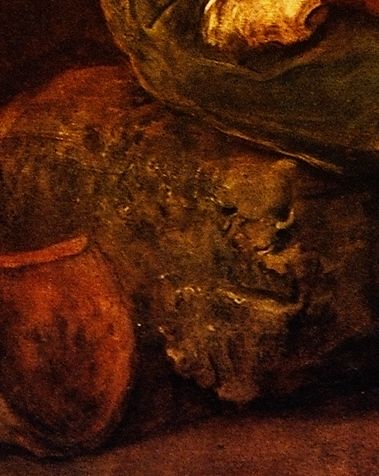
Far below the bubble is an overturned, broken earthenware vessel. On the other side of the scene, a plant still grows upright in its pot. Their low position makes them easy to miss while following the boy’s eyes. They also give the eye two different kinds of time to think about. The plant can put on new growth and the broken pot keeps its shape long enough to show what happened to it. The bubble will vanish altogether. That arrangement invites a reading of the scene as a meditation on how briefly living things and their pleasures last. [4]
The association reaches back centuries. In Jan Steen’s The Life of Man, in the Mauritshuis, a boy blowing bubbles appears high in the shadow of a loft beside a skull. The incident sits above a crowded room where people are eating, drinking and playing. The museum identifies it as a quiet reminder of mortality in the middle of ordinary life. In Millais the child and the bubble have moved to the centre of the picture, and breakable things carry the hint of loss. The Dutch comparison explains why a Victorian viewer might recognise a theme of transience in such a gentle subject. It also shows how little Millais needs to spell out. [7]
Chardin’s Soap Bubbles, painted around 1733–34 in the version at the Metropolitan Museum, offers another way to see Millais’s choice. Chardin shows a young man leaning over a ledge and blowing into a straw while a smaller child peers over beside him. The bubble is still attached, and both figures can watch it take shape. Millais gives Willie a space of his own and puts a gap between the pipe and the bubble. The older paintings offer points of comparison for a subject artists kept returning to. The suspended instant in Bubbles is as much about the intensity of a child’s attention as it is about what happens when the bubble bursts. [8]
From an illustrated newspaper to Pears Soap
Sir William Ingram, proprietor of The Illustrated London News, bought the oil for reproduction. A collector’s account in the Victoria and Albert Museum record, supplied through Unilever’s archivist, dates a presentation plate to Christmas 1886. Art historian Yoko Kanemitsu reproduces a surviving colour plate from a British Library copy of the 24 December 1887 issue. The latter plate gives us a documented example of what readers received with a Christmas issue. The date of the first newspaper reproduction remains uncertain. [9] [10]
Thomas J. Barratt acquired the painting for A. & F. Pears. The firm adapted it for advertising, and a full-page example appears in the 1887 Christmas number of the American magazine Judge. The advertisement praises the soap as an aid to complexion and names the picture and its painter prominently below the image. Giving the artist’s honours and the firm’s claimed purchase price made possession of a prestigious picture part of the sales pitch. For a reader seeing the image on the page, the boy’s velvet, curls and absorption came with a commercial explanation for the bubble. [10] [11]
On 9 June 1888, Pears announced a forthcoming Bubbles show-card to the trade in The Chemist and Druggist. The firm claimed that it had already spent £20,000 on the project and would produce a copy hard to distinguish from the original, for which it said it had paid £2,200. It listed depots in London, New York and Melbourne. The promise of fidelity and the attention to cost show what Pears wanted shopkeepers to value. The card would advertise the soap by giving shoppers something that looked like a painting worth stopping to see. [12]
The Victoria and Albert Museum holds a proof of a Pears design, dated about 1888 or 1889, mounted on card with gold edging. In that design a bar of Pears soap has been added near the lower right. The insertion is small enough to leave the boy’s pose intact and large enough to supply the name of the product associated with his play. Elsewhere the picture travelled without the familiar branding. Wellcome Collection holds a chromolithograph after Millais published by Arthur Tooth & Sons. The caption identifies Pears as the owner, but the picture itself carries no soap advertisement. The collection also holds a Pears advertising jigsaw. Each format asked for a different kind of attention, from the glance of a shopper passing a show-card to the sustained attention of someone piecing the picture together. [9] [13] [14]
Pears offered a version for the home in its 1897 Christmas annual, which paired Bubbles with a reproduction of Millais’s Cherry Ripe. This Bubbles print was an oleograph, a colour print made to resemble an oil painting. Successive impressions in carefully aligned colours could approximate the changeable tones of the original. The image itself measured about 71 by 49 centimetres in the National Library of New Zealand’s example, large enough to give a wall much the same focus as a modest painting. Readers could keep the picture long after the Christmas stories had been read. [10] [15] [16]
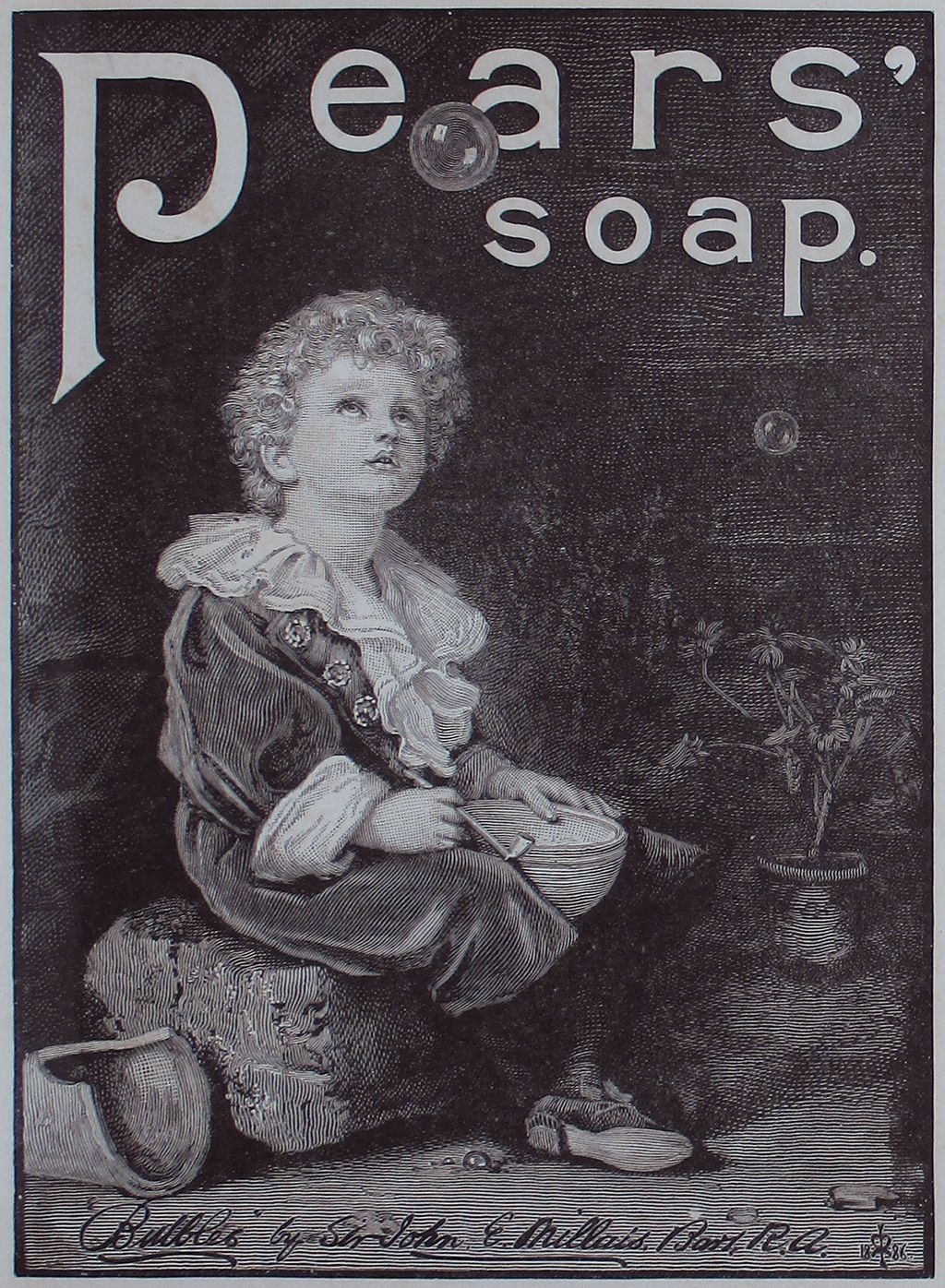
Pears soap advertisement after John Everett Millais’s Bubbles, from the 1912 Pears centenary edition of Charles Dickens’s The Battle of Life. The branded print uses the child and bubbles as part of an advertising design. Image source. Public domain.
Millais, Marie Corelli and the original canvas
Millais had long sold pictures for reproduction. His son mentions Cherry Ripe and Cinderella among the pictures that had already reached readers of the illustrated press. Even early in his career, while discussing a print of The Return of the Dove to the Ark, the artist took a close interest in who would reproduce his work and how well it would be done. A picture could travel far by this route, and the painter had reasons to care about what the new audience saw. Ownership of the canvas and control of its reproduction could be valuable to different people. As the trade in illustrated papers and standalone prints expanded, the decision about how a painting reached the public could pass from a studio to a publisher or advertiser. [5] [10] [17]
Accounts differ on how Millais received the Pears proposal. His son portrays him as angry at the commercial use and impressed when he inspected the reproduction. In a letter published in The Chemist and Druggist in 1899, Barratt recalled that Millais praised the proof at once and wanted to hang the finished print in his own room. Barratt defended the partnership between painters and advertisers. He argued that an advertiser could put a picture before a larger public than the Royal Academy could. Kanemitsu sees the print’s appeal beyond the gallery as part of the reason to take that argument seriously. The two men remembered Millais’s reaction differently even as they agreed on his admiration for the quality of the print. [5] [10] [18]
Millais’s own letter to his daughter Effie gives us a glimpse of the work that went into a reproduction. He told her he had been disappointed by an early attempt. He had the plate examined alongside the oil in the studio and was pleased with the result Effie had seen. The letter concerns the quality of an engraving and records his involvement in getting it right. It gives practical meaning to the claim that the painter cared how the picture would appear in print. [19]
The oil continued to have an exhibition life of its own. It was shown at the Paris Exposition Universelle in 1889. At the 1893 World’s Columbian Exposition in Chicago, the revised catalogue lists it among the British oil paintings, on loan from Pears. American readers who had seen the boy in a soap advertisement could now have encountered the canvas in a fine-art exhibition under the same title. [20] [21]
The novelist Marie Corelli made that tension personal in The Sorrows of Satan in 1895. A character points to the little boy associated with Pears as a reason to rank Millais below painters such as Reynolds and Gainsborough. Millais challenged her. In a letter dated 24 December, reproduced in the family biography, Corelli said how much she admired the original and how much she disliked the posters. She had assumed that he had painted the picture for Pears. She promised a correction and imagined the canvas hanging beside Reynolds’s The Age of Innocence, where the public could see it as a painting in its own right. [5]
Three years after Corelli’s letter, A. & F. Pears lent the canvas to the Royal Academy’s memorial exhibition of Millais’s work. It later passed into the corporate collection through the acquisition of Pears by Lever Brothers and spent a period on loan to the Royal Academy. In 2006 the Lady Lever Art Gallery announced the long-term loan from Unilever. In the oil itself, the deep shadow around the boy and the pale glimmer above him make the pleasure of his discovery visible. That simple line of sight survived all the changes the image underwent in print. [1] [2] [22]
Annotated Details from Bubbles
The numbered points identify visible features discussed in this article. Return from each detail to the numbered overview. Bubbles, also exhibited as A Child’s World, oil on canvas. Image source. Public domain.
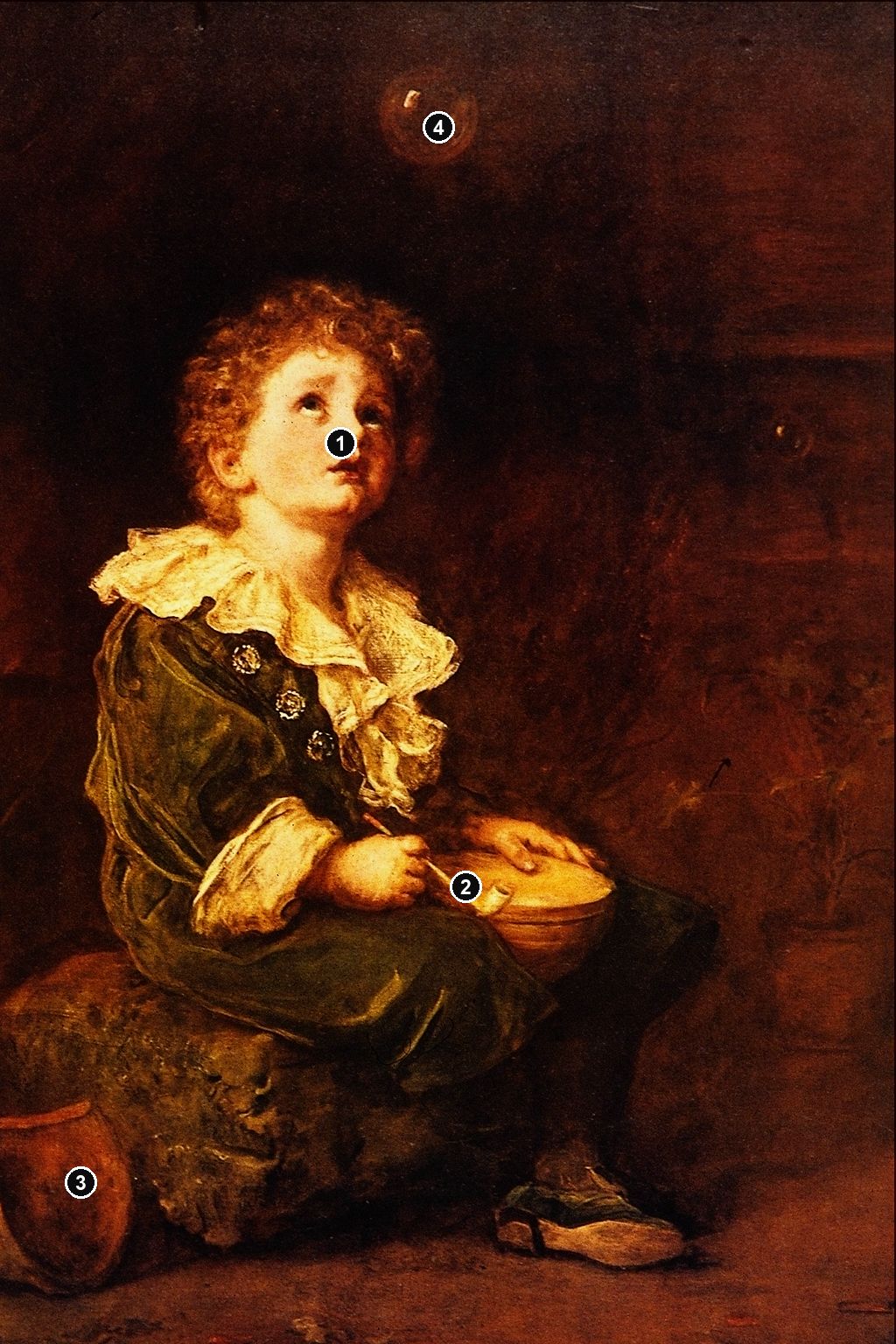
Details from BUBBLES
Compare the cropped details with the source images above. Notice how their colours, shapes and positions contribute to the larger compositions.
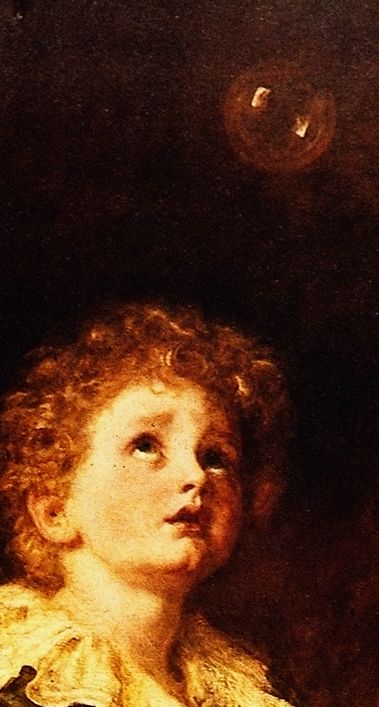
A face turned to the bubble
The face catches a light that follows the rise of the child’s gaze. Above him, the rim of the bubble almost fades into the dark.
The bowl and pipe
The boy holds the pipe near the bowl. The familiar size and shape of these objects are easier to recognise than that of the bubble.
A broken pot by the seat
The broken piece of pottery lies below the child, close to the block that serves as his seat. Its weight and damaged edge contrast with the light, intact bubble overhead.
The rim of the bubble
Look high in the dark field for the thin, uneven ring of light. Its partial outline makes the bubble harder to see than the child’s face.
John Everett Millais artwork directory
Browse paintings and drawings covered in these articles, including related works held in public collections. Reproductive engravings and editions are discussed on the Prints page.
Prints and illustrated editions
- The Baby-House, 1872. Etching by Millais.
- The Good Shepherd, 1864. Wood engraving designed by Millais, engraved and printed by the Dalziel Brothers.
- Mariana, 1857. Wood engraving designed by Millais and cut by the Dalziel Brothers for the Moxon Tennyson.
- The Proscribed Royalist, 1858. Mixed-method engraving by William Henry Simmons after Millais.
| Name | Date | Medium |
|---|---|---|
| Pizarro Seizing the Inca of Peru | 1846 | Painting |
| The Young Men of Benjamin Seizing Their Brides | 1847 | Painting |
| Isabella | 1848–49 | Painting |
| Christ in the House of His Parents (‘The Carpenter’s Shop’) | 1849–50 | Painting |
| Ferdinand Lured by Ariel | 1849–50 (monogram dated 1849) | Painting |
| Study for Christ in the House of His Parents, Tate N04623 | c. 1849 | Drawing |
| Study for Christ in the House of His Parents, Tate N04792 | c. 1849 | Drawing |
| Study for Mariana in the Moated Grange | 1850 | Drawing |
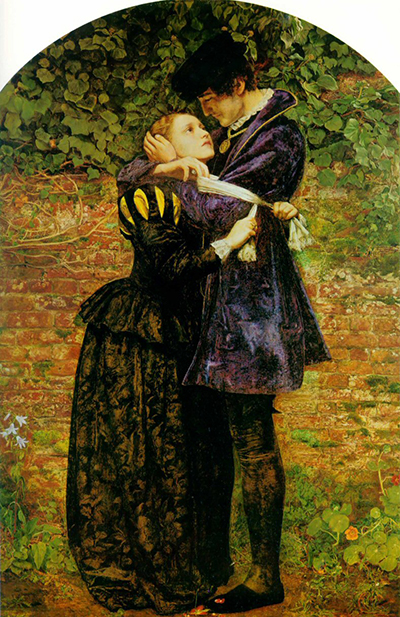
| A Huguenot, on St Bartholomew’s Day, Refusing to Shield Himself from Danger by Wearing the Roman Catholic Badge | 1851–52 (exhibited 1852) | Painting |
| Mariana | 1851 | Painting |
| Ophelia | 1851–52 | Painting |
| The Bridesmaid | 1851 | Painting |
| The Return of the Dove to the Ark | 1851 | Painting |
| The Order of Release 1746 | 1852–53 | Painting |
| The Proscribed Royalist, 1651 | 1852–53 (exhibited 1853) | Painting |
| Portrait of John Ruskin | 1853–54 | Painting |
| The Blind Girl | 1854–56 | Painting |
| Autumn Leaves | 1855–56 (Manchester labels 1856) | Painting |
| A Dream of the Past: Sir Isumbras at the Ford | 1856–57, later revised | Painting |
| The Vale of Rest | 1858–59 | Painting |
| Study for The Black Brunswicker, Tate A00812 | c. 1860 | Drawing |
| Study for The Black Brunswicker, Tate A00813 | c. 1860 | Drawing |
| Study for The Black Brunswicker, Tate A00814 | c. 1860 | Drawing |
| The Black Brunswicker | 1860 | Painting |
| The Ransom | 1860–62 | Painting |
| My First Sermon | 1863 | Painting |
| My Second Sermon | 1864 | Painting |
| Joan of Arc | 1865 | Painting |
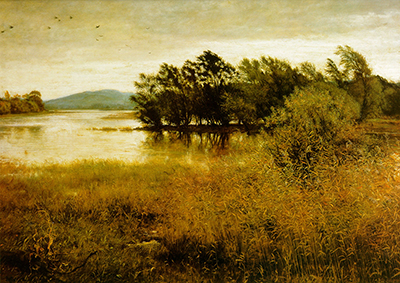
| Chill October | 1870 (exhibited 1871) | Painting |
| The Boyhood of Raleigh | 1870 | Painting |
| The Knight Errant | 1870 | Painting |
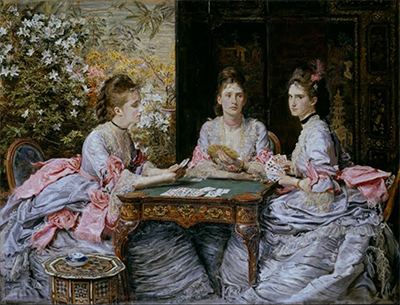
| Hearts are Trumps | 1872 | Painting |
| The North-West Passage | 1874 | Painting |
| Louise Jane Jopling | 1879 | Painting |
| William Ewart Gladstone, NPG 3637 | 1879 | Painting |
| Bubbles | 1886 | Painting |
| Portia | 1886 | Painting |
| Dew-Drenched Furze | 1889–90 | Painting |
| Ducklings | 1889 | Painting |
| Portrait of Sarah Hammond | 1891 | Painting |
Discussion
Look again at the images and ideas explored in Bubbles. These editorial prompts invite your observations.
Reader Insights
What do you notice first in the oil, and how does that change when the Pears name appears across the print?
Does the broken pot make you spend more time looking at the bubble? What relationship between the two stands out?
Join the Conversation
Share a detail, comparison or question about Bubbles below.
References
- Lady Lever Art Gallery, “Artwork of the Month: Bubbles,” August 2006, reproduced by Art in Liverpool. View source.
- Royal Academy of Arts, Exhibition of Works by the Late Sir John Everett Millais, Bart., 1898, p. 46, no. 157. View source.
- Royal Museums Greenwich, Admiral Sir William Milbourne James (1881–1973), collection record and sitter biography. View source.
- Rebecca Jeffrey Easby, “John Everett Millais, Bubbles,” Smarthistory. View source.
- John Guille Millais, The Life and Letters of Sir John Everett Millais, vol. II, chapter XVII, Methuen, 1899. View source.
- Lucy Oakley, “The Evolution of Sir John Everett Millais’s Portia,” Metropolitan Museum Journal 16, fig. 7, 1981. View source.
- Mauritshuis, Jan Steen, The Life of Man, collection no. 170. View source.
- The Metropolitan Museum of Art, Jean Siméon Chardin, Soap Bubbles, collection no. 49.24. View source.
- Victoria and Albert Museum, Bubbles, advertising proof, E.224-1942, about 1888–89. View source.
- Yoko Kanemitsu, “Originality and Reproduction: John Everett Millais’s Bubbles and Pears Soap Advertisement,” Aesthetics 58, no. 2, 2007, pp. 29–42, especially figs. 9 and 12. View source.
- A. & F. Pears, “Pears’ Soap” advertisement featuring Bubbles, Christmas Judge, 1887, p. 39. View source.
- A. & F. Pears, “A Magnificent Show-Card, Bubbles,” The Chemist and Druggist, 9 June 1888, p. 3. View source.
- Wellcome Collection, A Boy Sits on a Stone with a Bowl and a Bubble Pipe, chromolithograph FFAXRU5Q. View source.
- Wellcome Collection, “Bubbles”: Pears Soap Matchless for the Complexion, advertising jigsaw KVS5FEBD. View source.
- National Library of New Zealand, Cherry Ripe. Bubbles. London, Pears, 1897, C-066-005/006, Christmas annual supplements. View source.
- Bodleian Libraries, The Art of Advertising, exhibition captions on chromolithography and commercial uses of fine art. View source.
- Robert M. Verhoogt, “Artistic Piracy: Modern Conflicts of Artistic Copyright in Historical Perspective,” CIHA Congress, London, 2000. View source.
- Thomas J. Barratt, “Art and Advertisement,” letter dated 16 November 1899, published in The Chemist and Druggist, 25 November 1899. View source.
- John Everett Millais, letter to Effie James, transcribed in Bonhams, The Aldine Collection, lot 231, p. 60. View source.
- Nele Putz, Demokratisierung des Luxus in der Malerei des späten 19. Jahrhunderts: Portrait und Genre bei John Everett Millais, Ludwig Maximilian University of Munich, exhibition chronology and discussion of Bubbles. View source. (in German).
- World’s Columbian Exposition, Revised Catalogue, Department of Fine Arts, Chicago, 1893, p. 315, Great Britain, oil paintings, no. 125. View source.
- Rossetti Archive, “Bubbles,” artwork record and provenance. View source.