 by Tom Gurney
Tom Gurney BSc (Hons) is an art history expert with over 20 years experience
Published on June 19, 2020 / Updated on November 29, 2026
Email: tomgurney1@gmail.com / Phone: +44 7429 011000
Overview
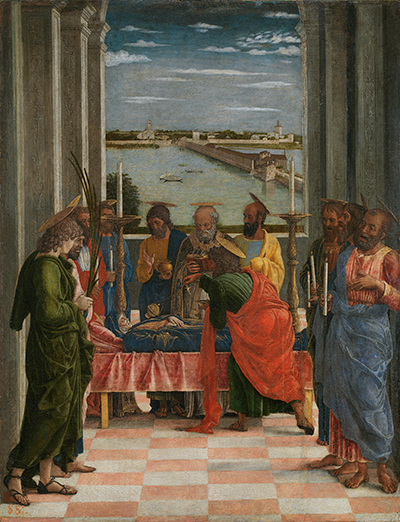
Through a tall opening behind the Virgin’s deathbed, a bridge crosses the pale water of Mantua. The apostles have gathered for a funeral rite, yet there is room in this small painting to see boats, towers and clouds beyond them. Andrea Mantegna painted the scene around 1462, in his first years working for the Gonzaga. The surviving panel, El Tránsito de la Virgen at the Museo Nacional del Prado in Madrid, measures 54.5 × 42 cm. The Prado describes the medium as mixed technique on wood panel, and its inventory number is P000248. [1] [2] [3]
The view of Mantua now fills much of the upper half of the painting. The original composition extended higher. A small panel in Ferrara showing Christ receiving Mary’s soul has been identified as a surviving part of that lost upper section. Seen together, the two paintings suggest how Mantegna set an earthly ceremony and a heavenly event within the same architecture. [1]
At a Glance
- DateAbout 1462
- MediumMixed technique on wood panel
- Dimensions54.5 × 42 cm
- CollectionMuseo Nacional del Prado, Madrid
- Inventory numberP000248
Andrea Mantegna in context
San Zeno Altarpiece
1457–59 [13]The Death of the Virgin
C. 1462 [2]The Triumphs of Caesar
Mid-1480s–before 1506 [14]Madonna della Vittoria
1495–96 [15]The apostles around the bed
Mary lies with her head to the left, her dark blue mantle spread across a bed draped in rose-coloured cloth. The cloth hangs nearly to the floor and turns the front of the bed into a broad band across the panel. Her pale face emerges between a cushion and the folds of her mantle. One hand rests on her body. Around her, the apostles stand, turn or bend in the course of a rite. The subject is also called the Dormition, or the falling asleep of the Virgin. The Prado relates the gathering to apocryphal accounts of Mary’s death and identifies the absent apostle as Thomas, who is preaching in India in that version of the story. [1]
The foremost men on either side establish the limits of the group. At the left, a young man in green lowers his eyes as he holds a tall palm frond. Its lean draws attention towards the bed, while the curve of his mantle and the sandals visible beneath it give him a firm place on the pavement. At the right, an older man in pink and blue turns his head inward with his mouth open. One hand crosses his chest and the other holds a candle. The faces behind these two appear at different heights and in different degrees of profile. Even where the figures overlap closely, a line of brow or the edge of a cheek is often enough to make one face distinct from the next. [1] [3]
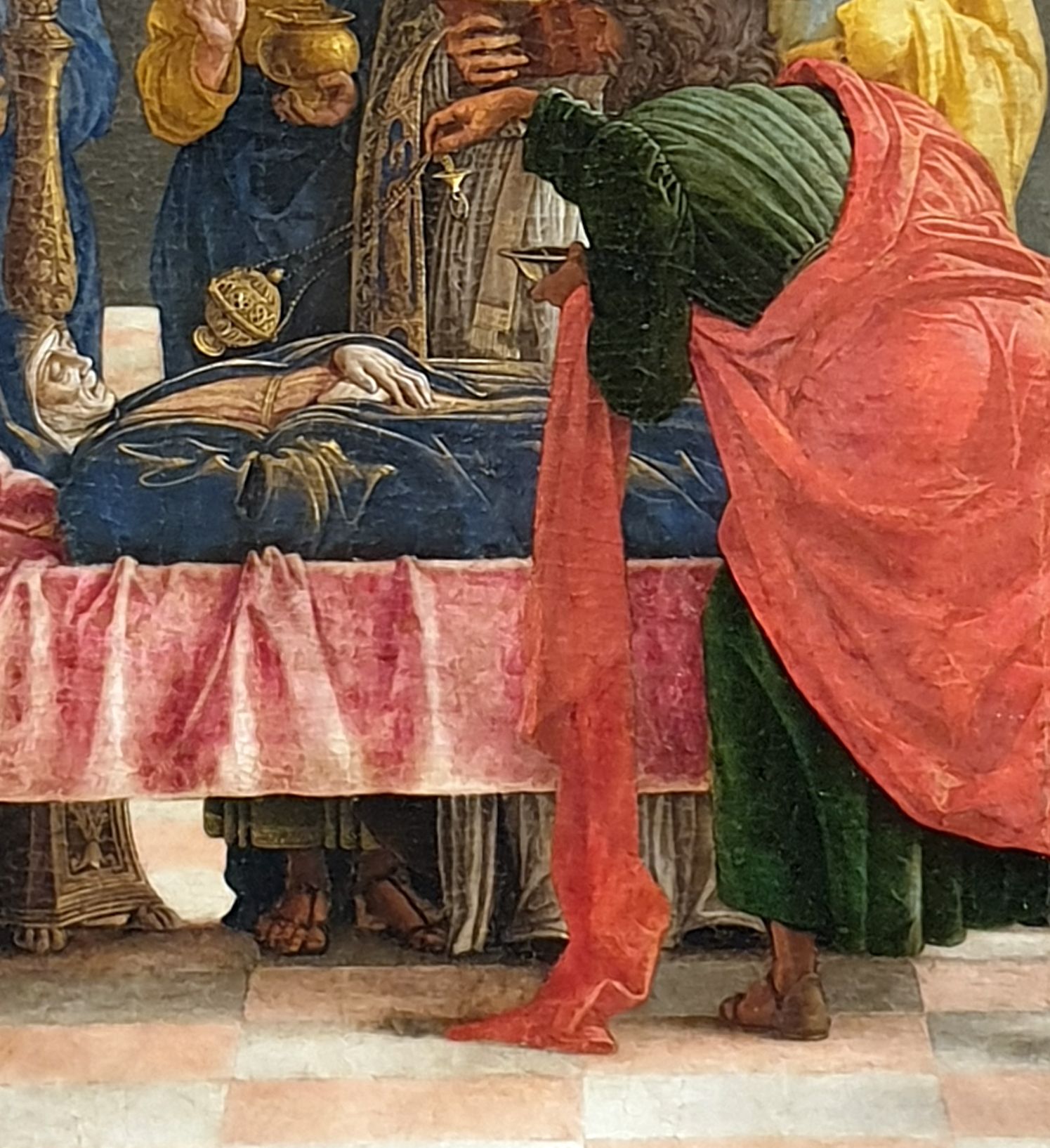
At the centre, a grey-bearded apostle in patterned vestments reads from a book. Beside him a man holds a small gold vessel and raises his free hand. In front of them, a man in green bends towards Mary, swinging a censer. The chains make a fine diagonal above her face as the red cloak falls almost to the floor. His movement is legible from the placement of his feet as much as from his arm. One foot bears his weight underneath him, while the other extends behind. The two tall candlesticks remain upright throughout this small flurry of gestures. They mark the space around Mary and help distinguish the men immediately engaged in the rite from those standing closer to the sides. [1] [3]
The grouping gives the impression of actions taking place together. The reader attends to his book, the man with the palm looks down, and one of the men at the right appears to turn towards his neighbour. The man with the censer is the only figure to lean so far across the long horizontal of the bed. His red drapery covers part of Mary’s body and briefly interrupts the view of her, an effect that makes sense in a room occupied by people with something to do. The gravity of the scene comes partly from the care they give those tasks.
How the pavement leads to the lake
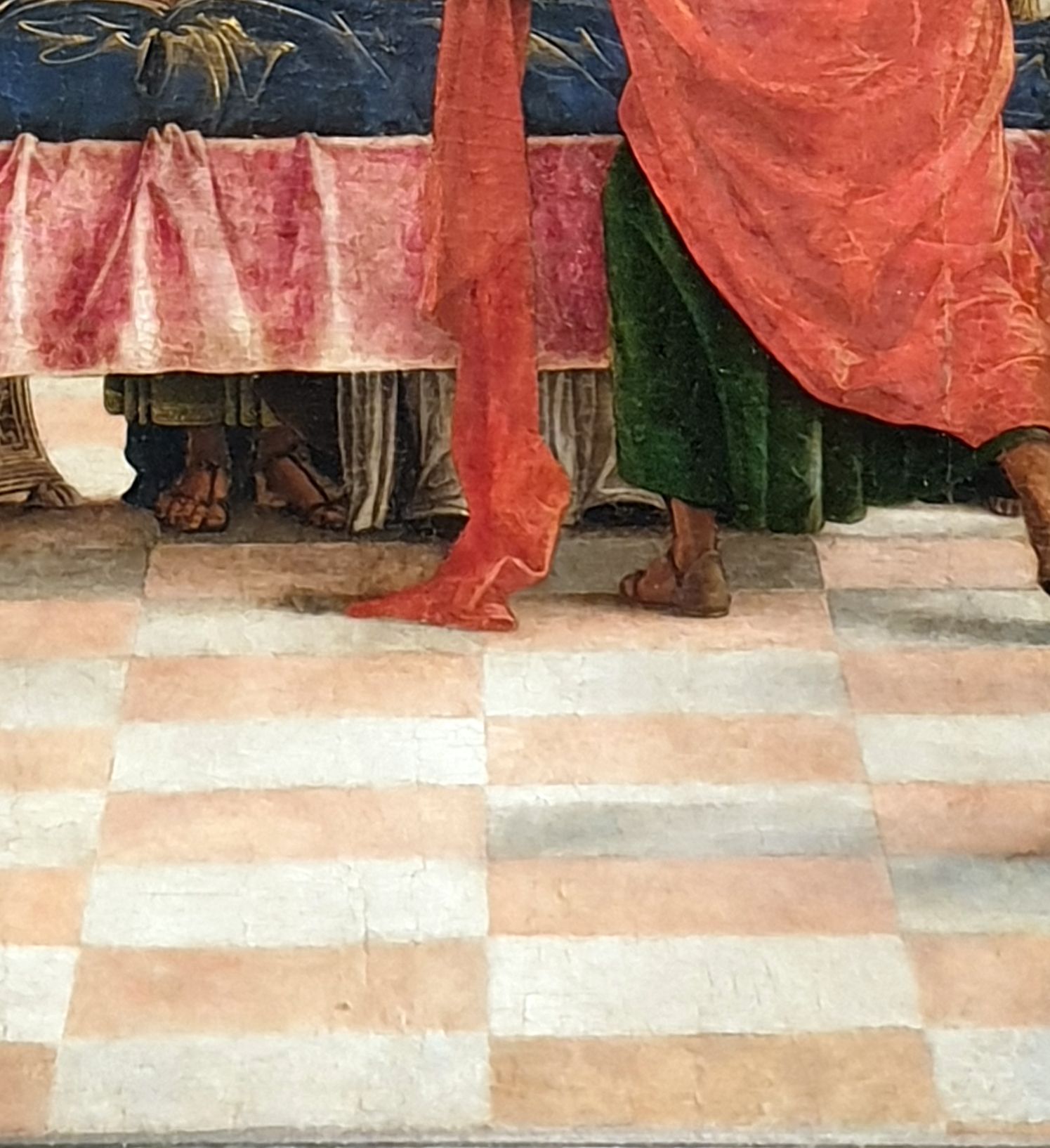
Start at the lower edge, where the pale and reddish tiles are broad enough to see clearly. The joints running into the picture draw closer together as they recede and disappear behind the bed. The crosswise bands grow shallower with distance. Between the men at the sides and the funeral group, these few visible rows establish a stretch of empty floor. They also give the standing figures different distances from the viewer. The men at the sides crowd together in the picture, but their feet occupy successive strips of pavement. [1] [3]
The horizontal of the bed repeats in the sill behind it. The upright candles and the pilasters at the sides counter those crosswise lines. Mantegna lets the nearest faces, branches and fabrics overlap this otherwise regular scheme. The dark palm frond crosses the mouldings at the left, and the candles rise in front of the view of the water. These simple overlaps explain where the objects are in a way that the pavement, largely concealed once it reaches the figures, can no longer do. They also help the opening read as part of a room rather than as a picture hanging behind the apostles. [1] [3]
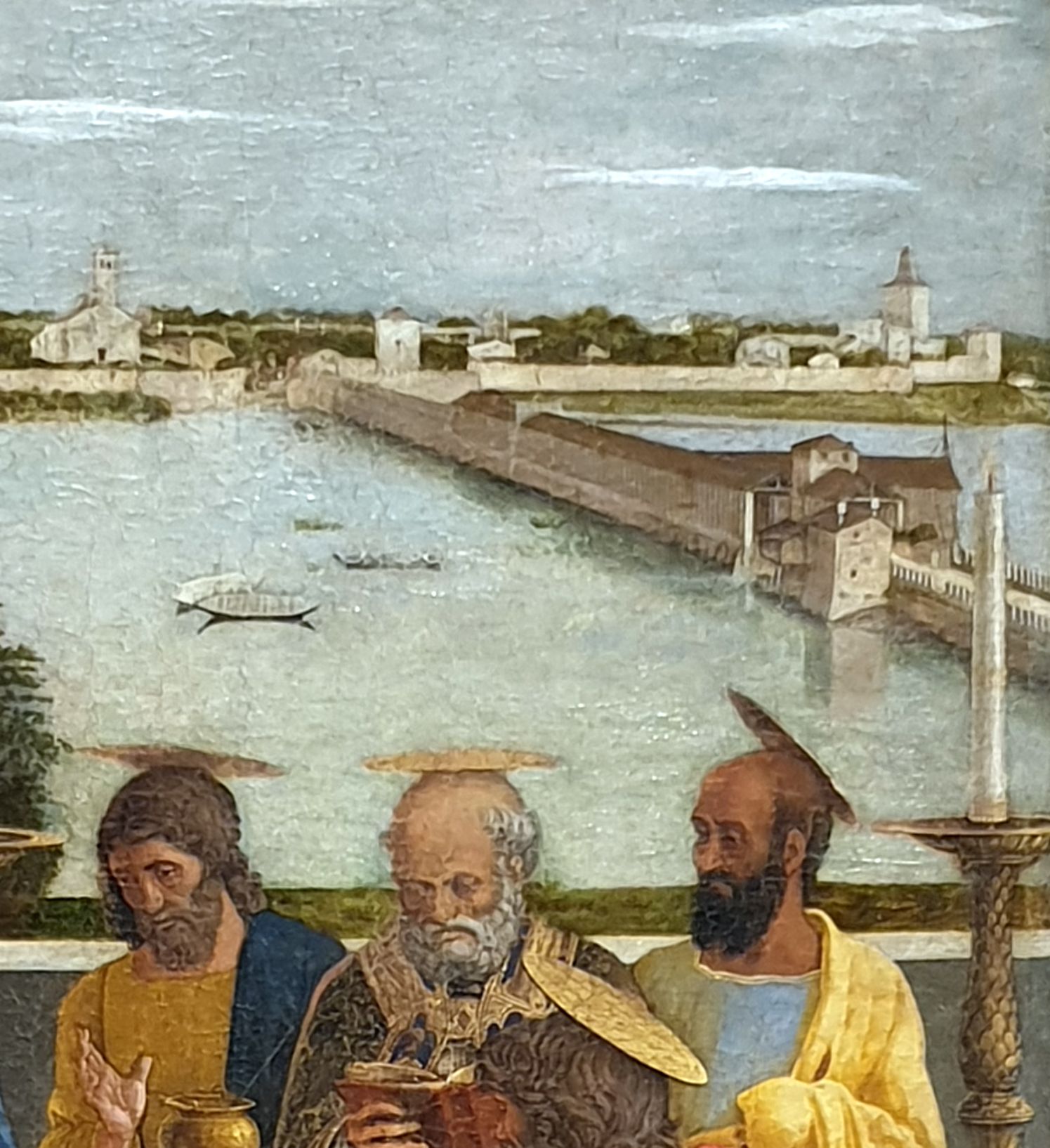
The Prado singles out the lake, the San Giorgio bridge and the settlement of Borgo di San Giorgio as an early example of recognisable topography in Italian painting. The Louvre likewise identifies the waters formed by the Mincio and the bridge at Mantua. To follow the view, begin at the right, where the bridge enters the opening. Its long flank angles towards the far shore, toward the buildings and towers spread across the horizon. A boat well inside the frame offers a second measure of distance. Its hull is small beside the bridge, and the marks on the water beyond it are smaller still. The tiles lead almost straight back into the room, while the bridge takes the eye across the water on a diagonal. [1] [3]
The topography gives the sacred scene a place familiar to Mantegna’s patrons. Someone at the Gonzaga court could recognise the crossing and the settlement within a scene from the life of the Virgin. The lake also changes how the interior feels. Behind faces rich in warm reds, greens and yellows lies a field of cool, pale water. The low far shore leaves sky above it, while the straight edges of the opening keep the view contained. Mantegna can give the mourners a close, enclosed space and still let the eye travel a long way beyond them. [1] [3]
Venetian designs and a Mantuan setting
The Prado’s exhibition text traces the design to the Dormition mosaic in the Mascoli Chapel at San Marco in Venice and relates the vaulted architecture to drawings by Jacopo Bellini. The basilica’s own account distinguishes different phases within the mosaic and associates much of the figure group and its great classical arch with Andrea del Castagno. The Louvre also holds an exact comparison in Bellini’s drawing of the Virgin’s death in an elaborate Venetian palace. The parallels concern the arrangement of the mourners and the architecture in which they stand. [1] [4] [5]
The mosaic and drawing help explain why the building in the Prado picture matters as much as it does. A large architectural setting can give a group of mourners a common space while leaving room above their heads for another part of the story. Mantegna also opened that space horizontally. His local landscape sits between the company around the bed and the place where the heavenly figures would have appeared. The painted room thus serves a devotional narrative and accommodates a recognisable view, each visible on its own terms. [1] [3] [4] [5]
What survives above the window
The Prado’s upper edge cuts through the rising architecture. The pilasters run all the way to the cut, which also interrupts the opening onto the lake. The likely surviving piece from above it is Christ with the Soul of the Virgin at the Pinacoteca Nazionale in Ferrara. The Louvre exhibition dates the fragment to about 1460–64 and gives its dimensions as 27.5 × 17.5 cm. Italy’s national catalogue records it as tempera on wood and gives rounded dimensions of 28 × 18 cm. The Ferrara fragment is less than half the width of the painting in Madrid. [1] [3] [6] [7]
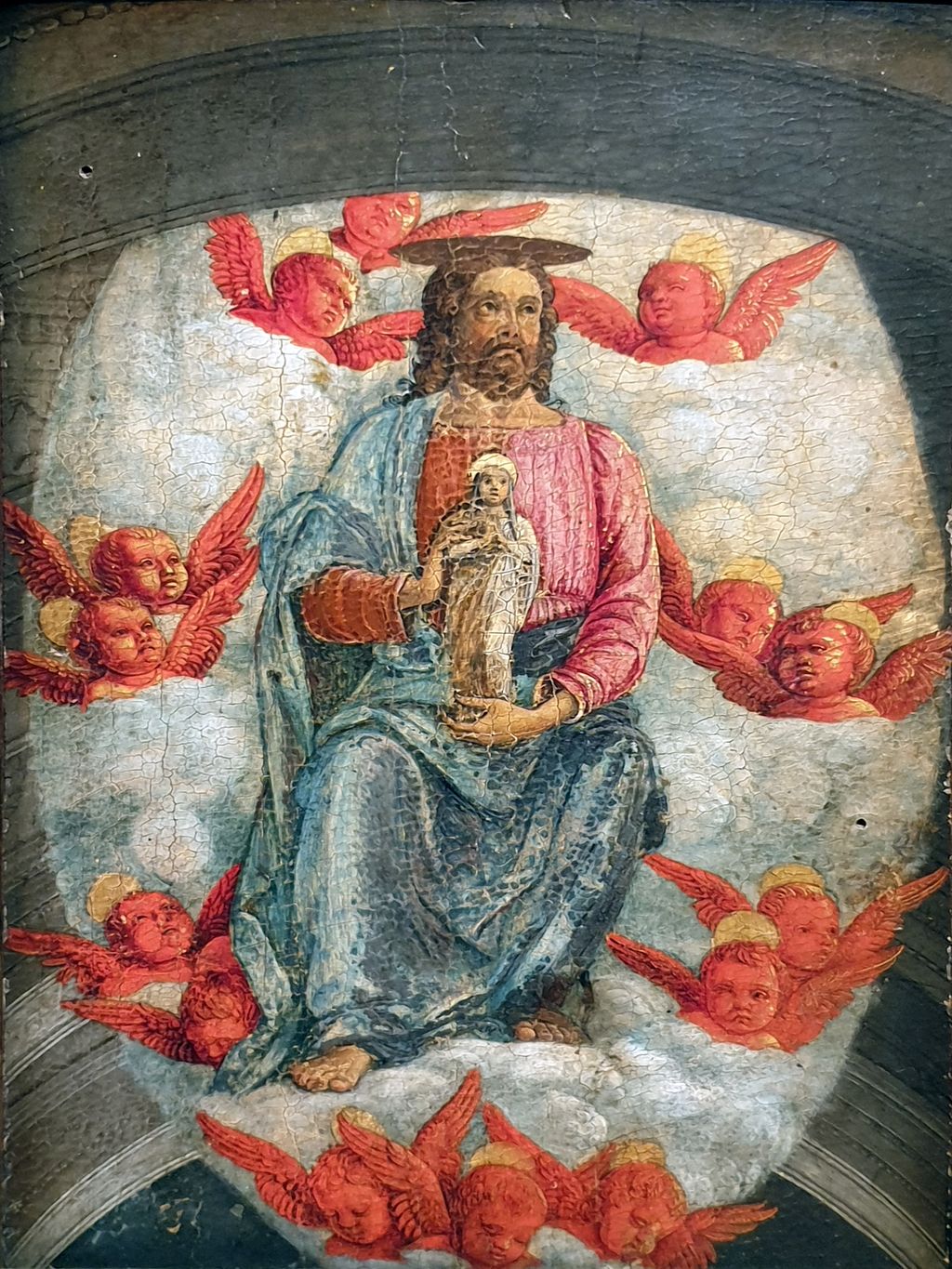
Christ with the Soul of the Virgin, Pinacoteca Nazionale, Ferrara Image source. Public domain.
The art historian Roberto Longhi identified the Ferrara piece as part of the larger painting in 1934. There are two reasons why the identification is persuasive. The Prado panel’s upright supports leave the architecture incomplete, while the fragment preserves portions of a painted vault. Curved bands of masonry are visible above Christ and reappear at the lower corners. Those arcs give the eye a credible continuation of the construction rising behind the apostles. The subject is equally telling. The figure of Christ carrying a small, upright representation of Mary’s soul supplies the event that belongs with the vigil around her body. The Uffizi’s account of the Mantuan cycle treats the two pieces as parts of a single scene. The fragment’s narrowness leaves missing material around it, so the reconstruction cannot recover the full outline or every detail of the lost section. [1] [6] [8] [9]
In Ferrara, Christ sits on clouds with red-winged cherubim around him. He supports the little figure of Mary with one hand below and the other at her side. She faces out with her hands gathered in prayer. The small upright figure gives the story a second image of Mary, distinct from the long, still form on the bed. The painted ribs at the edges of the fragment bring the vision into the building the apostles occupy. Seen separately, the two works allow time to study each action. Imagined one above the other, Christ holding the soul answers the apostles’ care for Mary’s body. [6] [8] [9]
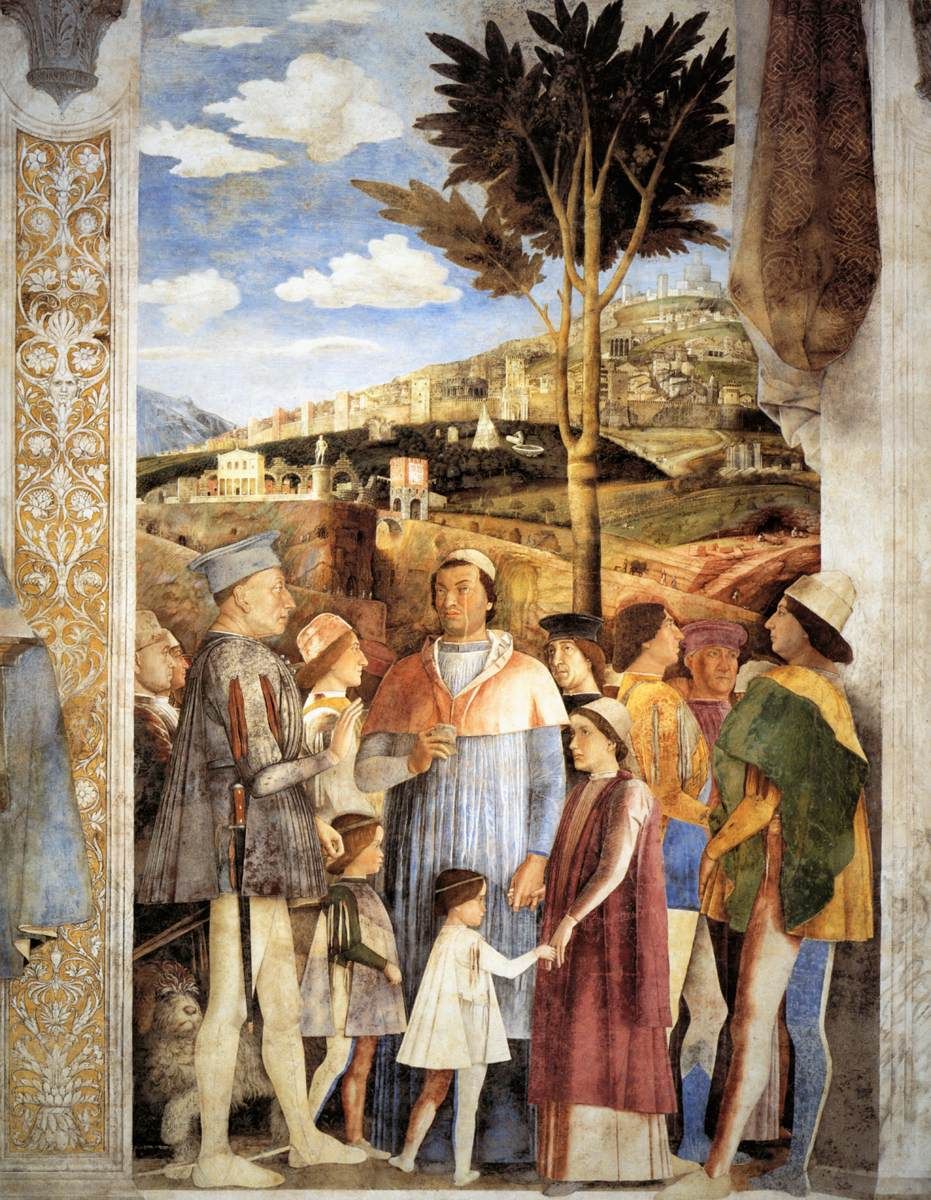
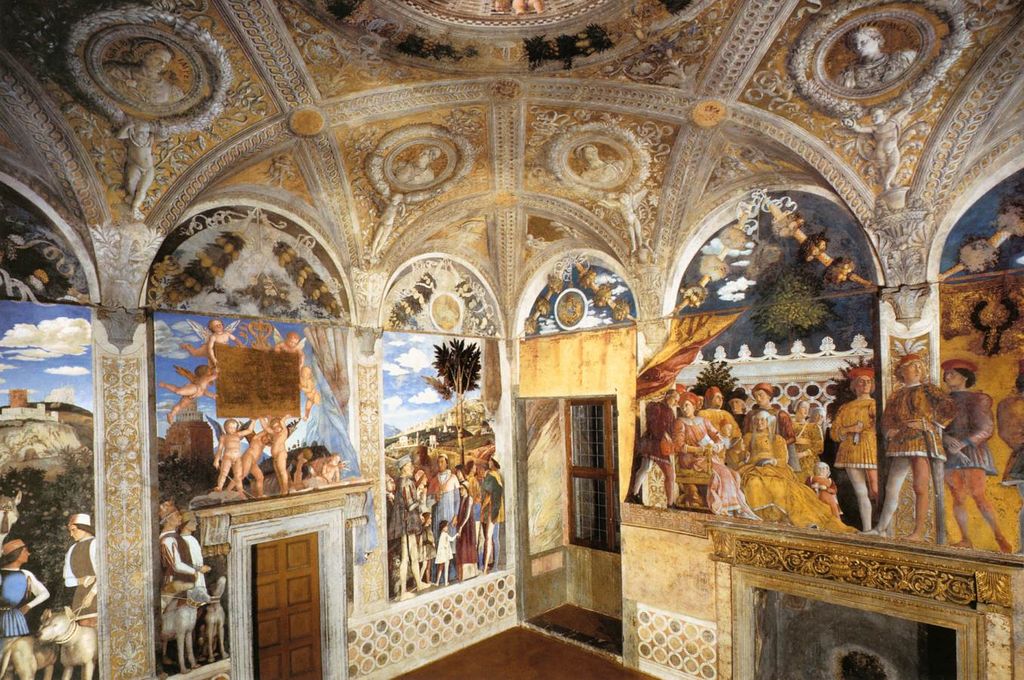
The Meeting wall, Camera degli Sposi, Palazzo Ducale, Mantua Image source. Public domain.
The Gonzaga chapel and its dispersed paintings
Mantegna had been working in Padua and was documented in Mantua by 1460. The move, a turning point in his career, brought him into the service of Ludovico Gonzaga. The Louvre describes the decoration of the chapel in the Castello di San Giorgio as his first project for the marquis. The Prado painting is usually placed in that commission. The chapel was lost through alterations to the castle, leaving the panels themselves and later records to bear much of the weight of any reconstruction. The familiar scene outside the window supports a Mantuan setting. It cannot by itself establish the painting’s original wall or prove that the picture reproduces the view from a particular opening of the castle. [1] [3] [8] [9]
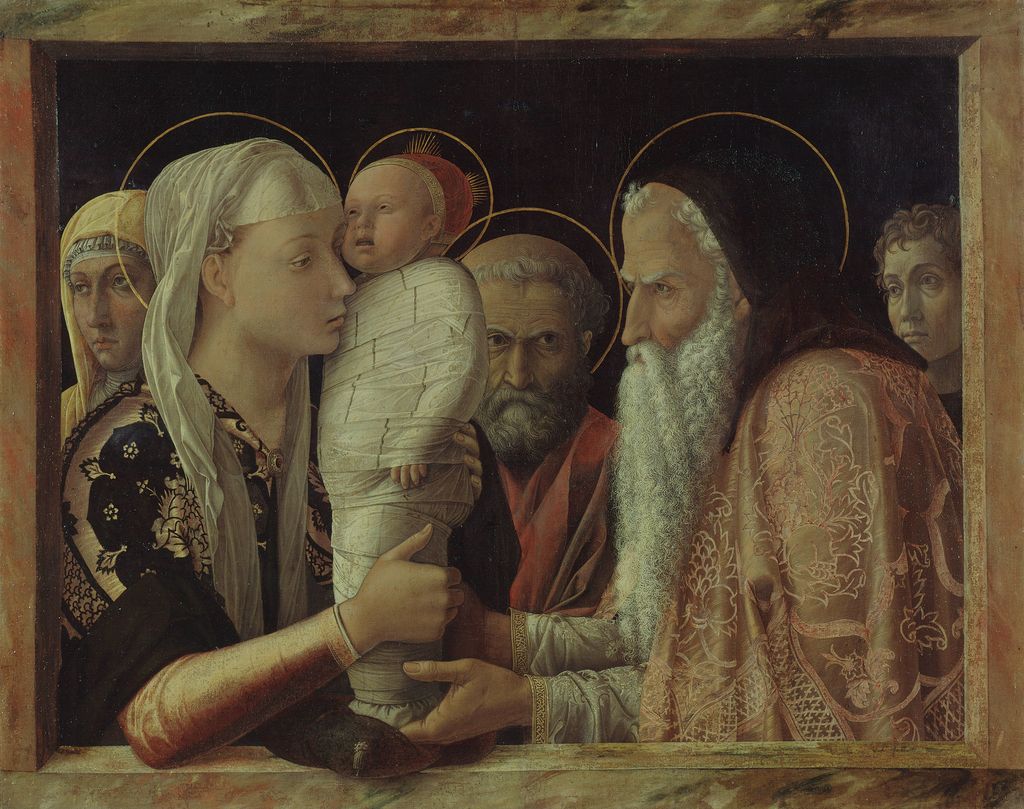
Daniela Parenti’s Uffizi catalogue places three other scenes in the chapel cycle, the Ascension, the Adoration of the Magi and the Presentation in the Temple. They now share a nineteenth-century frame. Parenti notes that the centre panel, the Adoration, is concave and wider than the other two. Its curved support suggests a niche or small apse, a proposal based on the object itself. The Presentation offers a closer comparison with the Prado interior. Its tiled pavement also gives depth and order to a gathering, this time around a child brought into the temple. Those panels are associated with the same decorative project. The Ferrara panel belongs to the reconstruction of the Death of the Virgin itself. The original arrangement and timing of the chapel cycle remain debated. [9]
The two pieces had separate collecting histories. In her study of the painting’s reception, Valentina Locatelli relates the probable reduction of the panel to its installation in the chapel of Margherita Gonzaga in Ferrara. She traces the larger piece back to Mantua, then to the collection of Charles I of England and eventually to Philip IV of Spain. The Spanish heritage record gives a later point of certainty. An 1834 inventory of the royal museum in Madrid lists Mantegna’s painting, on wood, under the old number 703. The Ferrara fragment came to the Pinacoteca with the Vendeghini collection in 1973. The Madrid inventory describes the surviving bedside scene as a painting in its own right, under the title La Muerte dela Virgen. [2] [8] [10]
From the painted chapel to the painted room
Mantegna had already used architecture to unite separate groups in the San Zeno Altarpiece in Verona, made for Gregorio Correr between 1456 and 1459. The real columns of its carved frame stand alongside painted pilasters, and a single fictive vestibule stretches across the main panels. At San Zeno the eye works its way across the picture as the architecture ties the saints to the enthroned Virgin and Child. In the Death of the Virgin the eye travels inward from the pavement to the bed, then outward through the window. The proposed upper part adds a third direction, following the rise of the pilasters towards the vault. [1] [3] [6] [11]
In the Camera degli Sposi, painted for the Gonzaga later in the same castle, Mantegna extended the illusion across the walls and vault of an actual room. Painted pilasters organise the walls. Curtains appear to part and reveal the court, while figures lean over the rim of an oculus high on the ceiling. The Palazzo Ducale dates the decoration from 1465 to 1474. In the painted chamber a visitor can stand under the oculus and look straight up at the figures. In the panel the viewer stands outside the depicted room and follows the pilasters upwards from the floor. The vault in the Ferrara fragment gives that upward movement a destination, just as the bridge gives the eye a route across the water. [3] [6] [12]
Annotated Details from The Death of the Virgin
The numbered points identify details to look at closely. The detail images below preserve the native scale of the selected crops.
The Death of the Virgin
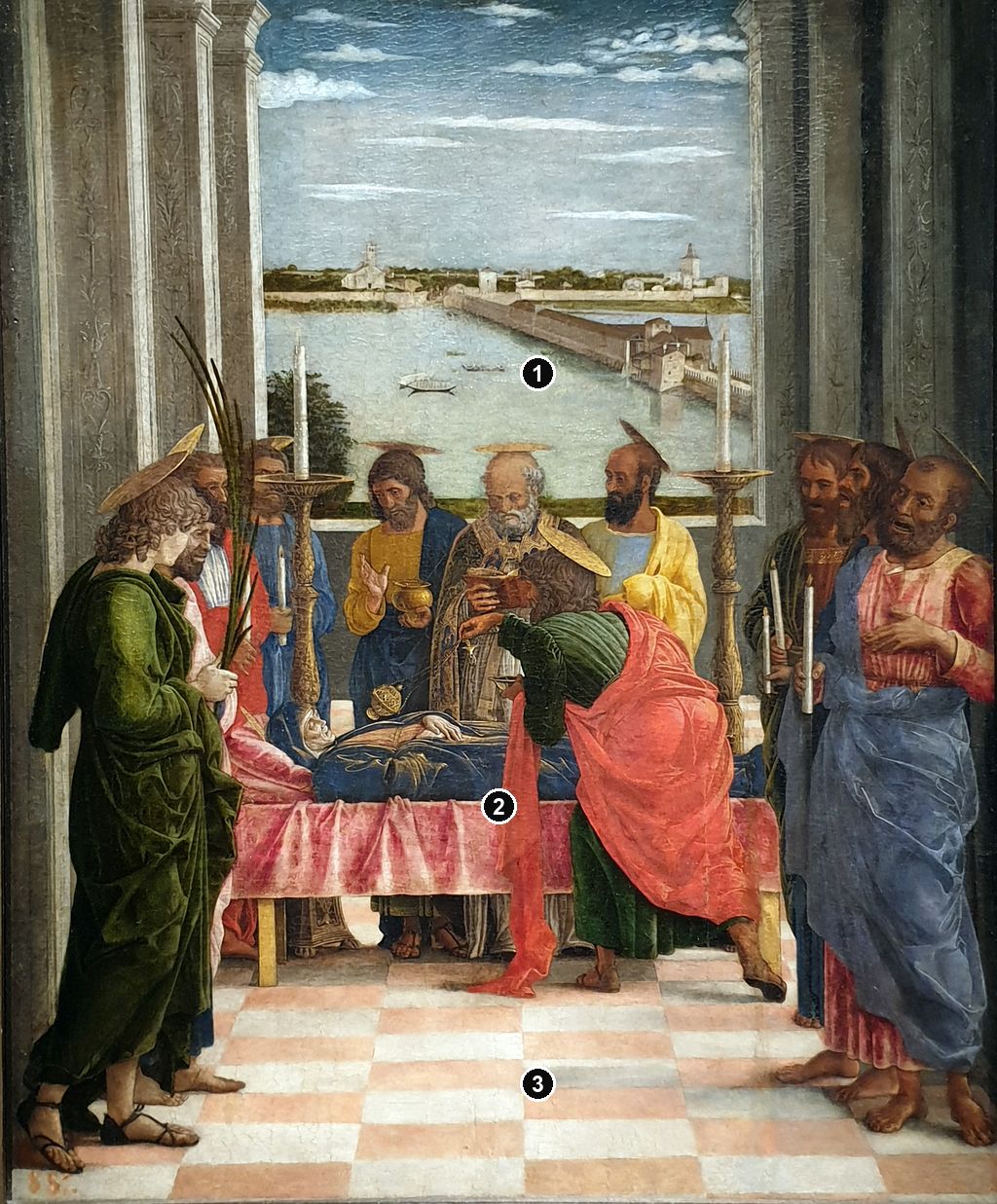
Details from THE DEATH OF THE VIRGIN
Choose a detail to enlarge it.
The Death of the Virgin
The view beyond the room
The central opening gives a long view across water. Its height above the figures separates this glimpsed distance from the interior.
Apostles around the bed
The figures gather behind and beside the bed. The horizontal width of their arrangement answers the upright divisions of the room.
Pavement receding into the room
The alternating pavement units lead towards the gathering. Their changing scale makes the shallow foreground feel connected to a longer interior.
Artworks directory
| Name | Date | Medium and collection |
|---|---|---|
| The Adoration of the Shepherds | Shortly after 1450 | Painting · Metropolitan Museum of Art · 32.130.2 Catalogue. |
| Saint Mark the Evangelist | C. 1448–51 | Painting · Städel Museum · 1046 Catalogue. |
| Saint Jerome Penitent in the Desert | C. 1448–51 | Painting · Museu de Arte de São Paulo · MASP.00015 Catalogue. |
| Martyrdom and Transport of the Body of Saint Christopher | Mid-1450s | Painting · Ovetari Chapel, Padua Catalogue. |
| San Luca Altarpiece | 1453–55 | Painting · Pinacoteca di Brera · 176 Catalogue. |
| The Presentation of Christ at the Temple | 1454 (Berlin dating) | Painting · Gemäldegalerie, Berlin · 29 Catalogue. |
| San Zeno Altarpiece | 1457–59 | Painting · Basilica of San Zeno, Verona Catalogue. |
| The Crucifixion | 1456–59 | Painting · Musée du Louvre · INV 368 Catalogue. |
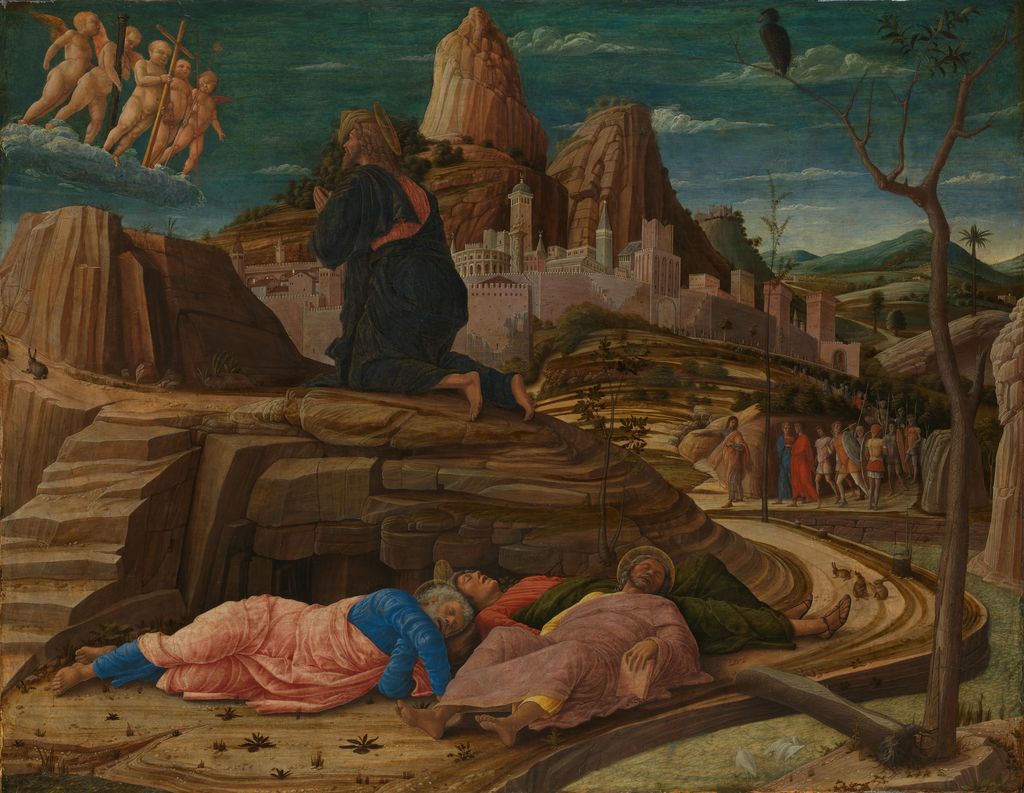
| The Agony in the Garden (London) | C. 1455–56 | Painting · National Gallery, London · NG1417 Catalogue. |
| The Agony in the Garden (Tours) | 1459 (Tours dating) | Painting · Musée des Beaux-Arts de Tours · 1803-1-24 Catalogue. |
| The Resurrection | 1459 (Tours dating) | Painting · Musée des Beaux-Arts de Tours · 1803-1-25 Catalogue. |
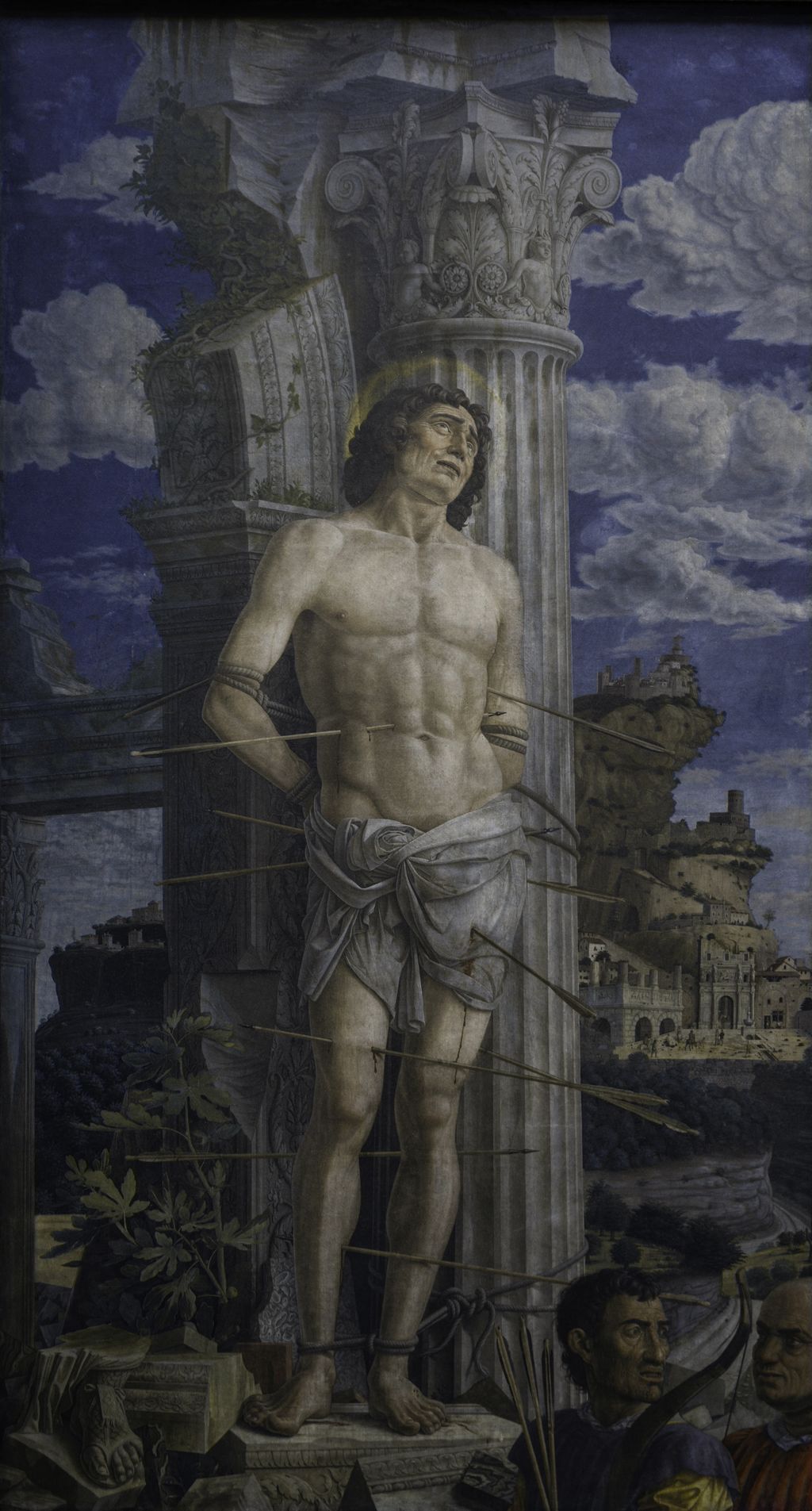
| Saint Sebastian (Vienna) | C. 1457–59 | Painting · Kunsthistorisches Museum · GG 301 Catalogue. |
| Cardinal Ludovico Trevisan | C. 1459–60 (Berlin exhibition dating) | Painting · Gemäldegalerie, Berlin · 9 Catalogue. |
| The Death of the Virgin | C. 1462 | Painting · Museo Nacional del Prado · P000248 Catalogue. |
| Christ with the Soul of the Virgin | C. 1460–64 | Painting · Pinacoteca Nazionale, Ferrara Catalogue only. |
| Portrait of a Young Man (traditionally Francesco Gonzaga) | C. 1461 or 1470, depending on sitter | Painting · Museo di Capodimonte · Q 60 Catalogue. |
| Portrait of a Prelate (Carlo de’ Medici?) | C. 1465–70 | Painting · Uffizi Galleries · 1890 no. 8540 Catalogue. |
| Portrait of a Man | C. 1470 | Painting · National Gallery of Art, Washington · 1952.2.5 Catalogue. |
| Madonna with Sleeping Child (Berlin) | C. 1455–60 | Painting · Gemäldegalerie, Berlin · S.5 Catalogue. |
| Camera degli Sposi (Camera Picta) | 1465–74 | Painting · Palazzo Ducale, Mantua Catalogue. |
| Saint Sebastian (Louvre) | Around 1480 | Painting · Musée du Louvre · RF 1766 Catalogue. |
| Lamentation over the Dead Christ | C. 1483 (Brera dating) | Painting · Pinacoteca di Brera · 352 Catalogue. |
| The Triumphs of Caesar | About 1485–1506 | Painting · Royal Collection · RCIN 403958–403966 Catalogue. |
| Madonna of the Caves | C. 1488–90 | Painting · Uffizi Galleries · 1890 no. 1348 Catalogue. |
| Madonna and Child with a Choir of Cherubim | C. 1485 | Painting · Pinacoteca di Brera · 297 Catalogue. |
| Madonna and Child (Poldi Pezzoli) | Early 1490s (museum dating) | Painting · Museo Poldi Pezzoli · 1595 Catalogue. |
| The Holy Family with Saint Mary Magdalen | C. 1495–1500 | Painting · Metropolitan Museum of Art · 14.40.643 Catalogue. |
| The Virgin and Child with Saint Mary Magdalene and Saint John the Baptist | C. 1490–1505 | Painting · National Gallery, London · NG274 Catalogue. |
| Christ as the Suffering Redeemer | 1485–95 (SMK dating) | Painting · Statens Museum for Kunst · KMSsp69 Catalogue. |
| Ecce Homo | C. 1500 | Painting · Musée Jacquemart-André · MJAP-P 1840 Catalogue. |
| Judith with the Head of Holofernes (Mantegna or follower) | C. 1495–1500 | Painting · National Gallery of Art, Washington · 1942.9.42 Catalogue. |
| Madonna della Vittoria | 1495–96 | Painting · Musée du Louvre · INV 369 Catalogue. |
| Mars and Venus (Parnassus) | C. 1496–97 | Painting · Musée du Louvre · INV 370 Catalogue. |
| The Trivulzio Madonna | 1497 | Painting · Castello Sforzesco, Milan · 0554 Catalogue. |
| The Adoration of the Magi | C. 1495–1505 | Painting · J. Paul Getty Museum · 85.PA.417 Catalogue. |
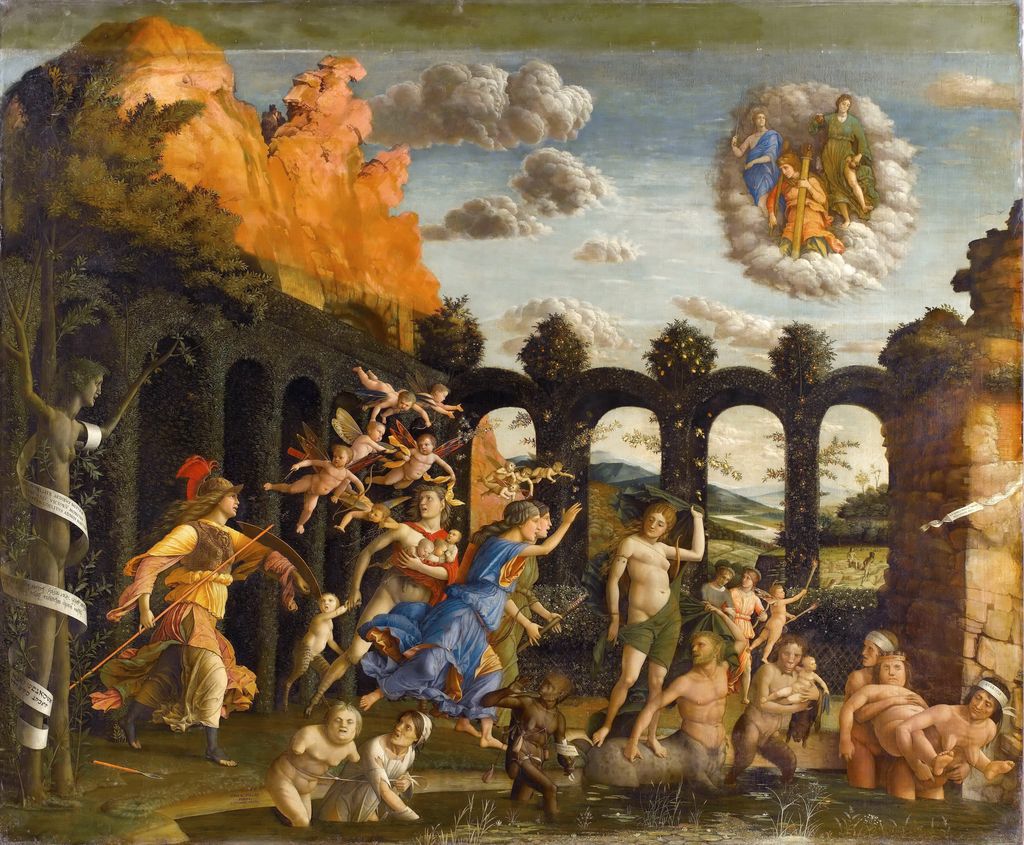
| Minerva Expelling the Vices from the Garden of Virtue | C. 1502 | Painting · Musée du Louvre · INV 371 Catalogue. |
| The Introduction of the Cult of Cybele at Rome | 1505–06 | Painting · National Gallery, London · NG902 Catalogue. |
| Saint Sebastian (Venice) | Probably c. 1504–06 | Painting · Galleria Giorgio Franchetti alla Ca’ d’Oro · D.11 Catalogue. |
| Samson and Delilah | C. 1500 | Painting · National Gallery, London · NG1145 Catalogue only. |
| A Woman Drinking (probably Sophonisba) | C. 1495–1506 | Painting · National Gallery, London · NG1125.2 Catalogue only. |
| The Vestal Virgin Tuccia with a Sieve | C. 1495–1506 | Painting · National Gallery, London · NG1125.1 Catalogue only. |
| Judith with the Head of Holofernes (Dublin) | C. 1495–1500 | Painting · National Gallery of Ireland · NGI.442 Catalogue only. |
| Battle of the Sea Gods, left half (Met impression) | Before 1481 (Met dating) | Print · Metropolitan Museum of Art · 18.12 Catalogue only. |
| Battle of the Sea Gods, right half (Met impression) | Before 1481 (Met dating) | Print · Metropolitan Museum of Art · 1984.1201.4 Catalogue only. |
| Battle of the Sea Gods, left half (Tokyo impression) | C. 1475 (Tokyo dating) | Print · National Museum of Western Art, Tokyo · G.1981-0002 Catalogue only. |
| Battle of the Sea Gods, left half (Washington impression) | C. 1485–88 (NGA dating) | Print · National Gallery of Art, Washington · 1941.1.6 Catalogue only. |
| The Entombment of Christ, second state of two | Before 1475 (Met dating) | Print · Metropolitan Museum of Art · 37.42.30 Catalogue only. |
| The Entombment of Christ (possibly Zoan Andrea, after Mantegna) | 1460–1549 (Rijksmuseum dating) | Print · Rijksmuseum · RP-P-1924-60 Catalogue only. |
| Four Dancing Muses (Gian Marco Cavalli after Mantegna) | C. 1497 | Print · Metropolitan Museum of Art · 20.5.3 Catalogue only. |
| Bacchanal with Silenus | Before 1475 (Met dating) | Print · Metropolitan Museum of Art · 29.44.15 Catalogue only. |
| Bacchanal with a Wine Vat | Before 1475 (Met dating) | Print · Metropolitan Museum of Art Catalogue only. |
| St James on His Way to Execution | C. 1453–57 | Drawing · British Museum · 1976,0616.1 Catalogue only. |
| Three Studies for a Dead Christ | C. 1455–65 | Drawing · British Museum · 1909,0406.3 Catalogue only. |
| Pietà (Venice) | C. 1456–65 (exhibition datings) | Drawing · Gallerie dell’Accademia, Venice · 115 Catalogue only. |
| Studies for Christ at the Column | 1460–65 | Drawing · The Courtauld · D.1978.PG.345 Catalogue only. |
| Virtus Combusta | C. 1490 (technical study) | Drawing · British Museum · Pp,1.23 Catalogue only. |
| Virtus Combusta (Giovanni Antonio da Brescia after Mantegna) | C. 1495–1506 | Print · Musée du Louvre · 3881 LR/ Recto Catalogue only. |
| The Calumny of Apelles | C. 1504–06 | Drawing · British Museum · 1860,0616.85 Catalogue only. |
Frequently Asked Questions
The tiled floor leads through the room to a broad opening. The view of the water and crossing is associated with Mantua, giving the sacred scene a recognisable local setting.
A small Ferrara panel shows Christ receiving Mary’s soul. Its possible connection with the missing upper portion of the Prado panel is an evidence-based reconstruction.
Discussion
Look again at the images and ideas explored in Death of the Virgin. These editorial prompts invite your observations.
Reader Insights
How do the pavement joints, the two tall candlesticks and the line of the bridge guide your eye through different parts of the Prado panel?
What do the painted arcs and the figure of Mary’s soul in the Ferrara panel each contribute to Longhi’s reconstruction?
Join the Conversation
Share a detail, comparison or question about Death of the Virgin below.
References
- Museo Nacional del Prado, El tránsito de la Virgen, exhibition label in El Museo del Prado. Historia y colecciones. View source.
- Poder, Patrimonio y Cultura en España, El Tránsito de la Virgen, object and 1834 inventory record. View source.
- Musée du Louvre, Death of the Virgin, First Years in Mantua. View source.
- Basilica di San Marco, La Cappella della Madonna dei Mascoli. View source.
- Musée du Louvre, Jacopo Bellini, La Mort de la Vierge dans une riche architecture de palais vénitien. View source.
- Musée du Louvre, Christ with the Soul of the Virgin, First Years in Mantua. View source.
- Ministero della Cultura, Cristo con l’Animula della Vergine, Catalogo generale dei Beni Culturali 0800039718. View source.
- Valentina Locatelli, Università degli Studi di Bergamo, Le opere dei maestri italiani nella Gemäldegalerie di Dresda, note 276. View source.
- Gallerie degli Uffizi, Daniela Parenti, Trittico con Ascensione di Cristo, Adorazione dei Magi, Presentazione di Gesù al tempio. View source.
- Rai Cultura, Cristo con l’animula della Vergine, Pinacoteca Nazionale collection focus. View source.
- Musée du Louvre, Around the San Zeno Triptych in Verona. View source.
- Palazzo Ducale di Mantova, Camera Picta. View source.
- Basilica of San Zeno, Verona, San Zeno Altarpiece, View source.
- Royal Collection, The Triumphs of Caesar, View source.
- Musée du Louvre, Madonna della Vittoria, View source.
- National Gallery, London, The Introduction of the Cult of Cybele at Rome, View source.
More MANTEGNA Paintings
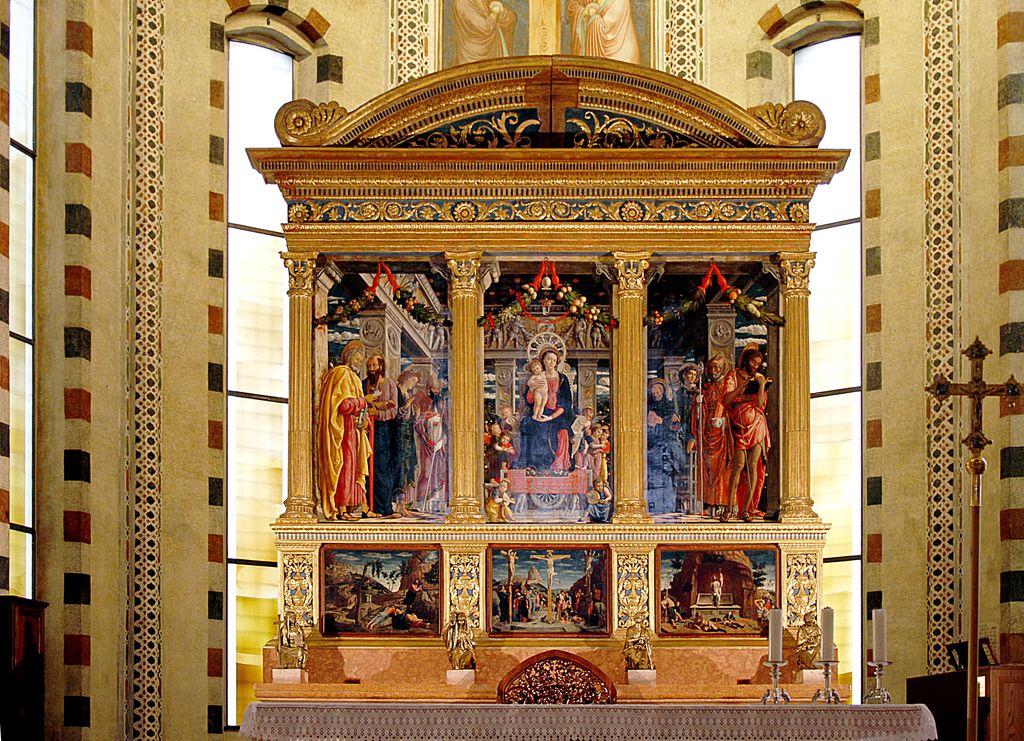
San Zeno Altarpiece
The San Zeno Altarpiece in its frame, Basilica of San Zeno, Verona José Luiz. Image source. CC BY-SA 4.0. Resized from the cited image.