 by Tom Gurney
Tom Gurney BSc (Hons) is an art history expert with over 20 years experience
Published on June 19, 2020 / Updated on November 29, 2026
Email: tomgurney1@gmail.com / Phone: +44 7429 011000
Overview
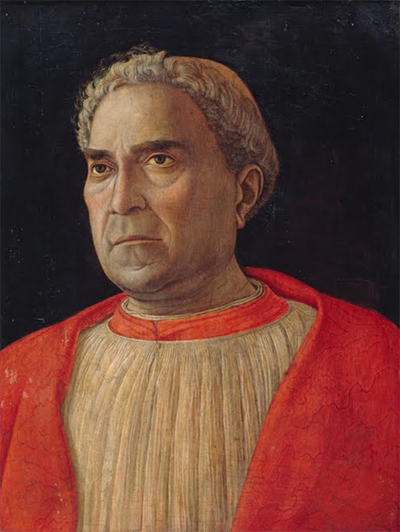
Andrea Mantegna gives Cardinal Ludovico Trevisan almost the entire width of this small panel. The cardinal’s shoulders spread beneath a red mantle, while his head turns towards the left and his eyes look past the viewer. The turn brings the face into view without making the encounter feel familiar. Berlin’s Gemäldegalerie holds the portrait as inventory number 9. Its exhibition checklist dates the work to about 1459–60 and records egg tempera on poplar, measuring 45.5 × 34.8 centimetres. [1] [2]
At a Glance
- ArtistAndrea Mantegna
- DateAbout 1459–60 (Berlin exhibition dating)
- MediumEgg tempera on poplar panel
- Dimensions45.5 × 34.8 cm
- Collection and inventoryGemäldegalerie, Staatliche Museen zu Berlin, inv. 9
Andrea Mantegna in context
San Zeno Altarpiece
1457–59 [19]Cardinal Ludovico Trevisan
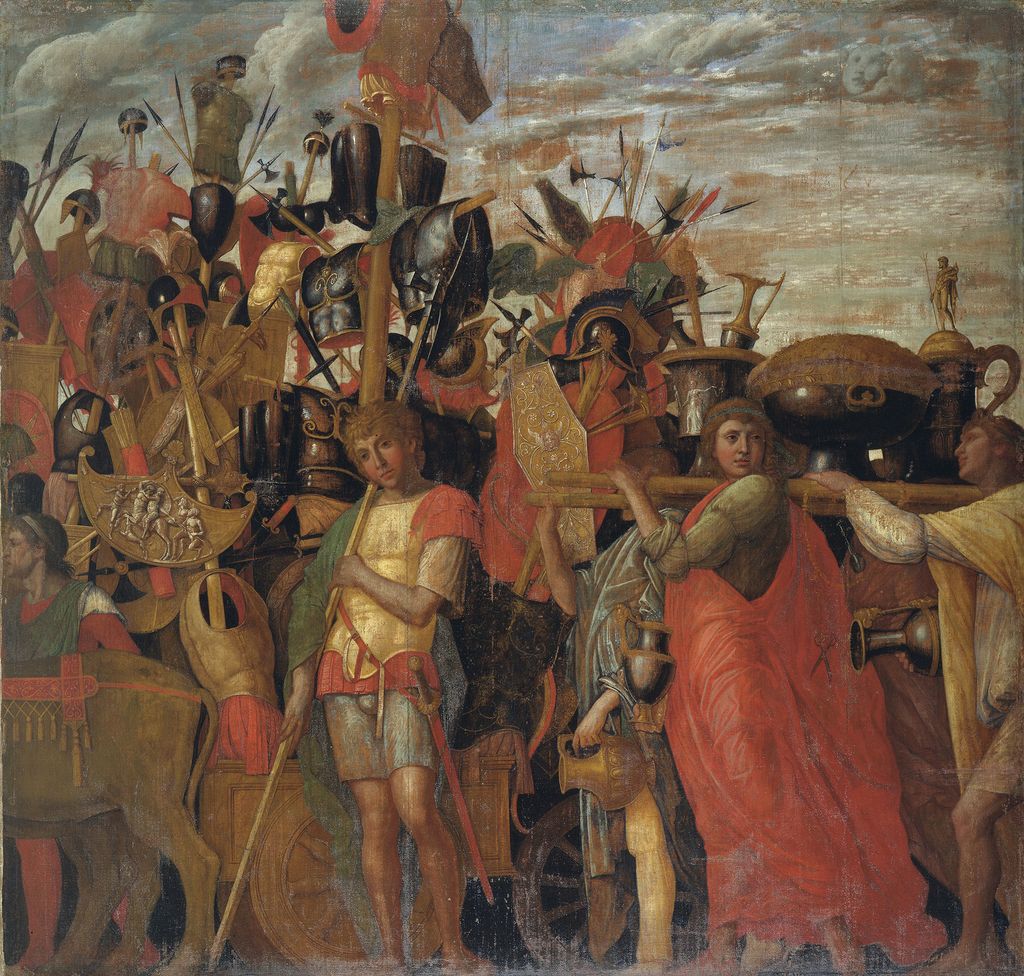
C. 1459–60 (Berlin exhibition dating) [1]The Triumphs of Caesar
Mid-1480s–before 1506 [20]Madonna della Vittoria
1495–96 [21]A cardinal at the Congress of Mantua
Trevisan came to church government through medicine. Born in Venice in 1401, he studied at Padua and served as physician to Cardinal Gabriele Condulmer, who became Pope Eugenius IV in 1431. Trevisan went on to become bishop of Traù, now Trogir, and archbishop of Florence. By 1440 he held the patriarchate of Aquileia, the office of camerlengo and the rank of cardinal. As camerlengo he helped administer the papacy’s finances. He also led papal troops at Anghiari in 1440 and later commanded a papal fleet in the eastern Mediterranean under Callixtus III. [1] [3]
That career gives the portrait’s association with Mantua a particular tension. Pius II convened the congress of 1459–60 to seek support from European rulers for a campaign against the Ottomans. Trevisan had firsthand experience of the conflict, and the pope met resistance from him at Mantua. Antonio Manfredi, writing in the Dizionario Biografico degli Italiani, describes the cardinal as a reluctant participant who largely represented Venetian interests. The scarlet on the panel identifies a man of the Church whose responsibilities and loyalties extended far beyond ceremonial life. [1] [3]
The congress also supplies a possible occasion for the portrait. In the essay on Berlin’s object page, Keith Christiansen places its making during the meeting, consistent with the 1459–60 exhibition date. The dating field on that same page gives about 1455–59. The narrower date thus rests on an interpretation of the circumstances. It puts the portrait close to Mantegna’s move from Padua into the service of the Gonzaga, a transition traced in his biography. The congress brings the painter’s and cardinal’s movements into proximity. The circumstances of the commission and the place where Mantegna actually painted the panel remain uncertain. [1] [2] [4]
How the mantle gives the bust its weight
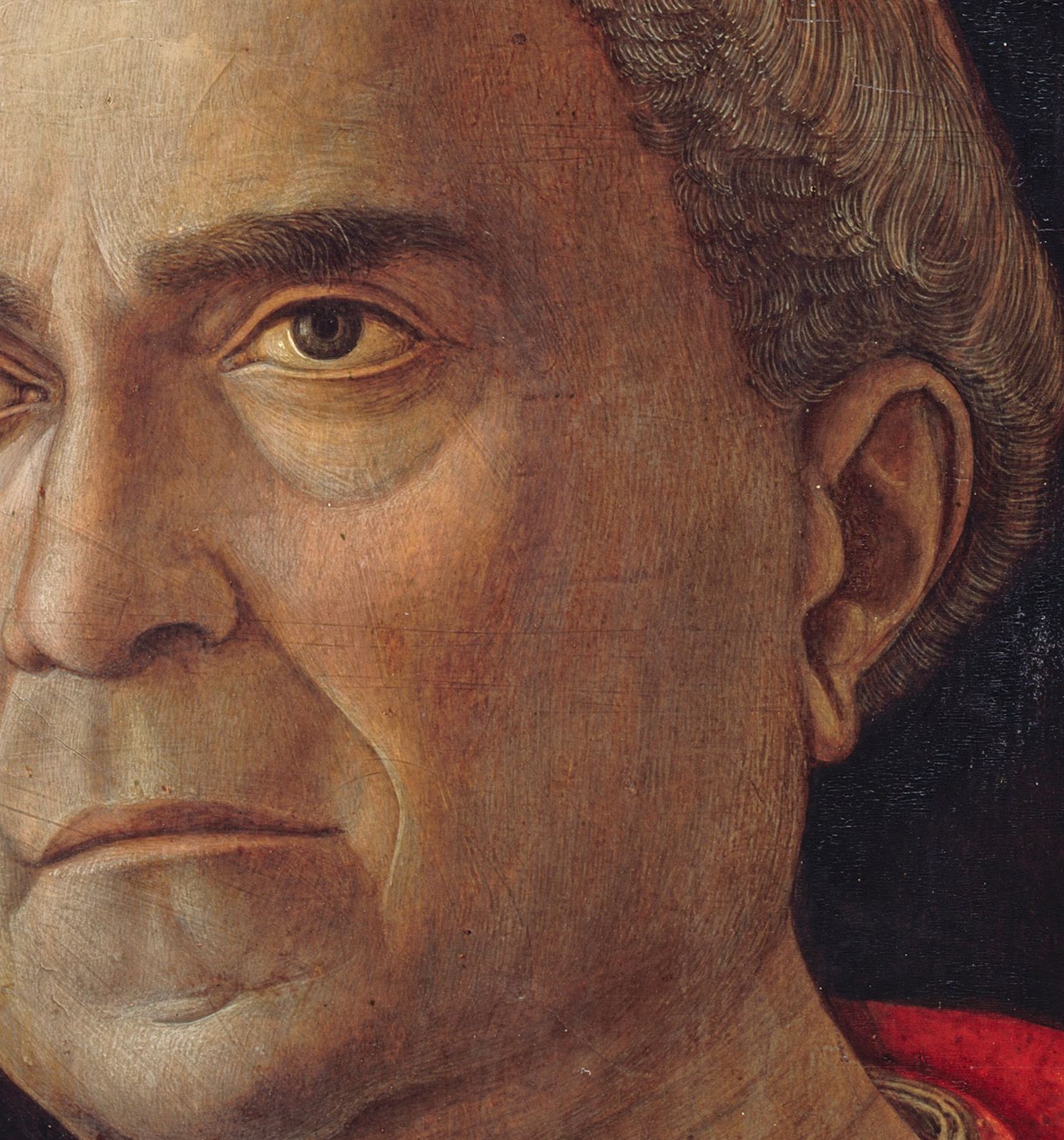
The face turns more sharply than the shoulders. One cheek opens towards the light while the other recedes, and the line of the nose breaks across the darker side of the face. The pressed lips, drawn brows and small highlights around the eyes give the expression its concentration. A slackening of the flesh beneath the jaw and the short waves of hair interrupt the harder lines. These details give the impression of someone holding a pose, with the muscles at the mouth and brow still active. [1]
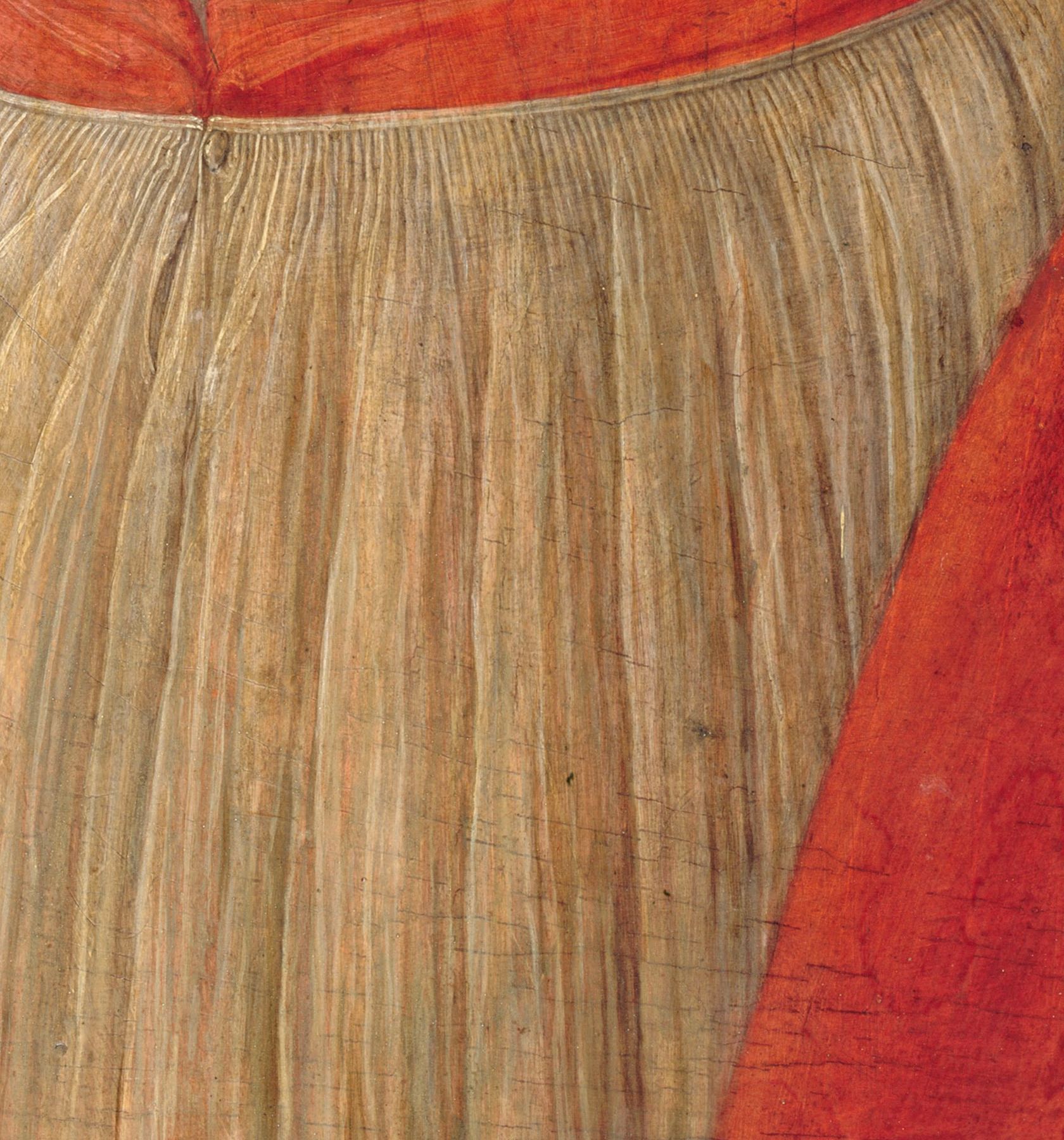
The fabric does much of the work usually attributed to the head. The red outer mantle, which Christiansen identifies as a clerical ferraiolo, spreads towards the bottom corners. Within it, the close vertical folds of the pale linen make a much narrower shape. Christiansen identifies the linen as a translucent surplice, through which the red of the cassock shows. There is a corresponding difference between the broad, uneven sheen of the mantle and the repeated fine ridges of the linen. The eye can distinguish those fabrics even in a picture that gives the sitter so little room to move. [1]
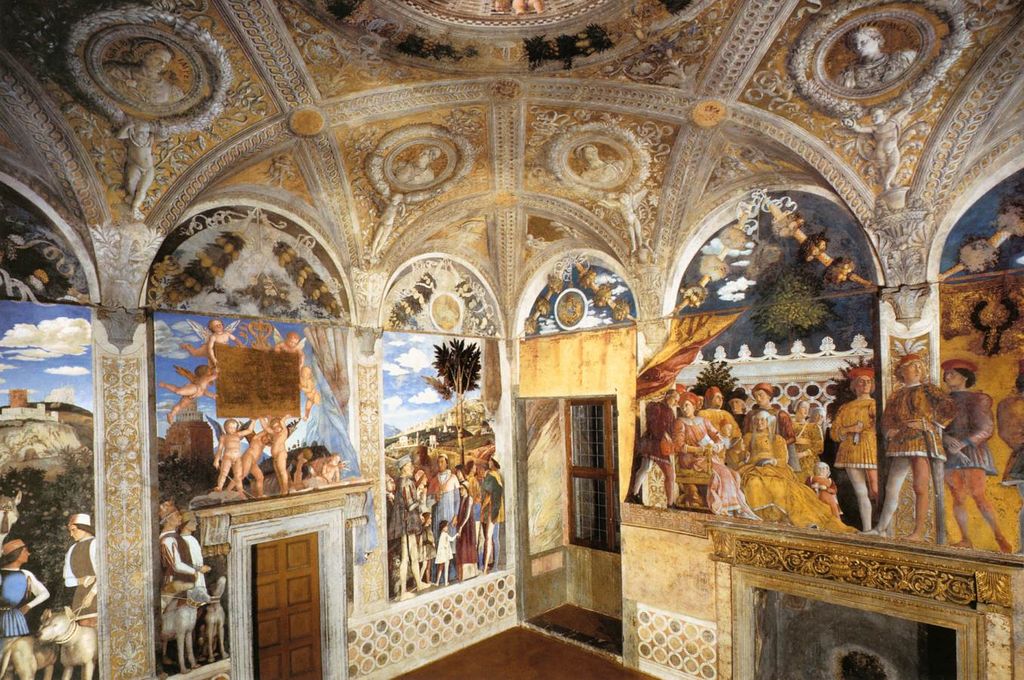
Christiansen compares the mantle to the military cloaks that give breadth to Mantegna’s painted marble busts in the vault of the Camera degli Sposi. That later room in Mantua, painted between 1465 and 1474, puts Roman emperors above the Gonzaga court. The comparison helps locate the sculptural effect in the Berlin portrait. It lies partly in the structure beneath the face, where the wide drapery makes the narrow neck and turned head feel supported. The sheen of silk and the transparency of linen keep the figure from looking like painted stone. Manfredi likewise sees something of a Roman consul in Trevisan’s expression. The analogy suits a sitter who collected ancient coins, gems, cameos and bronze busts. He corresponded with humanists including Francesco Barbaro and Poggio Bracciolini. His interest in antiquity is documented independently of the painting, which leaves open how much of its sculptural character he might have asked for. [1] [3] [5]
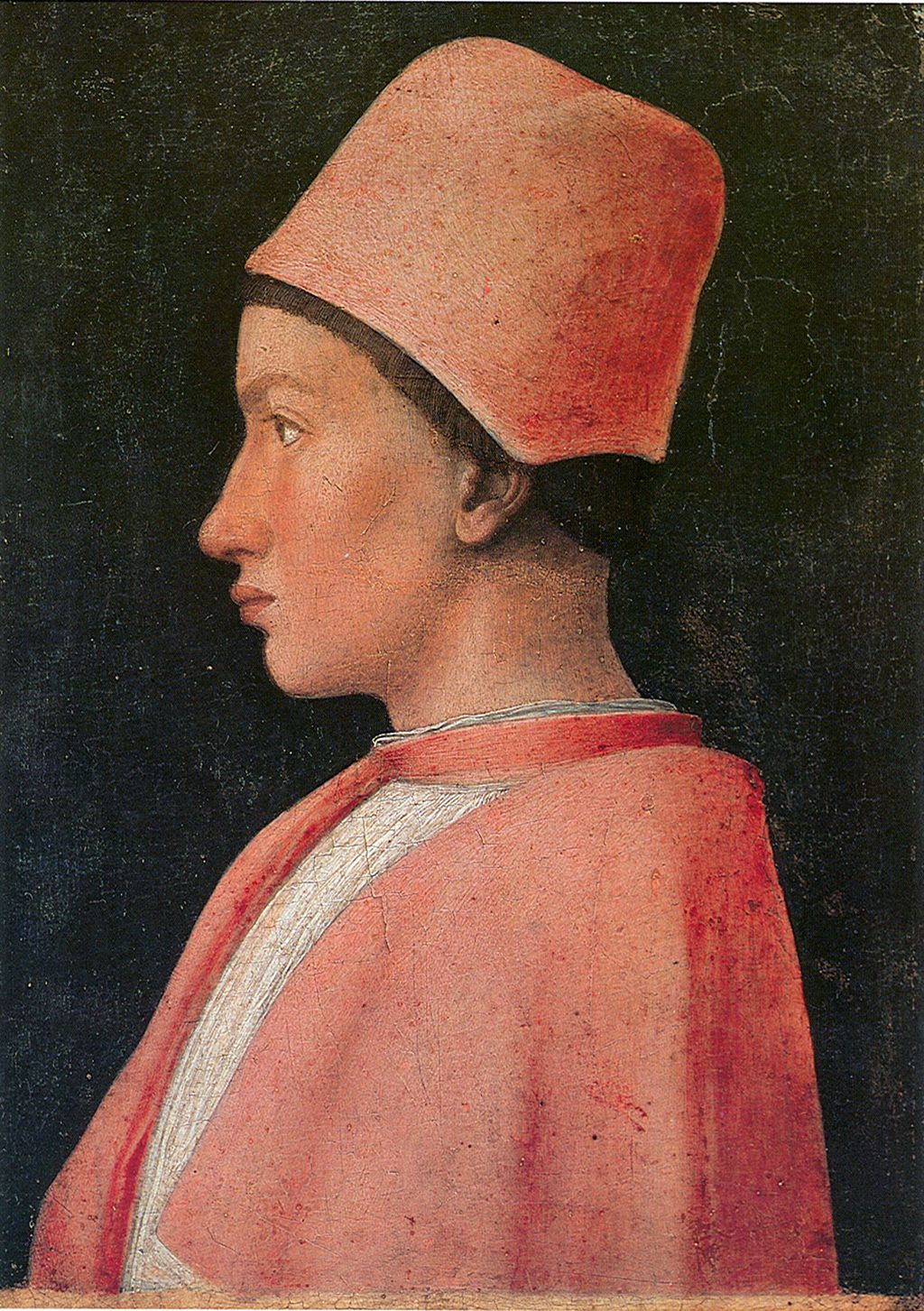
Portrait of Francesco Gonzaga, Museo di Capodimonte Image source. Public domain.
A comparison with Mantegna’s early St Mark the Evangelist makes the Berlin panel’s lower edge worth a closer look. In the Frankfurt painting a stone parapet marks the front of the pictured space, and a painted slip of paper on it carries an inscription that includes Mantegna’s name. On the surviving face of the Trevisan panel, the cloth runs down to the crop and there is no comparable ledge or lettering. The crop at the chest is enough to give the figure the compact shape of a bust. Where St Mark’s ledge gives the eye a place to stop, the cardinal’s mantle seems to continue below the visible picture. [1] [6]
The patriarch named in bronze
An inscription survives on another likeness. The Metropolitan Museum of Art holds a bronze medal of the same man under the names Ludovico Scarampi and Mezzarota, attributed to Cristoforo di Geremia. The National Gallery of Art in Washington records the legend around the portrait on its version of the medal. In translation it says that Ludovico, patriarch of Aquileia, restored the Church. An initial stands for his first name and the wording identifies him by his office. The statement about restoration turns that office into a public claim. In the turn of the lettering around the head and the firm right-facing outline, the medal makes a more direct appeal to the authority of ancient coinage than the painting does. [1] [7] [8]
On the reverse, a procession passes a temple, and the legend again declares the Church restored. An ancient triumph supplied a form in which ecclesiastical victory could be pictured. Philippe Malgouyres proposes that the scene celebrates Trevisan’s entry into Rome in 1440 after the fall of Cardinal Giovanni Vitelleschi. He takes the absence of the title of cardinal from the inscription as evidence that the design predates Trevisan’s promotion that July. The Washington catalogue dates its medal to 1440, while the Met dates its example to 1461–70. Malgouyres also entertains a date before mid-century for the painting, citing the sitter’s apparent age and possible northern portrait models. Those clues give his proposal a different basis from Christiansen’s association of the panel with the congress. [1] [2] [7] [8] [9] [10]
What a profile can show
Pisanello’s Portrait of Leonello d’Este in Bergamo gives a clear example of a court profile. The boundary of the face is legible from forehead to chin against a flowering background. Narrow though the head is from this angle, the turn of the shoulder gives room to display the costly patterned cloth. Trevisan’s medal likewise puts a single contour in charge of the likeness. Mantegna’s panel gives that contour less work to do. With the head turned partway towards us, we can see the mouth tighten across the face and the uneven shadows under the two brows. The difference is clearest in the eyes. In profile, the direction of the head largely establishes the direction of attention. Trevisan’s painted eyes can travel a little further sideways than the pose itself suggests. [1] [8] [11]
Mantegna could make a strict profile quietly observant. In the Capodimonte panel known as the Portrait of Francesco Gonzaga, the forehead, nose and chin make a finely drawn edge, and the reddish cap and garment have a softness that suits the youthful face. Capodimonte keeps a question mark after Francesco’s name and considers his younger brother Ludovico another possibility. Francesco, the son of the marquis of Mantua, became a cardinal in 1461. The museum points out that the boy has yet to assume cardinal’s dress if the traditional identification and dating are correct. Set beside Berlin’s portrait, the difference in dress matters as much as the angle. One man’s mantle announces an office backed by decades of service. The boy’s likeness depends on subtler distinctions of age, dress and bearing. [1] [12]
The Uffizi’s Portrait of a Prelate, traditionally associated with Carlo de’ Medici, uses a turn and a dark ground much as Trevisan’s portrait does. Its light spreads more evenly across the face, and the garment gives the lower part of the panel a quieter field of colour. The Uffizi retains the proposed identification with a question mark. A late-sixteenth-century Medici family tree lends support, while comparison with a possible likeness by Filippo Lippi has raised doubts. The Profile of a Man in Washington offers another variation: the dark cap and muted blue behind the head make the facial outline especially easy to follow. The National Gallery of Art catalogues it as Mantegna’s work of about 1470 under the generic title Portrait of a Man. Janus Pannonius appears as a proposed sitter in the work’s older exhibition history. These portraits show how much an angle can reveal about the shape of a face and how little it can settle about the name attached to it. [1] [13] [14]
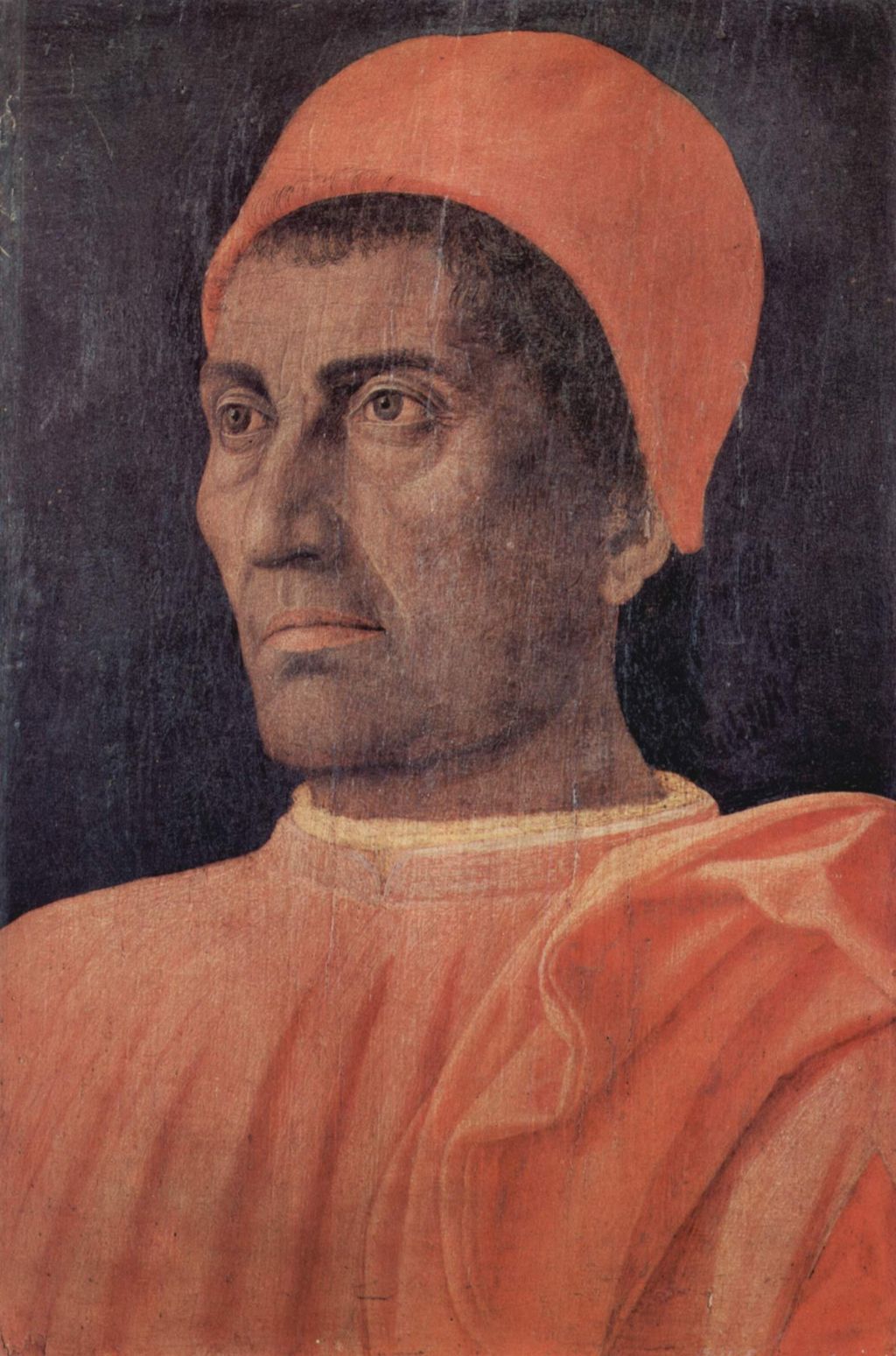
Portrait of a Prelate (Carlo de’ Medici?), Uffizi Image source. Public domain.
From Padua to Berlin
The National Gallery in London’s loan documentation places the panel with Francesco Leone in Padua before 1630. The next owner it lists is the English merchant Edward Solly in Berlin. The interval between those entries leaves the panel’s route out of Padua open. Berlin records acquiring the work by exchange in 1830, the year its picture gallery opened in the Königliches Museum. Solly’s large collection, purchased by the Prussian state in 1821, helped form the gallery. This panel’s later acquisition date distinguishes its passage into the museum from that founding purchase. [1] [15] [16]
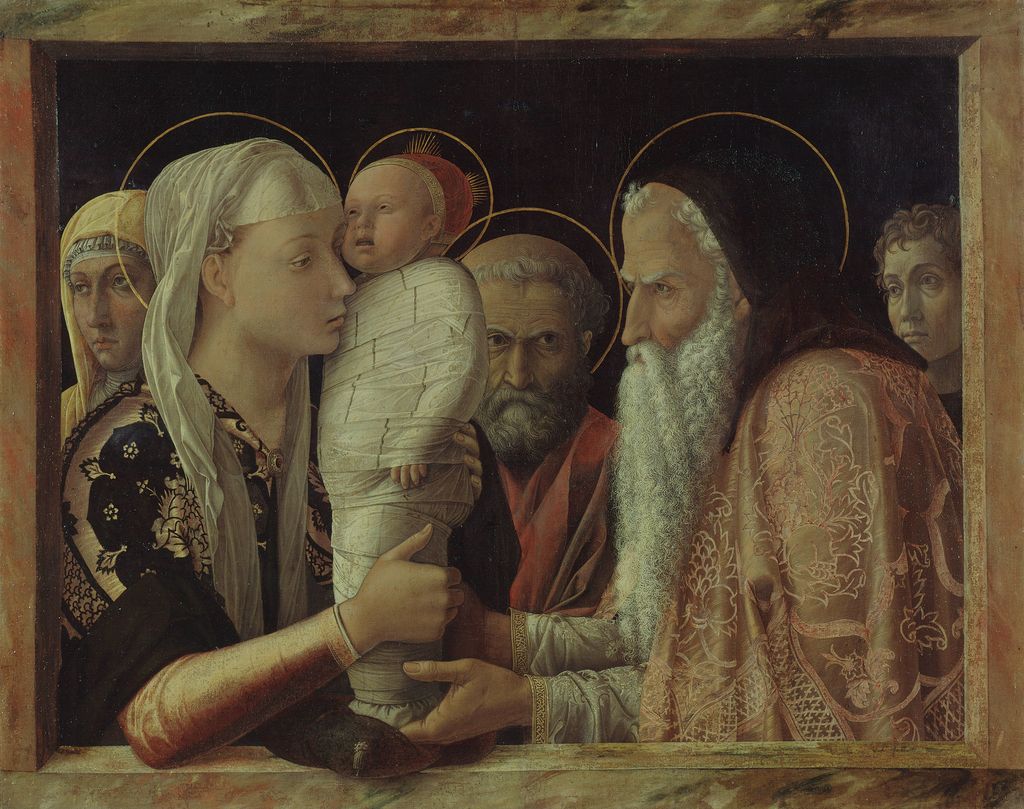
The panel also travelled under very different circumstances. The Gemäldegalerie curator Neville Rowley identifies it as one of the Berlin paintings transferred to Washington in December 1945, alongside Mantegna’s Presentation in the Temple. The United States Army’s removal of the pictures for safekeeping met with protests from museum professionals, and the National Gallery of Art exhibited the group in 1948. The catalogue for the 2011–12 Renaissance portrait exhibition in Berlin and New York gave the Washington medal and the painted portrait consecutive entries. Those two exhibits brought the same sitter into view through objects that could scarcely be more different in scale. One is a bronze that could be turned in the hand. The other is a panel whose sweep of red gives a single figure the weight of a monument. [8] [15] [17] [18]
Annotated Details from Cardinal Ludovico Trevisan
The numbered points identify details to look at closely. The detail images below preserve the native scale of the selected crops.
Cardinal Ludovico Trevisan
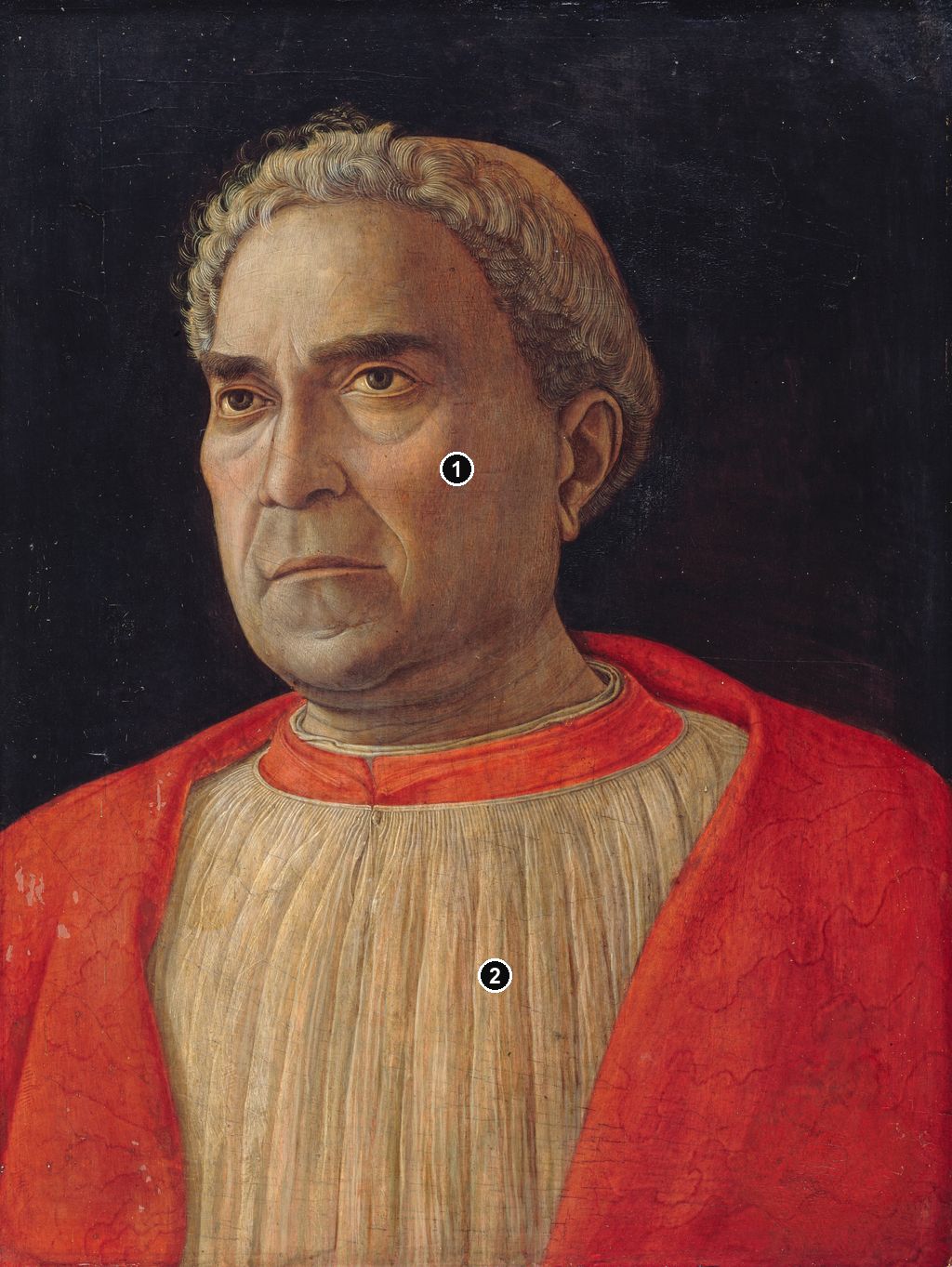
Details from CARDINAL LUDOVICO TREVISAN
Choose a detail to enlarge it.
Cardinal Ludovico Trevisan
Turn of the head
The sitter meets the space off to one side. The face is turned enough for its differently lit planes to register.
Red and pale fabric
A bright outer colour sets off the closely spaced folds below the face. The fabrics hold the portrait’s lower area together.
Artworks directory
| Name | Date | Medium and collection |
|---|---|---|
| The Adoration of the Shepherds | Shortly after 1450 | Painting · Metropolitan Museum of Art · 32.130.2 Catalogue. |
| Saint Mark the Evangelist | C. 1448–51 | Painting · Städel Museum · 1046 Catalogue. |
| Saint Jerome Penitent in the Desert | C. 1448–51 | Painting · Museu de Arte de São Paulo · MASP.00015 Catalogue. |
| Martyrdom and Transport of the Body of Saint Christopher | Mid-1450s | Painting · Ovetari Chapel, Padua Catalogue. |
| San Luca Altarpiece | 1453–55 | Painting · Pinacoteca di Brera · 176 Catalogue. |
| The Presentation of Christ at the Temple | 1454 (Berlin dating) | Painting · Gemäldegalerie, Berlin · 29 Catalogue. |
| San Zeno Altarpiece | 1457–59 | Painting · Basilica of San Zeno, Verona Catalogue. |
| The Crucifixion | 1456–59 | Painting · Musée du Louvre · INV 368 Catalogue. |
| The Agony in the Garden (London) | C. 1455–56 | Painting · National Gallery, London · NG1417 Catalogue. |
| The Agony in the Garden (Tours) | 1459 (Tours dating) | Painting · Musée des Beaux-Arts de Tours · 1803-1-24 Catalogue. |
| The Resurrection | 1459 (Tours dating) | Painting · Musée des Beaux-Arts de Tours · 1803-1-25 Catalogue. |
| Saint Sebastian (Vienna) | C. 1457–59 | Painting · Kunsthistorisches Museum · GG 301 Catalogue. |
| Cardinal Ludovico Trevisan | C. 1459–60 (Berlin exhibition dating) | Painting · Gemäldegalerie, Berlin · 9 Catalogue. |
| The Death of the Virgin | C. 1462 | Painting · Museo Nacional del Prado · P000248 Catalogue. |
| Christ with the Soul of the Virgin | C. 1460–64 | Painting · Pinacoteca Nazionale, Ferrara Catalogue only. |
| Portrait of a Young Man (traditionally Francesco Gonzaga) | C. 1461 or 1470, depending on sitter | Painting · Museo di Capodimonte · Q 60 Catalogue. |
| Portrait of a Prelate (Carlo de’ Medici?) | C. 1465–70 | Painting · Uffizi Galleries · 1890 no. 8540 Catalogue. |
| Portrait of a Man | C. 1470 | Painting · National Gallery of Art, Washington · 1952.2.5 Catalogue. |
| Madonna with Sleeping Child (Berlin) | C. 1455–60 | Painting · Gemäldegalerie, Berlin · S.5 Catalogue. |
| Camera degli Sposi (Camera Picta) | 1465–74 | Painting · Palazzo Ducale, Mantua Catalogue. |
| Saint Sebastian (Louvre) | Around 1480 | Painting · Musée du Louvre · RF 1766 Catalogue. |
| Lamentation over the Dead Christ | C. 1483 (Brera dating) | Painting · Pinacoteca di Brera · 352 Catalogue. |
| The Triumphs of Caesar | About 1485–1506 | Painting · Royal Collection · RCIN 403958–403966 Catalogue. |
| Madonna of the Caves | C. 1488–90 | Painting · Uffizi Galleries · 1890 no. 1348 Catalogue. |
| Madonna and Child with a Choir of Cherubim | C. 1485 | Painting · Pinacoteca di Brera · 297 Catalogue. |
| Madonna and Child (Poldi Pezzoli) | Early 1490s (museum dating) | Painting · Museo Poldi Pezzoli · 1595 Catalogue. |
| The Holy Family with Saint Mary Magdalen | C. 1495–1500 | Painting · Metropolitan Museum of Art · 14.40.643 Catalogue. |
| The Virgin and Child with Saint Mary Magdalene and Saint John the Baptist | C. 1490–1505 | Painting · National Gallery, London · NG274 Catalogue. |
| Christ as the Suffering Redeemer | 1485–95 (SMK dating) | Painting · Statens Museum for Kunst · KMSsp69 Catalogue. |
| Ecce Homo | C. 1500 | Painting · Musée Jacquemart-André · MJAP-P 1840 Catalogue. |
| Judith with the Head of Holofernes (Mantegna or follower) | C. 1495–1500 | Painting · National Gallery of Art, Washington · 1942.9.42 Catalogue. |
| Madonna della Vittoria | 1495–96 | Painting · Musée du Louvre · INV 369 Catalogue. |
| Mars and Venus (Parnassus) | C. 1496–97 | Painting · Musée du Louvre · INV 370 Catalogue. |
| The Trivulzio Madonna | 1497 | Painting · Castello Sforzesco, Milan · 0554 Catalogue. |
| The Adoration of the Magi | C. 1495–1505 | Painting · J. Paul Getty Museum · 85.PA.417 Catalogue. |
| Minerva Expelling the Vices from the Garden of Virtue | C. 1502 | Painting · Musée du Louvre · INV 371 Catalogue. |
| The Introduction of the Cult of Cybele at Rome | 1505–06 | Painting · National Gallery, London · NG902 Catalogue. |
| Saint Sebastian (Venice) | Probably c. 1504–06 | Painting · Galleria Giorgio Franchetti alla Ca’ d’Oro · D.11 Catalogue. |
| Samson and Delilah | C. 1500 | Painting · National Gallery, London · NG1145 Catalogue only. |
| A Woman Drinking (probably Sophonisba) | C. 1495–1506 | Painting · National Gallery, London · NG1125.2 Catalogue only. |
| The Vestal Virgin Tuccia with a Sieve | C. 1495–1506 | Painting · National Gallery, London · NG1125.1 Catalogue only. |
| Judith with the Head of Holofernes (Dublin) | C. 1495–1500 | Painting · National Gallery of Ireland · NGI.442 Catalogue only. |
| Battle of the Sea Gods, left half (Met impression) | Before 1481 (Met dating) | Print · Metropolitan Museum of Art · 18.12 Catalogue only. |
| Battle of the Sea Gods, right half (Met impression) | Before 1481 (Met dating) | Print · Metropolitan Museum of Art · 1984.1201.4 Catalogue only. |
| Battle of the Sea Gods, left half (Tokyo impression) | C. 1475 (Tokyo dating) | Print · National Museum of Western Art, Tokyo · G.1981-0002 Catalogue only. |
| Battle of the Sea Gods, left half (Washington impression) | C. 1485–88 (NGA dating) | Print · National Gallery of Art, Washington · 1941.1.6 Catalogue only. |
| The Entombment of Christ, second state of two | Before 1475 (Met dating) | Print · Metropolitan Museum of Art · 37.42.30 Catalogue only. |
| The Entombment of Christ (possibly Zoan Andrea, after Mantegna) | 1460–1549 (Rijksmuseum dating) | Print · Rijksmuseum · RP-P-1924-60 Catalogue only. |
| Four Dancing Muses (Gian Marco Cavalli after Mantegna) | C. 1497 | Print · Metropolitan Museum of Art · 20.5.3 Catalogue only. |
| Bacchanal with Silenus | Before 1475 (Met dating) | Print · Metropolitan Museum of Art · 29.44.15 Catalogue only. |
| Bacchanal with a Wine Vat | Before 1475 (Met dating) | Print · Metropolitan Museum of Art Catalogue only. |
| St James on His Way to Execution | C. 1453–57 | Drawing · British Museum · 1976,0616.1 Catalogue only. |
| Three Studies for a Dead Christ | C. 1455–65 | Drawing · British Museum · 1909,0406.3 Catalogue only. |
| Pietà (Venice) | C. 1456–65 (exhibition datings) | Drawing · Gallerie dell’Accademia, Venice · 115 Catalogue only. |
| Studies for Christ at the Column | 1460–65 | Drawing · The Courtauld · D.1978.PG.345 Catalogue only. |
| Virtus Combusta | C. 1490 (technical study) | Drawing · British Museum · Pp,1.23 Catalogue only. |
| Virtus Combusta (Giovanni Antonio da Brescia after Mantegna) | C. 1495–1506 | Print · Musée du Louvre · 3881 LR/ Recto Catalogue only. |
| The Calumny of Apelles | C. 1504–06 | Drawing · British Museum · 1860,0616.85 Catalogue only. |
Frequently Asked Questions
The Berlin painting is identified as Trevisan by comparison with documented portraits. The inscription on the bronze medal names Ludovico as patriarch of Aquileia. The painting has no surviving inscription on its face.
The congress supplies a plausible occasion and date range. It does not establish the actual sitting or commission.
Discussion
Look again at the images and ideas explored in Cardinal Ludovico Trevisan. These editorial prompts invite your observations.
Reader Insights
How do the Berlin portrait’s mantle and sideways gaze convey authority differently from the words and profile on Trevisan’s medal?
What changes at the lower edge when you place Trevisan beside Mantegna’s St Mark and follow the cloth down to the crop or parapet?
Join the Conversation
Share a detail, comparison or question about Cardinal Ludovico Trevisan below.
References
- Gemäldegalerie, Staatliche Museen zu Berlin, Kardinal Ludovico Trevisan. View source.
- Staatliche Museen zu Berlin, Mantegna und Bellini exhibition checklist. View source.
- Istituto della Enciclopedia Italiana, Antonio Manfredi, “Trevisan, Ludovico,” Dizionario Biografico degli Italiani. View source.
- Istituto della Enciclopedia Italiana, “Mantegna, Andrea,” Dizionario Biografico degli Italiani. View source.
- Palazzo Ducale di Mantova, Camera Picta (Camera degli Sposi). View source.
- Städel Museum, St Mark the Evangelist. View source.
- The Metropolitan Museum of Art, Ludovico Scarampi (or Mezzarota), 1402–1465. View source.
- National Gallery of Art, Ludovico Trevisan, portrait medal obverse. View source.
- National Gallery of Art, Triumphal Procession, portrait medal reverse. View source.
- Société nationale des Antiquaires de France, Philippe Malgouyres, “À propos de la médaille de Lodovico, patriarche d’Aquilée (1401–1465)”. View source.
- Accademia Carrara, Ritratto di Lionello d’Este, Catalogo Generale dei Beni Culturali. View source.
- Museo e Real Bosco di Capodimonte, Una nuova cornice per l’opera di Andrea Mantegna. View source.
- Gallerie degli Uffizi, Portrait of a Prelate (Carlo de’ Medici?). View source.
- National Gallery of Art, Portrait of a Man. View source.
- The National Gallery, Mantegna and Bellini loan documentation, Cardinal Ludovico Trevisan, X9783. View source.
- Staatliche Museen zu Berlin, The Solly Collection, 1821–2021. View source.
- Fondazione Giorgio Cini, Neville Rowley, “Fortuna e sfortune della Presentazione di Gesù al Tempio di Andrea Mantegna ora alla Gemäldegalerie di Berlino”. View source.
- National Gallery of Art, Paintings from the Berlin Museums. View source.
- Basilica of San Zeno, Verona, San Zeno Altarpiece, View source.
- Royal Collection, The Triumphs of Caesar, View source.
- Musée du Louvre, Madonna della Vittoria, View source.
- National Gallery, London, The Introduction of the Cult of Cybele at Rome, View source.
More MANTEGNA Paintings
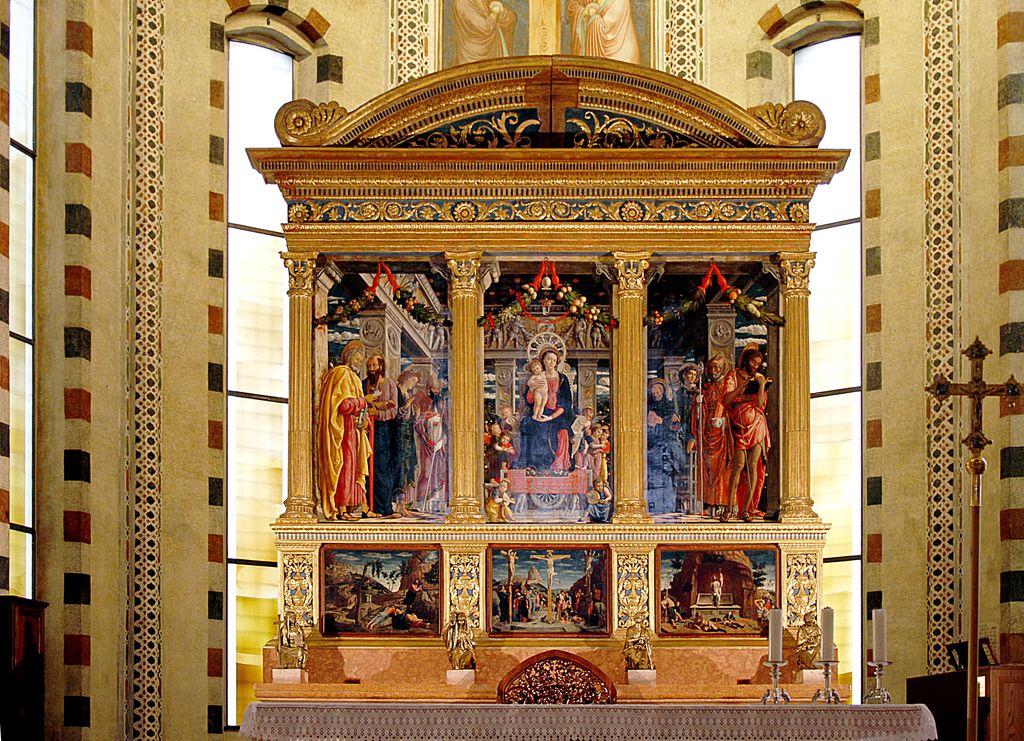
San Zeno Altarpiece
The San Zeno Altarpiece in its frame, Basilica of San Zeno, Verona José Luiz. Image source. CC BY-SA 4.0. Resized from the cited image.