 by Tom Gurney
Tom Gurney BSc (Hons) is an art history expert with over 20 years experience
Published on June 19, 2020 / Updated on November 29, 2026
Email: tomgurney1@gmail.com / Phone: +44 7429 011000
Overview
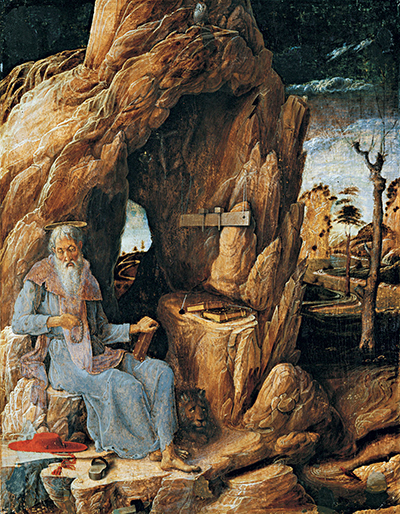
A pale seam of rock leads down to St Jerome’s bare foot. His red hat lies on the ledge beside him, while a lion’s face emerges from the darkness below his books. Above him, rock bends into a rough arch. There is just enough light inside the recess to make out a small crucifix. The Museu de Arte de São Paulo Assis Chateaubriand (MASP) catalogues this tempera on wood as Andrea Mantegna’s Saint Jerome Penitent in the Desert, dated 1448–51. The panel measures 51 by 40 centimetres and its inventory number is MASP.00015. Both the attribution and the early dating have a history of debate. [1] [2]
At a Glance
- ArtistAndrea Mantegna, as catalogued by MASP
- Date1448–51, according to MASP
- MediumTempera on wood
- CollectionMuseu de Arte de São Paulo Assis Chateaubriand (MASP)
- Inventory numberMASP.00015
Andrea Mantegna in context
Saint Jerome Penitent in the Desert
C. 1448–51 [1]San Zeno Altarpiece
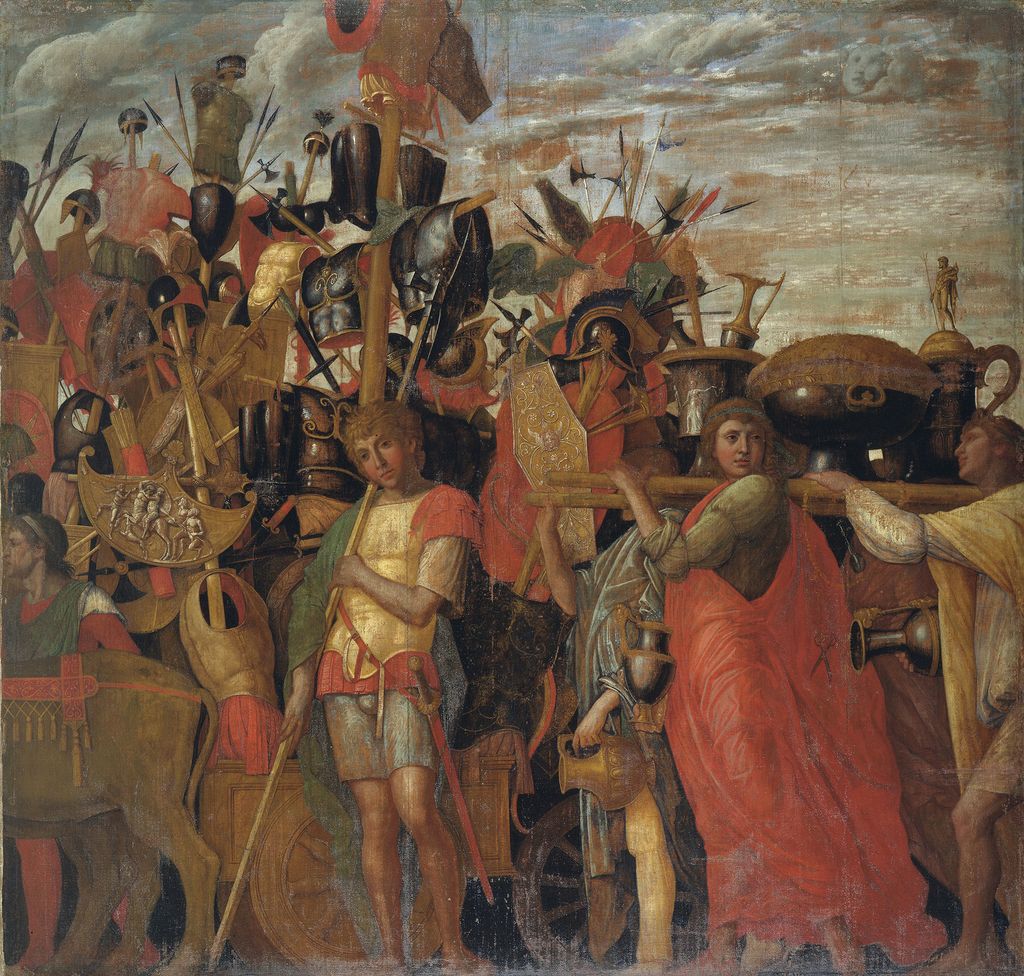
1457–59 [12]The Triumphs of Caesar
Mid-1480s–before 1506 [14]Madonna della Vittoria
1495–96 [15]The cave as a place to read and pray
MASP identifies the setting as the desert of Chalcis in Syria, where Jerome withdrew as a young man. The episode mattered to later painters because it brought together two pursuits that could be shown in very different ways. The hermit subjected himself to the discipline of solitude. The scholar applied himself to understanding Scripture, studying Hebrew during his retreat according to the museum’s catalogue account. The books beside him point towards the work for which he later became famous as a translator and interpreter of the Bible. The painted desert is green in places, with trees and distant paths. Its remoteness is conveyed chiefly by the rock that encloses his seat. [1] [2]
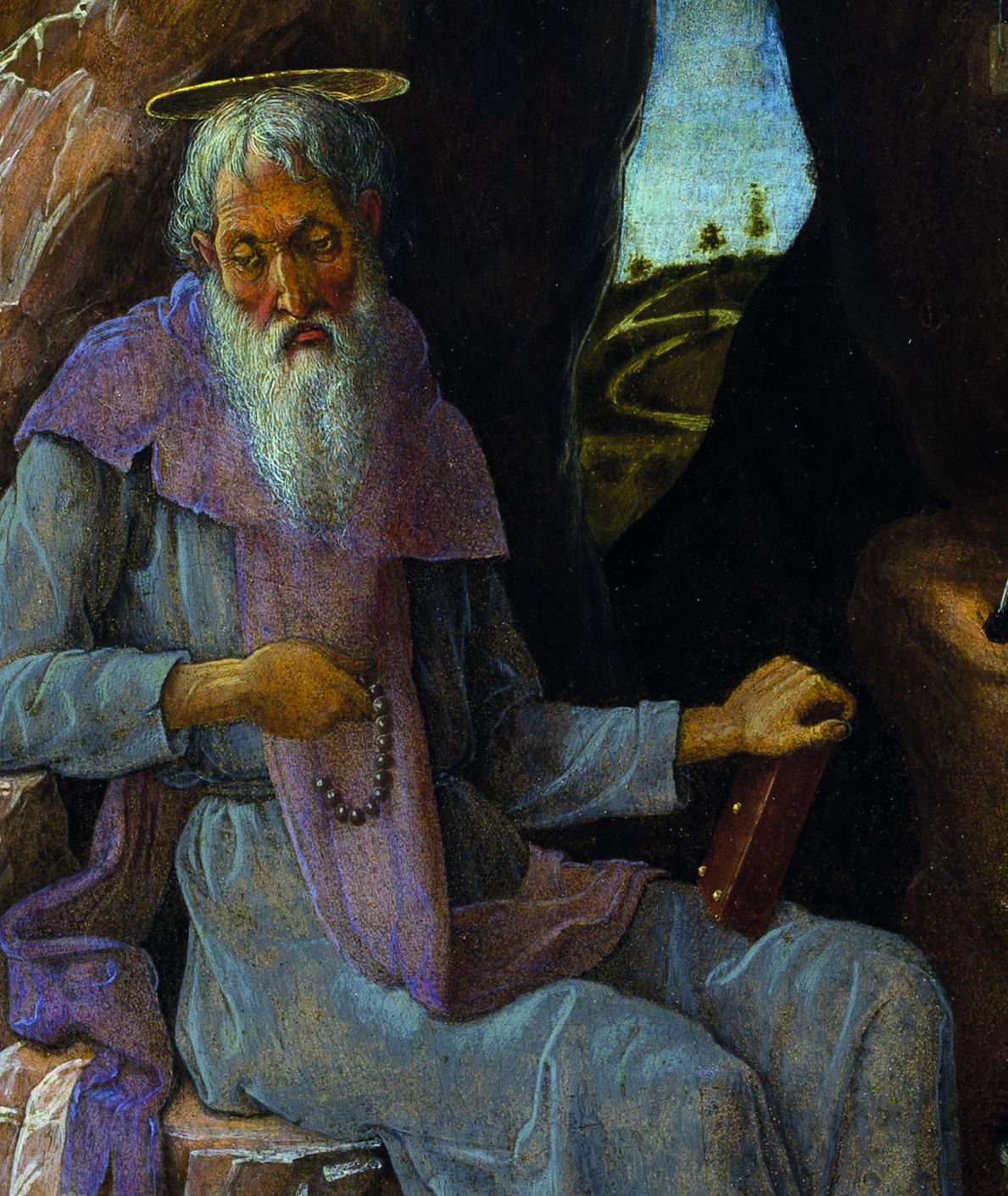
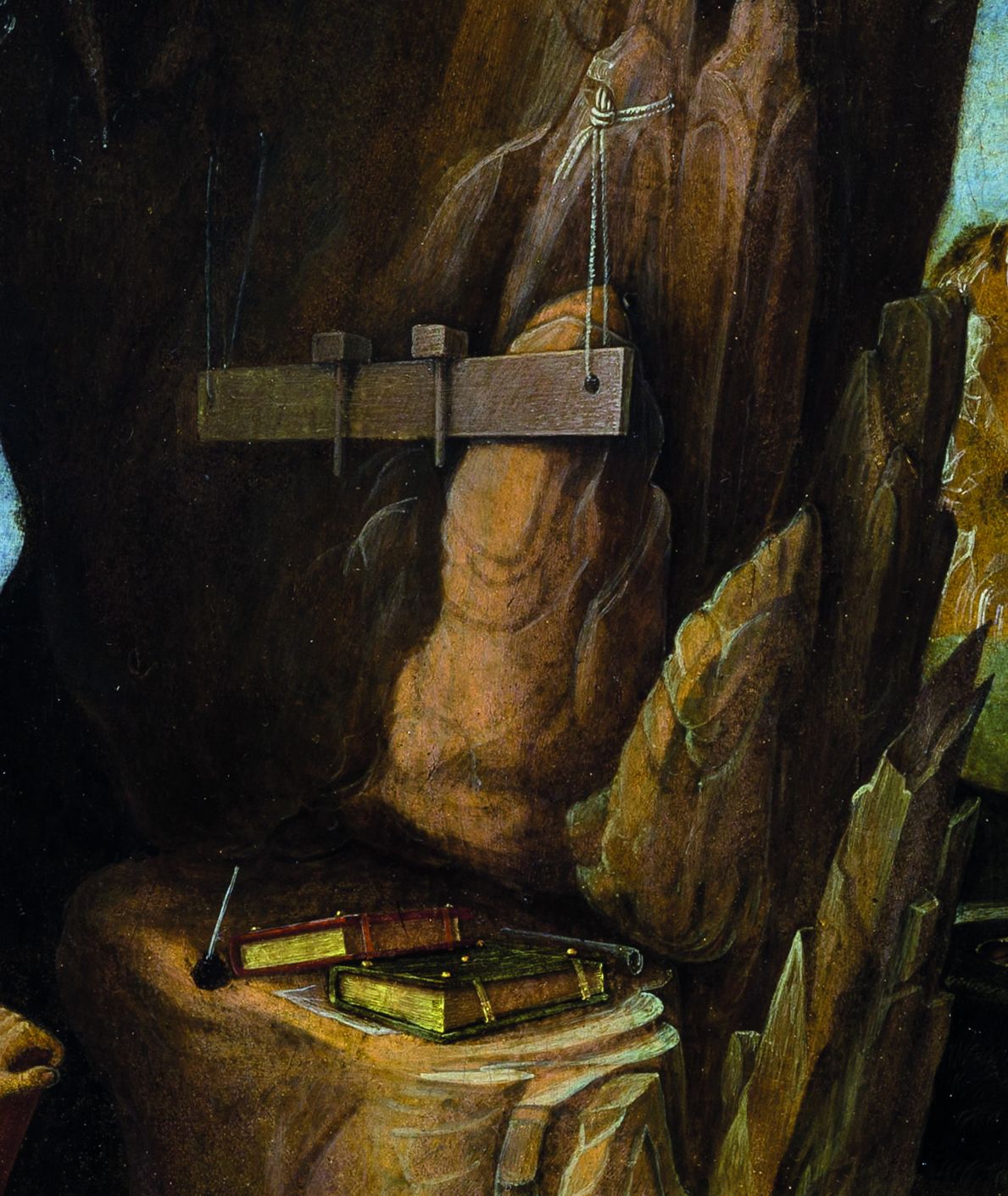
Jerome holds a loop of beads in one hand and rests the other on the top of a closed volume. Two more books lie on the stone shelf to his right, where their pale page edges catch the light. Birolli also identifies a pen, an inkwell and a roll of parchment there. Look higher and farther back for the cross. The crucifix and the tiny flame beside it are harder to make out than the broad plank hanging across the rock face. Birolli discusses that plank and its strikers as a possible semantron, a sounding board used to call worshippers to prayer. The objects on the ledge seem within reach, while picking out the cross takes time for the eye to adjust to the recess. [1] [2] [3]
The lion is tucked low between Jerome’s robe and the stone supporting the books. Medieval legend had Jerome remove a thorn from the lion’s paw, after which the animal stayed with him. Here the animal is already at ease in his company. The bright red hat has been set down on the rock at the saint’s other side, near a discarded shoe. These objects bring a public identity into a secluded place. The hat is the familiar attribute of Jerome as a cardinal in later art, and the lion recalls the legend by which viewers could recognise him even at a small scale. [1] [2]
The catalogue essay published by MASP reads the beads and the book as a meeting of faith and reason. The arrangement helps explain why the subject appealed to Renaissance humanists. A cave set apart from ordinary life could serve as a study, and a scholar of ancient languages could also be a model of devotion. Ettore Camesasca saw the small owl perched high on the rock as the bird of Minerva, an allusion to philosophical wisdom. The museum also points to an owl in Mantegna’s Ovetari Chapel frescoes in Padua, a comparison concerned with how the bird is drawn and lit. [1] [2] [3]
What the rocks can tell us about the painter
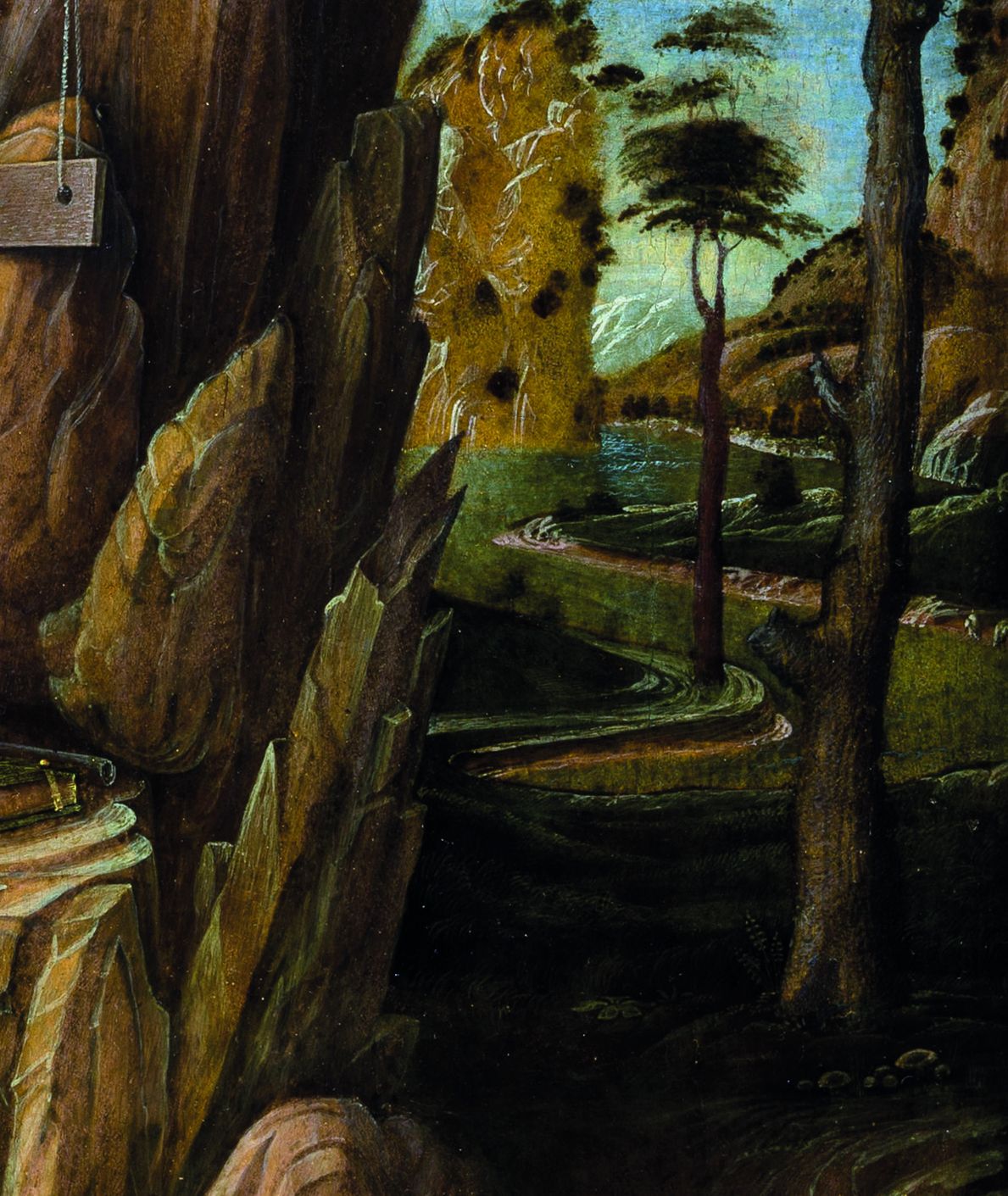
The shelter looks almost built. Thin lips of stone run over Jerome’s head like layers of masonry, and a block at his elbow has a flat enough surface to serve as a table. Look through the narrow slit behind his shoulder and a bright patch of blue opens up beyond the shade. A much broader view at the right, with trees and a winding light track, lets the eye travel into the distance. The two openings give the massive rock a depth of its own. At the lower right, a little red parrot bends over water. Birolli draws attention to the bird’s reflection, a detail easily missed amid the broken lines of the rock. Jerome’s stillness is intensified by everything that moves the eye around him, from the ledges and ripples at his feet to the turns in the landscape beyond. [1] [3]
The panel was sold as a Mantegna at Christie’s in London in 1936. Giuseppe Fiocco put forward Marco Zoppo in 1937, and Tancred Borenius argued the case for a young Mantegna in a 1938 article, comparing Jerome’s head with that of an old man in the Ovetari Chapel frescoes. Roberto Longhi also supported Mantegna. Ronald Lightbown rejected both Mantegna and Zoppo, while Camesasca and Keith Christiansen examined the panel directly and supported an early date under Mantegna’s name. Their estimates differed slightly. MASP reports about 1449–51 for Camesasca and 1448–49 for Christiansen. Alberta De Nicolò Salmazo later considered Nicolò Pizolo, who worked alongside Mantegna on the Ovetari frescoes, and Janez Höfler proposed Giorgio Schiavone. [2] [3] [4]
Mantegna and Zoppo both trained with Francesco Squarcione in Padua. Zoppo’s Saint Jerome in the Desert in Madrid also sets a red hat, books and a lion amid sharply drawn rock and gentler country beyond. Zoppo puts Jerome on his knees before the cross, with the harshest rocks rising in the middle distance. In São Paulo, the rock curves directly over the seated saint and becomes the place where he keeps his things. The parallel shows why subject matter and a taste for unusual rocks alone carry limited weight in deciding who painted the panel. MASP’s account points to more particular resemblances, including the treatment of rock in the Ovetari frescoes. Christiansen’s suggestion that the humanist Ulisse degli Aleotti might have commissioned the work remains a hypothesis. [1] [2] [5]
Two Jeromes on paper in Berlin
The Kupferstichkabinett in Berlin holds a small drawing, Saint Jerome with the Lion (KdZ 5114), in black chalk on slightly grey paper. The museum dates it to about 1450–55, gives Mantegna’s name with a question mark and records an earlier attribution to Giovanni Bellini. As in the São Paulo painting, the bearded saint sits with a lion close beside him. In the drawing he raises one knee and braces himself with a hand. The lion lifts its head on the viewer’s left. The artist gives much of the sheet to the turn of the torso and the fall of the drapery over the raised leg. [6]
As Birolli records, Alfred Scharf took the drawing to be a study for the figures in the panel. The shared subject and seated pose explain why they were brought together. The changed posture, the placement of the animal and the uncertain authorship of the sheet leave the nature of the relationship open. Berlin also holds a separate Saint Jerome Reading (KdZ 5065), which it assigns to Giovanni Bellini’s workshop and dates to about 1475–85. That sheet uses pen, wash and white heightening on blue-green paper. The question mark beside Mantegna’s name on the chalk sheet is part of the wider difficulty of deciding which drawings are by his hand. [2] [3] [6] [7]
From a hermit’s shelter to a working quarry
Zeno Birolli compared the two openings in Jerome’s landscape with the more expansive use of space in The Adoration of the Shepherds, which the Metropolitan Museum of Art dates to shortly after 1450. In the Met painting, the Virgin kneels on a rough stone platform and the landscape opens wide behind the shepherds. An angel’s announcement in the distance and the figures bending over the child in the foreground give the eye two moments in the same story. The stacked planes of Jerome’s rock direct attention in a different way. The landscape beyond is visible in glimpses, while the saint’s immediate surroundings repay a slow inspection. The two pictures share a concern with how near and far objects appear under changing light. [1] [3] [8]
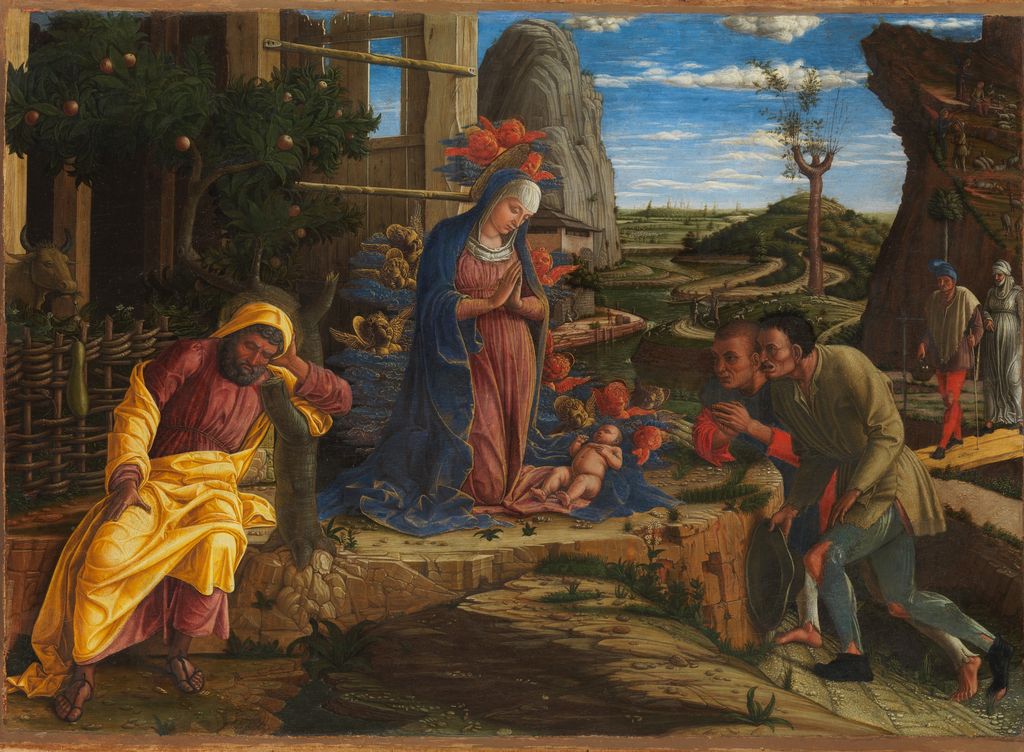
The Adoration of the Shepherds, Metropolitan Museum of Art Image source. Public domain.
Stone has another role in the Uffizi’s Madonna of the Caves, dated about 1488–90. There, the rock behind Mary and Christ is actively being quarried. Daniela Parenti, writing for the Uffizi, relates the column and sarcophagus being made by the stonecutters to Christ’s Passion and burial. She also sees the quarry as an opportunity for the painter to imagine the labour behind the sculpture and architecture of antiquity. Jerome’s cave already provides a seat, a shelf and a recess for prayer. Seen together, the two settings show how much a small devotional painting could ask of its landscape. It could furnish a hermit’s daily round or allow the work of distant stonecutters to suggest the future of the child in the foreground. [1] [9]
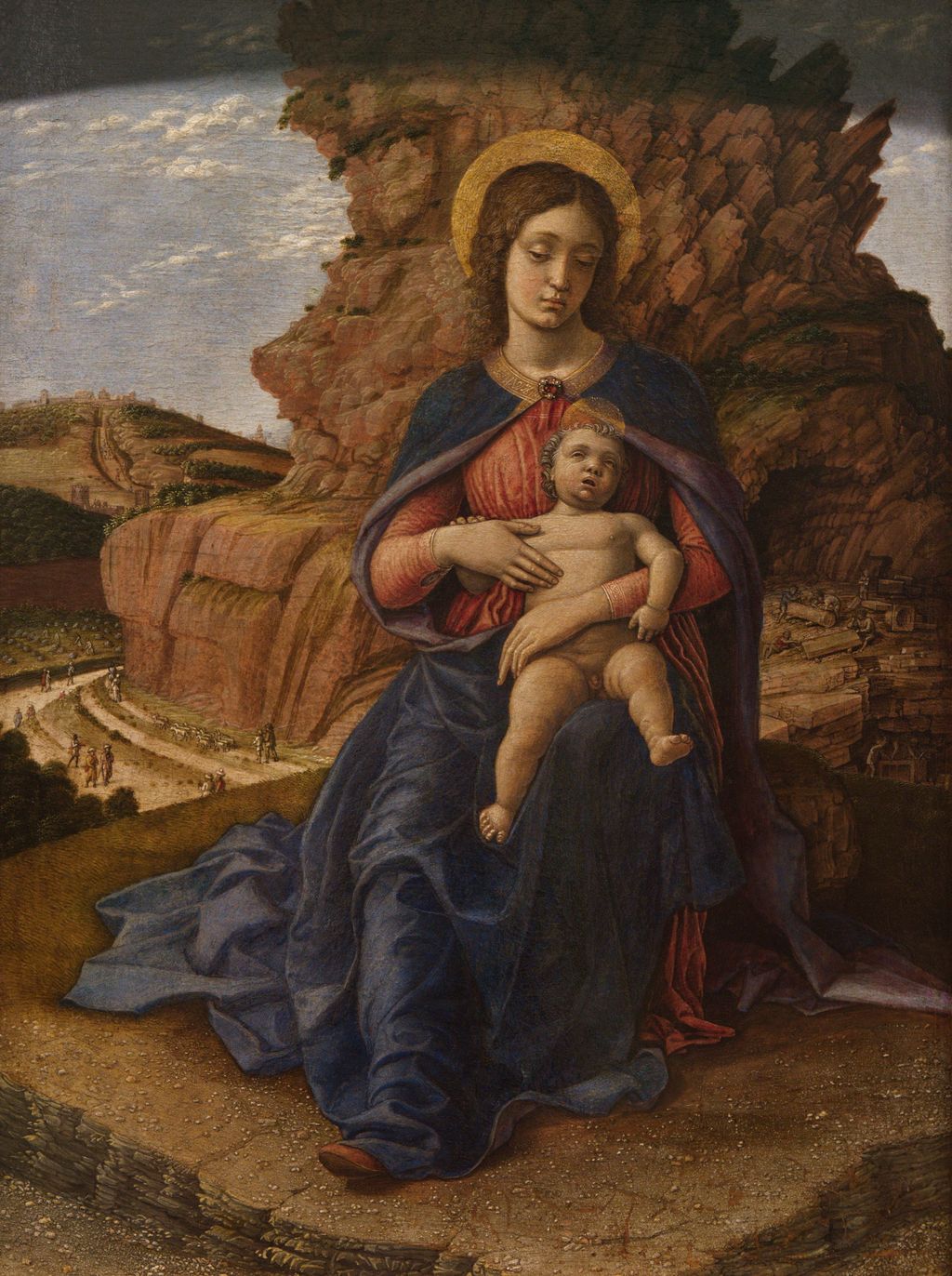
Madonna of the Caves, Uffizi Armin Kleiner. Image source. CC BY-SA 4.0. Cropped to the edges of the artwork and resized.
The surface that survived
The city council of São Paulo gave the panel to MASP in 1952. In her account of its acquisition, Eugênia Gorini Esmeraldo traces the purchase through Wildenstein and the municipal funding that made it possible. Within a few years the painting was on the cover of the catalogue for the museum’s 1954–55 exhibition in Milan. It went to Paris for the Louvre’s Mantegna exhibition in 2008 and was treated the following year at the Centre de recherche et de restauration des musées de France. [1] [4] [10] [11]
Conservator Christine Mouterde reports that the support is a single poplar board. Infrared examination revealed hatching beneath the painted folds and small adjustments during execution, including around the hand and the finger holding the beads. Old varnish and retouching had changed the apparent colour of parts of the sky and recast shadows in the rock. During treatment some older work was retained, including the previous reconstruction of a loss in the red hat. The lighter and darker passages of sky are easier to distinguish after cleaning, while the wear to Jerome’s lowered face remains visible. [3] [11]
Annotated Details from Saint Jerome Penitent in the Desert
The numbered points identify details to look at closely. The detail images below preserve the native scale of the selected crops.
Saint Jerome Penitent in the Desert
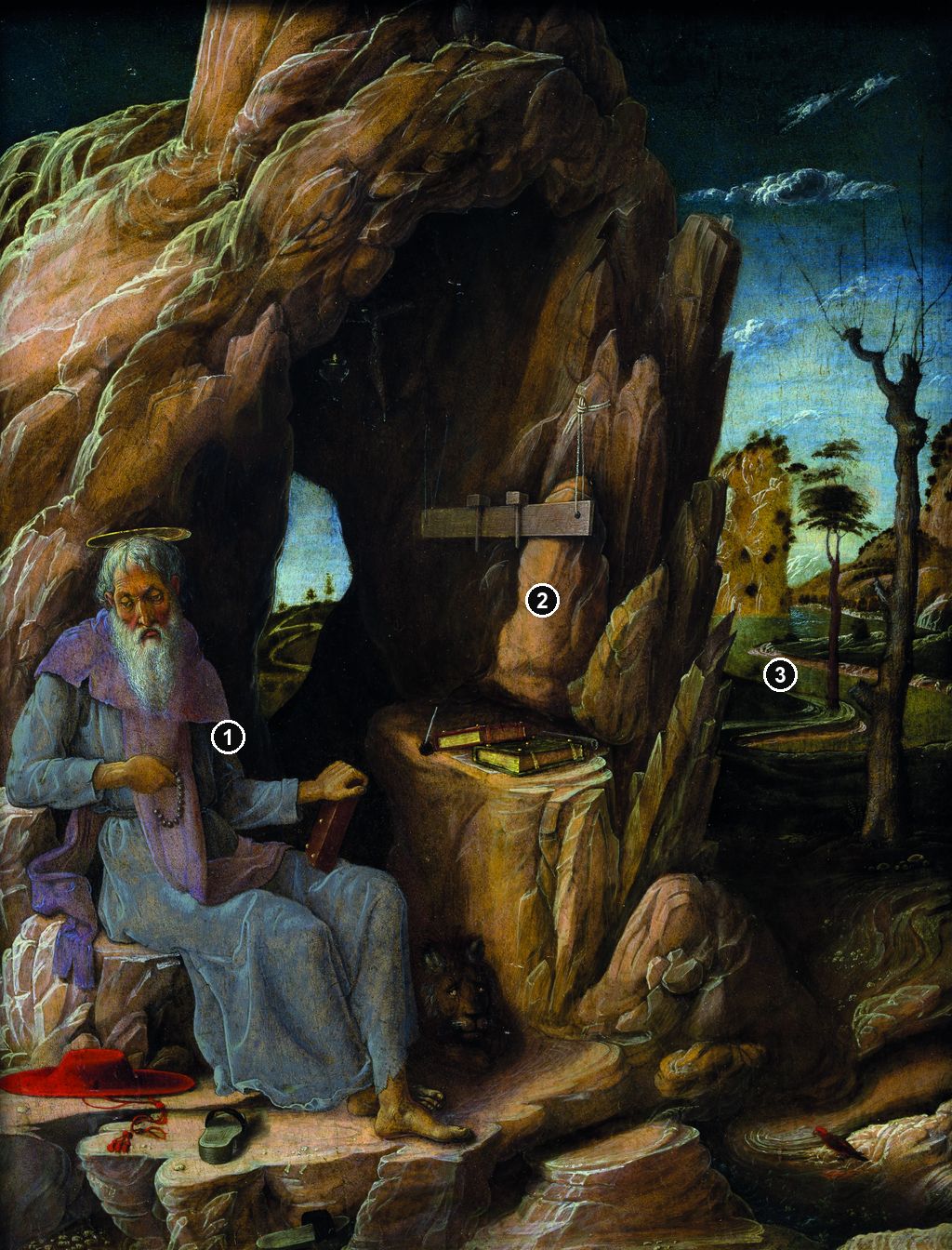
Details from SAINT JEROME PENITENT IN THE DESERT
Choose a detail to enlarge it.
Saint Jerome Penitent in the Desert
The seated saint
The saint sits against a large surface of rock. Compare his quiet pose with the diagonal bands running through the stone.
Rock shelter and cross
The cross lies within the enclosure of the rock. The shadowed recess sets off its straight lines.
Opening into the landscape
The space beyond the rocky shelter appears in a narrow opening. Trees and changes of scale take the eye into the distance.
Artworks directory
| Name | Date | Medium and collection |
|---|---|---|
| The Adoration of the Shepherds | Shortly after 1450 | Painting · Metropolitan Museum of Art · 32.130.2 Catalogue. |
| Saint Mark the Evangelist | C. 1448–51 | Painting · Städel Museum · 1046 Catalogue. |
| Saint Jerome Penitent in the Desert | C. 1448–51 | Painting · Museu de Arte de São Paulo · MASP.00015 Catalogue. |
| Martyrdom and Transport of the Body of Saint Christopher | Mid-1450s | Painting · Ovetari Chapel, Padua Catalogue. |
| San Luca Altarpiece | 1453–55 | Painting · Pinacoteca di Brera · 176 Catalogue. |
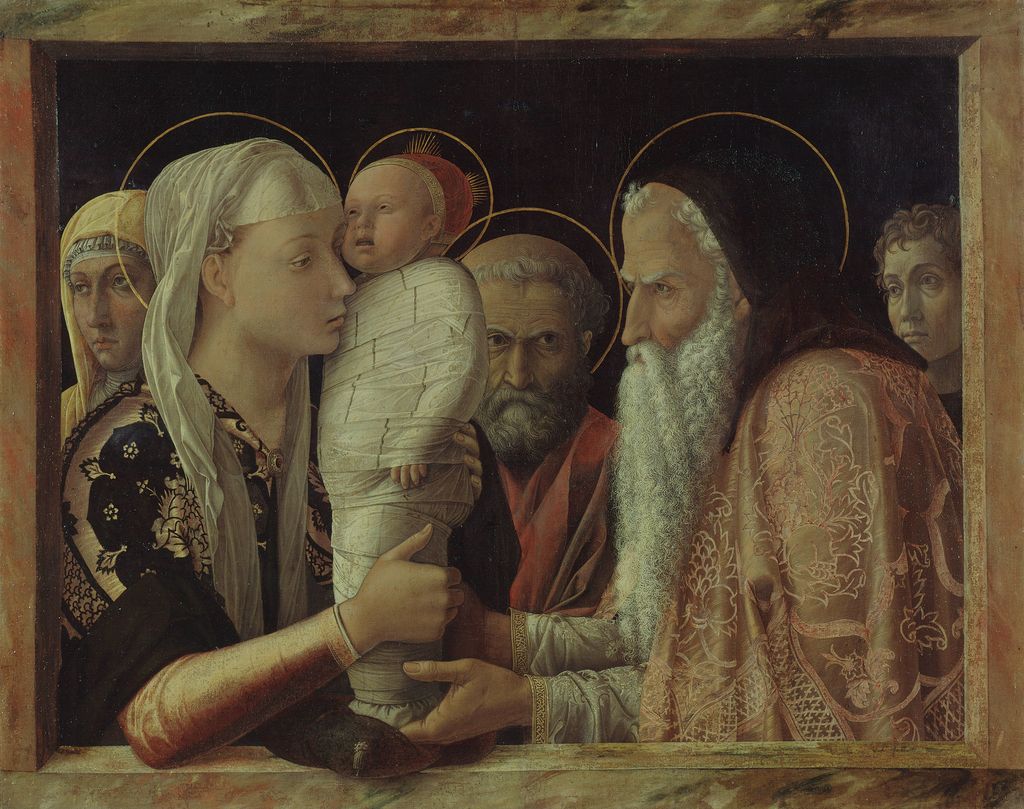
| The Presentation of Christ at the Temple | 1454 (Berlin dating) | Painting · Gemäldegalerie, Berlin · 29 Catalogue. |
| San Zeno Altarpiece | 1457–59 | Painting · Basilica of San Zeno, Verona Catalogue. |
| The Crucifixion | 1456–59 | Painting · Musée du Louvre · INV 368 Catalogue. |
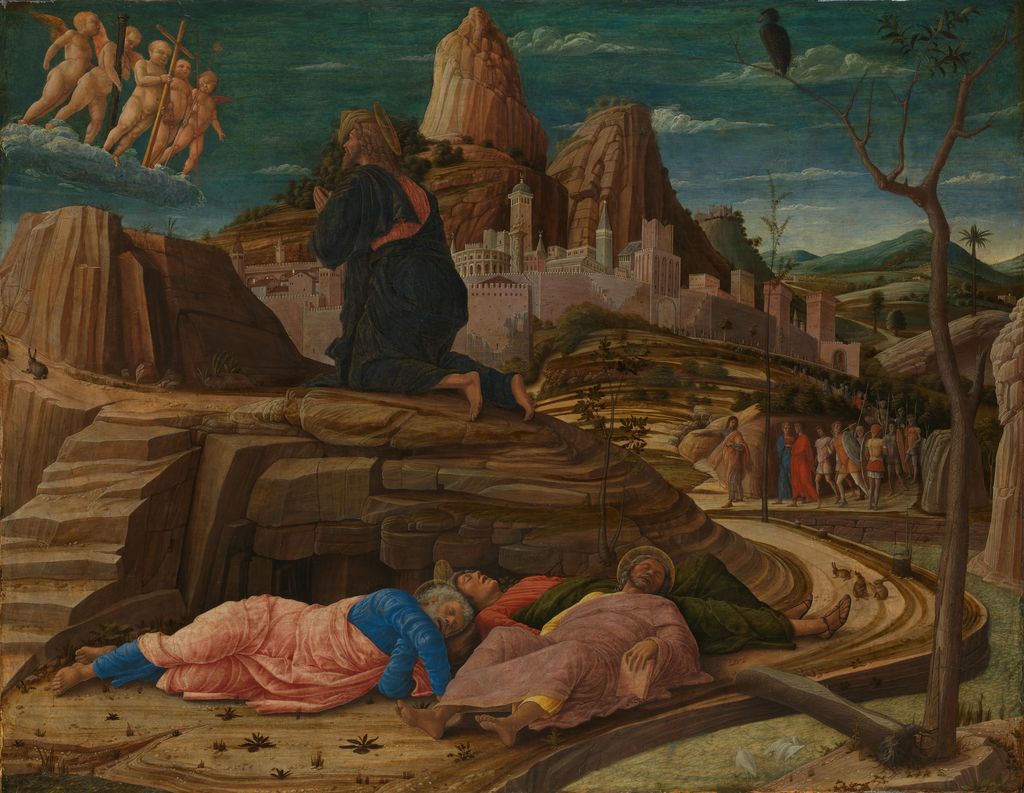
| The Agony in the Garden (London) | C. 1455–56 | Painting · National Gallery, London · NG1417 Catalogue. |
| The Agony in the Garden (Tours) | 1459 (Tours dating) | Painting · Musée des Beaux-Arts de Tours · 1803-1-24 Catalogue. |
| The Resurrection | 1459 (Tours dating) | Painting · Musée des Beaux-Arts de Tours · 1803-1-25 Catalogue. |
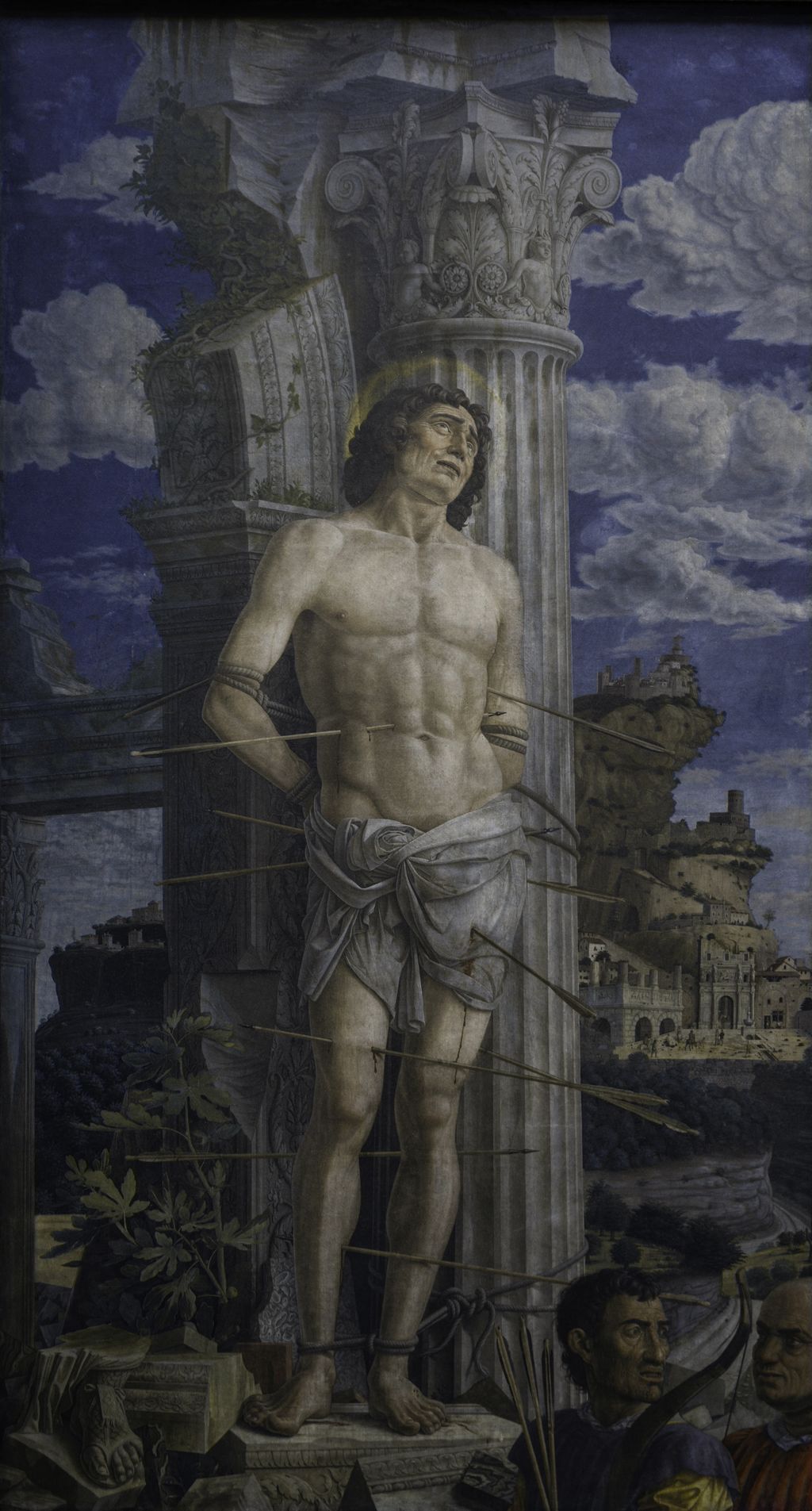
| Saint Sebastian (Vienna) | C. 1457–59 | Painting · Kunsthistorisches Museum · GG 301 Catalogue. |
| Cardinal Ludovico Trevisan | C. 1459–60 (Berlin exhibition dating) | Painting · Gemäldegalerie, Berlin · 9 Catalogue. |
| The Death of the Virgin | C. 1462 | Painting · Museo Nacional del Prado · P000248 Catalogue. |
| Christ with the Soul of the Virgin | C. 1460–64 | Painting · Pinacoteca Nazionale, Ferrara Catalogue only. |
| Portrait of a Young Man (traditionally Francesco Gonzaga) | C. 1461 or 1470, depending on sitter | Painting · Museo di Capodimonte · Q 60 Catalogue. |
| Portrait of a Prelate (Carlo de’ Medici?) | C. 1465–70 | Painting · Uffizi Galleries · 1890 no. 8540 Catalogue. |
| Portrait of a Man | C. 1470 | Painting · National Gallery of Art, Washington · 1952.2.5 Catalogue. |
| Madonna with Sleeping Child (Berlin) | C. 1455–60 | Painting · Gemäldegalerie, Berlin · S.5 Catalogue. |
| Camera degli Sposi (Camera Picta) | 1465–74 | Painting · Palazzo Ducale, Mantua Catalogue. |
| Saint Sebastian (Louvre) | Around 1480 | Painting · Musée du Louvre · RF 1766 Catalogue. |
| Lamentation over the Dead Christ | C. 1483 (Brera dating) | Painting · Pinacoteca di Brera · 352 Catalogue. |
| The Triumphs of Caesar | About 1485–1506 | Painting · Royal Collection · RCIN 403958–403966 Catalogue. |
| Madonna of the Caves | C. 1488–90 | Painting · Uffizi Galleries · 1890 no. 1348 Catalogue. |
| Madonna and Child with a Choir of Cherubim | C. 1485 | Painting · Pinacoteca di Brera · 297 Catalogue. |
| Madonna and Child (Poldi Pezzoli) | Early 1490s (museum dating) | Painting · Museo Poldi Pezzoli · 1595 Catalogue. |
| The Holy Family with Saint Mary Magdalen | C. 1495–1500 | Painting · Metropolitan Museum of Art · 14.40.643 Catalogue. |
| The Virgin and Child with Saint Mary Magdalene and Saint John the Baptist | C. 1490–1505 | Painting · National Gallery, London · NG274 Catalogue. |
| Christ as the Suffering Redeemer | 1485–95 (SMK dating) | Painting · Statens Museum for Kunst · KMSsp69 Catalogue. |
| Ecce Homo | C. 1500 | Painting · Musée Jacquemart-André · MJAP-P 1840 Catalogue. |
| Judith with the Head of Holofernes (Mantegna or follower) | C. 1495–1500 | Painting · National Gallery of Art, Washington · 1942.9.42 Catalogue. |
| Madonna della Vittoria | 1495–96 | Painting · Musée du Louvre · INV 369 Catalogue. |
| Mars and Venus (Parnassus) | C. 1496–97 | Painting · Musée du Louvre · INV 370 Catalogue. |
| The Trivulzio Madonna | 1497 | Painting · Castello Sforzesco, Milan · 0554 Catalogue. |
| The Adoration of the Magi | C. 1495–1505 | Painting · J. Paul Getty Museum · 85.PA.417 Catalogue. |
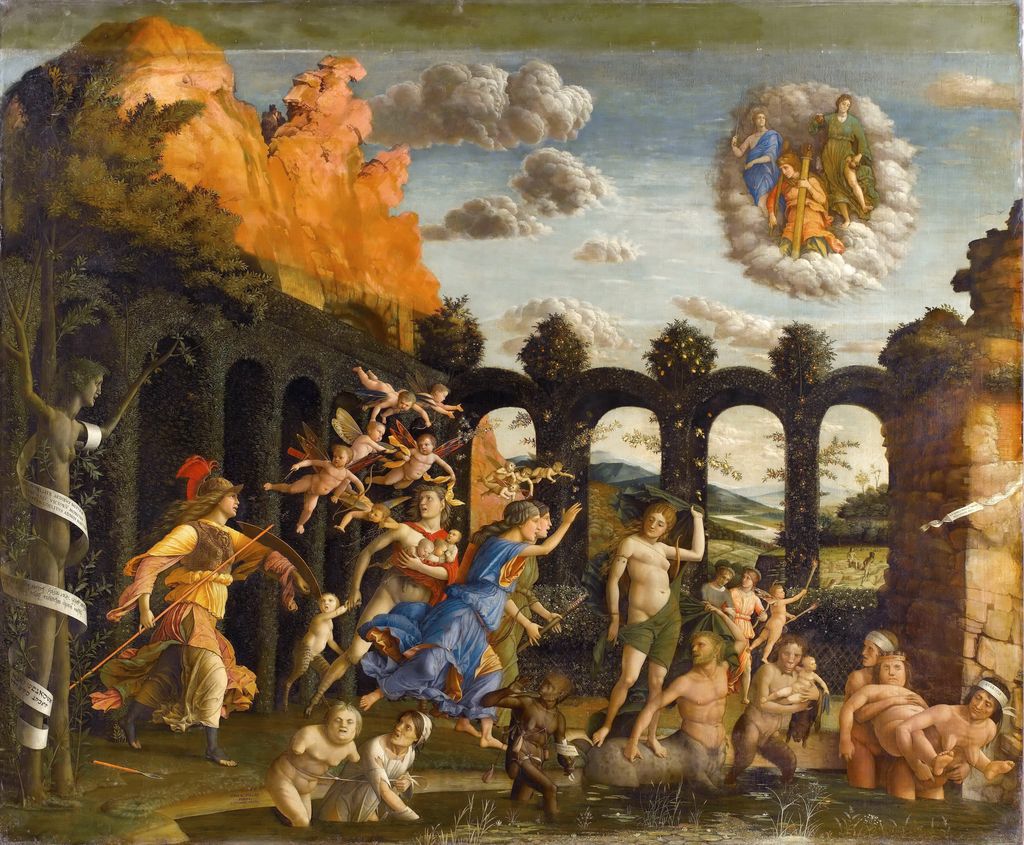
| Minerva Expelling the Vices from the Garden of Virtue | C. 1502 | Painting · Musée du Louvre · INV 371 Catalogue. |
| The Introduction of the Cult of Cybele at Rome | 1505–06 | Painting · National Gallery, London · NG902 Catalogue. |
| Saint Sebastian (Venice) | Probably c. 1504–06 | Painting · Galleria Giorgio Franchetti alla Ca’ d’Oro · D.11 Catalogue. |
| Samson and Delilah | C. 1500 | Painting · National Gallery, London · NG1145 Catalogue only. |
| A Woman Drinking (probably Sophonisba) | C. 1495–1506 | Painting · National Gallery, London · NG1125.2 Catalogue only. |
| The Vestal Virgin Tuccia with a Sieve | C. 1495–1506 | Painting · National Gallery, London · NG1125.1 Catalogue only. |
| Judith with the Head of Holofernes (Dublin) | C. 1495–1500 | Painting · National Gallery of Ireland · NGI.442 Catalogue only. |
| Battle of the Sea Gods, left half (Met impression) | Before 1481 (Met dating) | Print · Metropolitan Museum of Art · 18.12 Catalogue only. |
| Battle of the Sea Gods, right half (Met impression) | Before 1481 (Met dating) | Print · Metropolitan Museum of Art · 1984.1201.4 Catalogue only. |
| Battle of the Sea Gods, left half (Tokyo impression) | C. 1475 (Tokyo dating) | Print · National Museum of Western Art, Tokyo · G.1981-0002 Catalogue only. |
| Battle of the Sea Gods, left half (Washington impression) | C. 1485–88 (NGA dating) | Print · National Gallery of Art, Washington · 1941.1.6 Catalogue only. |
| The Entombment of Christ, second state of two | Before 1475 (Met dating) | Print · Metropolitan Museum of Art · 37.42.30 Catalogue only. |
| The Entombment of Christ (possibly Zoan Andrea, after Mantegna) | 1460–1549 (Rijksmuseum dating) | Print · Rijksmuseum · RP-P-1924-60 Catalogue only. |
| Four Dancing Muses (Gian Marco Cavalli after Mantegna) | C. 1497 | Print · Metropolitan Museum of Art · 20.5.3 Catalogue only. |
| Bacchanal with Silenus | Before 1475 (Met dating) | Print · Metropolitan Museum of Art · 29.44.15 Catalogue only. |
| Bacchanal with a Wine Vat | Before 1475 (Met dating) | Print · Metropolitan Museum of Art Catalogue only. |
| St James on His Way to Execution | C. 1453–57 | Drawing · British Museum · 1976,0616.1 Catalogue only. |
| Three Studies for a Dead Christ | C. 1455–65 | Drawing · British Museum · 1909,0406.3 Catalogue only. |
| Pietà (Venice) | C. 1456–65 (exhibition datings) | Drawing · Gallerie dell’Accademia, Venice · 115 Catalogue only. |
| Studies for Christ at the Column | 1460–65 | Drawing · The Courtauld · D.1978.PG.345 Catalogue only. |
| Virtus Combusta | C. 1490 (technical study) | Drawing · British Museum · Pp,1.23 Catalogue only. |
| Virtus Combusta (Giovanni Antonio da Brescia after Mantegna) | C. 1495–1506 | Print · Musée du Louvre · 3881 LR/ Recto Catalogue only. |
| The Calumny of Apelles | C. 1504–06 | Drawing · British Museum · 1860,0616.85 Catalogue only. |
Frequently Asked Questions
It is the São Paulo panel MASP.00015. The Berlin works on paper are comparisons and have separate catalogue identities.
The saint sits close to his book and cross under the shelter of the rock. The lion helps identify Jerome, while the rocky setting provides both a retreat and a place to work.
Discussion
Look again at the images and ideas explored in St Jerome in the Wilderness. These editorial prompts invite your observations.
Reader Insights
How do the beads, closed book and barely visible crucifix shape your understanding of what Jerome is doing?
Compare the two openings in Jerome’s rock shelter with the view behind the shepherds in the Met painting. Where does each landscape direct your eye first, and how does it lead you into the distance?
Join the Conversation
Share a detail, comparison or question about St Jerome in the Wilderness below.
References
- Museu de Arte de São Paulo Assis Chateaubriand, Saint Jerome Penitent in the Desert. View source.
- Museu de Arte de São Paulo Assis Chateaubriand, São Jerônimo penitente no deserto. View source.
- Universidade Estadual de Campinas, Zeno Birolli, São Jerônimo no Deserto. View source.
- The National Gallery, London, Mantegna and Bellini: Immunity from Seizure Report, Saint Jerome Penitent in the Desert, X9730. View source.
- Museo Nacional Thyssen-Bornemisza, Marco Zoppo, Saint Jerome in the Desert. View source.
- Staatliche Museen zu Berlin, Kupferstichkabinett, Der heilige Hieronymus mit dem Löwen, KdZ 5114. View source.
- Staatliche Museen zu Berlin, Kupferstichkabinett, Der heilige Hieronymus, lesend, KdZ 5065. View source.
- The Metropolitan Museum of Art, Andrea Mantegna, The Adoration of the Shepherds. View source.
- Gallerie degli Uffizi, Andrea Mantegna, Madonna delle cave. View source.
- Universidade Estadual de Campinas, Eugênia Gorini Esmeraldo, O São Jerônimo de Mantegna. View source.
- Universidade Estadual de Campinas, Christine Mouterde, Saint Jérôme d’Andrea Mantegna (MASP): Restauration de couche picturale. View source.
- Basilica of San Zeno, Verona, San Zeno Altarpiece, View source.
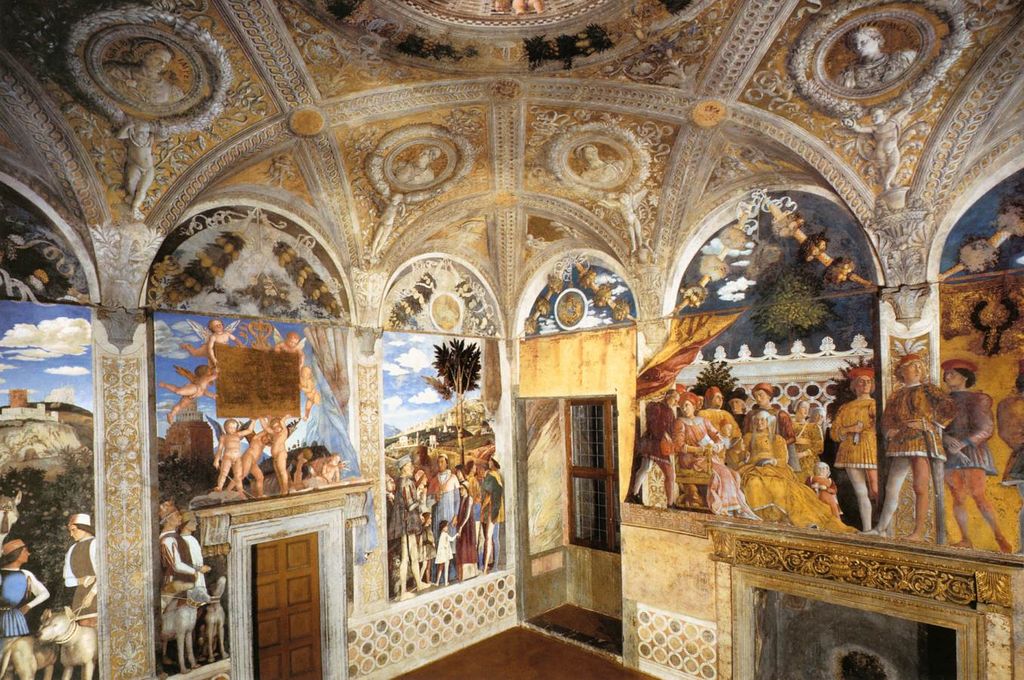
- Palazzo Ducale, Mantua, Camera degli Sposi (Camera Picta), View source.
- Royal Collection, The Triumphs of Caesar, View source.
- Musée du Louvre, Madonna della Vittoria, View source.
- National Gallery, London, The Introduction of the Cult of Cybele at Rome, View source.
More MANTEGNA Paintings
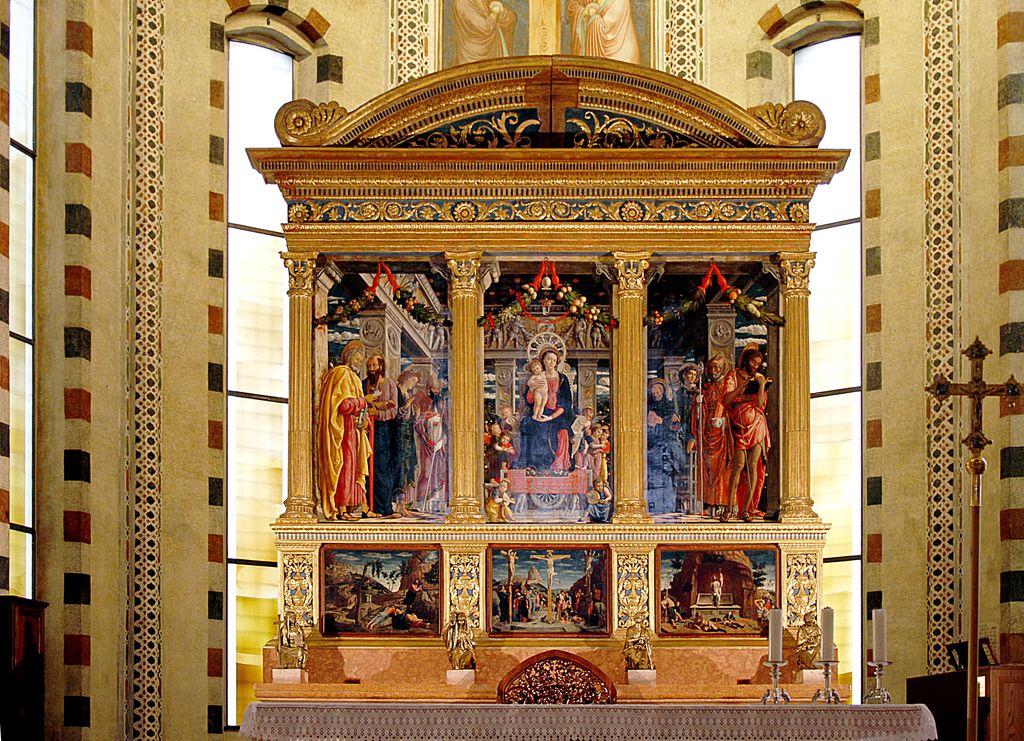
San Zeno Altarpiece
The San Zeno Altarpiece in its frame, Basilica of San Zeno, Verona José Luiz. Image source. CC BY-SA 4.0. Resized from the cited image.