 by Tom Gurney
Tom Gurney BSc (Hons) is an art history expert with over 20 years experience
Published on June 19, 2020 / Updated on November 29, 2026
Email: tomgurney1@gmail.com / Phone: +44 7429 011000
Overview
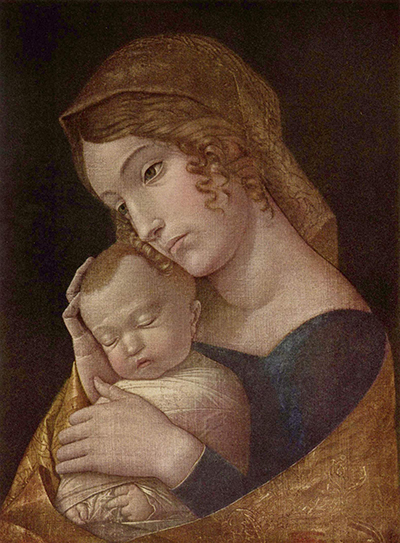
Mary cups the back of her child’s head and rests her cheek against him. The infant’s eyes have closed, and only his tiny hands emerge from the swaddling. Mary’s eyes stay open, directed beyond the bundle she holds. At 48.4 by 32.2 centimetres, Andrea Mantegna’s Madonna with Sleeping Child is small enough for this difference to register slowly. The Gemäldegalerie in Berlin dates the painting to about 1455–1460 and catalogues it as inventory S.5. [1]
At a Glance
- DateAbout 1455–1460 (Gemäldegalerie dating)
- MediumDistemper (glue-bound paint) on unprimed linen canvas
- Dimensions48.4 × 32.2 cm
- CollectionGemäldegalerie, Staatliche Museen zu Berlin
- Inventory numberS.5
Andrea Mantegna in context
Madonna with Sleeping Child (Berlin)
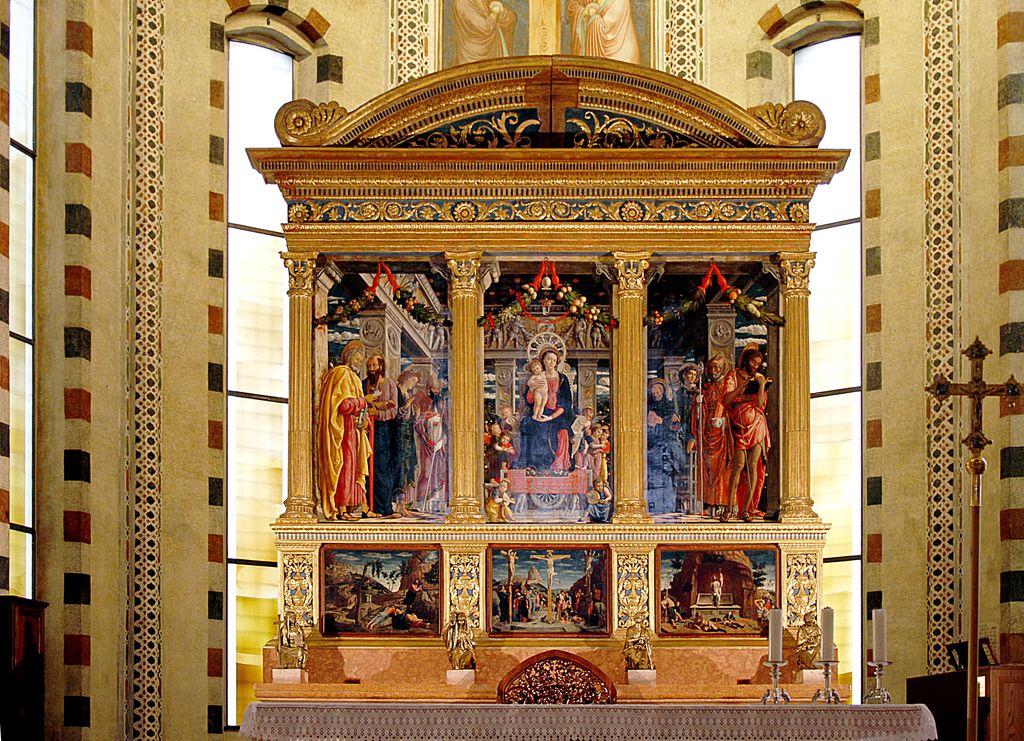
C. 1455–60 [1]San Zeno Altarpiece
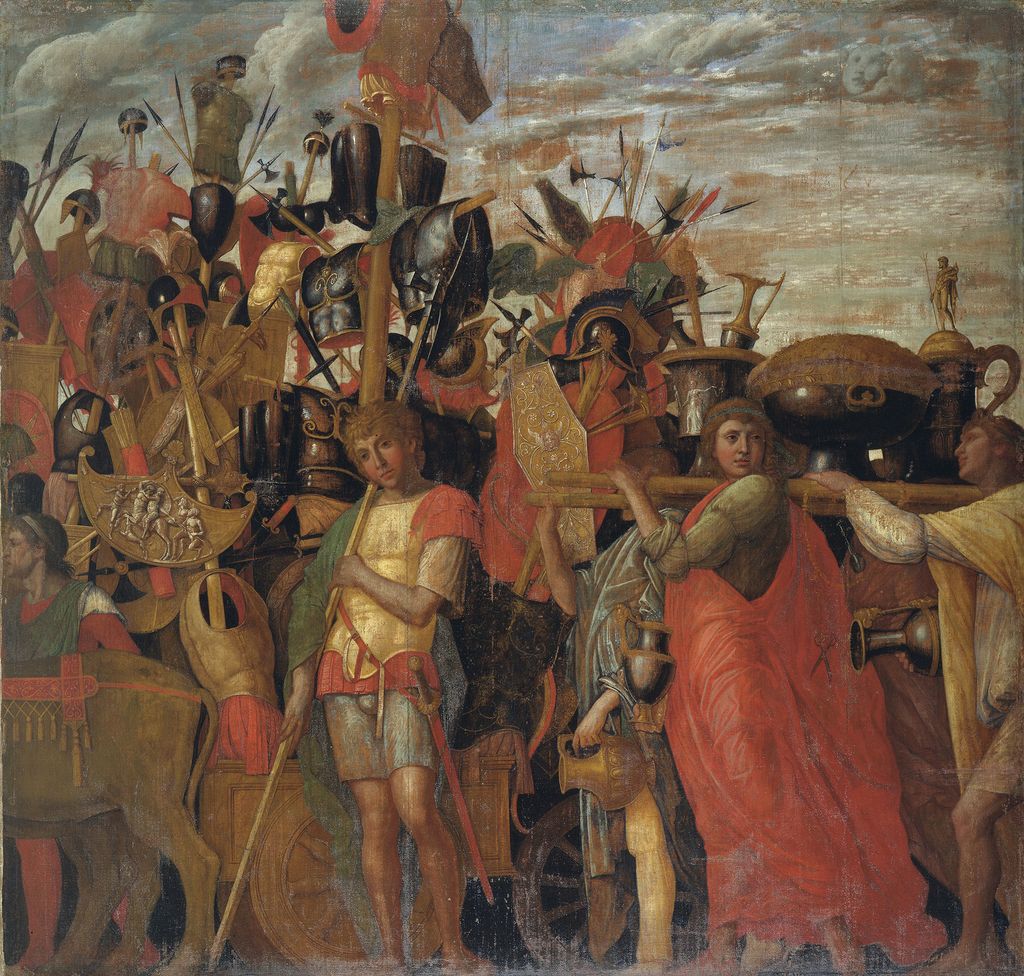
1457–59 [15]The Triumphs of Caesar
Mid-1480s–before 1506 [17]Madonna della Vittoria
1495–96 [18]A hand beneath the sleeping head
The embrace is easiest to read by following the two hands separately. Mary’s right hand steadies the infant’s head where it falls back against hers. Her left draws the wrapped body towards her chest. His face tilts up as hers inclines, so that the point where her cheek meets his head brings the two movements to a stop. Her fingers bear his weight, leaving the contact between their faces as light as it looks. The swaddling keeps the little body together and makes the exposed hands, so much smaller than Mary’s, surprisingly easy to find. [1] [2]
It takes a second look to see how much work the textiles do. Follow the edge of Mary’s head covering down towards her nape, then pick up the outer line of her shoulder and the border of her cloak. The folds of her clothing turn back towards the child, whose own wrapping supplies a series of shorter edges within that broad sweep. The cloak and swaddling do different things. One curves around them both, while the other holds the child close against her. The dark field around the figures leaves those contours to establish how much space they occupy together. [1] [2]
Sleep and the thought of the Passion
The Gemäldegalerie classifies the painting as an image for devotion. Its dimensions and tight view suit sustained looking at close range. Mary’s face, the child’s closed eyes and the hands under his head and around his body form a group small enough to take in at a glance. The ordinary act of settling a sleeping child is itself the subject of contemplation. That reading fits the scale and the composition, while the record of the work’s ownership supplies no original patron or setting. [1] [3]
Katharina Weick-Joch, writing for the Gemäldegalerie, proposes that the infant’s sleep may anticipate Christ’s death and that Mary’s melancholy may reflect her foreknowledge of it. The expression gives that reading room. Mary is wholly occupied with supporting the child, yet her gaze seems to travel beyond the task at hand. To a viewer thinking of the Passion, the weight she takes so gently on her hands can recall the weight of the adult Christ in images of the lamentation. The force of the association comes from how convincingly the child is asleep. His dependence is apparent before any thought of what is to come. [1] [2]
Giovanni Bellini’s Madonna Adoring the Sleeping Child in the Metropolitan Museum of Art shows how differently the subject can be arranged. Bellini lays the child on a ledge beneath his mother’s gaze. The Met compares the ledge to an altar and reads the sleeping body as a reference to Christ’s sacrifice and the Eucharist. In Mantegna’s Berlin painting, the places to look for the child’s weight are the hand at his head and the arm that gathers him to Mary. With the child held against a living body, the anticipation of loss belongs especially to the embrace. [1] [4]
From Donatello’s marble to painted linen
Weick-Joch traces Mantegna’s compact grouping to Donatello’s Madonna reliefs, singling out the Pazzi Madonna as a comparison. In that marble, dated about 1420 by Berlin’s sculpture collection, Mary and Jesus bring their foreheads together. The niche gives the pair a shallow architectural space, while their meeting profiles take over its centre. The Bode-Museum’s catalogue describes the concentrated gesture in terms of both tenderness and distress. Mantegna turns the child’s sleeping face out towards the viewer and moves the point of contact to Mary’s cheek. The meeting of the heads has a similar power to draw the eye, while the sleeping child leaves the work of holding entirely to Mary. [1] [5]
Up close, the weave of the Berlin canvas shows through the paint. Mantegna used distemper, in this case pigment bound with glue, laid thinly on unprimed linen. The fine weave is visible, particularly in the face, where it gives an otherwise precise outline a delicate surface. There are two kinds of fabric to look for here. The actual linen carries the picture, and the painted fabrics take the shape of the bodies within it. The weave continues across the image, while the painted edges separate kerchief, cloak and swaddling. [1] [2] [3]
The subdued colour visible today gives only a partial account of the original clothing. Berlin’s technical findings identify lapis lazuli in the blue of Mary’s dress and show that much of the red has worn away from the pattern of her cloak. In his account for the Gemäldegalerie, Erich Schleier describes the cloak as gold brocade with a pomegranate design. The museum also identifies later overpainting of the dark background at the margins. The boundary between garment and background is therefore a place to look both at Mantegna’s arrangement of the figures and at the material changes the painting has undergone. [1] [2]
Two Madonnas in Milan and one in Bergamo
The Poldi Pezzoli Madonna in Milan makes the closest comparison. The museum dates it to about 1490 and records it as inventory 1595. Here too a sleeping child presses into his mother and her cloak draws their bodies into a compact, pyramidal group. Mary’s fingers touch the child’s face in the Milan painting, where he sleeps with his mouth open inside a thin white wrapping. The Poldi Pezzoli proposes that the cloth anticipates Christ’s shroud, a reading that gives the textile a more specific role in the allusion to his death. [6]
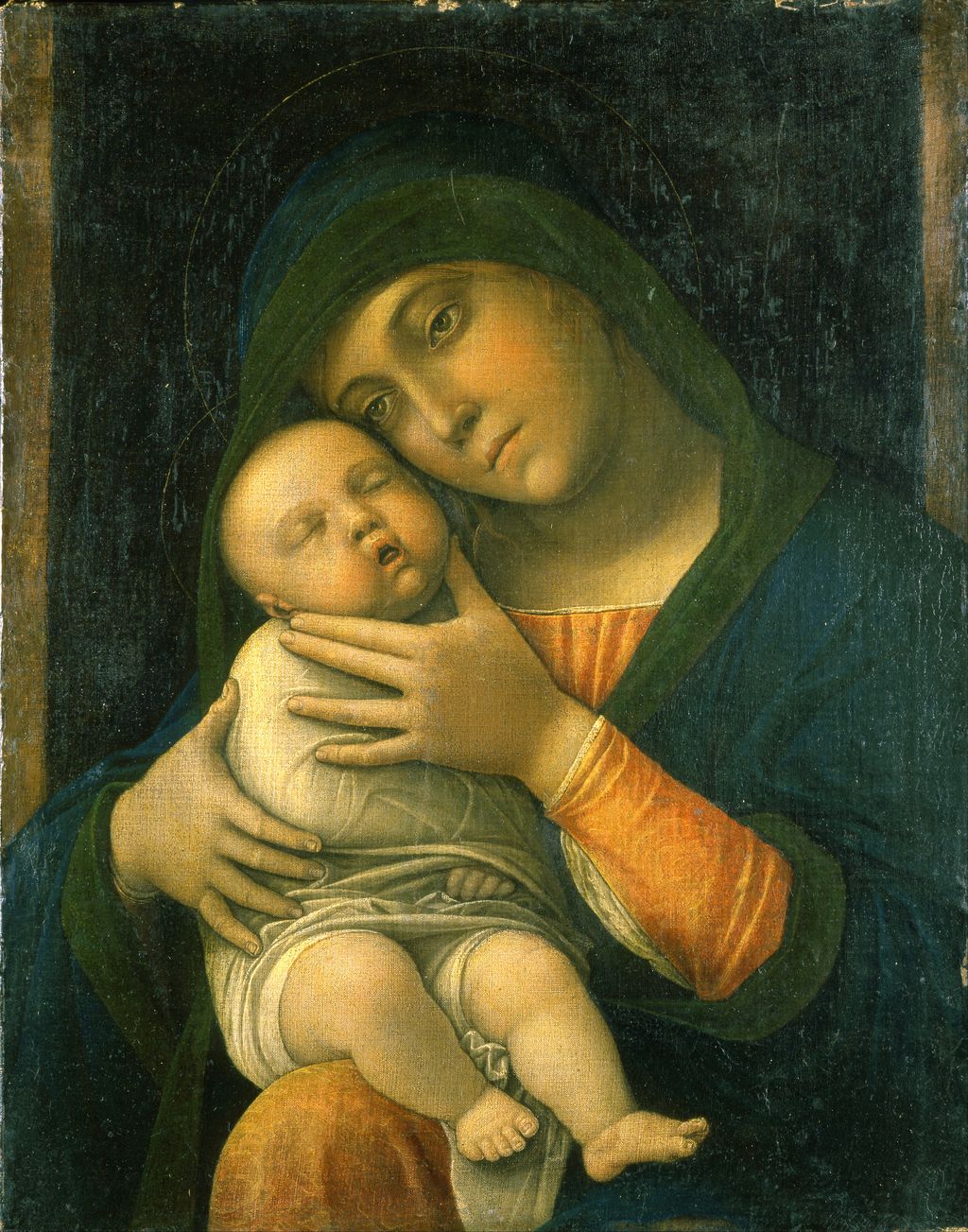
Madonna and Child, Museo Poldi Pezzoli Image source. Public domain.
The red of Mary’s dress and the turned edge of the mantle help articulate where one garment meets another. The Berlin canvas is narrower in proportion, and the snug swaddling bands make the child’s stillness especially pronounced. [1] [6]
The two works also reward comparison as painted objects. The Opificio delle Pietre Dure found that a nineteenth-century restoration of the Milan canvas had introduced a Prussian-blue passage over original azurite and added gold decoration of its own. During treatment in 2019, the conservators removed those additions and mapped surviving traces of a gold inscription from the Song of Songs in the background. The Milan painting thus offers direct evidence of devotional words once set beside the embrace. Berlin’s published technical account yields a different set of clues, chiefly the lapis lazuli in the dress, the loss of red from the brocade and the overpaint at the edges. [1] [7]
The Madonna of the Cherubim, also in Milan, puts a comparable tenderness on a larger scale. Brera dates its tempera panel to about 1485. At 88 by 70 centimetres it has room for a crowd of winged faces. Brera identifies the red-winged figures as cherubim and the blue-winged ones as seraphim. The turn of Mary’s face still draws attention to her child, but the surrounding company makes the encounter visible within a heavenly assembly. Looking back at Berlin, one can see how much of that work is done by the cloak alone, which marks out the space around the pair. [1] [8]
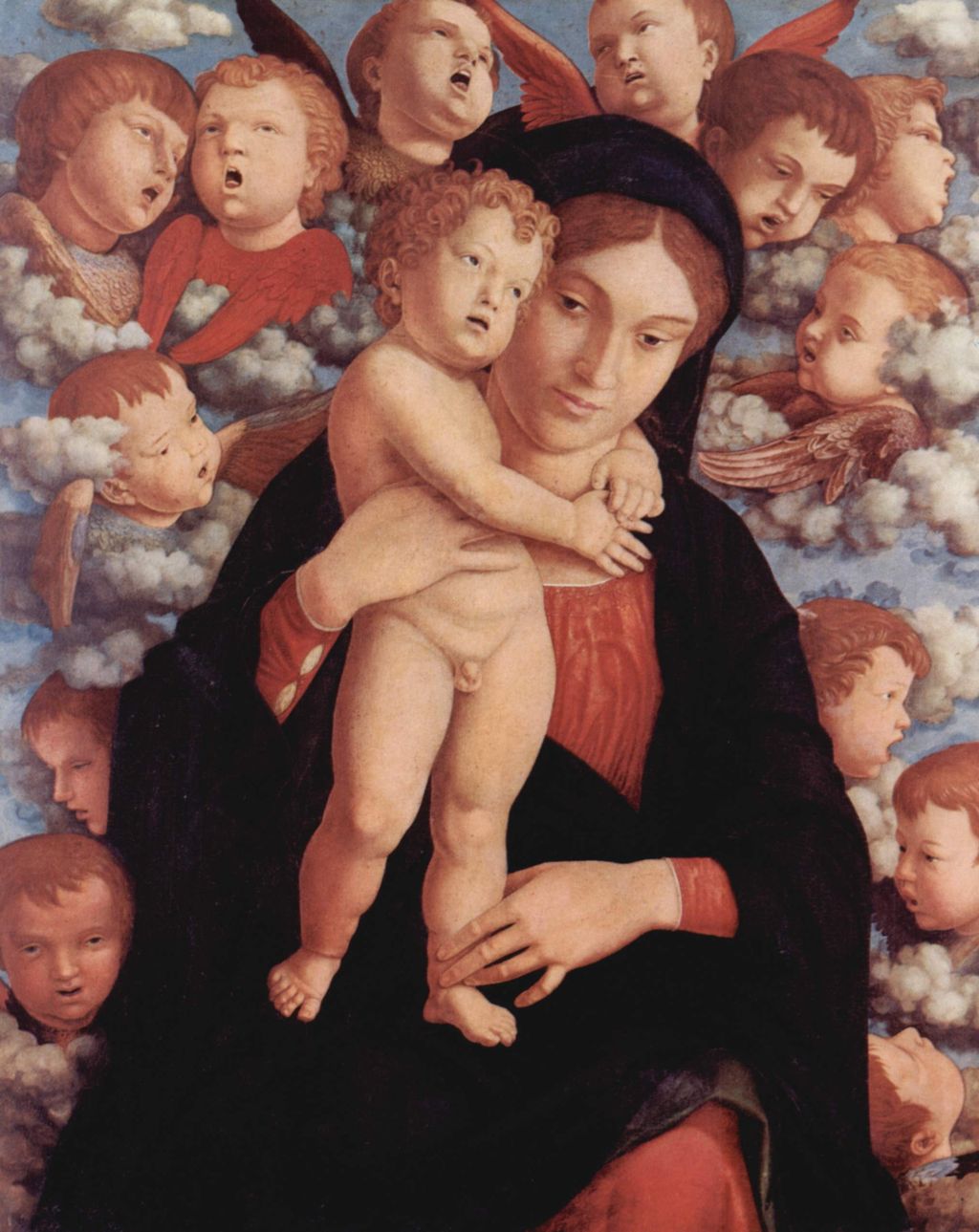
Madonna and Child with a Choir of Cherubim, Pinacoteca di Brera Image source. Public domain.
Mantegna’s Madonna and Child at the Accademia Carrara in Bergamo is another distinct, small tempera on canvas. The Italian catalogue dates it to about 1475–1480 and traces it from Carlo Marenzi’s collection into the Carrara through his 1851 bequest. Its size, technique and devotional purpose bring it close to the Berlin and Poldi Pezzoli paintings. Its own collection history helps keep three similarly named canvases apart. [9]
From James Simon’s collection to the Bode-Museum
The National Gallery’s loan record for the Simon Madonna traces it through the Trissino collection in Vicenza, G. Brauner and the Della Porta collection before it reached the Berlin collector James Simon in 1897. The record places the Della Porta collection in Piacenza. The Fondazione Federico Zeri catalogue associates that collection with Vicenza and gives the same years, 1897–1904, for Simon’s ownership. [3] [10]
According to Karolin Korthase’s account for the Staatliche Museen, Wilhelm von Bode drew Simon’s attention to the canvas on the London art market in 1897. Simon hesitated, then bought it after looking at it twice. He hung the painting in his study in his villa on Berlin’s Tiergartenstraße. That setting brings the painting’s scale into focus. In a room where Simon worked, he could have seen the child’s closed eyes or the pattern on Mary’s cloak from only a short distance away. [11]
Simon gave the work to the Gemäldegalerie as part of his Renaissance collection when the Kaiser-Friedrich-Museum opened in 1904. [1] [12] He stipulated that the ensemble should be exhibited together in the same room for a hundred years. Wilhelm von Bode arranged the cabinet with something of the character of a domestic interior, mixing paintings, sculpture and furniture. An early photograph catalogued by Berlin’s Central Archive records the Mantegna among paintings and small sculptures. The cabinet gave this small painting a setting in which viewers could approach it closely, amid objects gathered by a single collector. [12] [13]
The arrangement was broken under the Nazi regime. From 1938 the museums suppressed the names of Jewish donors on labels, and in August 1939 Simon’s works were removed from their cabinet. The division of Berlin later separated parts of his collection. In 2019 the painting appeared in the Berlin exhibition Mantegna and Bellini: Masters of the Renaissance, whose illustrated list used the shorter date “about 1455.” In July that year the James Simon Cabinet reopened in its original room in the building now called the Bode-Museum. The painting returned to the mixed company of bronzes, sculpture and furniture that had given the original cabinet the character of a collector’s room. [12] [14]
Annotated Details from Madonna with Sleeping Child
The numbered points identify details to look at closely. The detail images below preserve the native scale of the selected crops.
Madonna with Sleeping Child
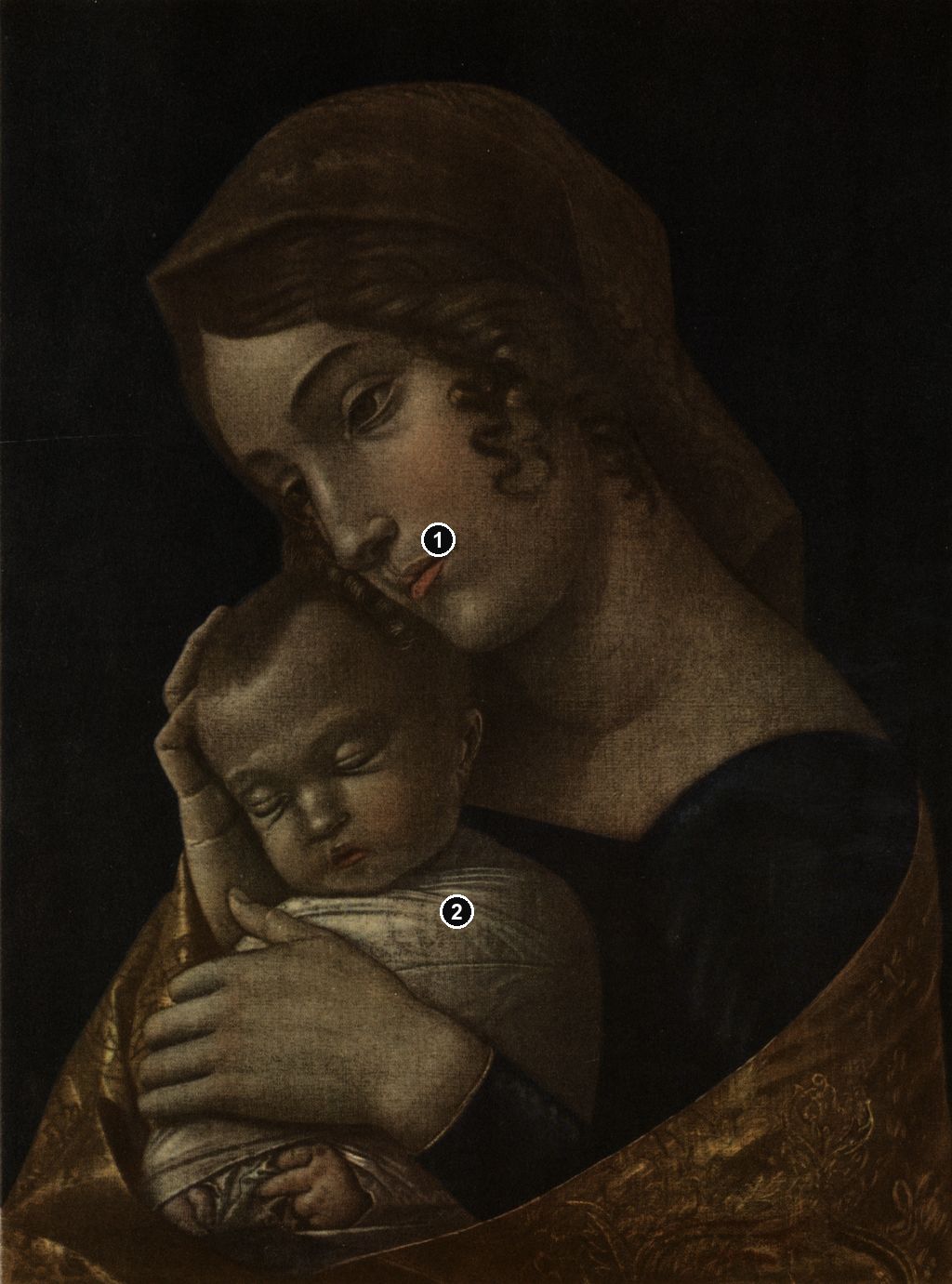
Details from MADONNA WITH SLEEPING CHILD
Choose a detail to enlarge it.
Madonna with Sleeping Child
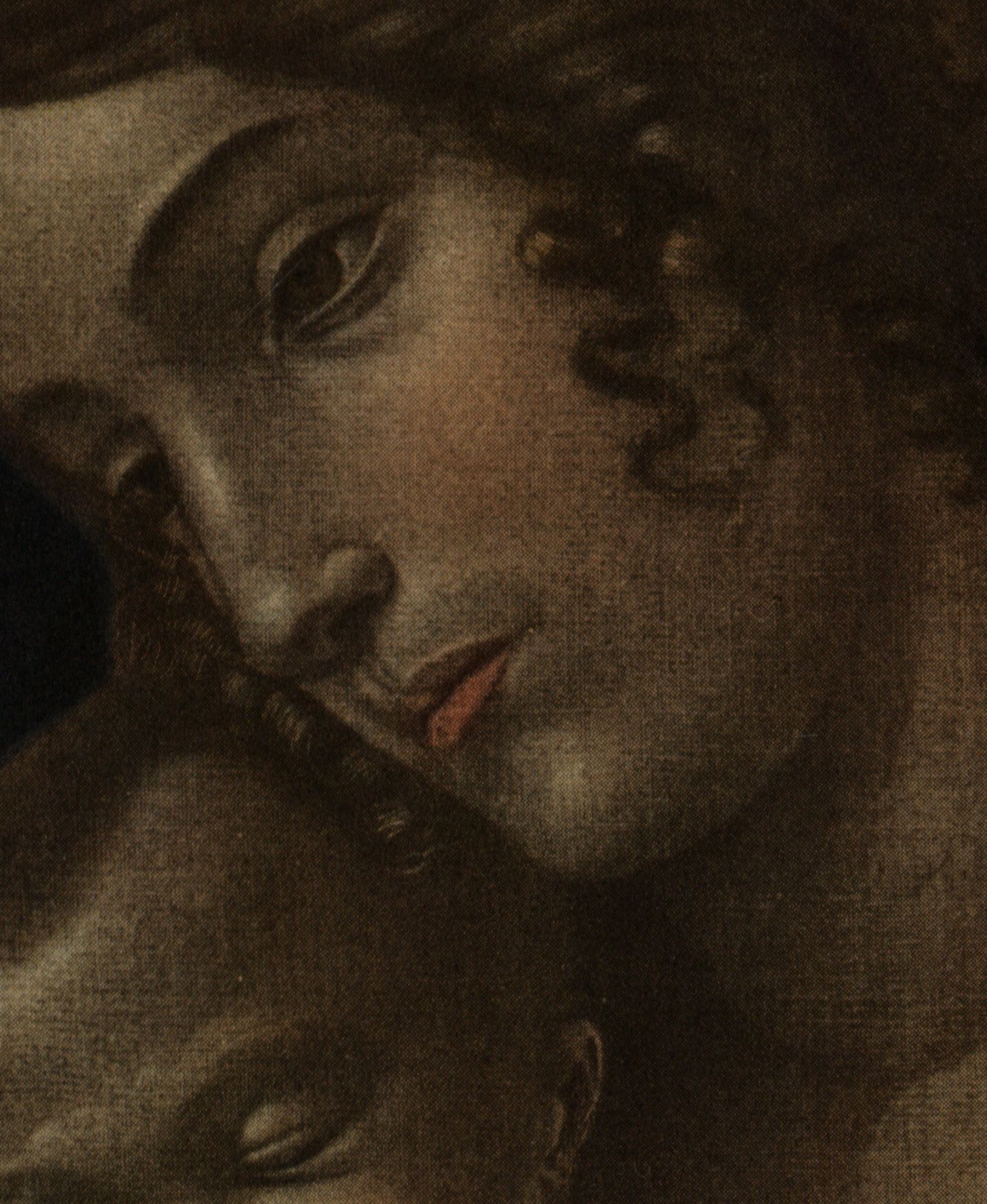
Resting heads
The child rests against the Madonna while her face tilts down. The close spacing makes the relationship legible within the dark setting.
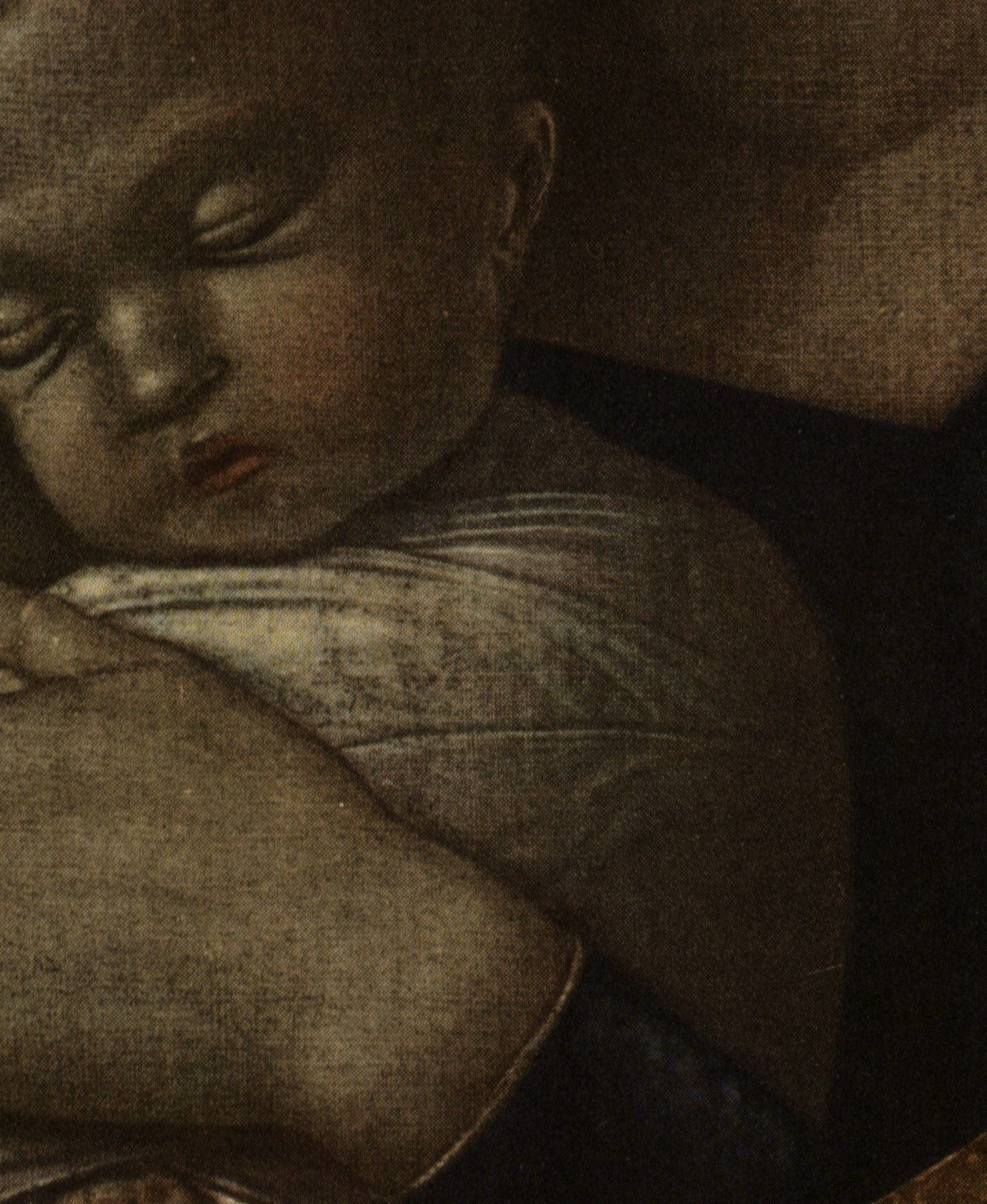
A supported body
The folds and enclosing hands support the infant. Light moves across the rounded forms beside the darker fabric.
Artworks directory
| Name | Date | Medium and collection |
|---|---|---|
| The Adoration of the Shepherds | Shortly after 1450 | Painting · Metropolitan Museum of Art · 32.130.2 Catalogue. |
| Saint Mark the Evangelist | C. 1448–51 | Painting · Städel Museum · 1046 Catalogue. |
| Saint Jerome Penitent in the Desert | C. 1448–51 | Painting · Museu de Arte de São Paulo · MASP.00015 Catalogue. |
| Martyrdom and Transport of the Body of Saint Christopher | Mid-1450s | Painting · Ovetari Chapel, Padua Catalogue. |
| San Luca Altarpiece | 1453–55 | Painting · Pinacoteca di Brera · 176 Catalogue. |
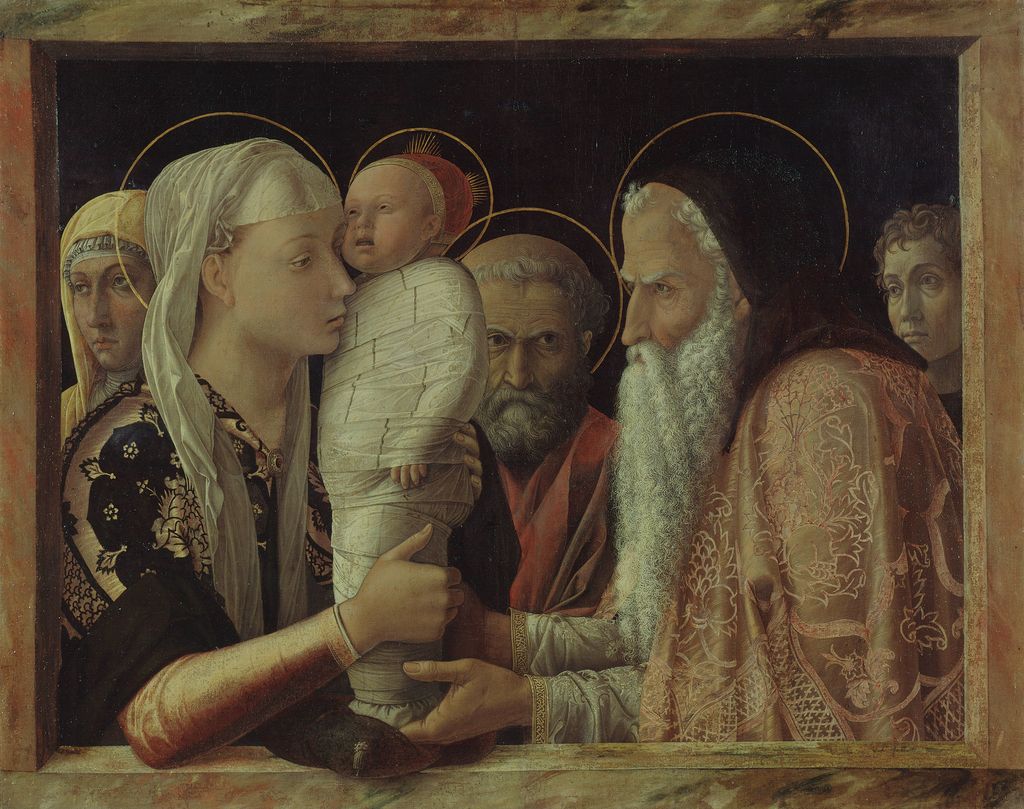
| The Presentation of Christ at the Temple | 1454 (Berlin dating) | Painting · Gemäldegalerie, Berlin · 29 Catalogue. |
| San Zeno Altarpiece | 1457–59 | Painting · Basilica of San Zeno, Verona Catalogue. |
| The Crucifixion | 1456–59 | Painting · Musée du Louvre · INV 368 Catalogue. |
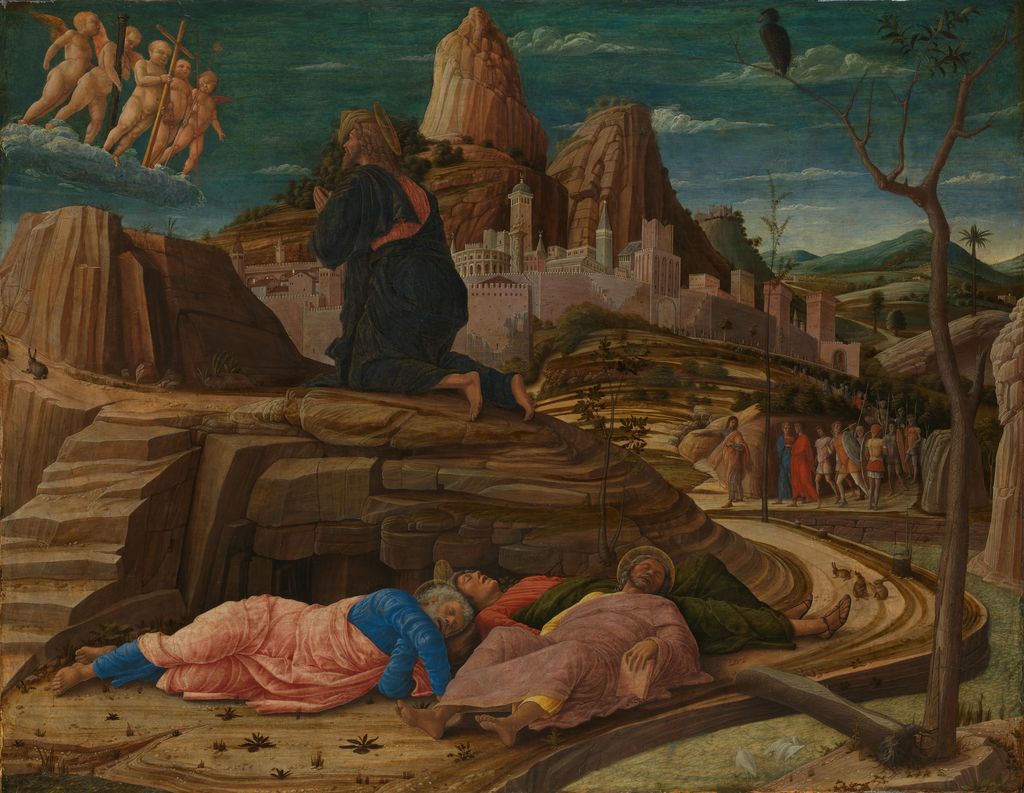
| The Agony in the Garden (London) | C. 1455–56 | Painting · National Gallery, London · NG1417 Catalogue. |
| The Agony in the Garden (Tours) | 1459 (Tours dating) | Painting · Musée des Beaux-Arts de Tours · 1803-1-24 Catalogue. |
| The Resurrection | 1459 (Tours dating) | Painting · Musée des Beaux-Arts de Tours · 1803-1-25 Catalogue. |
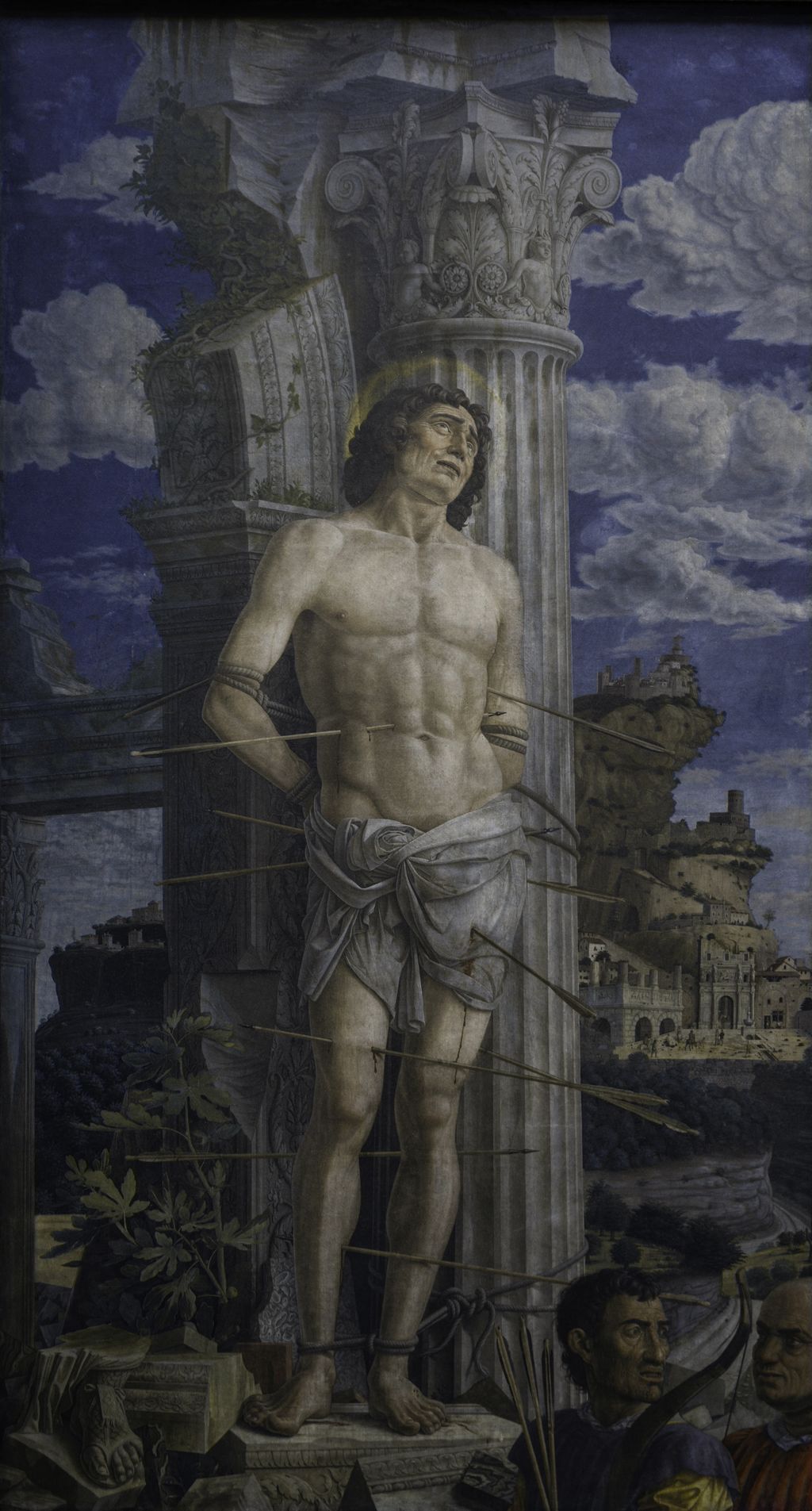
| Saint Sebastian (Vienna) | C. 1457–59 | Painting · Kunsthistorisches Museum · GG 301 Catalogue. |
| Cardinal Ludovico Trevisan | C. 1459–60 (Berlin exhibition dating) | Painting · Gemäldegalerie, Berlin · 9 Catalogue. |
| The Death of the Virgin | C. 1462 | Painting · Museo Nacional del Prado · P000248 Catalogue. |
| Christ with the Soul of the Virgin | C. 1460–64 | Painting · Pinacoteca Nazionale, Ferrara Catalogue only. |
| Portrait of a Young Man (traditionally Francesco Gonzaga) | C. 1461 or 1470, depending on sitter | Painting · Museo di Capodimonte · Q 60 Catalogue. |
| Portrait of a Prelate (Carlo de’ Medici?) | C. 1465–70 | Painting · Uffizi Galleries · 1890 no. 8540 Catalogue. |
| Portrait of a Man | C. 1470 | Painting · National Gallery of Art, Washington · 1952.2.5 Catalogue. |
| Madonna with Sleeping Child (Berlin) | C. 1455–60 | Painting · Gemäldegalerie, Berlin · S.5 Catalogue. |
| Camera degli Sposi (Camera Picta) | 1465–74 | Painting · Palazzo Ducale, Mantua Catalogue. |
| Saint Sebastian (Louvre) | Around 1480 | Painting · Musée du Louvre · RF 1766 Catalogue. |
| Lamentation over the Dead Christ | C. 1483 (Brera dating) | Painting · Pinacoteca di Brera · 352 Catalogue. |
| The Triumphs of Caesar | About 1485–1506 | Painting · Royal Collection · RCIN 403958–403966 Catalogue. |
| Madonna of the Caves | C. 1488–90 | Painting · Uffizi Galleries · 1890 no. 1348 Catalogue. |
| Madonna and Child with a Choir of Cherubim | C. 1485 | Painting · Pinacoteca di Brera · 297 Catalogue. |
| Madonna and Child (Poldi Pezzoli) | Early 1490s (museum dating) | Painting · Museo Poldi Pezzoli · 1595 Catalogue. |
| The Holy Family with Saint Mary Magdalen | C. 1495–1500 | Painting · Metropolitan Museum of Art · 14.40.643 Catalogue. |
| The Virgin and Child with Saint Mary Magdalene and Saint John the Baptist | C. 1490–1505 | Painting · National Gallery, London · NG274 Catalogue. |
| Christ as the Suffering Redeemer | 1485–95 (SMK dating) | Painting · Statens Museum for Kunst · KMSsp69 Catalogue. |
| Ecce Homo | C. 1500 | Painting · Musée Jacquemart-André · MJAP-P 1840 Catalogue. |
| Judith with the Head of Holofernes (Mantegna or follower) | C. 1495–1500 | Painting · National Gallery of Art, Washington · 1942.9.42 Catalogue. |
| Madonna della Vittoria | 1495–96 | Painting · Musée du Louvre · INV 369 Catalogue. |
| Mars and Venus (Parnassus) | C. 1496–97 | Painting · Musée du Louvre · INV 370 Catalogue. |
| The Trivulzio Madonna | 1497 | Painting · Castello Sforzesco, Milan · 0554 Catalogue. |
| The Adoration of the Magi | C. 1495–1505 | Painting · J. Paul Getty Museum · 85.PA.417 Catalogue. |
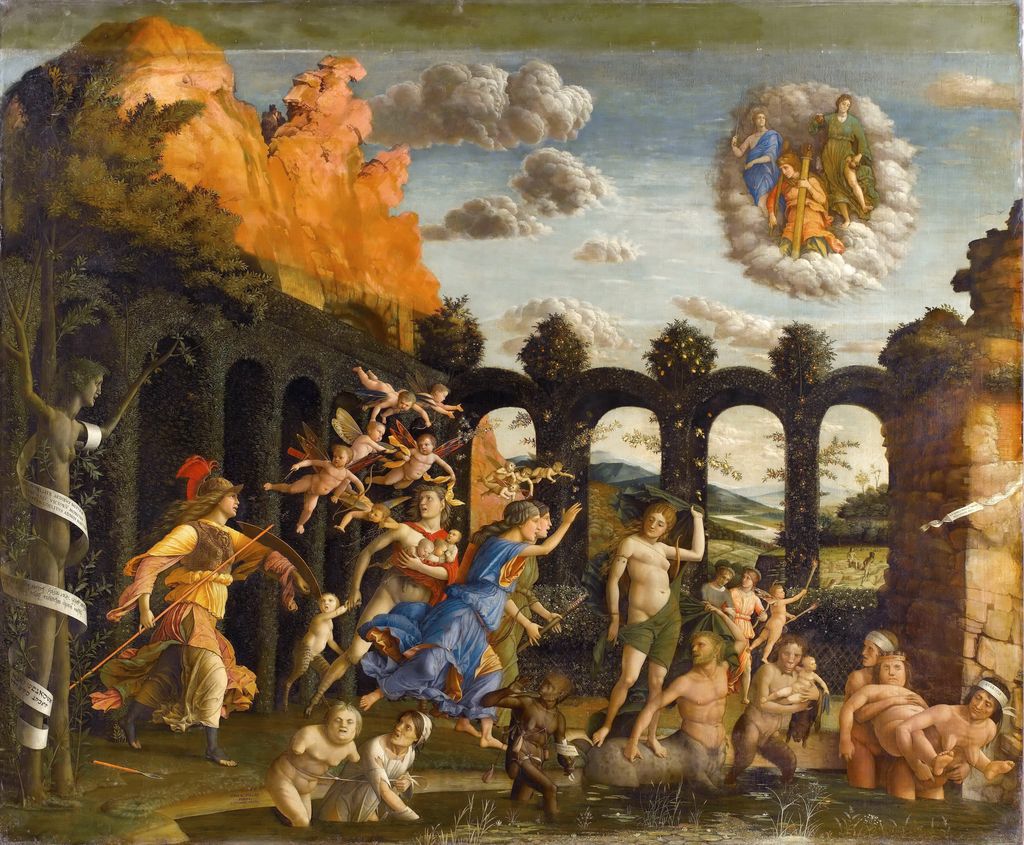
| Minerva Expelling the Vices from the Garden of Virtue | C. 1502 | Painting · Musée du Louvre · INV 371 Catalogue. |
| The Introduction of the Cult of Cybele at Rome | 1505–06 | Painting · National Gallery, London · NG902 Catalogue. |
| Saint Sebastian (Venice) | Probably c. 1504–06 | Painting · Galleria Giorgio Franchetti alla Ca’ d’Oro · D.11 Catalogue. |
| Samson and Delilah | C. 1500 | Painting · National Gallery, London · NG1145 Catalogue only. |
| A Woman Drinking (probably Sophonisba) | C. 1495–1506 | Painting · National Gallery, London · NG1125.2 Catalogue only. |
| The Vestal Virgin Tuccia with a Sieve | C. 1495–1506 | Painting · National Gallery, London · NG1125.1 Catalogue only. |
| Judith with the Head of Holofernes (Dublin) | C. 1495–1500 | Painting · National Gallery of Ireland · NGI.442 Catalogue only. |
| Battle of the Sea Gods, left half (Met impression) | Before 1481 (Met dating) | Print · Metropolitan Museum of Art · 18.12 Catalogue only. |
| Battle of the Sea Gods, right half (Met impression) | Before 1481 (Met dating) | Print · Metropolitan Museum of Art · 1984.1201.4 Catalogue only. |
| Battle of the Sea Gods, left half (Tokyo impression) | C. 1475 (Tokyo dating) | Print · National Museum of Western Art, Tokyo · G.1981-0002 Catalogue only. |
| Battle of the Sea Gods, left half (Washington impression) | C. 1485–88 (NGA dating) | Print · National Gallery of Art, Washington · 1941.1.6 Catalogue only. |
| The Entombment of Christ, second state of two | Before 1475 (Met dating) | Print · Metropolitan Museum of Art · 37.42.30 Catalogue only. |
| The Entombment of Christ (possibly Zoan Andrea, after Mantegna) | 1460–1549 (Rijksmuseum dating) | Print · Rijksmuseum · RP-P-1924-60 Catalogue only. |
| Four Dancing Muses (Gian Marco Cavalli after Mantegna) | C. 1497 | Print · Metropolitan Museum of Art · 20.5.3 Catalogue only. |
| Bacchanal with Silenus | Before 1475 (Met dating) | Print · Metropolitan Museum of Art · 29.44.15 Catalogue only. |
| Bacchanal with a Wine Vat | Before 1475 (Met dating) | Print · Metropolitan Museum of Art Catalogue only. |
| St James on His Way to Execution | C. 1453–57 | Drawing · British Museum · 1976,0616.1 Catalogue only. |
| Three Studies for a Dead Christ | C. 1455–65 | Drawing · British Museum · 1909,0406.3 Catalogue only. |
| Pietà (Venice) | C. 1456–65 (exhibition datings) | Drawing · Gallerie dell’Accademia, Venice · 115 Catalogue only. |
| Studies for Christ at the Column | 1460–65 | Drawing · The Courtauld · D.1978.PG.345 Catalogue only. |
| Virtus Combusta | C. 1490 (technical study) | Drawing · British Museum · Pp,1.23 Catalogue only. |
| Virtus Combusta (Giovanni Antonio da Brescia after Mantegna) | C. 1495–1506 | Print · Musée du Louvre · 3881 LR/ Recto Catalogue only. |
| The Calumny of Apelles | C. 1504–06 | Drawing · British Museum · 1860,0616.85 Catalogue only. |
Frequently Asked Questions
The Berlin canvas is Gemäldegalerie inventory S.5. The Berlin image brings the hand supporting the sleeping head into view. The corresponding pose and fabrics differ in the Milan paintings.
The relaxed body and the way Mary holds it can recall later images in which she supports Christ after his death. The immediate subject remains a mother and her sleeping child.
Discussion
Look again at the images and ideas explored in Madonna with Sleeping Child. These editorial prompts invite your observations.
Reader Insights
How do Mary’s hands and the point where her cheek meets the child’s head make his weight and sleep apparent?
What changes when you compare Berlin’s tightly swaddled child with the white wrapping in the Poldi Pezzoli painting and the company of angels in Brera’s panel?
Join the Conversation
Share a detail, comparison or question about Madonna with Sleeping Child below.
References
- Gemäldegalerie, Staatliche Museen zu Berlin, Maria mit dem schlafenden Kind, S.5. View source.
- Gemäldegalerie, Staatliche Museen zu Berlin, Madonna and Sleeping Child, illustrated account based on a text by Erich Schleier. View source.
- The National Gallery, London, Mantegna and Bellini loan and provenance register, The Virgin and Child (Simon Madonna), X9781. View source.
- The Metropolitan Museum of Art, Giovanni Bellini, Madonna Adoring the Sleeping Child. View source.
- Skulpturensammlung, Staatliche Museen zu Berlin, Donatello, Madonna und Kind (Die Pazzi Madonna), SKS 51. View source.
- Museo Poldi Pezzoli, Madonna con il Bambino, inv. 1595. View source.
- Opificio delle Pietre Dure, Andrea Mantegna, Madonna con Bambino, ca. 1490–1500, Museo Poldi Pezzoli, Milano. View source.
- Pinacoteca di Brera, Madonna and Child with a Choir of Cherubim (Madonna of Cherubim), inv. 297. View source.
- Regione Lombardia, Madonna con Bambino, Accademia Carrara, C0050-00484_R03. View source.
- Fondazione Federico Zeri, Andrea Mantegna, Madonna con Bambino dormiente, Gemäldegalerie, S 5. View source.
- Staatliche Museen zu Berlin, Karolin Korthase, Der Mäzen James Simon: Ein Geschenk für die Museen. View source.
- Staatliche Museen zu Berlin, The Reinstallation of the James Simon Cabinet in the Bode-Museum. View source.
- Zentralarchiv, Staatliche Museen zu Berlin, Photograph of the James Simon Cabinet, Kaiser-Friedrich-Museum, 1904–1909. View source.
- Staatliche Museen zu Berlin, Mantegna and Bellini: Masters of the Renaissance, illustrated press list, plate I7. View source.
- Basilica of San Zeno, Verona, San Zeno Altarpiece, View source.
- Palazzo Ducale, Mantua, Camera degli Sposi (Camera Picta), View source.
- Royal Collection, The Triumphs of Caesar, View source.
- Musée du Louvre, Madonna della Vittoria, View source.
- National Gallery, London, The Introduction of the Cult of Cybele at Rome, View source.
More MANTEGNA Paintings
San Zeno Altarpiece
The San Zeno Altarpiece in its frame, Basilica of San Zeno, Verona José Luiz. Image source. CC BY-SA 4.0. Resized from the cited image.