 by Tom Gurney
Tom Gurney BSc (Hons) is an art history expert with over 20 years experience
Published on June 19, 2020 / Updated on November 29, 2026
Email: tomgurney1@gmail.com / Phone: +44 7429 011000
Overview
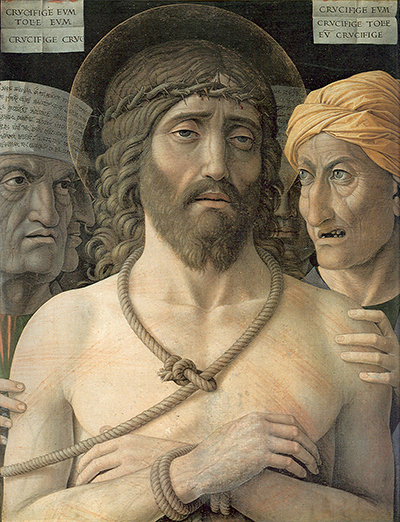
A rope drops from the knot at Christ’s throat towards his bound wrists. His shoulders nearly fill the width of the picture, yet faces press in on either side of him, close enough for a hand to reach across and touch his wounded skin. In Andrea Mantegna’s Ecce Homo, painted around 1500 and now in the Musée Jacquemart-André in Paris, the space usually given to the setting of the trial is taken up by the people who want it to end in Christ’s death. [1]
At a Glance
- DateAround 1500
- MediumCanvas backed on wood, with egg tempera reported by C2RMF analysis
- Dimensions54 × 42 cm
- CollectionMusée Jacquemart-André, Paris
- Inventory numberMJAP-P 1840
Andrea Mantegna in context
San Zeno Altarpiece
1457–59 [18]The Triumphs of Caesar
Mid-1480s–before 1506 [20]Madonna della Vittoria
1495–96 [21]Ecce Homo
C. 1500 [23]A prisoner brought within reach
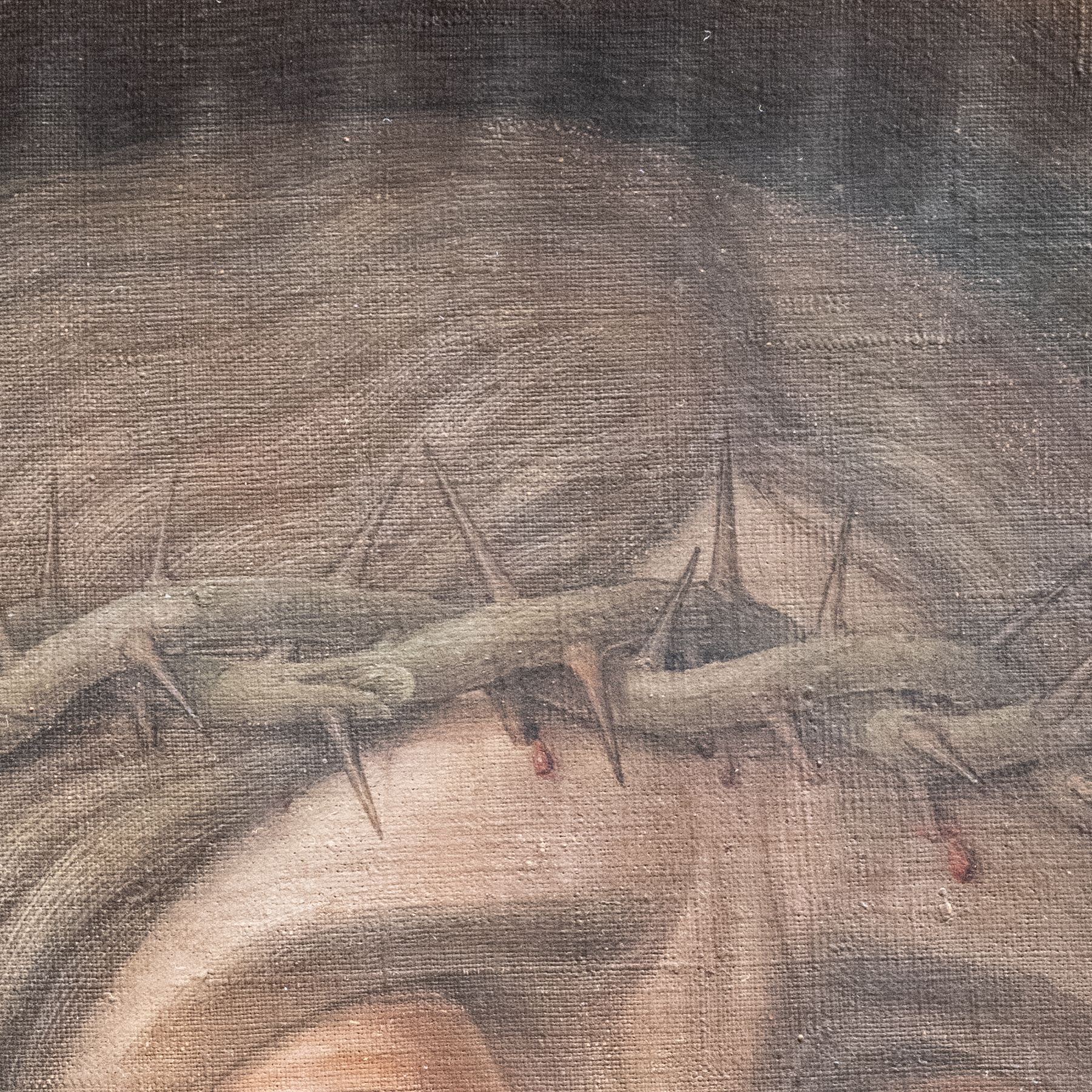
The title comes from Pilate’s words in John 19:5. After the soldiers have scourged Jesus, crowned him with thorns and dressed him in a purple robe, Pilate brings him out and says, “Behold, the man.” The people who call for crucifixion are heard in the verses that follow. Mantegna brings the presentation and the cries together. Pilate is absent, and Christ has already been brought before us. The exposed chest makes the scourging visible as a series of small marks across living skin. The Jacquemart-André singles out this exposure as unusual for the subject. [1] [2] [3]
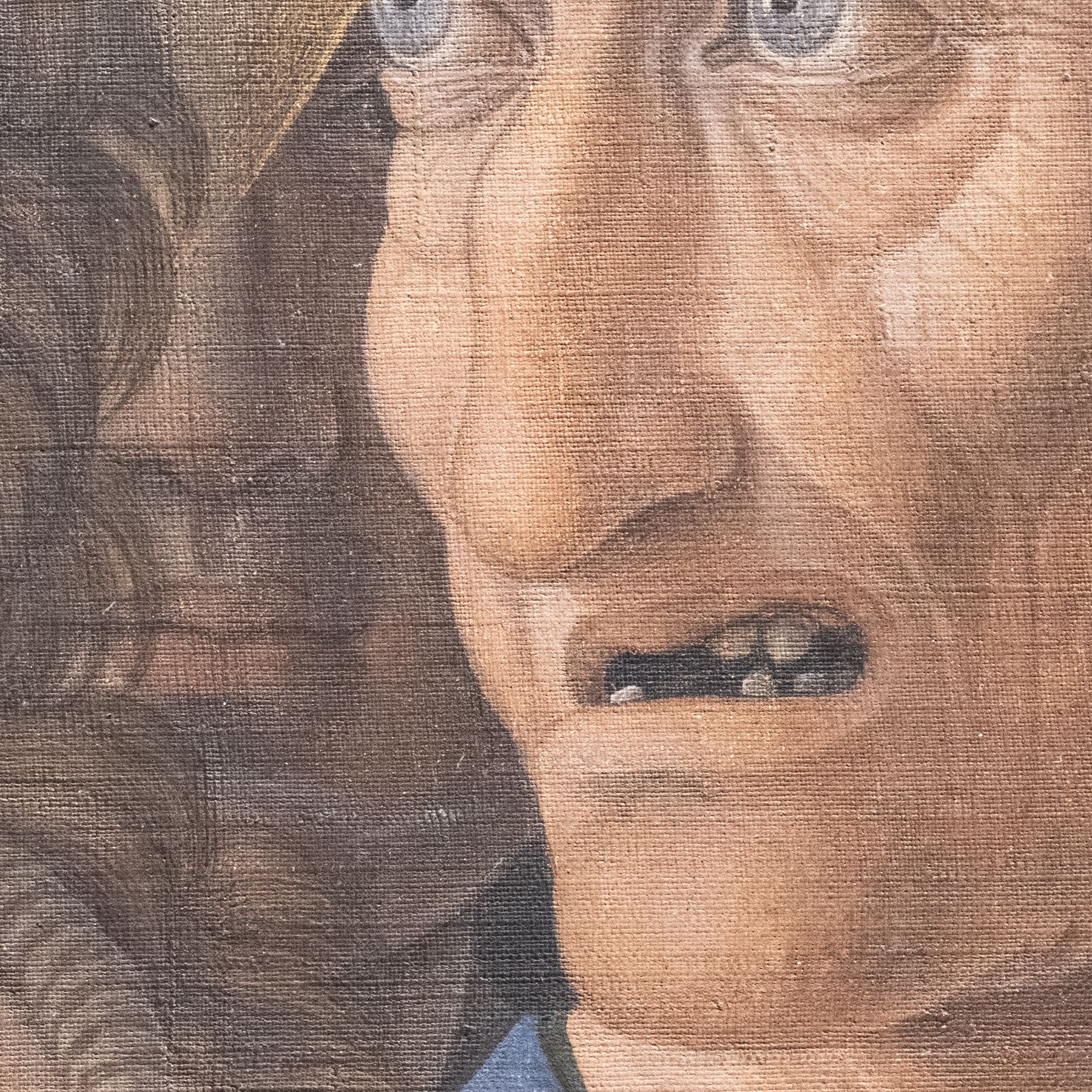
The picture’s upright shape makes Christ’s body the main vertical. The crown, the neck and the knot fall roughly one below another. Around that central line the heads push in at different angles. At left, a pale headpiece sits above a face seen in profile, its nose and eyelid drawn in sharp outline. At right, a yellow turban frames a head that turns outwards, with the eyes wide and the mouth open. The darker faces behind take longer to discern. They extend the crowd into the narrow intervals near Christ’s head, where the eye might otherwise have found a little room. [1] [3]
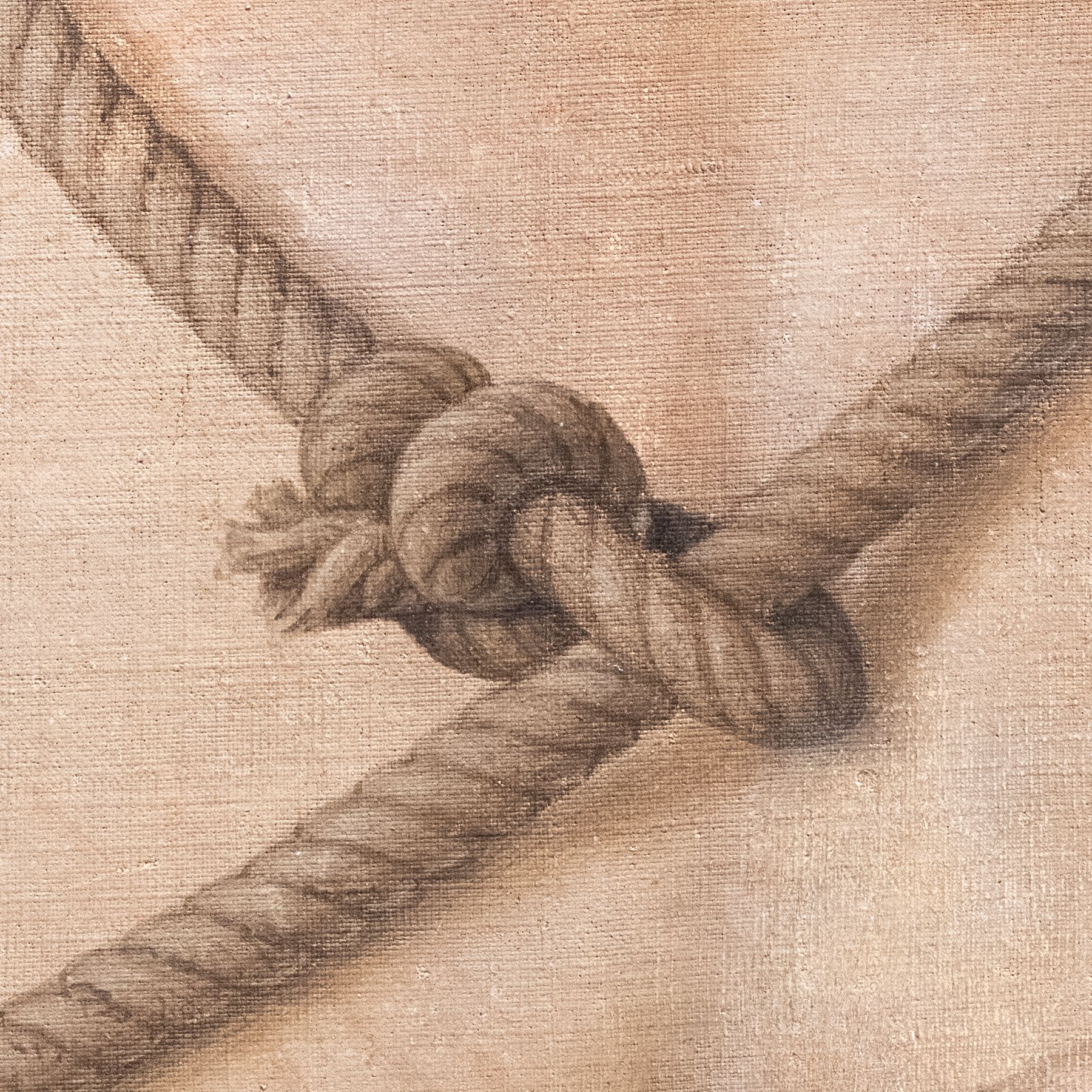
The rope helps establish which parts of the picture feel closest. One can follow it round the neck, feel how firmly the knot sits against the chest and watch the free length descend into the foreground. Christ’s hands are low in the picture, where their reach towards us can be seen at the same time as their restraint. Meanwhile, the face on the right comes forward independently of the ones swallowed by the dark. There is enough depth to judge each figure’s relation to Christ, and scarcely enough to imagine him moving. [1] [3]
The Jacquemart-André compares the density of the figures to antique sculpture and draws attention to the smoky colour and the way the halo almost dissolves into the dark. The Mauritshuis, which exhibited the picture on loan in 2016, suggests the reliefs of Roman sarcophagi as a visual parallel. A nose or chin stands out as abruptly as an edge in relief, while a head only a little farther back is already hard to separate from its neighbour. The shallow space makes every difference in angle count. A fold in a head covering, an open mouth and a lowered eyelid can carry as much drama as a gesture across a larger stage. [1] [3]
Christ’s face changes the pace of looking. The eyes are heavy and the lips slightly parted, with little of the obvious muscular exertion visible in the face beside him. The Mauritshuis reads his gaze as a direct confrontation. Its effect can be felt even if his eyes seem to stray past the person looking. The body is squarely presented and the face quietly available for inspection, yet the expression gives away very little. The contrast makes it possible to spend time looking at exhaustion while the crowd seems caught in an instant of effort. [3]
The cries above the heads
Two slips in the upper corners carry Latin capitals. Across them, versions of crucifige eum and tolle eum repeat the demands to crucify Christ and take him away. In John these cries occur at different moments, in verses 6 and 15. The slips bring them into the same field of view and rearrange the words. On the left, a final repetition breaks off partway through crucifige. The broken word has the abruptness of a cry interrupted by another voice. [2] [4] [5]
The letters occupy a different kind of space from the mouths. They sit on light rectangles that look folded or creased, with reddish marks at their upper edges. Art historian Gregor Christopher Meinecke reads those marks as simulated wax, making the slips look fastened to the picture itself. He also argues that the act of reading involves the viewer in the scene. The mouths give the cries a human source, but it is the person standing in front of the painting who must form the words in sequence. The repetition can continue in the reader’s head after the eye has moved back to Christ. [5]
A separate kind of writing appears on the headgear, most clearly on the strip above the left profile. The fine strokes are arranged in rows, with gaps that make them look like words. The French Institut national d’histoire de l’art describes the marks as imitations of Hebrew. Alexander Nagel proposes a resemblance to Syriac scripts used in biblical manuscripts, while Meinecke considers how the script could have been taken for Hebrew by its intended Christian audience. Nagel points to a letter of 1498 in which Isabella d’Este thanked her adviser Paride da Ceresara for sending examples of unfamiliar scripts. The letter shows the kind of attention letterforms could command at the Mantuan court. In the painting the neatly spaced strokes similarly invite inspection, and their meaning remains elusive. [4] [5] [6]
Meinecke reads the headgear and the exaggerated faces as part of an anti-Jewish visual tradition. The yellow turban and straining mouth make the right-hand figure easy to single out, while the script and head coverings encourage the viewer to assign an identity to the people at left. In this reading the painting directs Christian sympathy through a hostile caricature. The signs belong to a Renaissance Christian construction of the scene, and tell us about the prejudices that could inform devotional imagery. The difference between the legible Latin above and the elusive writing below is part of that construction. [5] [6]
What the canvas and paint reveal
The Louvre’s 2008 exhibition record gives the size as 54 by 42 centimetres and describes the support as canvas backed on wood. The Fondazione Federico Zeri, which dates the work to about 1495–1500, also records cloth on a panel. Andrea Rothe, in a paper published by the Getty Conservation Institute, reported that the fabric was glued at its edges to the back of the board, which he identified as the original panel. This construction accounts for both materials in the catalogue description. The image is painted on cloth, with a rigid support behind it. [7] [8] [9]
The binder has a more complicated history. The Jacquemart-André’s public entry lists oil on canvas. The Mauritshuis’s loan account describes glue distemper, in which animal glue binds the pigment. A team led by Sigrid Mirabaud at France’s Centre de recherche et de restauration des musées de France examined the Paris painting in connection with the Louvre exhibition. The researchers used chromatography to study the paint binders. Their 2009 conference abstract reports the use of egg tempera, with the composition of individual layers left open. [1] [3] [10]
The darks make the tiny red marks on Christ’s torso and the near-transparent halo distinct without giving them equal weight. A loose curl against the black can be as sharply defined as a strand of the rope. Rothe observed that fine details run up to the painted border and suggested that Mantegna may have finished the picture with its original frame in place. That possibility makes the sharp cutoff at the edges especially striking. At Palazzo Barberini in 2018–19, the painting’s unusual state of preservation was itself a reason for exhibiting it. [1] [9] [11]
From a Milanese collection to Paris
The date around 1500 places the painting near the end of Mantegna’s career. He was court painter to the Gonzaga in Mantua, and the painting’s first commission remains unidentified. The Institut national d’histoire de l’art records a label on the reverse naming the former Gambassini collection in Milan. Its provenance entry places the work there until 1891 and records its sale to Édouard André and Nélie Jacquemart on 24 March 1893 through the Florentine dealer Vincenzo Ciampolini. Nélie bequeathed it to the Institut de France in 1912. The painting is recorded in Paris under the inventory number MJAP-P 1840. [3] [4] [5] [7] [8]
The French record preserves earlier attributions to Mantegna’s circle or following. The Jacquemart-André credits exhibitions at the Metropolitan Museum of Art and the Louvre with renewing recognition of the work as Mantegna’s. Museum Boijmans Van Beuningen compares the puffy, veined eyelids and upright headpiece on one of its drawings with those of the painted onlooker. The authorship of the drawing is itself disputed. The resemblance suggests how features of a head might have circulated as studies or workshop models. [1] [4] [12]
Where Mantegna places the witness
In Christ as the Suffering Redeemer, in Copenhagen, the risen Christ also occupies the front of the picture. Angels support him as he displays the wounds of the Crucifixion. The Statens Museum for Kunst describes a devotional foreground joined to a narrative landscape, where the women approach on the road. The eye can leave the wounded body and follow a route into the distance. The Paris painting gives that space to faces. In Copenhagen, Christ’s upward attention and the angels’ supporting gestures open the encounter towards prayer. In Paris, the rope and the hand gripping his shoulder make the encounter one of custody. [3] [13]
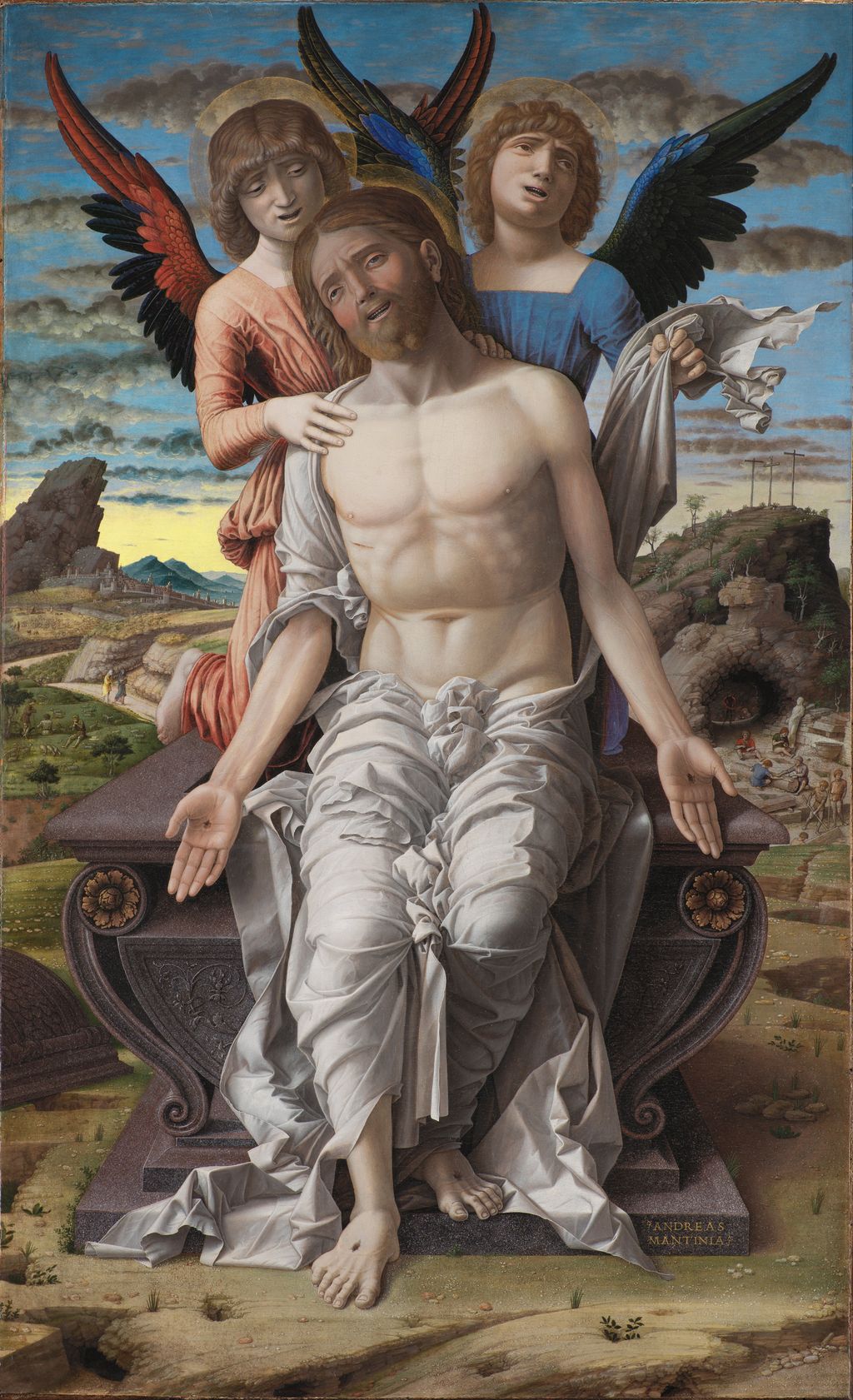
Christ as the Suffering Redeemer, Statens Museum for Kunst Image source. Public domain.
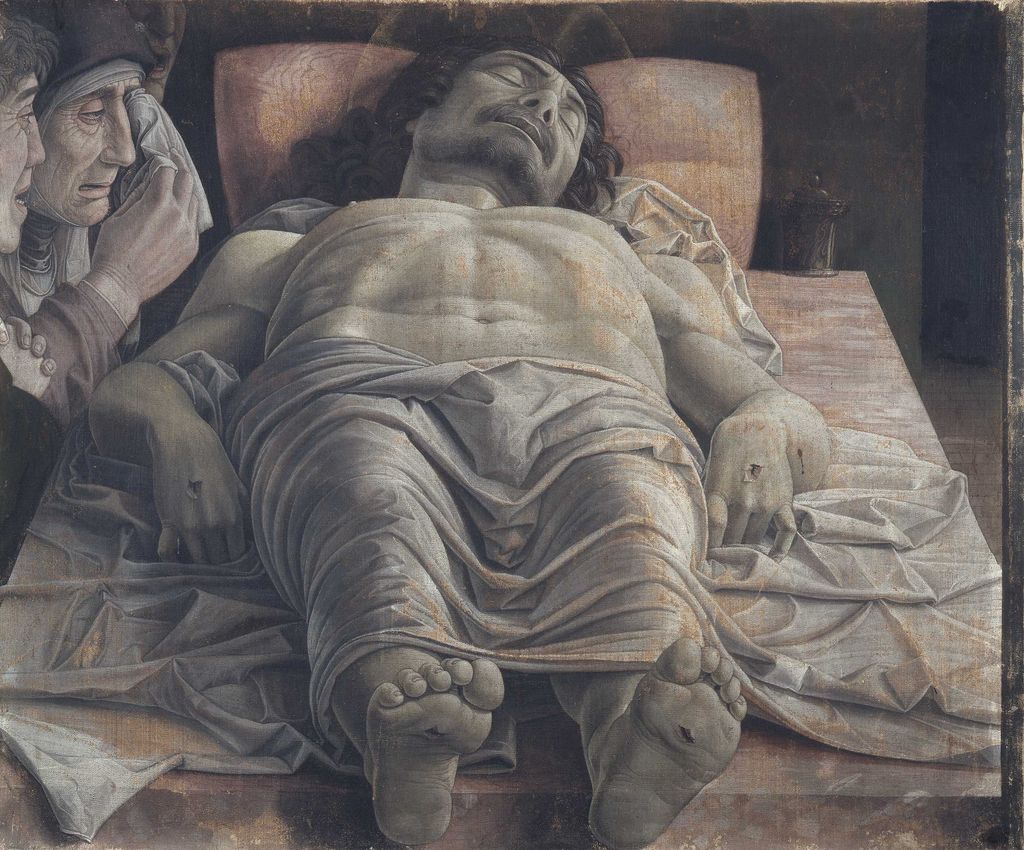
The Brera Lamentation of Christ brings the viewer close by placing the feet of the dead Christ at the near end of the stone on which he lies. The wounds on the feet and hands can be seen before the eye reaches his face. The mourners are pressed to one side, where grief registers in faces at the margin. In the Ecce Homo, the upright body keeps the wounds and face on nearly the same plane, and the people crowding the margins are active participants in what is being done to him. Both paintings give the body a proximity that would be awkward in an ordinary encounter. The Brera painting puts the spectator at the foot of a corpse, while the Paris picture places us in front of a man still breathing. [1] [14]
The Getty Adoration of the Magi shows how differently Mantegna could use a dense assembly of half-length figures. Faces and vessels press forward out of darkness, but the gifts and the direction of the gazes bring attention to the infant Christ at the left. In the Paris painting, the body faces front, and the looks around it are harder to reconcile. The Getty relates the shallow arrangement of its picture to Mantegna’s study of ancient Roman reliefs. Nagel also compares the script-like ornament on the Virgin’s clothing to the writing on the headgear in Paris. In the Magi the ornament helps evoke the geographical and historical distance of the holy figures. In the Ecce Homo similar marks figure in a scene of persecution. The Getty’s analysis identified animal glue in the paint of the Magi. Mantegna could make similarly compact pictures with different paints. [6] [9] [10] [15]
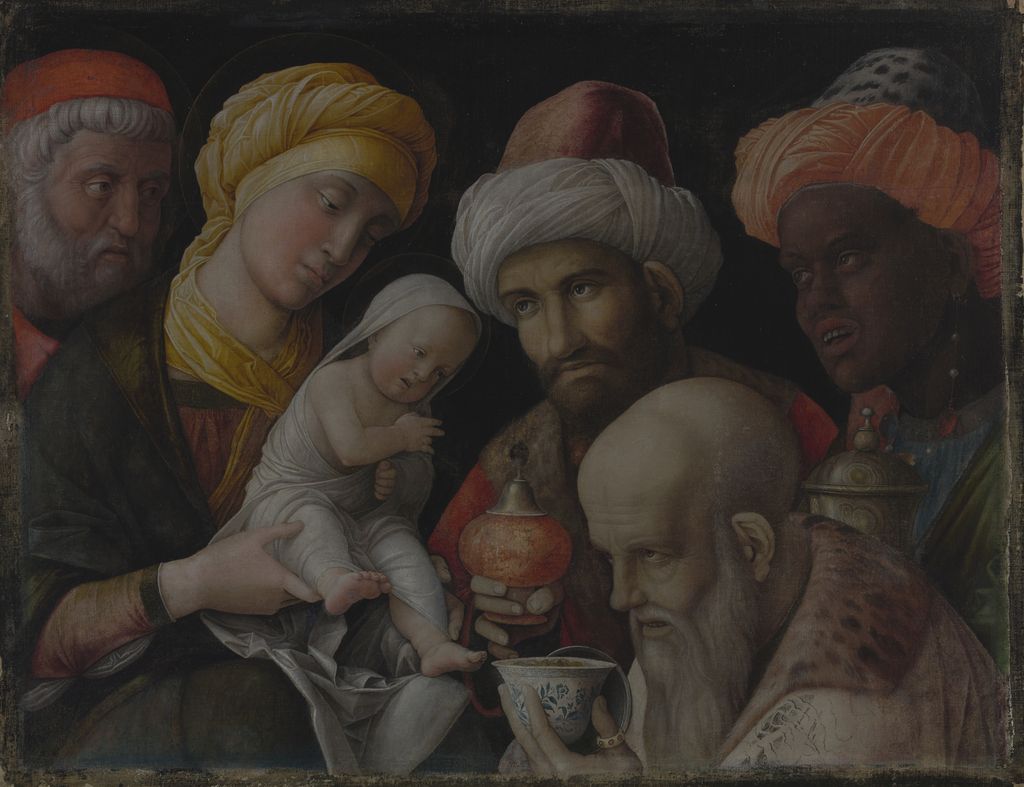
Adoration of the Magi, J. Paul Getty Museum Image source. Public domain.
A comparison with two paintings at the Metropolitan Museum brings the role of the crowd into focus. Antonello da Messina isolates Christ behind a parapet in his Christ Crowned with Thorns. The Met sees the ledge, borrowed from portraiture, as a means of making the figure physically present for meditation. Adriaen Isenbrant’s later pairing of the thorn-crowned Christ and the mourning Virgin gives grief a face alongside the one that bears the injuries. The Met sees the viewer as both Christ’s judge and a participant in the Virgin’s grief. In Mantegna’s painting the nearest faces offer no such companionship. The ribbon of space in front of Christ is left to the viewer, who can look long enough to trace a weal or the twist of the rope even as the written cries urge the scene onward. [1] [5] [16] [17]
Annotated Details from Ecce Homo
The numbered points identify details to look at closely. The detail images below preserve the native scale of the selected crops.
Ecce Homo
Image source. Photograph by Matthieu.lett.ube. Overview marked; details cropped. CC BY 4.0.
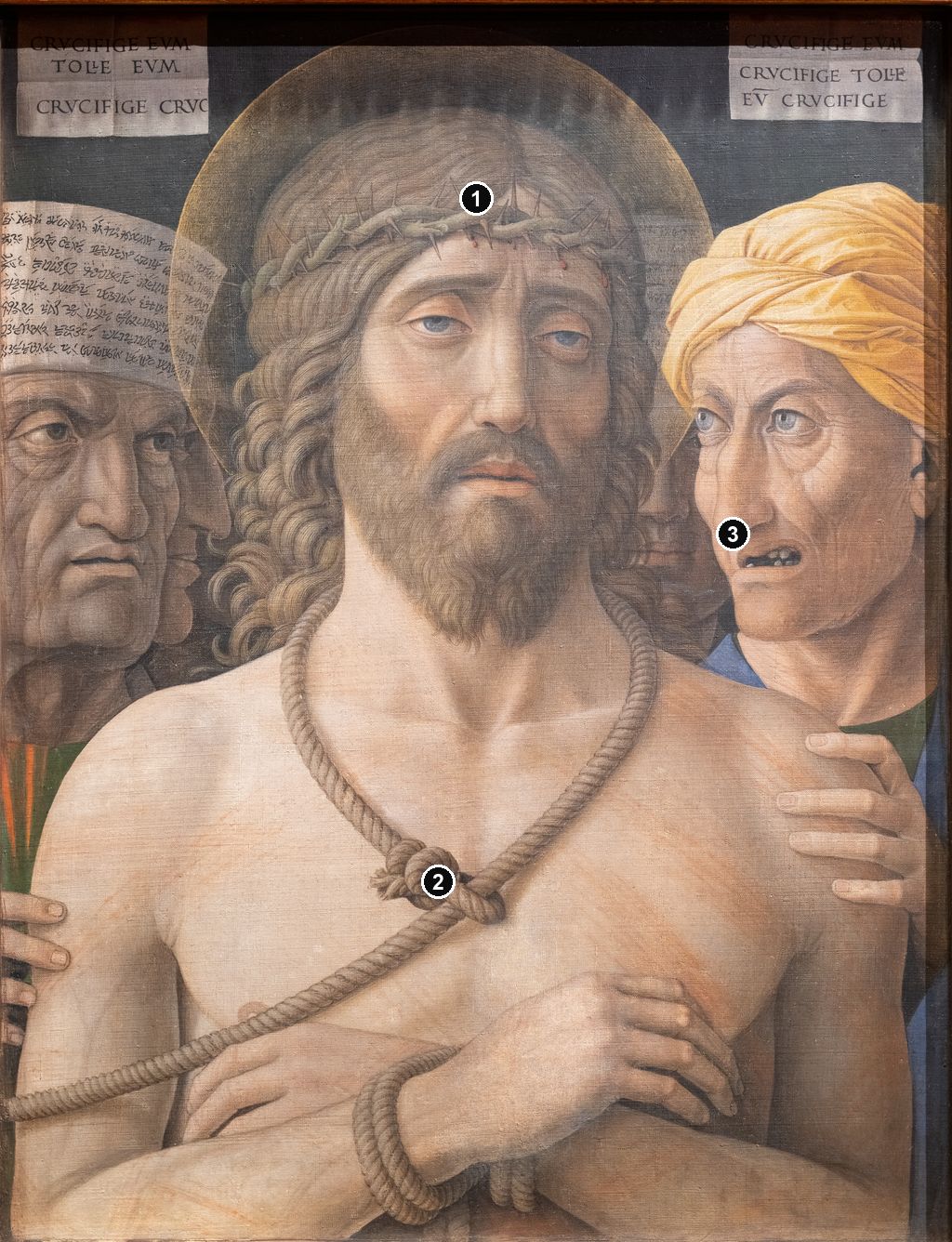
Details from ECCE HOMO
Choose a detail to enlarge it.
Ecce Homo
Inscriptions overhead
The lettered areas occupy narrow strips near the upper corners. The closely grouped heads leave only small spaces around the writing.
Hands close to the viewer
The crossed hands and bound wrists sit near the lower edge. The cropping concentrates attention on the gesture.
The adjacent face
The figure at right turns inwards. Different directions of gaze bring the faces into a tightly staged encounter.
Artworks directory
| Name | Date | Medium and collection |
|---|---|---|
| The Adoration of the Shepherds | Shortly after 1450 | Painting · Metropolitan Museum of Art · 32.130.2 Catalogue. |
| Saint Mark the Evangelist | C. 1448–51 | Painting · Städel Museum · 1046 Catalogue. |
| Saint Jerome Penitent in the Desert | C. 1448–51 | Painting · Museu de Arte de São Paulo · MASP.00015 Catalogue. |
| Martyrdom and Transport of the Body of Saint Christopher | Mid-1450s | Painting · Ovetari Chapel, Padua Catalogue. |
| San Luca Altarpiece | 1453–55 | Painting · Pinacoteca di Brera · 176 Catalogue. |
| The Presentation of Christ at the Temple | 1454 (Berlin dating) | Painting · Gemäldegalerie, Berlin · 29 Catalogue. |
| San Zeno Altarpiece | 1457–59 | Painting · Basilica of San Zeno, Verona Catalogue. |
| The Crucifixion | 1456–59 | Painting · Musée du Louvre · INV 368 Catalogue. |
| The Agony in the Garden (London) | C. 1455–56 | Painting · National Gallery, London · NG1417 Catalogue. |
| The Agony in the Garden (Tours) | 1459 (Tours dating) | Painting · Musée des Beaux-Arts de Tours · 1803-1-24 Catalogue. |
| The Resurrection | 1459 (Tours dating) | Painting · Musée des Beaux-Arts de Tours · 1803-1-25 Catalogue. |
| Saint Sebastian (Vienna) | C. 1457–59 | Painting · Kunsthistorisches Museum · GG 301 Catalogue. |
| Cardinal Ludovico Trevisan | C. 1459–60 (Berlin exhibition dating) | Painting · Gemäldegalerie, Berlin · 9 Catalogue. |
| The Death of the Virgin | C. 1462 | Painting · Museo Nacional del Prado · P000248 Catalogue. |
| Christ with the Soul of the Virgin | C. 1460–64 | Painting · Pinacoteca Nazionale, Ferrara Catalogue only. |
| Portrait of a Young Man (traditionally Francesco Gonzaga) | C. 1461 or 1470, depending on sitter | Painting · Museo di Capodimonte · Q 60 Catalogue. |
| Portrait of a Prelate (Carlo de’ Medici?) | C. 1465–70 | Painting · Uffizi Galleries · 1890 no. 8540 Catalogue. |
| Portrait of a Man | C. 1470 | Painting · National Gallery of Art, Washington · 1952.2.5 Catalogue. |
| Madonna with Sleeping Child (Berlin) | C. 1455–60 | Painting · Gemäldegalerie, Berlin · S.5 Catalogue. |
| Camera degli Sposi (Camera Picta) | 1465–74 | Painting · Palazzo Ducale, Mantua Catalogue. |
| Saint Sebastian (Louvre) | Around 1480 | Painting · Musée du Louvre · RF 1766 Catalogue. |
| Lamentation over the Dead Christ | C. 1483 (Brera dating) | Painting · Pinacoteca di Brera · 352 Catalogue. |
| The Triumphs of Caesar | About 1485–1506 | Painting · Royal Collection · RCIN 403958–403966 Catalogue. |
| Madonna of the Caves | C. 1488–90 | Painting · Uffizi Galleries · 1890 no. 1348 Catalogue. |
| Madonna and Child with a Choir of Cherubim | C. 1485 | Painting · Pinacoteca di Brera · 297 Catalogue. |
| Madonna and Child (Poldi Pezzoli) | Early 1490s (museum dating) | Painting · Museo Poldi Pezzoli · 1595 Catalogue. |
| The Holy Family with Saint Mary Magdalen | C. 1495–1500 | Painting · Metropolitan Museum of Art · 14.40.643 Catalogue. |
| The Virgin and Child with Saint Mary Magdalene and Saint John the Baptist | C. 1490–1505 | Painting · National Gallery, London · NG274 Catalogue. |
| Christ as the Suffering Redeemer | 1485–95 (SMK dating) | Painting · Statens Museum for Kunst · KMSsp69 Catalogue. |
| Ecce Homo | C. 1500 | Painting · Musée Jacquemart-André · MJAP-P 1840 Catalogue. |
| Judith with the Head of Holofernes (Mantegna or follower) | C. 1495–1500 | Painting · National Gallery of Art, Washington · 1942.9.42 Catalogue. |
| Madonna della Vittoria | 1495–96 | Painting · Musée du Louvre · INV 369 Catalogue. |
| Mars and Venus (Parnassus) | C. 1496–97 | Painting · Musée du Louvre · INV 370 Catalogue. |
| The Trivulzio Madonna | 1497 | Painting · Castello Sforzesco, Milan · 0554 Catalogue. |
| The Adoration of the Magi | C. 1495–1505 | Painting · J. Paul Getty Museum · 85.PA.417 Catalogue. |
| Minerva Expelling the Vices from the Garden of Virtue | C. 1502 | Painting · Musée du Louvre · INV 371 Catalogue. |
| The Introduction of the Cult of Cybele at Rome | 1505–06 | Painting · National Gallery, London · NG902 Catalogue. |
| Saint Sebastian (Venice) | Probably c. 1504–06 | Painting · Galleria Giorgio Franchetti alla Ca’ d’Oro · D.11 Catalogue. |
| Samson and Delilah | C. 1500 | Painting · National Gallery, London · NG1145 Catalogue only. |
| A Woman Drinking (probably Sophonisba) | C. 1495–1506 | Painting · National Gallery, London · NG1125.2 Catalogue only. |
| The Vestal Virgin Tuccia with a Sieve | C. 1495–1506 | Painting · National Gallery, London · NG1125.1 Catalogue only. |
| Judith with the Head of Holofernes (Dublin) | C. 1495–1500 | Painting · National Gallery of Ireland · NGI.442 Catalogue only. |
| Battle of the Sea Gods, left half (Met impression) | Before 1481 (Met dating) | Print · Metropolitan Museum of Art · 18.12 Catalogue only. |
| Battle of the Sea Gods, right half (Met impression) | Before 1481 (Met dating) | Print · Metropolitan Museum of Art · 1984.1201.4 Catalogue only. |
| Battle of the Sea Gods, left half (Tokyo impression) | C. 1475 (Tokyo dating) | Print · National Museum of Western Art, Tokyo · G.1981-0002 Catalogue only. |
| Battle of the Sea Gods, left half (Washington impression) | C. 1485–88 (NGA dating) | Print · National Gallery of Art, Washington · 1941.1.6 Catalogue only. |
| The Entombment of Christ, second state of two | Before 1475 (Met dating) | Print · Metropolitan Museum of Art · 37.42.30 Catalogue only. |
| The Entombment of Christ (possibly Zoan Andrea, after Mantegna) | 1460–1549 (Rijksmuseum dating) | Print · Rijksmuseum · RP-P-1924-60 Catalogue only. |
| Four Dancing Muses (Gian Marco Cavalli after Mantegna) | C. 1497 | Print · Metropolitan Museum of Art · 20.5.3 Catalogue only. |
| Bacchanal with Silenus | Before 1475 (Met dating) | Print · Metropolitan Museum of Art · 29.44.15 Catalogue only. |
| Bacchanal with a Wine Vat | Before 1475 (Met dating) | Print · Metropolitan Museum of Art Catalogue only. |
| St James on His Way to Execution | C. 1453–57 | Drawing · British Museum · 1976,0616.1 Catalogue only. |
| Three Studies for a Dead Christ | C. 1455–65 | Drawing · British Museum · 1909,0406.3 Catalogue only. |
| Pietà (Venice) | C. 1456–65 (exhibition datings) | Drawing · Gallerie dell’Accademia, Venice · 115 Catalogue only. |
| Studies for Christ at the Column | 1460–65 | Drawing · The Courtauld · D.1978.PG.345 Catalogue only. |
| Virtus Combusta | C. 1490 (technical study) | Drawing · British Museum · Pp,1.23 Catalogue only. |
| Virtus Combusta (Giovanni Antonio da Brescia after Mantegna) | C. 1495–1506 | Print · Musée du Louvre · 3881 LR/ Recto Catalogue only. |
| The Calumny of Apelles | C. 1504–06 | Drawing · British Museum · 1860,0616.85 Catalogue only. |
Frequently Asked Questions
The Latin words mean “Behold the man”. The subject is Christ being presented to the crowd, and Mantegna puts the spectator unusually close to the exchange.
The paint is on canvas that is now backed by wood. The article distinguishes the canvas support from the later rigid backing.
Discussion
Look again at the images and ideas explored in Ecce Homo. These editorial prompts invite your observations.
Reader Insights
How does reading the two Latin slips change what you make of the open mouth at right and Christ’s expression?
How does the space available to the witness change between the Ecce Homo, the Suffering Redeemer and the Brera Lamentation?
Join the Conversation
Share a detail, comparison or question about Ecce Homo below.
References
- Musée Jacquemart-André, Ecce Homo. View source.
- United States Conference of Catholic Bishops, John, chapter 19. View source.
- Mauritshuis, Andrea Mantegna’s Ecce Homo on view in the Prince Willem V Gallery. View source.
- Institut national d’histoire de l’art, Ecce Homo, Le Christ aux outrages, AGORHA object record. View source.
- Gregor Christopher Meinecke, Heretical Hebrew: On Pseudoscript and Christian Humanist “Truth” in Andrea Mantegna’s Anti-Jewish Ecce Homo. View source.
- Alexander Nagel, Some Discoveries of 1492: Eastern Antiquities and Renaissance Europe. View source.
- Musée du Louvre, Ecce Homo, Andrea Mantegna exhibition object entry. View source.
- Fondazione Federico Zeri, Mantegna Andrea, Ecce Homo, Fototeca Zeri 26587. View source.
- Andrea Rothe, Andrea Mantegna’s Adoration of the Magi, Getty Conservation Institute conference paper, pp. 111–116. View source.
- Sigrid Mirabaud, Juliette Langlois, Myriam Eveno and Elisabeth Ravaud, Analysing Mantegna’s binding media by HPLC and GC, MaSC 2009, p. 19. View source.
- Gallerie Nazionali Barberini Corsini, La stanza di Mantegna. Capolavori dal Museo Jacquemart-André di Parigi. View source.
- Museum Boijmans Van Beuningen, Studies of a Head and Other Figures. View source.
- Statens Museum for Kunst, Christ as the Suffering Redeemer. View source.
- Pinacoteca di Brera, Lamentation over the Dead Christ. View source.
- J. Paul Getty Museum, Adoration of the Magi, CONA object record 85.PA.417. View source.
- The Metropolitan Museum of Art, Antonello da Messina, Christ Crowned with Thorns. View source.
- The Metropolitan Museum of Art, Adriaen Isenbrant, Christ Crowned with Thorns (Ecce Homo), and the Mourning Virgin (Mater Dolorosa). View source.
- Basilica of San Zeno, Verona, San Zeno Altarpiece, View source.
- Palazzo Ducale, Mantua, Camera degli Sposi (Camera Picta), View source.
- Royal Collection, The Triumphs of Caesar, View source.
- Musée du Louvre, Madonna della Vittoria, View source.
- National Gallery, London, The Introduction of the Cult of Cybele at Rome, View source.
- Musée Jacquemart-André, Ecce Homo, View source.
More MANTEGNA Paintings
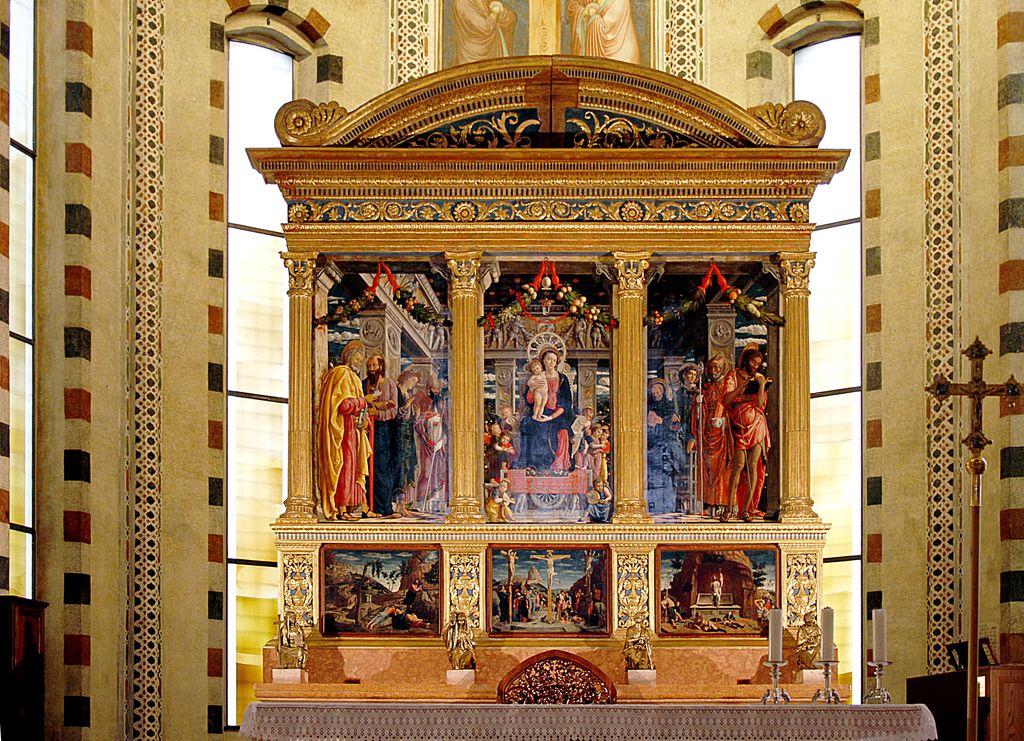
San Zeno Altarpiece
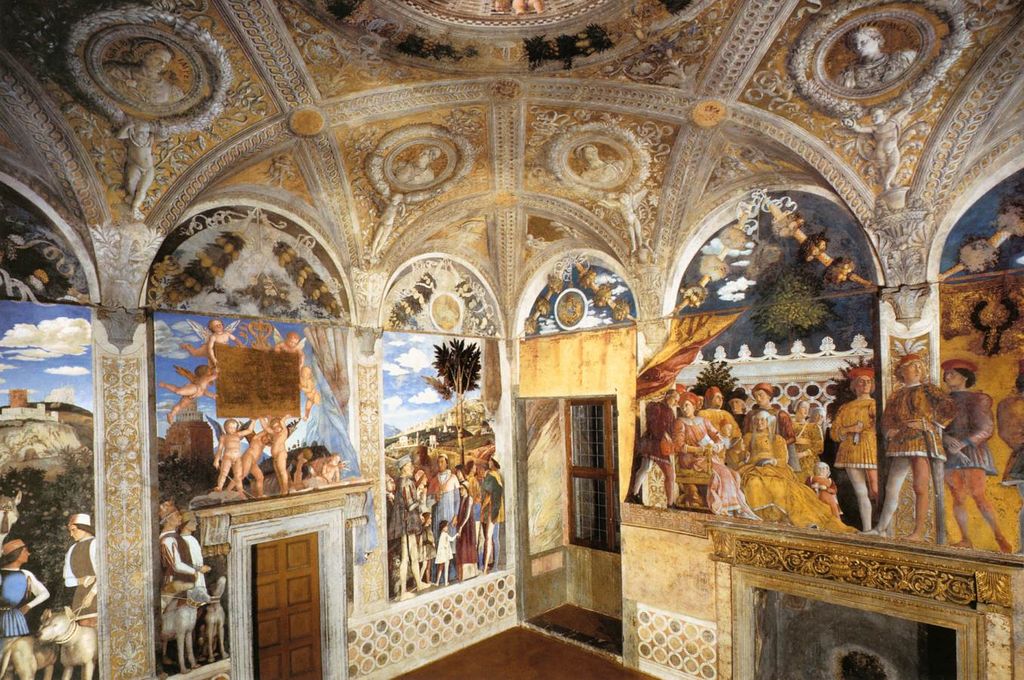
The San Zeno Altarpiece in its frame, Basilica of San Zeno, Verona José Luiz. Image source. CC BY-SA 4.0. Resized from the cited image.