 by Tom Gurney
Tom Gurney BSc (Hons) is an art history expert with over 20 years experience
Published on June 19, 2020 / Updated on November 29, 2026
Email: tomgurney1@gmail.com / Phone: +44 7429 011000
The Death of Brunelleschi: Introduction
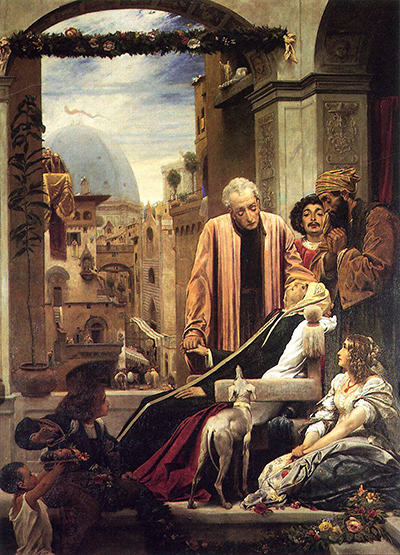
A garland hangs across an arch in Florence. Beyond it, a pale dome rises over a street deep enough to see people moving between the houses. On the near side of the arch, Filippo Brunelleschi lies back in a chair while a man bends over him and takes his hand. The building in the distance is the dome Brunelleschi designed for Florence Cathedral. Frederic Leighton painted this imagined scene at the end of his student years in Frankfurt. The oil on canvas, dated 1852, belongs to Leighton House in London. [1] [2] [3]
At a Glance
- Painted1852
- MediumOil on canvas
- CollectionLeighton House, LH0373
- Separate colour sketchLeighton House, LH1141
This work across Frederic Leighton’s career
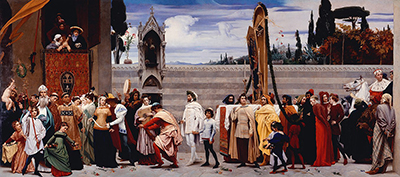
Cimabue’s Celebrated Madonna
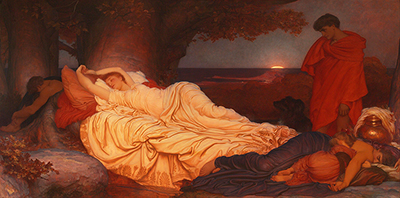
1853–55Lachrymae
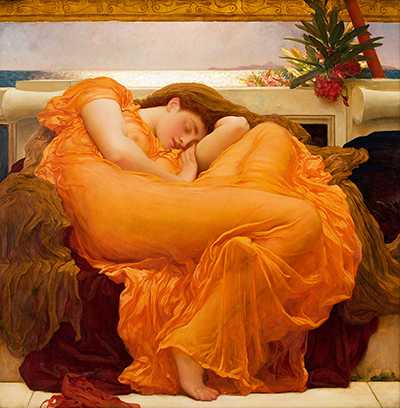
1894–95Flaming June
c. 1895Contents
- Florence through the arch
- A change of gesture
- Brunelleschi’s last years and the dome
- From Frankfurt to Leighton House
- Annotated details
Florence through the arch
The street does a surprising amount of work in this tall picture. A narrow bridge joins the buildings, striped cloth hangs across part of the street and tiny figures appear in the openings or cluster below. These small signs of activity give the city a life that continues beyond the people gathered on the landing. The dome, pale blue against the clouds, is large enough to register from across the room. The depth of the street makes its scale credible, even though Leighton lets its outline dissolve into the sky. [3]
Look down from the sky along the carved stonework on the right. The first face to emerge is that of the man in the pink and cream robe. His bowed head leads to Brunelleschi’s face, lit against the pale cloth of his hood. Two other men draw close beside the chair. One clasps his own hands near his face, an echo of the joined hands lower down. The woman on the step turns her face upward, and even the dog has raised its muzzle. At the bottom left, a child lifts a dish of fruit towards an older figure. The offering, like the flowers scattered at the right, carries some of the colour and activity of the street into the stillness around the chair. [3] [4]
The composition puts the body and the building on opposite sides of the opening. The swelling curve of the dome has its counterpart in the broad arch through which we see it. The sloping edge of Brunelleschi’s dark robe carries the eye in another direction, down from the convergence of faces into the stairway. The historian Joseph Kestner draws attention to the resemblance of the scene to Italian paintings of the death of a saint or of the Virgin. The fact that people surround the architect with this kind of attention gives his death the gravity of a sacred subject. The scene still makes room for a person carrying a dish and a dog intent on its master. [3] [4]
Annotated Details from The Death of Brunelleschi
The numbered points identify visible features discussed in this article. Return from each detail to the numbered overview. Frederic Leighton, The Death of Brunelleschi, 1852. Leighton House. Image source. Public domain. Resized proportionally.
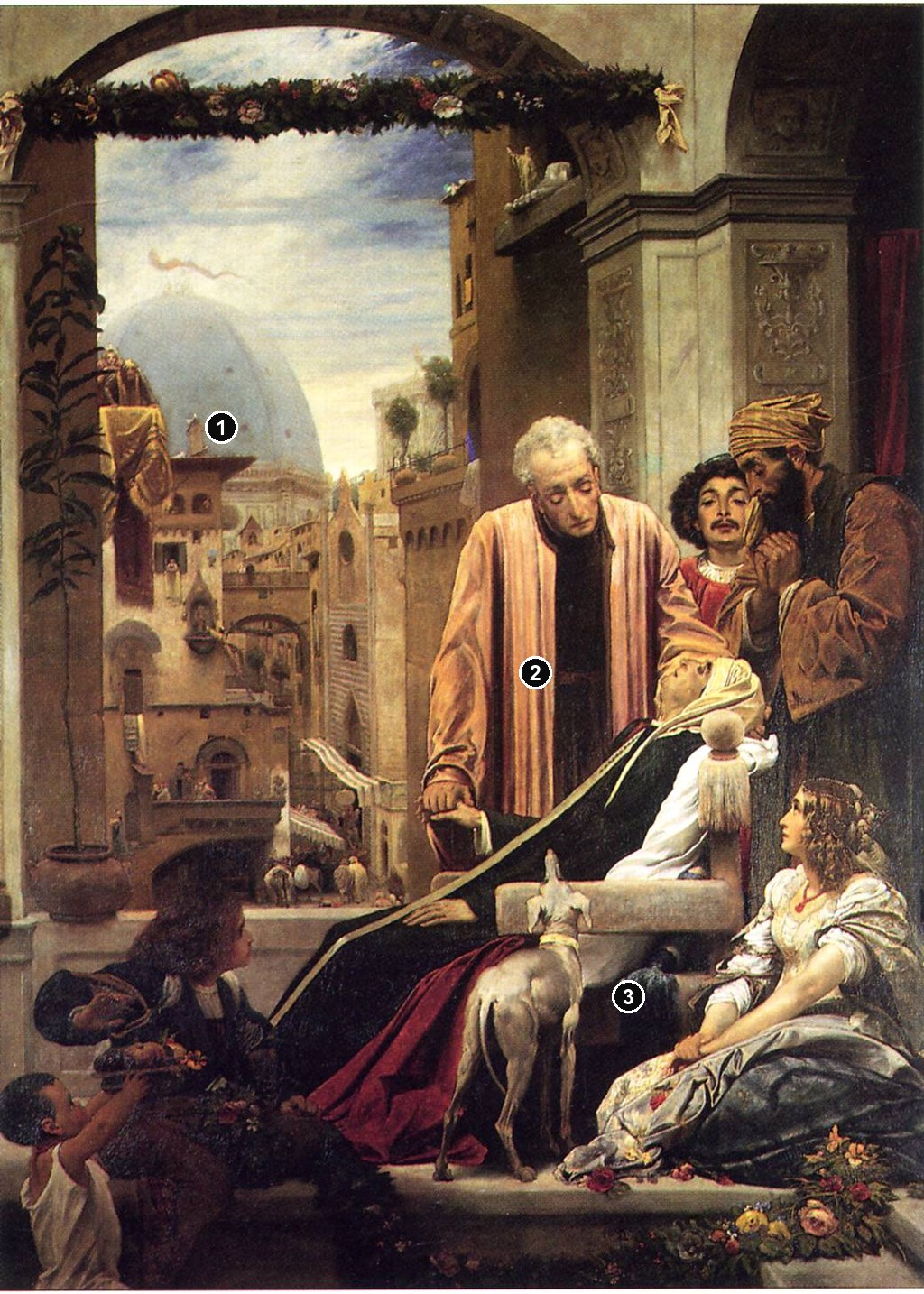
Details from THE DEATH OF BRUNELLESCHI
Compare the cropped details with the source images above. Notice how their colours, shapes and positions contribute to the larger compositions.
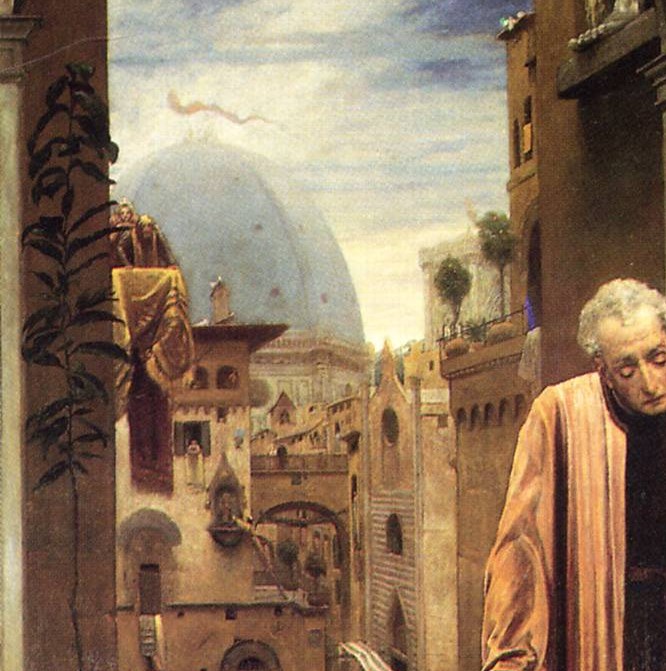
The dome beyond the room
The dome rises behind the nearer roofs and cuts into the pale sky. Florentine buildings carry the eye back from the figures in the room.
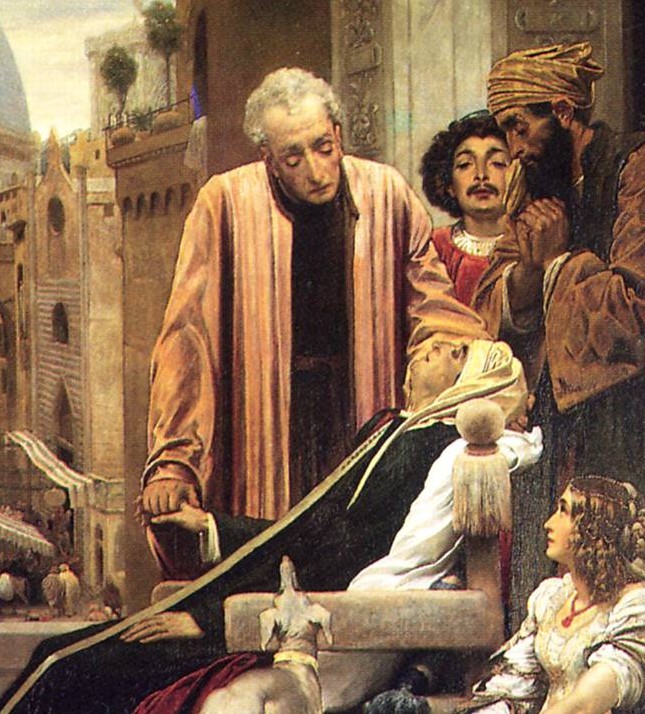
The standing man bends towards the sitter
The standing man and the reclining figure form a close group. The fall of the robes and the turn of their faces bring attention to their gesture.
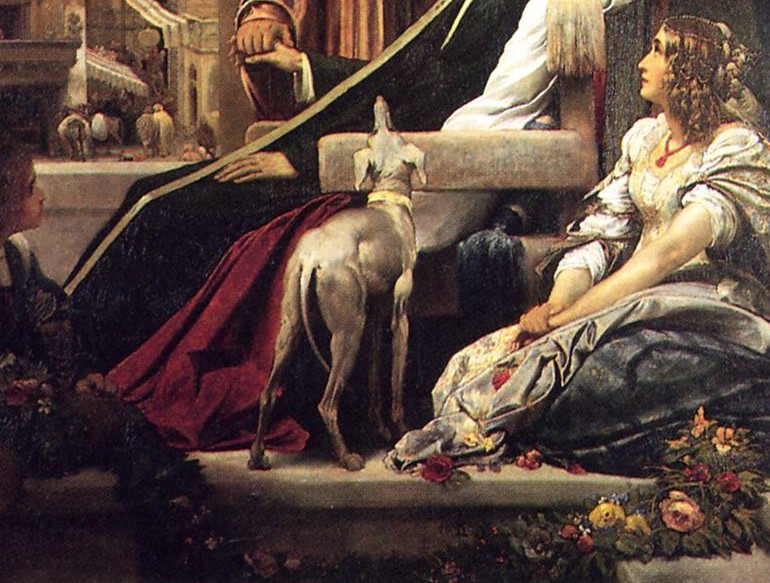
The dog and the floor of the room
The dog stands near the chair, between the descending red fabric and the woman’s dress. Flowers on the floor take the eye farther into the foreground.
A change of gesture
The oil sketch at Leighton House already contains the arch, the garland, the dome and most of the foreground group. The central standing man wears a greenish cap and extends an arm towards the opening. Brunelleschi’s head is more upright, in profile towards the glimpse of the city. The young figure at lower left, dressed in bright red and white, holds a stronger place in the sketch than in the finished painting. Leighton has marked the buildings in broad strokes, enough to put the dome at a distance and to place the figures in shadow. The brighter patches of costume hold their own against the light beyond the arch. [3] [5]
A charcoal study historically catalogued by the British Museum makes the outstretched gesture explicit. In the museum’s early description the sculptor by the chair is called Ghiberti, and points to the dome. The same entry noticed a detail that can be overlooked in the oils: the older child asks the little one with the fruit to be quiet. For the figure in the finished painting, Edgcumbe Staley and Kestner use the name Donatello. In the finished painting the hand has come down to meet Brunelleschi’s, the cap has gone, and the man’s white hair catches the light as he bends. We are left to discover the dome on our own. [3] [4] [5] [6] [7]
Staley identified Donatello’s features as those of Leighton’s father, the physician Frederic Septimus Leighton. A visitor to Leighton House writing in 1930 also reported that the young painter had used his teacher Eduard von Steinle for the dying architect. These accounts give the encounter a personal dimension. Leighton could study the faces of two people he knew well and cast them as artists from another century. The father’s likeness makes the exchange particularly intimate. His face is close enough to see whether the old man can still respond. [3] [4] [7] [8]
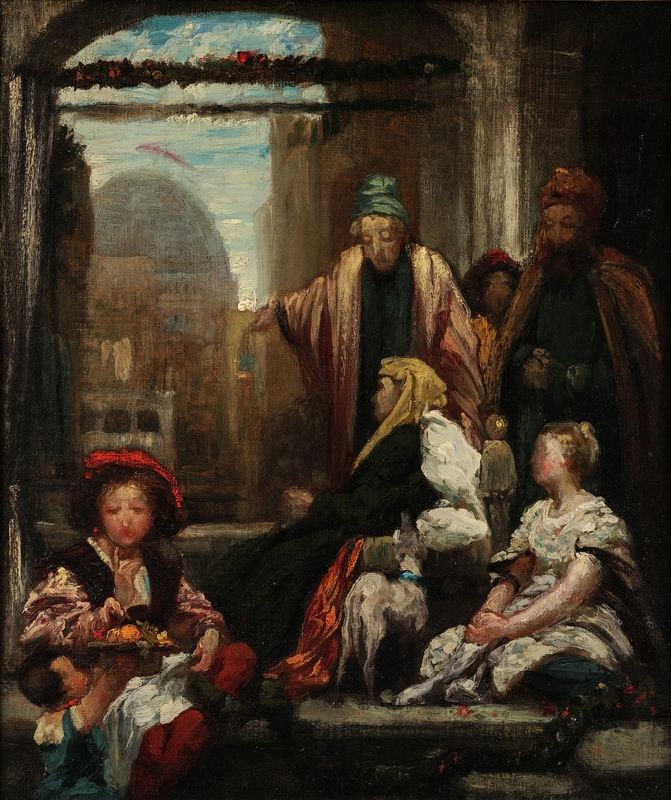
Frederic Leighton, colour sketch for The Death of Brunelleschi. Leighton House. Image source. Public domain. Resized proportionally.
Brunelleschi’s last years and the dome
Brunelleschi died at home in Florence on 15 April 1446. The cathedral authorities trace the closing of the main masonry vault to August 1436, nearly a decade earlier. Its brick shells rise together towards a single opening at the top. A wooden model attributed to Brunelleschi survives in the cathedral museum and shows the solution he proposed for that opening. The lantern repeats the octagonal plan of the dome below it. Its weight helps steady the masonry beneath. Work on the marble structure began after Brunelleschi’s death. An old description displayed with the painting, recorded in 1930, put his death on the day the cathedral opened and had him carried to a stairway to see it. The garland and the street decorations let Leighton bring public rejoicing within sight of a private leave-taking. [8] [9] [10] [11]
Antonio di Tuccio Manetti, writing in the later fifteenth century and recalling that he had known Brunelleschi, pairs him with Donatello in an episode from much earlier in their lives. He describes the two men sketching and measuring the buildings of Rome to work out their shapes and proportions. The connection between the two artists also survives in a sixteenth-century panel at the Louvre that puts them among five Florentine masters. Giorgio Vasari’s later biography follows Brunelleschi’s interest in the details of construction right through to the lantern. He says that the architect left instructions that it should be built according to his model. Leighton gives that long attachment to a building the brevity of a glance. [3] [9] [12] [13] [14]
Florence commemorated Brunelleschi inside the cathedral. The sculptor Andrea Cavalcanti, known as Il Buggiano, was Brunelleschi’s pupil and adopted son. He made the marble bust for the wall monument commissioned in 1447. The cathedral museum also preserves a funeral mask and attributes a preparatory terracotta portrait to him. The bust gives Brunelleschi a public likeness, set above the epitaph that Carlo Marsuppini wrote to mark what the city owed him. Where the marble face can address successive generations of visitors, Leighton’s Brunelleschi has just enough strength to look past the people around him. [3] [9] [15]
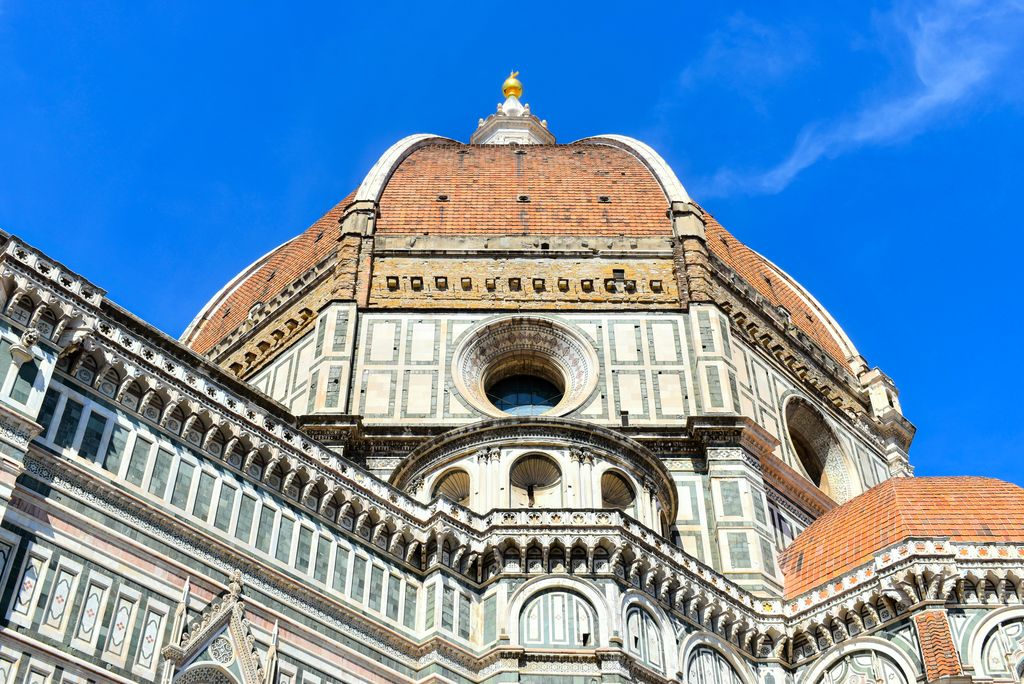
Brunelleschi’s dome at Santa Maria del Fiore, Florence. Photograph by Julian Lupyan. Image source. CC0 / Public domain. Resized proportionally.
From Frankfurt to Leighton House
Leighton had studied in Florence as a boy. By 1850, in Frankfurt, he was working under Steinle, at the Städel. Steinle’s enthusiasm for early Italian religious art helped direct Leighton’s reading and looking. His fellow student Enrico Gamba, from Piedmont, shared those interests and later travelled through Florence with him on the way to Rome. The Death of Brunelleschi belongs with other early ventures into artists’ lives, including Cimabue Finding Giotto in the Fields of Florence and Signorelli Painting his Dying Son. The meeting of two painters, a father attending a dying son, and a sculptor comforting a friend gave Leighton three ways to tell a story about artists through the smaller actions of their lives. [1] [16] [17] [18]
The early record places the canvas close to the end of this period. Ernest Rhys listed it as about 1851, and Emilie Barrington dated her illustration 1851, acknowledging Dr von Steinle. In a letter to his mother in 1852, Leighton described the reception of a picture he had left in Steinle’s care. The painter Moritz Daniel Oppenheim had encouraged him, and Leighton remembered a Russian prince speaking to him in the gallery. Barrington thought this was probably The Death of Brunelleschi. The title is absent from the Royal Academy’s exhibition catalogue of 1852. Leighton made his London debut at the Academy in 1855 with a different story about Florence, Cimabue’s Celebrated Madonna, in which a whole street turns out to honour a work of art. [1] [17] [19] [20] [21]
When Leighton’s possessions were dispersed after his death, the committee formed to preserve his house began gathering representative examples of his work. A public appeal brought The Death of Brunelleschi to the collection in 1909. The painting now gives the London house an early view of the Florence that kept drawing Leighton back. Its architect is surrounded by people close enough to touch him, but the air beyond the garland is open and the dome still rises over the city. [1] [2] [3]
Browse Frederic Leighton’s artworks
Explore paintings, drawings, sculptures and prints, with separate rows for identified preparatory works, reproductions and casts.
| Name | Date | Medium |
|---|---|---|
| A Girl Feeding Peacocks | Exhibited 1863 | Painting Catalogue. |
| A Recognition from ‘Romola’, engraved by Swain (Tate N04054) | published 1862 | Print Catalogue. |
| A Roman Lady | 1859 | Painting Catalogue. |
| Abram and the Angel (Tate A00733) | published 1881 | Print Catalogue. |
| Acme and Septimius | Exhibited 1868 | Painting Catalogue. |
| An Athlete Wrestling with a Python (Tate exhibition bronze) | 1877 | Sculpture Catalogue. |
| And the Sea Gave Up the Dead Which Were in It (Tate N01511) | 1891–92 | Painting Catalogue. |
| Andromache in Captivity (photogravure after Leighton) | 1889 | Print Catalogue. |
| Athlete Wrestling with a Python (Anglesey Abbey cast) | model 1877; cast 1905 | Sculpture Catalogue. |
| Athlete Wrestling with a Python (Hood reduced cast) | 1877 (inscribed model date) | Sculpture Catalogue. |
| Athlete Wrestling with a Python (Saint Louis reduced cast) | 1877 (museum date) | Sculpture Catalogue. |
| Cain and Abel (Tate A00731) | published 1881 | Print Catalogue. |
| Captive Andromache | 1888 | Painting Catalogue. |
| Cimabue's Celebrated Madonna | 1853–55 | Painting Catalogue. |
| Cimon and Iphigenia, with Many Smaller Subjects (Tate T09061) | date not known | Drawing Catalogue. |
| Crenaia, the Nymph of the Dargle | Exhibited 1880 | Painting Catalogue. |
| Cymon and Iphigenia | 1884 | Painting Catalogue. |
| Daedalus and Icarus | 1869 | Painting Catalogue. |
| Dante in Exile | 1864 | Painting Catalogue. |
| Death of the First Born (Tate A00737) | published 1881 | Print Catalogue. |
| Electra at the Tomb of Agamemnon | c. 1869 | Painting Catalogue. |
| Eliezer and Rebekah (Tate A00735) | published 1881 | Print Catalogue. |
| Elijah in the Wilderness | 1877–78 | Painting Catalogue. |
| Fanny Kemble: A Study for ‘Jezebel and Ahab’ (Tate T08208) | c.1862 | Drawing Catalogue. |
| Figure Studies | Date not recorded | Drawing Catalogue. |
| Flaming June | 1895 | Painting Catalogue. |
| Gulnihal | Exhibited 1886 | Painting Catalogue. |
| Helios and Rhodes (Tate N03015) | date not known | Painting Catalogue. |
| Hercules Wrestling with Death for the Body of Alcestis | c. 1869–71 | Painting Catalogue. |
| Jonathan's Token to David | c. 1868 | Painting Catalogue. |
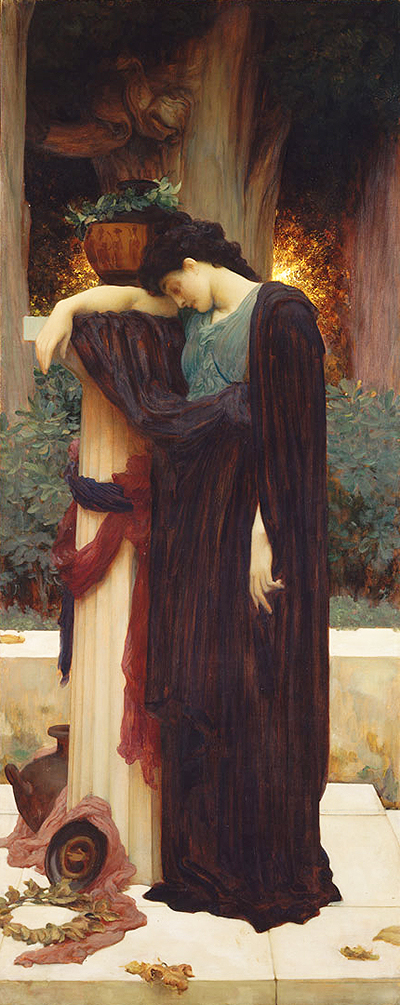
| Lachrymae | 1894–95 | Painting Catalogue. |
| Lieder ohne Worte | Exhibited 1861 | Painting Catalogue. |
| Light of the Harem | Exhibited 1880 | Painting Catalogue. |
| Moses Views the Promised Land (Tate A00736) | published 1881 | Print Catalogue. |
| Mrs James Guthrie | 1865 | Painting Catalogue. |
| Mrs John Hanson Walker (Tate N04731) | 1867 | Painting Catalogue. |
| Music Lesson | 1877 | Painting Catalogue. |
| Needless Alarms (Met cast) | modelled 1886; cast nineteenth century | Sculpture Catalogue. |
| Needless Alarms (Tate N05120) | 1886 | Sculpture Catalogue. |
| Pavonia | c. 1859 | Painting Catalogue. |
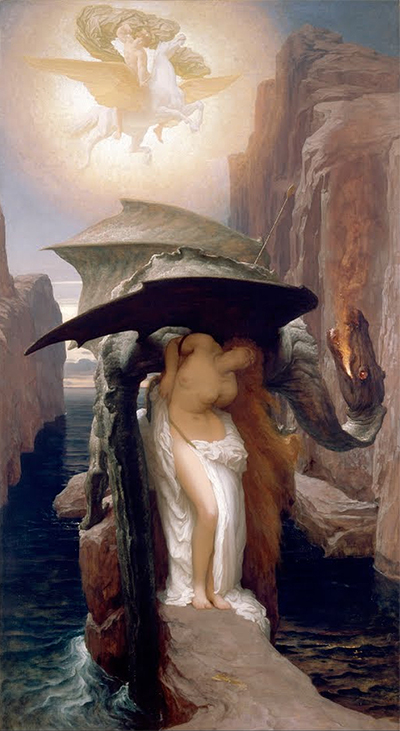
| Perseus and Andromeda | 1891 | Painting Catalogue. |
| Portrait of May Sartoris | c. 1860 | Painting Catalogue. |
| Preparing for a Festa, Florence (Tate T09062) | date not known | Drawing Catalogue. |
| Puerta de los Vientos, near Ronda, Spain (Tate N04006) | c.1886–9 | Painting Catalogue. |
| Samson and the Lions (Tate A00732) | published 1881 | Print Catalogue. |
| Samson at the Mill (Tate A00734) | published 1881 | Print Catalogue. |
| Samson Carrying the Gate (Tate A00738) | published 1881 | Print Catalogue. |
| Sketch for ‘An Athlete Wrestling with a Python’ (Tate N01761) | c.1877 | Sculpture Catalogue. |
| Sketches for Cimon and Iphigenia (Tate T09060) | date not known | Drawing Catalogue. |
| Study for The Return of Persephone (Demeter) | c. 1890–91 | Drawing Catalogue. |
| Study for The Return of Persephone (Persephone) | c. 1890–91 | Drawing Catalogue. |
| Study for ‘Needless Alarms’ (Tate N02945) | 1886 | Sculpture Catalogue. |
| Study for ‘The Discovery of Juliet Apparently Lifeless’ (Tate N01806) | c.1858 | Painting Catalogue. |
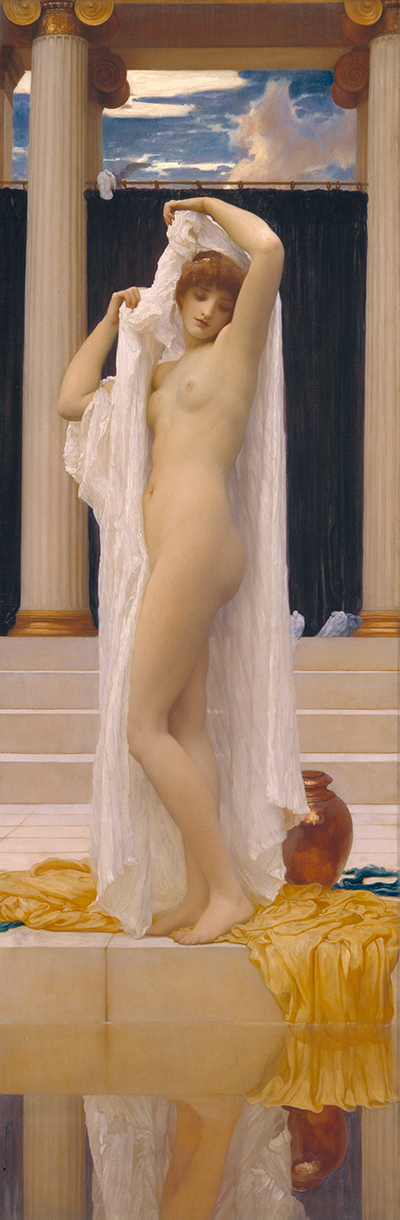
| The Bath of Psyche | Exhibited 1890 | Painting Catalogue. |
| The Daphnephoria | 1874–76 | Painting Catalogue. |
| The Death of Brunelleschi | 1852 | Painting Catalogue. |
| The Fisherman and the Siren | Exhibited 1858 | Painting Catalogue. |
| The Painter's Honeymoon | c. 1864 | Painting Catalogue. |
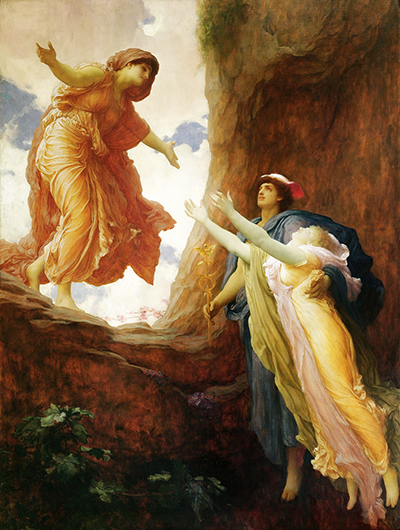
| The Return of Persephone | 1891 | Painting Leeds painting identified in the Met study record. |
| The Return of Persephone (preparatory oil) | c. 1890–91 | Painting Catalogue. |
| The Sluggard (Anglesey Abbey cast) | probably 1890–about 1906 | Sculpture Catalogue. |
| The Sluggard (Met cast) | modelled 1886; cast possibly before 1896 | Sculpture Catalogue. |
| The Sluggard (Museum Wales) | 1882–85 (museum date) | Sculpture Catalogue. |
| The Sluggard (Tate N01752) | 1885 | Sculpture Catalogue. |
| The Spies Escape (Tate A00730) | published 1881 | Print Catalogue. |
| Various Subjects (Tate T09063) | date not known | Drawing Catalogue. |
| View in Capri | Possibly 1859 | Painting Catalogue. |
| Wedded | 1882 | Painting Catalogue. |
| Winding the Skein | c. 1878 | Painting Catalogue. |
Discussion
Look again at the images and ideas explored in The Death of Brunelleschi. These editorial prompts invite your observations.
Reader Insights
How does the change in gesture alter the exchange between the two men?
When does your attention move from the figures in the room to the dome outside?
Join the Conversation
Share a detail, comparison or question about The Death of Brunelleschi below.
References
- Museum Villa Stuck and Leighton House Museum, Frederic, Lord Leighton, Munich exhibition, 2009, “Der Tod Brunelleschis” and chronology. View source.
- Royal Borough of Kensington and Chelsea, Leighton House Museum Collections Review, Appendix C, section 2, 2018. View source.
- Leighton House, The Death of Brunelleschi, LH0373, collection photograph contributed to Art UK. View source.
- Joseph A. Kestner, “Constructing the Renaissance: Leighton and Pater,” Journal of Pre-Raphaelite Studies, new series, vol. 2, spring 1993, pp. 3–4 and fig. 2. View source.
- Leighton House, Colour Sketch for ‘The Death of Brunelleschi’, LH1141, collection photograph contributed to Art UK. View source.
- Laurence Binyon, British Museum, Catalogue of Drawings by British Artists and Artists of Foreign Origin Working in Great Britain, vol. III, 1902, p. 48, Leighton no. 1. View source.
- Edgcumbe Staley, Lord Leighton of Stretton, P.R.A., 1906, ch. II and plate facing p. 32. View source.
- Effie May Ross, “The Centenary of Lord Leighton,” The Dalhousie Review, vol. 10, no. 3, October 1930, p. 363. View source.
- Opera di Santa Maria del Fiore, “L’Opera di Santa Maria del Fiore acquista un ritratto inedito in terracotta di Filippo Brunelleschi,” chronology of the death and memorial. View source.
- Opera di Santa Maria del Fiore, “L’11 agosto 1446 Michelozzo avviava la costruzione della lanterna della Cupola,” archival account of the main vault and the later lantern. View source.
- Opera di Santa Maria del Fiore, Filippo Brunelleschi, Modello architettonico della lanterna, object entry. View source.
- Antonio di Tuccio Manetti, Vita di Filippo di Ser Brunellesco, c. 1480, translated by Daniela Kern from Gaetano Milanesi’s edition, pp. 1 and 11–12 of the translation. View source.
- Giorgio Vasari, “Filippo Brunelleschi,” Le vite de’ più eccellenti pittori, scultori e architettori, 1568. View source.
- Musée du Louvre, Cinq maîtres de la Renaissance florentine, INV 267, collection entry. View source.
- Opera di Santa Maria del Fiore, Monumento funebre a Filippo Brunelleschi, scientific catalogue, no. 6815. View source.
- Leonée Ormond, “Frederic Leighton and the Poets,” in Henryk Siemiradzki and the International Artistic Milieu in Rome, Polish Academy of Sciences, 2020, pp. 223–24. View source.
- Emilie Barrington, The Life, Letters and Work of Frederic Leighton, vol. I, 1906, ch. I, pp. 55–56 and note 16. View source.
- Christie’s, A Color Sketch for ‘Cimabue’s Celebrated Madonna is Carried in Procession through the Streets in Florence’, lot 5484417, essay on Leighton’s early scenes from artists’ lives. View source.
- Ernest Rhys, Frederic Lord Leighton: An Illustrated Record of His Life and Work, appendix I, List of Principal Works. View source.
- Royal Academy of Arts, The Exhibition of the Royal Academy, 1852, original catalogue digitised by the Paul Mellon Centre. View source.
- National Gallery, London, Cimabue’s Celebrated Madonna, L275, collection entry. View source.