 by Tom Gurney
Tom Gurney BSc (Hons) is an art history expert with over 20 years experience
Published on June 19, 2020 / Updated on November 29, 2026
Email: tomgurney1@gmail.com / Phone: +44 7429 011000
Frederic Leighton Prints: Introduction
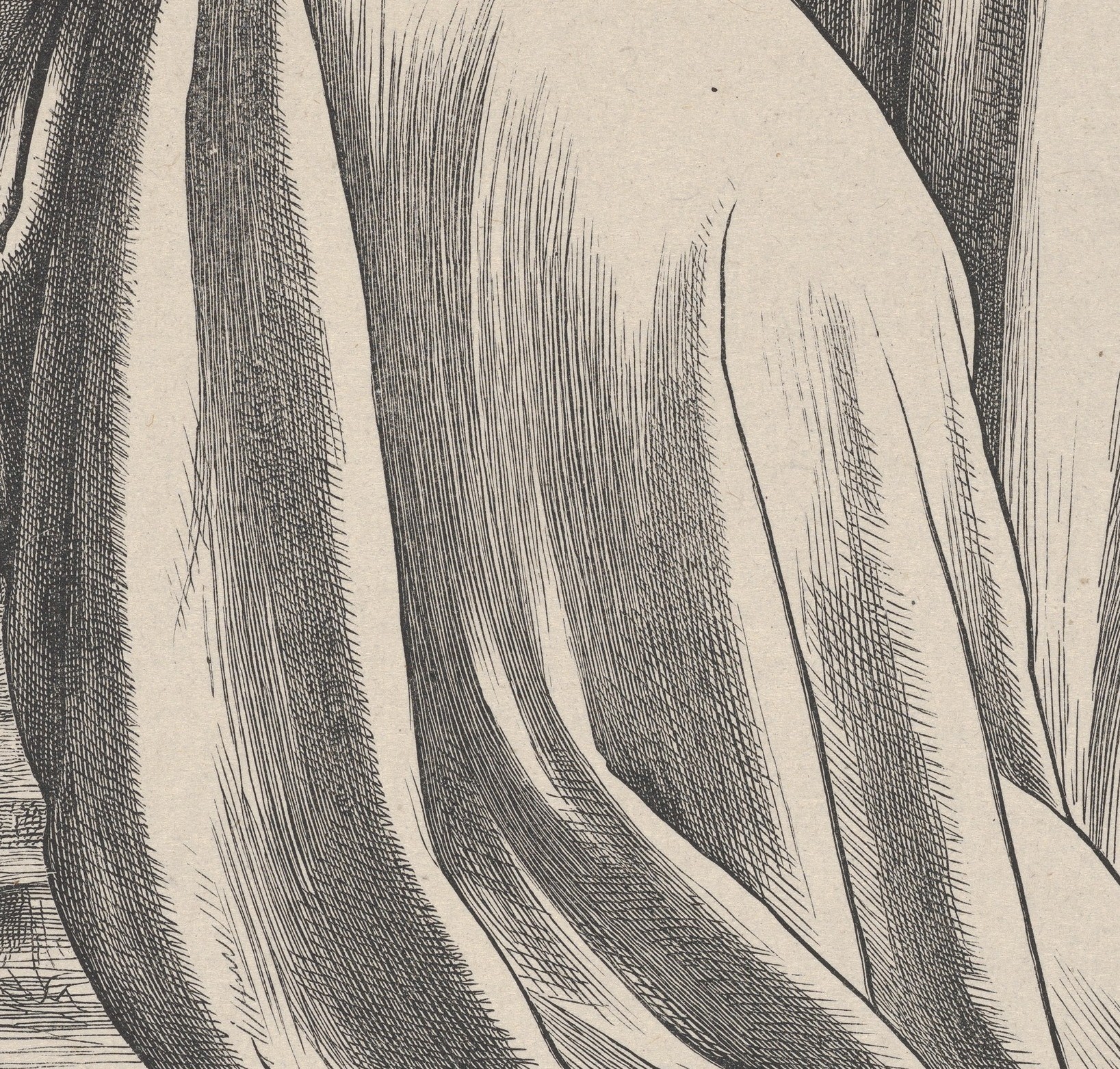
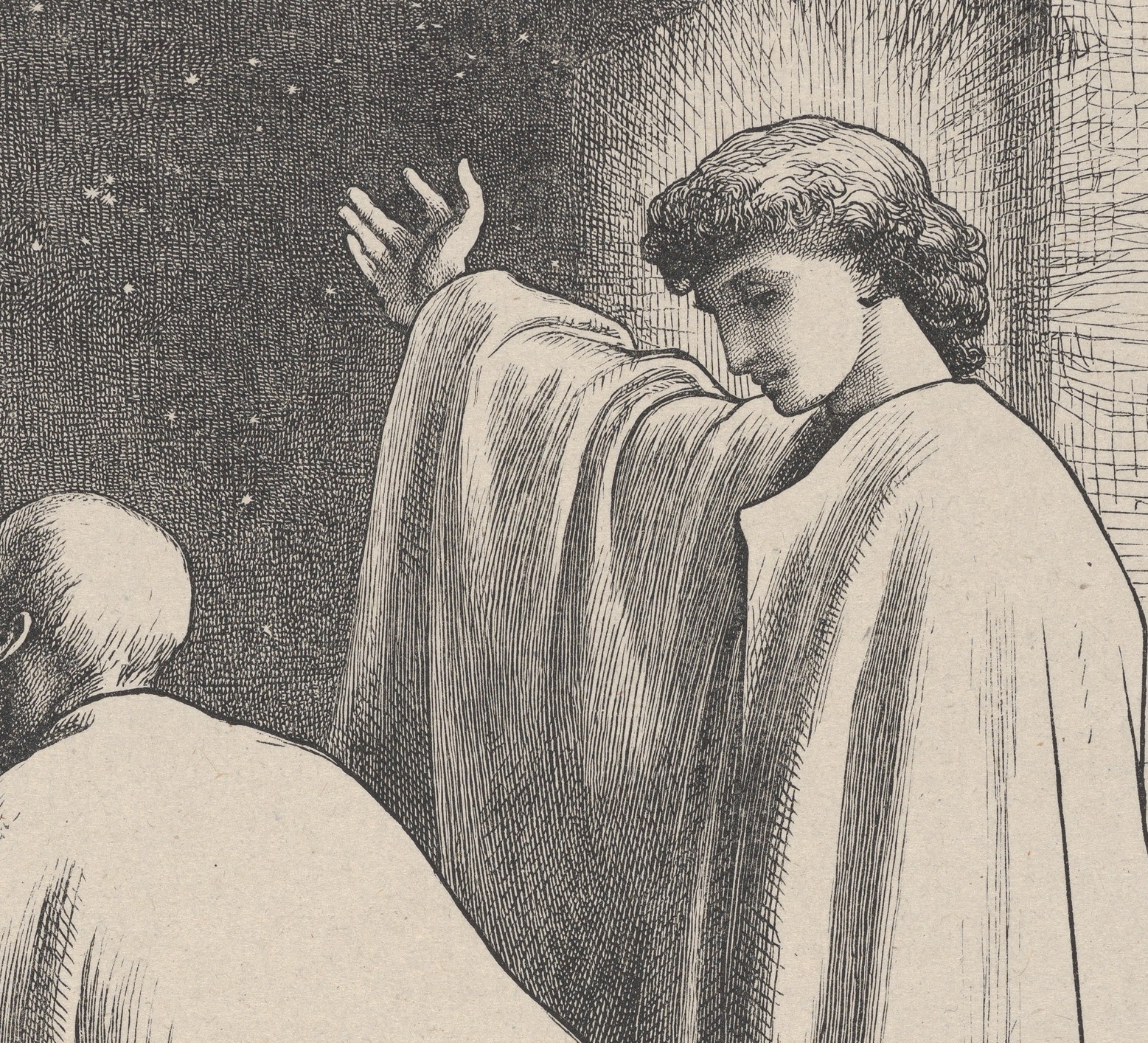
In Abram and the Angel, the night sky is almost solid black. Small points of light appear above the bowed figure of Abram as the angel raises a hand towards them. Follow the thin lines down the back of Abram’s cloak and they gather into dark folds. At his shoulder they make way for a broad area of light. Frederic Leighton designed the scene. The Dalziel Brothers cut it in wood, and the Camden Press printed the impression at the Metropolitan Museum of Art. [1]
Leighton’s name can turn up on very different kinds of prints. He drew designs for illustrated books and magazines, made an etching of one of his own compositions, and saw publishers reproduce some of his exhibition paintings. A wood engraving for a novel might be read in a few moments between passages of text. A photogravure of a painting could travel in a portfolio with works by other exhibitors. The margins, ink and paper of surviving impressions tell us which of those experiences an image was made for. [2] [3] [4]
At a Glance
- FormsWood engravings, etchings and reproductions
- Literary commissionGeorge Eliot’s Romola, 1862–63
- Bible GalleryLondon publication, 1881
Contents
- Florence in the pages of Romola
- The Dalziel Bible engravings
- An etching and two ways to circulate a painting
- Annotated details
Florence in the pages of Romola
George Eliot’s story of Renaissance Florence appeared in The Cornhill Magazine from July 1862 to August 1863. Leighton welcomed the commission from its publisher, George Smith, and wrote to his father that he was to receive the first proof sheets of the novel before publication began. By then he had already made several pictures on Florentine subjects. The magazine gave him a different task. He had to choose scenes that could take effect on a single page and make decorative initials that would sit within the text. [2] [5]
The letters reproduced by Emilie Russell Barrington show what that collaboration felt like. Early on, Eliot liked the attitude Leighton had given Romola but worried about details she had imagined differently. In September she discussed the usefulness of a portrait of Piero di Cosimo and considered whether Leighton should change his model for Romola. The prospect of a likeness could matter in one instance and offer very little help in another. She described the illustrations as a kind of overture to the novel. The first encounter with a character might belong to the eye, while the text had much longer to develop the impression. [5]
Two chalk studies on a single sheet in the British Museum show Leighton giving consecutive scenes quite different shapes. In The Painted Record, a hooded woman lifts one hand and gestures back with the other. In Coming Home, the upright of a doorway steadies a figure who holds a curtain aside. Both appeared in the December 1862 issue. The studies are in black and white chalk on blue paper, with smaller ideas worked out on the reverse. The museum notes that Leighton drew his final designs in pen and ink directly on the woodblocks. Photographs made before the blocks were cut preserve that intermediate stage. The Royal Academy has pencil tracings for two other scenes, Father, I Will Be Guided and The Dying Message. The tracings and a wood engraving of Drifting Away, cut by Joseph Swain, were displayed at the Museo San Domenico in Forlì in 2024. The surviving material gives a sense of how much work could go into preparing and transferring an illustration before readers saw it. [2] [6]
Joseph Swain’s work on the series survives in different forms. The National Gallery of Victoria records At the Well, from the August 1863 Cornhill, with Swain as wood engraver and Leighton as draughtsman. Tate’s collection dataset lists A Recognition from ‘Romola’, engraved by Swain as a wood engraving on paper, with the publication date recorded as 1862. The Met’s impression of A Recognition is dated 1864 and combines a wood engraving with lithographic tone. The Met gives the image as 15.8 by 10.5 centimetres and lists a larger area for the tone. That layer of printing is one detail you would miss if the two records were reduced to a title and artist. The British Museum also holds plates printed on good paper for the 1864 Cornhill Gallery. A design could have a second life outside the instalment it first accompanied. [2] [7] [8] [9]
The Dalziel Bible engravings
The Dalziel Brothers began commissioning pictures for an illustrated Bible in 1863. The project took years to reach publication. The 1881 volume gathered illustrations of the Old Testament, including nine designs by Leighton. In their memoir the brothers singled out his Cain and Abel and Death of the First Born. Ernest Rhys later compared one of Leighton’s surviving drawings on a block with impressions from the cut wood. He admired how closely the engravings kept the character of his drawing. Leighton could plan for the limits of the medium, and the engravers could give a drawn stroke, a pool of shadow or a patch of light substance in the printed image. In relief engraving the raised surface takes ink. A cut can open a light line in a dark field, or two closely spaced cuts can leave a hairline of wood to print black. The signature identifies the Dalziel firm. As the historian Bethan Stevens has shown, its employees used that signature across the workshop, so the name on the block often leaves the particular engraver’s identity open. [3] [8] [10] [11] [12] [13]
In Abram and the Angel, details at the bottom make the upward movement more striking. The long train of cloth runs close to the ground, and the low stones establish the space around the men. Abram’s head and open hand rise only a little. The angel’s hand makes the last movement towards the sky. The stars cluster in the open space beyond Abram’s bowed head. The brothers’ memoir includes a letter in which Leighton asks about the subject of the promise to Abram that his descendants will be as numerous as the stars. The survival of the letter gives us a glimpse of him thinking about the choice of scene as well as its design. [1] [10]
Several collections hold this composition. Tate’s A00733 is part of the group A00730–A00738, presented by Gilbert Dalziel in 1924. Tate dates its engravings by publication in 1881. The Met lists its Abram and the Angel as 1865–81 and describes the wood engraving on India paper mounted on thin card. It belongs to the New York portfolio published by Scribner and Welford. The National Gallery of Victoria’s Abraham and the Angel belongs to the London publication and names George Routledge & Sons. In Princeton’s Dalziel collection, a further distinction is possible. Its holdings include proofs pulled from engraved woodblocks around the 1860s and an early reproduction of Leighton’s drawing for Samson Carrying the Gates. The proofs preserve evidence of printing before the completed gallery was issued. The reproduction preserves the appearance of the drawing that preceded the engraving. [1] [3] [8] [12] [14]
The word proof also turns up in a different setting. In December 1880, Routledge advertised an India-paper proof edition of the Bible Gallery, available either bound or in a portfolio. The book carried an 1881 publication date, but the publisher was already promoting it as a gift. Here proof edition was a term used to sell fine impressions to the public. Princeton’s workshop proofs record the engravers’ work before that publication. [3] [12] [15]
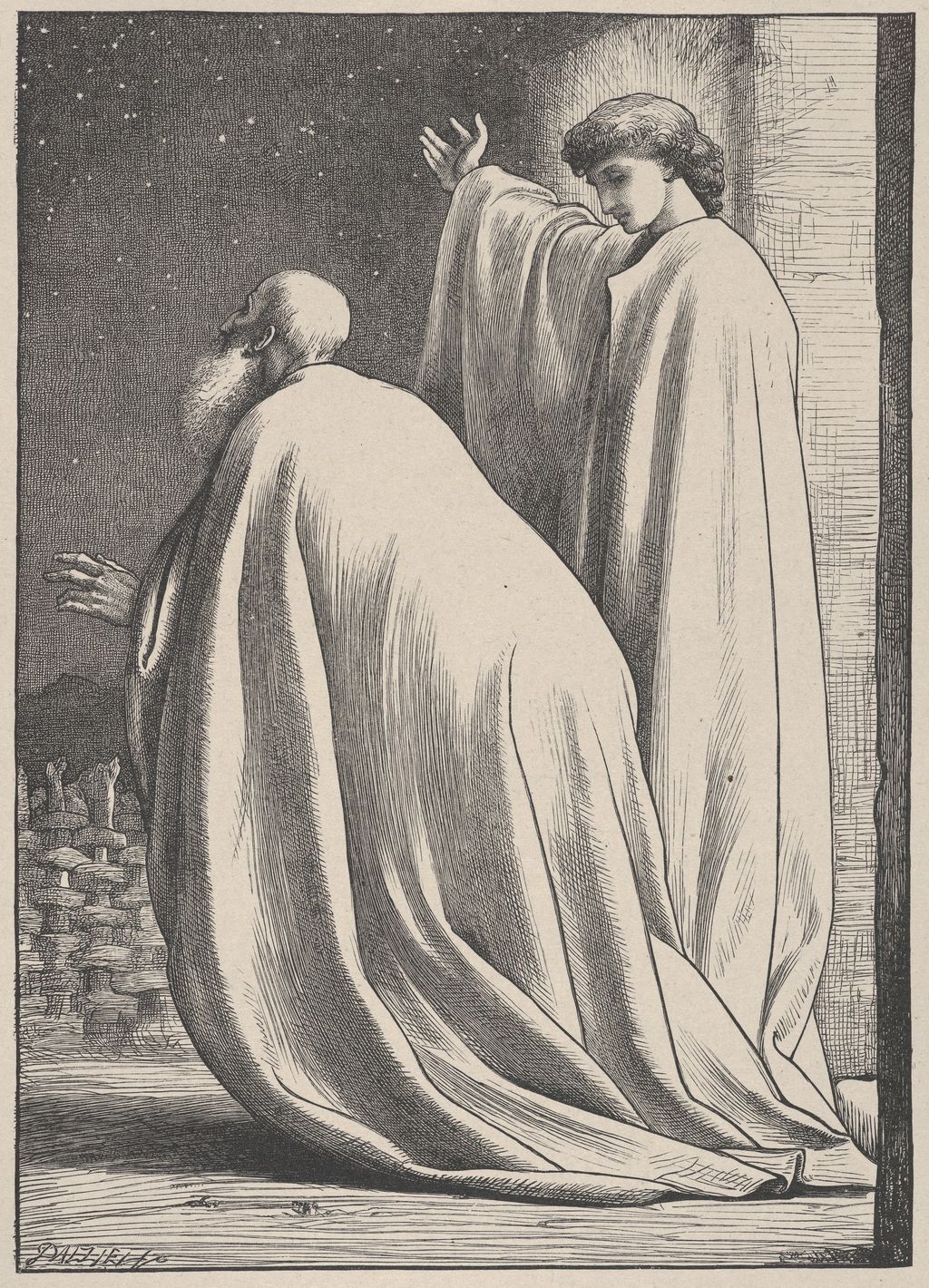
Abram and the Angel, wood engraving by the Dalziel Brothers after Frederic Leighton, 1865–81. The Metropolitan Museum of Art. The Metropolitan Museum of Art, Anonymous Gift, 1926. Image source. CC0 / Public domain. Resized proportionally.
An etching and two ways to circulate a painting
In 1867 Leighton made Pastorale from his own composition. The Pushkin Museum’s catalogue describes its impression as an etching and records his monogram in the lower left of the plate. A separately documented impression carries wording crediting Leighton for the image and its translation into print, as well as naming the Gazette des Beaux-Arts and the Paris printer Delâtre. The National Gallery of Canada holds an impression on beige laid paper. The Pushkin’s came from the Moscow collector Nikolai Basnin and entered the museum in 1924. These are impressions of a work in which Leighton helped make the printing image itself, from a design he had composed. [16] [17] [18]
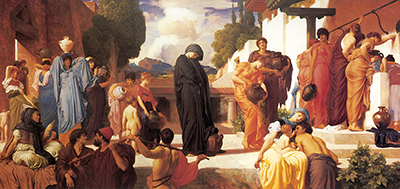
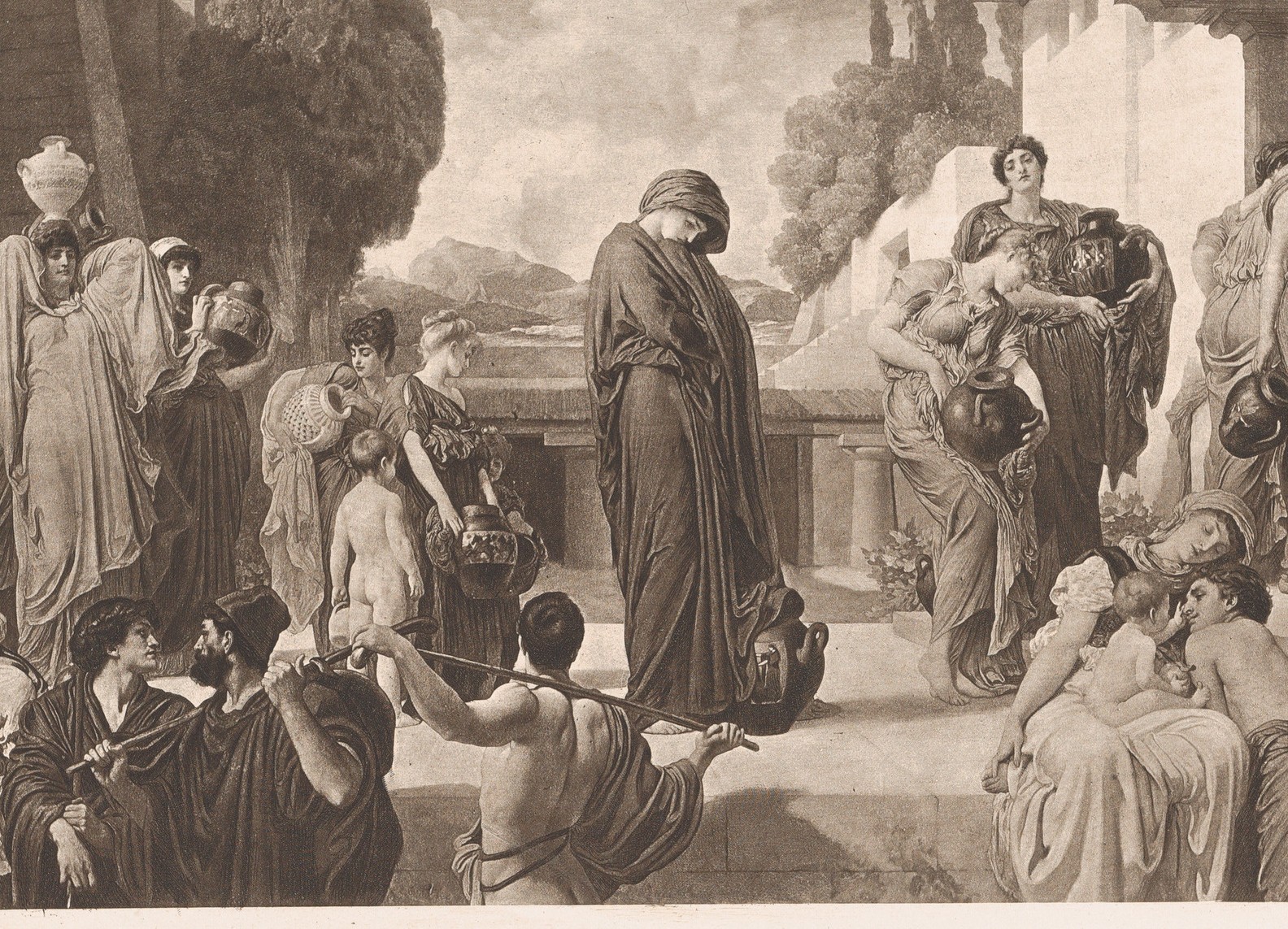
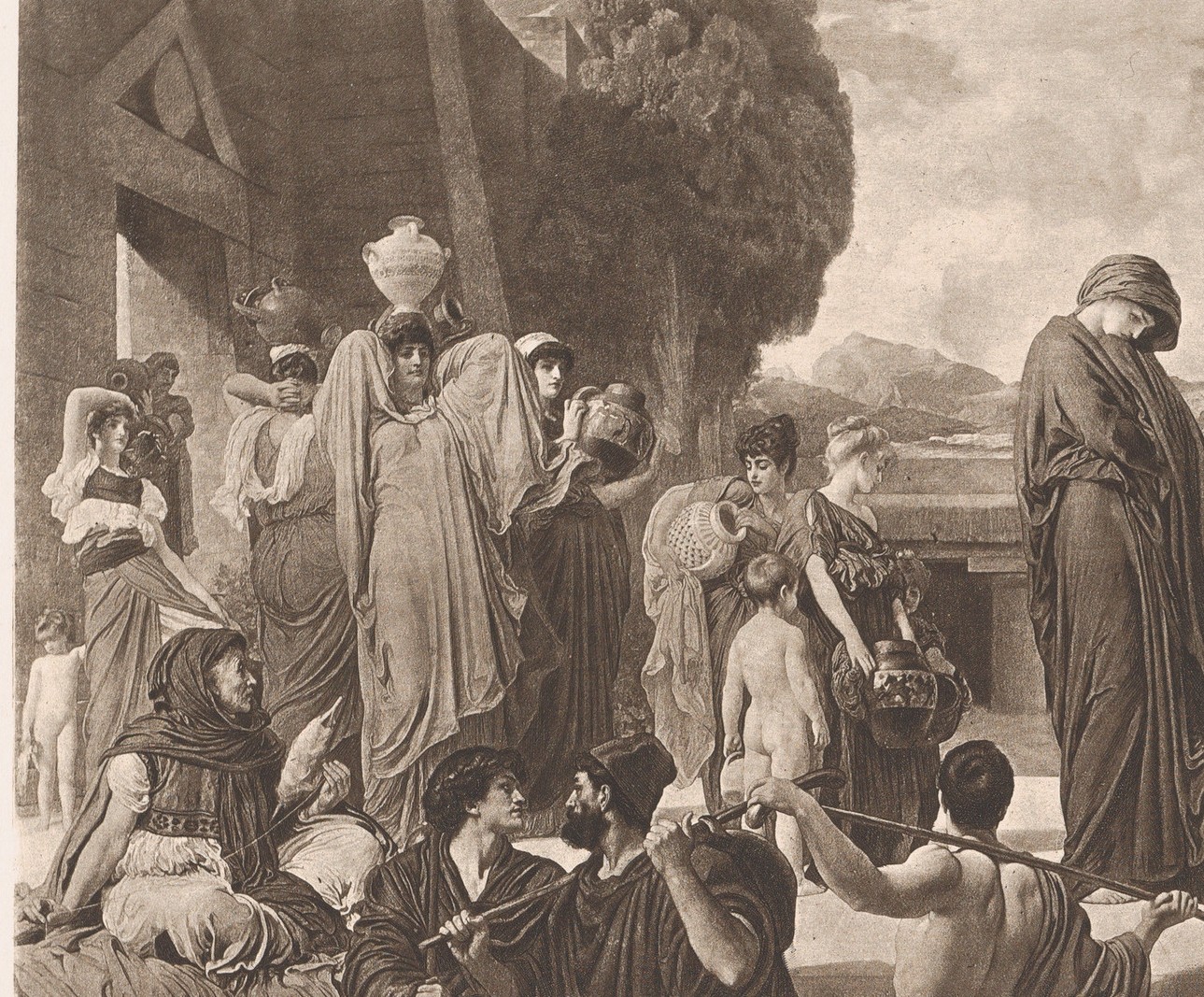
The 1889 Andromache in Captivity shows what a publisher could do with a painting already known to exhibition visitors. George Barrie issued the photogravure for a portfolio of paintings shown at the Paris Exposition Universelle. The title varies from that of the canvas, Captive Andromache, shown at the Royal Academy in 1888 and now in Manchester. Leighton gave the French state a preparatory drawing in black chalk in 1893. That sheet captures the design taking shape, while the photogravure records the composition as it appeared once the painting was finished. In photogravure, a photographic image is transferred to a metal plate that can be etched and printed in ink. The Met’s print is made from a plate only 33 centimetres wide. Pale walls and bright passages of dress lead the eye towards the dark, still figure in the middle. In monochrome the composition holds together through those changes of tone. The broad unprinted border and the title below the image give the scene the setting of a portfolio plate. A copy of the exhibition portfolios catalogued by the Smithsonian contains hand-coloured photogravures and includes this subject. That description belongs to the Smithsonian copy. The Met sheet shows how the composition reads without added colour. [4] [19] [20] [21] [22]
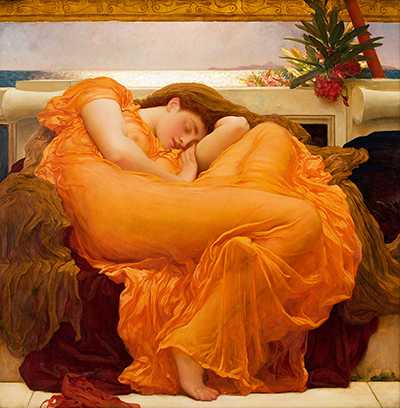
Colour was central to the circulation of Flaming June. William Luson Thomas of The Graphic bought the oil painting after seeing it at the Royal Academy in 1895. A New Zealand bookseller’s advertisement in November 1896 already lists the Christmas number of The Graphic with a colour presentation plate of the painting. The notice gives a sense of how far the image could travel while the canvas had a single owner. It also anchors the Christmas plate to 1896, a year after the painting’s exhibition. Leighton House now offers a mounted reproduction of the same picture on matte paper. The newspaper plate was made for readers opening a Christmas issue. The museum shop gives the mount size and paper stock for an object a visitor can bring home and hang. [23] [24] [25] [26]
An old Romola plate may still carry an engraver’s credit, a caption and the number assigned to it in a later compilation. A sheet removed from its binding can retain those small traces of where readers first encountered the image and how it was sold again. They are worth reading as closely as the engraving itself. [2] [8]
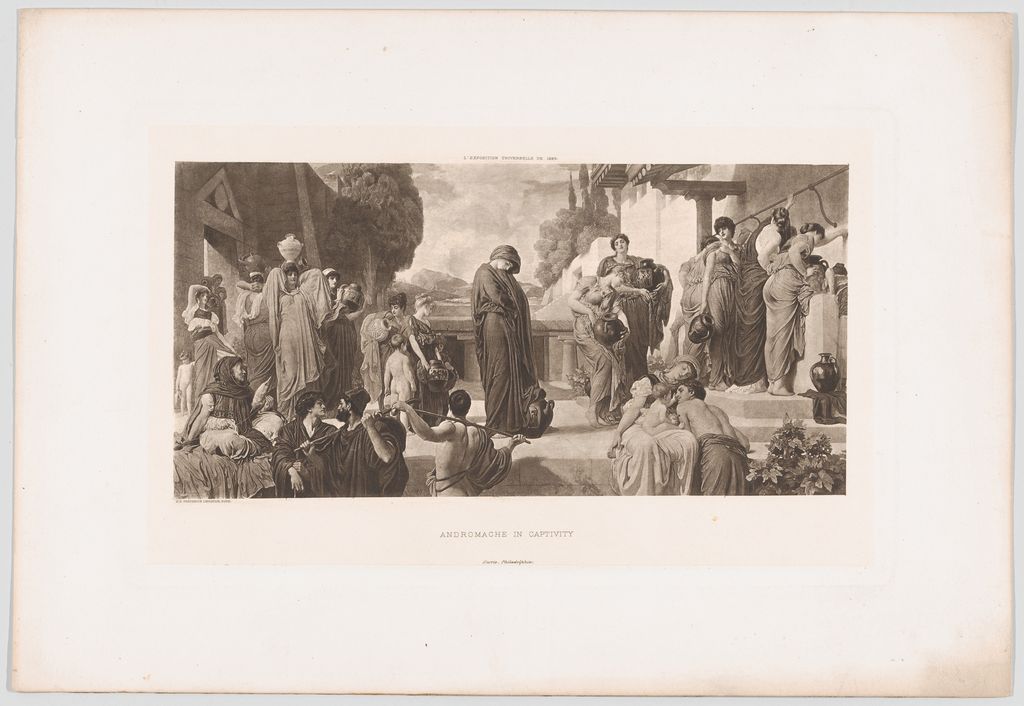
After Frederic Leighton, Andromache in Captivity, 1889. Photogravure published by George Barrie. The Metropolitan Museum of Art, gift of Donato Esposito, 2015. Image source. CC0 / Public domain. Resized without changing the composition.
Annotated Details from Frederic Leighton Prints
The numbered points identify visible features discussed in this article. Return from each detail to the numbered overview. Each caption identifies the work shown.
Abram and the Angel, engraved by the Dalziel Brothers after Leighton
Abram and the Angel, wood engraving by the Dalziel Brothers after Frederic Leighton, 1865–81. The Metropolitan Museum of Art. The Metropolitan Museum of Art, Anonymous Gift, 1926. Image source. CC0 / Public domain. Resized proportionally.
Andromache in Captivity, photogravure after Leighton
After Frederic Leighton, Andromache in Captivity, 1889. Photogravure published by George Barrie. The Metropolitan Museum of Art, gift of Donato Esposito, 2015. Image source. CC0 / Public domain. Resized without changing the composition.
Details from FREDERIC LEIGHTON PRINTS
Compare the cropped details with the source images above. Notice how their colours, shapes and positions contribute to the larger compositions.
Abram and the Angel, engraved by the Dalziel Brothers after Leighton
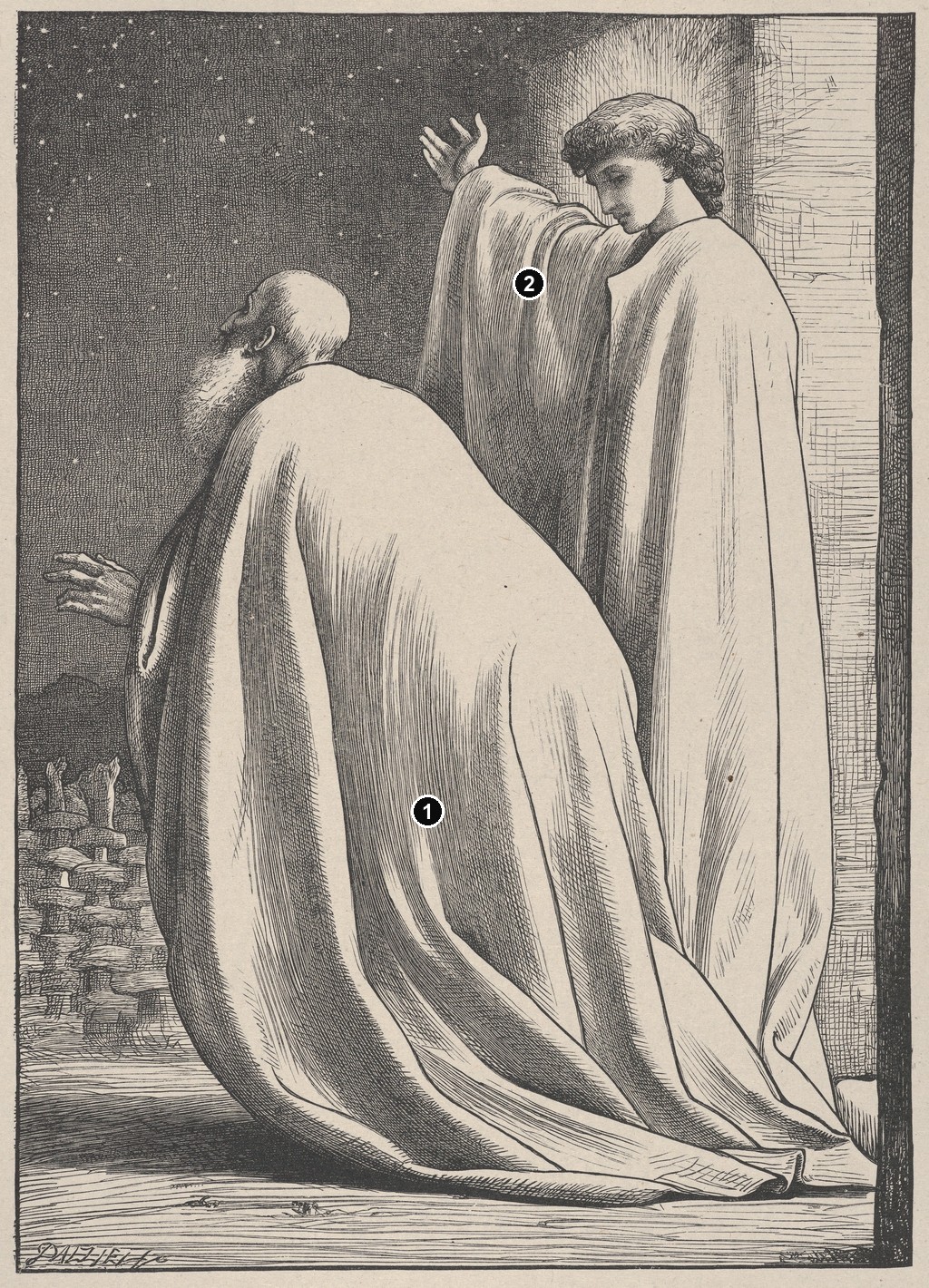
White lines across the cloak
Fine grooves remain pale against the grey of the printed cloth. Their direction describes the folds as they turn around the kneeling figure.
A hand against the stars
Abram and the angel look or gesture towards the night sky. Small pale dots stand out because the block prints a much darker field around them.
Andromache in Captivity, photogravure after Leighton
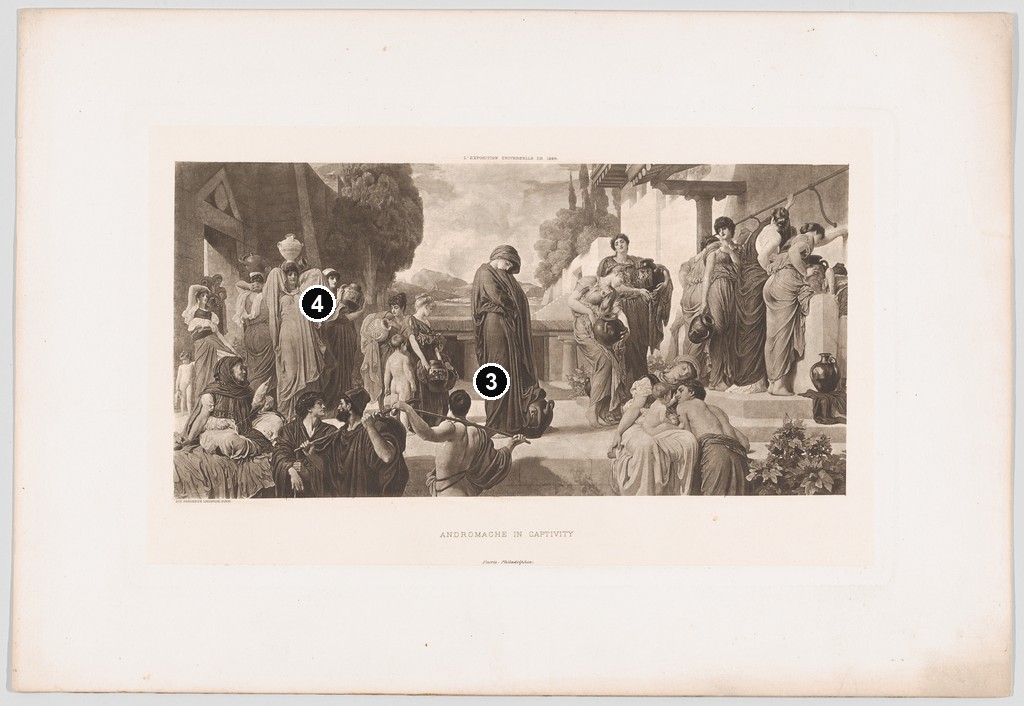
The still figure and the vessels
The woman in dark drapery stands apart from the bustle around the jars. The photogravure carries that contrast into a print made of ink tones.
An arm raised in the crowd
The vessels and gestures make an interrupted rhythm of light and shadow. In this impression colour has given way to a range of closely spaced greys.
Browse Frederic Leighton’s artworks
Explore paintings, drawings, sculptures and prints, with separate rows for identified preparatory works, reproductions and casts.
| Name | Date | Medium |
|---|---|---|
| A Girl Feeding Peacocks | Exhibited 1863 | Painting Catalogue. |
| A Recognition from ‘Romola’, engraved by Swain (Tate N04054) | published 1862 | Print Catalogue. |
| A Roman Lady | 1859 | Painting Catalogue. |
| Abram and the Angel (Tate A00733) | published 1881 | Print Catalogue. |
| Acme and Septimius | Exhibited 1868 | Painting Catalogue. |
| An Athlete Wrestling with a Python (Tate exhibition bronze) | 1877 | Sculpture Catalogue. |
| And the Sea Gave Up the Dead Which Were in It (Tate N01511) | 1891–92 | Painting Catalogue. |
| Andromache in Captivity (photogravure after Leighton) | 1889 | Print Catalogue. |
| Athlete Wrestling with a Python (Anglesey Abbey cast) | model 1877; cast 1905 | Sculpture Catalogue. |
| Athlete Wrestling with a Python (Hood reduced cast) | 1877 (inscribed model date) | Sculpture Catalogue. |
| Athlete Wrestling with a Python (Saint Louis reduced cast) | 1877 (museum date) | Sculpture Catalogue. |
| Cain and Abel (Tate A00731) | published 1881 | Print Catalogue. |
| Captive Andromache | 1888 | Painting Catalogue. |
| Cimabue's Celebrated Madonna | 1853–55 | Painting Catalogue. |
| Cimon and Iphigenia, with Many Smaller Subjects (Tate T09061) | date not known | Drawing Catalogue. |
| Crenaia, the Nymph of the Dargle | Exhibited 1880 | Painting Catalogue. |
| Cymon and Iphigenia | 1884 | Painting Catalogue. |
| Daedalus and Icarus | 1869 | Painting Catalogue. |
| Dante in Exile | 1864 | Painting Catalogue. |
| Death of the First Born (Tate A00737) | published 1881 | Print Catalogue. |
| Electra at the Tomb of Agamemnon | c. 1869 | Painting Catalogue. |
| Eliezer and Rebekah (Tate A00735) | published 1881 | Print Catalogue. |
| Elijah in the Wilderness | 1877–78 | Painting Catalogue. |
| Fanny Kemble: A Study for ‘Jezebel and Ahab’ (Tate T08208) | c.1862 | Drawing Catalogue. |
| Figure Studies | Date not recorded | Drawing Catalogue. |
| Flaming June | 1895 | Painting Catalogue. |
| Gulnihal | Exhibited 1886 | Painting Catalogue. |
| Helios and Rhodes (Tate N03015) | date not known | Painting Catalogue. |
| Hercules Wrestling with Death for the Body of Alcestis | c. 1869–71 | Painting Catalogue. |
| Jonathan's Token to David | c. 1868 | Painting Catalogue. |
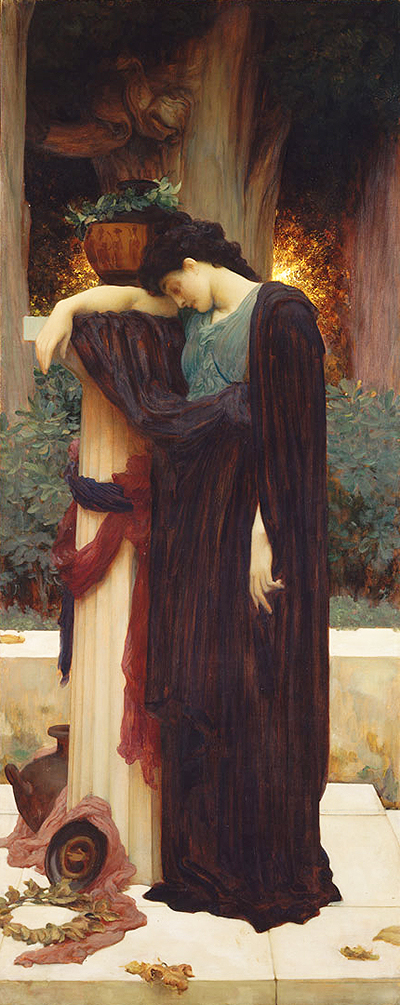
| Lachrymae | 1894–95 | Painting Catalogue. |
| Lieder ohne Worte | Exhibited 1861 | Painting Catalogue. |
| Light of the Harem | Exhibited 1880 | Painting Catalogue. |
| Moses Views the Promised Land (Tate A00736) | published 1881 | Print Catalogue. |
| Mrs James Guthrie | 1865 | Painting Catalogue. |
| Mrs John Hanson Walker (Tate N04731) | 1867 | Painting Catalogue. |
| Music Lesson | 1877 | Painting Catalogue. |
| Needless Alarms (Met cast) | modelled 1886; cast nineteenth century | Sculpture Catalogue. |
| Needless Alarms (Tate N05120) | 1886 | Sculpture Catalogue. |
| Pavonia | c. 1859 | Painting Catalogue. |
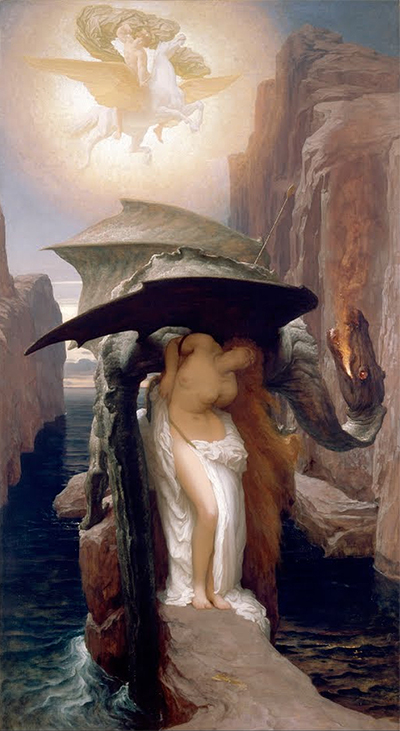
| Perseus and Andromeda | 1891 | Painting Catalogue. |
| Portrait of May Sartoris | c. 1860 | Painting Catalogue. |
| Preparing for a Festa, Florence (Tate T09062) | date not known | Drawing Catalogue. |
| Puerta de los Vientos, near Ronda, Spain (Tate N04006) | c.1886–9 | Painting Catalogue. |
| Samson and the Lions (Tate A00732) | published 1881 | Print Catalogue. |
| Samson at the Mill (Tate A00734) | published 1881 | Print Catalogue. |
| Samson Carrying the Gate (Tate A00738) | published 1881 | Print Catalogue. |
| Sketch for ‘An Athlete Wrestling with a Python’ (Tate N01761) | c.1877 | Sculpture Catalogue. |
| Sketches for Cimon and Iphigenia (Tate T09060) | date not known | Drawing Catalogue. |
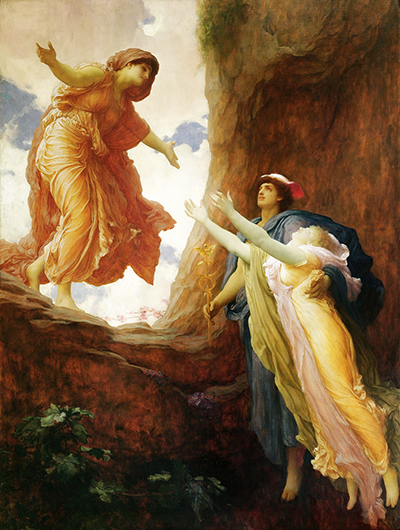
| Study for The Return of Persephone (Demeter) | c. 1890–91 | Drawing Catalogue. |
| Study for The Return of Persephone (Persephone) | c. 1890–91 | Drawing Catalogue. |
| Study for ‘Needless Alarms’ (Tate N02945) | 1886 | Sculpture Catalogue. |
| Study for ‘The Discovery of Juliet Apparently Lifeless’ (Tate N01806) | c.1858 | Painting Catalogue. |
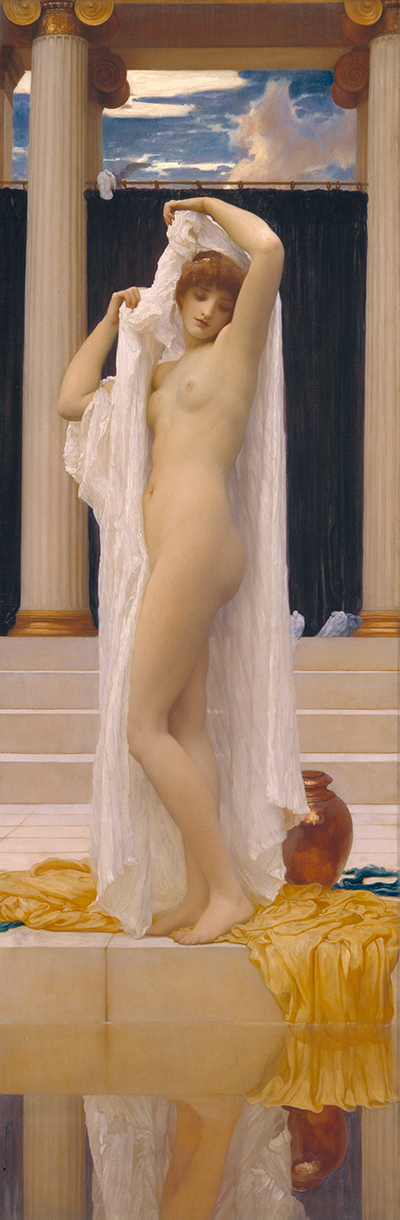
| The Bath of Psyche | Exhibited 1890 | Painting Catalogue. |
| The Daphnephoria | 1874–76 | Painting Catalogue. |
| The Death of Brunelleschi | 1852 | Painting Catalogue. |
| The Fisherman and the Siren | Exhibited 1858 | Painting Catalogue. |
| The Painter's Honeymoon | c. 1864 | Painting Catalogue. |
| The Return of Persephone | 1891 | Painting Leeds painting identified in the Met study record. |
| The Return of Persephone (preparatory oil) | c. 1890–91 | Painting Catalogue. |
| The Sluggard (Anglesey Abbey cast) | probably 1890–about 1906 | Sculpture Catalogue. |
| The Sluggard (Met cast) | modelled 1886; cast possibly before 1896 | Sculpture Catalogue. |
| The Sluggard (Museum Wales) | 1882–85 (museum date) | Sculpture Catalogue. |
| The Sluggard (Tate N01752) | 1885 | Sculpture Catalogue. |
| The Spies Escape (Tate A00730) | published 1881 | Print Catalogue. |
| Various Subjects (Tate T09063) | date not known | Drawing Catalogue. |
| View in Capri | Possibly 1859 | Painting Catalogue. |
| Wedded | 1882 | Painting Catalogue. |
| Winding the Skein | c. 1878 | Painting Catalogue. |
Discussion
Look again at the images and ideas explored in Frederic Leighton Prints. These editorial prompts invite your observations.
Reader Insights
What makes a print after a painting different from an illustration made for a text?
What does the engraver’s printed surface contribute to Abram and the Angel?
Join the Conversation
Share a detail, comparison or question about Frederic Leighton Prints below.
References
- The Metropolitan Museum of Art, Abram and the Angel, from “Dalziels’ Bible Gallery”, accession 26.99.1(12). View source.
- British Museum, Studies for two wood-engravings to Romola, accession 1993,0724.4. View source.
- The Metropolitan Museum of Art, Dalziels’ Bible Gallery: Illustrations from the Old Testament, New York portfolio, accession 26.99.1(1–67). View source.
- The Metropolitan Museum of Art, Andromache in Captivity, accession 2015.653.1. View source.
- Emilie Russell Barrington, The Life, Letters and Work of Frederic Leighton, vol. II, 1906, chapter II, pp. 95–101, letters from Leighton and George Eliot. View source.
- Fondazione Cassa dei Risparmi di Forlì and Museo San Domenico, Preraffaelliti. Rinascimento moderno, 2024, exhibition checklist for the Romola tracings and Drifting Away (in Italian and English). View source.
- National Gallery of Victoria, Joseph Swain and Frederic Leighton, At the Well. View source.
- Tate, collection dataset, October 2014, accessions N04054 and A00730–A00738. View source.
- The Metropolitan Museum of Art, A Recognition, for “Romola” (originally published 1862–63), accession 26.99.34. View source.
- George and Edward Dalziel, The Brothers Dalziel: A Record of Fifty Years’ Work, 1901, “The Bible Gallery”. View source.
- Ernest Rhys, Frederic Lord Leighton: An Illustrated Record of His Life and Work, chapter VII, pp. 69–70. View source.
- Princeton University Library, Graphic Arts Collection, Dalziel Brothers collection, May 2011 acquisitions archive. View source.
- Bethan Stevens, “Wood engraving as ghostwriting: the Dalziel Brothers, losing one’s name, and other hazards of the trade”, Textual Practice 33, no. 4, 2019, pp. 645–677. View source.
- National Gallery of Victoria, Dalziel Brothers and Frederic Leighton, Abraham and the Angel. View source.
- The Examiner, George Routledge & Sons advertisement for the India-paper proof edition of Dalziels’ Bible Gallery, 11 December 1880. View source.
- Pushkin State Museum of Fine Arts, Пастораль (Pastorale), accession Г–20099 (in Russian). View source.
- Josef Lebovic Gallery, Pastorale, CL168-88, photograph and transcription of the plate lettering. View source.
- National Gallery of Canada, Annual Report 2020–21, acquisitions, Pastorale, accession 49180. View source.
- Manchester Art Gallery, Tales from the Archives: A Brush with the Law, part 1, collection history of Captive Andromache. View source.
- Smithsonian Libraries and Archives, 1889, l’exposition universelle, catalogue record and portfolio contents. View source.
- The Metropolitan Museum of Art, Photography: Processes, Preservation, and Conservation, entry on photogravure. View source.
- Musée d’Orsay, Étude pour Andromaque ; reprises, RF 39663, recto, study held by the Louvre’s Département des Arts Graphiques (in French). View source.
- Leighton House, Frederic Leighton’s Flaming June: The Making of an Icon, account of The Graphic purchase and reproduction. View source.
- New Zealand Herald, bookseller R. Spreckley’s advertisement, 21 November 1896, p. 7. View source.
- Museo de Arte de Ponce, Sol ardiente de junio, collection entry for the original oil on canvas (in Spanish). View source.
- Leighton House Museum Shop, Flaming June, Mounted Print, format and paper description. View source.