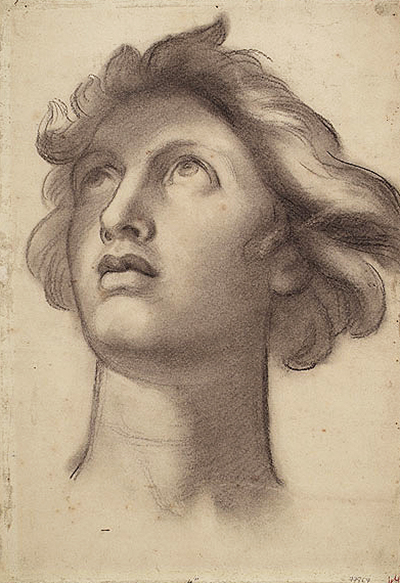
 by Tom Gurney
Tom Gurney BSc (Hons) is an art history expert with over 20 years experience
Published on June 19, 2020 / Updated on November 29, 2026
Email: tomgurney1@gmail.com / Phone: +44 7429 011000
Frederic Leighton Drawings: Introduction
On a brown sheet in the National Gallery of Art in Washington, Frederic Leighton gives a draped figure several different lives. An arm extends as the head turns. Elsewhere a figure sits, and in another part of the page the drawing comes in close to crossed arms and the cloth across a lap. Black chalk deepens the folds and white chalk picks up their ridges. Between the two, the warm paper supplies much of the visible tone. The sheet, titled Figure Studies, lets you see Leighton move between the bearing of a whole body and the way fabric behaves in one small area. [1]
The drawings preserve choices that are hard to recover from a finished painting. A page of graphite figures can hold several ideas at once. A single study can dwell on the angle of an arm or the pull of cloth across a joint. Across a group of related works, you can follow some of those decisions into a composition where one gesture depends on another. Leighton also drew things that make sense on their own terms. A lemon tree he studied on Capri has the same precision of observation as the figure studies, applied to the intricate growth of branches and leaves. [1] [2] [3]
At a Glance
- MaterialsGraphite, chalk and related drawing media
- Working stagesFigure study, drapery, arrangement and transfer
- CompareThe Tokyo Persephone studies and the preparatory oil in New York
Contents
- Graphite and chalk on paper
- From the pose to the drapery
- Two hands reaching for each other
- A fine line and the material that made it
- Where the drawings survived
Graphite and chalk on paper
The Metropolitan Museum of Art’s Sketches of Figures, dated 1840–60, is a single graphite page measuring 20 by 27.6 centimetres. The title leaves Leighton’s purpose open. On a page used for several figures, one pose can sit beside another without requiring a setting, consistent scale or even contact between them. The edges of individual marks matter more than the distribution of tones across the whole sheet. A contour can stop as soon as it describes the turn of a body, leaving room to try another. The Met’s object number, 42.21(17), singles out this particular page among the related sketchbook material. [2]
The Washington Study for “Greek Girl Dancing”, made around 1867, uses black chalk heightened with white on blue wove paper. On a sheet just under 19 centimetres wide, Leighton sets out a whole scene. A standing figure on the left extends into the space before a group on the right. The intervals between the figures are already doing work. They give the performer room to move and make the others legible as a group. Where a dark stroke meets a light one, part of a figure can come forward sharply. In less emphatic passages the blue of the sheet brings figures and setting into the same atmosphere. Look at the open space around the standing figure first, then at the close spacing of the seated figures. The difference in spacing gives the little scene much of its rhythm. [4]
The brown-paper Figure Studies brings the same black and white chalks to different ends. The cloth gathered over a lap can be worked quite intensively while another part of the page remains spare. Compare the marks beside the arms with those describing the hanging garment of the upright figure. Where cloth bears on a body it breaks or changes direction. Where it falls free, a few longer lines can carry the weight. The Washington catalogue identifies the dark medium as black chalk, an important distinction when a soft black passage can resemble charcoal in reproduction. The National Museum of Western Art in Tokyo, for example, catalogues a different work, Drawing (Woman), as charcoal and chalk on paper. [1] [5]
Two Royal Academy sheets shown at the Museo San Domenico in Forlì provide further variations. Leighton used black chalk and white paint on blue-grey laid paper for a Study of a Draped Arm. On a study of a male figure, possibly connected with Cimabue’s Celebrated Madonna, he laid watercolour and gouache over black chalk on blue wove paper. Each uses the colour of the support. On the arm study, where the exhibition catalogue records white paint, a bright passage can be built up over the darker sheet. On the figure study both washes and more opaque paint could develop forms first set out in chalk. [6]
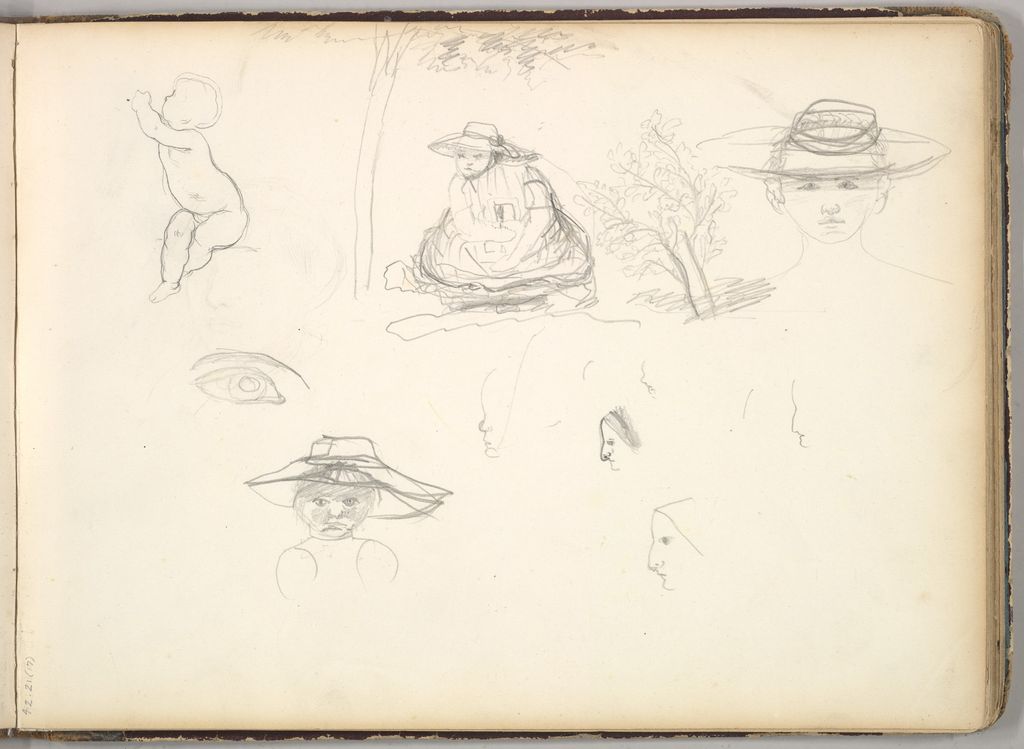
Frederic Leighton, Sketches of Figures, graphite, Metropolitan Museum of Art, 42.21(17). The Metropolitan Museum of Art. Image source. CC0 / Public domain. Resized to fit the article.
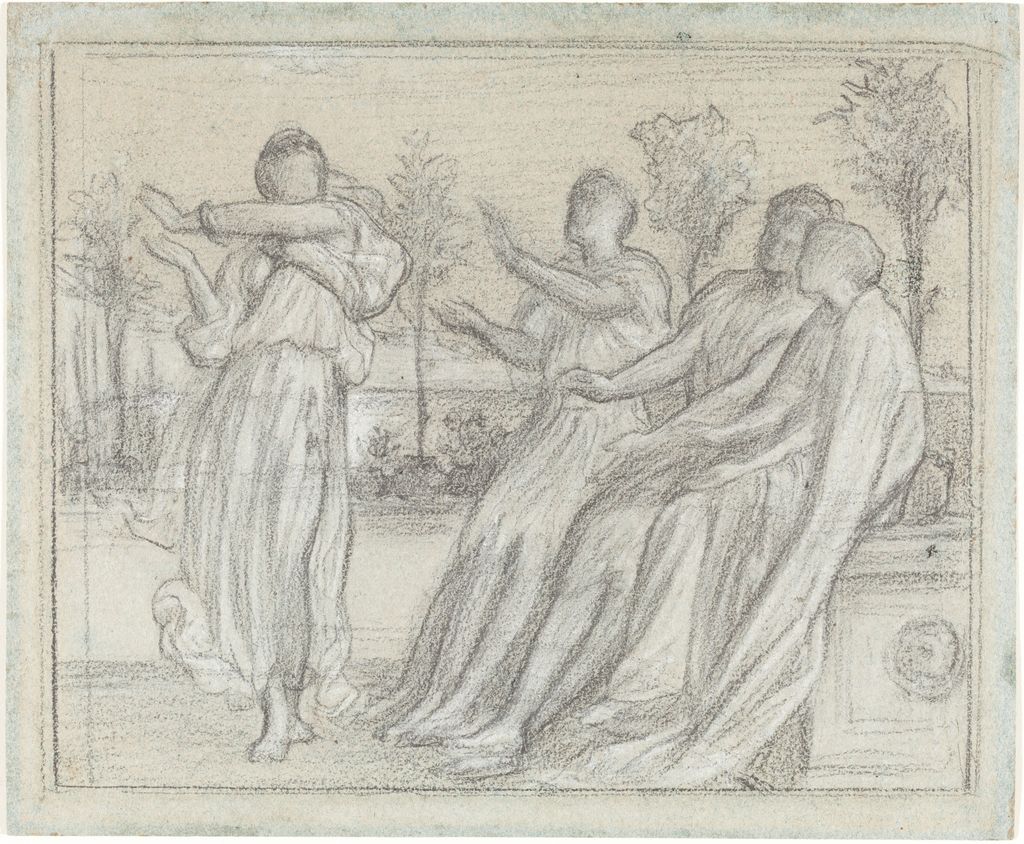
Frederic Leighton, Study for “Greek Girl Dancing”, c. 1867, National Gallery of Art, Washington, 1995.52.105. Image source. Public domain. Resized to fit the article.
From the pose to the drapery
Both faces of a sheet of brown card in Frankfurt carry a standing male nude. On the back, the figure is seen from behind and drawn in charcoal. On the front, the Städel Museum also records white heightening. Turning a sheet over gave Leighton another surface with the same colour and texture. A darker mark could sink into the middle tone on one side, while a stroke of white could pick out the light on the other. The Städel catalogues each face separately, with its own description of the materials. [7] [8]
The critic M. H. Spielmann published an account of Leighton’s working method during the painter’s lifetime, later reprinted by Ernest Rhys. Spielmann took The Sibyl as his principal example. The sight of a model’s striking hand and wrist helped prompt the subject. To find a pose that would expose that articulation, Leighton pictured the Sibyl sitting beside her tripod. In Spielmann’s account, he put down the arrangement in black and white chalk on brown paper, laying in the main folds broadly. A study from the posed model could then require small adjustments to the first design. The body could change the design Leighton had imagined. [9]
Spielmann describes changes of scale and returns to paper as the work progressed. Leighton worked the figure into a design with its setting. A grid allowed him to enlarge that design onto canvas while retaining its proportions. He also painted the underlying form of the body in monochrome. For more detailed studies of the garment he went back to brown paper and drew the folds from cloth arranged on the model. Because a model could only hold the pose for so long, he sometimes drew the costume in sections. The folds on the canvas would have to hang convincingly from the body he had already established beneath them. The paper studies and the painting, in this account, grew together. [9]
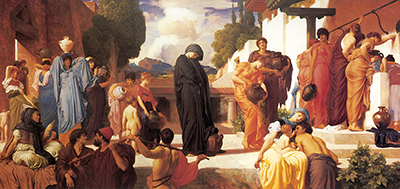
Spielmann applies the same description of care to the groups in Captive Andromache. The surviving material shows how much more there was to organise in a picture of that size. Madeline Boden reproduces two long studies from the Royal Academy of Arts collection in pencil on tracing paper, as well as a separate black-chalk tracing of figures. A sheet of tracing paper lets the artist carry an outline forward and work on its relationship to other forms. It offers a different kind of evidence from the larger study for Andromache catalogued by the Musée d’Orsay and kept in the Louvre’s Département des Arts Graphiques. That sheet uses black chalk with white heightening on brown paper, so Leighton could attend to the play of light across the standing figure. He gave the drawing to the French state in 1893. [9] [10] [11]
The two tracings also complicate Spielmann’s impression of a composition settled in advance. Boden points to a walled city with a classical pediment in one version and a much more open setting in the other. The disposition of the people changes as well. One sheet includes two bearded men by the group of women gathering water, whereas in the canvas younger men work in the foreground. Tracing kept parts of the design available as Leighton tried different arrangements. It gave him a way to rethink the setting and who inhabited it while retaining the figures and relationships he wanted to carry over. [10]
Studies could be kept in reserve for years. In an 1868 sketchbook Leighton drew Egyptian women balancing vessels on their heads, observing variations in how they held an empty or a full pitcher. Boden compares those little pencil figures with a woman balancing a vessel in Captive Andromache, exhibited in 1888. Their kinship shows how a gesture observed in one setting could find a place in another. Leighton also borrowed from ancient objects. Ian Jenkins traced the decoration on one vessel in the painting to a published illustration of a Greek vase, whose design Leighton adapted to a container of a different shape. Observed motion and studied artefacts came together in a further invention on the canvas. [10] [12]
A small Study for Captive Andromache at the Dahesh Museum takes the whole arrangement into oil. It is painted on a panel about 41 centimetres wide. The museum describes it as a stage after many scale drawings had established the composition. Look at how freely the brush connects the shapes and figures. The broad patches give some idea of how the mass of people will read before one begins to notice individual poses. A period illustration can preserve another kind of evidence about the project. Rhys reproduced studies alongside the account of Leighton’s method, and the British Museum held a photograph of a final sketch which Ian Jenkins studied in his research on the painting. The image records a design even though Jenkins did not know where the original sketch was. [9] [12] [13]
Two hands reaching for each other
Two brown-paper studies at the National Museum of Western Art in Tokyo show how Leighton could develop a relationship by working on each figure separately. In one sheet, D.2017-0089, Demeter opens her arms downwards. In the other, D.2017-0092, Persephone stretches upwards. The museum gives chalk on brown paper as the medium for the Demeter study and specifies black and white chalk for the Persephone sheet. Both were previously catalogued without an artist’s name. The Tokyo catalogue connects them to Leighton through the studio stamps, inscriptions, handling of the line and correspondence between the poses and the finished Return of Persephone in Leeds. [14] [15]
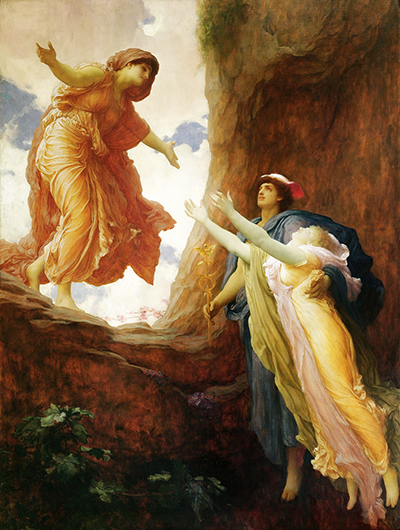
Follow the angle of each arm as if the two figures were facing each other. Each sheet gives close attention to one body, yet both gestures seem to continue into the space beyond the edges of the paper. In the Met’s preparatory oil on canvas, the gestures share one space. Hermes supports Persephone while the dark opening behind them frames their ascent. Demeter’s gesture has somewhere to land. The painting in Leeds, the oil in New York and the two drawings in Tokyo preserve different scales of decision, from the direction of an individual reach to the distribution of figures and colour across a whole composition. [14] [15] [16]
Colour studies could also preserve a choice Leighton later abandoned. The small oil for Flaming June at Leighton House already has the orange garment and sunlight on water. It also has a small island on the horizon, which Leighton dropped from the finished painting. Leighton House has displayed the oil alongside preparatory drawings. The Museo de Arte de Ponce, which holds the finished picture, has also shown preparatory drawings on loan from Leighton House. In this company, a visitor can look first at the pose, then at the effects of light and colour Leighton arranged around the figure. [17] [18]
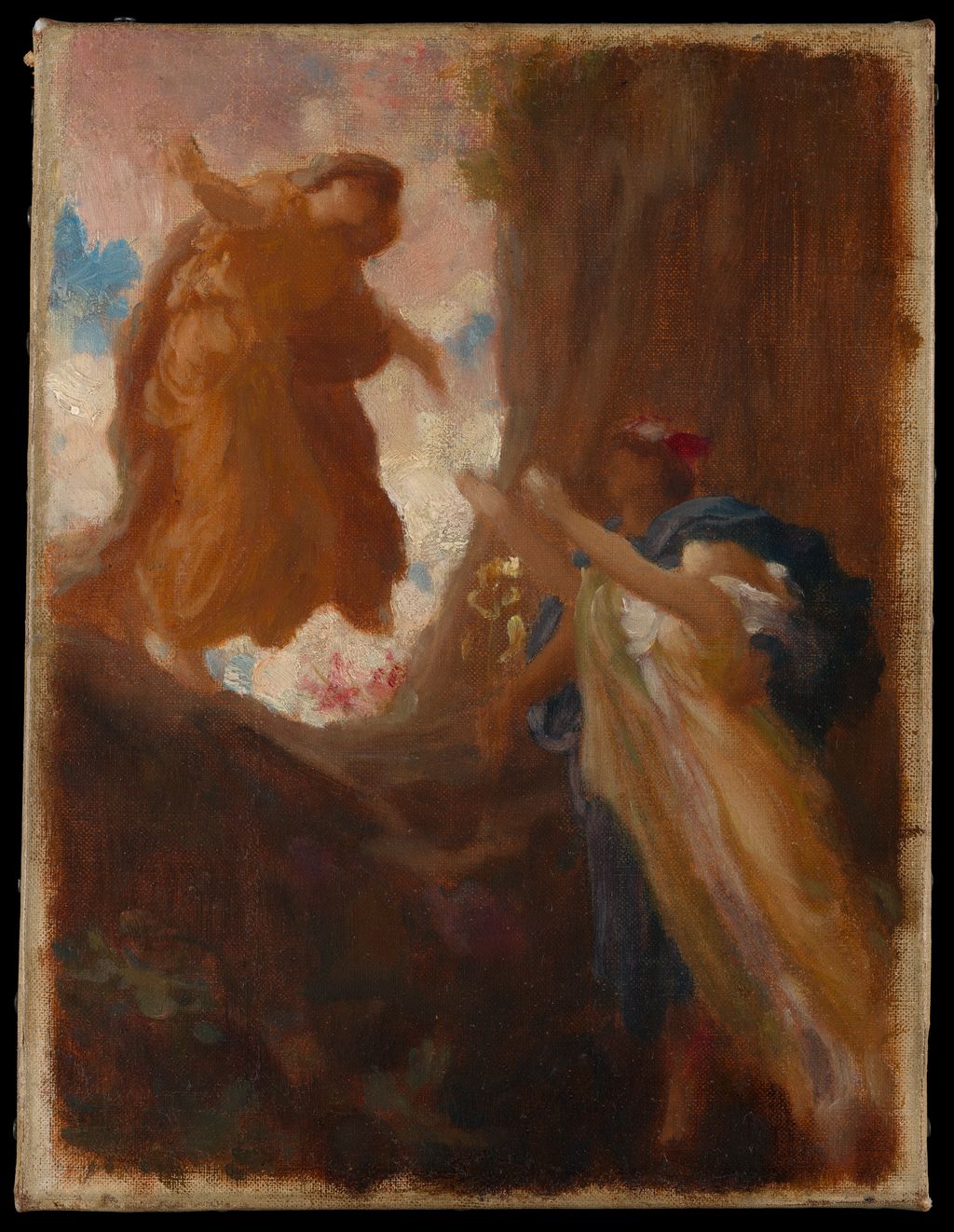
Frederic Leighton, The Return of Persephone, preparatory oil, Metropolitan Museum of Art. The Metropolitan Museum of Art. Image source. CC0 / Public domain. Resized to fit the article.
A fine line and the material that made it
For Study of a Lemon Tree, made in Capri in 1859, Leighton paid sustained attention to the branching forms and individual leaves of a living tree. Leighton House showed the private-collection drawing with other works made on the island. In Head of Dorothy Dene of 1881, a similarly controlled line serves a completely different subject. The two works have both been described as silverpoint, a medium in which a silver stylus draws on a specially prepared surface. Susan Owens identifies both as graphite on uncoated paper. She also records that three late botanical studies once listed as silverpoint were later catalogued as graphite. The head study of Hetty Dene, a different drawing from the head of Dorothy, is given as an example of Leighton’s actual use of metalpoint. [3] [19]
Owens links the old descriptions to the prestige of Renaissance drawing and the virtuosity associated with making precise marks in metalpoint. Seen closely, Leighton’s line in the tree can be admired for a more immediate reason. It helps keep each small shape distinct amid a dense network of leaves and twigs. The graphite sketchbook leaf at the Met puts the same material to a different use, accommodating ideas next to each other as they occur. One material gave Leighton room for both kinds of attention. [2] [3] [19]
Where the drawings survived
Leighton’s collection was dispersed at auction after his death in 1896. His neighbour Emilie Barrington and the Leighton House Committee began to gather works for the house, and Leighton’s sisters helped it acquire a large collection of sheets. The museum now holds over 700 drawings. The works in Paris, Tokyo, New York and Washington belong to different histories of gift, sale and collecting. Their records matter because the same subject can turn up under nearly identical titles in more than one medium. A named collection and an object number take you back to the sheet where a particular choice was made. [1] [2] [11] [14] [15] [16] [20] [21]
Browse Frederic Leighton’s artworks
Explore paintings, drawings, sculptures and prints, with separate rows for identified preparatory works, reproductions and casts.
| Name | Date | Medium |
|---|---|---|
| A Girl Feeding Peacocks | Exhibited 1863 | Painting Catalogue. |
| A Recognition from ‘Romola’, engraved by Swain (Tate N04054) | published 1862 | Print Catalogue. |
| A Roman Lady | 1859 | Painting Catalogue. |
| Abram and the Angel (Tate A00733) | published 1881 | Print Catalogue. |
| Acme and Septimius | Exhibited 1868 | Painting Catalogue. |
| An Athlete Wrestling with a Python (Tate exhibition bronze) | 1877 | Sculpture Catalogue. |
| And the Sea Gave Up the Dead Which Were in It (Tate N01511) | 1891–92 | Painting Catalogue. |
| Andromache in Captivity (photogravure after Leighton) | 1889 | Print Catalogue. |
| Athlete Wrestling with a Python (Anglesey Abbey cast) | model 1877; cast 1905 | Sculpture Catalogue. |
| Athlete Wrestling with a Python (Hood reduced cast) | 1877 (inscribed model date) | Sculpture Catalogue. |
| Athlete Wrestling with a Python (Saint Louis reduced cast) | 1877 (museum date) | Sculpture Catalogue. |
| Cain and Abel (Tate A00731) | published 1881 | Print Catalogue. |
| Captive Andromache | 1888 | Painting Catalogue. |
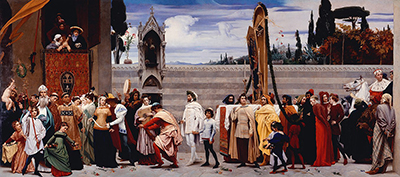
| Cimabue's Celebrated Madonna | 1853–55 | Painting Catalogue. |
| Cimon and Iphigenia, with Many Smaller Subjects (Tate T09061) | date not known | Drawing Catalogue. |
| Crenaia, the Nymph of the Dargle | Exhibited 1880 | Painting Catalogue. |
| Cymon and Iphigenia | 1884 | Painting Catalogue. |
| Daedalus and Icarus | 1869 | Painting Catalogue. |
| Dante in Exile | 1864 | Painting Catalogue. |
| Death of the First Born (Tate A00737) | published 1881 | Print Catalogue. |
| Electra at the Tomb of Agamemnon | c. 1869 | Painting Catalogue. |
| Eliezer and Rebekah (Tate A00735) | published 1881 | Print Catalogue. |
| Elijah in the Wilderness | 1877–78 | Painting Catalogue. |
| Fanny Kemble: A Study for ‘Jezebel and Ahab’ (Tate T08208) | c.1862 | Drawing Catalogue. |
| Figure Studies | Date not recorded | Drawing Catalogue. |
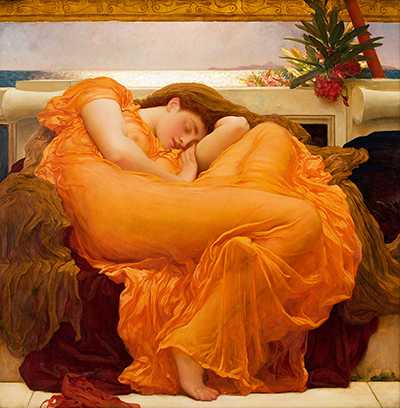
| Flaming June | 1895 | Painting Catalogue. |
| Gulnihal | Exhibited 1886 | Painting Catalogue. |
| Helios and Rhodes (Tate N03015) | date not known | Painting Catalogue. |
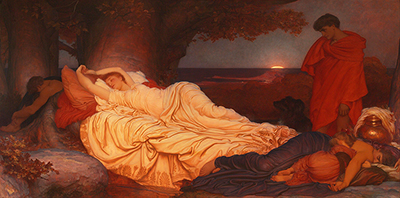
| Hercules Wrestling with Death for the Body of Alcestis | c. 1869–71 | Painting Catalogue. |
| Jonathan's Token to David | c. 1868 | Painting Catalogue. |
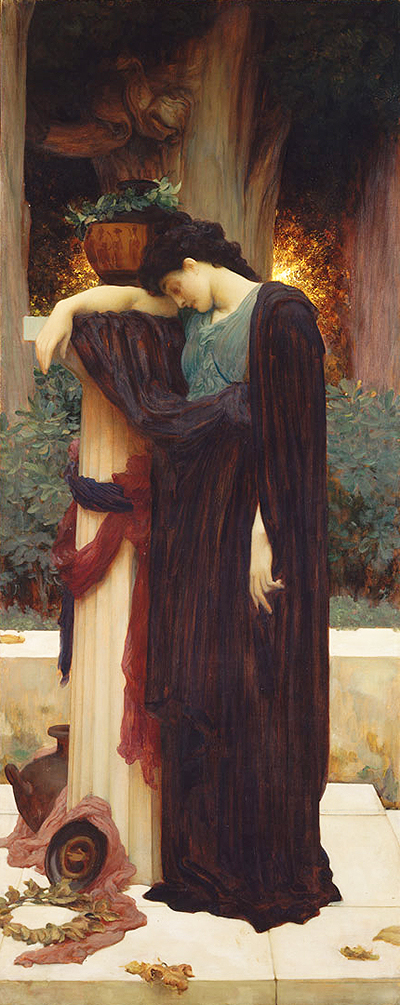
| Lachrymae | 1894–95 | Painting Catalogue. |
| Lieder ohne Worte | Exhibited 1861 | Painting Catalogue. |
| Light of the Harem | Exhibited 1880 | Painting Catalogue. |
| Moses Views the Promised Land (Tate A00736) | published 1881 | Print Catalogue. |
| Mrs James Guthrie | 1865 | Painting Catalogue. |
| Mrs John Hanson Walker (Tate N04731) | 1867 | Painting Catalogue. |
| Music Lesson | 1877 | Painting Catalogue. |
| Needless Alarms (Met cast) | modelled 1886; cast nineteenth century | Sculpture Catalogue. |
| Needless Alarms (Tate N05120) | 1886 | Sculpture Catalogue. |
| Pavonia | c. 1859 | Painting Catalogue. |
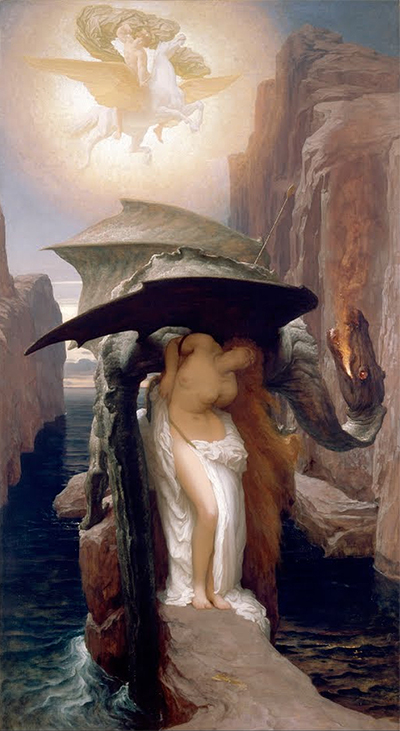
| Perseus and Andromeda | 1891 | Painting Catalogue. |
| Portrait of May Sartoris | c. 1860 | Painting Catalogue. |
| Preparing for a Festa, Florence (Tate T09062) | date not known | Drawing Catalogue. |
| Puerta de los Vientos, near Ronda, Spain (Tate N04006) | c.1886–9 | Painting Catalogue. |
| Samson and the Lions (Tate A00732) | published 1881 | Print Catalogue. |
| Samson at the Mill (Tate A00734) | published 1881 | Print Catalogue. |
| Samson Carrying the Gate (Tate A00738) | published 1881 | Print Catalogue. |
| Sketch for ‘An Athlete Wrestling with a Python’ (Tate N01761) | c.1877 | Sculpture Catalogue. |
| Sketches for Cimon and Iphigenia (Tate T09060) | date not known | Drawing Catalogue. |
| Study for The Return of Persephone (Demeter) | c. 1890–91 | Drawing Catalogue. |
| Study for The Return of Persephone (Persephone) | c. 1890–91 | Drawing Catalogue. |
| Study for ‘Needless Alarms’ (Tate N02945) | 1886 | Sculpture Catalogue. |
| Study for ‘The Discovery of Juliet Apparently Lifeless’ (Tate N01806) | c.1858 | Painting Catalogue. |
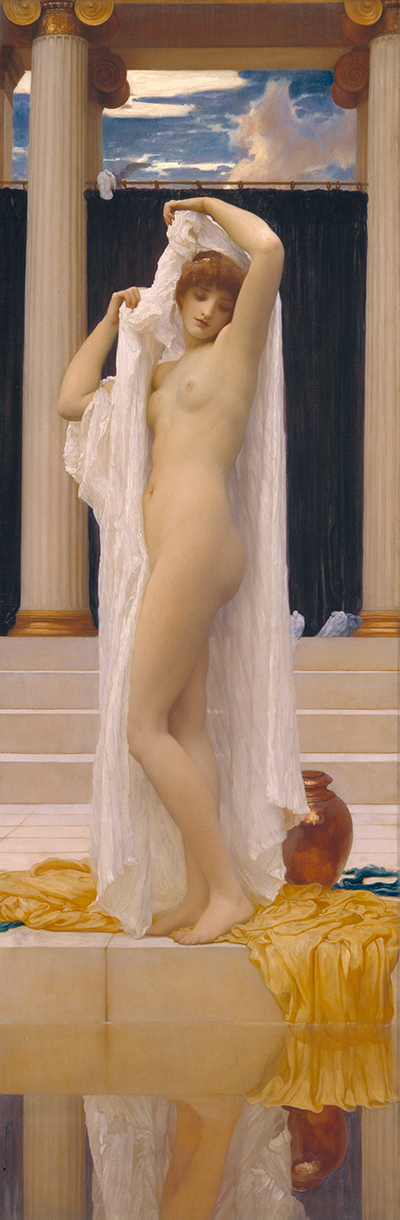
| The Bath of Psyche | Exhibited 1890 | Painting Catalogue. |
| The Daphnephoria | 1874–76 | Painting Catalogue. |
| The Death of Brunelleschi | 1852 | Painting Catalogue. |
| The Fisherman and the Siren | Exhibited 1858 | Painting Catalogue. |
| The Painter's Honeymoon | c. 1864 | Painting Catalogue. |
| The Return of Persephone | 1891 | Painting Leeds painting identified in the Met study record. |
| The Return of Persephone (preparatory oil) | c. 1890–91 | Painting Catalogue. |
| The Sluggard (Anglesey Abbey cast) | probably 1890–about 1906 | Sculpture Catalogue. |
| The Sluggard (Met cast) | modelled 1886; cast possibly before 1896 | Sculpture Catalogue. |
| The Sluggard (Museum Wales) | 1882–85 (museum date) | Sculpture Catalogue. |
| The Sluggard (Tate N01752) | 1885 | Sculpture Catalogue. |
| The Spies Escape (Tate A00730) | published 1881 | Print Catalogue. |
| Various Subjects (Tate T09063) | date not known | Drawing Catalogue. |
| View in Capri | Possibly 1859 | Painting Catalogue. |
| Wedded | 1882 | Painting Catalogue. |
| Winding the Skein | c. 1878 | Painting Catalogue. |
Discussion
Look again at the images and ideas explored in Frederic Leighton Drawings. These editorial prompts invite your observations.
Reader Insights
How does the colour of the paper contribute to the effect of Leighton’s black and white chalk?
Which part of the relationship between Persephone and Demeter can you already see in their separate drawings?
Join the Conversation
Share a detail, comparison or question about Frederic Leighton Drawings below.
References
- National Gallery of Art, Washington, Figure Studies, accession 1995.52.104. View source.
- The Metropolitan Museum of Art, Sketches of Figures, accession 42.21(17). View source.
- Leighton House, Leighton and Landscape, exhibition highlights and catalogue caption for Study of a Lemon Tree. View source.
- National Gallery of Art, Washington, Study for “Greek Girl Dancing”, accession 1995.52.105. View source.
- National Museum of Western Art, Tokyo, Drawing (Woman), accession D.2010-0002. View source.
- Fondazione Cassa dei Risparmi di Forlì and Museo San Domenico, Preraffaelliti. Rinascimento moderno, exhibition press dossier, bilingual checklist entries for Study of a Draped Arm and Study for Male Figure Possibly Relating to Cimabue’s Celebrated Madonna. View source.
- Städel Museum, Frankfurt, Stehender männlicher Akt, verso, accession 15617 V Z, German catalogue record. View source.
- Städel Museum, Frankfurt, Standing Male Nude, recto, accession 15617 Z. View source.
- M. H. Spielmann, account of Leighton’s working method reprinted by Ernest Rhys in Frederic Lord Leighton: An Illustrated Record of His Life and Work, chapter VI, “His Method of Painting”. View source.
- Madeline Boden, A Relief from Classicism: Frederic Leighton in the Near East, 1857–1895, University of York doctoral thesis, 2019, pp. 191–96 and figs. 167–68, 171 and 173. View source.
- Musée d’Orsay, Étude pour Andromaque ; reprises, RF 39663, recto, held in the Louvre’s Département des Arts Graphiques. View source.
- Ian Jenkins, “Frederic Lord Leighton and Greek Vases”, The Burlington Magazine, October 1983, pp. 597–605, especially p. 598 and fig. 17. View source.
- Dahesh Museum of Art, Study for Captive Andromache, accession 1996.26. View source.
- National Museum of Western Art, Tokyo, Study for ‘The Return of Persephone’ (Demeter), accession D.2017-0089, Japanese catalogue commentary. View source.
- National Museum of Western Art, Tokyo, Study for ‘The Return of Persephone’ (Persephone), accession D.2017-0092, Japanese catalogue commentary. View source.
- The Metropolitan Museum of Art, The Return of Persephone, preparatory oil, collection record 847023. View source.
- Leighton House, Frederic Leighton’s Flaming June: The Making of an Icon, colour sketch and preparatory drawings. View source.
- Museo de Arte de Ponce, Frederick Leighton y el mediterráneo eterno, Spanish exhibition account. View source.
- Susan Owens, “‘A Dose of Paradise’: Some Effects of Renaissance Drawings on Victorian Artists”, in Burning Bright: Essays in Honour of David Bindman, UCL Press, 2015, pp. 185–86 and nn. 22–24. View source.
- Leighton House, Collections, history of the drawings collection. View source.
- Leighton House, History of Leighton House, early history of the museum and the role of Leighton’s sisters. View source.