


 by Tom Gurney
Tom Gurney BSc (Hons) is an art history expert with over 20 years experience
Published on June 19, 2020 / Updated on September 27, 2026
Email: tomgurney1@gmail.com / Phone: +44 7429 011000
A head and an X
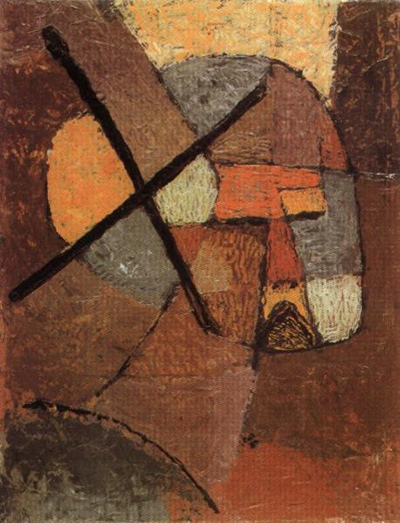
A black X cuts across a head that has almost been assembled from separate pieces of colour. Its two strokes are much darker than the ochre, orange, brown, cream and grey planes beneath. We can still find an eye, a long reddish nose and a dark mouth, but the face refuses to settle into a conventional portrait. Paul Klee called the small work von der Liste gestrichen—usually translated Struck from the List—and entered it as 1933,424. The gesture of crossing out and the bureaucratic phrase in the title make this one of the most direct encounters between Klee's art and the political rupture of 1933.[1][2]
The picture has often been called a self-portrait. That reading makes sense in light of Klee's removal from teaching at the Düsseldorf Academy and his eventual flight to Bern. It remains a reading of a schematic head, not a likeness established by realistic facial features or by a surviving statement in which Klee names himself as the sitter. The painting's strength is partly in that tension: a particular artist could be cancelled by a particular regime, while the simplified face allows the act of exclusion to appear broader than one biography.[2][3][4]
Explore the details of Struck from the List
Select a numbered area to examine how Klee built and crossed out the head.
Upper stroke and ochre field
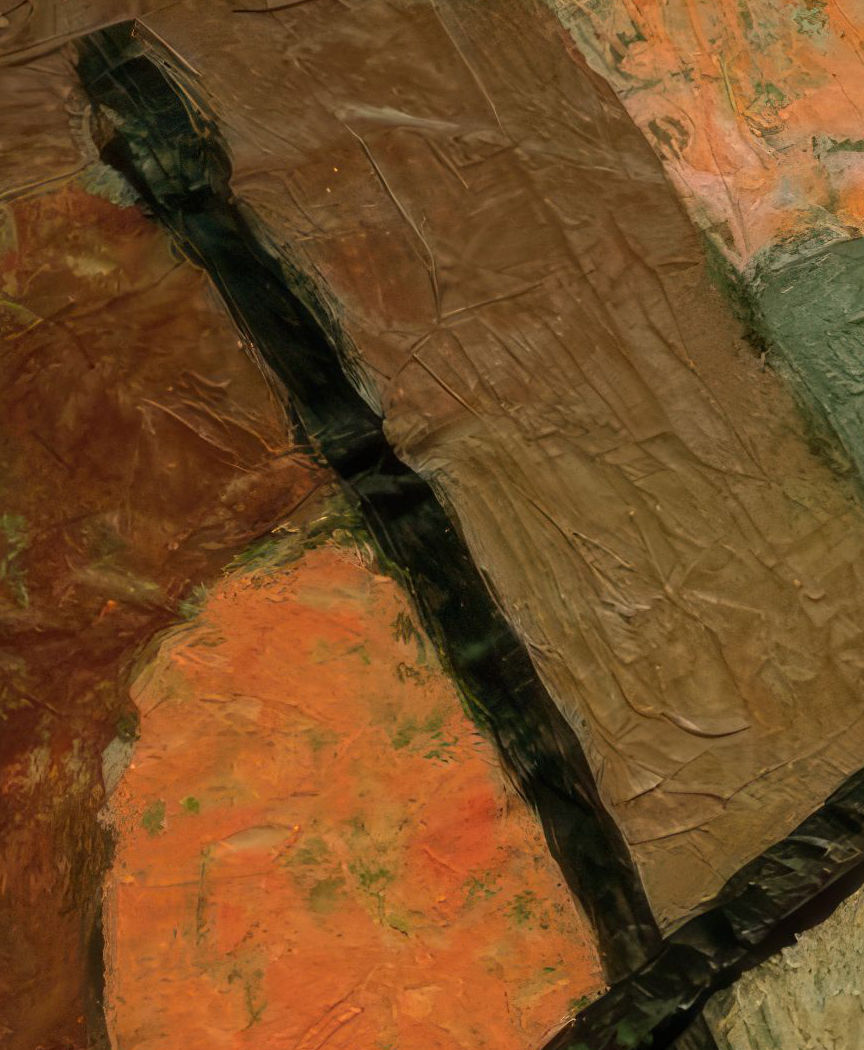
Follow the dark mark as it cuts into the warm field at the upper left.
Crossing dark lines
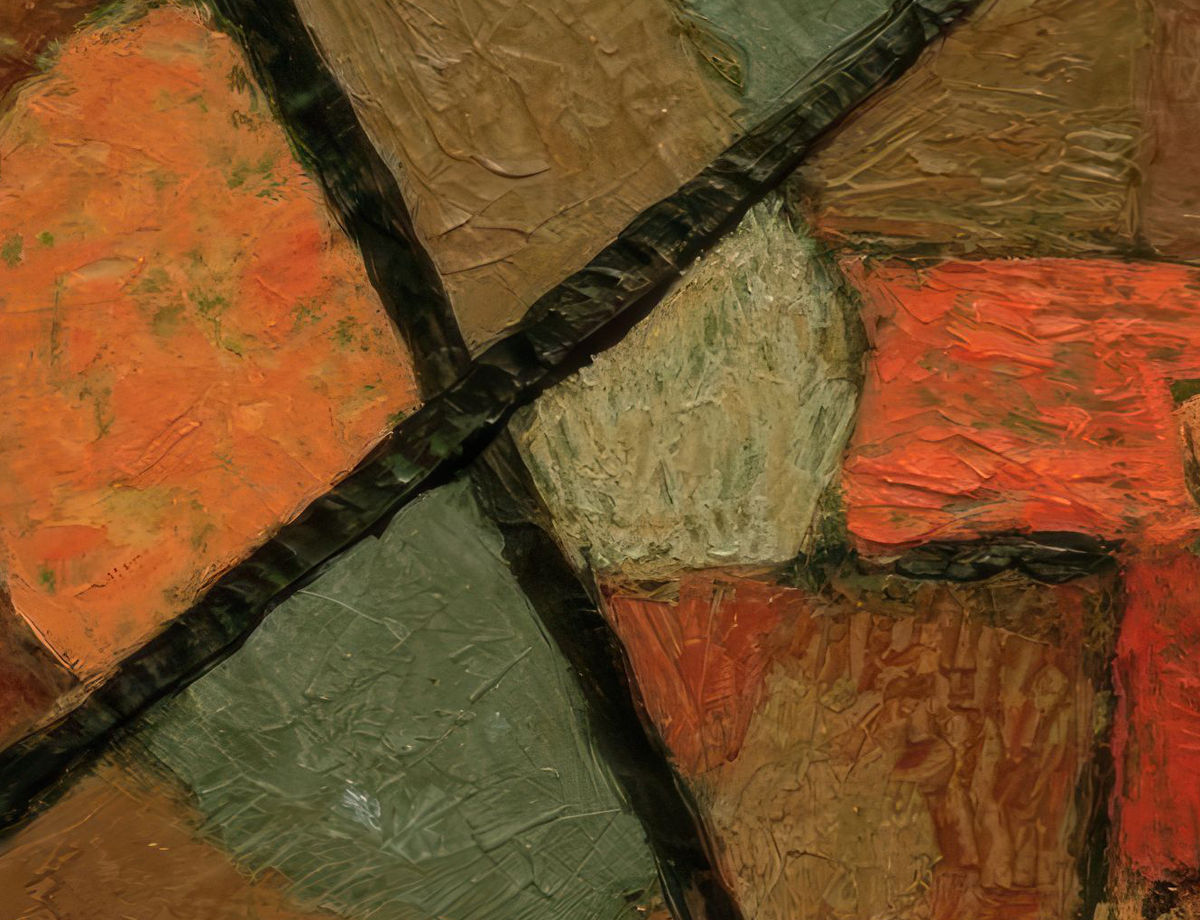
Two heavy diagonals interrupt the coloured planes instead of enclosing the head.
Eye and divided forehead
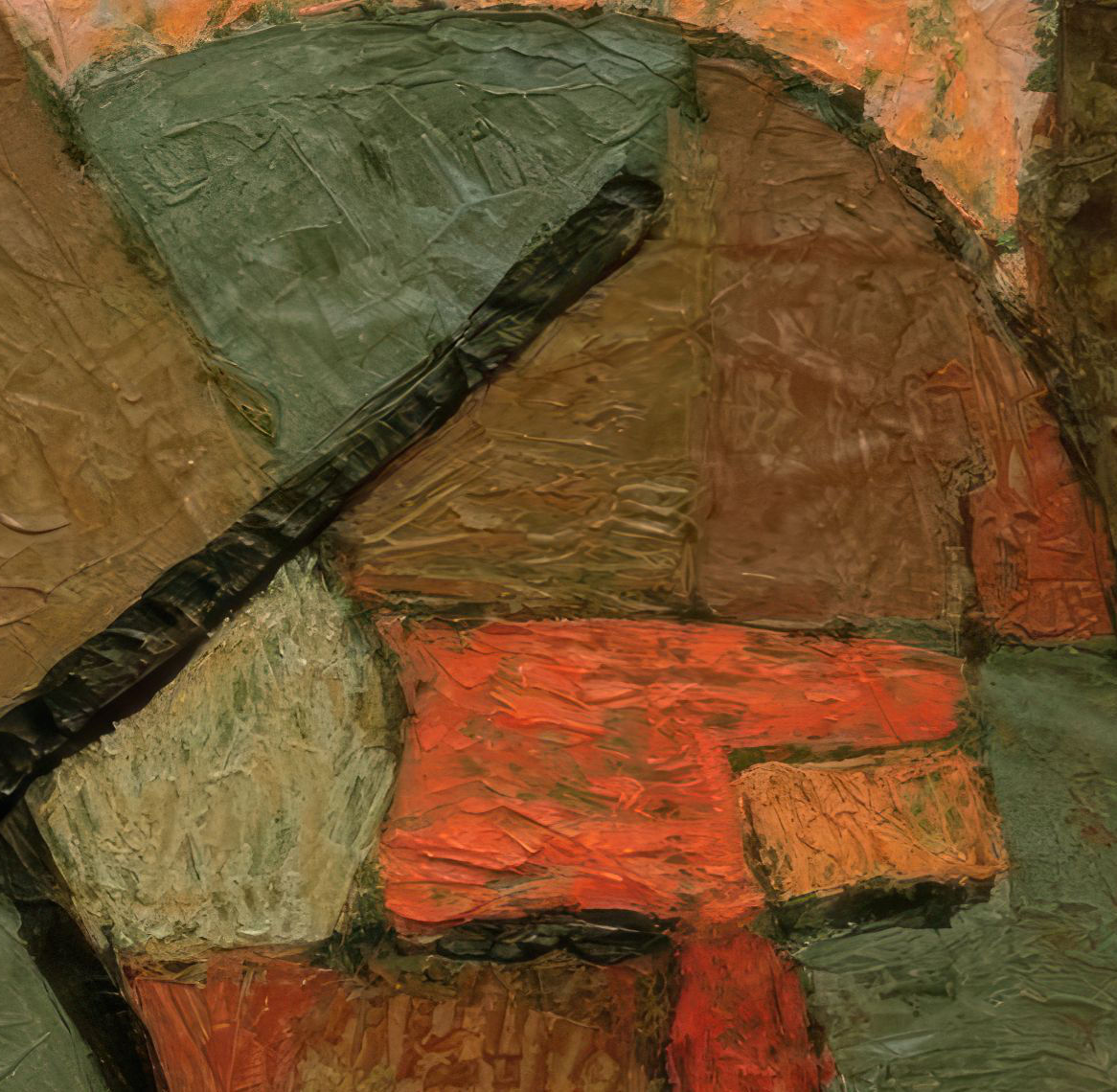
The pale green area and adjoining brown planes begin to suggest an eye and forehead.
Nose and coloured cheek
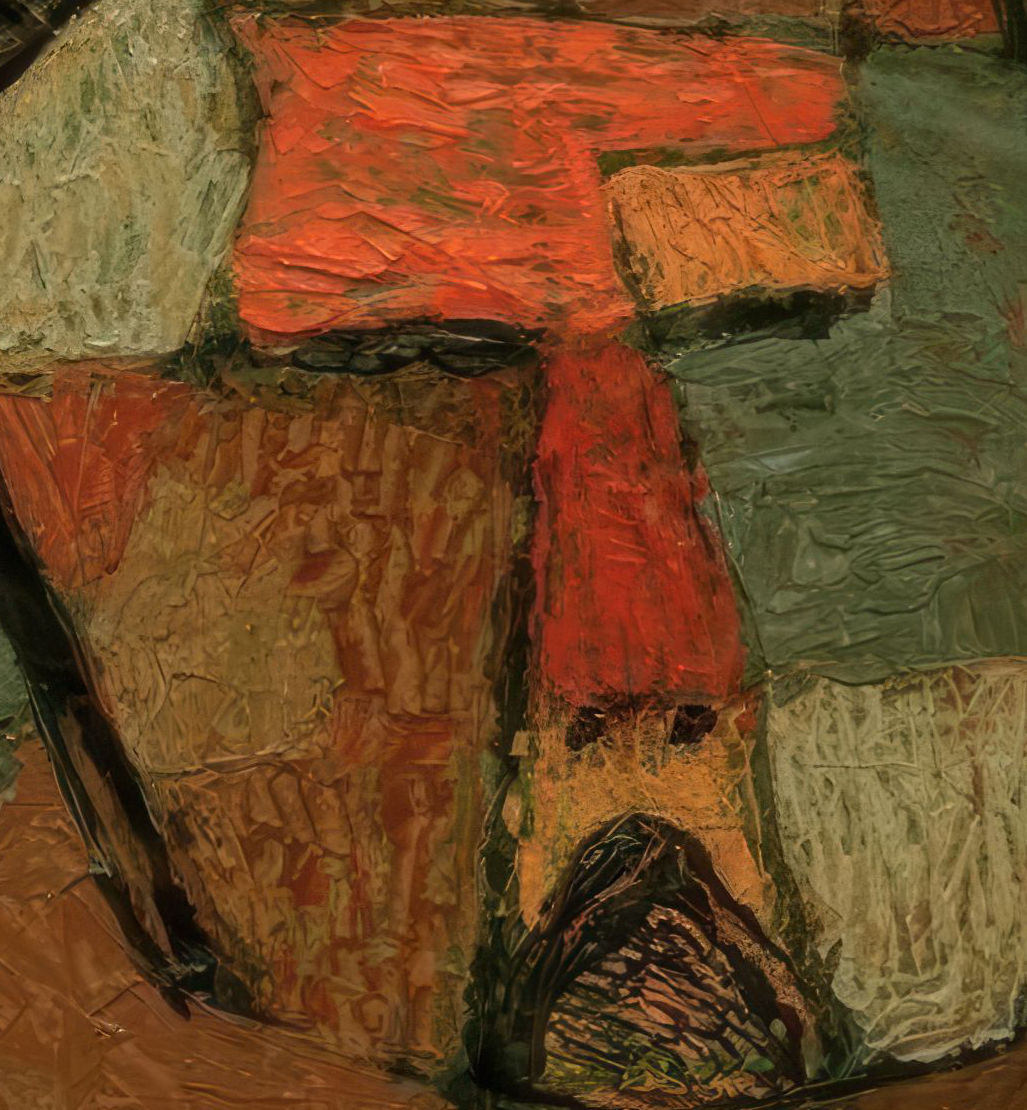
Red, cream and green patches give the face its uneven, assembled structure.
Dark mouth
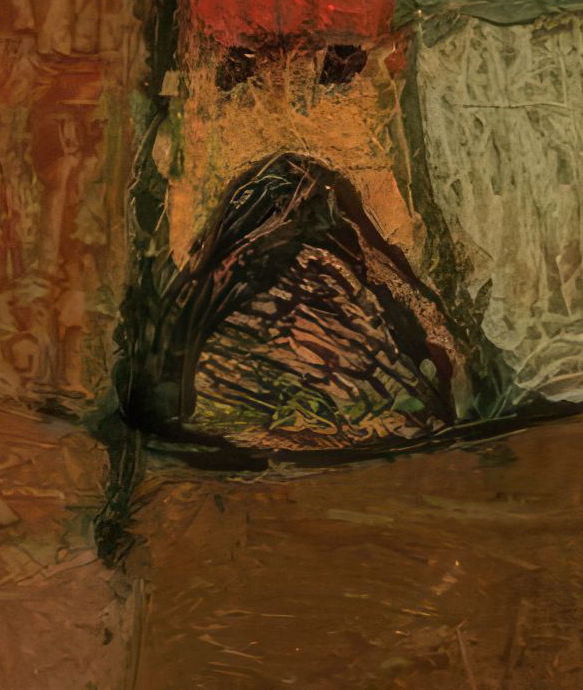
The dense curved mark near the lower right can be read as an open mouth.
Lower painted ground
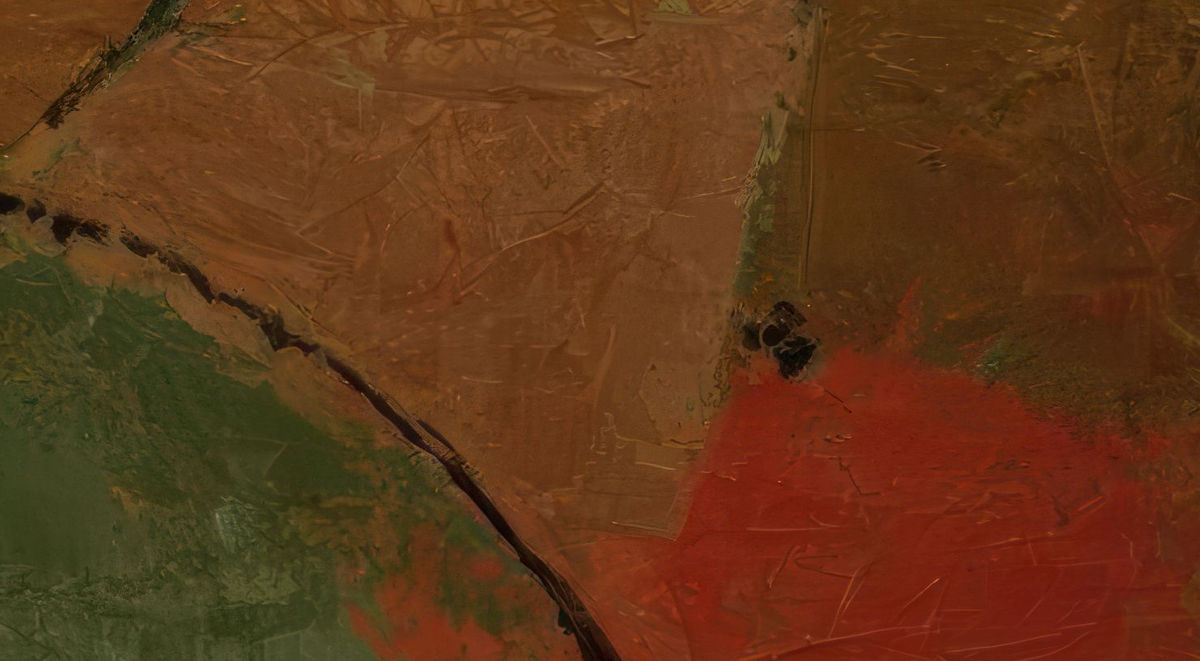
Look closely at the rough texture and large fields beneath the face.
Contents
- The object: small, layered and forceful
- A title with an administrative action
- What had happened by 1933?
- Is it a self-portrait?
- Other works and political images of the year
- What came later, and what did not cause this picture
- Looking again
The object: small, layered and forceful
The work belongs to the Zentrum Paul Klee in Bern, through Livia Klee's donation. Museum and exhibition records give its dimensions as 31.5 × 24 cm—a work that can be held within the span of two hands, though it demands close attention. The current ZPK-linked specialist caption and the Jewish Museum's 2026 checklist describe oil paint on paper mounted on cardboard. A 2008 Berlin exhibition worklist gives a shorter material line, “oil paint on paper,” with the same 1933,424 annual number and catalogue raisonné number 6471. The different levels of detail are useful: the primary image is on paper, and the mounted object has a further support that may disappear in a tight reproduction.[1][2][5]
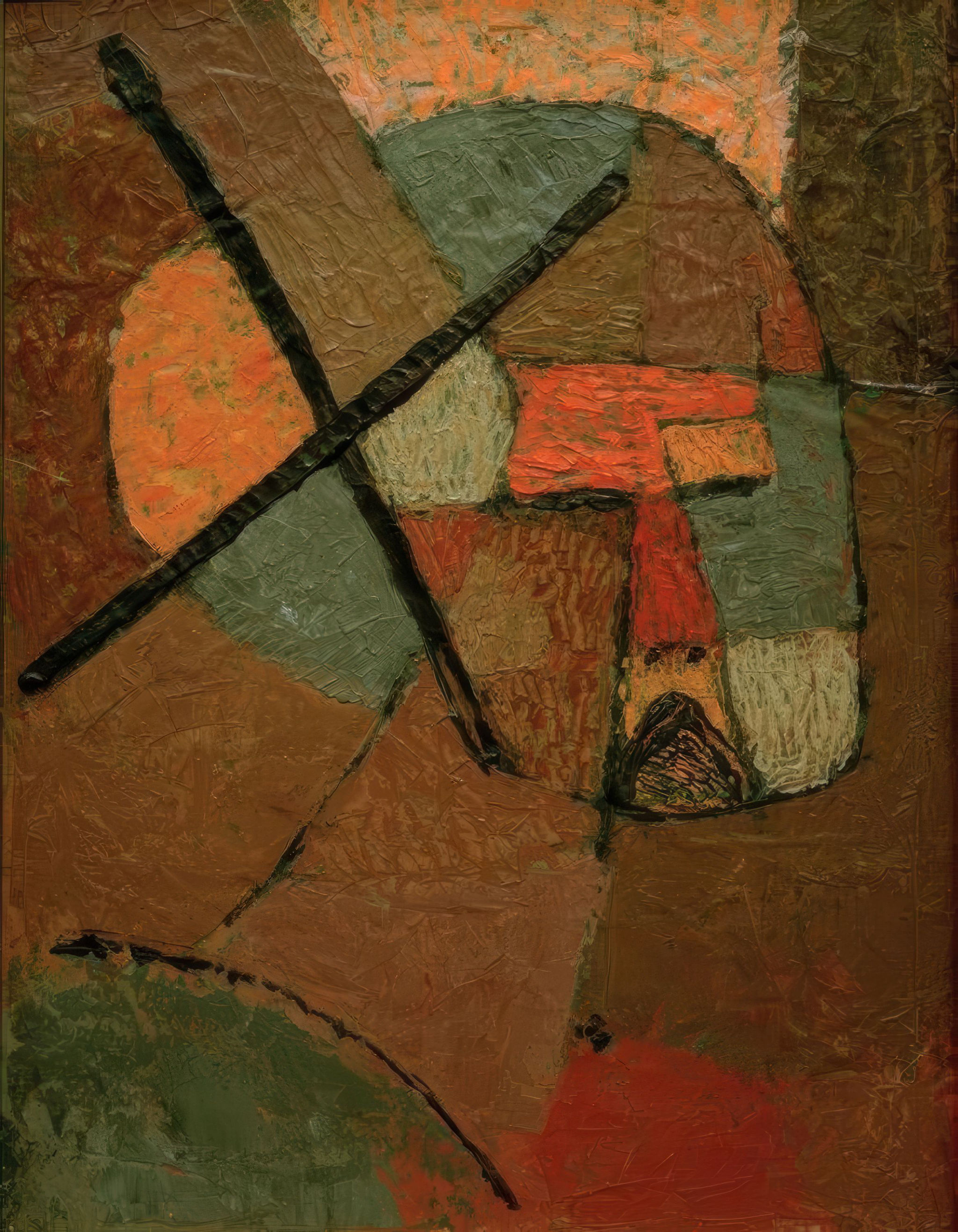
An older Hamburger Kunsthalle exhibition caption offers a more specific account: oil worked with a knife on wax paper. That description may record a real feature of the object or an earlier catalogue formulation. The current owner record available to this research does not confirm the wax treatment or the knife, so neither should be asserted as a settled technical finding. The detailed image above shows roughness, mottled areas and thin scratches or dragged lines, but even a sharp photograph cannot establish exactly which tool made them or whether the paper itself was waxed. A conservation report or direct examination of the object would be needed to resolve the point.[6][1]
Look first at where the cross actually sits. One dark stroke rises diagonally from the left side toward the upper central area; the other descends from high on the left toward the lower right of the face. They are not an ornamental frame around an intact portrait. They interrupt the coloured planes, crossing over the head's apparent eye and cheek area. Parts of the face remain legible through and beside them. The vertical division into blocks can suggest a forehead, cheeks, nose and jaw, but the X arrests that process of recognition. The title then gives the gesture an action: someone is struck off, crossed out, deleted.[2][3]
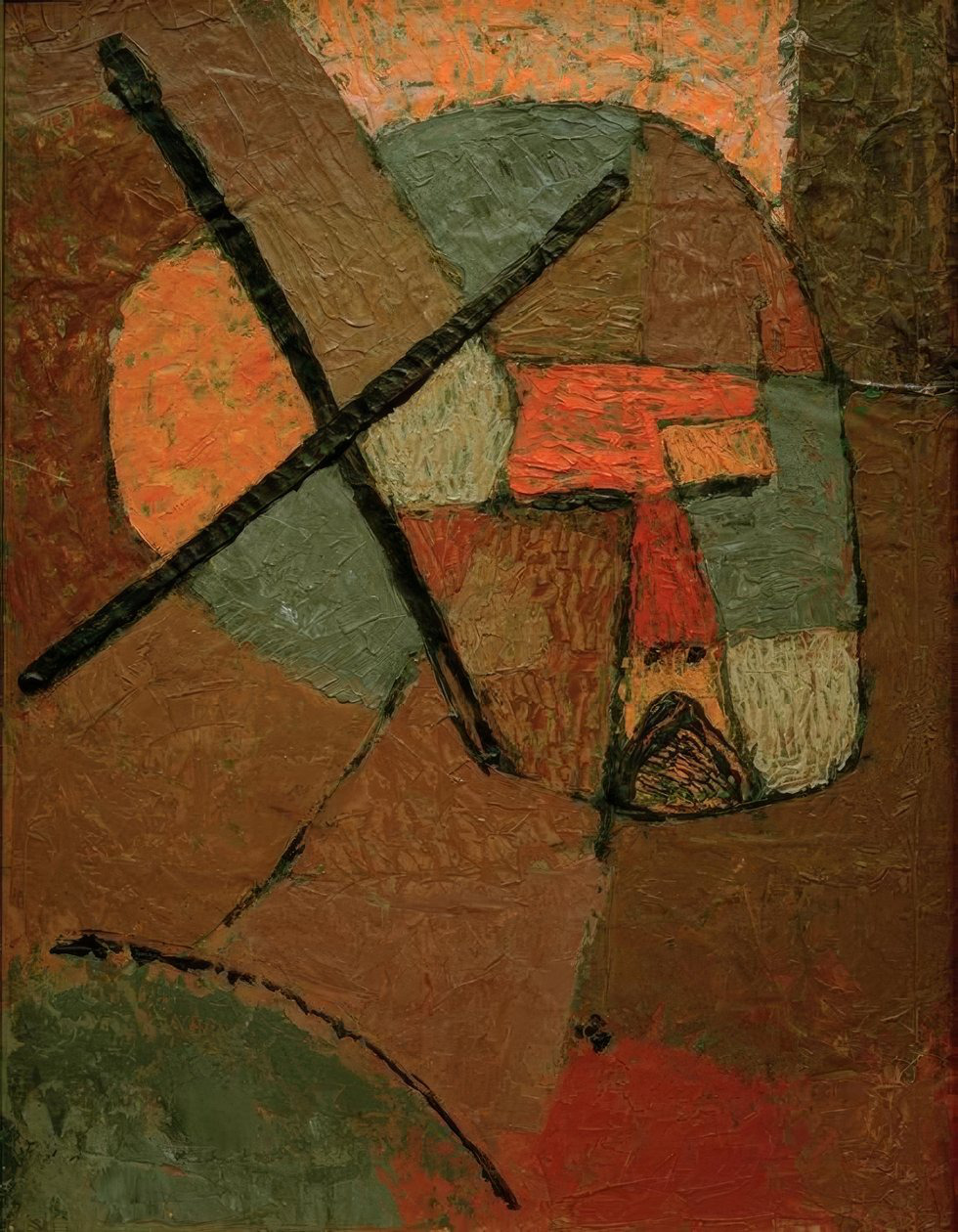
The head is made from unequal patches rather than a smooth modelling of skin. A light area near the centre catches the eye; darker orange and grey blocks compress the right side; the dark mouth-like shape is low and small. The reddish nose seems to run down through more than one coloured region. Below, broad brown paint and a curving dark line prevent an easy separation of neck, body and background. If the X looks like a sign placed over a completed picture, the colour and cuts beneath it make that picture unstable too. This is why describing the painting merely as “a sad face” misses its construction. The sadness is an interpretation; the interrupted formation of a head can be observed.[2][3]
It is possible to see moisture or tears in certain light passages. The Jewish Museum's 2026 label does so and links them to Klee's distress. The label also likens the face to an African reliquary mask. Those are curatorial comparisons, not material facts about the support or proof that Klee copied a particular mask. The broad category “African reliquary mask” covers distinct cultures and object types. Without evidence for an identifiable source, the safest way to use the museum's idea is to attribute it and return to what the picture itself shows: dark dividing lines, a head-like configuration and a face that is both present and denied.[3]
A title with an administrative action
The German phrase von der Liste gestrichen is passive: someone or something has been struck from a list. The title does not name the list. It might bring to mind Klee's Academy appointment, the political vetting of teachers, or the wider regime's attempt to erase modern artists from public culture. Christoph Zuschlag's specialist German study explicitly links the picture to the events of Klee's removal from teaching. The Arts in Exile archive interprets the X as a mark of censorship and banishment. Neither source produces a literal bureaucratic list on which this exact painted X was drawn. Klee's title can make an administrative procedure visible without reproducing an office document.[2][4]
That distinction gives the picture its range. An X is simple enough to be read quickly, even before a viewer knows the life story. It is also an element of drawing: two strokes that cross at an angle, divide coloured areas and set the composition in motion. If we translate the title and then imagine that every patch has one political referent, we risk closing down the painterly work that makes the image forceful. The language identifies the act of removal; the arrangement lets us watch a face persist under that act. The picture does not require a hidden inventory of symbols to communicate its violence.[2][3]
Klee frequently made titles do more than label a depicted object. A word could invite the viewer to find a figure or episode among ambiguous signs. Here the title is unusually explicit about an action, while remaining reticent about the agent, the person removed and the list itself. The figure's blurred identity matters: the head may be Klee, but the work avoids a normal portrait's claim to unmistakable resemblance. One can read the crossed face as autobiographical and still recognise how little direct likeness the paint supplies.[3][4]
What had happened by 1933?
Klee had been born near Bern to a German father and Swiss mother, held German citizenship, and taught at the Bauhaus before moving to the Düsseldorf Academy in 1931. After the National Socialists took power in January 1933, attacks on modern art and its teachers intensified. Zuschlag documents an antisemitic press assault on the Düsseldorf Academy in a regional Nazi paper on 1 April 1933. Its allegation about Klee's ancestry was a defamatory political weapon, not a fact to repeat as biography. The same study reports that Nazi agents searched the Klees' Dessau home on 17 March, while they were absent. Some later accounts name the Gestapo and Zuschlag names SA men; until an original search record settles the unit, the fact of the search matters more than a confident label for the personnel.[2][7]
On 21 April 1933, Klee was removed from teaching with immediate effect. Zuschlag describes the act as leave under the civil-service law of 7 April and gives the formal dismissal as effective 1 January 1934. Other concise chronologies say he was dismissed in autumn 1933. These formulations may refer to decision, notice and effective date at different points in one process. The public history need not turn them into one invented date: he was suspended from teaching in April, lost the position through the subsequent dismissal process, and left Germany in December. Calling the painting a direct illustration of an April dismissal letter would be more precise than the surviving evidence permits.[2][7][8]
Paul and Lily Klee did not leave immediately after the April suspension. The Arts in Exile archive says Klee moved belongings to Düsseldorf in May while still trying to maintain a working life. On 24 October, he signed an exclusive agreement with the Paris dealer Daniel-Henry Kahnweiler, a reminder that his international professional ties had not simply vanished. Later that year the family prepared for Bern. A letter Klee wrote to his son Felix on 22 December conveys both the practical emptying of the house and his sense of having aged in the intervening weeks. According to the Zentrum Paul Klee chronology, Lily emigrated to Switzerland two days before Paul, who arrived on 23 December 1933. This chronology gives the painting a context of mounting pressure over months, rather than a single sudden event followed by instant exile.[4][7][8]
The annual number 424 identifies the work within Klee's 1933 register. It anchors the year but is not a diary entry with an exact day of execution. The head and title can be connected to his documented removal; we cannot use the number alone to say that Klee painted the X on 21 April or immediately after the March search. Source discipline here makes the link to political experience stronger, because it rests on events we can date while leaving the artwork's exact occasion open.[1][2]
Is it a self-portrait?
An online synopsis attached to a 2015 Zentrum Paul Klee video calls von der Liste gestrichen a self-portrait, describing closed eyes and downward mouth corners. The Jewish Museum's 2026 exhibition material also presents it as one. Those accounts are pointing to an intelligible relation between the face, title and Klee's experience. An Arts in Exile text uses the more careful formulation that the image can be interpreted as a self-portrait. That qualification is closer to what a viewer can verify from the picture and the published documentation.[3][4][9]
The face is blocklike and asymmetrical. It has none of the individualized detail that would let us identify Klee independently of the title and chronology. If the mouth is sad, the painting gives us very little certainty about the eye, cheek or expression as a whole. The sensible conclusion is not that the self-portrait reading is wrong. It is that it is a powerful reading with a clear evidentiary limit.[3][4]
There is another way to make the question productive. If it is Klee's image, why give it such a reduced, almost impersonal structure? The act of being crossed off a list can strip a person of name and individuality. Yet the remaining warm planes, the uneven surface and the stubbornly recognisable mouth keep the head from disappearing. That is an interpretation of how the visible picture works, not an assertion about a sentence Klee left in a letter. The painting can be experienced as an image of one man's circumstances and as a visual argument about what an administrative act does to a person.[2][3]
Other works and political images of the year
Struck from the List is neither the whole of Klee's answer to 1933 nor a solitary exception to an otherwise apolitical career. The Schirn Kunsthalle's exhibition Paul Klee: 1933 gathered 245 drawings that used grotesque figures and parody to respond to the new regime's violence, militarism and humiliation. That number is the exhibition's selected group, not all works Klee made that year. Some drawings are more explicit in their titles and action than this compact painted head. The Jewish Museum's recent checklist includes Manhunt (Menschenjagd, 1933,115), Emigrating (auswandern, 1933,181) and Accusation in the Street (Anklage auf der Strasse, 1933,85), each on paper and card. Their records make it possible to compare several ways Klee addressed persecution without pretending that he labelled them as one continuous series.[10][11]
A 2008 Berlin exhibition placed Struck from the List in a section devoted to war and 1933 beside other Klee objects, including Europa (1933,7) and Die Zeit (1933,281). That is a later curator's grouping, not evidence that Klee intended each picture as a chapter of one narrative. It is useful because it asks what changes when we compare titles, figure types and supports instead of making this painting carry every political meaning alone. The compact head and X work differently from a scene of pursuit or public accusation.[1][11]
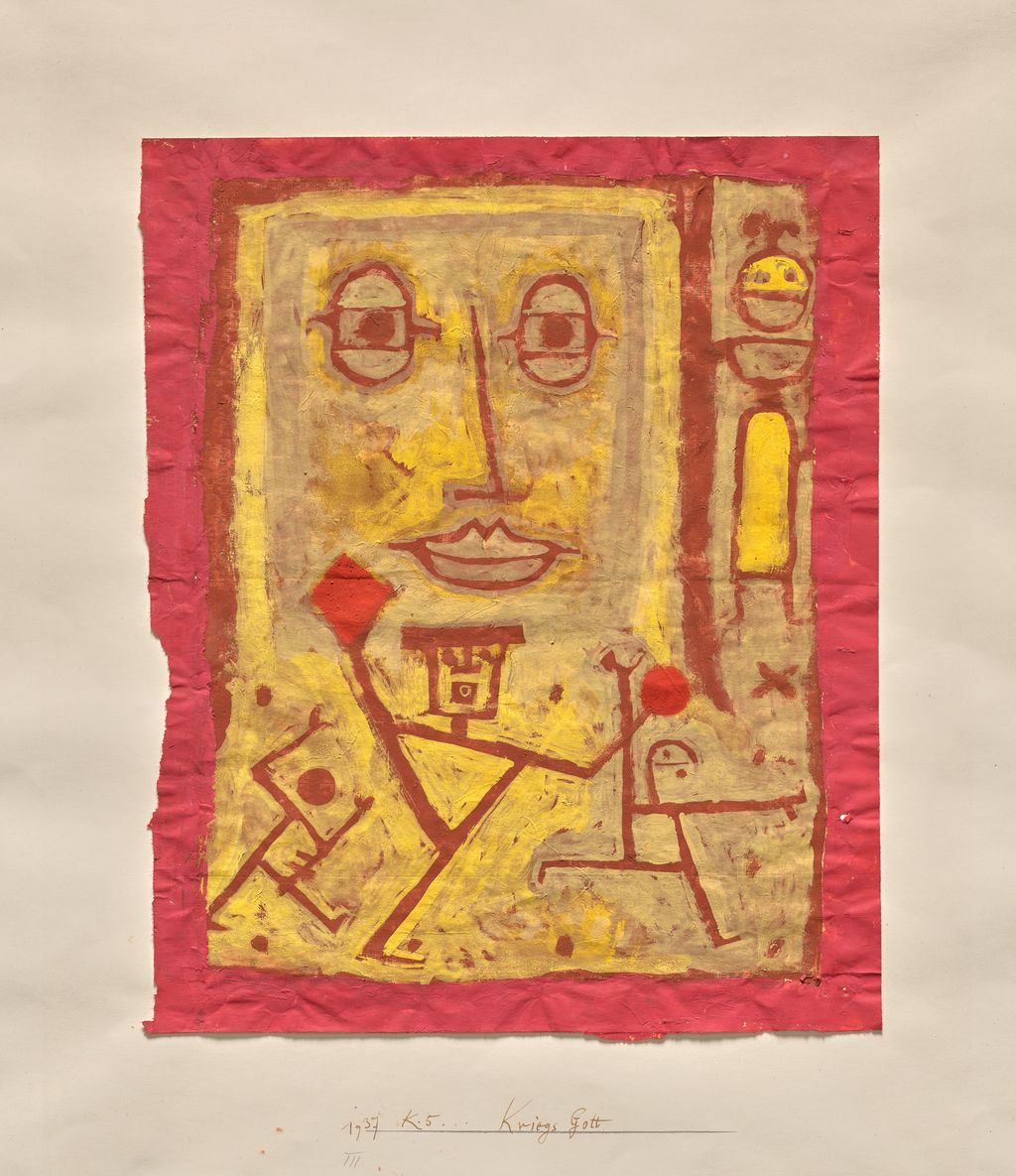
The contrast can also be chronological. God of War (Kriegs Gott, 1937) was made four years later on a newspaper sheet carrying an article about the Spanish Civil War. Cleveland Museum of Art identifies the printed text and the gouache and tempera applied above it. In the 1933 painting, the title evokes an administrative act but the paper does not visibly carry a document. In God of War, political news is literally part of the support. This comparison prevents one loose formula—“Klee made political art”—from erasing the specific way each work joins an image to its historical world.[12]
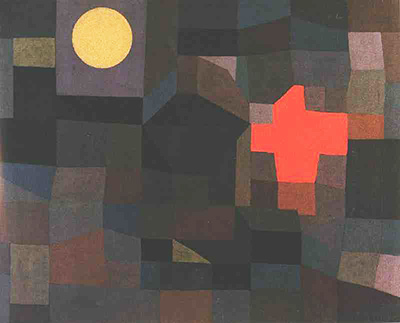
It is equally important to allow for other 1933 work. Museum Folkwang describes Fire at Full Moon (Feuer bei Vollmond, 1933,353) as a layered, vividly coloured picture on prepared canvas. The year of persecution did not make Klee abandon colour or create only crossed faces. Nor does that brighter work cancel the seriousness of Struck from the List. Klee's procedures and subjects varied, as did the degree to which an object makes its political reference explicit.[13]
What came later, and what did not cause this picture
The regime's campaign against modern art continued after Klee left. Zuschlag documents defamatory local exhibitions in 1933–34, including works by Klee, and distinguishes them from the centrally organised Entartete Kunst exhibition that opened in Munich in July 1937. His research identifies 15 Klee works in the Munich installation, with different counts for later travelling stops. A recent museum label gives 17 without defining the installation or inventory it counts. The count should therefore be attached to a particular venue and source if used, not repeated as one timeless total.[2][3]
The 1937–38 confiscations from German public collections were another, larger process. Zuschlag's research counts 134 seized Klee objects across media, including multiple copies of some prints and a book; the ZPK's brief chronology gives 102 works. The publications do not reconcile their definitions, so a line-by-line comparison of the underlying inventories is needed before choosing one figure as a universal total. Neither number tells us how many objects were in the Munich rooms. Most importantly, none of these 1937 events could have been the immediate occasion on which Klee made his 1933 head. They belong to the picture's later historical setting and reception.[2][8]
Zuschlag follows some confiscated works into Nazi-directed sales abroad. That afterlife is important for understanding why museums now hold pictures that once hung in German collections, including works Klee made long before 1933. It does not mean that Struck from the List itself was one of the confiscated works; the ZPK and Jewish Museum identify it with the Livia Klee donation. The painting is about a moment of being politically removed, while the later fate of other Klee works shows how that policy expanded. Keeping provenance separate from theme protects both histories.[2][5]
Looking again
The most useful way back to the painting is to begin without a predetermined expression. Find the colours that would form a head if the cross were absent. Follow each dark stroke and ask where it interrupts a plane, where it joins an existing boundary and where it continues into the ground. Then read the German title. The eye can move between an image of cancellation and a composition made from lines and fields. Those are not rival experiences: Klee built the political force through visual means.[1][3]
The documentary record establishes political defamation, a search, removal from teaching and departure for Bern. It establishes the work's year, dimensions, mounted-paper support and present holding institution. It does not establish that every coloured block maps to an event, that a specific tear can be measured from the reproduction, or that the X reproduces a mark on an actual list. The self-portrait reading remains persuasive when presented as an interpretation. The title and crossing make the picture specific enough to carry 1933; its head and surface keep it open enough to be looked at, rather than merely decoded.[1][2][3]
For more on the sequence of Klee's final years, see the late-work overview and the biography. The materials and techniques guide explains why a paper, mount or worked surface matters, while Viaducts Break Ranks follows a different politically charged painting from 1937. Each page returns to its own object, title and evidence.[2][12]
Explore selected works from Klee’s much larger oeuvre. Titles without a link have an authenticated catalogue identity but no reviewed article yet.
Artworks directory
| Name | Date | Medium |
|---|---|---|
| A Gate | 1939 | Painting and mixed media |
| A Woman for Gods | 1938 | Watercolour and mixed media |
| Ab Ovo | 1917 | Watercolour and mixed media |
| Above Mountain Summit | 1917 | Drawing and mixed media |
| Abstract Trio | 1923 | Drawing and mixed media |
| Acrobats | 1915 | Watercolour and mixed media |
| Actor's Mask | 1924 | Painting and mixed media |
| Ad Marginem | 1930 | Drawing and mixed media |
| Ad Parnassum | 1932 | Painting and mixed media |
| Adventurer Ship | 1927 | Drawing and mixed media |
| Affected Place | 1922 | Drawing and mixed media |
| After a Sketch from Zurich | 1914 | Watercolour and mixed media |
| After Drawing | 1919 | |
| After The Floods | 1936 | Watercolour and mixed media |
| All Souls' Picture | 1921 | |
| Ancient Harmony | 1925 | Painting and mixed media |
| Angel Applicant | 1939 | Drawing and mixed media |
| Angel Serves the Desired | 1920 | |
| Angel, Still Female | 1939 | Painting and mixed media |
| Angelus Novus | 1920 | Drawing and mixed media |
| Animal Terror | 1926 | Painting and mixed media |
| Arab Song | 1932 | Painting and mixed media |
| Archangel | 1938 | Painting and mixed media |
| Architecture | 1923 | Painting and mixed media |
| Architecture of the Plain | 1923 | Drawing and mixed media |
| Around the Fish | 1926 | Painting and mixed media |
| Arrival of the Air Steamer | 1921 | Drawing and mixed media |
| Asiatic God | 1924 | Painting and mixed media |
| Astrological Fantasy Portrait | 1924 | Drawing and mixed media |
| Athlete's Head | 1932 | Watercolour and mixed media |
| Aufgehender Stern | 1931 | Painting and mixed media |
| Autumn Flower | 1922 | Painting and mixed media |
| Bad Band | 1920 | Drawing and mixed media |
| Baroque Centaur | 1939 | Painting and mixed media |
| Before the Blitz | 1923 | Drawing and mixed media |
| Before the Snow | 1929 | Drawing and mixed media |
| Besessenes Madchen | 1924 | Watercolour and mixed media |
| Bird Garden | 1924 | |
| Bird Wandering Off | 1926 | Watercolour and mixed media |
| Blossoms in the Night | 1930 | Watercolour and mixed media |
| Blue-Bird-Pumpkin | 1939 | Painting and mixed media |
| Boats in the Flood | 1937 | Painting and mixed media |
| Botanical Theatre | 1934 | Drawing and mixed media |
| Boy in Fancy Dress | 1931 | Watercolour and mixed media |
| Broken Key | 1938 | |
| Brother and Sister | 1930 | Watercolour and mixed media |
| But the Red Roof | 1935 | Painting and mixed media |
| C - C = Fisch | 1931 | Watercolour and mixed media |
| Cacti | 1912 | Painting and mixed media |
| Camel (in Rhythmic Landscape with Trees) | 1920 | Drawing and mixed media |
| Captive Pierrot | 1923 | Drawing and mixed media |
| Castle and Sun | 1928 | Drawing and mixed media |
| Cat and Bird | 1928 | Drawing and mixed media |
| Cathedrals | 1925 | Watercolour and mixed media |
| Chalice of the Heart | 1937 | Painting and mixed media |
| Characters in Yellow | 1937 | Painting and mixed media |
| Chosen Site | 1927 | Mixed media |
| Christmas Picture | 1923 | Drawing and mixed media |
| City of Towers | 1916 | Painting and mixed media |
| Clarification | 1932 | Painting and mixed media |
| Collection of Figurines | 1926 | Painting and mixed media |
| Colorful Architecture | 1917 | Painting and mixed media |
| Comedians' Handbill | 1938 | |
| Comic Opera Singer | 1927 | Painting and mixed media |
| Composition | 1939 | Painting and mixed media |
| Composition with Figures | 1915 | Drawing and mixed media |
| Composition with the Yellow Half-Moon and the Y | 1918 | Watercolour and mixed media |
| Conch–Still Life II | 1939 | Watercolour and mixed media |
| Cosmic Composition | 1919 | Painting and mixed media |
| Crystal Gradation | 1921 | Drawing and mixed media |
| Dance of the Grieving Child | 1922 | Painting and mixed media |
| Dancing Girl | 1940 | Painting and mixed media |
| Das Licht und Etliches | 1931 | Mixed media |
| Death and Fire | 1940 | Painting and mixed media |
| Death for the Idea | 1915 | |
| Demon as Pirate | 1926 | Watercolour and mixed media |
| Diana | 1931 | Painting and mixed media |
| Diavolo Player | 1923 | Drawing and mixed media |
| Die Kapelle | 1917 | Watercolour and mixed media |
| Die Vase | 1938 | Painting and mixed media |
| Doctor | 1930 | Drawing and mixed media |
| Dredger and Sailboat | 1931 | Watercolour and mixed media |
| Ein Tor | 1939 | Painting and mixed media |
| Ein Weib fur Gotter | 1938 | Mixed media |
| Embrace | 1939 | Watercolour and mixed media |
| Episode before an Arab Town | 1923 | |
| Equals Infinity | 1932 | Painting and mixed media |
| Eros | 1923 | Drawing and mixed media |
| Error on Green | 1930 | Watercolour and mixed media |
| Evening Figure | 1935 | Drawing and mixed media |
| Falling Bird | 1919 | |
| Fermata | 1932 | Watercolour and mixed media |
| Fire Clown | 1921 | Watercolour and mixed media |
| Fire Full Moon | 1933 | Watercolour and mixed media |
| Fire in the Evening | 1929 | Painting and mixed media |
| Fish in the Harbour | 1916 | Watercolour and mixed media |
| Fish Magic | 1925 | Watercolour and mixed media |
| Flock of Birds | 1917 | Drawing and mixed media |
| Flora on Sand | 1927 | Watercolour and mixed media |
| Flower Myth | 1918 | |
| Flower Stand with Watering Can and Bucket | 1910 | Watercolour and mixed media |
| Flowering Tree (Abstraction with Reference to a Flowering Tree) | 1925 | Painting and mixed media |
| Flowers in Pots | 1923 | |
| Flowers in Stone | 1939 | Painting and mixed media |
| Forest Witch | 1938 | Painting and mixed media |
| Fright of a Girl | 1922 | Drawing and mixed media |
| Fruits on Red | 1930 | Drawing and mixed media |
| Full Moon | 1919 | Mixed media |
| Föhn Wind in Franz Marc's Garden | 1915 | Watercolour and mixed media |
| Garden in St Germain, The European Quarter near Tunis | 1914 | Watercolour and mixed media |
| Ghost Chamber with the Tall Door (New Version) | 1925 | |
| Ghost of a Genius | 1922 | Drawing and mixed media |
| Girl in Mourning | 1939 | Painting and mixed media |
| Glance of a Landscape | 1926 | Watercolour and mixed media |
| Gluht Nach | 1939 | Drawing and mixed media |
| Golden Fish | 1925 | Watercolour and mixed media |
| Goldfish Wife | 1921 | Watercolour and mixed media |
| Green Plant, Blood, Louse | 1924 | Drawing and mixed media |
| Hafenbild | 1918 | Mixed media |
| Hammamet with Mosque | 1914 | Watercolour and mixed media |
| Harbour with Sailing Ships | 1937 | Painting and mixed media |
| Hauptweg und Nebenwege | 1929 | Painting and mixed media |
| Heavenly and Earthly Time | 1927 | Drawing and mixed media |
| Heroic Fiddling | 1938 | Painting and mixed media |
| Heroic Roses | 1938 | Painting and mixed media |
| Heroic Strokes of the Bow | — | Mixed media |
| Highway and Byways | 1929 | Drawing and mixed media |
| Houses near the Gravel Pit | 1913 | Watercolour and mixed media |
| Howling Dog | 1928 | Painting and mixed media |
| In the Current Six Thresholds | 1929 | Painting and mixed media |
| In the Style of Kairouan | 1914 | Drawing and mixed media |
| Individualized Altimetry of Stripes | 1930 | Painting and mixed media |
| Insula Dulcamara | 1938 | |
| Interior with the Clock | 1913 | Watercolour and mixed media |
| Irma Rossa the Animal Tamer | 1918 | Drawing and mixed media |
| Journey in Corsica | 1927 | Drawing and mixed media |
| Landscape with Bluebirds | 1919 | Watercolour and mixed media |
| Legend of the Nile | 1937 | Painting and mixed media |
| Lemon Harvest | 1937 | Watercolour and mixed media |
| Likeness in the Bower | 1930 | Watercolour and mixed media |
| Limits of Reason | 1927 | Painting and mixed media |
| Little Hope | 1938 | Watercolour and mixed media |
| Magdalena before the Conversion | 1938 | Drawing and mixed media |
| Mask of Fear | 1932 | Painting and mixed media |
| May Picture | 1925 | Painting and mixed media |
| Monument in a Cemetery | 1922 | Watercolour and mixed media |
| Monuments at G | 1929 | Watercolour and mixed media |
| Municipal Jewel | 1917 | Watercolour and mixed media |
| Mural from the Temple of Longing Thither | 1922 | |
| Nach der Uberschwemmung | 1936 | Watercolour and mixed media |
| New Harmony | 1936 | Painting and mixed media |
| New House in the Suburbs | — | Mixed media |
| Old Steamboat | 1922 | Drawing and mixed media |
| On the Edge | 1930 | Drawing and mixed media |
| Once Emerged from the Gray of Night | 1918 | Drawing and mixed media |
| One Who Understands | 1934 | Painting and mixed media |
| Oriental Pleasure Garden | 1925 | Painting and mixed media |
| Park of Idols | 1939 | Watercolour and mixed media |
| Passing by Red Pillars | 1928 | Watercolour and mixed media |
| Persian Nightingales | 1917 | Drawing and mixed media |
| Popular Wall Painting | 1922 | Painting and mixed media |
| Prestidigitator | 1927 | Watercolour and mixed media |
| Rainy Day | 1931 | Watercolour and mixed media |
| Red and White Domes | 1914 | Watercolour and mixed media |
| Red Balloon | 1922 | Drawing and mixed media |
| Redgreen and Violet-Yellow Rhythms | 1920 | Drawing and mixed media |
| Refuge | 1930 | Watercolour and mixed media |
| Rhythmic Rythmical | 1930 | Painting and mixed media |
| Saint of the Inner Light | 1921 | |
| Scaffolding of a New Building | 1930 | Painting and mixed media |
| Scholar in Dealing with Stars | 1926 | Watercolour and mixed media |
| Seated Woman | 1930 | Drawing and mixed media |
| Senecio | 1922 | Painting and mixed media |
| Separation in the Evening | 1922 | Drawing and mixed media |
| Sinbad the Sailor | 1923 | Drawing and mixed media |
| Skeptically Smiling | — | Mixed media |
| Small House in the Garden City | 1928 | Watercolour and mixed media |
| Small Portrait of a Girl in Yellow | 1925 | Painting and mixed media |
| Southern Gardens | 1919 | Watercolour and mixed media |
| Static-Dynamic Gradation | 1923 | Drawing and mixed media |
| Still Life | 1927 | Painting and mixed media |
| Still Life with Gladioli | 1932 | Watercolour and mixed media |
| Strange Garden | 1923 | Drawing and mixed media |
| Stricken City | 1936 | Painting and mixed media |
| Strong Dream | 1929 | Watercolour and mixed media |
| Struck from the List | 1933 | Drawing and mixed media |
| Structural I | 1924 | Drawing and mixed media |
| Sumpflegende | 1919 | Painting and mixed media |
| Temple Gardens | 1920 | Drawing and mixed media |
| The Arrow before the Target | 1921 | Drawing and mixed media |
| The Barbed Noose with the Mice | 1923 | Watercolour and mixed media |
| The Flora of the Heath | 1925 | Watercolour and mixed media |
| The Goldfish | 1925 | Watercolour and mixed media |
| The Hour Before One Night | 1940 | Painting and mixed media |
| The Man in Love | 1923 | |
| The Mask with the Flag | 1925 | Mixed media |
| The Pathos of Fertility | 1921 | |
| The Rhine at Duisburg | 1937 | Painting and mixed media |
| The Way to the Citadel | 1937 | Painting and mixed media |
| Three Houses and a Bridge | 1922 | Watercolour and mixed media |
| Tightrope Walker | 1923 | |
| Tomb in Three Parts | 1923 | Watercolour and mixed media |
| Tomcat's Turf | 1919 | Watercolour and mixed media |
| Tower in Orange and Green | 1922 | Drawing and mixed media |
| Tree and Architecture - Rhythms I | 1920 | Watercolour and mixed media |
| Tree and Architecture - Rhythms II | 1920 | Painting and mixed media |
| Tropical Dawn with the Owl | 1921 | Mixed media |
| Tropische Dammerung | 1921 | Painting and mixed media |
| Twittering Machine | 1922 | Drawing and mixed media |
| Variations (Progressive Motif) | 1927 | Watercolour and mixed media |
| Ventriloquist and Crier in the Moor | 1923 | |
| Viaducts Break Ranks | 1937 | Drawing and mixed media |
| Villa R | 1919 | Painting and mixed media |
| Village Carnival | 1926 | Painting and mixed media |
| Vor dem Blitz | 1923 | Drawing and mixed media |
| Wald-Hexen | 1938 | Painting and mixed media |
| Young Forest | 1925 | Drawing and mixed media |
Related artworks
Explore eight other Klee works, beginning with works close in date to this one.
Fire Full Moon
1933
Ad Parnassum
1932
Mask of Fear
1932
Ad Marginem
1930
Error on Green
1930
New Harmony
1936
Fire in the Evening
1929
Discussion
Klee's crossed head can be read through its title, the events of 1933 and the work's construction on paper.
The face remains open to different readings, and the strongest ones should be tested against the object and its sources.
Reader Insights
Where do the two black strokes interrupt or join the forms beneath them?
Does the picture read to you as a self-portrait, a general image of exclusion, or both?
Which technical or archival record would help settle a question about this work?
Join the Conversation
Share what you can see in the picture and which source supports your interpretation.
References
- Staatliche Museen zu Berlin, Das Universum Klee exhibition worklist, von der Liste gestrichen, no. 6471, p. 10 of PDF (in German and English, 2008), View source.
- Christoph Zuschlag, “Paul Klee und die »Entartete Kunst«,” Zwitscher-Maschine 4 (in German, 2017), work caption, documentary chronology and confiscation study, View source.
- The Jewish Museum, Paul Klee: Other Possible Worlds, complete exhibition texts and Struck from the List label (English, 2026), View source.
- Arts in Exile, “Paul Klee: Von der Liste gestrichen (1933),” object, interpretation and December 1933 letter (English with original German, archive project), View source.
- The Jewish Museum, Paul Klee: Other Possible Worlds, exhibition checklist and owner credit (English, 2026), View checklist, View source.
- Hamburger Kunsthalle, 2003/04 exhibition object caption as preserved by Undo.net (German via an Italian exhibition archive), View source.
- Zentrum Paul Klee, biography and chronology supplied to Fondation Beyeler (English, institutional PDF), 1933 entry on p. 3, View source.
- Zentrum Paul Klee, institutional biography and chronology (in German), View source.
- Museumsfernsehen, synopsis attached to a Zentrum Paul Klee video on von der Liste gestrichen (in German, 2015; the portal says some of its texts have since been edited with AI), View source.
- Schirn Kunsthalle Frankfurt, Paul Klee: 1933 exhibition summary (English, 2003), View source.
- The Jewish Museum, 2026 exhibition checklist for 1933 political drawings (English), View source.
- Cleveland Museum of Art, “God of War,” owner object and medium record (English), View source.
- Museum Folkwang, “Fire at Full Moon,” owner object and material record (German and English), View source.