


 by Tom Gurney
Tom Gurney BSc (Hons) is an art history expert with over 20 years experience
Published on June 19, 2020 / Updated on October 14, 2023
Email: tomgurney1@gmail.com / Phone: +44 7429 011000
Pablo de Valladolid: Introduction
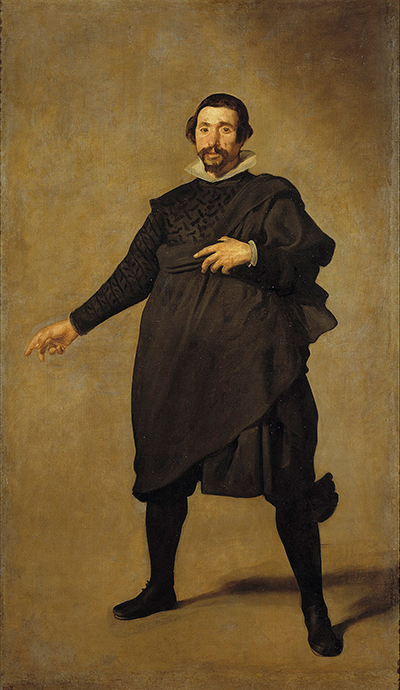
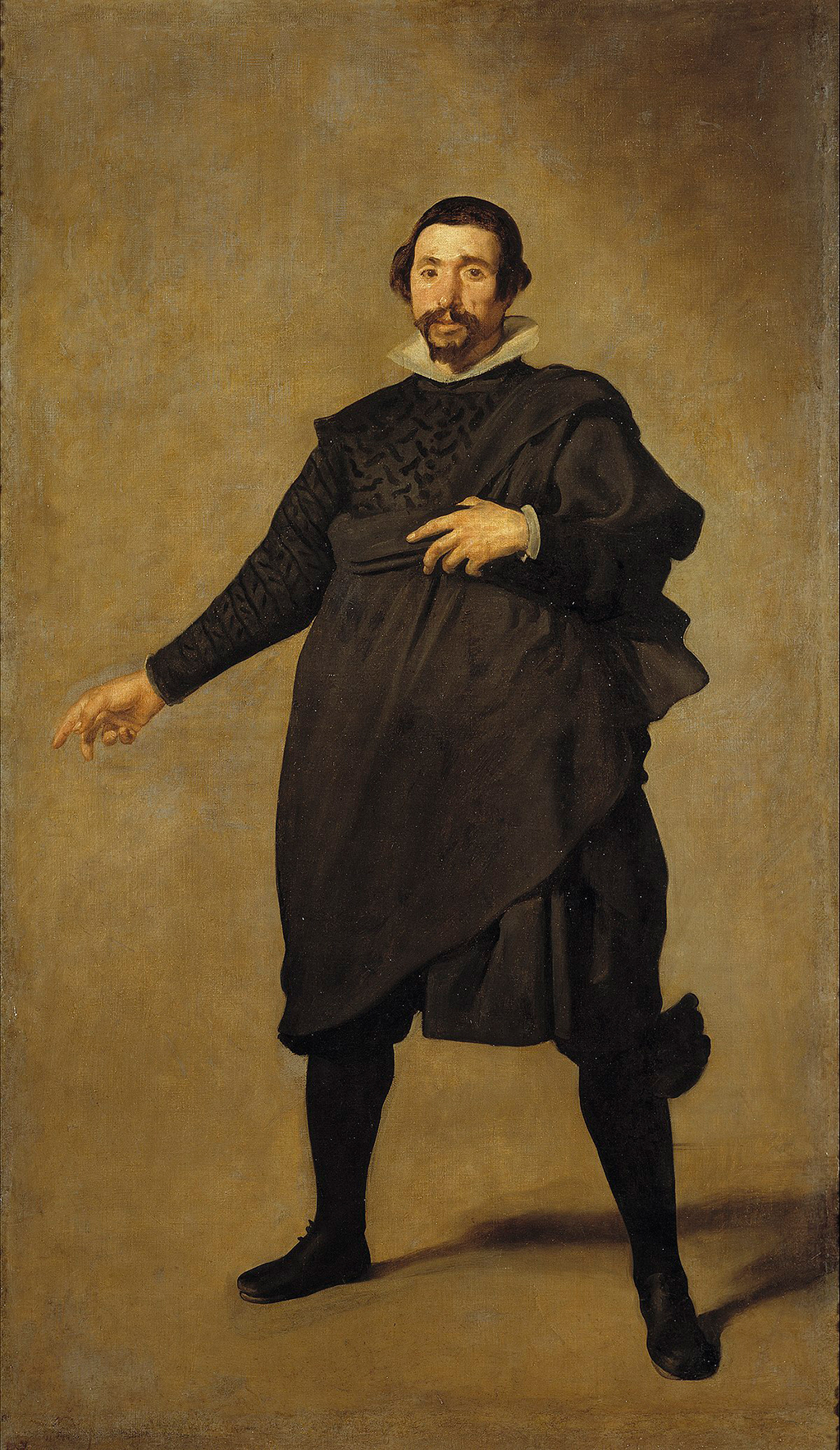
Pablo de Valladolid stands with his feet far apart. One hand has gone out into the open, low enough that its fingers are level with his hips. The other rests across a gathering of black cloth. Follow the extended arm back towards his shoulder and the next bright shape is the white collar beneath his face. Diego Velázquez gives each of these details room to register. A shadow under each foot supplies almost all the evidence for the floor. The Museo Nacional del Prado dates Pablo de Valladolid to about 1635. The oil on canvas measures 209 × 123 cm at the dimensions given in the Prado’s 1990 exhibition catalogue and is held in Madrid as P001198. [1] [2] [3]
At a Glance
- CollectionMuseo Nacional del Prado, P001198 [1]
- PaintedAround 1635 [1]
- ConservationTreatment presented in 2026 [3]
Contents
- The hand, the cloak and the stance
- Annotated details
- A floor made from light and shadow
- What the records say about Pablo
- From the Buen Retiro to the Prado
- What Goya and Manet took from the picture
The hand, the cloak and the stance
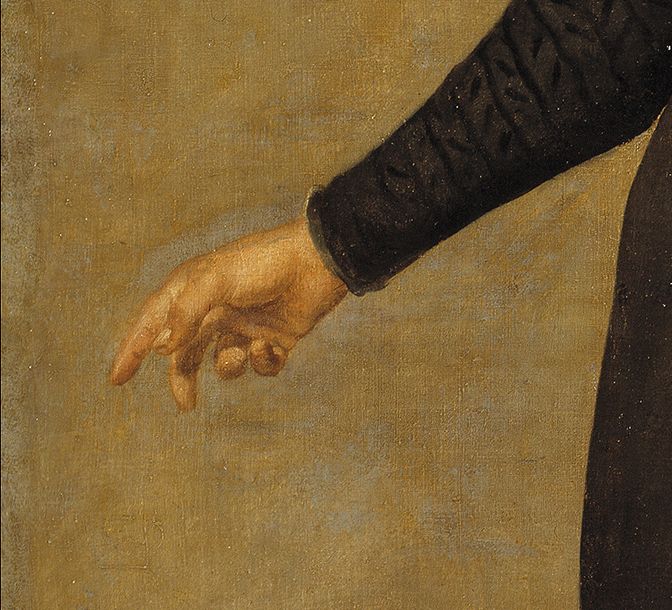
Start at the shoulder on our left. Its edge makes a small ledge above the long diagonal of the sleeve. Dark lines cross the sleeve and continue on the front of the doublet, becoming harder to follow where the arm joins the chest. At the wrist the pattern comes to an abrupt end. Light runs down the back of the bare hand into the fingers, some curled further under than others. They are loosely open, and the interval between their tips and the edge of the canvas lets us see the direction of the gesture. The hand seems to have reached a point in its movement where it could hang suspended for a moment. [2]
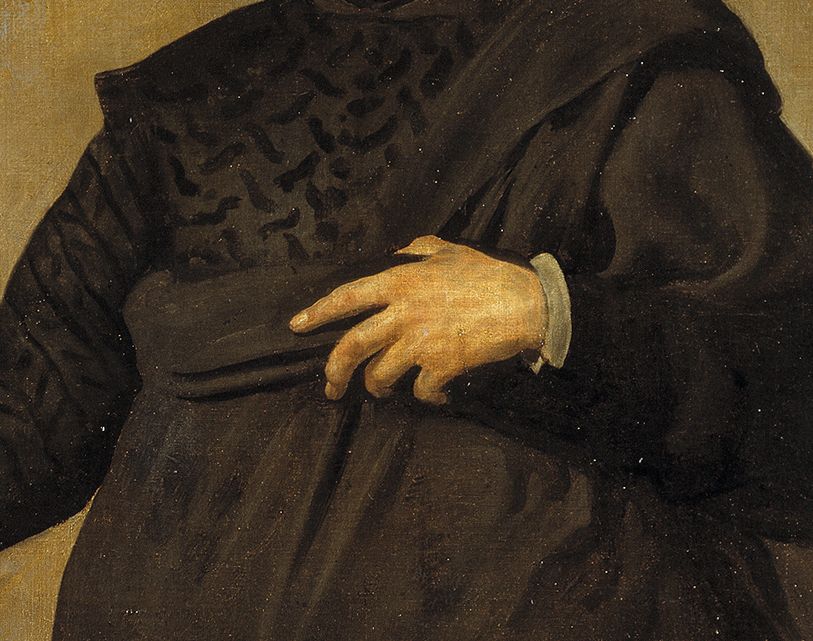
His left hand, on our right, is held higher and closer. The thumb rises against the dark fold, and the fingers stretch sideways across the cloak, with a narrow band of white at the wrist. That strip separates the palm from the dark sleeve and draws attention to how the hand gathers the cloth. Follow the same cloth down and its weight becomes apparent. The front hangs in a long curve, passes across the thighs and rises towards our right in a diagonal hem. Behind the elbow, the outline breaks into several short turns as the folds project. The costume gives the extended arm something solid to move away from, while its shifting edges carry some of that movement across the body. [2]
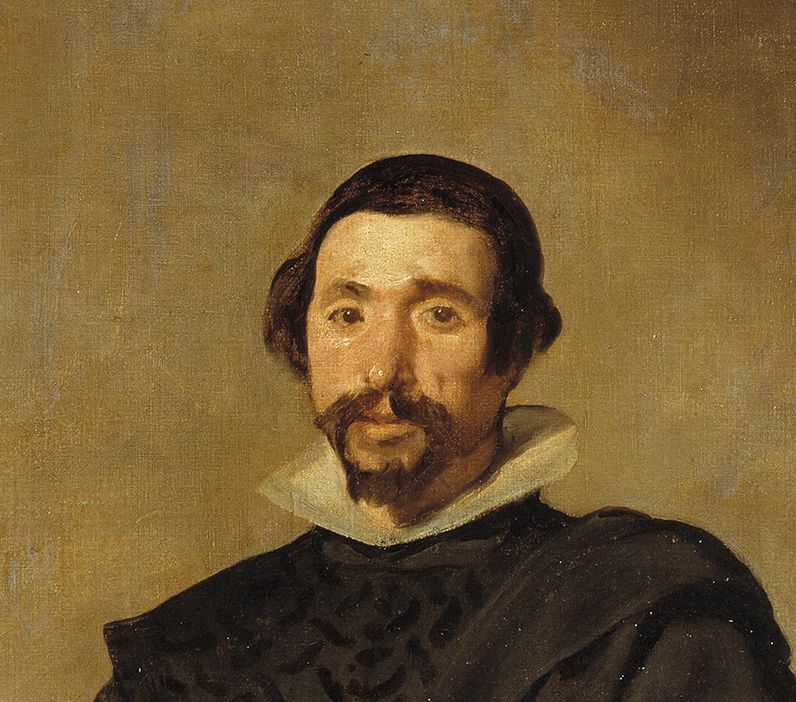
The brightest large passage at the top of the figure is the golilla, a stiff white collar. Its outer points are uneven in the picture because the shoulders turn and the folds sit differently on each side. It frames the shadow under the beard and helps bring the face clear of the chest. Within the face, the broad light across the forehead narrows along the nose. Darker, smaller marks give the eyebrows, moustache and line of the mouth their force. Against the scale of the full-length figure, these are concentrated effects. The face is turned almost towards us, with a slight divergence between the angle of the head and the spread of the arms. [2]
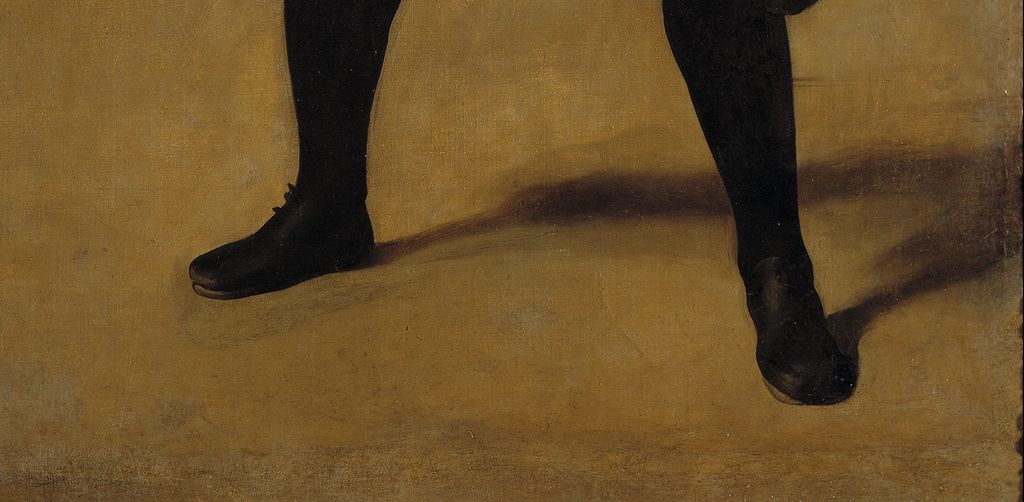
The legs provide the counterweight. The foot on our left gives us more of the side of the shoe, and the other comes forward, with its toe lower in the picture. The space between them is broad enough to follow the separate contours of both stockings all the way up to the breeches. Above the knee on our right, the fabric pushes out in a dark knot of folds. Below it, the stocking narrows towards the ankle. The long diagonal across the cloak and the splayed stance give the bottom half of the portrait as much variation as the two hands give the top. [2]
A floor made from light and shadow
The tone behind Pablo is warmer and darker in some passages and lighter in others. The gentlest of these changes take place around the body, where they can either bring an edge forward or allow it to soften. A particularly clear contact occurs under the toe on our right. From there a dark shape travels diagonally towards the margin. The other foot has a softer extension of shadow behind it. Viewed together, these small areas of darkness locate the soles on a common plane. Their edges dissolve as they move away from the shoes, and there is no drawn join to tell us where a floor ends and a wall begins. The footing is precise. The size and character of the place are left open. [2] [3]
Velázquez was familiar with a more explicit way to place a standing sitter. In his earlier Portrait of the Infante Don Carlos, the king’s brother also wears a white collar and black clothes and stands on a subdued floor. Behind him a faint division separates the floor from the wall, and beside his leg the cast shadow opens up a wide area of ground. Carlos’s hat and hanging glove set limits on the movement of his hands. Pablo’s hand moves into open space and makes its own claim on the area to one side. Seen beside the prince, Pablo occupies a similarly imposing canvas with many fewer cues for how to read the room or the occasion. [2] [4]
The relation of the body to the frame has a history of its own. In the eighteenth century, strips of canvas were added on both sides and along the bottom. Later repainting changed with age, altering the tones of the surround. In the Prado’s 2026 conservation project, X-radiography helped establish the original boundaries. Analysis of the weave traced the three extensions to a single piece of cloth. The conservators kept the extensions as evidence of the painting’s history and fitted a frame that conceals them. An earlier reproduction can therefore give a different impression of how far the fingertips and the nearer shoe sit from the edges. [3]
Multispectral infrared examination also exposed brushwork below the visible paint, including alterations made as Velázquez developed the composition. The material study found a light preparatory ground rich in lead white and identified both lamp black and charcoal black in the clothes. The first finding concerns the layer below the painting. The second helps explain the materials Velázquez used for an outfit that ranges from the dense darkness of the stockings to the softer passages across the cloak. The painting’s apparent simplicity took shape through adjustments as well as a carefully judged distribution of light. [3]
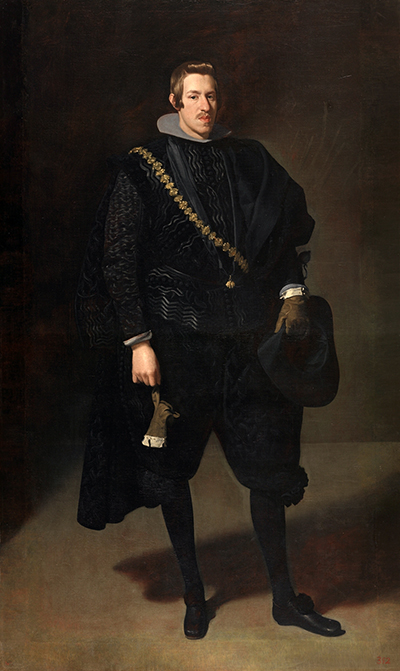
Infante Don Carlos. Compare the self-contained silhouettes and the distinct ways the held objects define the space around each figure. View Portrait of the Infante Don Carlos.
What the records say about Pablo
Pablo belonged to the group of royal servants the court called gentes de placer, or entertainers. Documents collected from the royal archives record a grant of lodging outside the Alcázar in 1633, alongside allowances for such things as shoes, clothes and rations. In 1634 the royal painter Angelo Nardi undertook to pay the final instalment of a charge due on Pablo’s lodging grant. These records give a more tangible idea of his place at the Spanish court than the pose alone can supply. They show which kinds of provision came with his service and hint at connections among people employed by the king. [1] [5]
A wardrobe memorandum of 15 September 1637 is particularly revealing. It reviews the expense and quality of clothes supplied to people in the royal household, including painters, musicians and entertainers. For Pablo, its recommendation is conditional. If the king orders him an outfit, it may be made from velvet or woollen cloth of the prescribed quality. The Prado’s 1990 catalogue considered whether the clothes in the portrait might be connected with this entry, which would shift the date from around 1633 towards the end of the decade. The memorandum gives the proposed fabrics and leaves the actual issue of the garment open. The weave of the painted costume cannot establish that link on its own. [2] [5]
The parish burial entry calls him a servant of the king and records that he was from Vallecas. It says he had made a will naming his children as heirs and the painter Juan Carreño de Miranda, who lived in the same house, as executor. The Infanta María Teresa wrote to Sor Luisa Magdalena de Jesús in December 1648 to report Pablo’s death and say that she had done what she could to obtain her father’s favour for his children. The royal records summarised by José Moreno Villa say that Pablo’s two allowances passed to his children, Isabel and Pablo. There is a small discrepancy between contemporary sources over the precise day of his death. The letter dated 1 December reports that it had occurred that day, while the burial entry gives 2 December. [5]
The trailing cloak, wide footing and extended arm have often invited a theatrical reading. A spectator could imagine the outstretched hand marking a line of verse or addressing someone beyond the picture. The historical title El cómico reflects that impression, as does the Prado’s suggestion that the painted pose implies a gift for declamation. The person named in the archives was in royal service. His surviving record leaves the specific duties he performed and any part he might be playing in the portrait uncertain. [1] [2] [5]
Annotated Details from Pablo de Valladolid
Follow the collar, hands and shadows below the shoes.
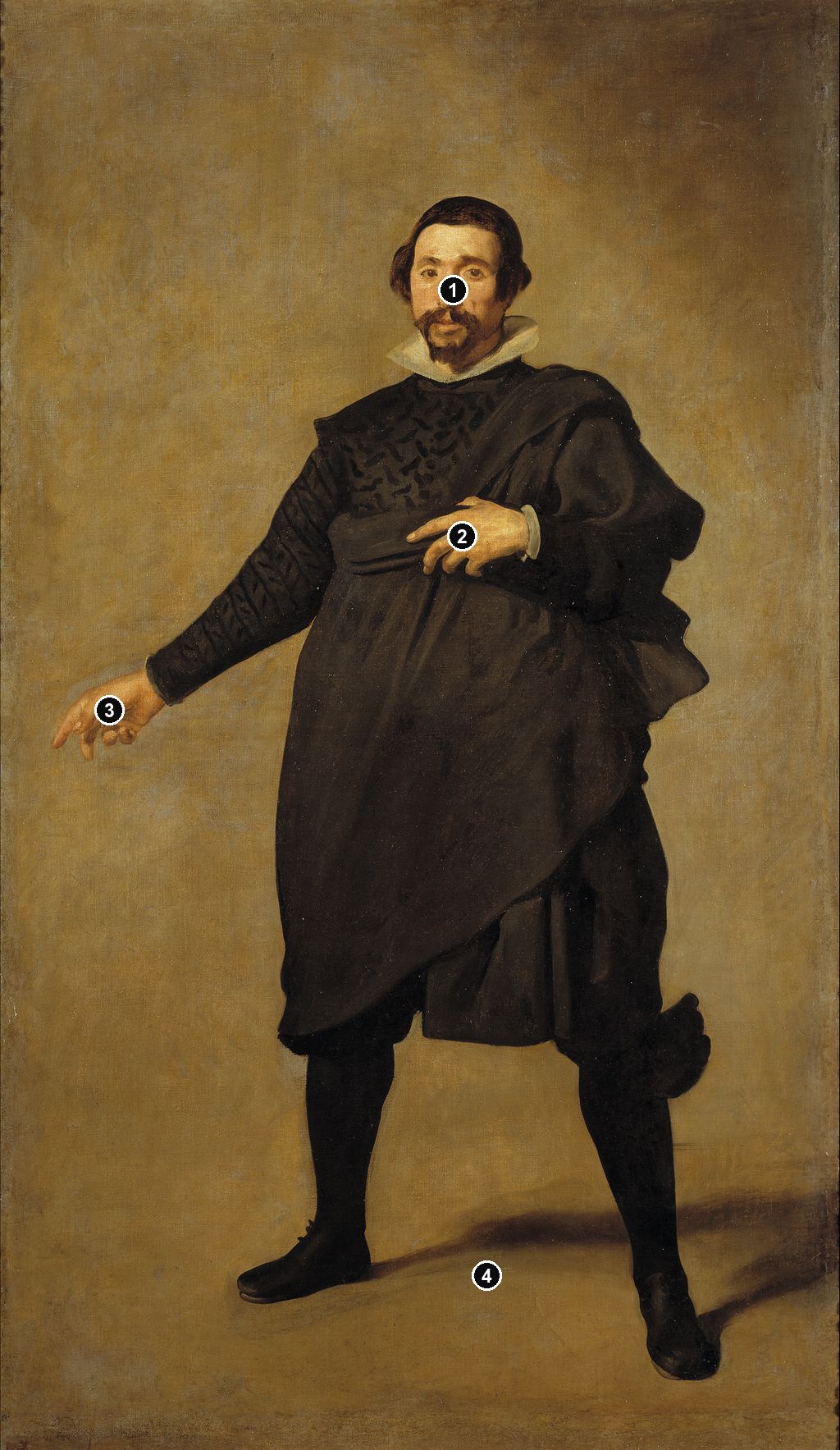
Details from PABLO DE VALLADOLID
Compare what the figure’s gestures tell us with what the background leaves open.
The face above the collar
The light collar separates the face from the black costume. Its bright outer edge gives a small pause beneath the chin.
The hand gathering the cloak
The bent fingers rest on a darker fold. They mark the place where the cloak crosses the front of the body.
The extended hand
The wrist emerges from the dark sleeve. The fingers are set against the background with space around their shapes.
The shoes and their shadows
The shadows below the shoes give the feet a place to stand. The change of tone is enough to suggest a floor without drawing its edge.
Reproduction of Museo Nacional del Prado P001198 via Wikimedia Commons, marked public domain. The reproduction predates the 2026 conservation treatment.
From the Buen Retiro to the Prado
The first secure record of the canvas is the Buen Retiro inventory of 1701. Its entry describes a court entertainer called Pablillos de Valladolid and singles out the golilla. The 1634 receipt for unspecified work by Velázquez for rooms at the Buen Retiro, together with a later reference to a room associated with entertainers in the queen’s apartments, has prompted suggestions about an earlier hanging there. The receipt names no subjects. The 1701 listing anchors the painting at the palace decades after Pablo’s death and leaves the particulars of the original commission open. [2] [6]
The inventories of the Palacio Nuevo list the picture in 1772, 1794 and 1814 under the generic description of a court jester. At the Real Academia de Bellas Artes de San Fernando from 1816, the same figure passed for a mayor. The canvas entered the Prado in 1827 and appeared as an unknown portrait in its 1828 catalogue. In 1872 Pedro de Madrazo connected the painting with the named Buen Retiro entry. The earlier descriptions tell us how differently viewers could understand a figure with this much authority over his space and so few visible clues to his duties. The collar that helped the early inventory distinguish this particular likeness was a better clue to its identity than the apparent drama of the pose. [2] [6]
What Goya and Manet took from the picture
Goya painted the financier Francisco de Cabarrús around 1788 against a dark setting whose floor is again made legible by a cast shadow. The hand on our left reaches out. The other is held against a luminous green coat. In the Banco de España catalogue, Manuela Mena links the pose to Pablo and discusses technical evidence that Goya first gave Cabarrús a director’s staff before it was painted out. The open hand then had to carry its own authority. The lean of the figure and its advancing foot also make more sense when we look for the patch of shadow that keeps the large body on the ground. [7]
Édouard Manet saw Pablo de Valladolid at the Prado on his visit to Madrid in 1865. In his letter of 3 September to Henri Fantin-Latour, he singled out the painting and remarked that the background seemed to disappear into air around the man in black. He referred to the picture by its theatrical catalogue description, a portrait of a celebrated actor from the time of Philip IV. The Prado and the Musée d’Orsay later made the connection between the effect Manet described and the setting of his own painting The Fifer. [2] [8] [9] [10]
The young musician in Manet’s The Fifer (Le Fifre, 1866, Musée d’Orsay, RF 1992) plays across the front of his body. His elbows, hands and instrument stay close to the figure’s outline. A span of grey surrounds him and a slight shadow near his feet is enough to make that grey serve as a floor. Colour gives the outline a different force from Pablo’s. The red trousers make a wide, nearly unbroken passage below the jacket, and a white strap stands out against the dark jacket and leads towards the hanging instrument case. Velázquez had set his light cuffs and collar among folds that vary subtly in tone. Manet makes the divisions between colours much broader and clearer. Both painters have removed the usual cues for where a performer stands, but the boy’s hands and mouth tell us exactly what he is doing. [2] [8] [9]
Manet’s The Tragic Actor (Rouvière as Hamlet), also dated 1866 by the National Gallery of Art in Washington, offers another comparison. Its dark costume and pale collar mark a figure against a continuous brown surround, with the stance and the shadow low in the picture. Manet gives Rouvière crossed wrists, a plumed hat and a sword on the floor. These belong to an identified actor’s costume and role. In Pablo’s portrait, the empty space around the extended fingers allows the gesture to work even after the story attached to it has changed. [2] [9] [11]
Further reading
Follow the comparison with Manet beyond a single pose.
Manet/Velázquez: The French Taste for Spanish Painting. Gary Tinterow and Geneviève Lacambre, editors. The Metropolitan Museum of Art, 2003
The catalogue places Manet’s response to Spanish painting alongside the works he saw and copied. Read the catalogue at The Met.
Artworks directory
Frequently Asked Questions
Museo Nacional del Prado, P001198 [1]
Around 1635 [1]
Start at the shoulder on our left. Its edge makes a small ledge above the long diagonal of the sleeve. Dark lines cross the sleeve and continue on the front of the doublet, becoming harder to follow where the arm joins the chest. [2]
Discussion
Look again at the images and ideas explored in Pablo de Valladolid. These editorial prompts invite your observations.
Reader Insights
How little information about the floor do you need to read Pablo as standing?
How does the direction of the hand affect the way you look across the empty background?
Join the Conversation
Share a detail, comparison or question about Pablo de Valladolid below.
References
- Museo Nacional del Prado, The Female Perspective labels, “Example of Changes in the Labels Related to Article 49”, Pablo de Valladolid, c. 1635, P-1198 (P001198). View source.
- Museo Nacional del Prado, Velázquez, exhibition catalogue, Madrid, 1990, no. 57, pp. 338–341, Pablo de Valladolid, 1198 (P001198). Spanish. View source.
- Fundación Iberdrola España, “The Prado’s Restoration of Pablo de Valladolid Sheds New Light on Velázquez’s Artistic Vision”, 13 May 2026, report by the project sponsor on the completed treatment and technical examination. View source.
- Museo Nacional del Prado, Velázquez, exhibition catalogue, Madrid, 1990, no. 17, pp. 128–131, El infante don Carlos, 1188 (P001188). Spanish. View source.
- Ángel Aterido Fernández and collaborators, Corpus Velazqueño. Documentos y textos, vol. I, Madrid, Ministerio de Educación, Cultura y Deporte, 2000, docs. 94, 127, 225 and 226, pp. 96–97, 117–119 and 195. Spanish. View source.
- Alicia Álvarez Sellers, “Iconografía del retrato de actor: «La Calderona», «Juan Rana» y Pablo de Valladolid”, pp. 311–312, including nn. 82 and 87–88. Spanish. View source.
- Manuela Mena, “Francisco de Cabarrús y Lalanne”, Banco de España collection, Francisco de Goya, c. 1788, P_136. Spanish. View source.
- Musée d’Orsay, Édouard Manet, Le Fifre, 1866, RF 1992, exact object record and excerpt from Manet’s letter to Henri Fantin-Latour. French. View source.
- Musée d’Orsay and The Metropolitan Museum of Art, Manet… Velázquez… The French Taste for Spanish Painting, Musée d’Orsay, 17 September 2002–12 January 2003, exhibition account of the 1865 visit and the relationship between the three works. View source.
- Art Institute of Chicago, Manet Paintings and Works on Paper at the Art Institute of Chicago, catalogue no. 14, “Boy with Pitcher (La Régalade)”, n. 43, transcription of Manet to Henri Fantin-Latour, 3 September 1865, from Juliet Wilson-Bareau, ed., Manet par lui-même, 1991, p. 34. English and French. View source.
- National Gallery of Art, Édouard Manet, The Tragic Actor (Rouvière as Hamlet), 1866, 1959.3.1, Washington, DC. View source.








