


 by Tom Gurney
Tom Gurney BSc (Hons) is an art history expert with over 20 years experience
Published on June 19, 2020 / Updated on October 14, 2023
Email: tomgurney1@gmail.com / Phone: +44 7429 011000
The Flight into Egypt by El Greco: Introduction
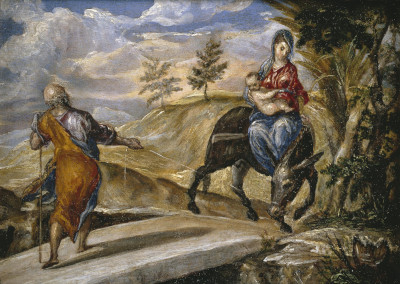
Joseph has already stepped onto the pale slab that crosses the stream. He holds his staff well out to one side and reaches back with the other arm. At the far end of the bridle the donkey lowers its head towards the bank, its front legs close to the edge. Mary and the child sit above the turn of the animal's neck. A few inches of painted ground hold the space between Joseph and his family, and a fine slanting line shows how he means to bring them across it. [1]
El Greco painted The Flight into Egypt around 1570 on a piece of pine just over twenty centimetres wide. The Prado's catalogue places it near the end of his Venetian years or the beginning of his time in Rome. Mary, Joseph and the child are travelling under threat, but the action we see is the small practical difficulty of crossing a stream. The landscape brings them to that point. Open country passes across the middle of the panel, then the water and the trees narrow the way to a single crossing. [1]
At a Glance
- ArtistEl Greco (Doménikos Theotokópoulos) [1]
- TitleThe Flight into Egypt (La huida a Egipto) [1]
- DateAbout 1570 [1]
- MediumOil on pine panel [1]
- Dimensions15.9 × 21.6 cm (height × width) [1]
- CollectionMuseo Nacional del Prado, Madrid, P007772 [1]
This work across El Greco’s career
Dormition of the Virgin
c. 1565–66Modena Triptych
1567–68The Flight into Egypt (current article)
About 1570 [1]The Disrobing of Christ
1577–79The Assumption of the Virgin
1577–79The Holy Trinity
1577–79Contents
- The crossing
- A journey in Matthew
- Hills and weather
- Two early paintings on wood
- A number on the back
The crossing
The slab slants across the bottom of the panel. Its broad face is pale, and a dark edge below gives it the thickness of stone. On the left Joseph is well into his stride, with one shoulder turned downhill and his bare foot set forward. The ochre cloak follows that movement down and across his back. At the right the family is still beside the wooded bank. The donkey's hindquarters extend into the open centre of the painting, while its nose turns down into shadow. The bridle is almost as hard to see as the transition between the dark water and the earth beside it. Once Joseph's hand has led you to the line, however, his turn and the animal's turn become part of the same movement. [1] [2]
Mary sits high on the right, where the folds of her blue mantle define the bend of a knee over the donkey's shoulder. The child lies at an angle in her arms. His pale body is set across the red of her dress and the deeper blue below. Their combined form rises in a compact shape with the trees behind it. Joseph has much more air around him. The small space left between his outstretched hand and the animal's muzzle separates the two groups without breaking the connection between them. Estelle Alma Maré reads the twisting poses of all three travellers in relation to the moment when the donkey is made to change direction. The bent neck of the animal and Joseph's planted foot let us see that turn on a panel we can take in at a glance. [1] [2]
A journey in Matthew
In Matthew 2:13–15, Joseph is warned in a dream after the Magi depart. An angel tells him to take the child and his mother to Egypt because Herod intends to kill the child. Joseph sets out with them by night, and they stay in Egypt until Herod's death. Those few verses supply the journey and its urgency. The donkey, the stream and the slab that carries them over it belong to the way the painter has imagined the passage. There is no visible escort, pursuer or angel in the picture. A viewer sees the family after Joseph has acted on the dream. [1] [3]
Leticia Ruiz Gómez notes that later traditions supplied painters with additional episodes, including the family's rest on the road. Here the travellers are still on the move. Joseph stretches to keep them together and the donkey has yet to set a hoof on the bridge. Mary and the child make up the panel's clearest block of colour, but the difficult part of the journey is directed by the older man whose face we see only in part. His placement lets the viewer understand the threat through its effect on the travellers. The route calls for his attention even at the moment when he has to look back. [1] [2]
Hills and weather
The ground rises behind the donkey into a rounded hill, with two small trees apart from the grove at the right. Beyond Joseph another slope gives way to a more distant pale ridge. El Greco uses the changing size of the trees to make the space beyond the family seem much deeper than the shallow platform at their feet. The brighter middle ground also lets the donkey's back and tail stand out. A different kind of mark describes the undergrowth by the stream. Short strokes bring light to the edge of the bank and leave the surrounding trees dark enough to end the view. [1]
Ruiz Gómez finds parallels for this scheme in sixteenth-century Venetian painting. Her catalogue reproduces an anonymous Italian print after a lost Titian drawing, where a page leads a horse by its bridle in an open, rolling landscape. It offers both a way of setting broken ground against distant hills and a precedent for giving a resisting animal a role in the composition. The comparison also helps locate what El Greco made of those elements. The bridge concentrates the pace of the journey in the lower corner, and the track and dips in the ground can be followed from the figures into the distance. [1]
The Prado catalogue also compares Joseph's twist with a figure in Tintoretto's Miracle of the Slave, completed by 1548 for the Scuola Grande di San Marco in Venice. Tintoretto's enormous canvas is filled with people reacting to an event. El Greco has room for only a few strokes between Joseph's planted staff and his extended hand. The comparison concerns how a turning body can carry the action. In the little panel, Joseph's shoulders and cloak show how much effort goes into a brief tug on the bridle. [1] [4]
Two early paintings on wood
In the Athens Entombment of Christ, painted about 1568–70, the projecting corner of a sarcophagus gives the figures a hard edge to move around. In The Flight into Egypt the bridge offers a way out of an obstacle. The two works ask the eye to work out how much ground separates a foot, a hand and an angled plane. The Entombment puts the bearers and mourners close to the picture's edge. On the smaller Prado panel, Joseph is set back far enough for the eye to see where he has come from and where he is trying to go. [1] [5]
The Modena Triptych gives the eye a different reason to move close. Its small scenes are distributed over three leaves, and the viewer can turn from one compartment to another. In The Flight into Egypt one continuous landscape fills the panel. The sky that opens over the receding hills continues above the figures until it meets the dark trees on the right. The same uninterrupted space holds the stretch of water, Joseph's step and the figures still waiting at the bank. [1] [6]
A number on the back
The Prado catalogue describes a board made in one piece, with some fine cracking in the sky and a few small knocks and scratches retouched in 2000. It also records marks on the reverse that establish where the panel has been. The most useful pair is a crowned brand associated with Gaspar Méndez de Haro, seventh marquess of El Carpio, and the number 933 in black. That number is also used in a 1682 inventory of his goods at the Palazzo della Vigna in Rome. The inventory describes a small painting of the flight and assigns it to Bassano. The old attribution is evidence of how the picture was catalogued in the seventeenth century. The shared number lets the Prado connect that entry to this particular panel. [1]
Later labels document its travels through dealers and the collection of Robert von Hirsch. The Prado traces an earlier passage through the collection of Antonio Gorostiza and records the panel's sale in London in 1978, its purchase by the Spanish state at Christie's in December 2000 and its entry into the museum in 2001. The original setting and intended viewer remain unknown. The museum records make the object's small size easy to picture. At 21.6 centimetres across, the whole journey can be held within the width of an open hand, and the light on the bridge is still enough to set the travellers in motion. [1]
Browse the artworks
Browse the paintings covered in this collection and related works in museum catalogues. Some are by El Greco’s workshop or were formerly attributed to him.
| Name | Date | Medium |
|---|---|---|
| View of Toledo | Around 1599–1600 | Oil on canvas |
| Adoration of the Shepherds | 1612–14 | Oil on canvas |
| Laocoön | About 1610–14 | Oil on canvas |
| The Tears of Saint Peter | 1587–96, Museo del Greco dating | Oil on canvas |
| The Holy Family with Saint Anne | About 1595 | Oil on canvas |
| The Holy Trinity | 1577–79 | Oil on canvas |
| The Burial of the Count of Orgaz | 1586–88, the conventional range | Oil on canvas |
| Disrobing of Christ | 1577–79 | Oil on canvas |
| Opening of the Fifth Seal | About 1608–14 | Oil on canvas |
| Saint Martin and the Beggar | 1597–99 | Oil on canvas |
| Martyrdom of Saint Maurice | 1580–82 | Oil on canvas |
| Adoration of the Name of Jesus | 1577–79 | Oil on canvas |
| Saint Peter in Penitence (Bowes Museum) | 1580s | Oil on canvas |
| Christ Carrying the Cross | Around 1577–87 | Oil on canvas |
| Crucifixion | 1597–1600 | Oil on canvas |
| Resurrection | 1597–1600 | Oil on canvas |
| Immaculate Conception | About 1608–13 | Oil on canvas |
| Annunciation | 1597–1600 | Oil on canvas |
| Coronation of the Virgin | 1591–92 | Oil on canvas |
| Lady in a Fur Wrap | About 1580–88 | Oil on canvas |
| Baptism of Christ | Around 1608–14, with further work in the early 1620s according to Walter Liedtke. The foundation dates the painting to around 1614. | Oil on canvas |
| Portrait of an Old Man (Possible Self-Portrait) | About 1595–1600 | Oil on canvas |
| Adoration of the Kings | 1565–67, Benaki Museum dating | Tempera on wood |
| Mary Magdalene in Penitence | About 1585–90, tentatively dated by the Museu del Cau Ferrat | Oil on canvas |
| Saint Sebastian | About 1577 in the cathedral centenary catalogue | Oil on canvas |
| Portrait of Cardinal Fernando Nino de Guevara | About 1600 | Oil on canvas |
| Penitent Magdalene | About 1576–77 | Oil on canvas |
| The Nobleman with his Hand on his Chest | About 1580 | Oil on canvas |
| Saint Peter and Saint Paul | 1590–1600 | Oil on canvas |
| Pentecost | Circa 1600 | Oil on canvas |
| The Fable | About 1580 | Oil on canvas |
| Pietà | 1580–90 | Oil on canvas |
| View and Plan of Toledo | 1610–1614, according to the Museo del Greco | Oil on canvas |
| Assumption of the Virgin | 1577–79, with 1577 in the Greek inscription | Oil on canvas |
| The Annunciation (1609) | Late Tavera period. The owner dates the canvas to 1614. Factum gives 1608–1613 in its initial recording account. | Oil on canvas |
| The Agony in the Garden of Gethsemane | 1590s | Oil on canvas |
| Portrait of Jorge Manuel Theotocópuli | Circa 1600–05 | Oil on canvas |
| Dormition of the Virgin | About 1565–66, according to the National Gallery of Greece | Tempera on wood |
| Saint Louis | 1585–90 | Oil on canvas |
| Ecstasy of St Francis of Assisi (1580) | About 1577–80 in the Vatican Museums’ account. The Diocesan Museum gives 1575–80. | Oil on canvas |
| Saint Francis of Assisi in Ecstasy, after El Greco | Seventeenth century | Oil on canvas |
| Christ Driving the Money Changers from the Temple | Probably before 1570 | Oil on wood |
| The Entombment of Christ | Circa 1568–70, Venice | Mixed technique on wood |
| Nativity | 1603–05 | Oil on canvas |
| Portrait of a Gentleman | About 1586 | Oil on canvas |
| Coronation of the Virgin (Illescas) | 1603–05 | Oil on canvas |
| A Boy Blowing on an Ember to Light a Candle (El Soplón) | About 1570–72 | Oil on canvas |
| The Feast in the House of Simon | About 1608–14 | Oil on canvas |
| Concert of Angels | About 1608–14 | Oil on canvas |
| Healing of the Man Born Blind | Around 1570 in Dresden’s printed collection guide | Mixed technique on wood |
| Fray Hortensio Félix Paravicino | 1609 | Oil on canvas |
| Purification of the Temple | Circa 1600 | Oil on canvas |
| Portrait of Vincenzo Anastagi | Circa 1575 | Oil on canvas |
| Saint Paul (Almadrones) | 1608–14 | Oil on canvas |
| Head of Christ | About 1579–86 | Oil on canvas |
| Last Supper | About 1567–68, Venice | Tempera on wood |
| Saint John the Evangelist (Prado Museum, Madrid) | About 1605 | Oil on canvas |
| Disrobing of Christ (Lyon, Half Painting Version) | About 1581–86 | Oil on canvas |
| The Dream of Philip II | 1577–79 | Oil on canvas |
| Portrait of a Sculptor | About 1577–80, 2019 exhibition dating | Oil on canvas |
| Saint Bernard | 1577–79 | Oil on canvas |
| Saint Benedict | 1577–79 | Oil on canvas |
| Portrait of Jerónimo de Cevallos | 1613, as catalogued by the Prado | Oil on canvas |
| The Flight into Egypt | About 1570 | Oil on wood |
| Saint Anthony of Padua | About 1580 | Oil on canvas |
| Portrait of a Doctor | 1582–85 | Oil on canvas |
| The Veil of Saint Veronica | 1586–95 | Oil on canvas |
| An Elderly Gentleman | About 1587–1600 | Oil on canvas |
| Saints Andrew and Francis | About 1595 | Oil on canvas |
| The Holy Family with Saint Anne and the Infant Saint John | Around 1600 in the Prado catalogue. The Balaguer record gives 1595–1600. | Oil on canvas |
| The Virgin Mary | 1595–1600 | Oil on canvas |
| Portrait of a Gentleman (1600-1605) | About 1600–05 | Oil on canvas |
| Portrait of a Young Gentleman | 1600–05 | Oil on canvas |
| John the Baptist and Saint John the Evangelist | 1600–10 | Oil on canvas |
| Portrait of a Friar | 1600–50 | Oil on canvas |
| Saint Thomas (Almadrones) | 1608–14 | Oil on canvas |
| Christ the Saviour (Almadrones) | 1608–14 | Oil on canvas |
| An Apostle (Prado P000814) | 1608–14 | Oil on canvas |
| Saint James (Almadrones) | 1608–14 | Oil on canvas |
| Julián Romero and his Patron Saint | 1612–18 | Oil on canvas |
| Allegory of the Camaldolese Order | Around 1600, Instituto Valencia de Don Juan dating | Oil on canvas |
| Saint Joseph and the Christ Child | 1597–99 | Oil on canvas |
| Saint Ildefonsus | Around 1600 according to the Prado's proposal, 1603–05 in Hadjinicolaou and Ficonofue | Oil on canvas |
| Saint Augustine | About 1585–1602, as listed in the 2014 exhibition study | Oil on canvas |
| Portrait of Diego de Covarrubias y Leyva | Circa 1600 | Oil on canvas |
| Saint Bernardino of Siena | 1603 in the Prado catalogue. The Museo del Greco object page lists 1602. | Oil on canvas |
| Portrait of Cardinal Tavera | About 1609 in the foundation's account, circa 1610 in its image heading | Oil on canvas |
| Visitation | About 1610–14 | Oil on canvas |
| Portrait of Francisco de Pisa | Circa 1610–14 | Oil on canvas |
| Saint Lawrence's Vision of the Madonna and Child (Apparition of the Virgin to St. Lawrence) | 1578–80 in the 2021 heritage decree | Oil on canvas |
| Christ on the Cross | Probably 1570s, assigned to El Greco’s Italian period in the sale literature | Oil on canvas |
| Portrait of Charles de Guise | 1572, as dated in the painted book | Oil on canvas |
| Portrait of Giulio Clovio | 1571–72, according to Capodimonte | Oil on canvas |
| Mount Sinai | About 1570–72 | Mixed technique on wood |
| Modena Triptych | 1567–1568, as dated by the Galleria Estense and the national catalogue | Tempera on wood |
| Saint Luke Painting the Virgin | 1560–67, Benaki Museum dating | Mixed technique on wood |
| Saint Ildefonso (Washington) | 1603–14 | Oil on canvas |
| Saint Martin and the Beggar (smaller Washington version) | 1600–14 | Oil on canvas |
| The Holy Family with Saint Anne and the Infant John the Baptist (Washington) | About 1595–1600 | Oil on canvas |
| The Adoration of the Name of Jesus (London panel) | Late 1570s | Oil on wood |
| Christ Driving the Traders from the Temple (London) | About 1600 | Oil on canvas |
| Saint Francis Receiving the Stigmata (Baltimore) | 1585–90 | Oil on canvas |
| Saint Luke (Almadrones, Indianapolis) | About 1610–14 | Oil on canvas |
| Saint Matthew (Almadrones, Indianapolis) | About 1610–14 | Oil on canvas |
| Saint Simon (Almadrones, Indianapolis) | About 1610–14 | Oil on canvas |
| The Tears of Saint Peter (Hospital de Tavera) | About 1605 | Oil on canvas Catalogue. |
Discussion
Look again at the images and ideas explored in The Flight into Egypt by El Greco. These editorial prompts invite your observations.
Reader Insights
Trace the bridle from Joseph’s hand to the donkey. What tells you that the animal is turning before it crosses?
Pick out one fold in Mary’s blue mantle and one line of the bridge. How do they describe two kinds of movement?
Join the Conversation
Share a detail, comparison or question about The Flight into Egypt by El Greco below.
References
- Leticia Ruiz Gómez, El Greco en el Museo Nacional del Prado. Catálogo razonado, 2007, cat. 1, pp. 32–37. View source.
- Estelle Alma Maré, El Greco’s Italian paintings (1560–76) based on Bible texts, Acta Theologica, 2009, pp. 64–65. View source.
- United States Conference of Catholic Bishops, Gospel of Matthew, chapter 2, verses 13–15. View source.
- Gallerie dell’Accademia, Venice, Tintoretto, Saint Mark Freeing the Slave. View source.
- National Gallery of Greece, The Entombment of Christ, inventory Π.9979. View source.
- Italian Ministry of Culture, Altarolo per un Miles Christi (Trittico di Modena), Gallerie Estensi RCGE 8095. View source.







