


 by Tom Gurney
Tom Gurney BSc (Hons) is an art history expert with over 20 years experience
Published on June 19, 2020 / Updated on November 20, 2026
Email: tomgurney1@gmail.com / Phone: +44 7429 011000
Introduction
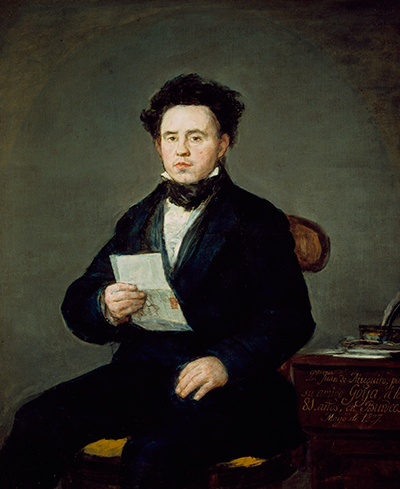
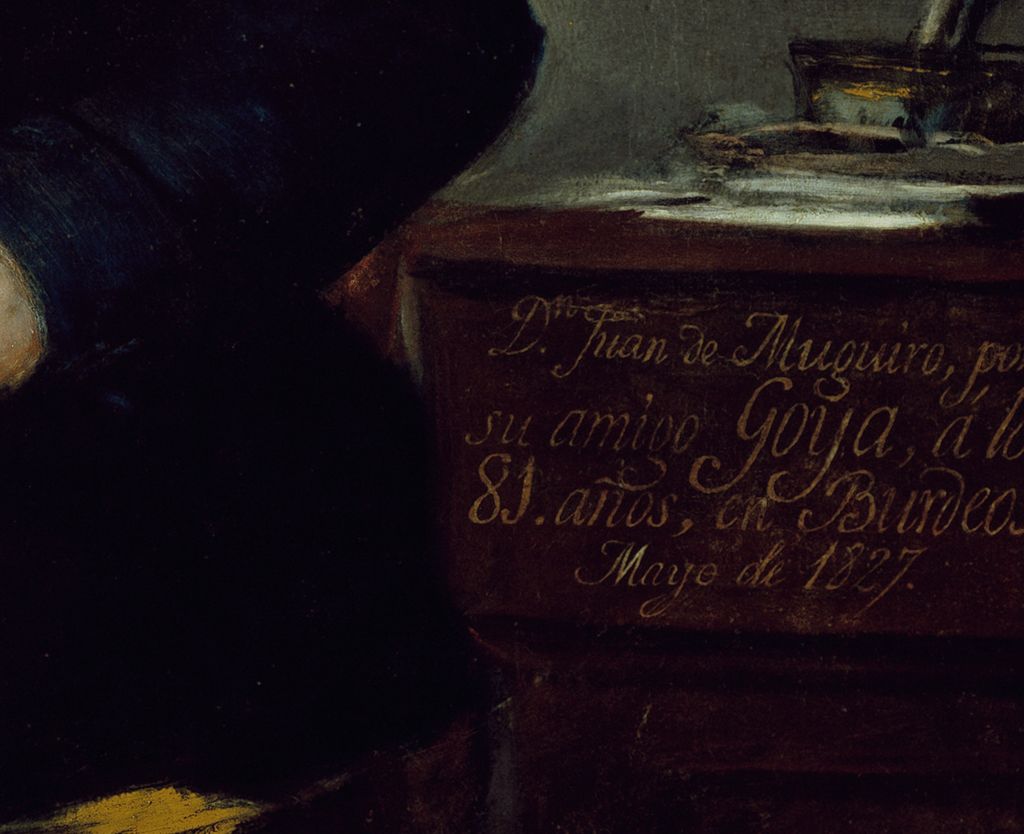
Juan Bautista de Muguiro sits with an open letter in one hand and the other resting on his thigh. Goya paints the paper just below the bright opening of the sitter’s shirt, so that the eye travels from the face to the letter almost at once. The words we can read are over on the desk. There Goya gives the sitter’s name, calls himself his friend and dates the painting to May 1827 in Bordeaux. The dedication also records the painter’s age, 81. It is a small detail to leave to the bottom corner of a portrait, particularly when it tells us so much about the two people involved. [1] [2]
At a Glance
Works across Goya’s career
The Parasol
1777The Nude Maja
1795–1800Saturn Devouring His Son
c. 1820–23The Dog
c. 1820–23A pause with a letter
Goya shows Muguiro down to the knees. The sitter’s shoulders sit at an angle, and his dark trousers run diagonally towards the left edge of the canvas. Above his shoulder on the right, a curved wooden chair back catches a warm light. A little yellow upholstery shows under his coat and between his legs. Those small patches of colour help us make sense of a seat otherwise obscured by the figure. Goya leaves a broad area of grey-green behind Muguiro’s head and gives us few clues about the rest of the room. The desk enters at the right edge just where the sitter could reach it. [1] [2]
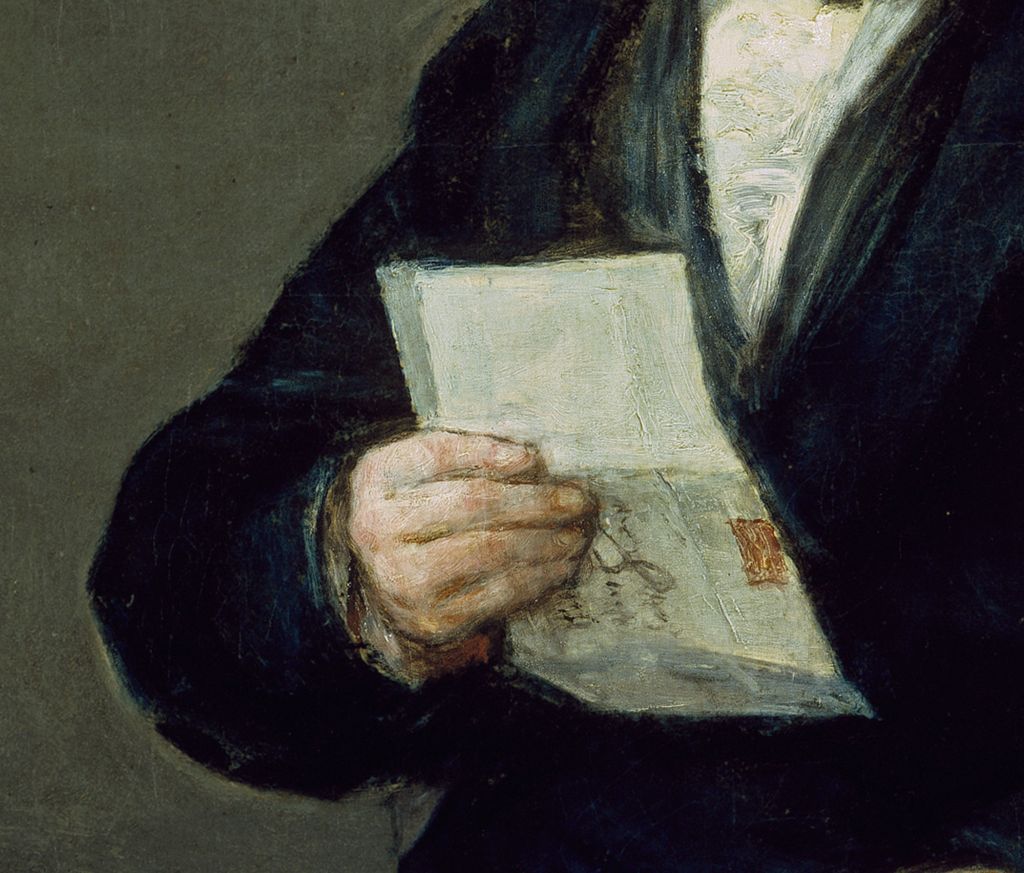
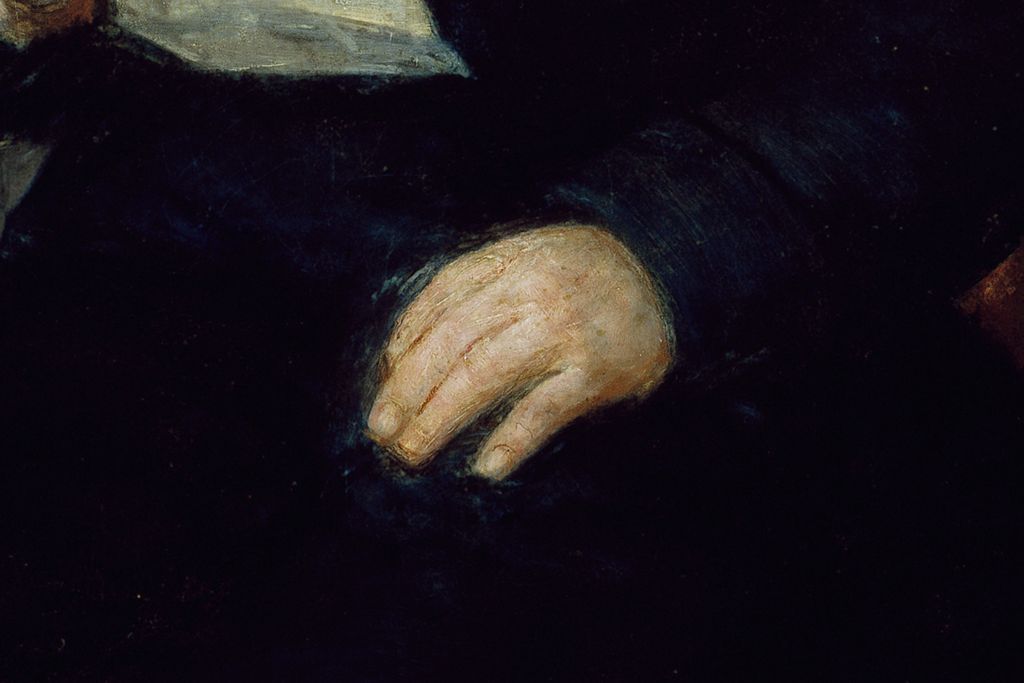
Look at the two hands in turn. The sitter’s right hand pinches the paper near the fold. The fingers of his left hand stretch across his thigh, with the tips catching the light. One arm draws the letter towards his chest, while the other follows the weight of his seated body downwards. The folded paper opens into two planes. Its upper section is cool and pale, while the lower one has more shadow, a few marks and a small reddish patch. The dark sleeve behind it makes the edge of the paper easy to follow. We can see how he holds it before we have time to wonder what it says. [2]
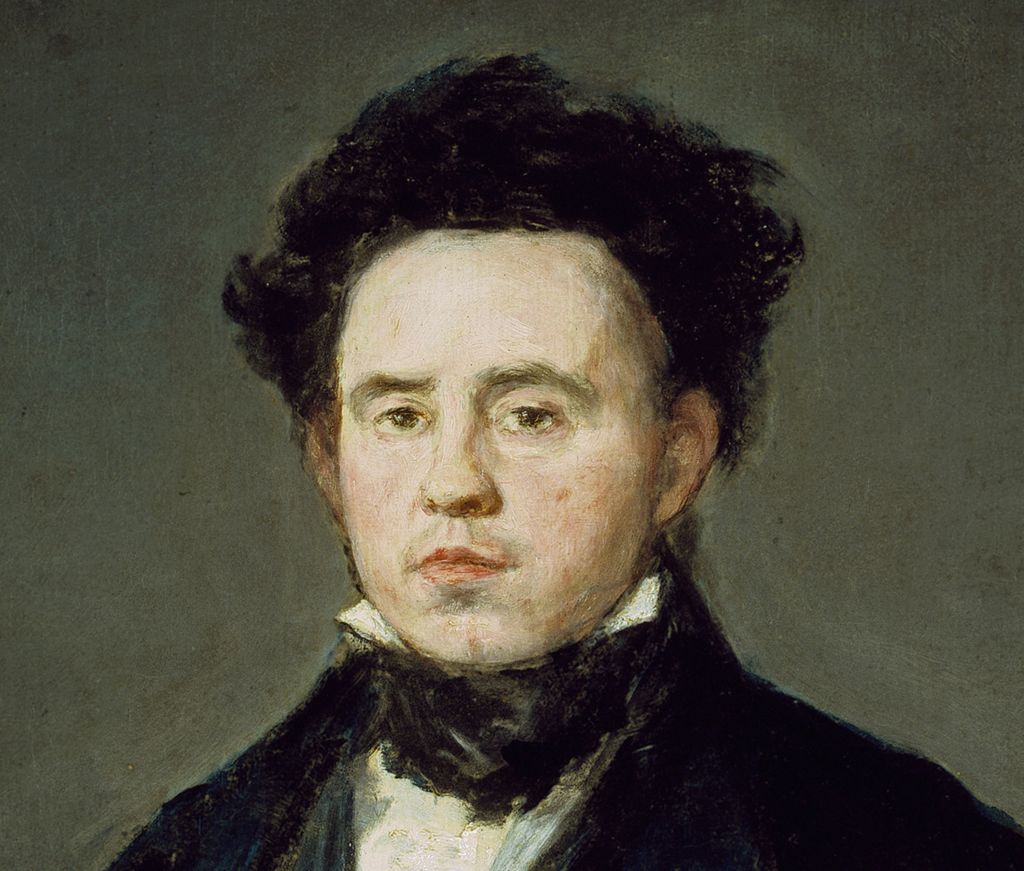
Muguiro’s eyes are raised from the sheet. His chin is still held close to the dark neckcloth, and the turn towards us is slight enough for the letter to stay upright in his grasp. Goya concentrates light around the forehead, cheeks and bridge of the nose. The white shirt narrows as it descends between the lapels, and its edge near the chin is partly swallowed by the folds of the neckcloth. Thin strokes of blue at the lapels and sleeves interrupt the dark mass of the coat. They help recover its shape without drawing the eye away from the flesh and paper. [2]
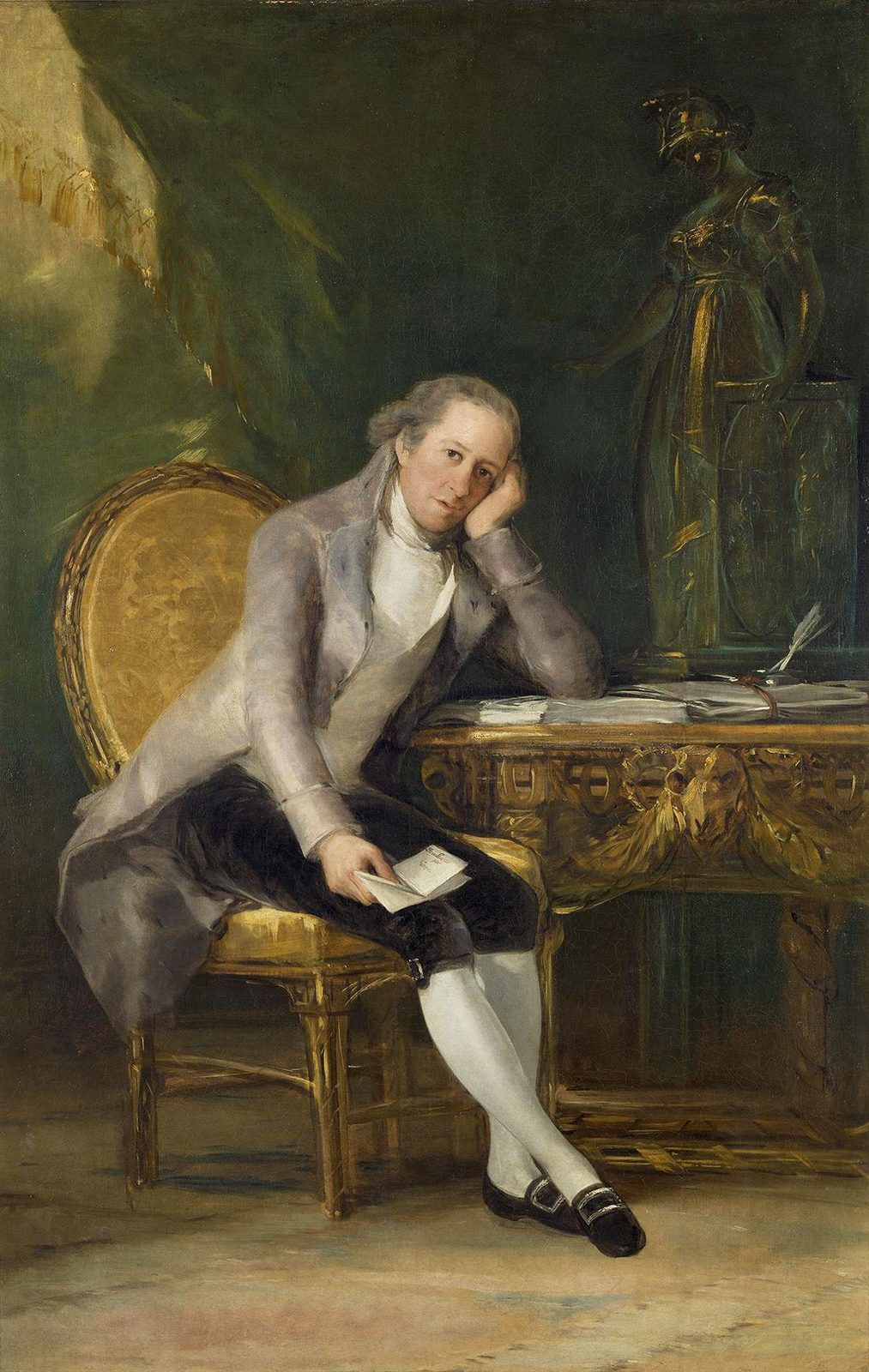
At the desk, the few light marks along the top separate the papers and inkwell from the darker edge below. The pen rises diagonally just before the frame cuts off the furniture. Compare that small corner with the extensive desk in Gaspar Melchor de Jovellanos. There the sitter leans into the furniture, and the papers support his elbow. In the Bordeaux portrait Muguiro sits back in his chair. His correspondence sits within reach, and the paper already in his hand is enough to suggest what he was doing a moment ago. [2] [3]
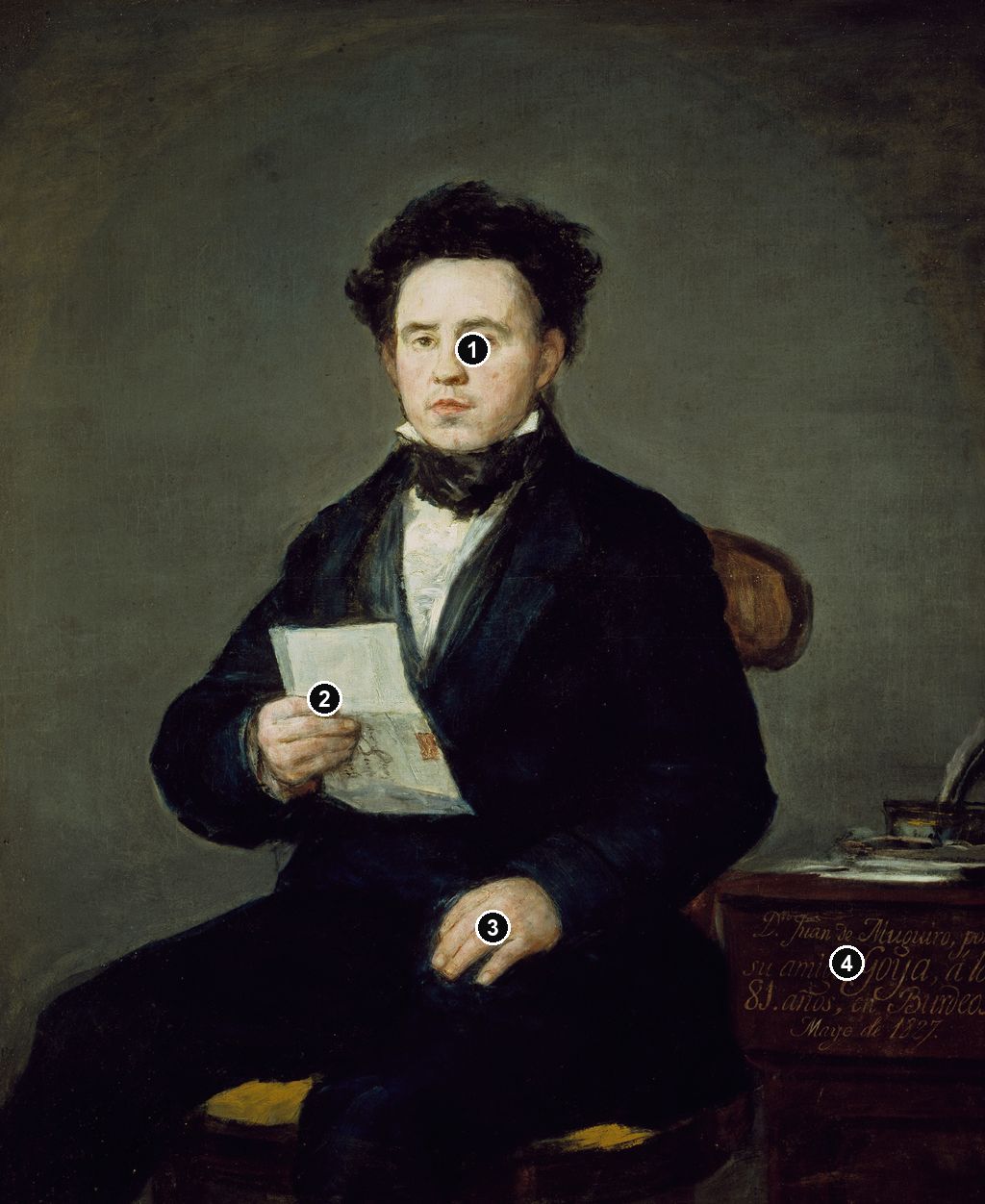
Annotated Details from Don Juan Bautista de Muguiro
Look from the sitter’s face to the sheet of paper and the desk.
Details from DON JUAN BAUTISTA DE MUGUIRO
Details from the Prado painting (P002898).
Muguiro’s face
The lit face stands out between the dark hair and cravat.
The sheet in his hand
Muguiro holds a pale sheet diagonally across the dark coat.
The hand at rest
His other hand lies open against the black trousers.
The inscription
The inscription names Muguiro and records Bordeaux and May 1827.
What Goya wrote on the desk
The Fundación Goya en Aragón transcribes the dedication as D.n Juan de Muguiro, por / su amigo Goya á los / 81. años, en Burdeos, / mayo de 1827. The slashes show the line breaks. In English it reads ‘Don Juan de Muguiro, by his friend Goya, aged 81, in Bordeaux, May 1827’. The first line begins just beneath the projecting lip of the desk. The warm lettering is close in tone to the surrounding wood, so it takes longer to read than the bright sheet takes to register. The age belongs to Goya, who puts his own name immediately before it. [1] [2]
The two surfaces offer different kinds of evidence. The letter in Muguiro’s hand looks like a piece of correspondence he has opened, and its contents are unknown. The inscription on the desk gives us a name, a relationship, a city and a month. In the earlier Jovellanos portrait, Goya put the names of sitter and painter on the sheet held by the minister. Here the position of the dedication leaves Muguiro’s letter free to belong to the scene. You can read the portrait first as a man interrupted in his work and then, as you find the writing, as a likeness made among friends. [2] [3]
Goya on film
Five films explore Goya’s portraits, prints, Black Paintings and painting techniques.
The Duke of Wellington by Goya
The portrait, its military decorations and its later theft.
Watch on YouTubeMuguiro and Goya in Bordeaux
Juan Bautista de Muguiro e Iribarren was a banker and merchant. He and his brother José Francisco were partners in a family banking and trading firm founded by an uncle. Through José Francisco’s marriage to Manuela Goicoechea, the family was connected to Goya’s. Manuela’s younger sister was married to Goya’s son Javier. Muguiro was already in Bordeaux when Goya settled there in 1824. The dedication is direct evidence of how Goya described their relationship three years later. The desk and letter point to Muguiro’s working life without identifying a specific transaction or occasion. [1] [2] [4]
Bordeaux gave Goya occasion to paint several people in his own circle. The Barnes Foundation’s Portrait of Jacques Galos shows the banker who handled Goya’s personal finances. Painted in 1826, it too has an inscription naming both men and recording Goya’s age, then 80. Galos is in a blue coat with gold-coloured buttons. His canvas is about 56 cm high, just over half the height of Muguiro’s. The closer framing in the Galos portrait puts more emphasis on the tilt of the head and the movement of the brush around the hair. Muguiro’s larger canvas gives Goya room to show the chair, both hands and the papers. [2] [5] [6]
Another sitter from the same circle is José Pío de Molina, Goya’s neighbour and a former mayor of Madrid. His portrait in Winterthur shows him from about the waist up, turned towards the right and wearing a brown coat and white neckcloth. In the passages around the coat, light strokes sketch in the clothing while the face already has a clear expression. The comparison shows how much Goya could vary the handling and scale of portraits made in the same city around the same time. Muguiro’s pale paper adds a second area of precise attention below his face, where Galos and Molina give us more room to study the play of light around the head. [2] [5] [7]
A second painting and a letter from Leocadia
Leocadia was part of the household Goya had made in Bordeaux. By the summer of 1827, after the portrait was painted, he was back in Madrid to negotiate his pension. A surviving letter from that trip, now in the Fondation Custodia, tells her he has arrived safely and that he is waiting to hear from her. He asks after her and Rosario. The letter gives a sense of how Goya kept in touch with his household while travelling between France and Spain. After his death in April 1828, Leocadia’s own letters show her turning to people in his circle for help. [7] [8] [10]
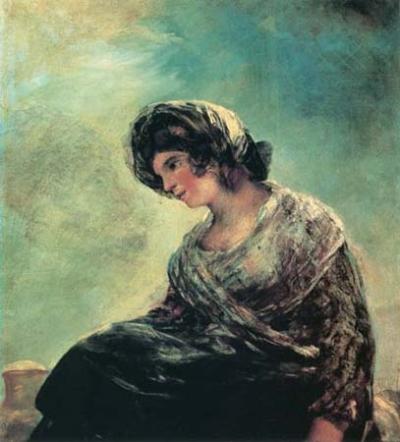
On 9 December 1829, more than a year after Goya’s death, Leocadia Zorrilla wrote from Bordeaux to Muguiro. Her letter names Milkmaid of Bordeaux and recalls that he had pressed her to name a price for it. She had said she would give him first refusal if she ever needed to sell. She now told him that the need had arisen, despite her daughter Rosario’s regret. She also said Goya had advised her to ask at least an ounce of gold. In the same letter she asks Muguiro for advice on advancing Rosario’s artistic training, mentioning the Duchess of San Fernando’s interest in her progress. If Muguiro was still interested, she offered to send the painting to his friend Ignacio García in Bayonne. The letter records her terms and proposed arrangement. The Prado catalogue records Muguiro’s subsequent acquisition. [1] [8] [9]
The portrait stayed in the Muguiro family. Juan Bautista Muguiro y Beruete, the sitter’s great-nephew and the second Count of Muguiro, bequeathed it to the Prado in his will of 1908. His brother Fermín, the third count, retained the use of it in his lifetime. The portrait entered the museum in 1945, the year of Fermín’s death. The Prado records both it and the Milkmaid as having entered the collection that year. In the Prado’s 1996 catalogue the entries sit side by side, numbered 2898 and 2899. In the portrait, a letter is part of the painted setting. In the history of the Milkmaid, a letter allows us to follow a painting from Goya’s circle into the sitter’s collection. [1] [2] [8] [9]
Artworks directory
| Name | Date | Medium |
|---|---|---|
| And There’s No Help for It, Plate 15 | Printed 1863 | |
| Asmodea | c. 1820–23 | Wall painting transferred to canvas |
| Boys Inflating a Bladder | 1777–78 | Tapestry cartoon |
| Boys Picking Fruit | 1778 | Tapestry cartoon |
| Bullfight in a Divided Ring | 1825 | Lithograph |
| Card Players | 1777–78 | Tapestry cartoon |
| Card Players (sketch) | 1777–78 | Painted sketch |
| Dance on the Banks of the Manzanares | 1777 | Tapestry cartoon |
| Duel with Cudgels | c. 1820–23 | Wall painting transferred to canvas |
| Heads in a Landscape | c. 1820–23 | Easel painting |
| Judith and Holofernes | c. 1820–23 | Wall painting transferred to canvas |
| Leocadia | c. 1820–23 | Wall painting transferred to canvas |
| Maja and Cloaked Men | 1777 | Tapestry cartoon |
| Maja and Cloaked Men (sketch) | 1777 | Painted sketch |
| Majo Clapping in Time to the Music | 1777 | Drawing |
| Men Reading | c. 1820–23 | Wall painting transferred to canvas |
| Out Hunting for Teeth, Plate 12 | 1799 | Etching, burnished aquatint and burin |
| Picnic in the Countryside (sketch) | 1776–78 | Painted sketch |
| Picnic on the Banks of the Manzanares | 1776 | Tapestry cartoon |
| Pilgrimage to San Isidro | c. 1820–23 | Wall painting transferred to canvas |
| Preparatory study for The Sleep of Reason Produces Monsters | c. 1796–97 | Drawing |
| Procession of the Holy Office | c. 1820–23 | Wall painting transferred to canvas |
| Quarrel at the Cockerel Inn (sketch) | 1777 | Painted sketch |
| Quarrel in the New Tavern | 1777 | Tapestry cartoon |
| Saturn Devouring His Son | c. 1820–23 | Wall painting transferred to canvas |
| Seated Majo Smoking | c. 1776 | Drawing |
| The Dog | c. 1820–23 | Wall painting transferred to canvas |
| The Drinker | 1777 | Tapestry cartoon |
| The Fates | c. 1820–23 | Wall painting transferred to canvas |
| The Great He-Goat | c. 1820–23 | Wall painting transferred to canvas |
| The Kite | 1777–78 | Tapestry cartoon |
| The Parasol | 1777 | Oil on canvas, tapestry cartoon |
| The Second of May 1808 | 1814 | Oil on canvas |
| The Sleep of Reason Produces Monsters, Plate 43 | 1799 | Etching and aquatint |
| The Third of May 1808 | 1814 | Oil on canvas |
| Thou Who Canst Not, Plate 42 | 1799 | Etching and burnished aquatint |
| Three Figures | 1776 | Drawing (lost) |
| Two Old Men | c. 1820–23 | Wall painting transferred to canvas |
| Two Old Men Eating Soup | c. 1820–23 | Wall painting transferred to canvas |
| Two Women and a Man | c. 1820–23 | Wall painting transferred to canvas |
| Universal Language: The Author Dreaming | 1797 | Drawing |
| The Family of Charles IV | 1800 | Oil on canvas |
| Witches’ Sabbath (Osuna painting) | 1797–98 | Oil on canvas |
| The Nude Maja | 1795–1800 | Oil on canvas |
| The Clothed Maja | 1800–07 | Oil on canvas |
| Self-Portrait (Drawing) | c. 1796 | Brush and carbon black ink on laid paper |
| The Swing, Madrid Album B.21 | 1795–97 | Brush and carbon black washes |
| Majas Fighting, a Majo Observing, Madrid Album B.15 | 1796–97 | Brush, grey and black washes on laid paper |
| Majos and Majas Conversing, Madrid Album B.16 | c. 1794–97 | Ink wash on paper |
| Weeping Woman and Three Men, Madrid Album B.17 | 1795–97 | Brush, carbon black washes and black chalk |
| Maja Seated on a Chair and Two Companions Behind, Madrid Album B.18 | 1795–97 | Brush and carbon black washes |
| Girl and Bull, Madrid Album B.23 | 1796–97 | Brush and carbon black washes |
| Lovers Sitting on a Rock, Madrid Album B.24 | 1796–97 | Brush and carbon black washes |
| Mariano Ceballos Riding a Bull | 1825 | Crayon lithograph and scraper |
| Landscape (lifetime impression) | c. 1807–10 | Etching and aquatint |
| Self-Portrait (1815), Prado canvas | 1815 | Oil on canvas |
| Self-Portrait (1815), Academy panel | 1815 | Oil on panel |
| Self-Portrait with Dr Arrieta | 1820 | Oil on canvas |
| Christ Crucified | 1780 | Oil on canvas |
| The Last Communion of Saint Joseph of Calasanz | 1819 | Oil on canvas |
| Christ on the Mount of Olives | 1819 | Oil on panel |
| The Flower Girls, or Spring | 1786–87 | Oil on canvas |
| The Grape Harvest, or Autumn | 1786–87 | Oil on canvas |
| The Snowstorm, or Winter | 1786–87 | Oil on canvas |
| The Threshing Ground, or Summer | 1786–87 | Oil on canvas |
| Picnic on the Banks of the Manzanares | 1776 | Oil on canvas |
| The Kite | 1777–78 | Oil on canvas |
| Dance on the Banks of the Manzanares | 1777 | Oil on canvas |
| A Fight at the Venta Nueva | 1777 | Oil on canvas |
| Blind Man’s Bluff | 1788 | Oil on canvas |
| Dogs on a Lead | 1775 | Oil on canvas |
| Hunting with a Decoy | 1775 | Oil on canvas |
| Hunter Loading His Rifle | 1775 | Oil on canvas |
| The Angler | 1775 | Oil on canvas |
| The Hermitage of San Isidro on His Feast Day | 1788 | Oil on canvas |
| The Meadow of San Isidro | 1788 | Oil on canvas |
| The Straw Manikin | 1791–92 | Oil on canvas |
| Witches’ Flight | c. 1797–98 | Oil on canvas |
| A Scene from ‘The Forcibly Bewitched’ | 1798 | Oil on canvas |
| The Duchess of Alba in Black | 1797 | Oil on canvas |
| The Duchess of Alba in White | 1795 | Oil on canvas |
| Charles III in Hunting Dress | c. 1786 | Oil on canvas |
| The Duke and Duchess of Osuna and Their Children | 1787–88 | Oil on canvas |
| Manuel Osorio Manrique de Zúñiga | 1787–88 | Oil on canvas |
| The Marquesa de Pontejos | c. 1786 | Oil on canvas |
| Equestrian Portrait of the 1st Duke of Wellington | 1812 | Oil on canvas |
| The Duke of Wellington | 1812–14 | Oil on wood |
| Portrait of Ferdinand VII of Spain | 1814 | Oil on canvas |
| Gaspar Melchor de Jovellanos | 1798 | Oil on canvas |
| María Tomasa Palafox y Portocarrero | 1804 | Oil on canvas |
| Señora Sabasa García | c. 1806–11 | Oil on canvas |
| Don Juan Bautista de Muguiro | 1827 | Oil on canvas |
| Doña Isabel de Porcel | Before 1805 | Oil on canvas |
| The Colossus | After 1808 | Oil on canvas |
| The Burial of the Sardine | 1808–12 | Oil on panel |
| The Madhouse | 1808–12 | Oil on panel |
| A Procession of Flagellants | 1808–12 | Oil on panel |
| Portrait of Jacques Galos | 1826 | Oil on canvas |
| Portrait of Mariano Goya, the Artist’s Grandson | 1827 | Oil on canvas |
| Milkmaid of Bordeaux | c. 1827 | Oil on canvas |
| Portrait of Don Juan Antonio Cuervo | 1819 | Oil on canvas |
| María Luisa of Parma (Naples version) | c. 1800 | Oil on canvas |
| The Countess of Baena | 1819 | Oil on canvas |
| The Family of the Infante Don Luis | 1783–84 | Oil on canvas |
| The Holy Family | c. 1787 | Oil on canvas |
| Saint Barbara | c. 1773 | Oil on canvas |
| Saints Justa and Rufina | 1817 | Oil on canvas |
| El Tío Paquete | c. 1819–20 | Oil on canvas |
| The Forge | c. 1815–20 | Oil on canvas |
| Majas on a Balcony (Metropolitan Museum version) | c. 1800–10 | Oil on canvas |
| Maja and Celestina on a Balcony | c. 1808–12 | Oil on canvas |
| The Water Bearer | 1808–12 | Oil on canvas |
| Time and the Old Women | c. 1810 | Oil on canvas |
Frequently Asked Questions
He holds an open letter in his right hand. Its purpose and contents are unknown. Goya placed the legible dedication on the desk at the lower right of the painting. [2]
Discussion
Look again at the images and ideas explored in Don Juan Bautista de Muguiro. These editorial prompts invite your observations.
Follow the face, the raised letter and the hand on the thigh, then look for the desk inscription. How does the portrait read before you find the words ‘his friend’? What changes once you know who wrote them?
Reader Insights
Where does the light fall on Muguiro and the paper?
What does the inscription add to the image?
Join the Conversation
Share a detail, comparison or question about Don Juan Bautista de Muguiro below.
References
- Museo del Prado, Catálogo de las pinturas (1996), p. 154, entries 2898 and 2899. View source.
- Fundación Goya en Aragón, Juan Bautista Muguiro, catalogue entry 189 and inscription transcription. See also the English entry. View source 1. View source 2.
- Fundación Goya en Aragón, Gaspar Melchor de Jovellanos, catalogue entry 352. View source.
- Universidad de Zaragoza, ‘Cronología’, entries for Goya’s Bordeaux years. View source.
- Barnes Foundation, Portrait of Jacques Galos, collection record BF5. View source.
- Fundación Goya en Aragón, Jacques Galos, catalogue entry 190 and inscription transcription. View source.
- Fundación Goya en Aragón, José Pío de Molina, catalogue entry 187. View source.
- Leocadia Zorrilla, letter to Juan de Muguiro Iribarren, Bordeaux, 9 December 1829, in Ángel Canellas López (ed.), Francisco de Goya. Diplomatario (Institución Fernando el Católico, 1981), document CLXXXIV, p. 515. View source.
- Fundación Goya en Aragón, La lechera de Burdeos, catalogue entry 488. View source.
- Fondation Custodia, ‘La Fondation Custodia acquiert une lettre inconnue de Goya’, with recto and verso of Goya’s letter to Leocadia Zorrilla from Madrid, before 30 July 1827. View source.







