


 by Tom Gurney
Tom Gurney BSc (Hons) is an art history expert with over 20 years experience
Published on June 19, 2020 / Updated on November 20, 2026
Email: tomgurney1@gmail.com / Phone: +44 7429 011000
Introduction
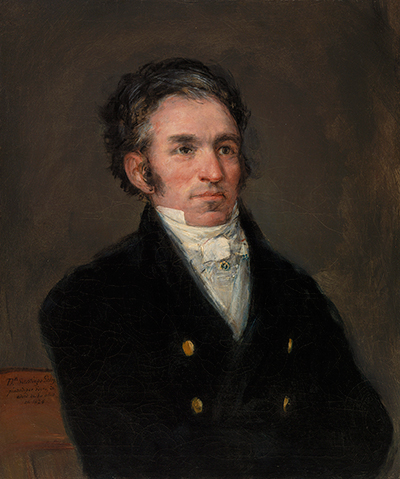
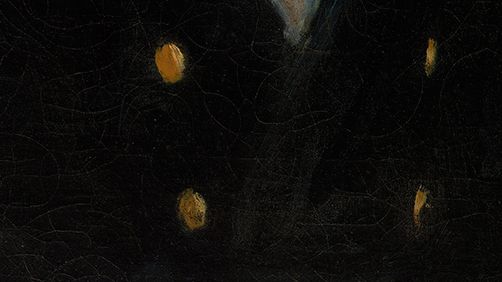
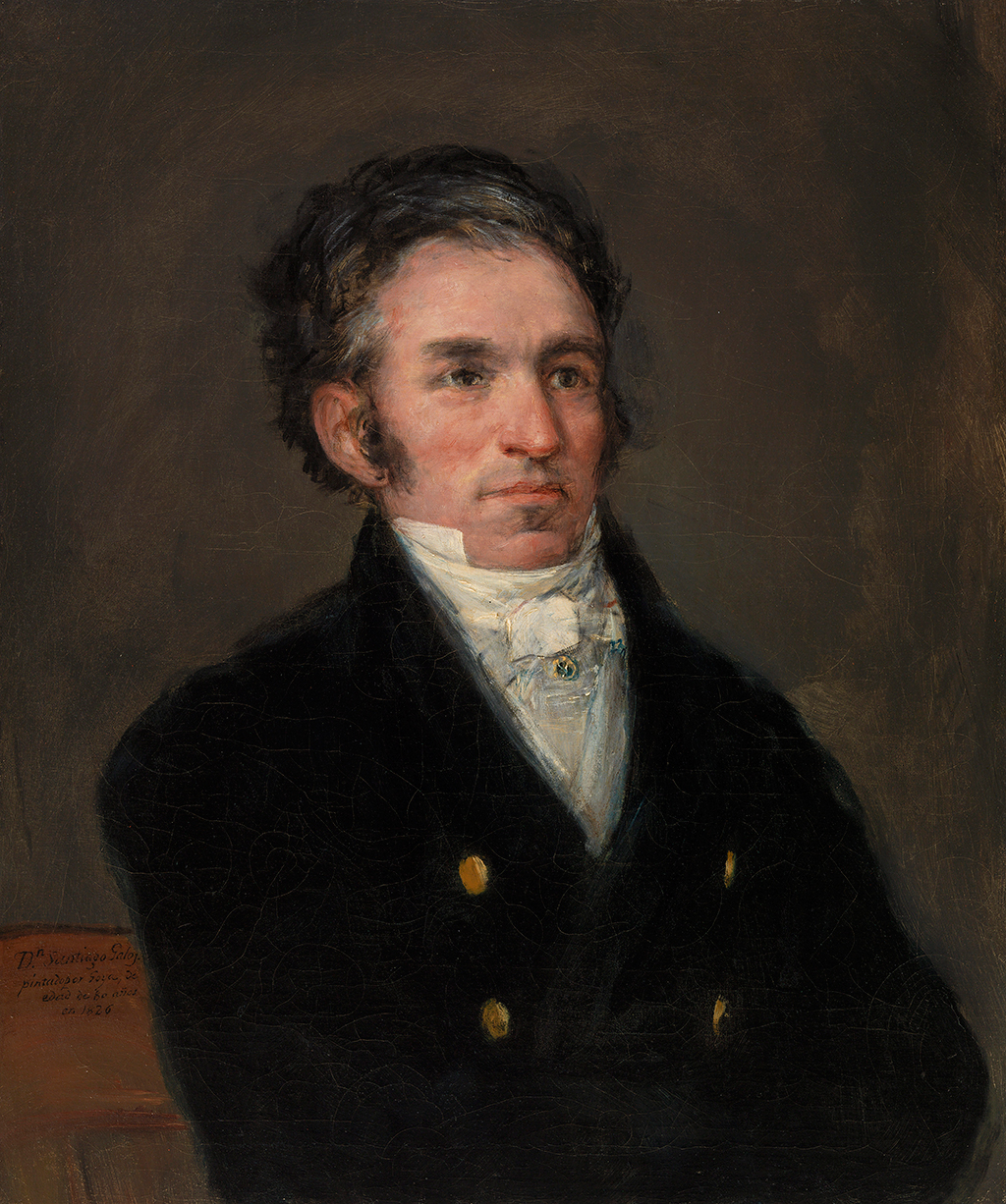
Jacques Galos turns his face towards the right edge of Goya’s canvas. In the dark coat, four small flashes of gold mark the buttons. A white collar and folded cravat draw the eye up to the sitter’s face, where the reddish brushwork at the nose and cheeks is still visible. Down by his shoulder, a few lines of writing identify him as Santiago Galos. The Barnes Foundation calls him Jacques Galos, the French name of the Bordeaux banker whose dealings with Goya are documented in the artist’s letters. [1] [2] [3]
At a Glance
- ArtistFrancisco de Goya y Lucientes
- TitlePortrait of Jacques Galos [1]
- Date1826, during Goya’s Bordeaux years. [1] [2]
- Medium and dimensionsOil on canvas, 55.9 × 46.7 cm overall (height × width). [1]
- CollectionBarnes Foundation, Philadelphia, accession BF5. [1]
- SitterJacques Galos, a Bordeaux banker named Santiago Galos in the Spanish inscription. [1] [2]
Works across Goya’s career
The Parasol
1777The Nude Maja
1795–1800Saturn Devouring His Son
c. 1820–23The Dog
c. 1820–23The turn of the head
There is space above Galos’s head and to the right of his eyes. His shoulders are broad across the lower part of the canvas, and his chin sits just to the right of the centre. The light picks out the near cheek and the front of the forehead. The line from brow to nose is clearer on the far side, where the face turns away into the brown-grey background. A reddish touch on the lower lip and the darker line where the lips meet are enough to give the mouth its shape. The far eye sits close to the silhouette, and the unequal amount of space around the two eyes makes the turn easy to read. [1]
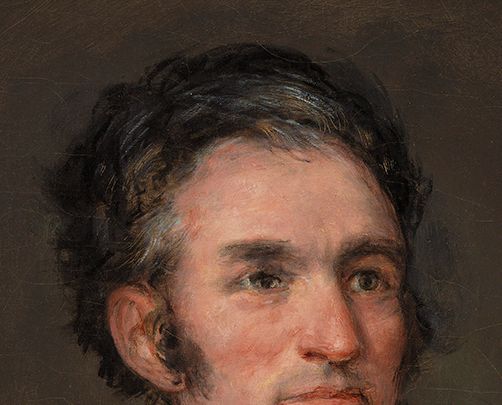
Look at the hair above the forehead and then at the edge by the ear. Over the forehead, grey strokes follow different angles across the dark curls. At the temple the hair comes down in a ragged edge beside the cheek. The grey is concentrated towards the front. Farther back, dark curls merge into the background, with a few strokes feathering out from the head. The face has its sharpest edges around the eyes and lips. The outline of the hair and the shoulders can be made out with much less precision, so the grey strokes tell us as much about the shape of the head as its silhouette does. [1] [2]
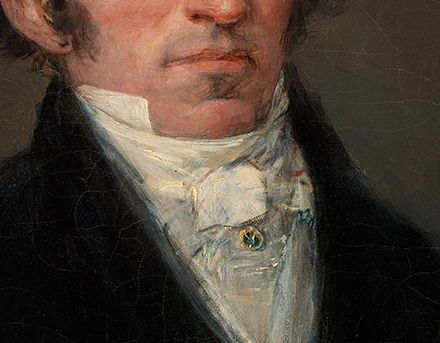
The clothing holds most of the darker paint. From a distance the coat looks almost black, but near the lapel and below the cravat there are cool blue passages. The collar comes up high under the chin, and the cravat narrows into a wedge. Look for a small dark pin where the pale folds meet. Below it the coat spreads to the sides and the gold-coloured buttons show as two unequal pairs, with the nearer buttons catching more light. Goya also varies the background. It is warmer around the lower left and lighter around parts of the face. These changes give the sitter room to turn even though very little of his surroundings is described. [1] [2]
Annotated Details from Portrait of Jacques Galos
Look from the lit face down to the white collar, the buttons and the inscription.
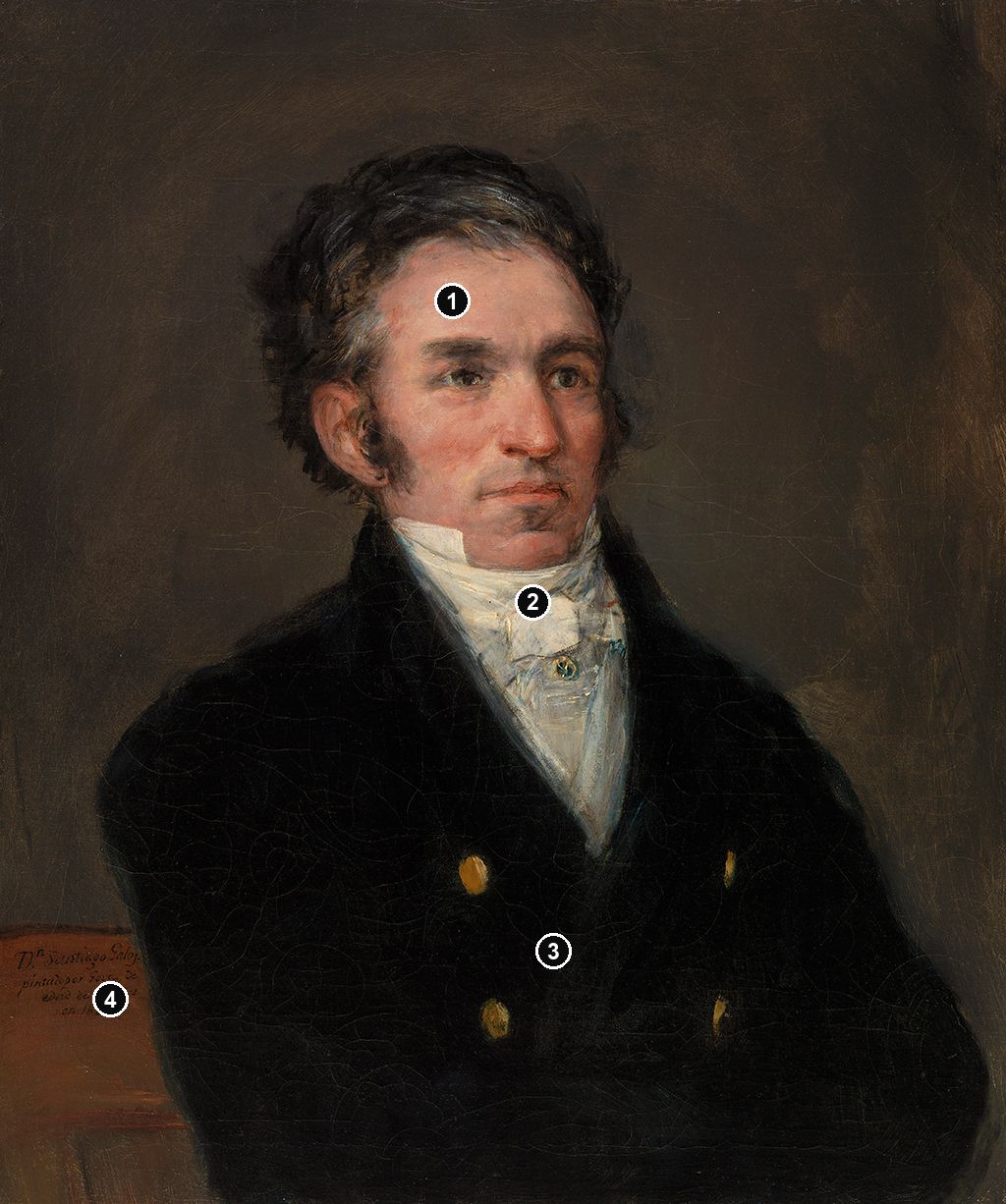
Details from PORTRAIT OF JACQUES GALOS
Details from the Barnes Foundation portrait (BF5).
Grey strokes in the hair
Pale strokes break up the dark outline of Galos’s hair.
Collar and neckcloth
The white cloth catches the light just below the face.
Buttons on the dark coat
Small warm marks stand out on the coat.
The inscription
The painted inscription names the sitter and gives the year 1826.
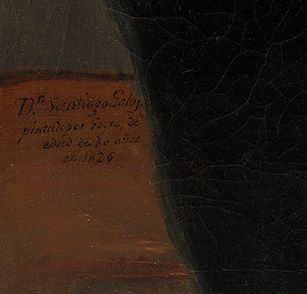
Santiago in the inscription
The writing is in the lower left, on the warm brown patch beside the dark coat. The Fundación Goya en Aragón transcribes it as D.n Santiago Galos / pintado por Goya de / edad de 80 años / en 1826. The slashes mark line breaks. It means ‘Don Santiago Galos, painted by Goya, aged 80, in 1826’. Santiago is the Spanish equivalent of Jacques. Goya gives his own age immediately after his own name. The words can be hard to make out at the size of a page illustration, where the lines of the inscription register as a few thin marks. [1] [2]
The inscription gives the year. The Fundación places the portrait around Goya’s visit to Madrid in 1826, with the exact timing on either side of the visit uncertain. The painting was in the Galos collection in Bordeaux. Aureliano de Beruete’s early twentieth-century account, cited in the University of Zaragoza’s study of the portraits, locates it with the sitter’s daughter, the Countess of Houdetot. The same study cites a later account that traces it through the Mietcke collection in Vienna and Durand-Ruel in New York before Barnes. The reported owners give the outline of its journey, while dates for those transfers remain unclear. [1] [2] [4]
Goya on film
Five films explore Goya’s portraits, prints, Black Paintings and painting techniques.
The Duke of Wellington by Goya
The portrait, its military decorations and its later theft.
Watch on YouTubeGoya’s banker in Bordeaux
Goya moved to Bordeaux in 1824, during the political repression that followed the restoration of Ferdinand VII’s absolute rule. Galos had already lived in Pamplona before settling in Bordeaux. He helped found the Bordeaux savings bank in 1819, later directed the Bank of Bordeaux and joined the city’s Chamber of Commerce in 1827. His work for the painter was personal. In his letters to his son Javier, Goya mentions money held with Galos and treats it as available for family expenses. In one letter he expects to pay for Javier and his grandson Mariano to stay with him and to visit Paris. [2] [3] [5]
On 12 March 1828 Goya wrote again to Javier from Bordeaux. He recalled calling to collect a monthly payment and asking how far the income fell short of twelve thousand reales. The answer was three thousand francs. Goya then asked Javier to check his papers if he knew the figure. The passage records an ordinary consultation between the painter and the man who managed his money. It also places Galos in the middle of a conversation between father and son about Mariano’s plans. The letter dates from nearly two years after the sitting and helps explain why the banker appears so often in Goya’s last correspondence. [2] [3]
Galos also acquired lithographs from the Bulls of Bordeaux and took care of the property Goya left behind. Goya had made the bullfighting prints in the workshop of Cyprien Gaulon in 1825. The Musée des Beaux-Arts de Bordeaux holds prints from the series as well as a unique trial impression. In the prints the action spreads through a crowded arena, with spectators pressing up to the action. The trial impression spans nearly 43 cm across. The portrait, made a year later, is only a few centimetres wider. In the vertical canvas Goya uses that span for the turn of a single head and the way the light hits a collar. [1] [2] [6]
Muguiro, Mariano and Molina
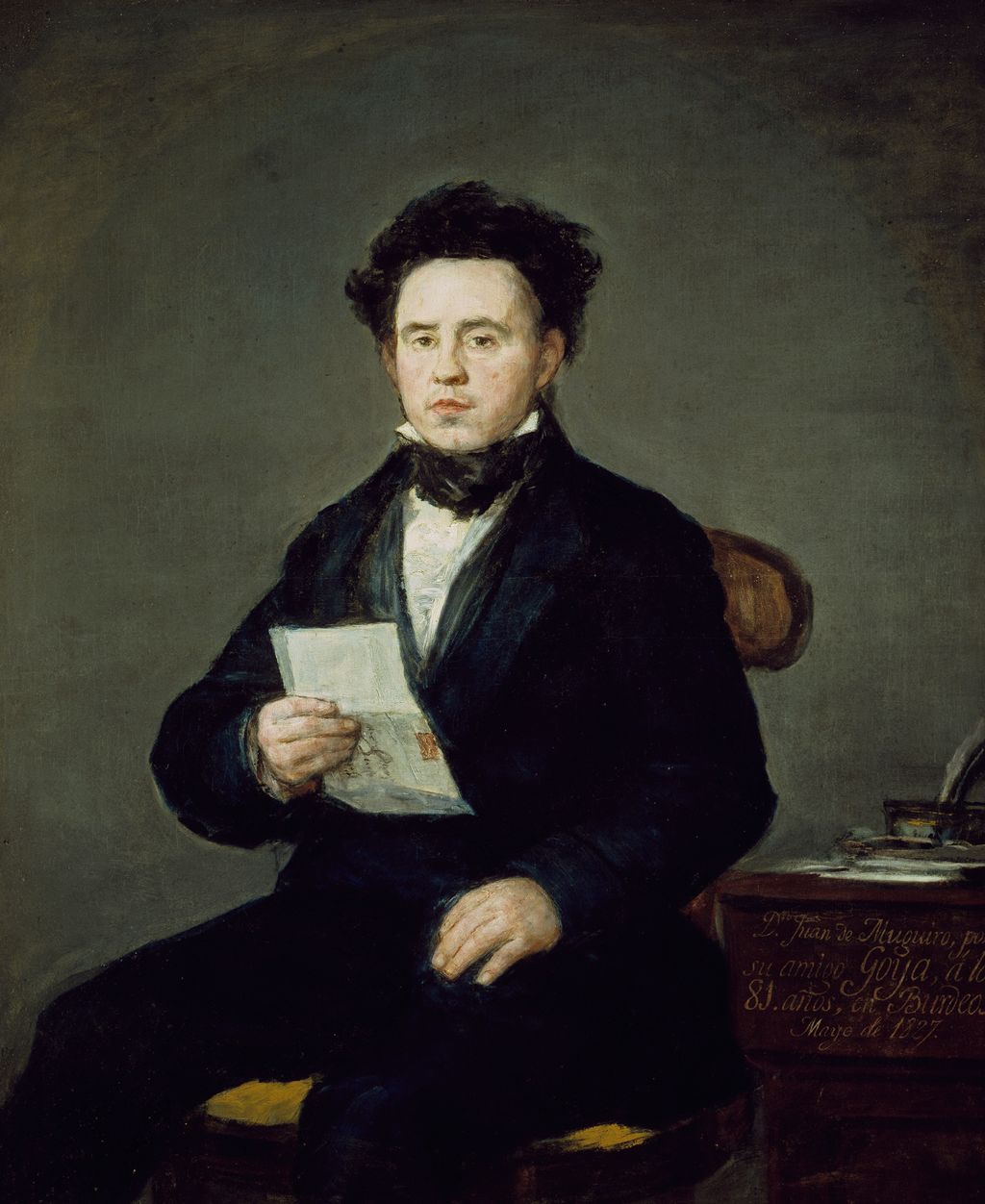
Goya painted another banker in Don Juan Bautista de Muguiro in May 1827. Muguiro also wears a sombre coat and a pale shirt, and here the canvas is tall enough to show both hands. One holds an open letter, and the other rests on his thigh. Goya uses the desk at the right to carry his dedication, which gives his name and age, 81, and calls him Muguiro’s friend. The portrait of Galos has fewer objects to take in. Its tight crop gives a coat button or a fold of linen more weight, and the small inscription appears at the left in an otherwise unoccupied part of the picture. [1] [2] [7]
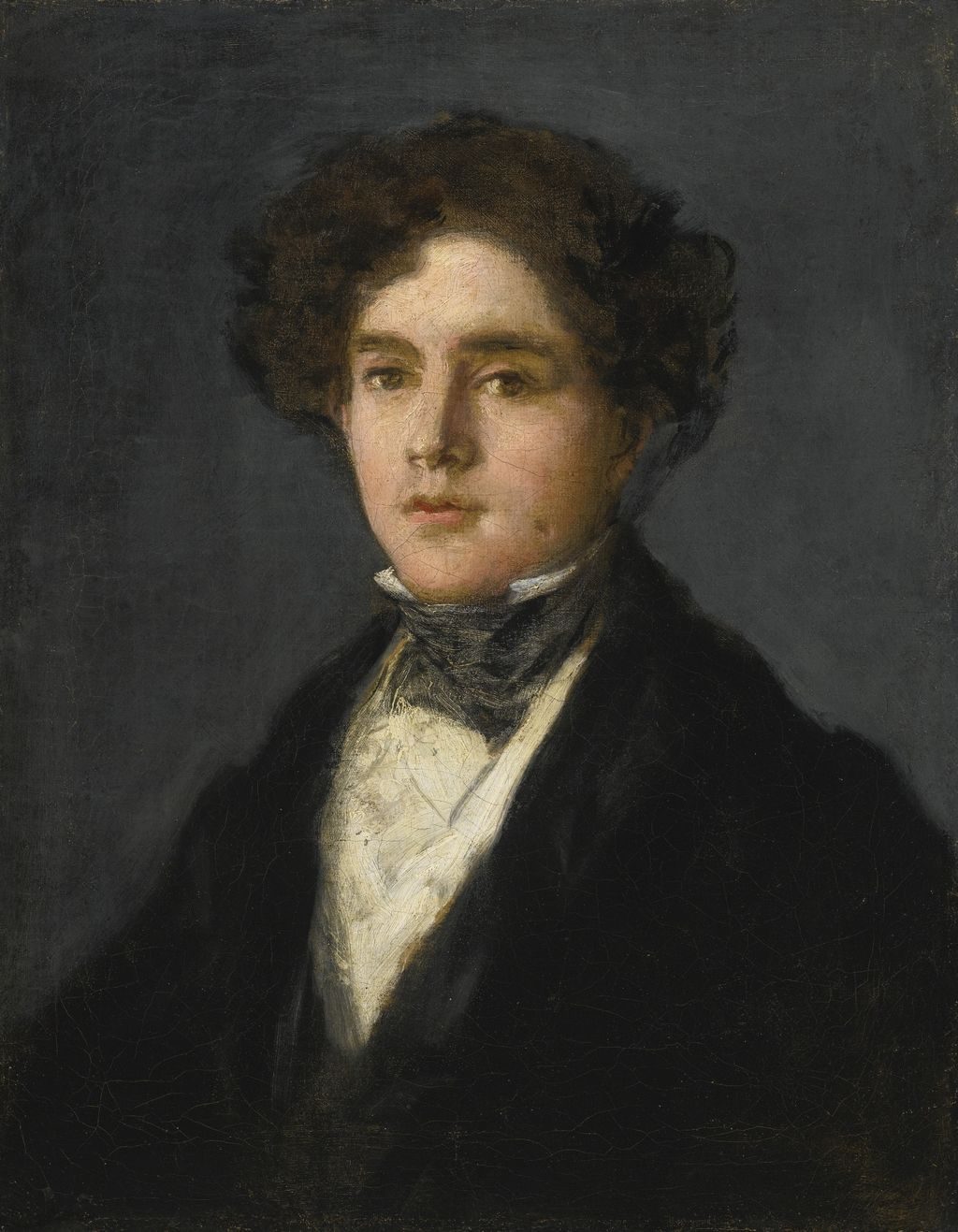
The portrait of Mariano Goya, made in 1827, comes closer to Galos in size. Both sitters are framed against quiet backgrounds, and in each canvas pale clothing draws attention to the space below the chin. Mariano faces out more directly, and his dark curls fall lower beside both cheeks. His jacket takes up much of the lower canvas, as Galos’s does. In the older sitter, the glints on the buttons give the dark coat its own pattern. In Mariano’s portrait the dark jacket and scarf concentrate attention nearer the face. Goya used that close format for two very different people, one the grandson mentioned in the letters and the other the man holding money for the family. [1] [3] [8]
Goya’s last months can also be traced through a document kept in Bordeaux. The civil register for 16 April 1828 names José Pío de Molina and Romualdo Yáñez as the men who declared his death. In the published transcription, Molina is listed at the same address as Goya on the Fossés de l’Intendance. There is a portrait of Molina from around this time in Winterthur. He turns to the right, like Galos, in a brown coat and white neckcloth. Light on Molina’s collar is enough to distinguish it from the coat, which dissolves into broad passages of brown. Galos’s four buttons give the lower half of the Barnes canvas a more distinct shape. Molina appears in a French record as the man who came to declare his neighbour’s death, while Galos appears in Goya’s own Spanish letters as the man he saw about the family’s money. In the letter of 26 March 1828 the two men come up in quick succession. Goya tells Javier he has collected two payments from Galos and hopes to secure a permanent income for Mariano and his descendants. A few lines later he credits Molina with suggesting the valerian he has been taking. [1] [3] [9] [10]
Artworks directory
| Name | Date | Medium |
|---|---|---|
| And There’s No Help for It, Plate 15 | Printed 1863 | |
| Asmodea | c. 1820–23 | Wall painting transferred to canvas |
| Boys Inflating a Bladder | 1777–78 | Tapestry cartoon |
| Boys Picking Fruit | 1778 | Tapestry cartoon |
| Bullfight in a Divided Ring | 1825 | Lithograph |
| Card Players | 1777–78 | Tapestry cartoon |
| Card Players (sketch) | 1777–78 | Painted sketch |
| Dance on the Banks of the Manzanares | 1777 | Tapestry cartoon |
| Duel with Cudgels | c. 1820–23 | Wall painting transferred to canvas |
| Heads in a Landscape | c. 1820–23 | Easel painting |
| Judith and Holofernes | c. 1820–23 | Wall painting transferred to canvas |
| Leocadia | c. 1820–23 | Wall painting transferred to canvas |
| Maja and Cloaked Men | 1777 | Tapestry cartoon |
| Maja and Cloaked Men (sketch) | 1777 | Painted sketch |
| Majo Clapping in Time to the Music | 1777 | Drawing |
| Men Reading | c. 1820–23 | Wall painting transferred to canvas |
| Out Hunting for Teeth, Plate 12 | 1799 | Etching, burnished aquatint and burin |
| Picnic in the Countryside (sketch) | 1776–78 | Painted sketch |
| Picnic on the Banks of the Manzanares | 1776 | Tapestry cartoon |
| Pilgrimage to San Isidro | c. 1820–23 | Wall painting transferred to canvas |
| Preparatory study for The Sleep of Reason Produces Monsters | c. 1796–97 | Drawing |
| Procession of the Holy Office | c. 1820–23 | Wall painting transferred to canvas |
| Quarrel at the Cockerel Inn (sketch) | 1777 | Painted sketch |
| Quarrel in the New Tavern | 1777 | Tapestry cartoon |
| Saturn Devouring His Son | c. 1820–23 | Wall painting transferred to canvas |
| Seated Majo Smoking | c. 1776 | Drawing |
| The Dog | c. 1820–23 | Wall painting transferred to canvas |
| The Drinker | 1777 | Tapestry cartoon |
| The Fates | c. 1820–23 | Wall painting transferred to canvas |
| The Great He-Goat | c. 1820–23 | Wall painting transferred to canvas |
| The Kite | 1777–78 | Tapestry cartoon |
| The Parasol | 1777 | Oil on canvas, tapestry cartoon |
| The Second of May 1808 | 1814 | Oil on canvas |
| The Sleep of Reason Produces Monsters, Plate 43 | 1799 | Etching and aquatint |
| The Third of May 1808 | 1814 | Oil on canvas |
| Thou Who Canst Not, Plate 42 | 1799 | Etching and burnished aquatint |
| Three Figures | 1776 | Drawing (lost) |
| Two Old Men | c. 1820–23 | Wall painting transferred to canvas |
| Two Old Men Eating Soup | c. 1820–23 | Wall painting transferred to canvas |
| Two Women and a Man | c. 1820–23 | Wall painting transferred to canvas |
| Universal Language: The Author Dreaming | 1797 | Drawing |
| The Family of Charles IV | 1800 | Oil on canvas |
| Witches’ Sabbath (Osuna painting) | 1797–98 | Oil on canvas |
| The Nude Maja | 1795–1800 | Oil on canvas |
| The Clothed Maja | 1800–07 | Oil on canvas |
| Self-Portrait (Drawing) | c. 1796 | Brush and carbon black ink on laid paper |
| The Swing, Madrid Album B.21 | 1795–97 | Brush and carbon black washes |
| Majas Fighting, a Majo Observing, Madrid Album B.15 | 1796–97 | Brush, grey and black washes on laid paper |
| Majos and Majas Conversing, Madrid Album B.16 | c. 1794–97 | Ink wash on paper |
| Weeping Woman and Three Men, Madrid Album B.17 | 1795–97 | Brush, carbon black washes and black chalk |
| Maja Seated on a Chair and Two Companions Behind, Madrid Album B.18 | 1795–97 | Brush and carbon black washes |
| Girl and Bull, Madrid Album B.23 | 1796–97 | Brush and carbon black washes |
| Lovers Sitting on a Rock, Madrid Album B.24 | 1796–97 | Brush and carbon black washes |
| Mariano Ceballos Riding a Bull | 1825 | Crayon lithograph and scraper |
| Landscape (lifetime impression) | c. 1807–10 | Etching and aquatint |
| Self-Portrait (1815), Prado canvas | 1815 | Oil on canvas |
| Self-Portrait (1815), Academy panel | 1815 | Oil on panel |
| Self-Portrait with Dr Arrieta | 1820 | Oil on canvas |
| Christ Crucified | 1780 | Oil on canvas |
| The Last Communion of Saint Joseph of Calasanz | 1819 | Oil on canvas |
| Christ on the Mount of Olives | 1819 | Oil on panel |
| The Flower Girls, or Spring | 1786–87 | Oil on canvas |
| The Grape Harvest, or Autumn | 1786–87 | Oil on canvas |
| The Snowstorm, or Winter | 1786–87 | Oil on canvas |
| The Threshing Ground, or Summer | 1786–87 | Oil on canvas |
| Picnic on the Banks of the Manzanares | 1776 | Oil on canvas |
| The Kite | 1777–78 | Oil on canvas |
| Dance on the Banks of the Manzanares | 1777 | Oil on canvas |
| A Fight at the Venta Nueva | 1777 | Oil on canvas |
| Blind Man’s Bluff | 1788 | Oil on canvas |
| Dogs on a Lead | 1775 | Oil on canvas |
| Hunting with a Decoy | 1775 | Oil on canvas |
| Hunter Loading His Rifle | 1775 | Oil on canvas |
| The Angler | 1775 | Oil on canvas |
| The Hermitage of San Isidro on His Feast Day | 1788 | Oil on canvas |
| The Meadow of San Isidro | 1788 | Oil on canvas |
| The Straw Manikin | 1791–92 | Oil on canvas |
| Witches’ Flight | c. 1797–98 | Oil on canvas |
| A Scene from ‘The Forcibly Bewitched’ | 1798 | Oil on canvas |
| The Duchess of Alba in Black | 1797 | Oil on canvas |
| The Duchess of Alba in White | 1795 | Oil on canvas |
| Charles III in Hunting Dress | c. 1786 | Oil on canvas |
| The Duke and Duchess of Osuna and Their Children | 1787–88 | Oil on canvas |
| Manuel Osorio Manrique de Zúñiga | 1787–88 | Oil on canvas |
| The Marquesa de Pontejos | c. 1786 | Oil on canvas |
| Equestrian Portrait of the 1st Duke of Wellington | 1812 | Oil on canvas |
| The Duke of Wellington | 1812–14 | Oil on wood |
| Portrait of Ferdinand VII of Spain | 1814 | Oil on canvas |
| Gaspar Melchor de Jovellanos | 1798 | Oil on canvas |
| María Tomasa Palafox y Portocarrero | 1804 | Oil on canvas |
| Señora Sabasa García | c. 1806–11 | Oil on canvas |
| Don Juan Bautista de Muguiro | 1827 | Oil on canvas |
| Doña Isabel de Porcel | Before 1805 | Oil on canvas |
| The Colossus | After 1808 | Oil on canvas |
| The Burial of the Sardine | 1808–12 | Oil on panel |
| The Madhouse | 1808–12 | Oil on panel |
| A Procession of Flagellants | 1808–12 | Oil on panel |
| Portrait of Jacques Galos | 1826 | Oil on canvas |
| Portrait of Mariano Goya, the Artist’s Grandson | 1827 | Oil on canvas |
| Milkmaid of Bordeaux | c. 1827 | Oil on canvas |
| Portrait of Don Juan Antonio Cuervo | 1819 | Oil on canvas |
| María Luisa of Parma (Naples version) | c. 1800 | Oil on canvas |
| The Countess of Baena | 1819 | Oil on canvas |
| The Family of the Infante Don Luis | 1783–84 | Oil on canvas |
| The Holy Family | c. 1787 | Oil on canvas |
| Saint Barbara | c. 1773 | Oil on canvas |
| Saints Justa and Rufina | 1817 | Oil on canvas |
| El Tío Paquete | c. 1819–20 | Oil on canvas |
| The Forge | c. 1815–20 | Oil on canvas |
| Majas on a Balcony (Metropolitan Museum version) | c. 1800–10 | Oil on canvas |
| Maja and Celestina on a Balcony | c. 1808–12 | Oil on canvas |
| The Water Bearer | 1808–12 | Oil on canvas |
| Time and the Old Women | c. 1810 | Oil on canvas |
Frequently Asked Questions
It belongs to the Barnes Foundation in Philadelphia, where it is catalogued as Portrait of Jacques Galos, accession BF5. [1]
Goya identifies himself as 80 in the lower-left inscription, which also gives the year 1826. [2]
Discussion
Look again at the images and ideas explored in Portrait of Jacques Galos. These editorial prompts invite your observations.
Start with the line of the cravat, then look from Galos’s eyes to the space at the right of the canvas. Where does his attention seem to be? Compare the gaze with Muguiro’s and consider what the visible letter adds to the impression that somebody has just interrupted him.
Reader Insights
Follow the line of the cravat and the direction of his gaze.
Compare Galos’s portrait with Muguiro’s reading pose.
Join the Conversation
Share a detail, comparison or question about Portrait of Jacques Galos below.
References
- Barnes Foundation, Portrait of Jacques Galos, collection record BF5. View source.
- Fundación Goya en Aragón, Jacques Galos, catalogue entry 190 and inscription transcription. View source.
- Francisco de Goya, letters to Francisco Javier de Goya, in Ángel Canellas López (ed.), Francisco de Goya. Diplomatario (Institución Fernando el Católico, 1981), pp. 392–394, documents 277, 279–280. View source.
- Universidad de Zaragoza, Análisis documental de contenido de la imagen artística, p. 1811, entry 78, citing Aureliano de Beruete and Juan Antonio Gaya Nuño on provenance. View source.
- Fondation Custodia, ‘La Fondation Custodia acquiert une lettre inconnue de Goya’, with the autograph letter to Leocadia Zorrilla and context for the move to Bordeaux. View source.
- Musée des Beaux-Arts de Bordeaux, Combat de Taureaux, inventory Bx E 998.2, and Hommage à Goya (1824–2024). View source 1. View source 2.
- Fundación Goya en Aragón, Juan Bautista Muguiro, catalogue entry 189 and inscription transcription. View source.
- Meadows Museum, SMU, Portrait of Mariano Goya, the Artist’s Grandson, accession MM.2013.08. View source.
- Bordeaux civil register, death entry for Francisco de Goya, 16 April 1828, transcribed in ‘La maison mortuaire de Goya’ (1912). View source.
- Fundación Goya en Aragón, José Pío de Molina, catalogue entry 187. View source.







