


 by Tom Gurney
Tom Gurney BSc (Hons) is an art history expert with over 20 years experience
Published on June 19, 2020 / Updated on November 20, 2026
Email: tomgurney1@gmail.com / Phone: +44 7429 011000
Hokusai’s Ukiyo-e Woodblock Prints
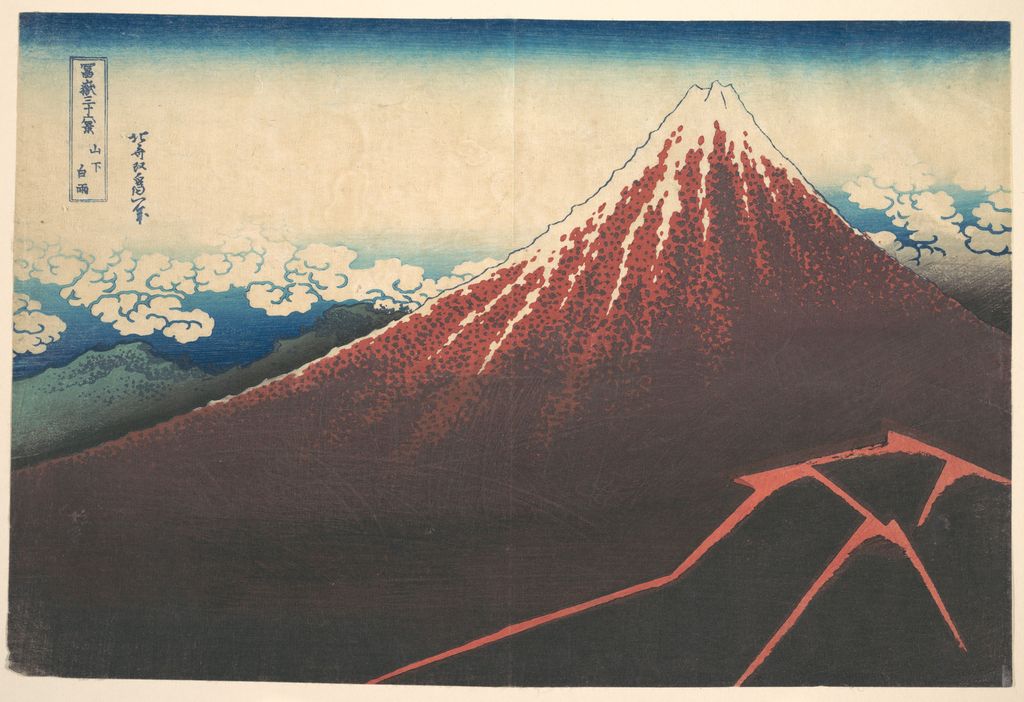
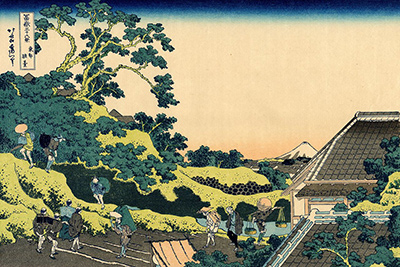
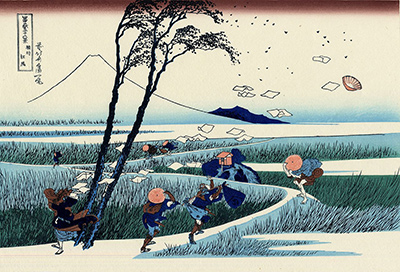
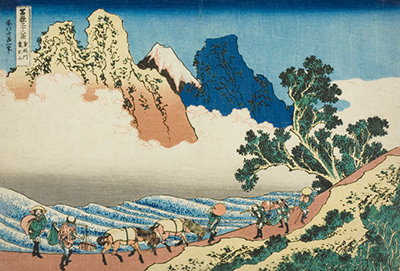
Near the top of Hokusai’s Rainstorm Beneath the Summit, a blue band darkens the edge of the sky and fades into the light below. Follow the edge of the mountain and another sort of transition comes into view. The shape of the summit is held by a precise line even as the tone deepens across its flank. Someone had to cut that contour into wood. Someone also had to control the amount of colour carried by the block when the paper came down. A single impression preserves the results of those different kinds of work. [1] [2]
Hokusai made drawings, paintings and printed books as well as the single sheets now most closely associated with his name. Ukiyo-e describes a field of subjects and artistic practice that included brush paintings and printed images. The woodblock process within it brought an artist’s drawing into a publishing trade. To understand why two impressions of one Hokusai print can differ, it helps to follow the drawing through that trade and to look closely at the surfaces that carried it. [2] [3]
At a Glance
- ArtistKatsushika Hokusai
- ScopeDesign, carving, printing and editions
Contents
- Who made a Hokusai print?
- How a brush line becomes a carved line
- Printing the colours and holding them in place
- Key Hokusai artworks and series
- Blue outlines, blue water and what analysis can tell us
- One design, many impressions
- Woodblock prints and their impressions
- What changes when the prints form a book
- What the surviving drawings tell us about a lost stage
- What wear looks like when one block is used again and again
- The work a publisher could put into circulation
Who made a Hokusai print?
Four roles recur in descriptions of the Edo print workshop. The designer made the initial drawing. The carver prepared the raised surfaces that transferred it to paper. The printer set the paper against those surfaces and controlled the ink, colour and pressure. The publisher, or hanmoto, organised the work and brought the finished sheets to market. Publishers could also be booksellers. Taking on a design meant financing blocks and labour before there were impressions to sell, and the publisher’s responsibilities included decisions about theme and production quality. [2] [3]
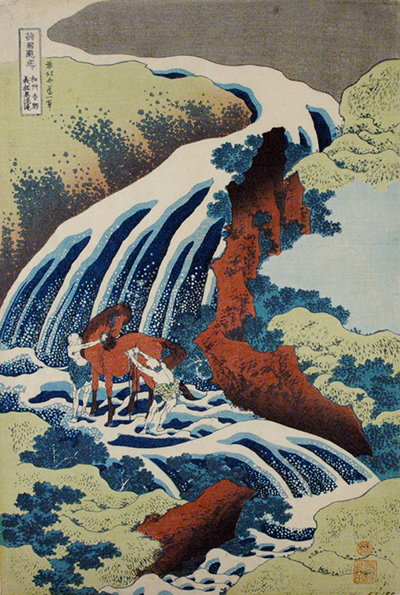
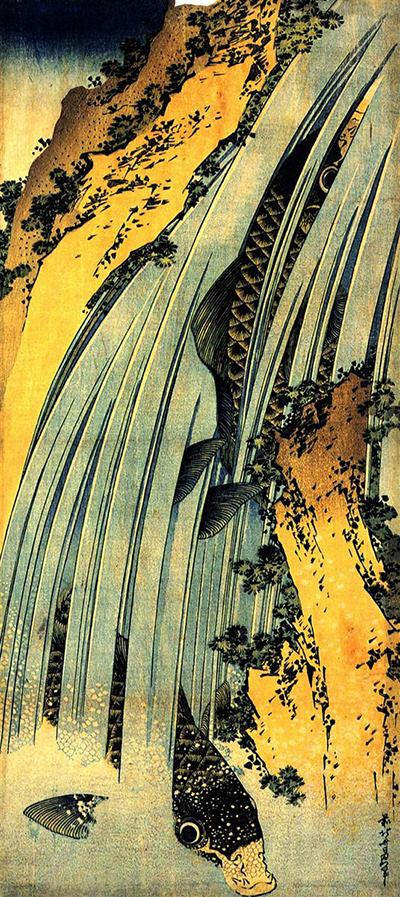
These roles can sometimes be read on the sheet. In Kirifuri Waterfall, for example, the National Gallery of Victoria identifies the seal of Eijudō, the firm of Nishimuraya Yohachi, in its impression. A publisher’s seal and an artist’s signature convey different kinds of information. The signature names the artist responsible for the design. The seal connects that particular sheet to the business of publishing it. Other marks, such as the kiwame seal recorded on the same print, belong to the procedures by which prints were authorised. Reading the inscriptions alongside the image gives a fuller account of how a sheet reached its original viewers. [3] [4]
The final line also depended on how well designer and carver understood each other. Hokusai’s work on illustrated books provides an unusually clear example. In correspondence concerning Tōshisen ehon, an illustrated edition of Chinese poetry, he expressed a preference for the carver Egawa Tomekichi. Ellis Tinios, discussing the books and their production for the Smithsonian’s Pulverer Collection, connects the request to the fine detail of Hokusai’s figures. That documented preference belongs to the books and their circumstances. It shows the care Hokusai could take over an engraving without assigning Egawa’s hand to every print carrying Hokusai’s name. [5]
How a brush line becomes a carved line
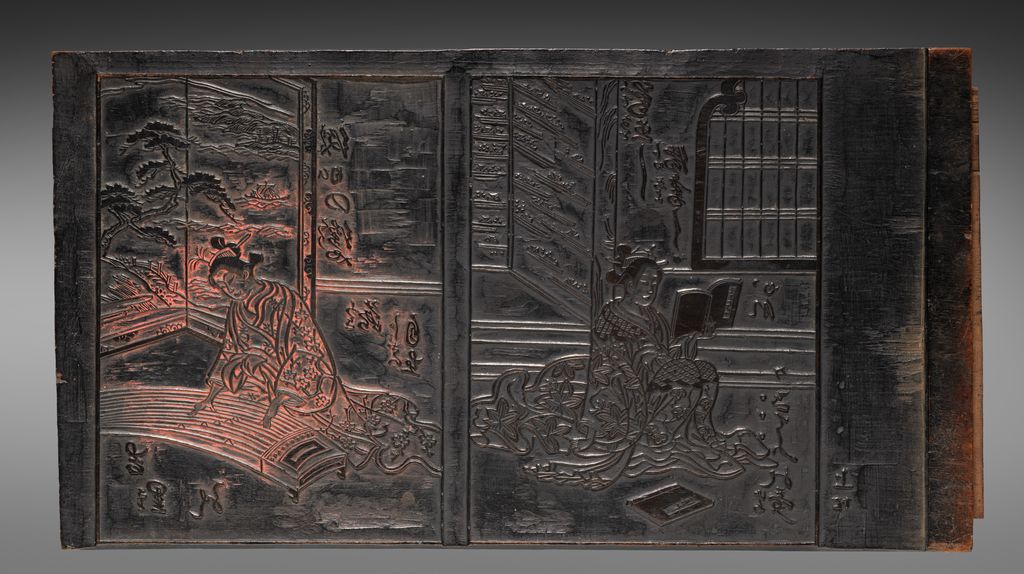
A drawing for a print had to pass from the artist’s paper to a surface that could carry ink repeatedly. In the process described by the Metropolitan Museum of Art, the drawing was transferred to thin paper and pasted onto a block, commonly made from cherry wood. The carver worked through the pasted drawing, cutting away the wood around the lines to leave them standing in relief. In the resulting block, what had been a mark drawn with a brush became the edge or top of a slender piece of wood. The raised surface carried the ink. The recessed area left the paper clear. [2]
This is why the drawing used for the transfer could be lost in making the print. Surviving drawings still tell us a great deal, especially those that were never cut. The British Museum’s set of drawings for The Great Picture Book of Everything, a work that did not reach publication, preserves finished designs in ink. They let a viewer linger over a stage normally difficult to see. One smooth drawn line can turn sharply into another. A change of thickness can indicate the shape of an animal or a fold of clothing. To transfer such an image, the cutter had to judge which small changes to keep legible in relief. These surviving drawings document the design stage, while the prints show what a workshop could make from such instructions. [2] [6]
The first block that carries the principal outlines is generally called the keyblock. For a print with several colours, impressions from that block could guide the preparation of subsequent blocks. Each new surface needed to correspond to a precise portion of the design. Consider the narrow branching discharge in Rainstorm Beneath the Summit. A light fork crossing a dark field must retain its fine boundaries from one impression to the next. A close look at those edges brings the separation of areas, alignment of the paper and condition of the blocks into the picture alongside the original drawing. [1] [2]
Image comparison
Printing the colours and holding them in place
The printer put colour on a raised block and laid paper against it. Rubbing the back with a round pad called a baren pressed the sheet into contact with the raised surface. Japanese papers made from mulberry fibres were valued for their ability to take up colour and withstand repeated rubbing. The same sheet might return to the printing surface several times. Its edges needed to meet the same coordinates again so that the impressions from several blocks came together as a single image. [2] [7]
Alignment marks, known as kentō, guided that placement. A right-angled notch located a corner of the paper while a second notch held another part of the edge in position. A viewer generally sees their effect in the meeting of printed shapes. A patch of colour on a garment needs to fill the space created by the line without spilling across a neighbouring feature. In an image made from several printing surfaces, a shift can be noticeable in one meeting of colours before it becomes obvious elsewhere. Blocks and the printer’s placement of paper both matter to the eventual effect. An isolated coloured edge in a reproduction is therefore worth checking against the same detail in another impression before explaining how it happened. [2] [7]
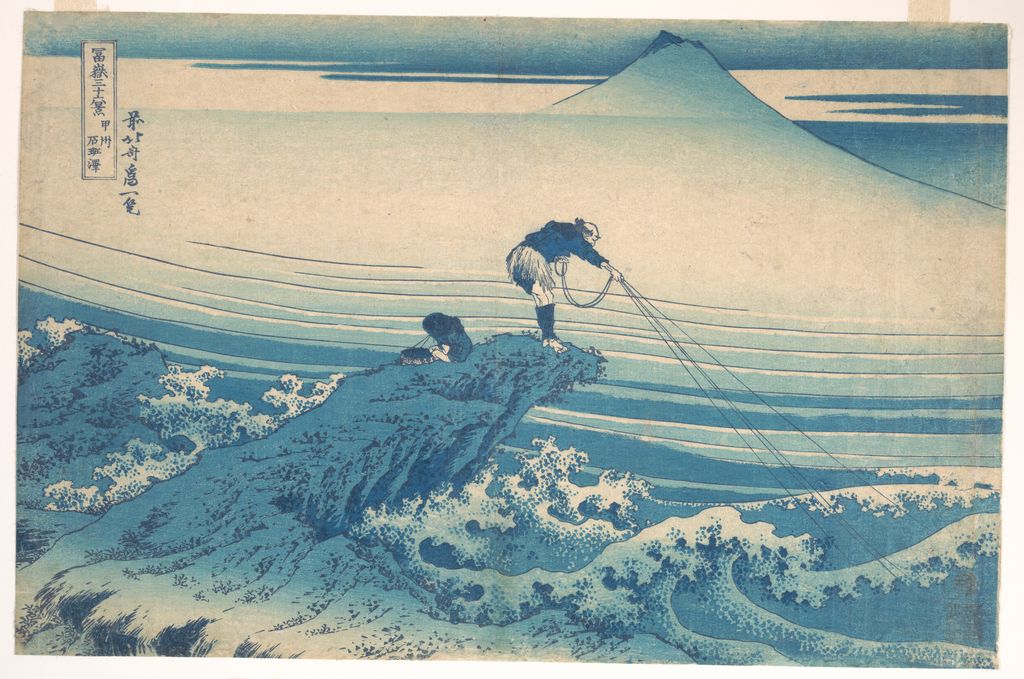
A block can also carry a gradual change of tone. In bokashi, the printer prepares the colour on the surface so that a band shades from stronger to weaker. The passage takes shape at printing, with each sheet receiving a fresh application. In Kajikazawa in Kai Province, a comparison of documented impressions shows how the weight of colour helps decide what the eye notices first. On the Met’s JP2986 sheet, the blue around the fishing ledge and the open pale area above it help separate the foreground from the distant mountain. The Met’s JP1327 uses a bright garment that makes the figure stand out differently. The fisherman and mountain have the same relationship on the page, yet the route a viewer takes between them can change with the printing. [7] [8] [9]
Key Hokusai Artworks and Series
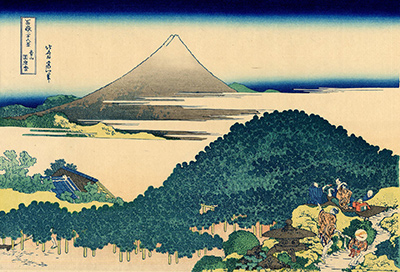
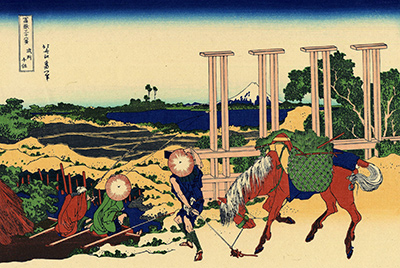
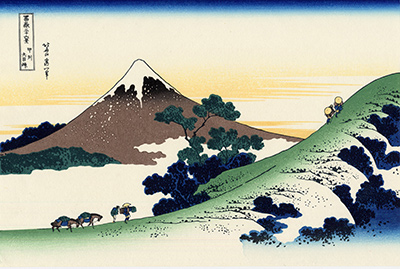
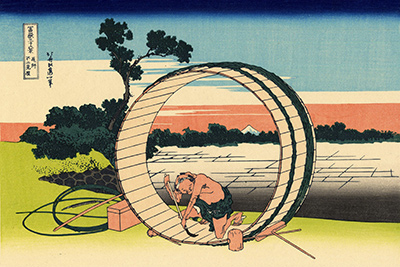
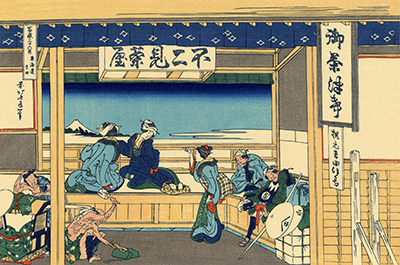
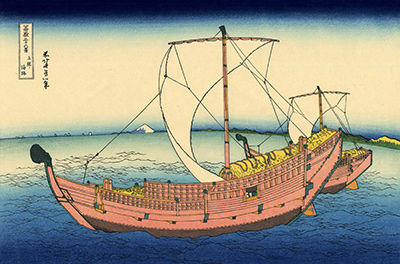
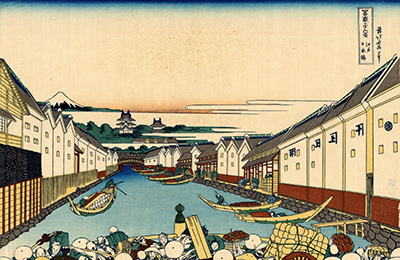
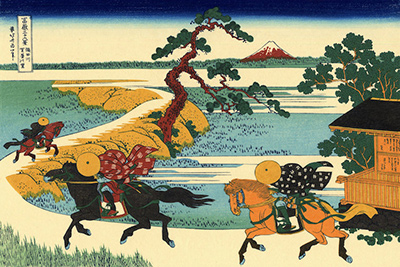
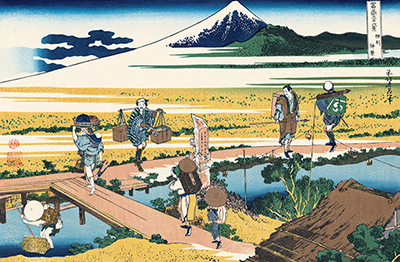
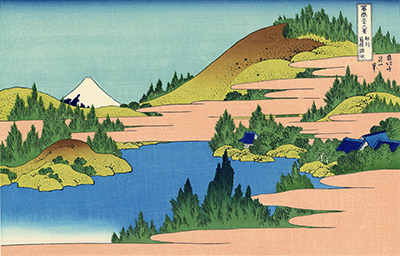
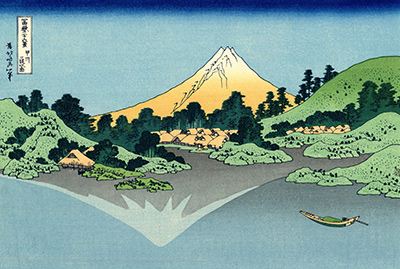
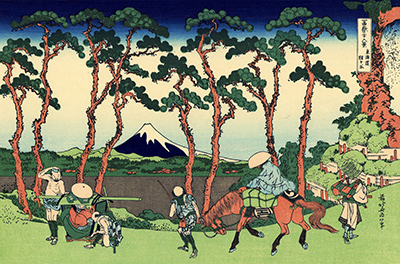
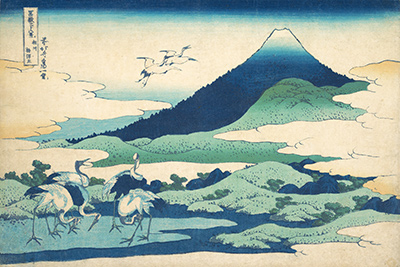
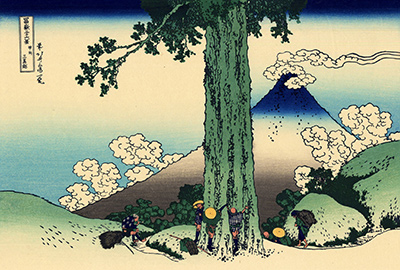
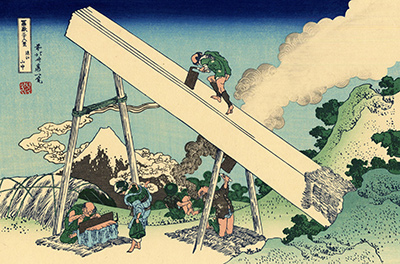
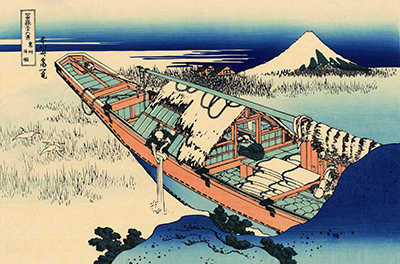
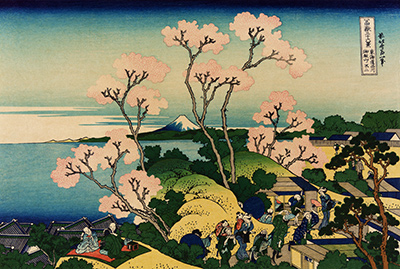
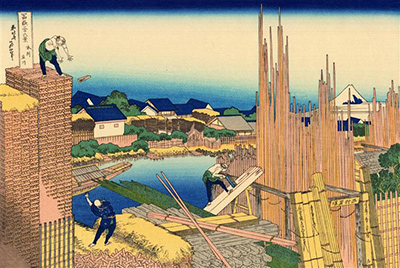
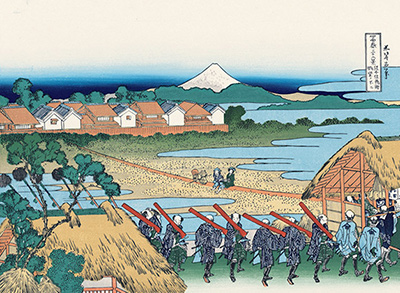
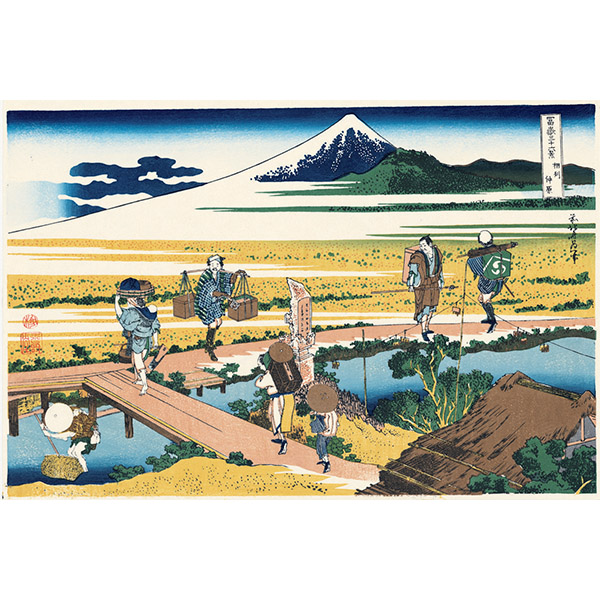
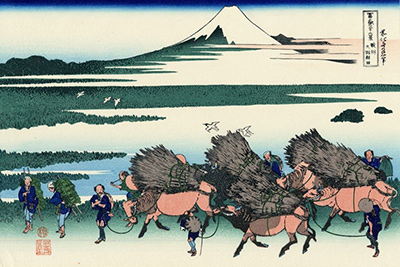
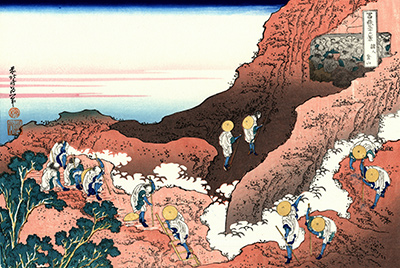
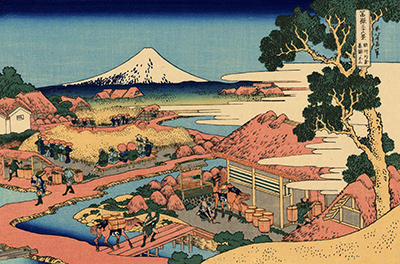
Hokusai’s two Mount Fuji projects
Thirty-six Views of Mount Fuji
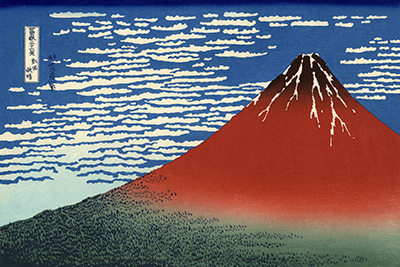
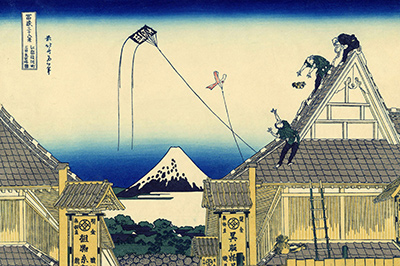
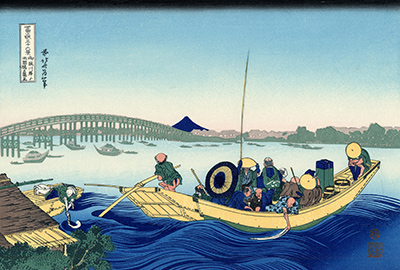
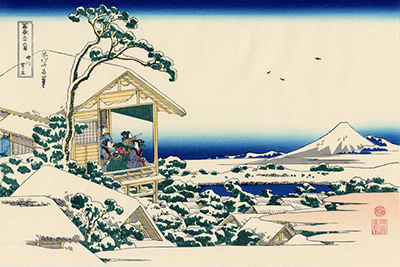
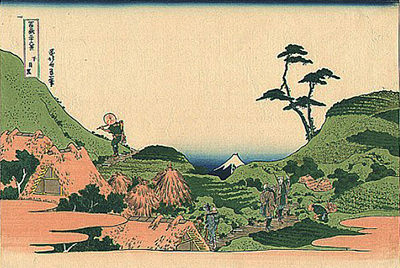
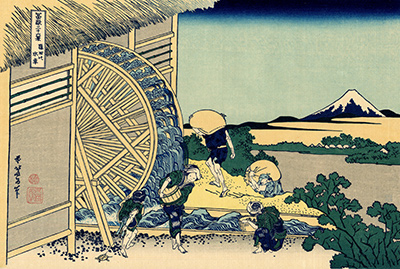
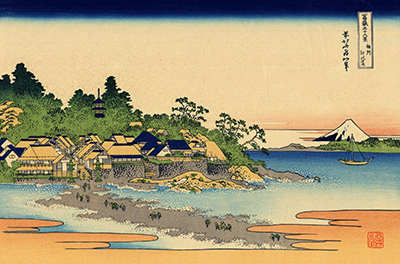
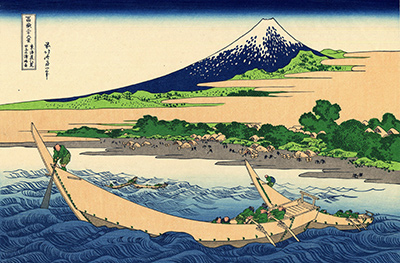
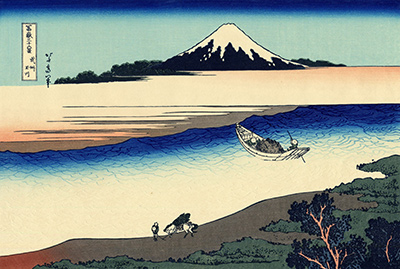
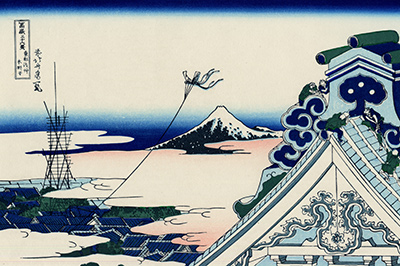
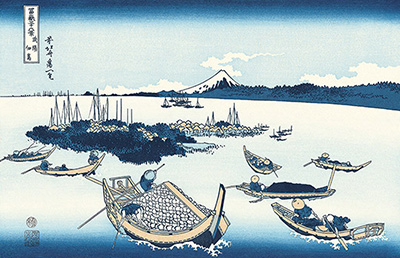
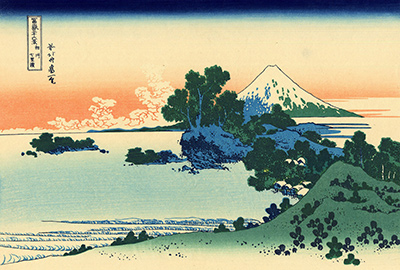
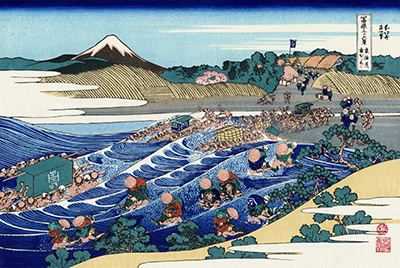
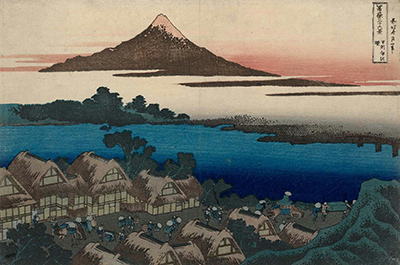
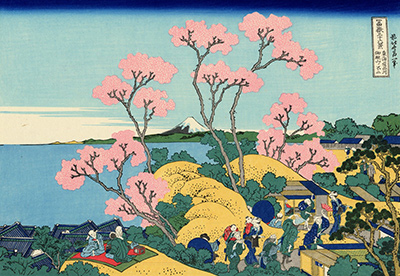
The colour print series includes the Great Wave, Red Fuji and Rainstorm Beneath the Summit. Forty-six designs were published.
One Hundred Views of Mount Fuji
Three illustrated volumes explore the mountain through ink lines, grey tones and changes of viewpoint across facing pages.






Blue outlines, blue water and what analysis can tell us
Prussian blue gave nineteenth-century printmakers a strong blue pigment that could be used in different concentrations and in combination with other materials. Its presence in Hokusai’s series is well documented, but an outline, an expanse of water and a strip of sky can come from different blocks and have different colour recipes. The word aizuri-e describes the visual and printing practice of producing a design predominantly in blue. A museum can give that designation to a sheet while still describing individual blue inks more precisely elsewhere in its research. The Met, for example, discusses the unified blue appearance of its JP15 impression of Shichirigahama in Sagami Province. That catalogue observation attaches to the identified sheet. [10] [11]
Marc Vermeulen and colleagues studied the blue keyblock outlines of 141 impressions of designs from Thirty-six Views of Mount Fuji. They used reflectance spectroscopy to compare the signatures of indigo and Prussian blue mixtures, then looked for patterns that could help situate groups of sheets in a production sequence. Their method gives conservators an additional way to examine patterns that are hard to see unaided. What it measures is important. Evidence from selected outline passages cannot by itself identify the blue mixture in the whole surface of a print. A group defined in a study also depends on the objects available to measure and on the way the measurements were taken. [10]
There is a useful distinction here for anyone looking at prints online. A blue can appear less saturated because of a difference in printing, the state of preservation or the way the print was photographed. The paper can also have changed colour since it was printed, affecting how adjacent blues appear. Knowing the collection and accession lets a reader follow a particular reproduction back to the object and to any published technical study. Comparing several such records is more informative than matching hues on a screen and using the match as a material identification. [10] [12]
One design, many impressions
An impression is one result of transferring the image from the blocks to a sheet of paper. A printing run could produce many impressions. Later printings could reuse blocks, alter colour arrangements or show physical wear. A state describes a distinguishable condition of the printing surfaces or the resulting design. Two sheets can differ in the intensity of a colour while still showing the same state of a principal block. A recurring gap in a carefully chosen line can tell a different story. [12]
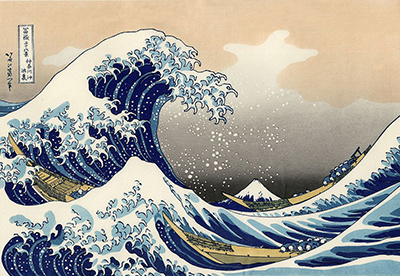
Capucine Korenberg examined digital photographs of 111 impressions of The Great Wave off Kanagawa. Her study looked for changes in details such as breaks in the printed lines of the cartouche and changes that recur across multiple sheets. The cartouche is useful because it offers a small, repeatable set of lines at a fixed place in the design. A gap that appears in several impressions can point to a change in the block. A patch of weak colour on one sheet might tell us about the condition of that sheet or about how the impression was pulled. Photographs vary in clarity. The researchers set limits on what they could see in some examples, and the resulting sequence remains an account of the evidence they could compare. [12]
Treating the sheets as impressions also makes the word original more useful. Someone asking about an original Hokusai print may mean an impression printed in the artist’s era, a sheet from a particular set of blocks or a museum’s individual example. Those questions call for different evidence. A later reproduction can repeat the shape of the great wave accurately while telling us little about the thickness of the ink, the timing of the printing or the wear on the original wood. A catalogue number identifies a particular object and allows those questions to be asked more precisely. [2] [12]
Woodblock prints and their impressions
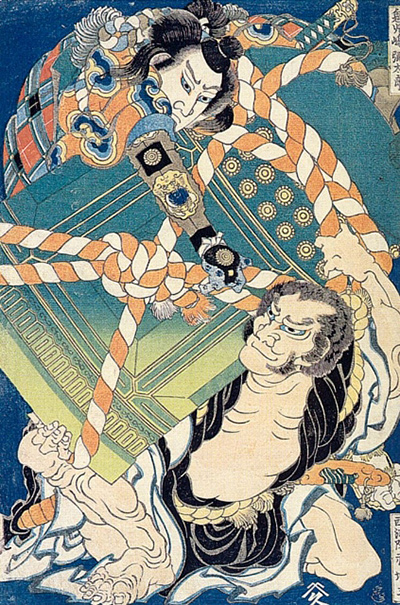
The Met’s narrow sheet The Sumo Wrestlers Takaneyama Yoichiemon and Sendagawa Kichigorō, printed around 1790–93, bears Hokusai’s early name Shunrō. The tight format brings the wrestlers close to the boundaries of the paper. Their heads nearly touch and their arms overlap. The coloured belts make it easier to separate the two bodies long enough to follow how they lean into each other. As in the much later Fuji prints, a few large shapes tell you what sort of movement is taking place before the smaller details begin to register. [14]
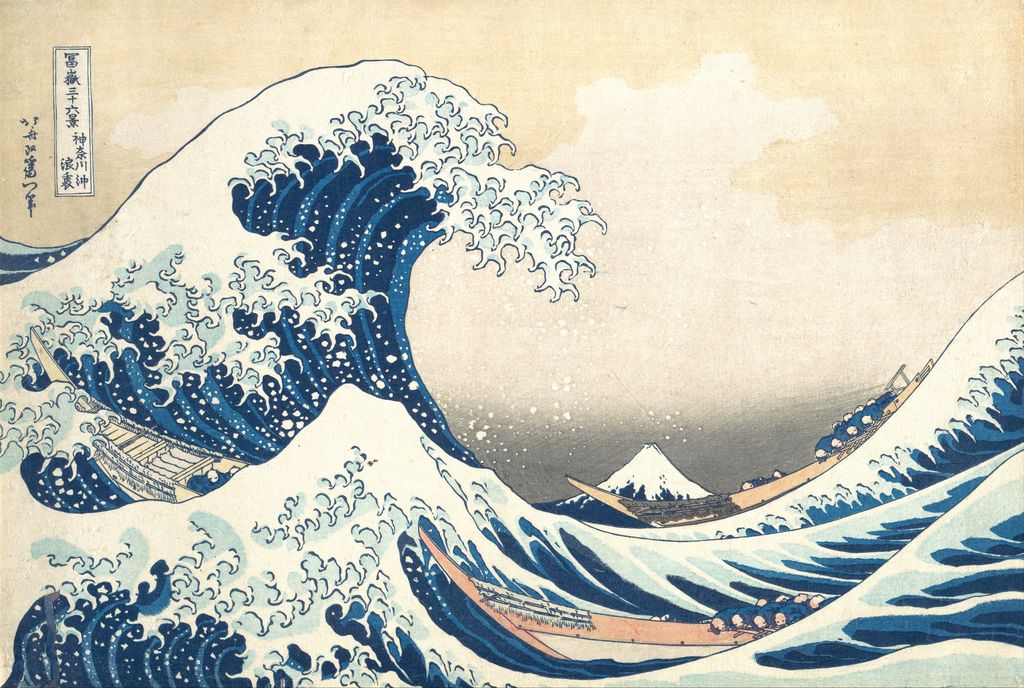
Under the Wave off Kanagawa, the print commonly known as The Great Wave, belongs to Thirty-six Views of Mount Fuji. In the Metropolitan Museum of Art’s impression JP1847, the crest arches high above three boats, whose slender shapes and low crews run close to the curves of the sea. Fuji is the small, almost closed triangle visible through an opening beneath the wave. Its capped summit echoes the white water, and the long horizontal margin of the sheet helps register how far the nearest crest has risen. The National Museum of Western Art in Tokyo exhibited 46 designs from the series in 2026. The title under which the project is known preserves the number of views originally announced. [15] [16]
An impression is an individual printed example of a design. The distinction matters when looking at Kajikazawa in Kai Province. In the Met’s impression JP2986, the rocks, water and fisherman are closely related through blue. In JP1327, the fisherman’s red garment draws attention to his body sooner. In both, his bent form and the taut fishing lines extend from a jutting shelf of rock, and the outline of Fuji sits well behind them. The relation of those shapes holds even when the clothes take on greater prominence. Recognising the two objects as impressions of a single design makes the change in colour more interesting, since it can shift where a viewer first looks while leaving the fisherman’s stance and the arrangement of the landscape in place. [8] [9]
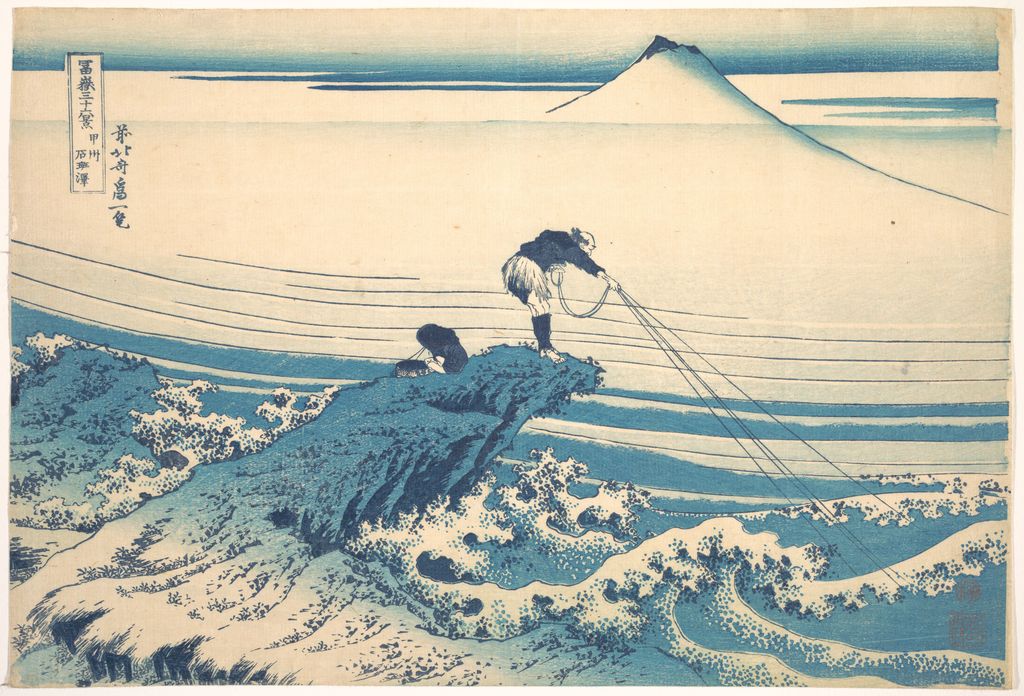
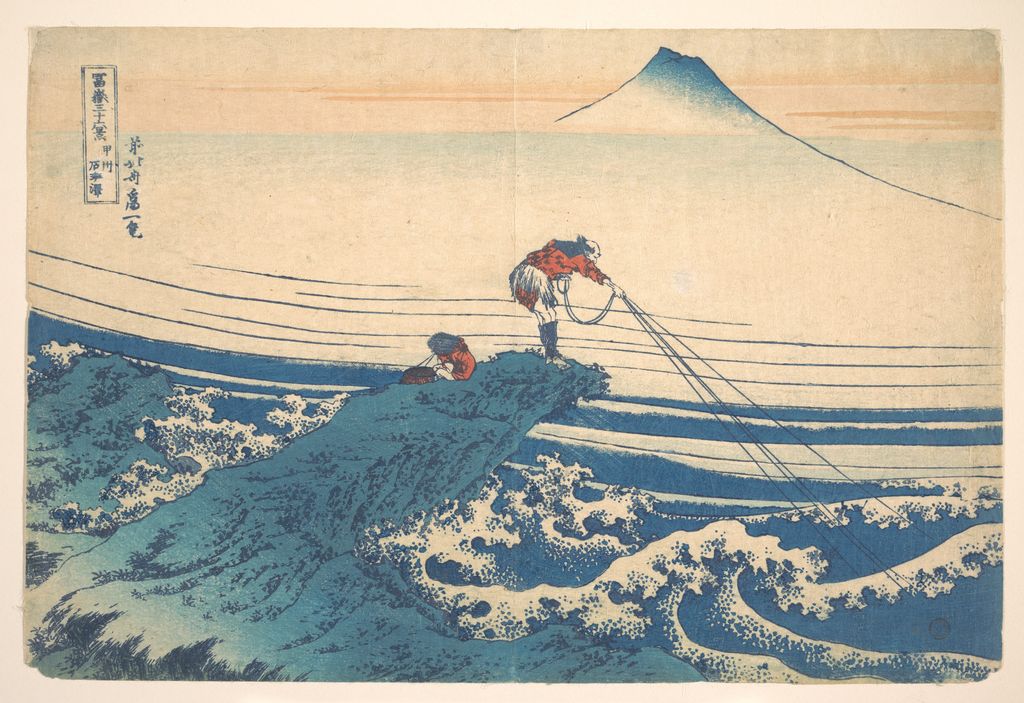
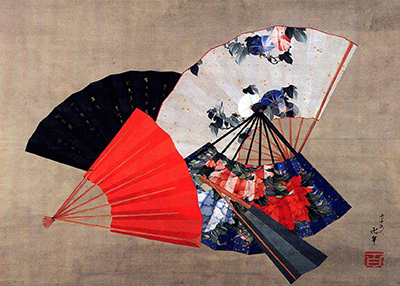
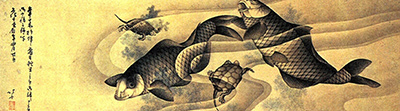
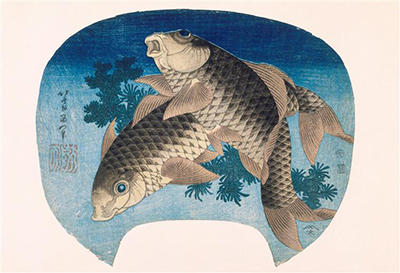
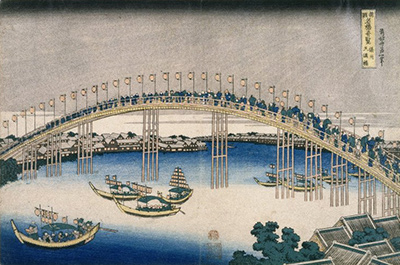
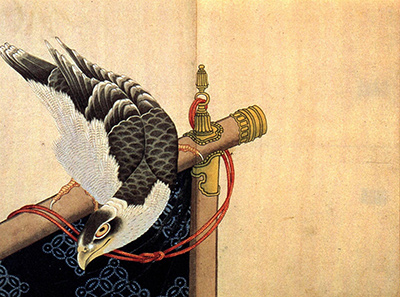
Look for the collection and accession number when comparing printed examples. A picture on a screen can show the composition clearly while leaving its paper colour, borders or dimensions hard to judge. Accession numbers lead back to the individual sheets. With painted screens or scrolls, the museum may also give separate dimensions for the painted surface and its mounting. Those measurements let the viewer reconstruct something a reproduction often flattens out, whether it is the intimate scale of a fan-shaped sheet or the width across which a pair of folding screens carries the eye. [17] [18] [19] [20] [8] [9]
What changes when the prints form a book
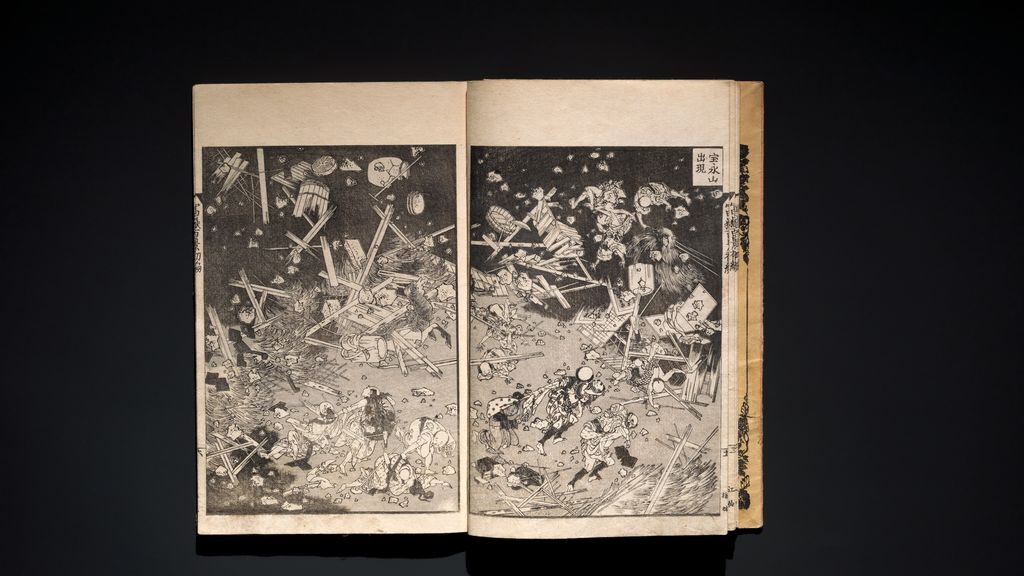
A single-sheet print is designed to work across its own paper field. In an illustrated book, the reader can turn a leaf, take in a double-page opening and see one design give way to another. Hokusai’s One Hundred Views of Mount Fuji uses this rhythm throughout its three volumes. The Metropolitan Museum of Art’s set documents the use of ink on paper in book form. Across an opening, changes in ink density can distinguish successive surfaces and distances, while the fold can interrupt a contour or bring two related forms together. The strength of the effect depends on cutting and printing as well as on the designer’s placement of the view. [5] [13]
A book also offers different evidence of publication. Its covers, title slips and publication information belong to an object that may survive as multiple volumes, with individual volumes reprinted or rebound. A loose leaf or a digital image cropped from an opening leaves much of that information out of view. The same caution applies to Hokusai’s printed study books. When a museum shows an opening from Hokusai Manga, check the volume and any details the catalogue gives about the printing. They tell you how that gathering of figures, plants or gestures was encountered in sequence. [3] [5] [13]
On a return to any of Hokusai’s sheets, it is worth beginning with a small passage. Follow a line where it thins, a printed colour where it changes strength, or the edge where one area meets another. Those details often bring a different part of the workshop into focus. Then look at the whole image again. The force of a blue sky, a running figure or a sudden flash of lightning depends on the exactness with which many such choices hold together across the sheet. [1] [2] [7]
Japanese Woodblock Printmaking
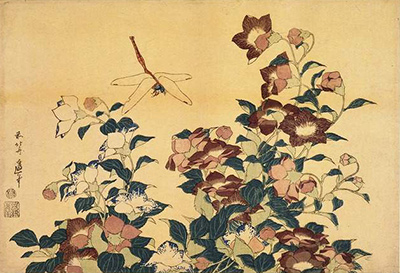
Works across Hokusai’s career
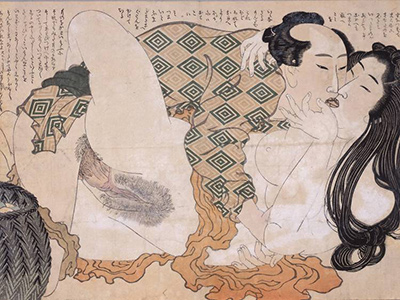
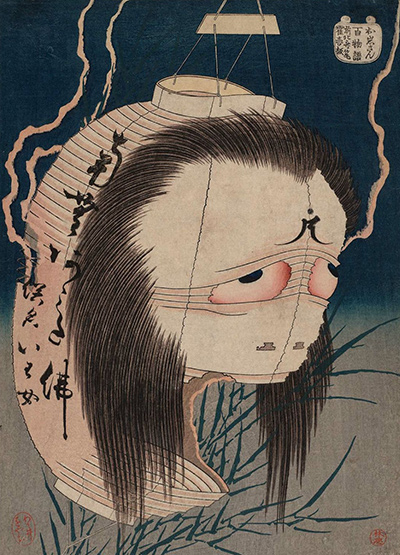
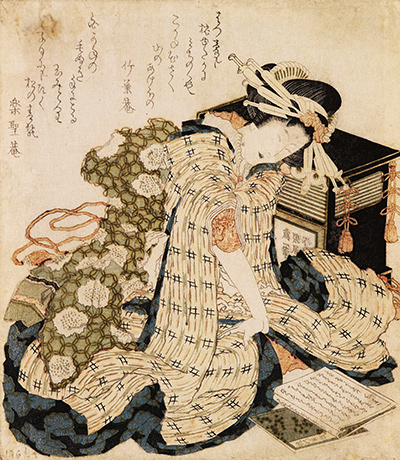
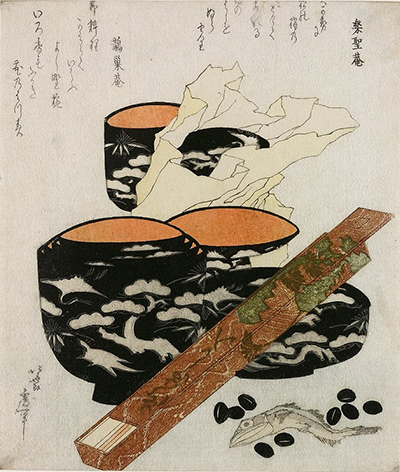
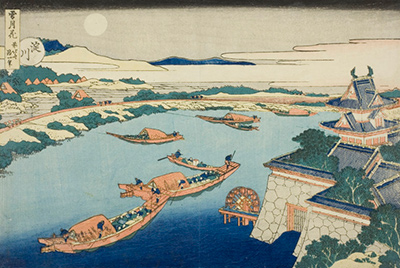
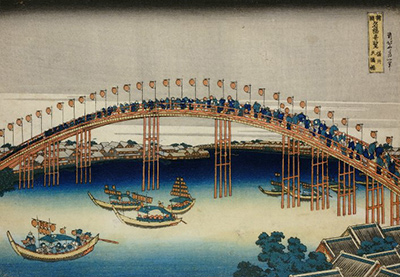
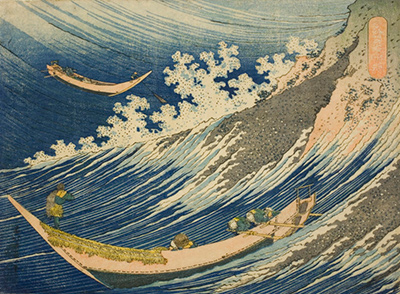
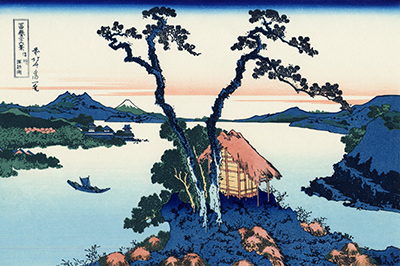
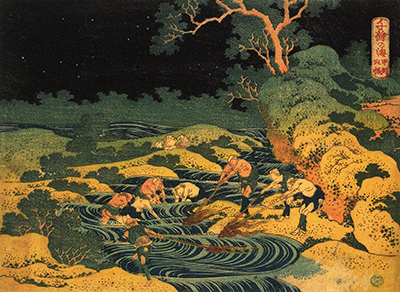
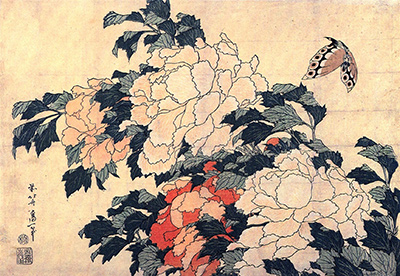
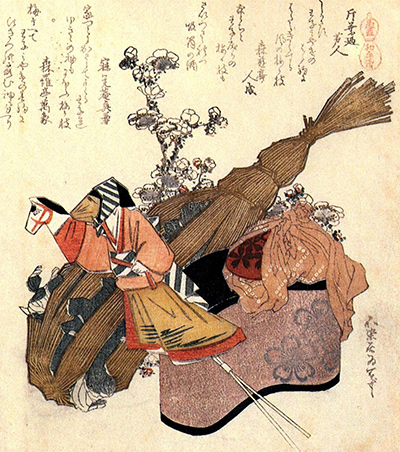
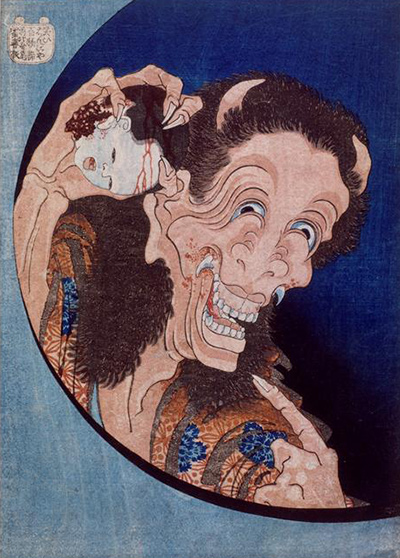
Browse Hokusai’s print series and illustrated books, including the waterfall, ghost, fishing, bridge and poetry series.
What the surviving drawings tell us about a lost stage
The British Museum's Great Picture Book of Everything preserved a large group of drawings associated with an unrealised publication. Their survival is especially revealing because in the ordinary process a design on paper could be pasted face down and sacrificed in cutting the printing block. The printed book would then be the main place to see the line. A group of drawings for a project that did not reach the press can retain evidence of the step before carving. That is a different sort of value from having all the pages of a successfully issued book with subsequent printing dates. [6]
Stand in the position of a cutter for a moment. Every major contour needs to have a form that can be recovered after transfer, cutting, inking and repeated contact. If a raised edge is cut too fine, the tiny end of a branch or hook of foam may soon cease to print clearly. Two lines that are sharply distinguishable in ink on one sheet can blend to form a solid area on another if the fine opening closes. The cutter's selection of what to preserve is a professional judgement, and the artist knows there will be a second pair of eyes on the detail. The surviving work for unrealised books helps us imagine a moment at which those details are still present together on a sheet of drawing paper.
Books and coloured landscape prints give different chances to hide or emphasise information. A pale distant hill among pale shapes in One Hundred Views must hold its place without a bright colour assigning it a meaning. A finely drawn form in a print with colour may stand apart because one block prints a contrasting colour on a neighbouring surface. Working in a limited palette does not reduce the need for exact cutting. It gives line weight and the location of the intervening white paper more of the burden of making the scene legible. [21] [22]
What wear looks like when one block is used again and again
There is a difference between an object that was printed from the original blocks after they had already seen much use and a reprint from a new set of blocks. Both kinds of picture may take the same subject and design into new hands. Only one can show the accumulation of damage associated with the earlier wood. Conservation researchers studying Red Fuji compared the exact positions of signs of wear in features such as the snow and the tree marks, and supplemented that observation with evidence about colourants and printing technique. A claim about likely sequence becomes persuasive when several independent readings of the paper support the same explanation. [23]
A break somewhere else in a line is a weaker match than a break in the same distinctive feature. Damage happening on paper can also be confused with what happened on wood. Looking at a second or third impression of comparable quality makes it easier to see if a mark travels with printing history or is unique to a single sheet. A well lit photograph can help locate a feature for close reading. It cannot supply pigment identification or always distinguish a coloured sheet from the digital tone of a scan. The British Museum's study of the Great Wave addresses such questions by comparing groups of impressions rather than classifying isolated highlights in separate reproductions. [12]
A variation also need not be explained by disappearance of detail. Compare the red and blue impressions of Gaifū kaisei shown at Sumida's Mogi Honke exhibition. A choice of colour can alter the mood of a sheet while leaving the overall recognition of its design secure. The important thing to look at is how printed changes interact with the fields of light and dark. Putting more attention on outline will tell you some things, and asking how the picture is separated into regions of printing will tell you others. Find an independent reason if you wish to identify the variation as a separate printing state or put it into a historical sequence. [24]
The work a publisher could put into circulation
A publisher bore responsibility for bringing a picture to a buyer rather than just commissioning a drawing. The blocks represented an investment that could support a new issue of the same sheet. The Japanese study of Hokusai, Hiroshige and publisher practice held by the National Diet Library distinguishes the decisions of Edo publishers about illustrated books and separately sold prints. Their commercial life depended on decisions about how widely to distribute the designs, how to use blocks and when to act on a popular subject. A large surviving series can still include designs with quite distinct production histories. [25]
Consider the relation between a series and an individual purchaser. A shop can sell a landscape that belongs to a series to someone who has never seen any of the others. A whole book assumes a reader who can turn a page and see the order in which the publishers wanted images encountered. A short edition made for a poetry circle can assume an even more specialised set of experiences among its recipients. These types of transaction give different reasons for making a picture, repeating it and modifying or preserving a detail. They all leave some sort of evidence in the object. Taken together, they make the term ukiyo-e cover something more specific than the composition and colouring of the artwork.
An original edition may owe some of its appearance to a procedure that turns out to be slow for a larger run. A new issue can benefit from simplifying a gradation while retaining a stable silhouette, or from using a different proportion of pigments when preparing the colour. There are effects a viewer may prefer in a later printing and effects that have important evidentiary value in an early one. The practice of studying several named impressions allows preference to be distinguished from the dating question. A market in actual objects has room for both kinds of judgement.
Explore Hokusai’s works
Discussion
Look again at the images and ideas explored in Hokusai’s Ukiyo-e Woodblock Prints. These editorial prompts invite your observations.
Reader Insights
Where on the sheet can you follow a gradual change in colour?
What helps you recognise a design across different impressions?
Join the Conversation
Share a detail, comparison or question about Hokusai’s Ukiyo-e Woodblock Prints below.
References
- The Metropolitan Museum of Art, Storm below Mount Fuji (Sanka no haku u), JP2567. View source.
- The Metropolitan Museum of Art, Department of Asian Art, Woodblock Prints in the Ukiyo-e Style. View source.
- Sumida Hokusai Museum, Wow, Hokusai! See, Examine, and Discover Ukiyo-e. View source.
- National Gallery of Victoria, Misty Kirifuri Waterfall at Kurokami Mountain, including inscription and seal details. View source.
- Ellis Tinios, Hokusai as an Illustrator of Books, Smithsonian Institution, Pulverer Collection. View source.
- The British Museum, Hokusai: The Great Picture Book of Everything, exhibition large-print guide. View source.
- RISD Museum, Process and Function: Traditional Japanese Printmaking Technique, exhibition text. View source.
- The Metropolitan Museum of Art, Kajikazawa in Kai Province (Kōshū Kajikazawa), JP2986. View source.
- The Metropolitan Museum of Art, Kajikazawa in Kai Province (Kōshū Kajikazawa), JP1327. View source.
- Marc Vermeulen, Lucia Burgio, Nathalie Vandeperre and colleagues, “Beyond the connoisseurship approach: creating a chronology in Hokusai prints using non-invasive techniques and multivariate data analysis,” Heritage Science 8, article 62, 2020. View source.
- The Metropolitan Museum of Art, Shichirigahama in Sagami Province (Sōshū Shichirigahama), JP15. View source.
- Capucine Korenberg, The Making and Evolution of Hokusai’s Great Wave, British Museum research paper. View source.
- The Metropolitan Museum of Art, One Hundred Views of Mount Fuji (Fugaku hyakkei), three-volume set. View source.
- The Metropolitan Museum of Art, The Sumo Wrestlers Takaneyama Yoichiemon and Sendagawa Kichigorō, JP741. View source.
- The Metropolitan Museum of Art, Under the Wave off Kanagawa, JP1847. View source.
- National Museum of Western Art, Tokyo, Čiurlionis and Hokusai, exhibition account of the Iuchi Collection’s Mount Fuji prints. View source.
- Saitama Prefectural Museum of History and Folklore, fiscal 2024 annual report, catalogue entry for Carp and Turtles (紙本着色 鯉亀図). View source.
- Rijksmuseum, Two Carp, RP-P-1960-3. View source.
- Smithsonian National Museum of Asian Art, Boy Viewing Mount Fuji, F1898.110. View source.
- Smithsonian National Museum of Asian Art, Hokusai: Japanese Screens, exhibition and reproductions of Country Scenes and Mount Fuji. View source.
- Sumida Hokusai Museum, Sumida Hokusai Museum, the book and the print projects. View source.
- The Metropolitan Museum of Art, Met digitised book openings. View source.
- nature.com, Red Fuji technical study. View source.
- Sumida Hokusai Museum, Sumida exhibition including red and blue-printed Fuji. View source.
- National Diet Library, National Diet Library research article on ukiyo-e publishing practice, Japanese. View source.

