



 by Tom Gurney
Tom Gurney BSc (Hons) is an art history expert with over 20 years experience
Published on June 19, 2020 / Updated on November 18, 2026
Email: tomgurney1@gmail.com / Phone: +44 7429 011000
Sculptures
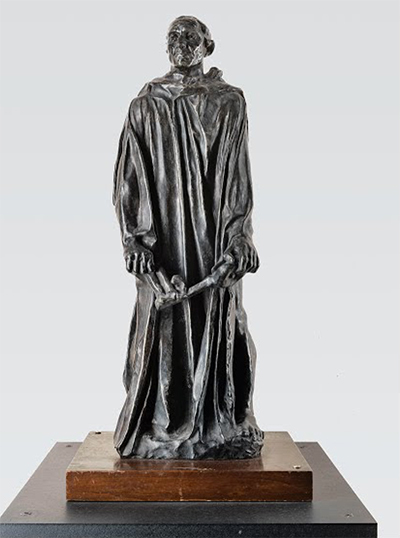
A good place to start with Rodin is a pair of hands. In The Cathedral, stone fingers curve upward around a narrow opening. Two right hands approach one another and give the space between them a shape of its own. Move to The Burghers of Calais and a hand becomes part of a much larger arrangement. The weight of a sleeve and the direction of a wrist tell you where one man’s attention has gone while the figures around him follow separate lines of thought. Rodin could make an independent sculpture from a fragment or make a small gesture count across a public square. [1] [2]
His work ranges from small studio studies to civic monuments, from clay and plaster to carved marble and cast bronze. Some titles describe a composition with a long history in the workshop. Others identify a particular monument or commission. The most revealing comparisons begin by asking whether two objects share a model, a subject, a material or a size. Each of those relationships can tell a different story.
What the plaster can tell you
At the Musée Rodin, the workshop holdings include clay and wax as well as a large number of plasters. The collection owes much of its shape to the works Rodin gave to the French state. Some of these objects preserve stages in the making of a familiar sculpture. Others show how forms could circulate within the studio, remaining available years after their first use. A plaster records the volume of a body and the marks on its surface. Multiple plasters could allow the sculptor to work on several arrangements at once. [3] [4]
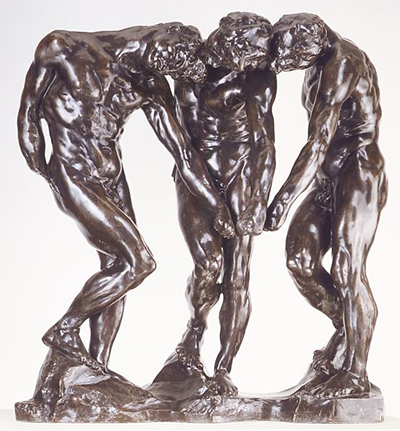
Look at The Three Shades above The Gates of Hell. Each figure bends forward with the head lowered. Their different directions turn that repeated gesture into a group. Where one body would leave most of the top of the door open, three bodies draw you towards their meeting point and reinforce the downward movement. The group itself was later enlarged as an independent work. The same principle helped Rodin change the effect of a figure within the portal. Fugitive Love appears twice in different positions, and one of its figures became the starting point for The Prodigal Son. The changes in placement and company give you something concrete to look for when moving between the portal and the sculptures that came out of it. [4] [5]
A surviving plaster may represent a moment when Rodin reconsidered what should be visible. The Meudon plaster of The Gates of Hell preserves the version exhibited in 1900 with many of the prominent figures taken away. In the Paris bronze, completed after Rodin’s death, modelling protrudes from the surface and casts shadows across the door. The Tokyo bronze has its own casting interval and collection history. The three records describe stages and objects that belong to the same commission. Comparing them tells you how far the portal’s appearance changed between exhibition, reconstruction and casting. [5] [6] [7]
Selected sculptures

 Auguste Rodin.jpg)





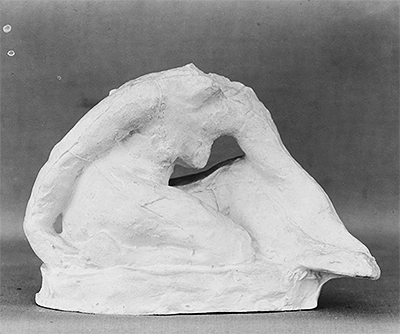
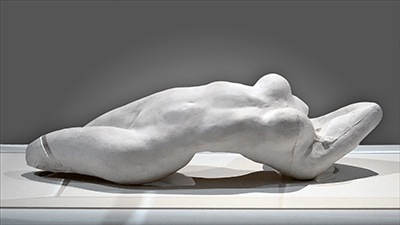
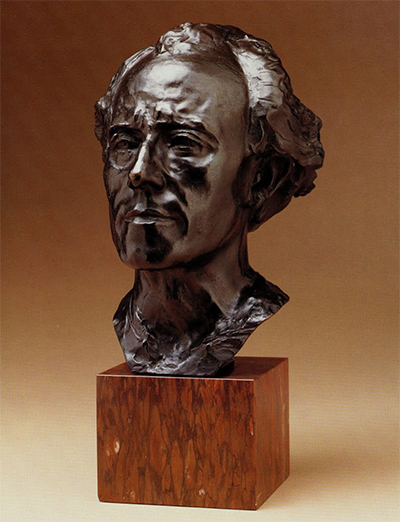
 Auguste Rodin.jpg)
 Auguste Rodin.jpg)
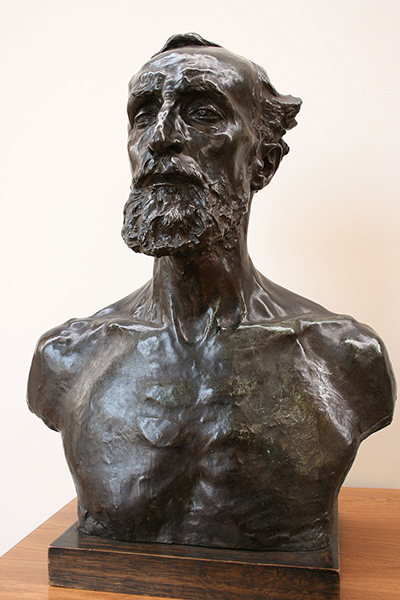
 Auguste Rodin.jpg)
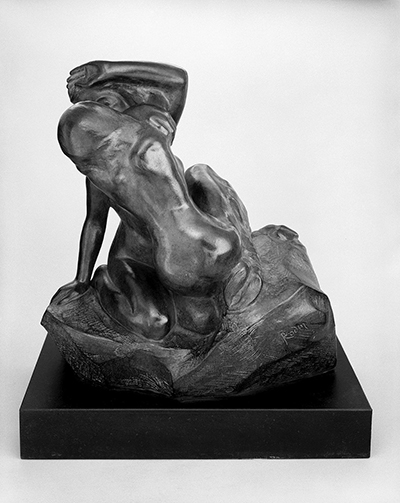
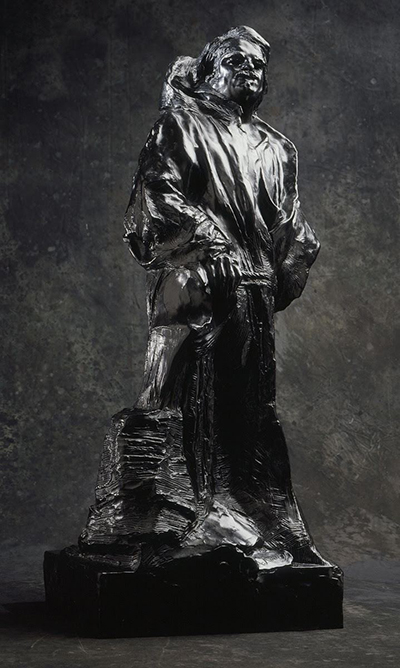
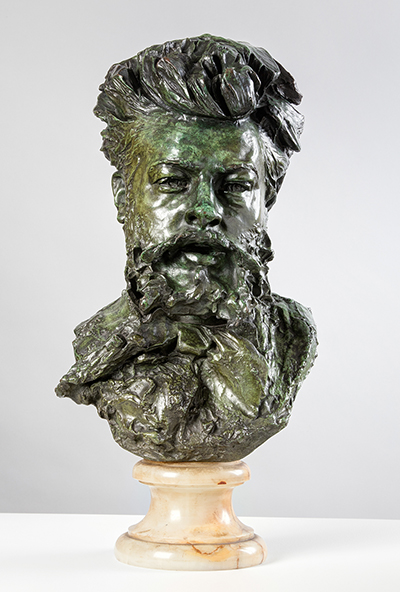
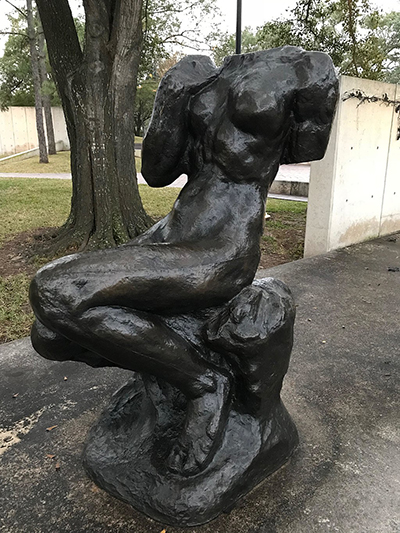
 Auguste Rodin.jpg)
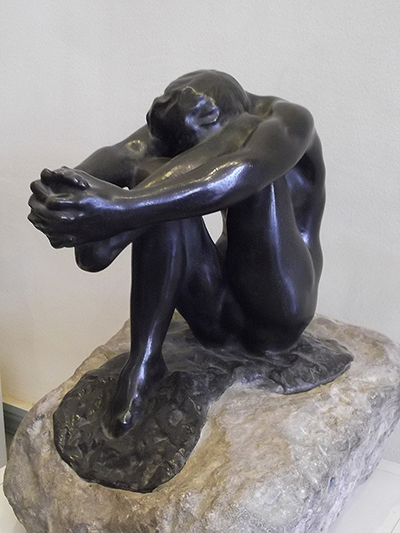
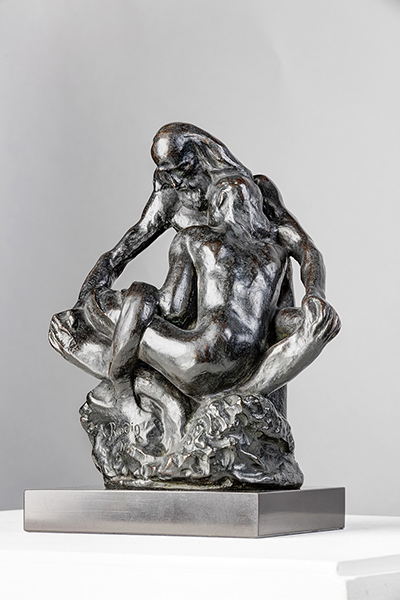
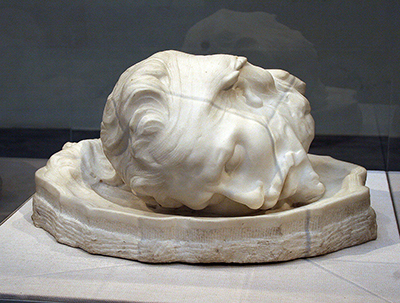
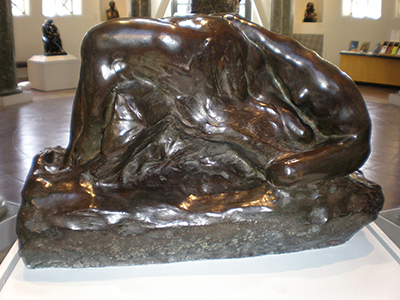
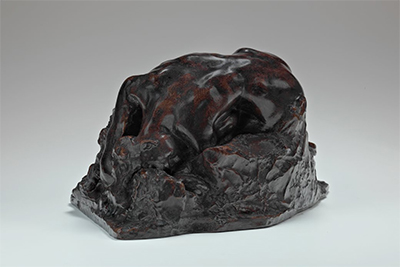
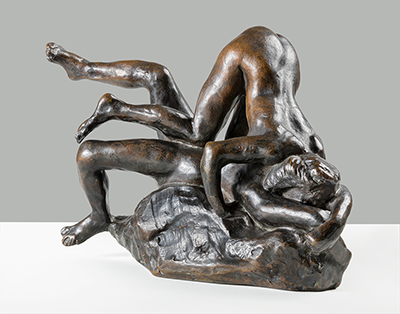
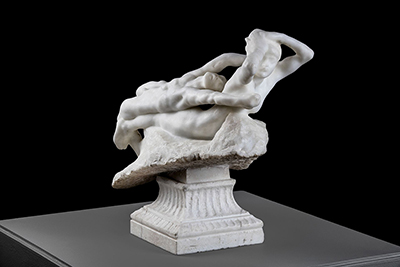
Illusions Received by the Earth
Working from a living model
The Musée Rodin describes the pose of a large clay figure as something the sculptor could establish before the figure looked much like a body. An armature anchored to a wooden base carried the weight. Rodin could then build up the principal volumes of the torso and legs and judge whether the figure would hold the intended relation to its base. Clay added at a shoulder changed more than the shoulder. From the side it could make the back seem to lean, and from the front it could change the impression of where the figure carried its weight. The pliable surface made it possible to work through those effects while the form was still taking shape. Damp cloth kept the clay workable between sessions. [23]
Rodin kept the sitter and the clay on separate stands. He began by comparing their contours from the front, back and sides, then worked through intermediate views. The profile he was attending to was the boundary between the body and the space around it. The boundary moves as the viewer goes around a stationary figure. Matching one view could still leave a shoulder too broad when seen at a slight angle. Working from several positions let him judge the shape that would produce those contours. An object photographed from the front offers evidence of only one of those views, even when it is a familiar image of the sculpture. [17] [23]
Two small terracotta figures at the Met make it possible to watch Rodin isolate a problem of balance. He modelled them to demonstrate how Michelangelo and Phidias treated the bearing of weight on one leg. On figures this small, the first things to compare are the directions of the hips, the feet and the upper body. The museum identifies them as demonstrations. That gives the rough handling a purpose distinct from that of a preliminary sketch for a named monument. The pair could make an argument about pose through the amount of clay shifted to either side of a supporting leg. A viewer comparing them can follow the two arrangements without having to imagine a later bronze or marble. [23] [24]
What a seam tells you
The moulders could preserve an unfired study by taking an impression of it and casting a plaster. The first mould could be sacrificed to release that plaster. To make more than one version, the workshop could instead make a mould in removable pieces that could be reassembled for the next cast. Where the pieces touched, the cast might carry a raised line. The Musée Rodin notes that those lines were generally trimmed, and that Rodin sometimes chose to leave them. A line may therefore belong to the mould rather than to the modelling. At a join between two parts of an assemblage there is another possibility. One form can end and a second begin at a slightly different angle. The relief of a seam and the angle of a join give different clues to the work done in the studio. [4] [14] [25]
The moulders also gave Rodin a supply of forms he could return to. At Meudon the museum uses his term abattis for the heads, arms, hands, legs and feet made from his models and preserved as separate pieces. This was a way to hold on to volumes that could be tried on another figure. A hand is easy to imagine reused if one thinks only of its gesture. At the studio scale its size, the direction of the wrist and the angle at which it meets another plaster matter too. Comparing surviving parts can help show what would have to change before they could work together. The stock of plaster forms thus gave Rodin a way to explore positions in three dimensions before committing them to another material. [4] [26]
Two routes to fired clay
Firing can preserve work done directly in clay, as in the Met’s terracotta sketch of Triton and Nereid. The museum also records a commission for a marble above life size that Rodin never completed. Its collection history reproduces evidence of a large plaster in the studio. The sketch, the documented plaster and the marble commission allow a reader to trace a design across different scales and materials, including a stage that remained an intention. The clay sketch can be studied for the pressure with which one body turns into the other even though it does not supply the detail a marble executed on that scale would have required. [27] [28]
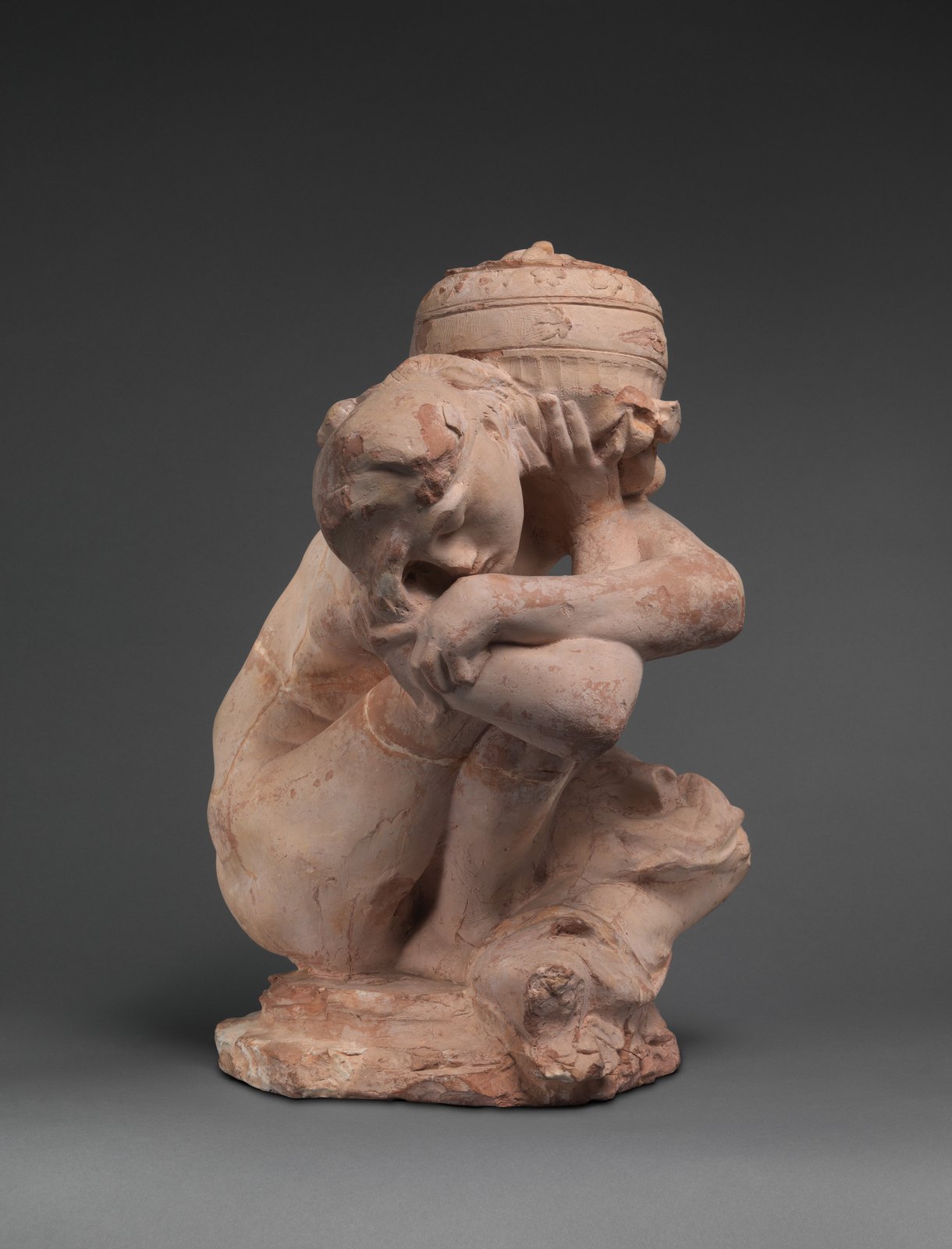
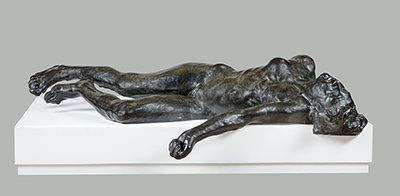
The Met catalogues this Fallen Caryatid as cast terracotta. The Metropolitan Museum of Art, Gift of Thomas F. Ryan, 1910, 12.13.2. Image source. CC0 / Public domain.
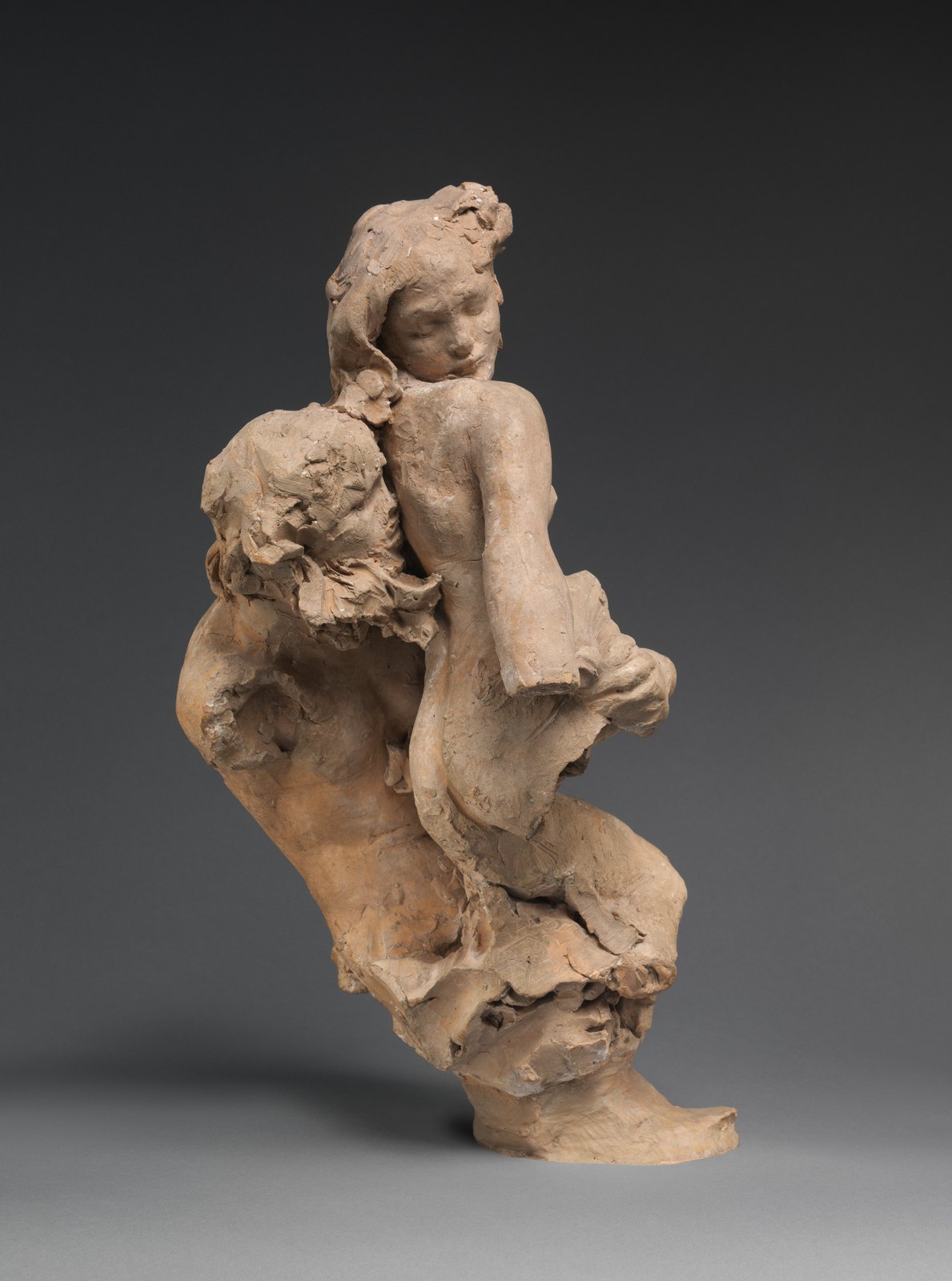
Rodin modelled this sketch directly in clay. The surface gives a comparison with the cast terracotta of Fallen Caryatid. The Metropolitan Museum of Art, Rogers Fund, 1912, 12.11.2. Image source. CC0 / Public domain. Resized for the web.
The Met’s terracotta Fallen Caryatid Carrying an Urn took a different route. The museum describes sheets of wet clay pressed into moulds and then fired. An object described simply as terracotta could therefore be a sketch modelled directly or a form transferred through a mould. It is worth checking which kind of object survives before attributing an irregularity to Rodin’s fingers or a modelling tool. A cast or pressed version could preserve an irregularity that had been introduced earlier, during the handling of a different piece of clay. Its own joins and surface also bear the history of being made and fired. [25] [27] [29]
Marble, bronze and the workshop
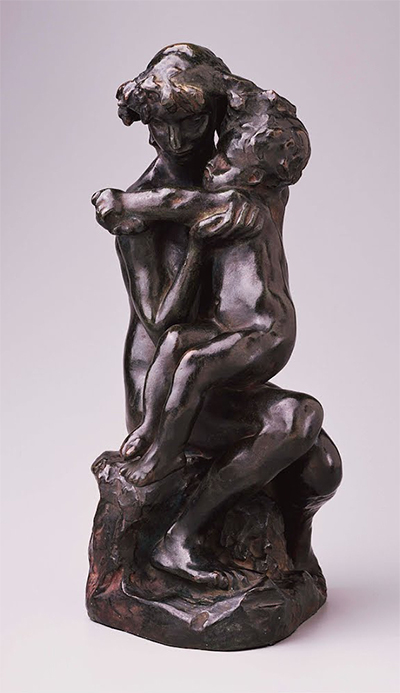
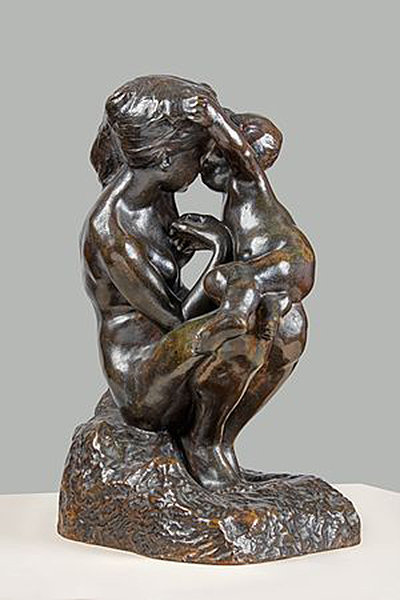
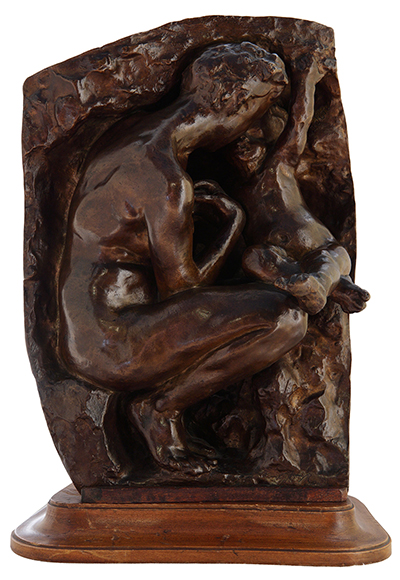
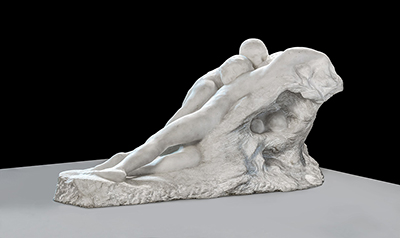
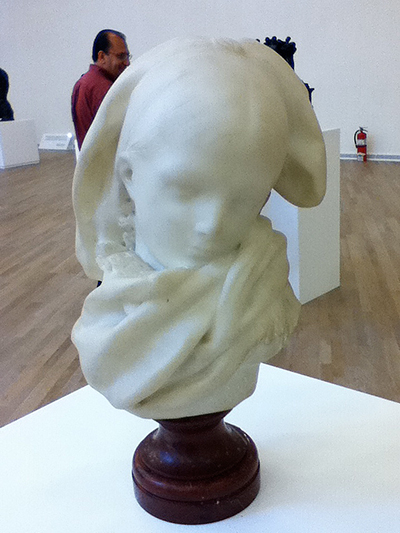
The difference between two materials can be seen particularly well in Young Mother in the Grotto. The Philadelphia Museum of Art dates the modelling of its example to 1885 and the carving to 1891. In the marble the enclosing stone reads as a grotto because the surface changes from loose and broken to smooth and continuous as it approaches the mother and child. The Museo Nacional de Bellas Artes in Buenos Aires records a much smaller work of the same title in patinated bronze. Its colour and sheen belong to the metal and its surface treatment. When looking at a photograph of either work, the museum, dimensions and material establish what kind of object you are seeing. [8] [9]
Marbles bring the work of the practitioner into view. The sculptor’s model could be transferred to a block of stone by taking measurements from fixed points. A carver could use those measurements to translate the design at the same size or enlarge it with a different method. Working the surface involved tools that left quite distinct traces, from grooves to closely spaced striations. Polished stone gives the rounded parts of a body a particular clarity, while the surrounding block can retain the evidence of cutting. The contrast is part of the arrangement of the sculpture, and an individual catalogue record can establish a practitioner’s contribution when documented. [10]
There are also several different questions to ask of a bronze. The year a figure was modelled tells you when the composition took shape. The cast date belongs to the physical bronze. A foundry mark can tell you who made it, and a collection record can sometimes establish its route from the studio or foundry to the museum. Compare the monumental Thinker installed outside the Panthéon in 1906 with Philadelphia’s bronze, cast in 1919. Both belong to the enlarged form, while a smaller cast in Philadelphia preserves a figure closer in scale to the portal’s original seated poet. These differences matter whether you are studying the silhouette on the door, looking up at a freestanding outdoor sculpture or examining a small bronze indoors. [11] [12] [13]
From a model to a block of marble
The Musée Rodin’s account of pointing describes a transfer that begins with three reference points. On a bust, the top of the head and the two shoulders supply places to locate the instrument. A movable needle can register the position of another point on the model. The carver can then use the same setup at the block to tell where that point belongs and how far into the stone they have to go. For a change of scale, distances can be adjusted using compasses. In both cases the measurements give a set of positions to work between. They do not by themselves determine how a surface should pass from the brow into the temple, or how much stone to leave between a figure and the block that surrounds it. [10] [17]
In the Musée Rodin’s collection, two records for portraits of Eve Fairfax make part of this work traceable. The plaster S.01533 is identified as a pointing model and bears Bourdelle’s signature on the base. A separate marble record names Antoine Bourdelle and Victor Peter as practitioners. The inscriptions and catalogue fields allow a reader to follow the work of people whose roles are easily compressed into the artist’s name on a gallery label. The plaster could make a form measurable and carry a practitioner’s name. The marble had to give those measurements physical continuity in a material from which stone could only be removed. The records establish participation more securely than a guess about whose tool made an individual mark. [18] [19]
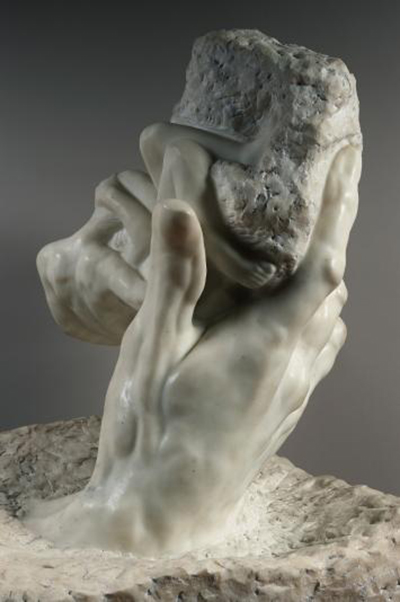
An object like the Met’s Hand of God also shows why a carved surface could retain more than one kind of finish. The Met dates its model to before 1895 and the carving to around 1907. The rough area below the hand holds much of the weight and gives the softer transitions of the fingers an immediate contrast. If that base were smoothed to the same degree as the hand, the transition from block to figure would be much harder to see. In this sculpture a change in finish is part of what describes the subject. The hand seems to form the small bodies, while it in turn looks as if it has come up through the stone. [16] [17]
What happens between plaster and bronze
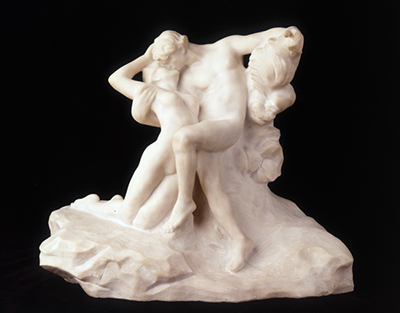
The Musée Rodin demonstrates sand casting with Eternal Springtime and lost-wax casting with a caryatid. In both processes a core occupies the space that will remain empty inside the bronze. That is how a foundry can make a relatively thin metal sculpture that appears to have the full mass of the model. The two processes differ in what carries the sculpted surface into the casting mould. With sand casting, the mould receives the model’s shape directly. For lost-wax casting an intermediate wax preserves the contours and gives the workshop a chance to retouch them. The metal occupies the space left when the wax melts out. That space includes channels for the flow of metal that belong to the making of the sculpture and have to be removed afterwards. [20] [21]
The foundry can also divide a complex model into sections and cast them separately. For a group whose arms, legs and other projections spread into several directions, dividing the model can make moulding more manageable. Joining the separate pieces in bronze adds another place where the work can change. The joins have to follow the intended contours, and chasing and finishing can make them difficult to locate from the outside. The Musée Rodin cites an account of the enlarged Thinker being cast in one pour. Its relatively compact posture makes it easier to see why some forms offer a foundry fewer problems than a group made up of bodies moving away from one another. The report concerns a particular casting achievement. A foundry mark shared by two bronzes does not establish how many sections either was cast in. [11] [20]
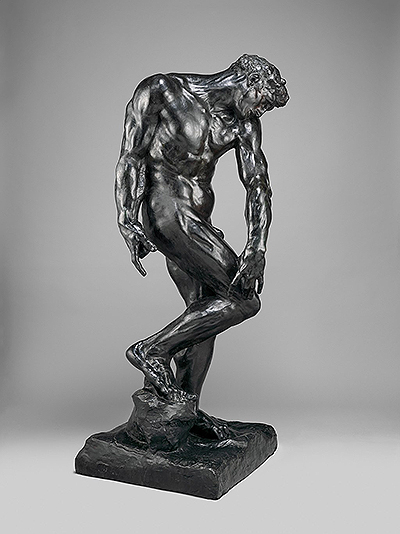
The finish can also make two casts of a related figure read differently in photographs. The National Gallery of Art describes green areas on the ribcage, inside the thighs and along the arm of its Simpson bronze of The Age of Bronze. They can be compared with the modelling of the same parts in an older plaster, where the edge of a rib or a change in the arm has to register through the light reflecting from plaster. Patination can deepen or soften the contrast between adjoining surfaces in bronze. A catalogue entry that identifies the material, finish and accession number therefore helps distinguish an effect belonging to one cast from something built into the design. [20] [21] [22]
The bronzes a foundry kept as models
Two bronzes of Eternal Springtime in the Musée Rodin collection were made to serve as models for further casting. The museum calls each a chef-modèle. The larger, S.02808, stands 66.5 centimetres high and weighs 68 kilograms. The other, S.02473, stands 52 centimetres high and weighs 39 kilograms. Both records name Barbedienne and give 1898. The foundry returned both to the museum in 1918 when its contract expired. The numbers in their titles identify different reductions of the design. They describe the scale for which each master was made. A cast’s number within an edition, by contrast, identifies an example within a series. A reader who encounters a numbered bronze has to establish which kind of number is being given before drawing conclusions from it. [20] [30] [31]
The master models show why bronze could have a special place in the workshop. In the previous examples, metal was the material in which a buyer or museum received the work. Here the metal had a further job. A durable bronze model could be used to take successive impressions for casting, with less risk to a vulnerable plaster. The difference between the two reductions is substantial enough to change how someone would see the group on a table or pedestal. In both, the bend of the bodies and the extent of the base remain part of the design. A model made to establish that relationship at a particular size could go back into use as demand for casts arose. The bronzes returned in 1918 preserve evidence of that work even when the production history of a particular buyer’s cast needs to be traced separately. [20] [30] [31]
Watch Rodin’s sculpture up close
Five films explore Rodin’s sculpture, from his use of classical models and the figures on his monumental doorway to the work of his studio.
Auguste Rodin – Challenging Beauty
Six sculptures show how Rodin adapted classical models.
Watch on YouTubeWhat a catalogue can tell you about a purchase
The Met’s 1910 negotiations with Rodin show that permission to make a new bronze could depend on an arrangement already made with a foundry. The museum’s account of the correspondence reports that Rodin could not supply the bronze Kiss the buyers wanted because he had sold the plaster model and the casting rights to Barbedienne. The museum separately considered a terracotta of The Kiss which its representative had taken for an original sketch. It turned out to be a cast. In one case the issue was who could supply a new object. In the other it was how the existing object had been made. Barbedienne’s sand-cast bronze master for the first reduction of The Kiss, catalogued at 71.1 centimetres high, survives in the Musée Rodin. Its record traces it back to the museum after the contract expired. [28] [32]
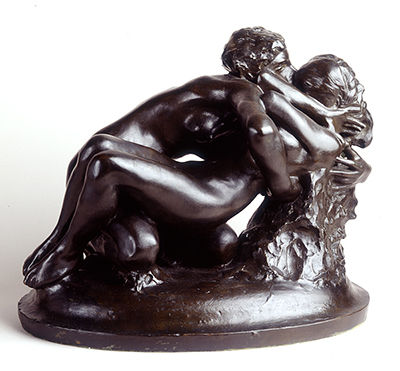
An inscription can answer a more personal question about a bronze. The National Gallery of Art’s Kiss bears a dedication to Kate Simpson dated September 1902, recalling time in the studio. The date in the dedication records an association between sculptor and collector. It can be read alongside the foundry information and provenance in the catalogue, where those facts are recorded for the same object. The gallery also describes the golden-brown patina and darker areas where the bodies curve into shadow. The signature and dedication each occupy a particular part of the sculpture. To read them, one has to look at the rock that supports the figures, an area easily overlooked when studying only the couple’s pose. The object preserves information about who saw it and where attention falls on it as well as the shape of an embrace. [32] [33]
What an early photograph can establish
Jean Limet worked for Rodin as a patinator and photographer. The Musée Rodin records that he took photographs for the catalogue of the 1900 Alma exhibition, where visitors could see photographs alongside drawings and sculpture. A bronze in the gallery could be approached from several sides, while a photograph gave the viewer a particular side to study and a particular distribution of light across it. Limet also experimented with colour in gum bichromate printing. A colour in a photograph can thus belong to the print as much as to the bronze it shows. His dual role makes the distinction especially important. An attribution to Limet as photographer identifies who made the image. It takes separate evidence to establish who treated the sculpture’s surface. [21] [34]
Limet’s glass negative Ph.08004 shows three bronze figures from The Burghers of Calais on a trestle in the courtyard of Rodin’s workshop at the Dépôt des marbres. The catalogue identifies the material, the setting and the fact that the figures were photographed apart from the six-person group. The figures’ height relative to the support can give a sense of scale, although the dimensions in the catalogue entry are those of the glass negative. The image gives a record of an arrangement that could be taken apart after the exposure. Connecting any one figure in the photograph to a bronze now in a museum would require a further match, such as dimensions, a visible inscription or a documented chain of ownership. [2] [35]
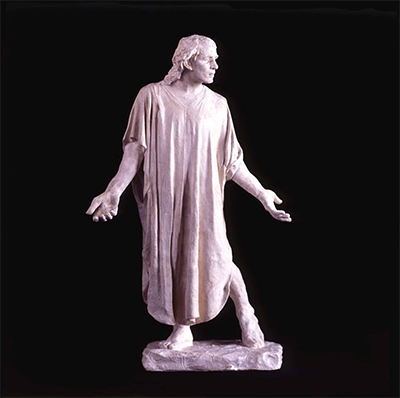
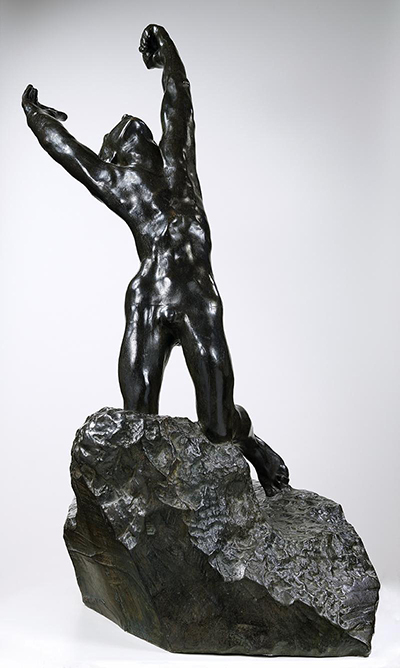
Another Limet photograph, catalogued as Jean de Fiennes, carries an annotation describing a bronze with outstretched arms, its height and a price of 2,200 francs. The price and dimensions make the print evidence of how the sculpture was described as an object that someone could acquire. The photograph could convey the sweep of the arms. The written height could help someone judge where the bronze would fit. Neither the annotation nor the image on its own records a completed sale. For that, a bill, a letter acknowledging receipt or a museum provenance could supply the next step. A photograph can take an object’s history as far as a documented offer even when the buyer remains unknown. [28] [36]
Modern museum photography involves a related choice about the visibility of the surface. In an interview about photographing sculpture, the Met’s Joe Coscia describes having to balance the reflections on a Rodin bronze against the need to make its details legible. A highlight can reveal a raised ridge and at the same time make the colour on it harder to read. That matters when comparing the green passages on the Simpson Age of Bronze with a historical print. The gallery’s written description records where it sees colour on that cast. The older photograph can still be useful for the outline, a support or the appearance of a detail that the photographer chose to light. A comparison works best when each source is asked for the kind of evidence it can provide. [22] [34] [37]
Fragments and changes of scale
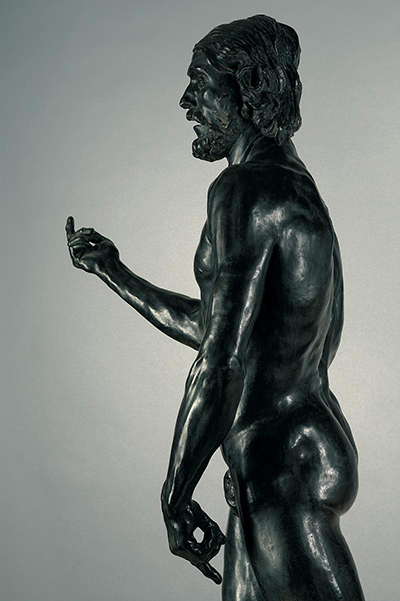
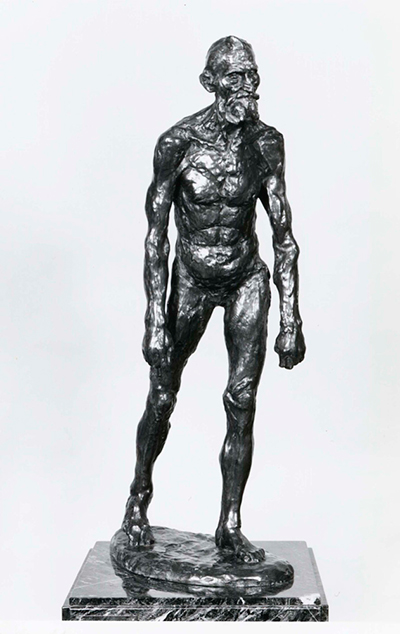
Rodin gave some partial figures a life of their own. The Walking Man combines a torso and legs associated with Saint John the Baptist. The legs spread wide and hold the figure firmly to the base. Above them the torso twists slightly, giving the stride an uneven forward pressure. The missing arms and head direct attention to the relation between the hips and the feet. With the early plaster at a smaller scale and then with the enlargement made by Henri Lebossé, what began as a workshop assemblage acquired a second kind of presence. Its size changes where your eyes meet the body and how far you can step back and still register the lean. [4] [14]
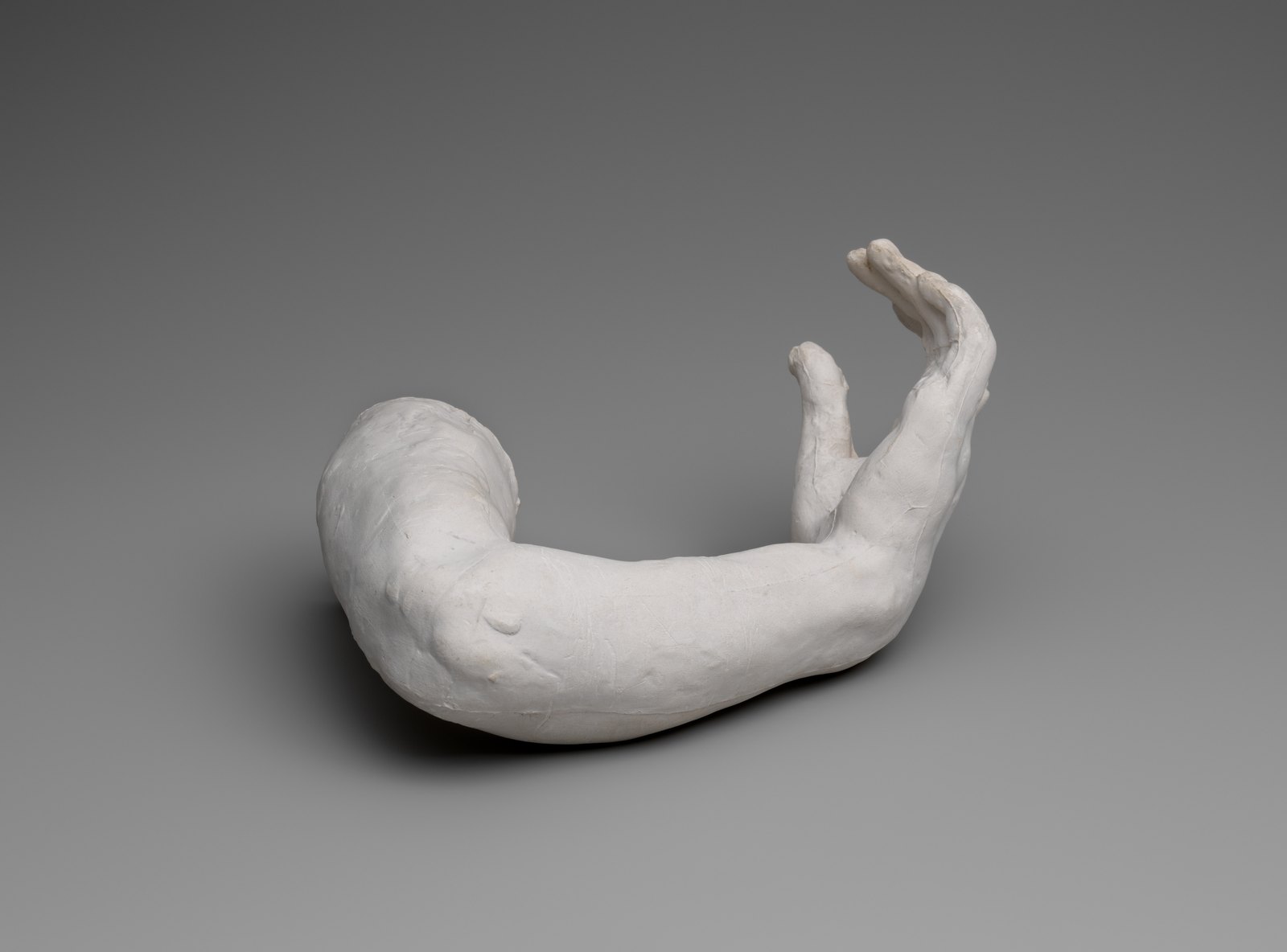
The fragment remained available as a separate cast, so its pose can be examined independently. The Metropolitan Museum of Art, Gift of Auguste Rodin, 1912, 12.12.9. Image source. CC0 / Public domain.
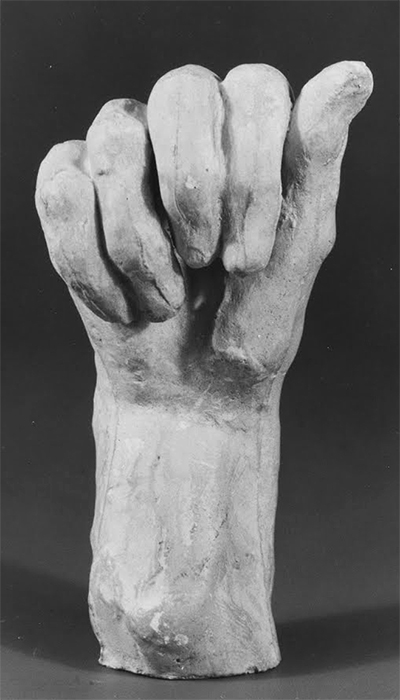
A hand also changes with scale, orientation and setting. A small plaster study lets you follow the bend of a thumb or the distance between two knuckles. In The Hand of God, Rodin turned a hand into the setting for two much smaller bodies. The Metropolitan Museum of Art’s marble shows the new figures curled into the hollow held by the larger hand. Turning around it, you can see the same stone supporting a figure, enclosing it, and giving the sculpture a broad base. The two right hands of The Cathedral take a different approach to the space between forms. A gap is held open by the narrowing curve of the fingers. [1] [15] [16]
Changing what a figure has to do
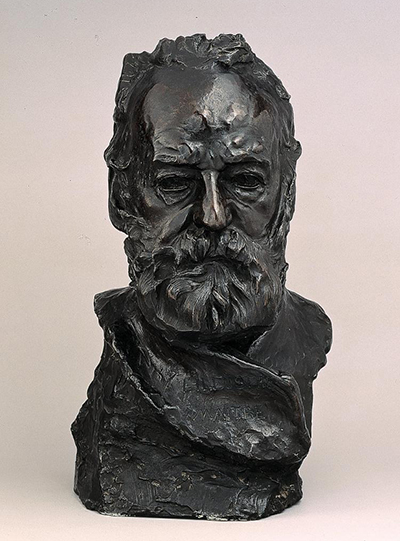
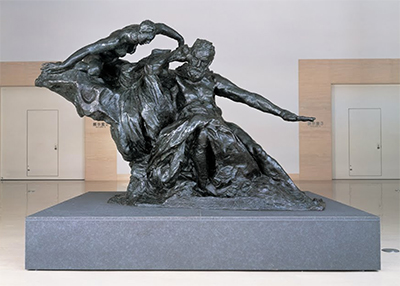
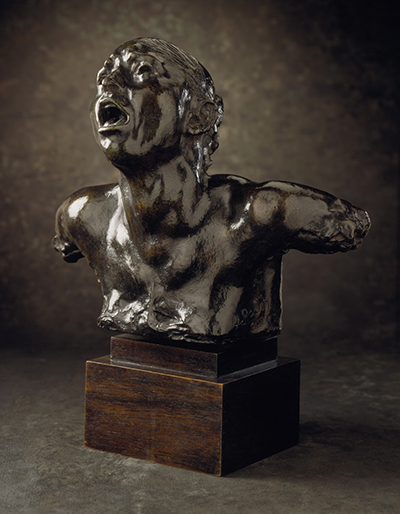
The Musée Rodin follows one of the figures from the tympanum of The Gates of Hell into a model for the Monument to Victor Hugo. In the Hugo model, Meditation stands behind the seated poet while the Tragic Muse hovers above him. Each figure has a different relation to his body. The standing muse can be read against the direction of Hugo’s outstretched arm, and the hovering figure brings attention to the space above him. Rodin removed Meditation’s arms and parts of her legs in adapting her to the monument. Looking at the model helps explain the purpose that truncation could serve inside a group. The reduced figure could fit close to the poet and direct attention back to his pose. [38] [39]
When Rodin exhibited the enlarged figure on its own as The Inner Voice, the rest of the group was absent. The Musée Rodin records showings in Dresden and Stockholm in 1897 and describe the difficulty some viewers had in accepting the figure’s unfinished appearance. Its plaster S.01125 stands 147 centimetres high. At that scale the dip of the head and the curve through the trunk have room to be read together. A viewer no longer has the seated Hugo or a second muse by which to judge her position. The bend of the neck can now lead into the curve at the waist without an intervening gesture drawing the eye elsewhere. What was practical in assembling a monument became expressive when the figure stood alone. [38] [39]
Rodin explored another version of that curve in figures that kept their arms. The Musée Rodin’s portal study identifies versions where the arms change position and the neck is drawn out. In one, the line from neck to shoulder can be compared to the exaggerated bend in The Three Shades. This offers a way to distinguish a change to the figure from a change to its context. On one version the line of a shoulder is altered within the model. On another the figure has been enlarged and removed from the company in which it was first conceived. In sculpture both changes can affect how long the eye stays on the same passage of a body. [4] [38] [40]
Reading a group above and below eye level
The three figures of The Three Shades repeat a body related to Adam. Turning it around a common point makes each figure present a different side. To a viewer looking up at the portal, those sides direct attention back down across the lintel. On a pedestal at a lower height, the angle of one bent head can be held against the angle of another, and the space between the three bodies becomes easier to examine. A photograph by Jean Limet carries an annotation about the group being placed on a platform one storey up at the 1902 Salon. The annotation supplies evidence about the height at which the composition could be encountered outside the doorway. It does not establish that the photographed object was the independent version the Musée Rodin dates to the 1904 enlargement. [4] [5] [41]
The Met’s bronze gives another specific encounter with the group. The museum records the cast by Georges Rudier in 1969 at 97.2 centimetres high and describes its chocolate-brown patina. The design dates back to the nineteenth-century work on the portal, but the particular surface and dimensions belong to the bronze that arrived in the Met’s collection. Set beside the museum’s record for its lifetime cast of Adam, the group offers two points of comparison. A viewer can follow what happened to the lines of a single figure when it was repeated. The museum also invites attention to the difference in colour between the two casts. That difference can modify how abruptly the edge of a forward arm appears against the chest or against the space between the figures. [4] [42]
Following a torso into two compositions
The Musée Rodin traces the small clay Torso of Adèle into two compositions. Rodin added limbs to make a figure for the upper left of The Gates of Hell. He also reworked the torso and supplied a head for the woman in Eternal Springtime. The torso alone gives the viewer the curve of the back and the relation between the lower body and the shoulders. On the portal, the angle of that curve has to work in a crowded area of relief. The woman in Eternal Springtime has to meet the other figure at the right height and angle for the embrace to read. The chest and shoulders can be related to the independent study, while the head and the partner give the gesture a subject that the torso could never supply by itself. [4] [5] [30] [31]
It can help to begin a comparison at the waist. In a photograph of the group, the inclination of the heads understandably catches the eye first. Looking lower down reveals how far the woman’s body bends away from her base of support, and why the curve would have interested Rodin when he had only the torso in hand. The studio sequence also explains why an attribution based on resemblance should be specific. The museum identifies a reused form in each case. That relationship can sit alongside differences in finish and angle introduced when Rodin adapted the study, and differences of scale introduced when Barbedienne made bronze master models. [4] [30] [31]
Enlarging a figure that stays close to the ground
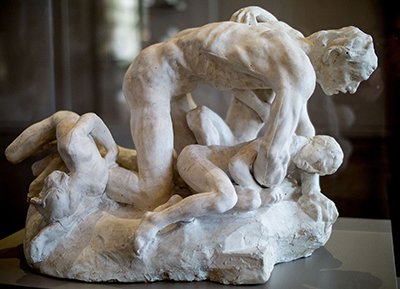
Rodin considered a seated Ugolino for the doorway before settling on a man moving on all fours among his children. The Musée Rodin’s portal study traces the seated idea through drawings and the third maquette. That earlier arrangement can be compared with the low reach of the figure that eventually occupied the door. A seated figure could have presented his face over the children. In the crawling pose his head approaches their level, and the adult body covers a larger area in relation to its height. Once the design stood free of the portal, a visitor could also see the position of each child in relation to Ugolino’s hands and knees from several sides. [43] [44]
The enlarged garden bronze was cast by Alexis Rudier in 1927 from the large model dated 1902–09. Its dimensions make clear how much space the group claims. It is about 134 centimetres high but extends 194 centimetres along its longest recorded dimension. That spread is significant when moving around the group. From one viewpoint the nearer bodies overlap, and from the other side parts of the group that were hidden can open up between the adult figure and a child. The small plaster gives a way to see that distribution in a single glance. The bronze puts the same distribution over a span that can require several steps to take in. Unlike an upright monument, much of what gives it scale happens close to its base. [43] [45]
A Jacques-Ernest Bulloz photograph catalogued by the Musée Rodin identifies its subject as a plaster of the group. This is another way of encountering the design at a chosen angle. The plaster can reflect light into the narrow space where the bodies almost touch. The sand-cast garden bronze has a different surface and is seen in daylight that changes with the hour and the viewer’s position. Before using the Bulloz image to interpret a dark passage in the metal, it helps to ask whether the darkness belongs to a hollow in the underlying form or to the setting and material. The design can survive the move out of a door and into a garden while the way it becomes legible changes at each stage. [20] [45] [46]
Looking at the works together
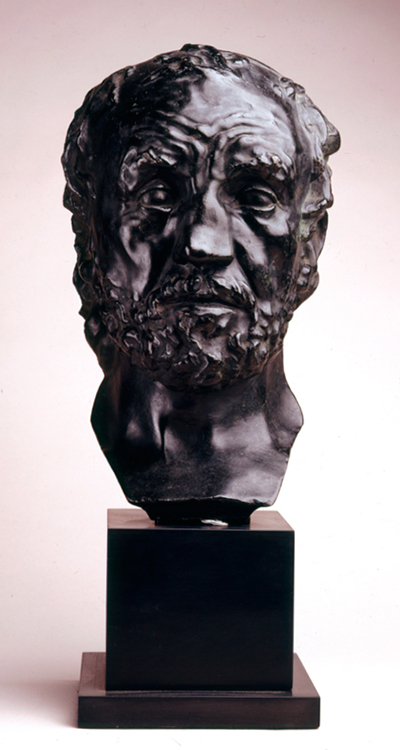
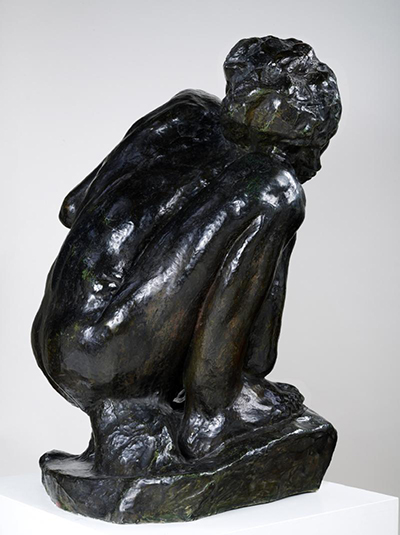
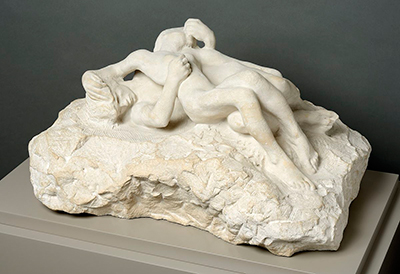
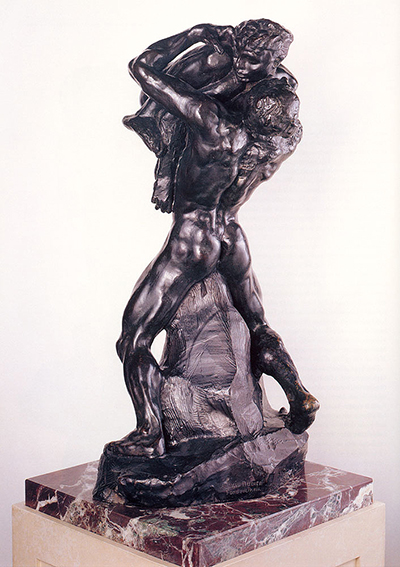
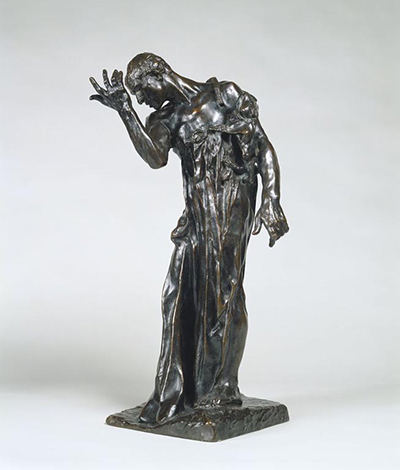
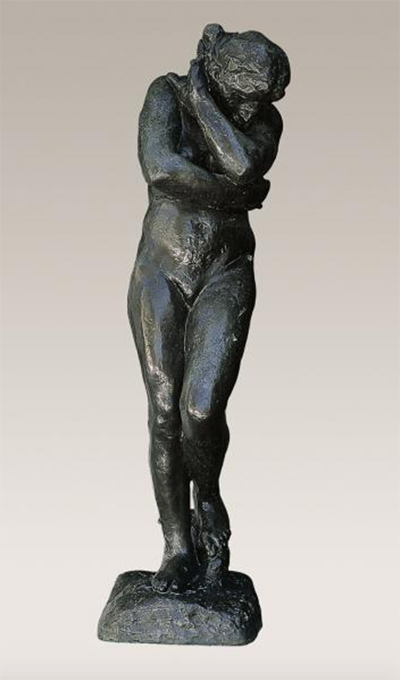
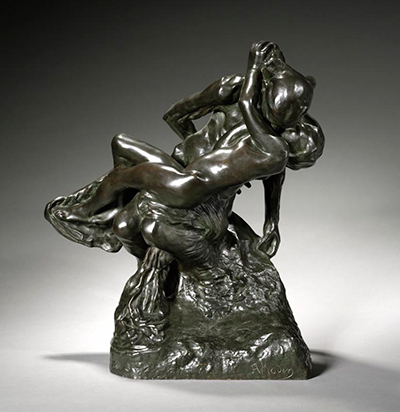
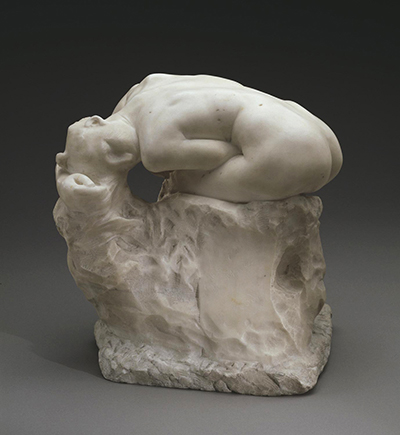
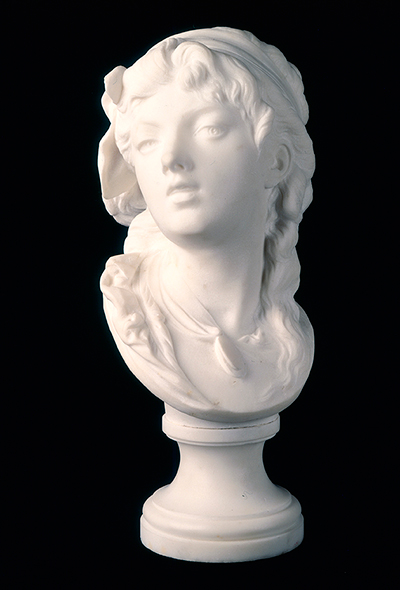
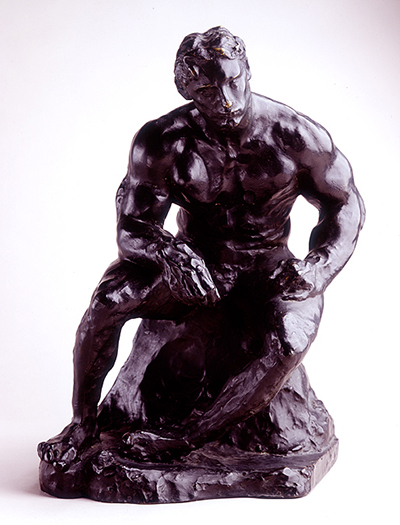
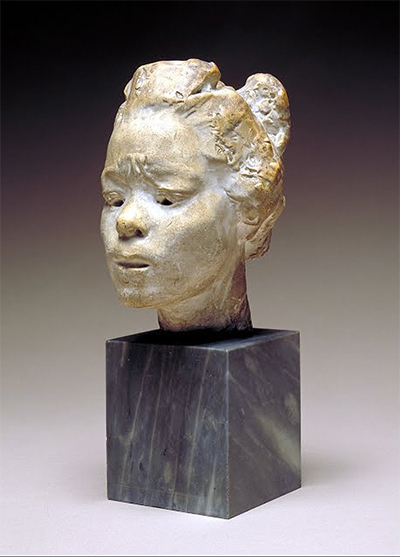
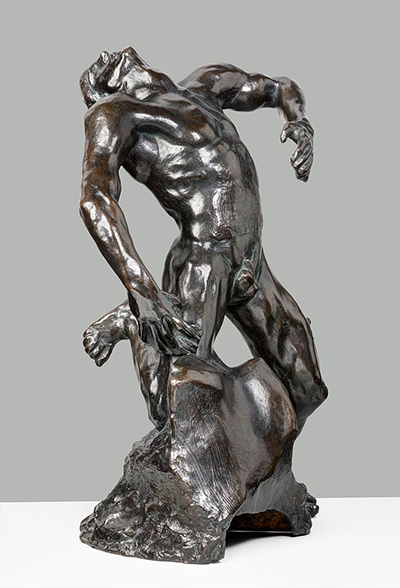
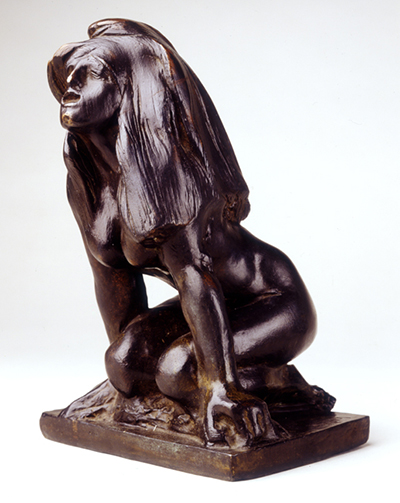
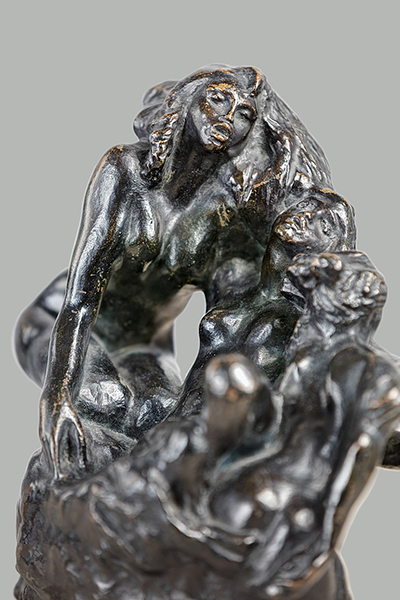
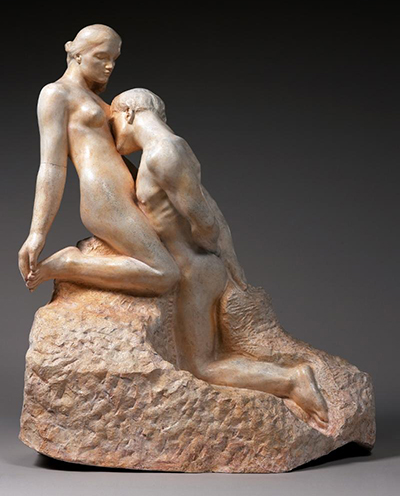
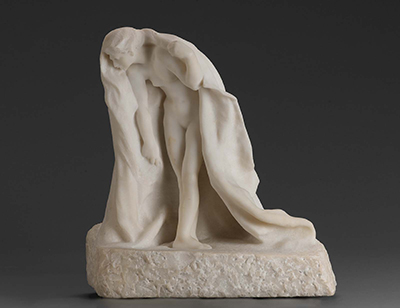
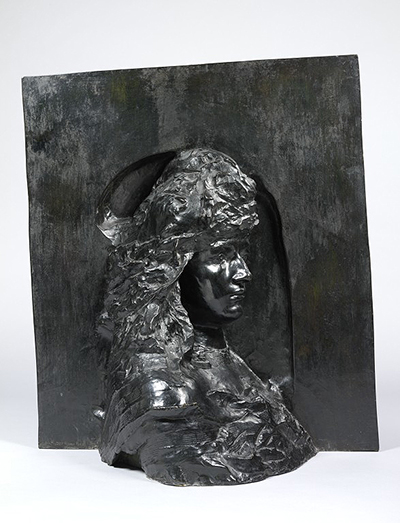
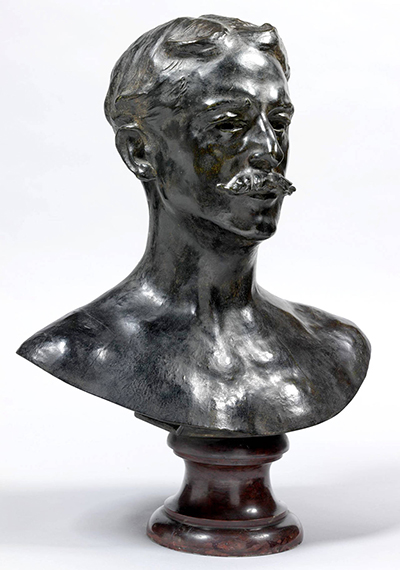
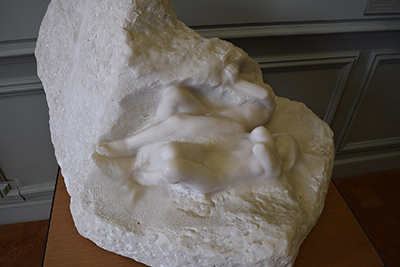
For a first comparison, try the Gates of Hell and The Thinker to see how an individual figure changes when it leaves an architectural setting. Follow the Burghers of Calais with its related studies to see how the design develops around individual bodies. The two young mothers and the several versions of The Kiss make it possible to compare how a composition lives in separate objects. The catalogue below includes independent works as well as fragments, variants and studies. Their relationships often become clearer when you can move from one to the next.
Rodin artworks directory
Discussion
Look again at the images and ideas explored in Sculptures. These editorial prompts invite your observations.
Reader Insights
After reading “What the plaster can tell you”, what detail would you look for in the object or image?
What extra evidence would help you distinguish the artist’s choices from the effects of material, viewpoint or later display?
Join the Conversation
Share a detail, comparison or question about Sculptures below.
References
- Musée Rodin. The Cathedral. View source.
- Musée Rodin. Monument to The Burghers of Calais. View source.
- Musée Rodin. Sculptures. View source.
- Musée Rodin. Multiples, fragments, assemblages. View source.
- Musée Rodin. The Gates of Hell. View source.
- Musée Rodin, Meudon. The Gates of Hell, plaster. View source.
- National Museum of Western Art. The Gates of Hell. View source.
- Philadelphia Museum of Art. Young Mother in the Grotto. View source.
- Museo Nacional de Bellas Artes. Jeune mère dans la grotte. View source.
- Musée Rodin. Marble carving. View source.
- Musée Rodin. The Thinker. View source.
- Philadelphia Museum of Art. The Thinker, monumental cast. View source.
- Philadelphia Museum of Art. The Thinker, smaller cast. View source.
- Musée Rodin. The Walking Man. View source.
- The Metropolitan Museum of Art. Study of a Hand. View source.
- The Metropolitan Museum of Art. The Hand of God. View source.
- Musée Rodin. Rodin et le marbre, exhibition dossier. View source.
- Musée Rodin. Eve Fairfax, pointing plaster. View source.
- Musée Rodin. Eve Fairfax, marble worked by Bourdelle and Victor Peter. View source.
- Musée Rodin. Bronze sand casting. View source.
- Musée Rodin. Lost-wax bronze casting. View source.
- National Gallery of Art. The Age of Bronze, Simpson cast. View source.
- Musée Rodin. Modelage. View source.
- The Metropolitan Museum of Art. Pair of Standing Nude Male Figures Demonstrating Contrapposto. View source.
- Musée Rodin. Moulage. View source.
- Musée Rodin Meudon. Abattis. View source.
- The Metropolitan Museum of Art. Triton and Nereid, 12.11.2. View source.
- The Metropolitan Museum of Art. Rodin at The Metropolitan Museum of Art, a history of the collection. View source.
- The Metropolitan Museum of Art. Fallen Caryatid Carrying an Urn, terracotta. View source.
- Musée Rodin. L’Éternel printemps, reduction no. 1, master model S.02808. View source.
- Musée Rodin. L’Éternel printemps, reduction no. 2, master model S.02473. View source.
- Musée Rodin. Le Baiser, reduction no. 1, master model S.02809. View source.
- National Gallery of Art. The Kiss, Simpson bronze. View source.
- Musée Rodin. Rodin et la photographie. View source.
- Musée Rodin. Jean Limet, Trois Bourgeois de Calais sur un tréteau, Ph.08004. View source.
- Musée Rodin. Jean Limet, Jean de Fiennes (bronze). View source.
- The Metropolitan Museum of Art. Interview with museum photographer Joe Coscia. View source.
- Musée Rodin. Meditation or The Inner Voice, S.01125. View source.
- Musée Rodin. Model for the Monument to Victor Hugo, with Meditation and the Tragic Muse. View source.
- Musée Rodin. Méditation on The Gates of Hell. View source.
- Musée Rodin. Jean Limet, Les Trois ombres, Ph.02038. View source.
- The Metropolitan Museum of Art. The Three Shades, 1984.364.17. View source.
- Musée Rodin. Ugolino and his children, small plaster. View source.
- Musée Rodin. Ugolin et ses enfants on The Gates of Hell. View source.
- Musée Rodin. Ugolin, grand modèle, bronze cast in 1927. View source.
- Musée Rodin. Jacques-Ernest Bulloz, Ugolin et ses enfants (plâtre). View source.